
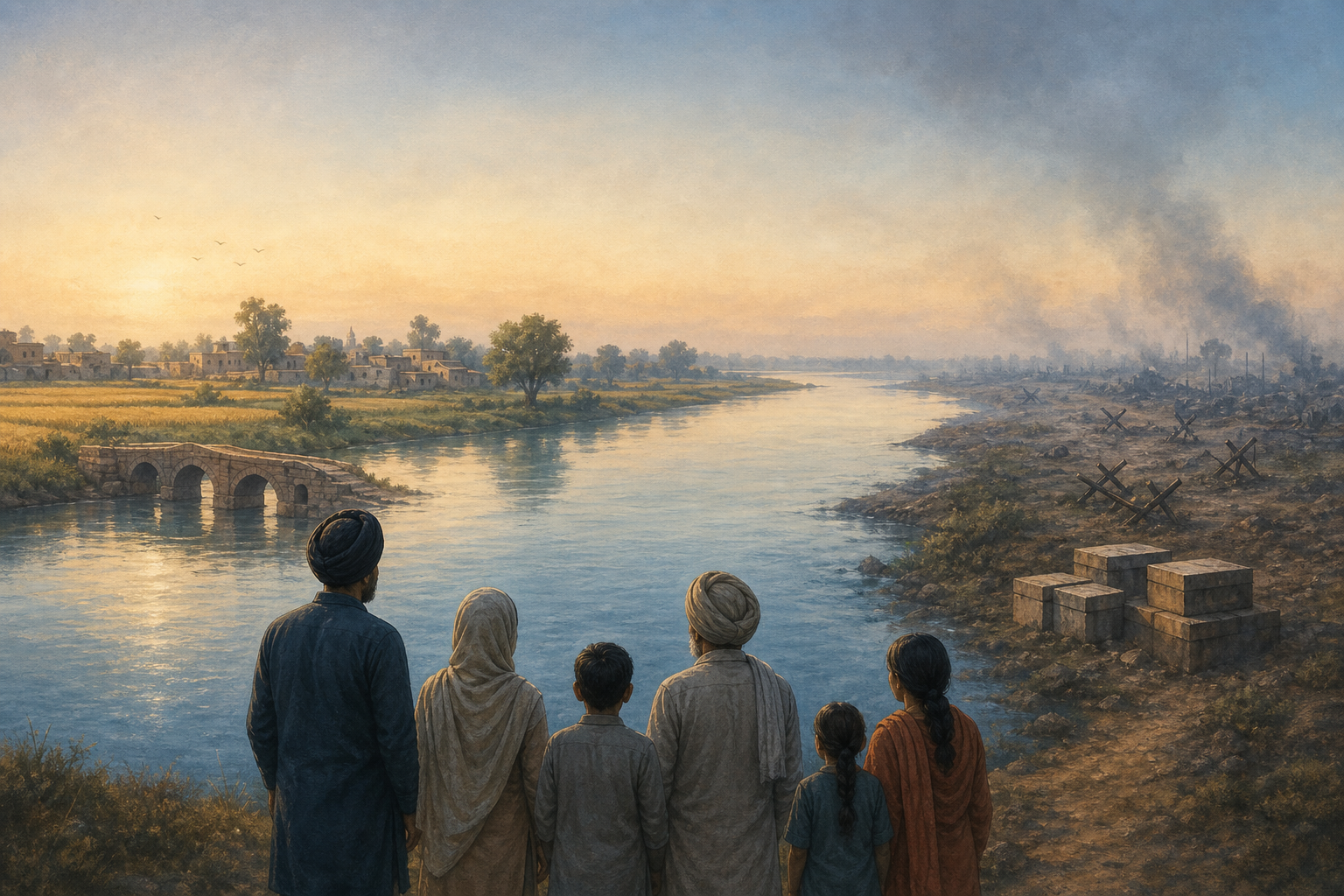
If you are trying to decide whether Satluj is an act of historical accountability, a political intervention or a selective retelling, do not begin with the demand to support or suppress it. Begin by separating the claims that Punjab’s politics keeps collapsing into one another.
That separation lets you condemn Khalistani terrorism, take allegations of state abuse seriously, protect Sikh-Hindu social bonds and judge the film on evidence rather than partisan loyalty. You do not have to surrender any one of those duties to perform the others.
Why Satluj sits on a political fault line
Satluj follows activist Jaswant Singh Khalra, played by Diljit Dosanjh, as he gathers material concerning thousands of alleged illegal cremations during Punjab’s militancy years. The word alleged matters. A film can dramatize an allegation and present evidence for it, but the premise alone cannot tell you which individual claims have been established, which remain disputed or what context the finished work includes.
The historical span matters as well. Terrorism in Punjab began in the 1980s and continued into the mid-1990s. A film centered on one activist will necessarily select one line through that long and violent period. Selection is unavoidable; concealment is not. Your task is to determine whether the selection illuminates its subject honestly while acknowledging the history around it.
The distribution controversy adds another layer: the film was removed from Zee5, and a public-interest litigation was filed. Those facts establish controversy, not the merits of the film or the litigation. A filed petition is not a judicial finding. Removal from one platform is not automatically a state ban. Use the exact verbs, because political arguments often become misleading at precisely this point.
Suppression can also change the subject. Instead of asking whether the central claims are supported, people begin asking why they are not allowed to see the work. The removal then supplies its own publicity and lets every faction substitute a censorship argument for an evidentiary one. The better response is lawful access, precise rebuttal and open examination of the claims.
Keep four different questions separate

Most bad arguments about Satluj move between four questions without announcing the switch. You can prevent that by testing each question independently.
- What does the film actually claim? Identify the alleged acts, the people or institutions accused, the period covered and the material presented. A trailer, controversy clip or political speech cannot substitute for the complete work.
- How strong is the evidence? Separate what is portrayed from what is alleged, what is supported within the film and what can be corroborated independently. Emotional force may explain why a scene matters, but it does not raise the evidentiary status of a claim.
- What moral judgment follows? Condemning terrorism does not grant immunity to any unlawful state act. Examining alleged state wrongdoing does not excuse separatist violence. One category of victim cannot be used to erase another.
- What political use is being made of the story? Parties and activists may emphasize whichever memory serves their present coalition. Motive can help you understand the messaging, but it neither proves nor disproves the underlying claim.
For any disputed statement, write four short lines: the exact claim, its current status, the evidence offered and the evidence that would change your mind. This simple discipline prevents words such as shown, alleged, proved and disproved from being treated as interchangeable.
A Dharmic political ethic should be especially resistant to selective truth. If your standard becomes strict only when an opponent is accused, it is not a standard. It is a factional weapon. The same demand for evidence and accountability must survive a change in the identity of the accused.
Do not let separatism redefine Sikh and Hindu identities
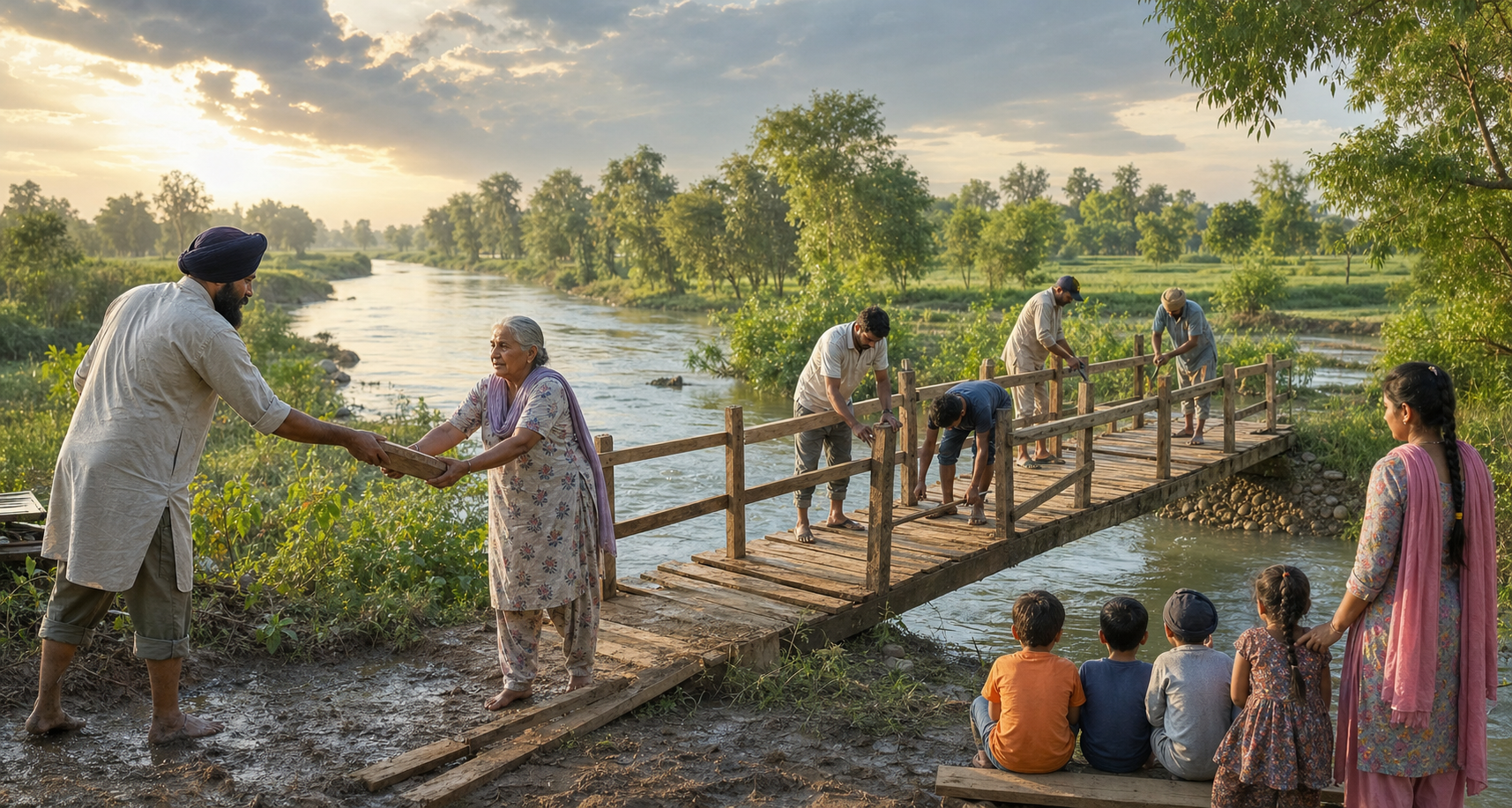
One family memory from the militancy period captures what is at stake: the writer describes a Sikh grandmother and a family temple that included Guru Nanak Dev until the early 1980s, followed by a hardened Hindu identification under pressure from Khalistanis. This is testimony about one household, not a census of Punjab. Its value lies in showing how separatist pressure can force an inherited overlap into mutually exclusive political boxes.
That distinction should govern your language. Sikh identity is not a synonym for Khalistan. Hindu identity is not a synonym for the state. A demand to investigate alleged illegal conduct is not automatically support for separatism. Condemnation of Khalistani terrorism is not automatically hostility to Sikhs.
Watch for five substitutions that turn discussion into communal mobilization:
- A speaker says Sikhs when the relevant actor is a Khalistani organization, militant or political advocate.
- A speaker says Hindus when the relevant actor is a government, police unit, official or political party.
- A request for evidence is described as disrespect toward an entire community.
- A demand for accountability is treated as approval of terrorism.
- The crimes of one actor are invoked to make scrutiny of another actor seem unnecessary.
Correct the category before debating the conclusion. Ask the speaker to name the actor, act, date range and evidence. If that precision makes the claim collapse, the original claim was trading on identity rather than facts.
This is not merely a matter of polite wording. Broad communal labels assign inherited guilt to people who did not commit the alleged act. They also reward separatist logic by accepting its claim that Sikhs and Hindus must stand in opposing political camps. Refusing that frame is both more accurate and more protective of Punjab’s social fabric.
How to assess the film and the politics around it

If you plan to discuss Satluj publicly, use a procedure that another person could audit. It is slower than repeating a party line, but it produces a judgment worth defending.
- Establish what you have actually seen. If you have not watched the complete film, say so. Do not turn a trailer, edited clip, synopsis or second-hand description into a review of the whole work.
- State one proposition at a time. Replace a slogan such as the film exposes the truth with the exact event or pattern it alleges. Specific propositions can be checked; slogans can only be cheered or rejected.
- Label the proposition’s status. Use depicted for what appears on screen, alleged for an accusation, supported when evidence is supplied and independently corroborated only when material outside the film confirms it.
- Check the chronology. Note which part of the 1980s-to-mid-1990s period is being discussed. Evidence about one phase should not silently become a claim about the entire militancy era.
- Examine omissions without pretending every film must cover everything. Ask whether omitted context would materially alter the film’s central claim. A focused biography need not become a complete history of Punjab, but it should not depend on the audience remaining ignorant of decisive contrary facts.
- Apply the same moral rule to every actor. Deliberate terrorist violence remains wrong even when committed in the name of a grievance. Any illegal killing or concealment by state personnel would remain wrong even when committed during counterterrorism operations.
- Judge distribution separately from historical accuracy. Ask who removed the film, under what authority and on what stated ground. Do not call a platform decision a legal ban unless the evidence supports that description, and do not treat removal as proof that the film is true.
The same discipline helps you evaluate politicians, campaigners and commentators. Put these questions to anyone asking for your loyalty:
- Do you condemn Khalistani terrorism without converting that condemnation into suspicion of Sikhs as a community?
- Do you support a lawful, evidence-based examination of alleged illegal cremations without using the allegations to romanticize militancy?
- Are you offering a factual rebuttal, or merely demanding that the work disappear?
- What evidence would cause you to revise your position?
- Are victims being treated as human beings, or only as symbols useful against an opponent?
Evasion is useful information about the quality of an argument, though it is not proof that the underlying historical claim is false. Keep judging the evidence even when the advocate behaves badly.
Key takeaways
- Satluj concerns Jaswant Singh Khalra and allegations involving thousands of illegal cremations during Punjab’s militancy years; allegations, portrayals and established findings must not be conflated.
- Khalistani terrorism and alleged unlawful state violence are separate moral and evidentiary questions. Recognition of one does not cancel the other.
- The film’s removal from Zee5 and the filing of a PIL demonstrate controversy, not a verdict on historical truth or legal merit.
- Sikh identity must not be collapsed into Khalistani separatism, and Hindu identity must not be collapsed into state power.
- The soundest response is to seek lawful access, inspect the complete work, verify its central claims and demand precise rebuttals rather than communal slogans.
When Satluj enters your political conversation, make one commitment: do not let a party, platform or community label decide the truth in advance. Name terrorism precisely. Keep Sikh identity out of the dock. Examine alleged unlawful state acts on evidence. That is how Punjab’s memory can serve justice instead of becoming ammunition for the next round of polarization.