
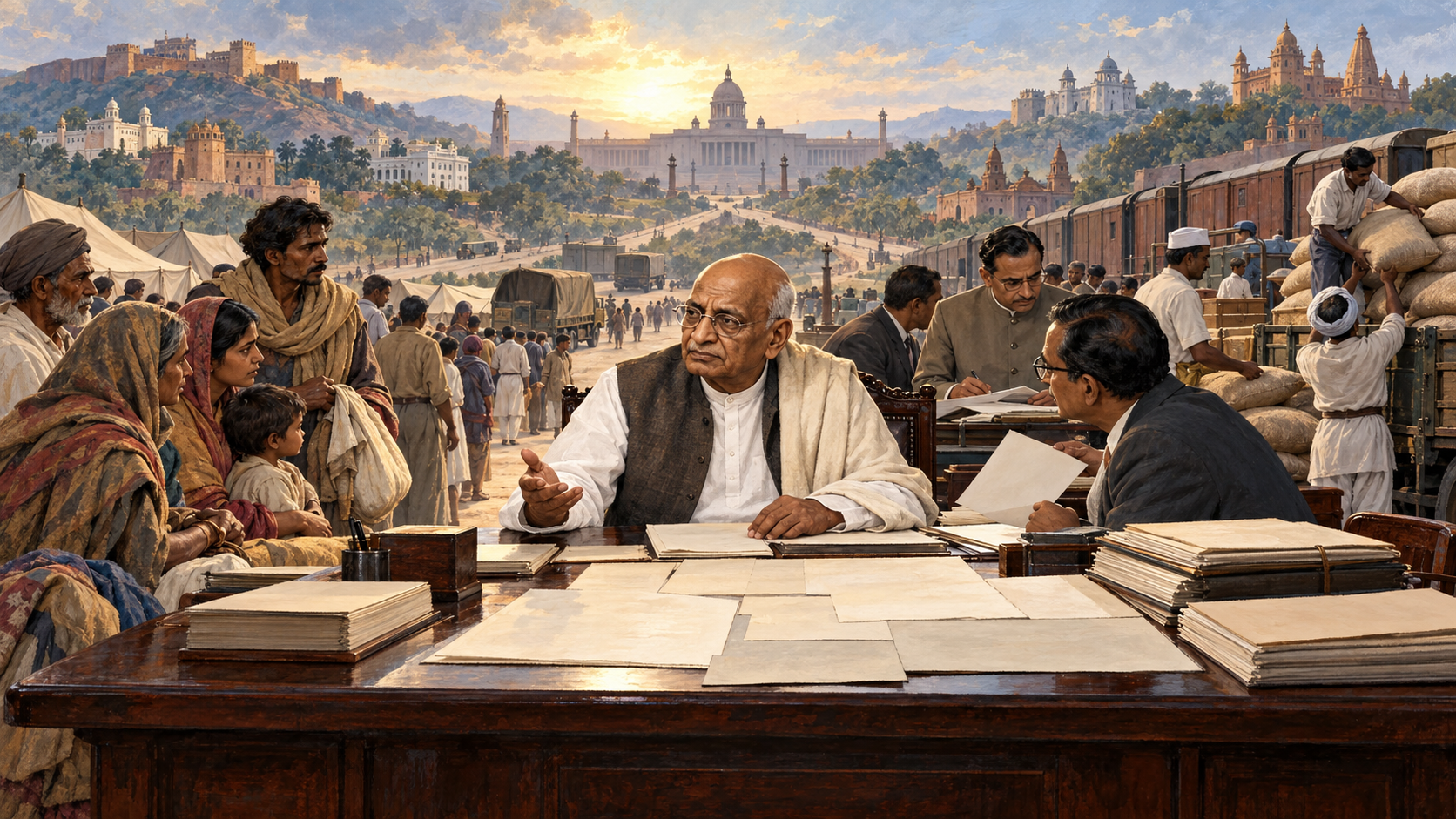
You may have encountered Sardar Patel in two very different ways: as the administrator who helped hold India together, and as a name attached to present-day arguments about Hindu security, minority rights, or the RSS. If you want to know what he actually offers a Hindu political imagination, test those claims in this order: deeds first, attributable words second, and modern slogans last.
That test produces a more demanding portrait. Patel’s concern for Hindus after Partition was not merely an expression of sympathy. It became refugee rehabilitation, territorial consolidation, and a willingness to use the authority of the state. Yet his response to B. R. Ambedkar’s inter-caste marriage also warns you against confusing Hindu solidarity with social rigidity.
Start with Patel’s responsibilities, not attributed slogans
Patel was born on 31 October 1875 in Nadiad, Gujarat, studied law at Middle Temple in London, and became a barrister. His decisive public role, however, came through the freedom movement and then through government. As deputy prime minister and home minister, he held responsibilities that allowed conviction to become policy.
This distinction matters because political memory often turns leaders into collections of convenient quotations. Patel is frequently invoked in arguments about organised communities, minority protections, Article 299, and the constitutional use of the word “secular.” Do not treat those as a single claim. Each assertion needs its own dated speech, letter, legislative debate, or other primary record.
Before repeating a statement attributed to Patel, ask four questions in sequence. What is the exact wording? When and where was it said? Does the record show Patel speaking, or merely a later paraphrase? Does the constitutional explanation surrounding the quotation have independent support? If you cannot answer those questions, call the words “attributed to Patel” or leave them out. An uncertain quotation should not carry an otherwise serious argument.
His executive record gives you firmer ground. It shows what Patel prioritised when decisions had immediate consequences: displaced people needed rehabilitation, contested territories needed resolution, and a fragmented subcontinent needed a functioning Union. This is the first practical lesson in reading Patel. Judge his Hindu concern through the responsibilities he accepted and the results he pursued.
Partition pain became an administrative duty
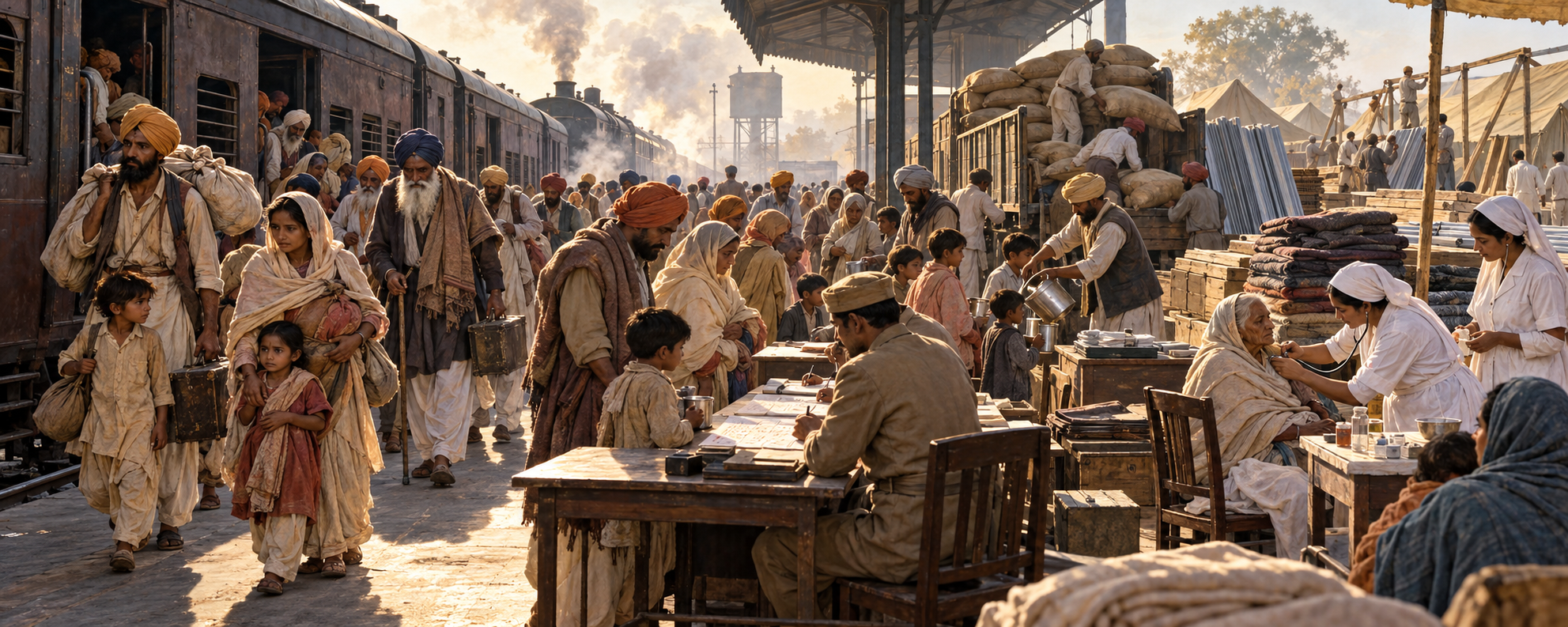
For Hindus uprooted from Pakistan, emotional recognition could not replace shelter, settlement, security, and a place within the Indian polity. Patel accepted responsibility for rehabilitating refugees displaced from Pakistan. That action is central to understanding the claim that he grasped Hindu suffering after Partition.
Rehabilitation is the bridge between concern and citizenship. A state that listens to a persecuted community but leaves its members permanently displaced has acknowledged pain without repairing its political consequences. Patel’s example asks you to look beyond speeches and identify the machinery required for relief: which government has jurisdiction, who is responsible for implementation, and what concrete outcome restores the displaced person’s membership in the nation?
The territorial question was inseparable from that human one. At the end of British rule, princely states faced choices about accession to India, accession to Pakistan, or an attempt to remain independent. Patel is credited with bringing 554 princely states into the Indian Union, preventing the loss of Junagadh, and compelling Hyderabad’s Nizam to accept integration with military assistance.
Those actions show why national integration was also a Hindu concern. Partition had demonstrated that territorial uncertainty could become insecurity for ordinary people. Patel did not treat unity as a ceremonial map. He treated it as a condition of effective sovereignty: the Union had to be able to govern, protect, and enforce its decisions.
You should still resist turning every accession dispute into a simple Hindu-versus-Muslim story. The sound political distinction is conduct: accession or secession, cooperation or resistance, lawful settlement or coercive defiance. Nothing in Patel’s territorial firmness requires collective suspicion of Muslims, just as no ruler’s Hindu identity would by itself prove loyalty to the Union. A pro-Hindu reading becomes stronger, not weaker, when it judges political actors by what they did.
This gives you a usable standard for present controversies. When someone invokes Patel to demand “strong leadership,” ask what administrative remedy is actually proposed. Who has legal authority? What leverage is available? What happens if negotiation fails? Who bears the cost? Patel’s legacy is not a licence to substitute a forceful tone for a workable plan.
The RSS episode supports a careful, limited conclusion

Patel’s relationship with the RSS is often pressed into an all-or-nothing argument. One side may use every contact as proof of complete ideological agreement; another may treat political differences as proof that no affinity or cooperation existed. Neither approach respects the limits of the evidence.
The 1949 sequence can be stated narrowly. Patel participated in efforts associated with ending the ban on the RSS; the ban was lifted in July 1949, and M. S. Golwalkar met Patel in September to express his thanks. The relationship also included recognition of the RSS’s contribution to national unity.
That supports a limited conclusion: Patel could recognise useful national service, maintain a working channel, and participate in a practical accommodation. It does not establish that he endorsed every RSS position, much less every later policy advanced in its name. A meeting proves a meeting. Cooperation on a defined question proves cooperation on that question. Wider ideological agreement requires wider evidence.
Use this two-part discipline whenever Patel’s RSS relationship appears in a debate. First, identify the exact act of cooperation. Second, state only the inference that act can bear. You do not have to minimise the relationship, but you should not inflate it either. Historical precision protects a pro-Hindu case from collapsing under claims that were never necessary to make.
Hindu solidarity did not require caste rigidity
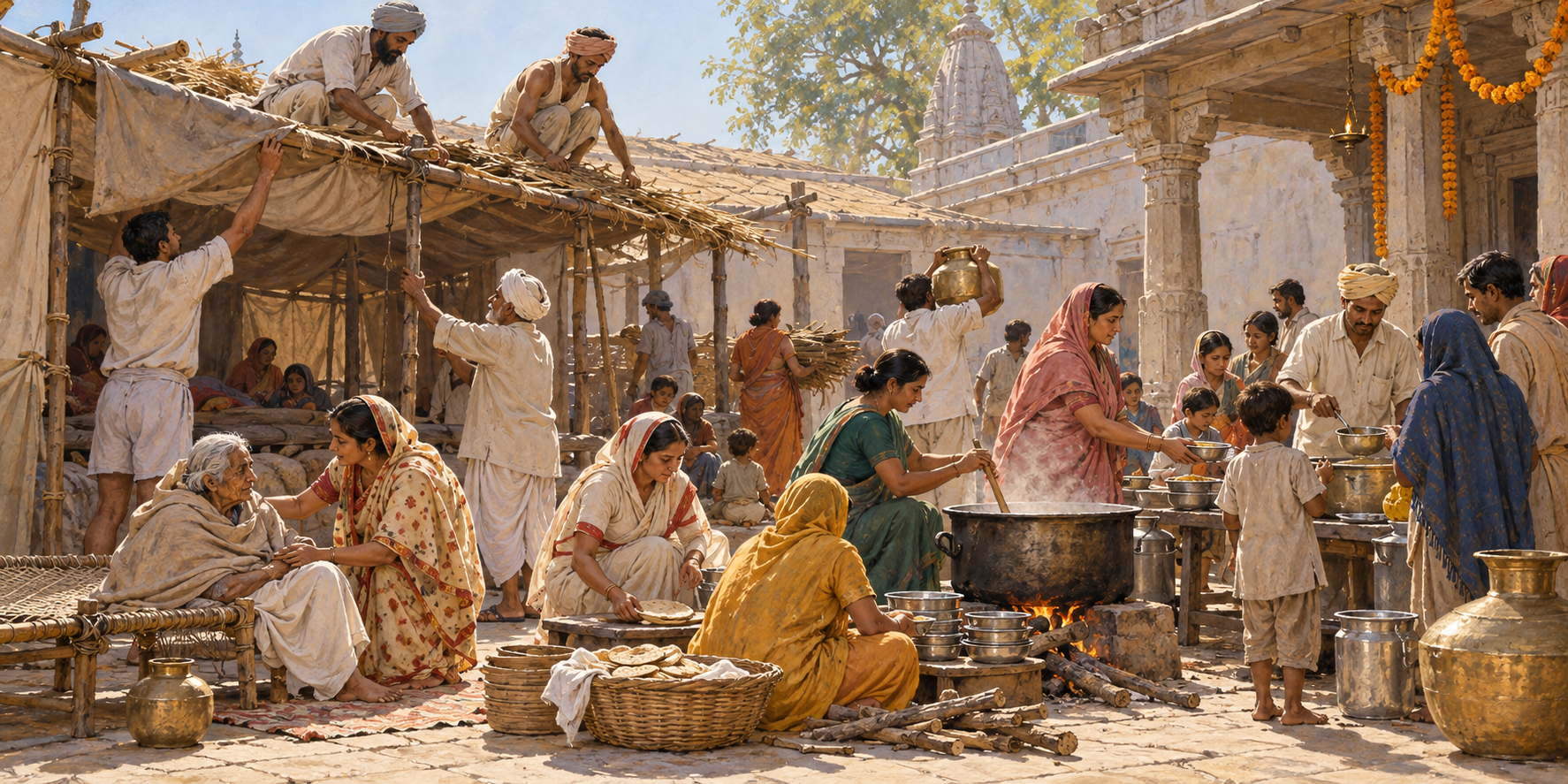
A smaller episode reveals an important boundary around Patel’s Hindu concern. Two months after Gandhi’s death, B. R. Ambedkar married Dr Sharda Kabir, a physician identified as Brahmin by caste. Patel wrote to Ambedkar that Gandhi would have blessed the marriage, and Ambedkar replied that he agreed.
One letter cannot settle every question about Patel’s approach to caste. It does, however, show that his public regard for Hindu society was compatible with affirming a marriage that crossed a major caste boundary. That is relevant whenever Hindu unity is presented as a demand to preserve every inherited social barrier.
The distinction you should carry forward is between continuity and rigidity. A civilisation can defend its people, institutions, and sacred inheritance while correcting practices that deny dignity within the community. Patel’s gesture toward Ambedkar points in that direction. Concern for Hindu survival loses moral coherence if it asks vulnerable Hindus to accept exclusion as the price of solidarity.
This also changes how you should evaluate present-day appeals to Patel. If his name is used to defend national cohesion, ask whether the proposal includes social cohesion. If Hindu unity is invoked, ask whether formerly excluded people are being treated as full participants. Territorial strength and internal dignity are not rival projects; a durable civilisation needs both.
Key takeaways
- Judge Patel’s concern for Hindus first through his responsibilities and executive decisions, not through an unattributed quotation.
- After Partition, refugee rehabilitation turned recognition of Hindu suffering into a practical duty of citizenship.
- The integration of 554 princely states, including the resolution of Junagadh and Hyderabad, shows Patel treating territorial unity as a condition of public security.
- The 1949 RSS episode supports a finding of cooperation and practical accommodation, but not an assumption of unlimited ideological agreement.
- Patel’s letter after Ambedkar’s inter-caste marriage shows that Hindu solidarity could coexist with approval of a challenge to caste boundaries.
- Claims connecting Patel to Article 299, minority rights, or constitutional secularism should not be repeated without a traceable primary record for each separate proposition.
The next time you are deciding whether to share a claim about Patel, take three minutes to separate the deed, the documented words, and the later interpretation. Preserve the date and context, then make only the argument the evidence can support. That discipline does not dilute Patel’s relevance to Hindu concerns. It places the emphasis where his legacy is hardest to dismiss: on rehabilitation, unity, state capacity, and social breadth.
References

Leave a Reply
You must be logged in to post a comment.