
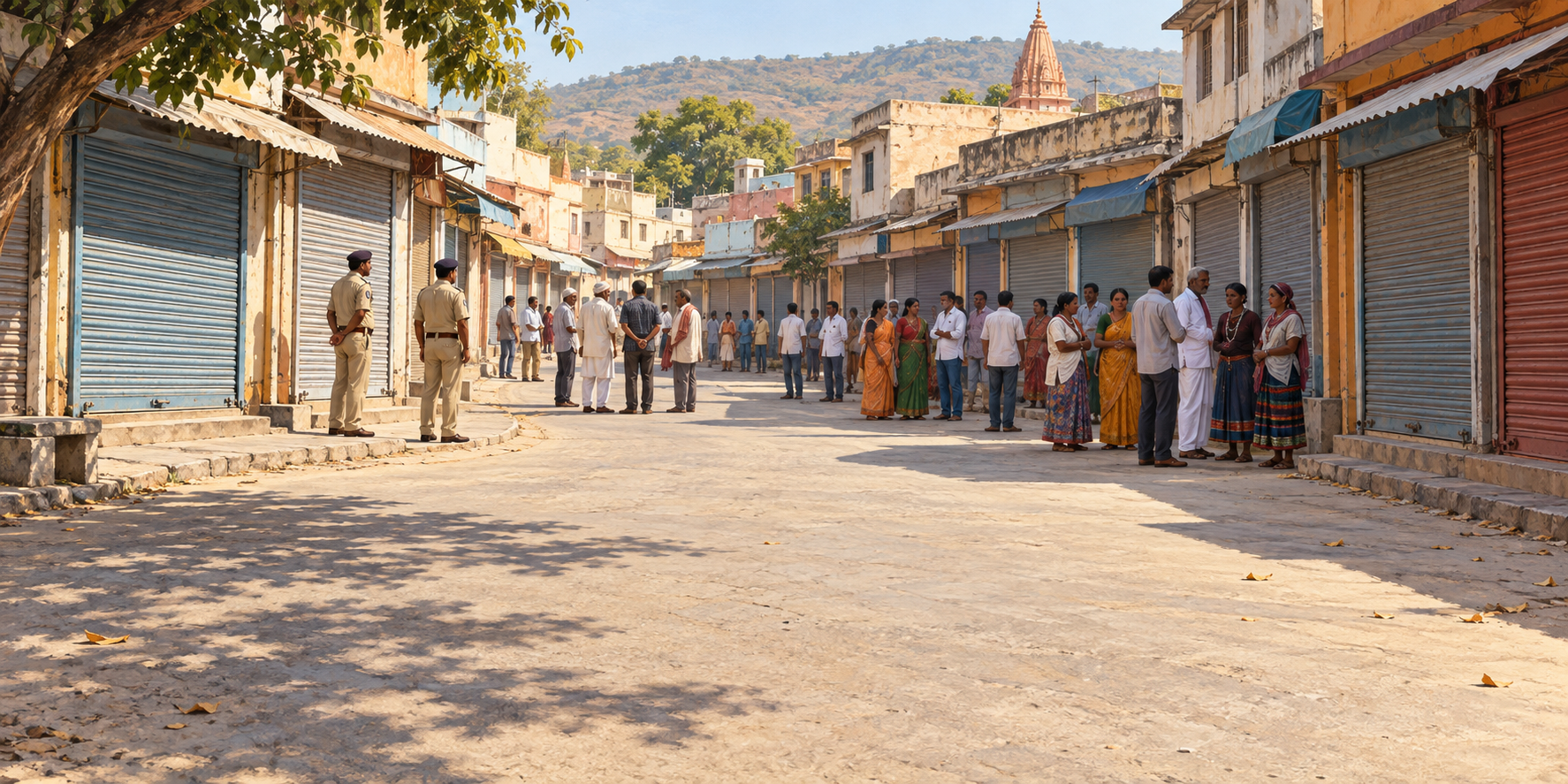
If you saw images of shuttered shops in Ghoghamba and heard that a Janjatiya Hindu woman had been abducted, the question before you is simple but serious: was a crime committed, or did an adult leave home to live with the man she had chosen? The town-wide bandh and the concern behind it were real. That does not make every claim surrounding the disappearance equally established.
The responsible Hindu position is neither to dismiss the family’s fear nor to erase the woman’s stated will. It is to insist on her safety, test the allegation against evidence, and refuse to turn community solidarity into a substitute for investigation. That distinction will determine whether the Ghoghamba mobilisation protects a Hindu woman or unintentionally denies her agency.
The case turns on consent, not competing slogans

Vishva Hindu Parishad, Bajrang Dal and Janjatiya community groups supported the family’s allegation that a Muslim man had taken away the woman. Her father reportedly said that she left for college on September 30 and disappeared after getting off a bus. That is a serious allegation and gives the family every reason to seek a prompt, credible investigation.
Police, however, presented a materially different sequence. They identified the woman as an adult, said the couple had been in a relationship for approximately two and a half years, and said they legally married in July 2025. Authorities also said that the marriage certificate had been verified. After failing to secure acceptance from their families, the couple reportedly left their homes and sought protection from the Gujarat High Court.
| Question | Family and protest position | Police position | What should govern judgment |
|---|---|---|---|
| Was she taken forcibly? | Her father alleges that she disappeared after leaving for college. | The couple reportedly said at a Halol police station that they wished to live together voluntarily. | A protected, uncoerced statement from the adult woman, supported by the investigation. |
| Was there a prior relationship? | The mobilisation was organised around an alleged abduction. | Police said the relationship had lasted about two and a half years. | Verifiable chronology and communications, not assumptions based on the couple’s religions. |
| Was the marriage legally recorded? | The family continues to seek her return. | Police said the couple married in July 2025 and that the certificate was verified. | The authenticated certificate and any relevant judicial record. |
| Was she converted? | Protesters raised wider concerns about the targeting of vulnerable Hindu communities. | The woman reportedly said she had not converted and continued to practise Hindu Dharma. | Her own freely expressed religious identity and any concrete evidence contradicting it. |
The couple also reportedly approached the Gujarat High Court because they feared threats arising from family opposition, and the court directed Panchmahal Police to provide protection. These details do not make scrutiny improper. They do mean that anyone asserting abduction must address the recorded statements, verified marriage certificate and reported protection proceedings, rather than treating the original allegation as the final finding.
Language matters here. Because police identify her as an adult, calling her a woman is more precise than repeatedly calling her a girl, unless official age records establish otherwise. The choice of word affects how you understand the central issue: an adult is not merely the subject of competing claims by a family and a husband. She is the person whose safety, consent and religious identity must be established directly.
What the Ghoghamba shutdown demonstrated – and what it did not
The bandh demonstrated considerable local concern. Traders kept shops and commercial establishments closed, normal business slowed sharply, and residents and community organisations participated. Authorities maintained an increased police presence and described the shutdown as largely peaceful. For organisers, that turnout showed that the family’s concern had become a community concern.
Turnout proves mobilisation, however, not abduction. A closed market cannot determine whether a private statement was voluntary, whether a certificate is genuine or whether a criminal offence occurred. Crowd size should therefore influence how quickly authorities respond, but not what conclusion they reach.
This is an important discipline for Hindu organisations. A bandh is strongest when it concentrates attention on specific unanswered questions. It becomes weaker when its public message presumes guilt before those questions are tested. If subsequent evidence supports coercion, a fact-led demand will carry more credibility. If consent is established, the same discipline prevents a legitimate community institution from being used to punish an adult Hindu for an unpopular personal decision.
A demand sheet that can survive scrutiny
Residents and organisations seeking accountability should ask for a small set of concrete assurances:
- Confirmation that the woman is physically safe and has been able to speak privately, away from relatives, activists and her husband.
- Clarity about the status of the family’s complaint and whether investigators found evidence of force, threats, confinement, fraud or another specific offence.
- Authentication of the marriage certificate and confirmation of the operative directions issued in the protection proceedings.
- A safe channel through which the woman may contact her family if she chooses, without making reunion or separation a condition of her safety.
- Protection of her identity, location and contact information. Publicising those details could expose both members of the couple to harm and defeat the purpose of protective measures.
Anyone possessing direct evidence of coercion should preserve it and provide it to investigators or qualified legal counsel. It should not be converted into edited clips, communal rumours or an attempt to stage a confrontation. Evidence can establish an offence; circulation without verification can endanger the woman and compromise a serious complaint.
A Dharmic response protects truth, safety and agency together
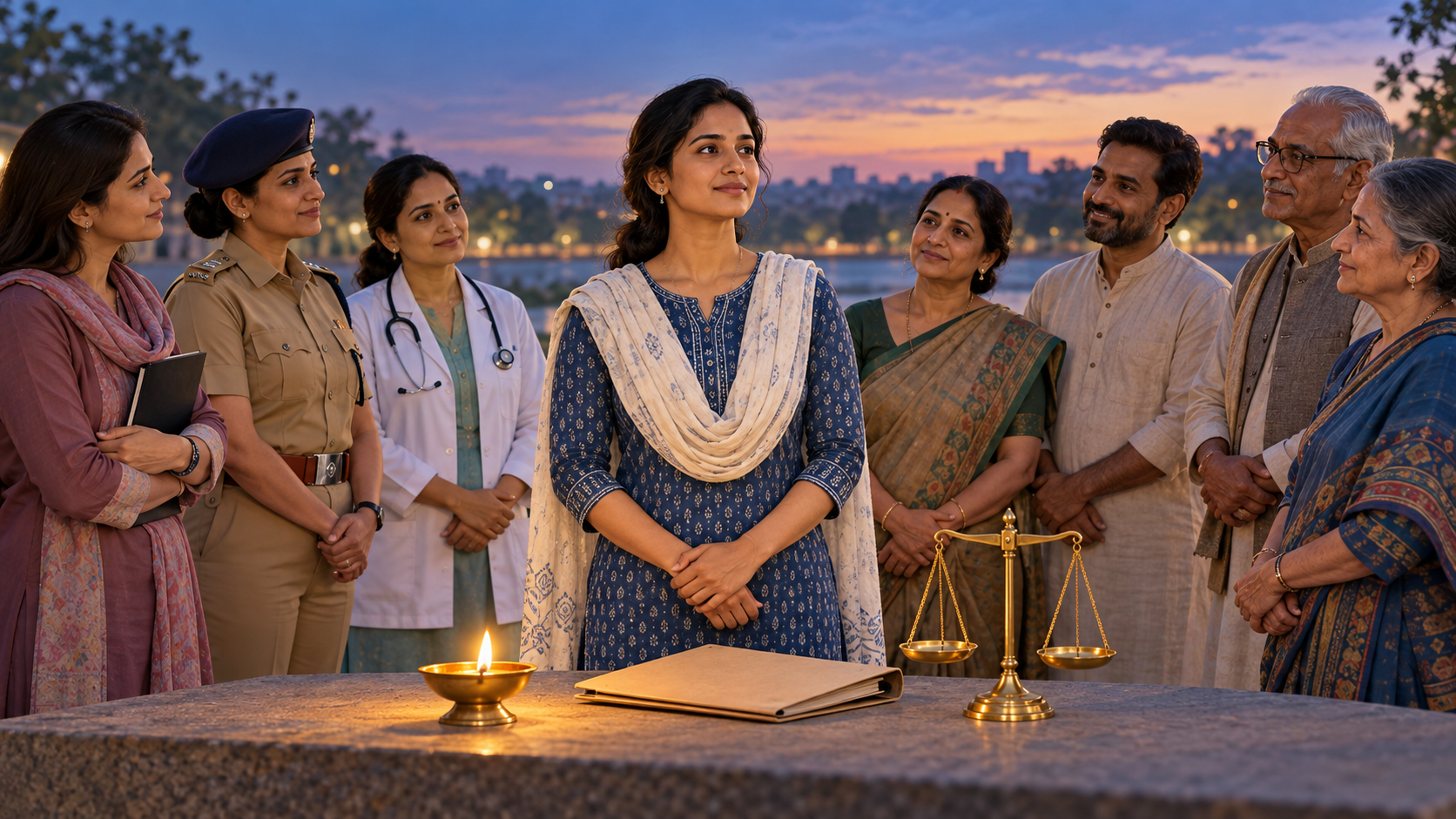
Concern for Janjatiya Hindu communities is legitimate. Families and community bodies need not remain silent when they believe a member has been threatened or manipulated. Yet vulnerability cannot be treated as permanent incapacity. A Janjatiya adult can be vulnerable to coercion and still be capable of making an independent choice. The possibility of one does not erase the possibility of the other.
A Dharmic response should pass three tests. First is satya: describe an allegation as an allegation until evidence establishes it. Second is ahimsa: protect all involved from threats, exposure and mob pressure. Third is consistency: apply the same standard of adult consent even when the chosen relationship causes religious or familial discomfort.
The woman’s reported statement that she remains Hindu also matters. An interfaith marriage does not automatically establish conversion, and marriage to a Muslim man does not by itself extinguish her Hindu identity. If anyone believes the statement was extracted through pressure, the answer is an independent inquiry into that pressure. It is not to declare on her behalf that she has already ceased to be Hindu.
Nor should the police version be treated as beyond examination merely because officials recorded it. Consent can be investigated. Statements can be checked for consistency, certificates can be authenticated, and courts can review threats to liberty. The proper demand is rigorous verification under conditions in which the woman can speak freely. The improper demand is a predetermined result – whether that result is forced reunion with her family or unquestioning acceptance of the husband’s account.
One interfaith case also cannot prove or disprove a broader pattern. If Hindu organisations believe Janjatiya communities face organised targeting, they need case-level evidence: documented deception, threats, fraudulent identities, forced conversion, unlawful confinement or comparable conduct. Religious difference alone is not that evidence. Building a credible record protects communities more effectively than attaching the largest possible claim to a disputed individual case.
Key takeaways
- The Ghoghamba bandh showed substantial public concern and trader participation, but participation cannot establish whether an abduction occurred.
- The family alleges that the woman was taken away; police say she is an adult who voluntarily married after a relationship of about two and a half years.
- Police say the marriage certificate was verified, the couple gave voluntary statements in Halol, and the woman said she remains Hindu.
- The reported Gujarat High Court protection direction makes the couple’s safety and privacy part of the case, not an inconvenience to be overcome.
- Hindu organisations can demand a thorough investigation without presuming guilt, exposing the couple’s location or denying the woman’s legal and moral agency.
- New evidence of force or fraud should be acted upon immediately; absent such evidence, precise language is essential: the family alleges abduction, while the woman and police describe a voluntary marriage.
The next facts worth watching are the woman’s continued safety, the formal status of the family’s complaint and compliance with the reported court direction. Until evidence changes the position, you can support accountability without spreading a conclusion that investigators have not established. That is how community vigilance remains credible – and how concern for Hindu society stays anchored in dharma rather than anger.
References

Leave a Reply
You must be logged in to post a comment.