
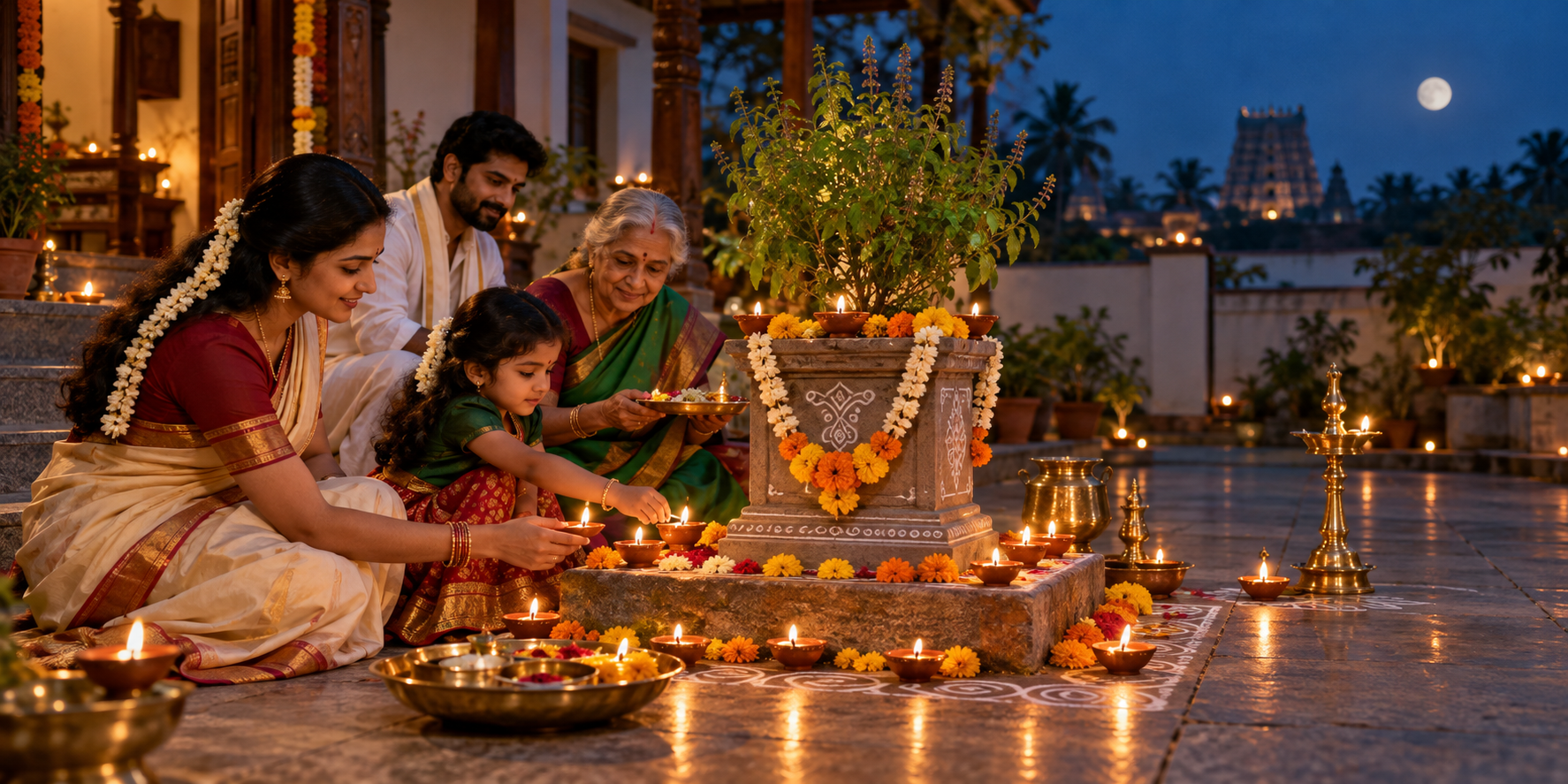
If you are deciding which Karthika Masam days to reserve in 2026, begin with four dates: November 13, 20, 21, and 24. If Tirupati is part of your plan, also note the special puja and homam period from November 10 through December 8.
The important complication is that Karthika does not occupy the same civil-date boundaries in every regional calendar. Kartik Purnima closes the month in many North Indian calendars, while other calendars place the full moon in the middle of their monthly reckoning. You therefore need two things: a clear list of common dates and confirmation from the panchanga, family tradition, or temple you actually follow.
The 2026 dates to put on your calendar
Use this as a planning calendar, not as a declaration that every listed observance is compulsory for every household. Your sampradaya and inherited family practice determine which dates become vrata days, temple days, or occasions for a simple home puja.
| Date | Observance | What it means for your plan |
|---|---|---|
| November 10-December 8 | Karthika Masa pujas and homams at Sri Kapileswara Swamy Temple | This is the announced Tirupati temple program. Treat it as a venue-specific schedule, not as a universal definition of the month’s boundaries. |
| November 13 | Nagula Chavithi | A Telugu regional observance in Andhra Pradesh and Telangana, dedicated to Naga Devata and held on the fourth day after Deepavali. |
| November 20 | Kaisika Ekadashi | Shukla Paksha Ekadashi in the Telugu Karthika calendar, with particular importance in South Indian Vaishnava temples. |
| November 21 | Ksheerabdhi Dwadashi or Tulsi Damodara Dwadashi | The Dwadashi observance associated with Tulsi and Damodar. Several names on different calendars can refer to this same date. |
| November 24 | Kartik Purnima, Tripuri Purnima, or Tripurari Purnima | The full-moon observance. It ends Kartik in North Indian calendars but is the fifteenth day of the month in other calendar systems. |
These civil dates tell you when to prepare. They do not supply the local tithi window, temple admission arrangements, or the precise form of a household vrata. Confirm those details with the local temple or the panchanga trusted by your family, especially if you are arranging travel or need to observe a vrata within a particular time window.
Choose your observance framework before making a checklist
Karthika brings Shaiva, Vaishnava, and regional household observances into the same sacred season. That richness can become confusing when an online calendar presents every named day as though it were an obligation for everyone. It is better to establish your framework first.
- Identify the calendar authority you follow. For a home vrata, this may be your family’s panchanga or sampradaya. For a temple observance, the temple’s announced schedule governs the visit.
- Identify your principal devotional commitments. A Shaiva household may give special attention to Shiva worship or a visit to Sri Kapileswara Swamy Temple. A Vaishnava household may centre the month on Kaisika Ekadashi and Tulsi Damodara Dwadashi. A Telugu family may also preserve Nagula Chavithi as an inherited regional observance.
- Decide what you can sustain. Separate a regular home practice from selected vrata dates and temple visits. The calendar should support steady sadhana, not turn the month into a contest over how many observances you can accumulate.
This framework also prevents a common error: treating different names as additional festival days. Chiluku Dwadashi, Ksheerabdhi Dwadashi, Tulsi Damodara Dwadashi, Yogini Dwadashi, Yogeeshwari Dwadashi, and Chukkala Dwadashi are names associated with the November 21 observance. You do not need to schedule six separate pujas merely because six labels appear across calendars.
What distinguishes the principal observances

Nagula Chavithi on November 13 is directed toward Naga Devata. It is especially associated with the Telugu-speaking regions of Andhra Pradesh and Telangana. If it belongs to your family tradition, establish the customary place and method of worship before the day arrives. Practices can be inherited locally, so avoid assembling a ritual from unrelated instructions simply because they share the Nagula Chavithi name.
Kaisika Ekadashi on November 20 is a Vaishnava vrata day. It has notable significance at Tirumala Tirupati Venkateswara Swamy Temple, Srirangam Ranganathar Temple, and other South Indian Vaishnava temples. If you intend to attend a temple program, verify that temple’s timing and access arrangements independently; the festival date alone does not establish when a particular service begins or whether participation requires advance arrangements.
The following day, November 21, is Ksheerabdhi Dwadashi. Its devotional centre is the worship of Tulsi and Damodar, and households may celebrate the marriage of Tulsi and Damodar. When planning supplies or involving children in the observance, use this clear devotional focus rather than mixing it with the distinct purpose of Nagula Chavithi.
Kartik Purnima falls on November 24. Its position exposes the regional-calendar distinction most clearly: this full moon is the end of Kartik in North Indian calendars, but it is not necessarily the end of the Karthika season being followed elsewhere. Do not cancel later commitments solely because a North Indian calendar ends Kartik on Purnima. The special program at Sri Kapileswara Swamy Temple, for example, continues through December 8.
Turn the dates into a workable family plan
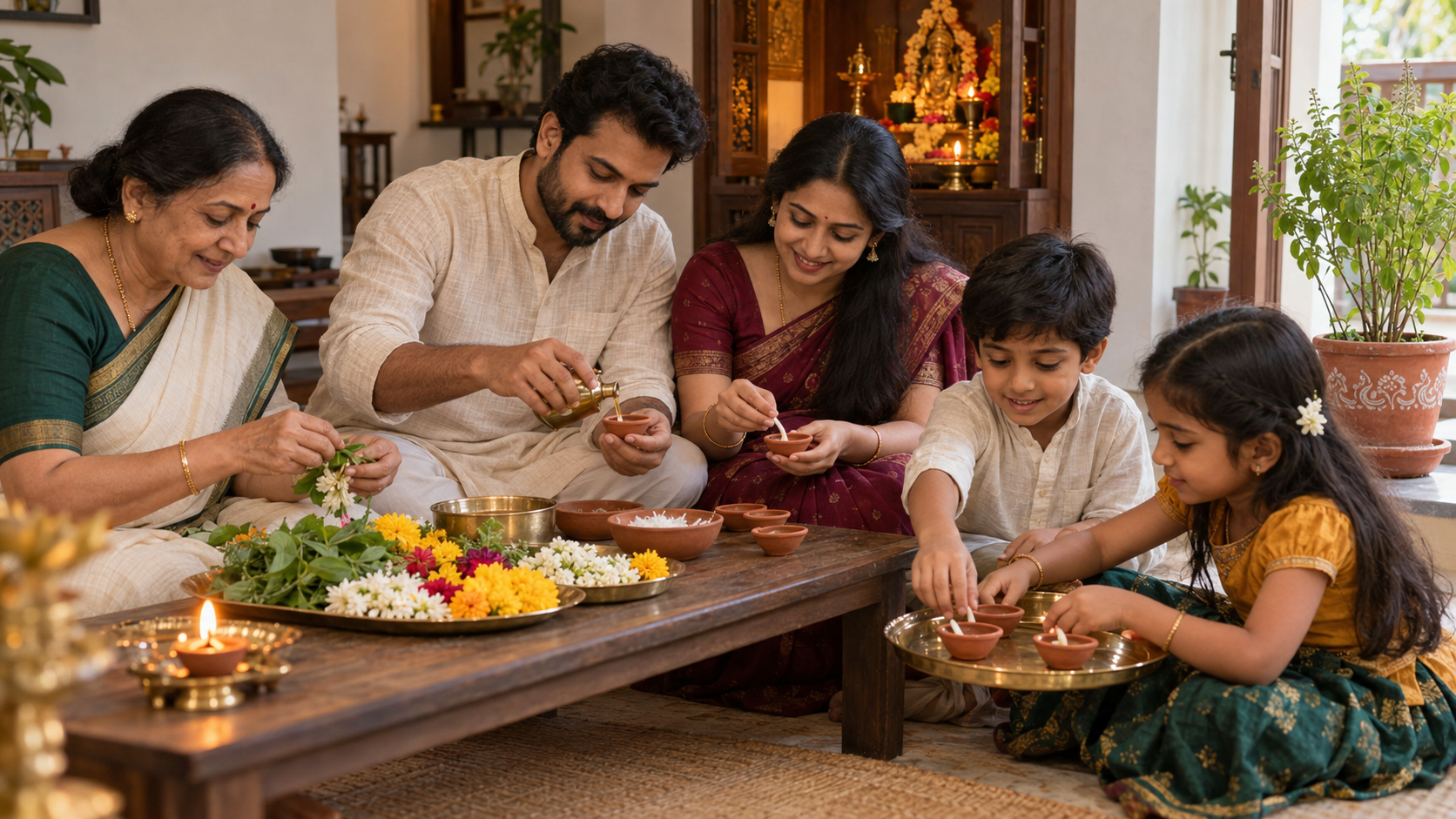
A useful plan separates what must happen at home from what depends on a temple. Make that distinction before early November, particularly if several members of your household follow different work or school schedules.
- Enter the five anchors in your calendar: November 10, 13, 20, 21, and 24, plus December 8 if the Kapileswara program matters to you. Write the observance name beside each date; a bare date is easy to misread later.
- Mark each commitment as home, local temple, or travel. This immediately shows which arrangements require transport, accommodation, leave from work, or confirmation from a temple.
- Keep November 20 and 21 together in your planning. Kaisika Ekadashi and Ksheerabdhi Dwadashi fall on consecutive civil dates, so prepare for the two-day sequence instead of treating the Dwadashi observance as an unrelated surprise.
- Distinguish Sri Kapileswara Swamy Temple from Tirumala Venkateswara Swamy Temple. The month-long puja and homam schedule belongs to Sri Kapileswara Swamy Temple, while Kaisika Ekadashi has special significance at the Vaishnava temple in Tirumala. Their connection with the Tirupati area does not make them the same venue or the same program.
- Buy or arrange only what your confirmed practice requires. The November 13 worship is directed to Naga Devata; the November 21 observance centres on Tulsi and Damodar. Ask your family elder, acharya, or temple what is customary rather than treating a generic festival shopping list as ritual authority.
- Create a modest fallback for days when travel is impossible. A simple home observance consistent with your tradition is more coherent than making an elaborate promise and abandoning it. If fasting forms part of your vrata, choose a form appropriate to your health and established practice; a religious calendar does not replace individual medical guidance.
If your household lights a dipa during Karthika, decide in advance who is responsible for it. Keep the flame on a stable, heat-resistant surface, away from fabric and children, and never leave it unattended. Devotional regularity does not require avoidable household risk.
Key takeaways
- Nagula Chavithi is on November 13, Kaisika Ekadashi on November 20, Ksheerabdhi Dwadashi on November 21, and Kartik Purnima on November 24.
- Sri Kapileswara Swamy Temple in Tirupati has a special Karthika puja and homam schedule from November 10 through December 8.
- Kartik Purnima ends the month in North Indian calendars, but it does not mark the same monthly boundary in every regional system.
- Chiluku Dwadashi, Ksheerabdhi Dwadashi, and Tulsi Damodara Dwadashi are alternative names associated with the November 21 observance, not three separate dates.
- Your local panchanga, sampradaya, and temple schedule should determine ritual timing and method.
Open your calendar now and reserve the dates that genuinely belong to your practice. Then confirm local timings before arranging travel or taking a vrata sankalpa. That small act of preparation leaves Karthika free for worship instead of last-minute calendar confusion.
References
- Hindu Pad – Karthika Masam Pujas at Kapilateertham Kapileshwara Swamy Temple in 2026
- Hindu Pad – Nagula Chavithi 2026 | Nag Chaturthi
- Hindu Pad – Chilku Dwadashi 2026 | Chiluku Dwadashi Vrat
- Hindu Pad – Kartik Purnima 2026 | Tripuri Poornima | Tripurari Purnima
- Hindu Pad – Kaisika Ekadashi 2026
- Hindu Pad – Ksheerabdhi Dwadashi 2026 | Tulsi Damodara Dwadashi

Leave a Reply
You must be logged in to post a comment.