

If the image of Sri Krishna beside a non-vegetarian dish angered you, the useful question is not whether you are entitled to object. You are. The question is how to defend a sacred boundary without allowing one advertisement to become an excuse for hostility between communities.
That discipline matters because the dispute moved quickly. An online image first drew attention in Alappuzha, complaints followed in several districts including Malappuram, police registered multiple FIRs, and three people were arrested while investigations continued. Those developments make the matter serious, but they do not turn allegations into proven guilt or justify blaming an entire religious community.
Why the objection is about sacred context, not Kerala’s menu

The weakest response to this controversy is to debate whether Malayalis eat non-vegetarian food. Kerala has diverse culinary practices, but that fact does not answer the actual complaint. The objection concerns the use of Sri Krishna’s image inside a commercial composition associated with a dish that many devotees regarded as incongruous with the deity and the festival.
Vishu is not merely a seasonal marketing opportunity. In many homes, the day begins with the Vishukkani: an auspicious first sight arranged with a lamp, flowers, fruits, grains, and sacred images. Families prepare it as an intimate act of renewal, gratitude, and intergenerational devotion. A divine image placed in that setting is not a decorative asset that can be moved into any commercial frame without changing its meaning.
If you need to explain why the poster hurt devotees, make that distinction precise. Do not claim that every Hindu follows the same diet. Do not turn a dispute over representation into a contest about who is a sufficiently observant Hindu. Say instead that culinary diversity does not erase the devotional meaning of sacred iconography. A disagreement about food is one thing; using the image of a revered deity to sell food is another.
A strong complaint should therefore identify four things: the sacred image used, the Vishu context, the commercial juxtaposition that caused offence, and the remedy being requested. That remedy might be withdrawal of the image, a clear acknowledgement, an apology, or a review process designed to prevent recurrence. Precision makes the grievance harder to dismiss and easier to resolve.
Three distinctions can stop offence from becoming communal conflict
Online arguments tend to collapse separate questions into one accusation. Keeping the following distinctions intact protects both Hindu interests and public order.
- Impact is not the same as criminal intent. Devotees can experience real hurt even when malicious intention has not been established. An advertiser can withdraw a creative, apologise, and repair trust without waiting for a criminal judgment. Criminal liability is a different question, requiring examination of context, intent, and likely consequences.
- An individual’s act is not a community’s act. Responsibility should follow verified decisions: who commissioned the image, who approved it, who published it, and what they did after receiving objections. A person’s religious identity does not make every member of that religion answerable for the advertisement. If identity is irrelevant to the decision being challenged, inserting it manufactures an interfaith confrontation that the evidence does not establish.
- A police action is not a judicial verdict. An FIR begins a process of investigation. An arrest does not prove guilt. Evidence, legal arguments, judicial scrutiny, and due process still matter. You can support an impartial investigation without declaring the accused guilty in advance.
India’s constitutional framework also requires two truths to be held together. Freedom of speech and expression is protected under Article 19(1)(a), while Article 19(2) permits specified reasonable restrictions, including restrictions connected with public order, decency, and morality. In religious-speech disputes, courts examine context, intention, and the likely effect on public order; mere public anger should not be treated as a substitute for that legal test.
This is a point at which careless advice can create legal exposure. Do not threaten anyone, publish private addresses or phone numbers, urge violence, or pressure witnesses. If you are filing a complaint, answering one, or speaking for an organisation involved in the dispute, preserve the original material and consult a qualified lawyer. A viral interpretation of criminal law is not a safe substitute for legal advice about the actual FIR.
What to do during the first 24 to 48 hours
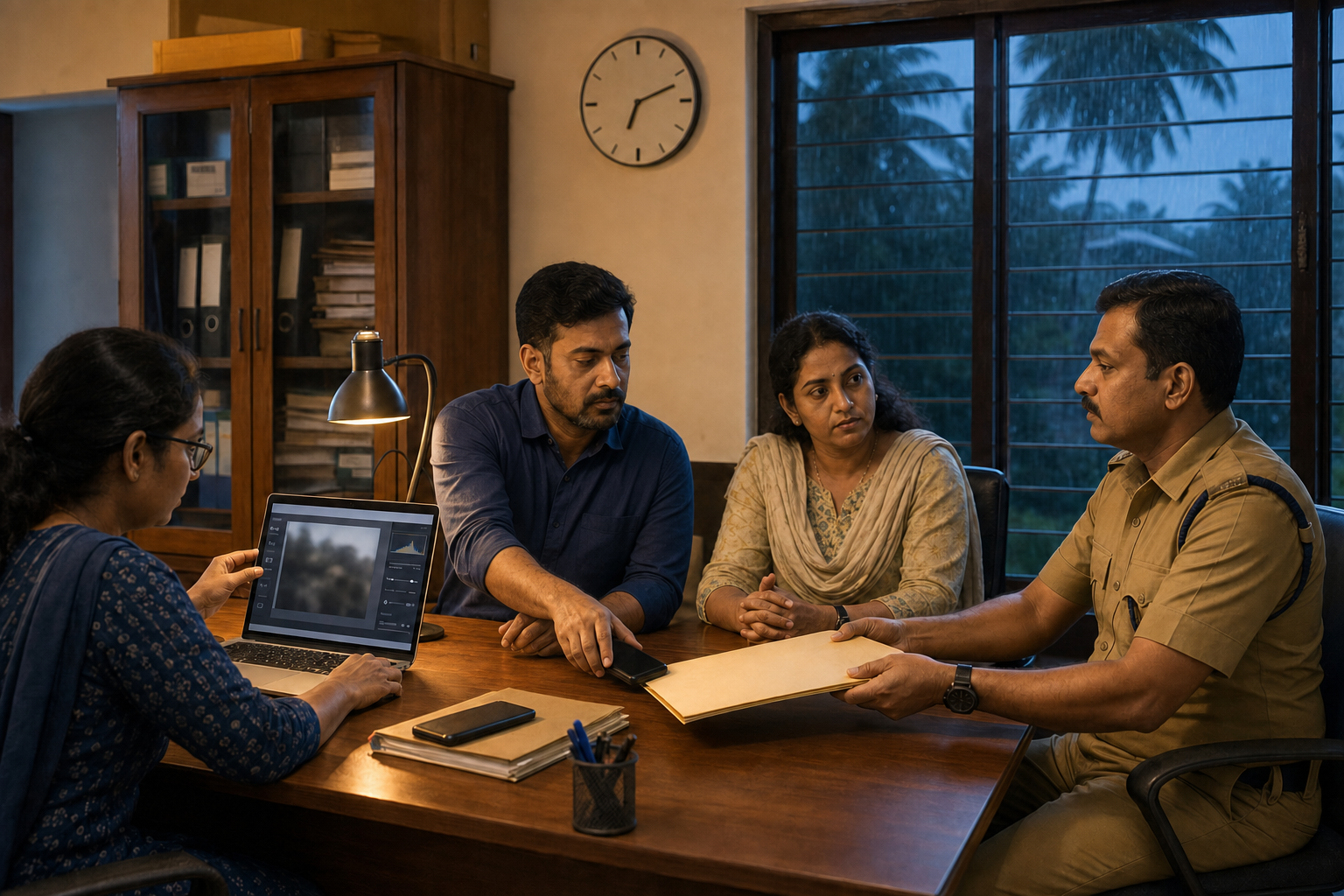
The first reaction often determines whether a sacred grievance receives a remedy or becomes raw material for outrage accounts. Use the following sequence when you encounter a similar image.
- Preserve before commenting. Save the full image, the original URL or account, the date and time you saw it, and enough surrounding context to show how it was presented. Do not rely on a cropped screenshot forwarded through several groups. If you cannot confirm that the creative came from the business or organisation being named, label it unverified and do not accuse anyone publicly.
- Do not become the poster’s distributor. Reposting the disputed image to condemn it can give it a much larger audience. Send the evidence privately to the advertiser, platform, police, lawyer, or community representative who needs it. In public, a factual description will often establish the nature of the complaint without reproducing the offensive juxtaposition.
- Write a narrow complaint. Identify the exact sacred element, explain the Vishu setting, describe the objection without abuse, and request a specific response. Withdrawal, clarification, apology, and a cultural-sensitivity review are actionable demands. Vague calls to punish everyone involved invite escalation but tell the recipient little about how to repair the harm.
- Separate verified facts from demands. State whether the image remains online, whether the organisation has acknowledged it, and whether police action has been officially confirmed. Keep allegations labelled as allegations. Do not add a person’s religion, caste, political affiliation, or place of origin unless it is demonstrably relevant to the disputed decision.
- Coordinate rather than multiply confusion. If complaints have already been filed, ask a lawyer or responsible community body whether another filing would add evidence or merely duplicate the same allegation. Where cases arise across districts, coordination can reduce duplication and uneven handling.
- Correct the public record within 48 hours. If the image is withdrawn, an apology is issued, or an earlier claim proves inaccurate, update the same audience that saw your first message. A correction buried elsewhere leaves the inflammatory version circulating after the facts have changed.
A useful public statement can be short: identify the objection, request the remedy, reject threats and collective blame, and confirm that verified legal developments will be allowed to proceed. One designated spokesperson is usually more effective than dozens of accounts improvising accusations.
Repair requires different duties from each institution
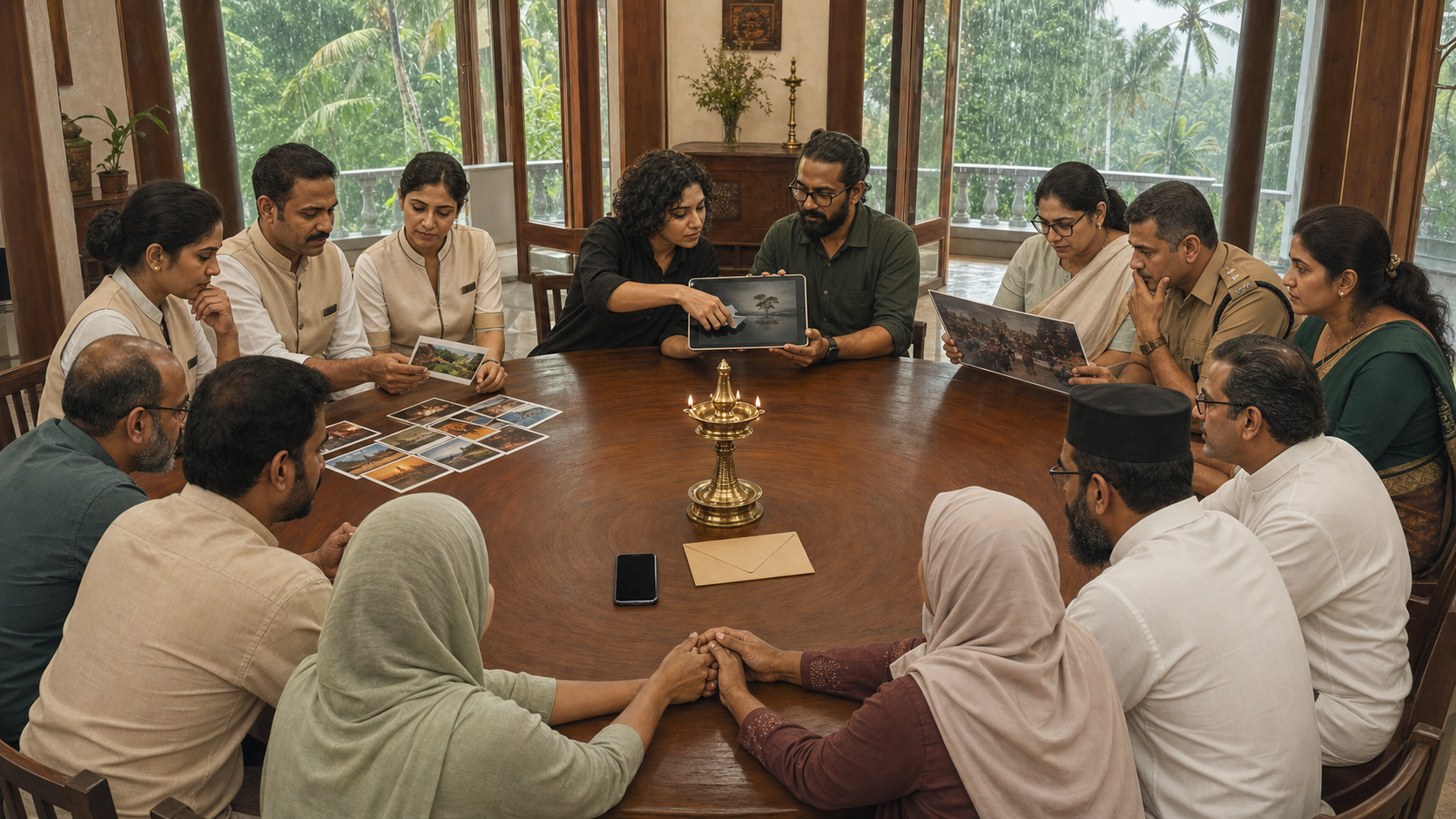
De-escalation does not mean asking devotees to suppress legitimate hurt. It means assigning responsibility accurately and requiring each actor to do the work that belongs to it.
- Advertisers and agencies: Remove the disputed creative while reviewing it, acknowledge the precise concern, preserve approval records, and explain what will change. A generic statement that no offence was intended addresses intent but not impact. The Advertising Standards Council of India advises advertisers to avoid material likely to cause widespread or serious offence on religious grounds. A cultural risk scan, informed review, and rapid-response procedure should occur before the next festival campaign, not after another controversy.
- Police and public authorities: Investigate impartially, preserve evidence, coordinate related complaints, and communicate verified procedural facts. Arrest must remain necessary and proportionate, with judicial safeguards respected. Public briefings should distinguish a complaint, an FIR, an arrest, and a finding of guilt instead of allowing rumour to merge them.
- Newsrooms and digital publishers: Give readers the festival context, mark disputed claims clearly, and avoid repeatedly using the offending image as a high-engagement thumbnail. Report what is known about the act under investigation without turning the accused person’s wider community into the headline.
- Hindu organisations: Explain the sacred boundary in language that a person outside the tradition can understand. Demand accountability without threats, humiliation, or collective accusations. Centre Sri Krishna, Vishu, and the dignity of worship rather than allowing provocateurs to make another community the centre of the story.
- Interfaith forums: Begin with a shared commitment that sacred symbols deserve care and that no neighbour is collectively liable for an individual’s action. Once immediate facts are stable, a facilitated conversation among elders, young people, artists, advertisers, and faith representatives can identify what caused harm and what would restore trust. Its purpose is practical repair, not a public contest over theology.
Dharmic ethics offer a demanding standard for this work. Ahimsa rules out intimidation, not principled opposition. Jain anekantavada reminds us to examine both impact and claimed intent without pretending they are identical. Buddhist metta disciplines the language used toward people we oppose. The Sikh ideal of Sarbat da Bhala asks whether the remedy protects the welfare of all. These traditions do not require passivity; they require strength without dehumanisation.
The standard for success is not universal agreement about the poster. It is a corrected or withdrawn misuse of sacred imagery, an impartial legal process, a clear lesson for future campaigns, and ordinary neighbours who remain safe from retaliation. Anything that produces more spectacle but less repair has failed that test.
Key takeaways
- The core grievance concerns the commercial treatment of Sri Krishna’s image during Vishu, not a claim that every Hindu or every Malayali follows one diet.
- Real religious hurt does not by itself establish malicious intent or criminal guilt; those questions require evidence and due process.
- Preserve the original context, avoid amplifying the image, and ask for a concrete remedy such as withdrawal, acknowledgement, apology, or cultural review.
- Attribute responsibility to verified decision-makers. Do not convert an individual’s act into an accusation against an entire faith community.
- Update your audience when facts change. De-escalation depends as much on visible corrections as it does on careful first statements.
- Defending dharma and practising ahimsa are not competing choices. The means used to defend a sacred symbol must also withstand moral scrutiny.
You can be uncompromising about the dignity of Sri Krishna while remaining disciplined about how you pursue accountability. Before forwarding the next provocative image, ask whether you have the original, whether you can name the exact sacred boundary crossed, what repair you want, and whether your words expose innocent people to hostility. If any answer is missing, pause. A response worthy of dharma should leave truth clearer, the sacred boundary stronger, and fewer openings for hatred.