
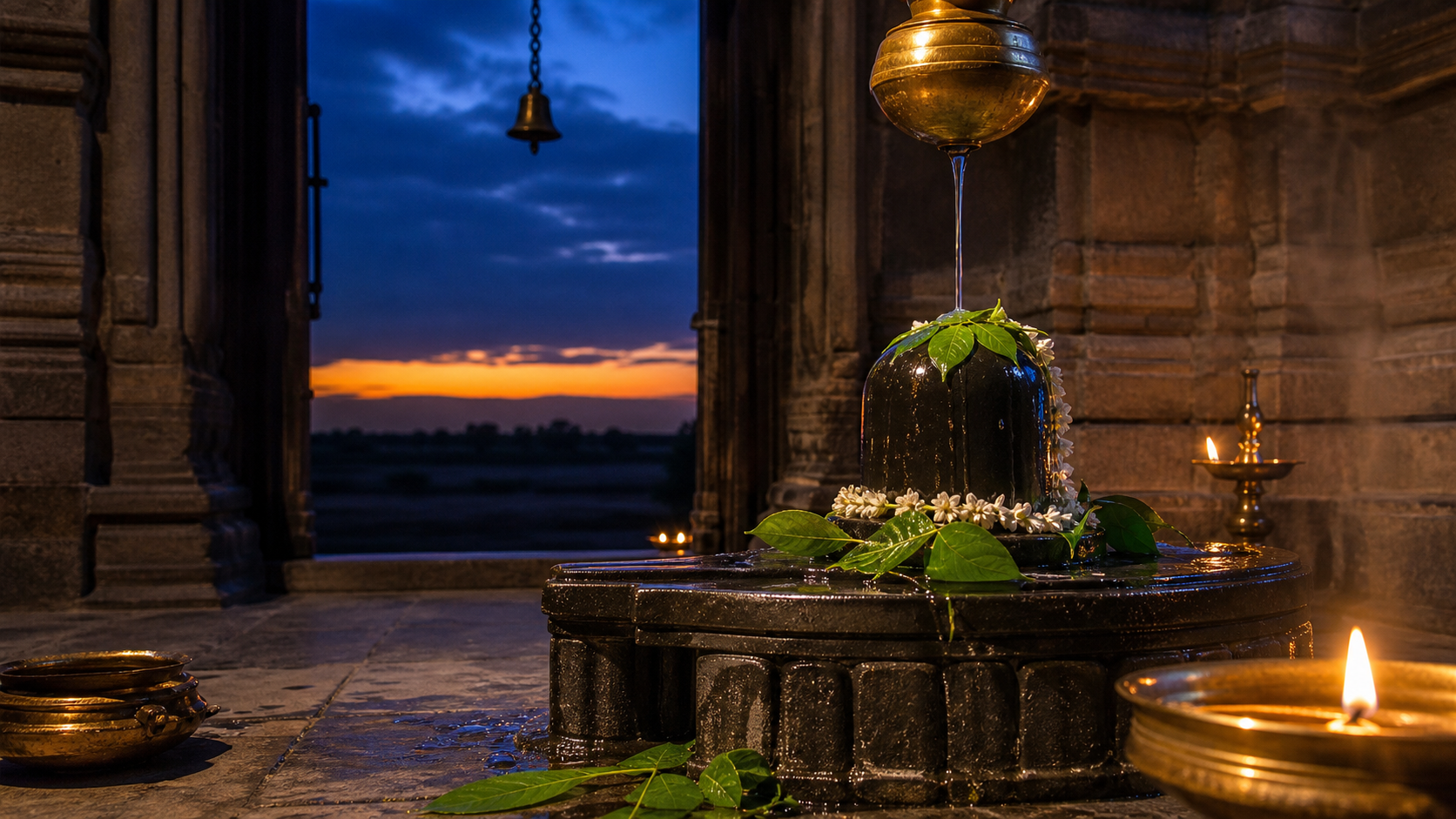
If you are arranging work, temple darshan, or family worship for Wednesday, April 29, the decisive question is not simply whether the calendar says Trayodashi. You need to know whether Trayodashi is still present during Pradosh Kaal at your location.
The broad timing for the date places Shukla Paksha Trayodashi until 7:32 PM, followed by Shukla Paksha Chaturdashi. That makes Budh Pradosh observance appropriate in many places where local sunset and the Pradosh interval occur while Trayodashi remains. Confirm that overlap first; then keep the evening simple, steady, and centered on Shiva upasana.
Decide from the local Trayodashi-Pradosh overlap
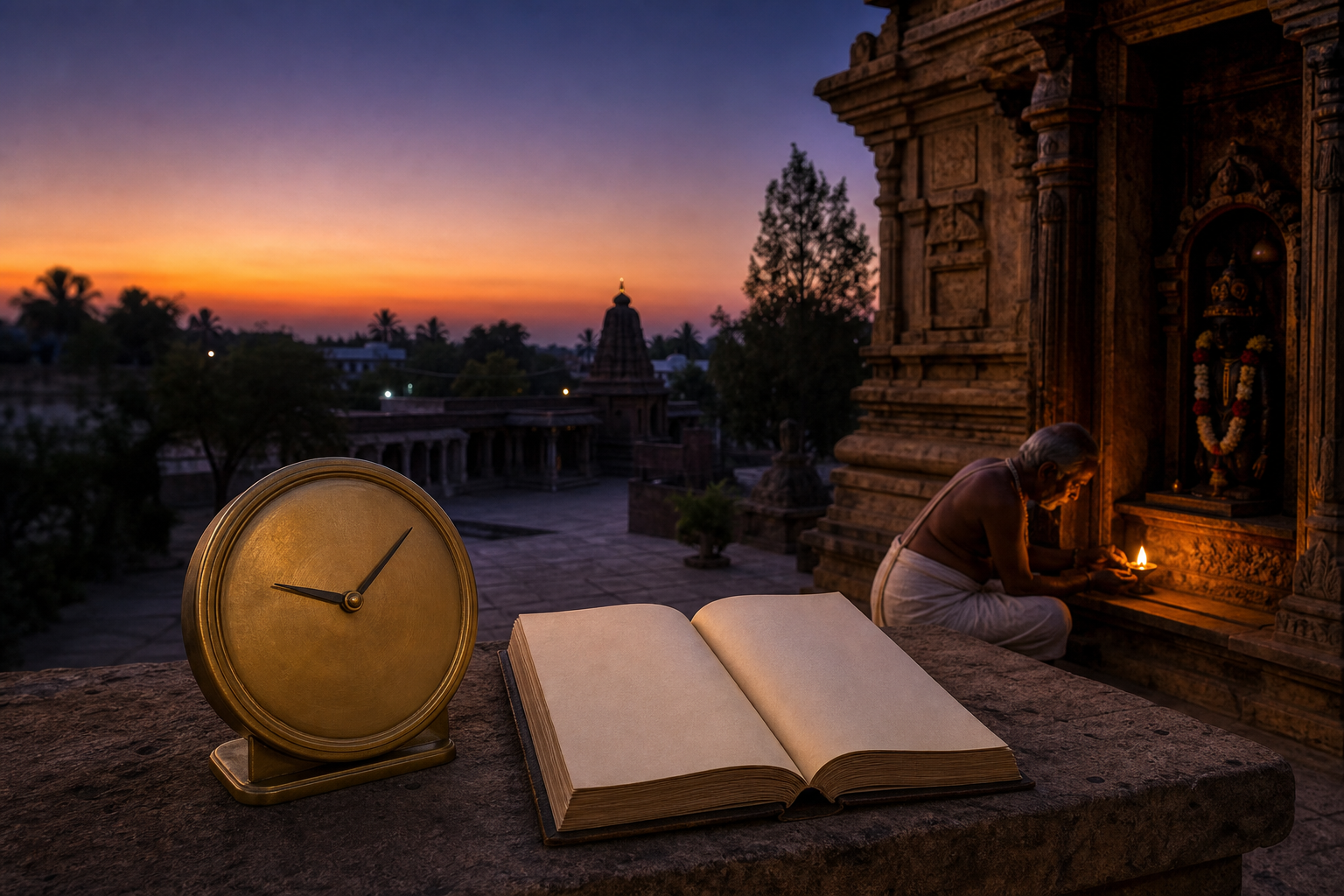
April 29, 2026 falls on a Wednesday. Pradosh on a Wednesday is commonly called Budh Pradosh, but the weekday supplies only the name and devotional emphasis. The ritual basis remains Trayodashi touching Pradosh Kaal, the twilight interval of two muhurtas around sunset.
Use the 7:32 PM Trayodashi ending as an orientation, not as a universal clock reading. Sunset changes by location, and a Panchang calculation must be tied to a city or region. Where local sunset occurs before the applicable Trayodashi cutoff, the tithi is present as twilight begins. Where the timings are close, use the local calculation rather than trying to resolve the observance from a general calendar entry.
- Open the Panchang for your actual location, not merely your country or time zone.
- Confirm that the entry is for Wednesday, April 29, 2026.
- Write down the local sunset, the displayed Pradosh Kaal, and the Trayodashi ending time.
- Check whether Trayodashi is present at sunset or otherwise touches the Pradosh interval under the rule followed by your tradition.
- If your temple or sampradaya publishes a different observance date, follow its calendar consistently rather than combining rules from several systems.
Apparently different dates or decisions do not necessarily mean that one calendar is careless. Some communities emphasize Trayodashi touching Pradosh Kaal, while others also apply sunrise-based udaya-tithi rules or lineage-specific conventions. Drik and Vakyam calculations can likewise reflect different calendrical traditions. For a household vrata, consistency with your established sampradaya is more useful than searching until one website produces the preferred answer.
The reason for these shifting boundaries is astronomical. A tithi is determined by the angular distance between the Moon and the Sun, and a new tithi begins after each additional 12 degrees of separation. In compact form, the tithi number is approximately floor[(Moon longitude – Sun longitude) / 12 degrees] + 1. The Moon does not move at a perfectly uniform rate, so a tithi rarely begins or ends at civil midnight. That is why the date printed at the top of a calendar cannot settle a twilight observance by itself.
Keep Pradosh timing separate from general shubh muhurta
One common mistake is to treat every favorable timing question as though it were the same question. It is not. Pradosh observance depends chiefly on the relationship between Trayodashi and twilight. Choosing a time for an unrelated undertaking, such as important correspondence, a separate griha puja, or another planned ceremony, requires additional local Panchang details.
For those other activities, check Rahu Kalam, Gulika Kalam, and Yamaganda for your location. These divisions are calculated from the local span of daylight and therefore cannot be copied safely from a different city. In Western Indian practice, Choghadiya may add another layer: Shubh, Labh, and Amrit periods can help identify favorable windows, including a suitable period near twilight when the relevant tithi is still active.
Nakshatra and the Moon’s Rashi also need an exact time and place. Either can change within the civil day, so a label copied from the morning may not describe the evening worship. If you use Nakshatra to refine a sankalpa or choose a mantra, check it for the intended worship time. If you follow a Vakyam Panchang by tradition, do not silently replace only one component with a Drik value; use one calendrical framework consistently or seek guidance from the temple that will conduct the ritual.
- Use tithi plus local Pradosh Kaal to decide the Pradosh observance.
- Use Rahu Kalam, Gulika, Yamaganda, and any customary Choghadiya to assess a separate shubh muhurta.
- Use the Nakshatra and Moon Rashi at the actual time of the intended act, not merely at sunrise.
- Use your temple or sampradaya’s convention when multiple calendar systems produce different answers.
A practical Budh Pradosh observance for a working day
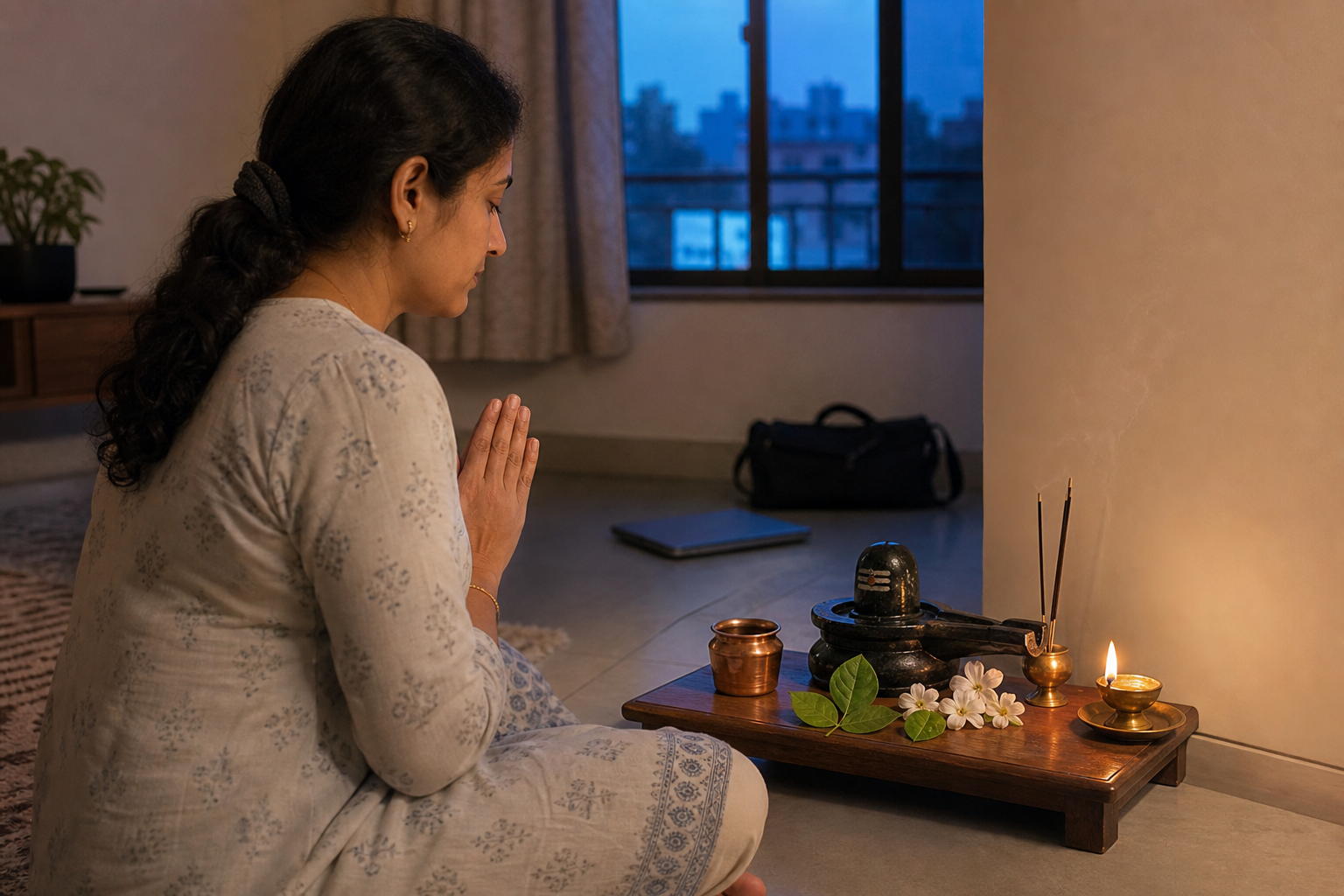
A Wednesday vrata has to fit around ordinary responsibilities. Do not let the wish to assemble an elaborate puja prevent you from observing the twilight at all. Complete urgent work before the local Pradosh window where possible, simplify the evening meal arrangements, and prepare the lamp and offerings in advance. The aim is to arrive at twilight without bringing the whole day’s haste into the worship space.
A straightforward household observance can follow this sequence:
- Prepare a clean, quiet place for Shiva worship and state a sincere sankalpa for the vrata.
- Offer a simple Panchopachara: gandha or sandal, pushpa or flowers, dhupa or incense, deepa or light, and a sattvic naivedya.
- If it is customary and feasible in your home, perform abhishekam with cool water and offer bilva-patra.
- Recite a brief Shiva stotra or sit for quiet japa of Om Namah Shivaya.
- Let attention rest gently at the anahata, the heart region, without turning the practice into a test of concentration.
- Conclude with prayer, an act of daan according to your capacity, and restraint in speech for the remainder of the evening.
If you cannot perform the fuller sequence, preserve its center: light a lamp, remember Shiva, repeat Om Namah Shivaya attentively, and sit in silence. A family can add a short kirtan or shared prayer. What matters is not the quantity of ritual items but whether the twilight becomes a real pause in conduct and attention.
Fasting rules vary by family, region, and sampradaya. Keep the rule you have received rather than inventing a stricter one from an unfamiliar calendar. If your household has no established procedure, the local temple can clarify what it recognizes as the vrata while you still undertake sincere evening worship.
Let the Budh association change how you speak and decide
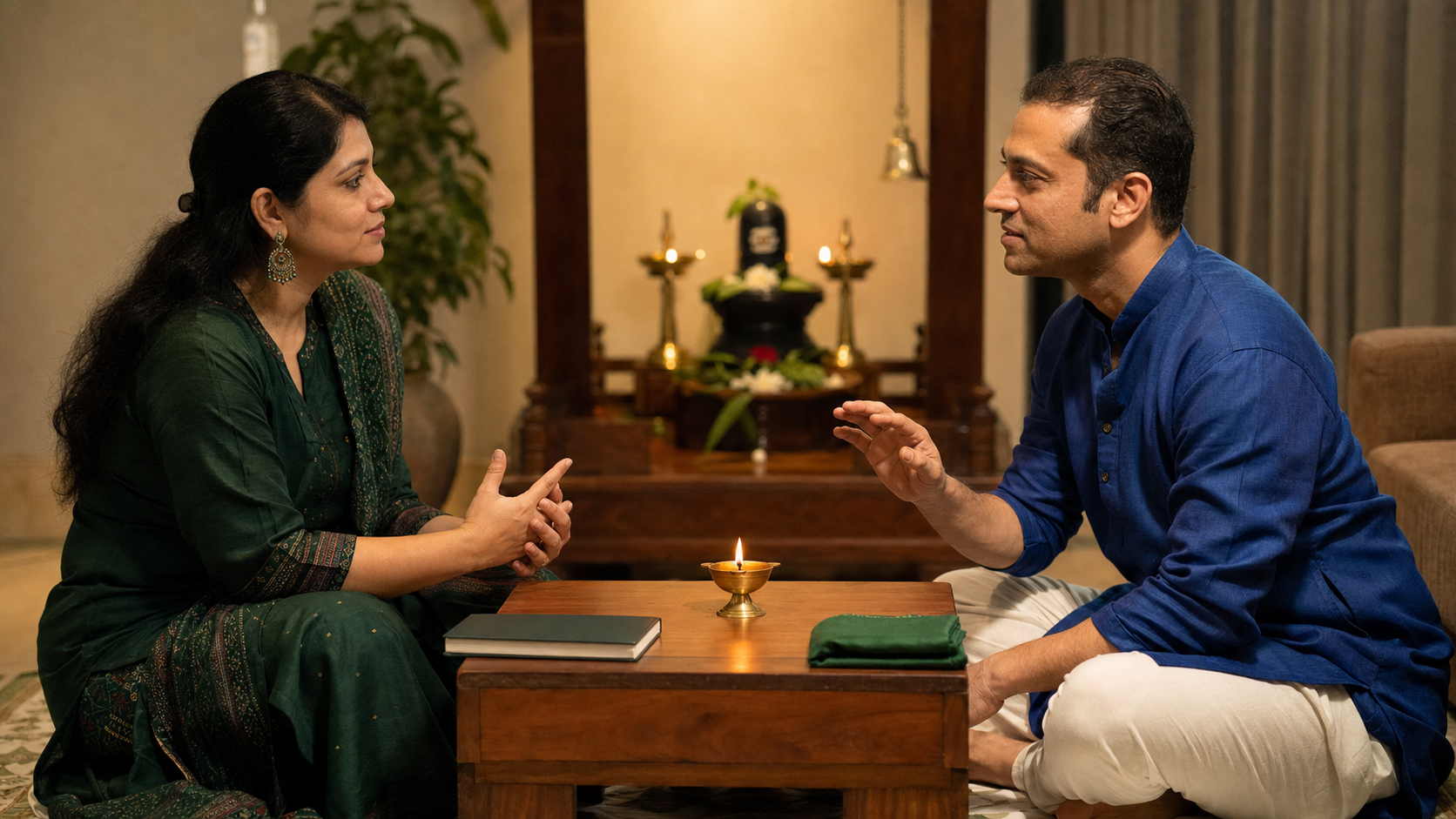
Budha is traditionally associated with intellect, articulation, commerce, and analysis. This does not turn Budh Pradosh into a promise of automatic success in business or study. It gives the vrata a practical field of discipline: clear thought, truthful expression, careful judgment, and freedom from needless verbal agitation.
Choose one concern that genuinely needs clarity. It might be an avoided conversation, an unclear commitment, a decision clouded by too many competing considerations, or a habit of replying before listening. Bring that one matter into the sankalpa instead of presenting Shiva with a long list of unrelated wishes.
- Before speaking, ask whether the words are true, necessary, and properly timed.
- When a decision feels confused, separate what you know from what you merely fear or assume.
- If you owe someone a clear answer, decide what truthful communication is required after the vrata.
- If the day’s work involved tension, do not carry the argument into the Pradosh interval through messages, gossip, or mental rehearsal.
This is where a weekday Pradosh becomes more than a calendar observance. The lamp, mantra, and offerings create the pause; disciplined speech and a clean decision carry it into life. By the following day, complete one concrete action that follows from the clarity you asked for. Send the honest reply, correct the ambiguous commitment, or decline what cannot be undertaken with integrity.
Key takeaways for April 29
- April 29, 2026 is a Wednesday, so a qualifying Pradosh observance is known as Budh Pradosh.
- The broad Panchang timing places Shukla Trayodashi until 7:32 PM, after which Shukla Chaturdashi begins.
- Do not apply 7:32 PM as a universal cutoff. Verify the Trayodashi-Pradosh overlap for your location.
- Follow your temple or sampradaya when sunrise rules, Pradosh-touch rules, or Drik and Vakyam systems produce different conclusions.
- Check Rahu Kalam, Gulika, Yamaganda, Choghadiya, Nakshatra, and Moon Rashi separately when choosing a muhurta for another activity.
- A lamp, Panchopachara, optional water abhishekam and bilva-patra, Om Namah Shivaya japa, daan, and restrained speech form a workable household observance.
- Use the Budh emphasis to resolve one question of thought, speech, or responsibility rather than accumulating ritual without a corresponding change in conduct.
For an April 29 observance, save the local Trayodashi ending and sunset times together. Once their relationship is clear, prepare only what you can offer attentively and let the evening culminate in one truthful, disciplined action.