
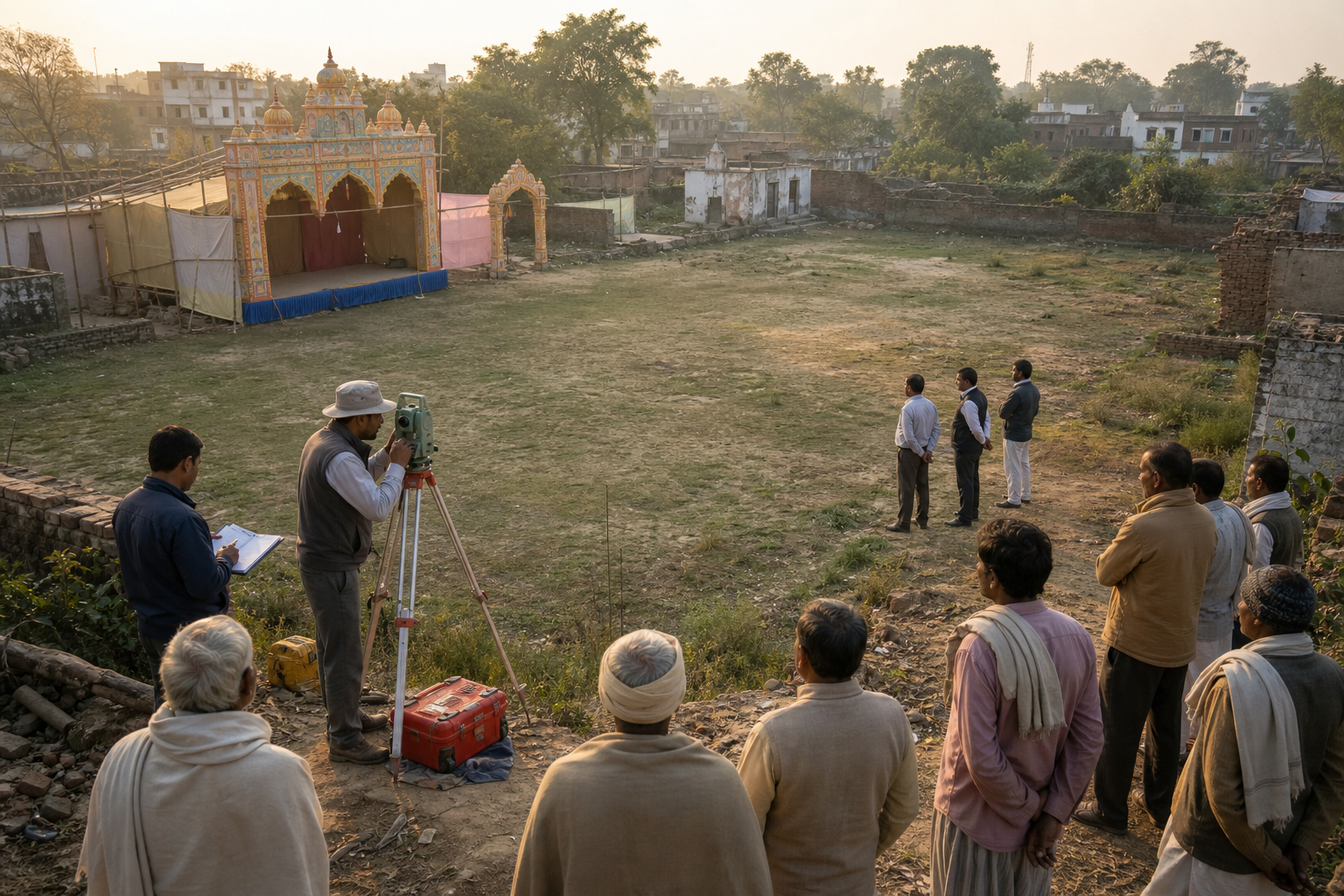
Two DharmaRenaissance reports dated June 23, 2026 describe allegations of encroachment on Deoria’s historic Ramlila Ground, a reported public warning of self-immolation, and an administrative assurance of prompt action. The supplied reporting does not establish that an official survey or adjudication had already confirmed the allegation.
The central question is therefore not simply whether the ground should be protected, but how concern for a valued cultural space can be converted into a verifiable, lawful and humane resolution. That requires separating the confirmed reporting from unresolved claims, identifying the land’s legal status, and treating the danger to human life as an urgent but distinct responsibility.
Key takeaways
- The supplied articles report an encroachment allegation, a self-immolation warning and an assurance of administrative action; they do not report a completed demarcation or final order.
- The ground’s cultural importance strengthens the public interest in protecting its lawful use, but it does not by itself determine title, boundaries or the identity of an unauthorized occupant.
- Record verification, physical demarcation, notice, a hearing and a reasoned order are the essential stages of a credible resolution.
- Preventing self-harm and deciding the land dispute are parallel duties: the first demands immediate care and de-escalation, while the second must remain evidence-led.
- Once the land’s status is settled, visible boundaries, documented permissions and periodic inspections can reduce the risk of another dispute.
What the reports establish – and what they leave open
Both supplied articles describe mounting concern in Deoria over alleged encroachment on a Ramlila ground characterized as historic. Both also report that a public warning of self-immolation heightened the urgency and that the district administration assured action. One article expressly says that the facts awaited verification through official demarcation and examination of the records.
Important evidentiary details are absent from the supplied material. Neither report identifies a parcel number, gives surveyed measurements, names an alleged unauthorized occupant, reproduces a notice or order, or states that a competent authority had conclusively determined the ground’s boundaries. The narrow factual picture supported by the articles is thus a live public dispute followed by an administrative commitment, not a completed legal finding.
The relationship between the sources also matters. They are two closely overlapping articles from the same blog rather than reports from independent news organizations. Their agreement demonstrates consistency within the supplied coverage, but it should not be treated as independent corroboration of the underlying allegation. Responsible discussion should continue to distinguish an alleged encroachment from an encroachment established on the official record.
Cultural significance does not decide land status
The reports place the dispute in a broader cultural setting. One notes that the traditional performance of Ramlila was placed on UNESCO’s Representative List of the Intangible Cultural Heritage of Humanity in 2008. Both portray Ramlila grounds as more than seasonal stages: such spaces can support fairs, artisans, vendors, civic gatherings and the intergenerational transmission of Ramayana narratives.
This framing explains why even a limited boundary dispute can provoke anxiety. An intangible tradition still depends on tangible conditions: sufficient open space, predictable access, safe circulation and continuity of use. If a cultural ground is gradually narrowed or obstructed, the loss may affect not only a festival committee but also performers, families and small-scale participants who rely on the gathering.
Cultural value and legal status must nevertheless remain separate inquiries. Describing a place as a community commons does not reveal whether the parcel is Gaon Sabha land, municipal property, trust or endowment property, or another form of public premises. The supplied articles identify those as possible classifications in Uttar Pradesh but do not establish which classification applies in Deoria. Nor can memories of past performances, however valuable for documenting customary use, substitute for cadastral records when a precise boundary must be determined.
The strongest heritage case therefore combines two kinds of evidence without confusing them. Revenue and title records address legal control and boundaries; event photographs, committee documents, historic maps and community testimony help demonstrate the ground’s established cultural function. Together they can support an informed decision, although each answers a different question.
A lawful resolution begins with evidence
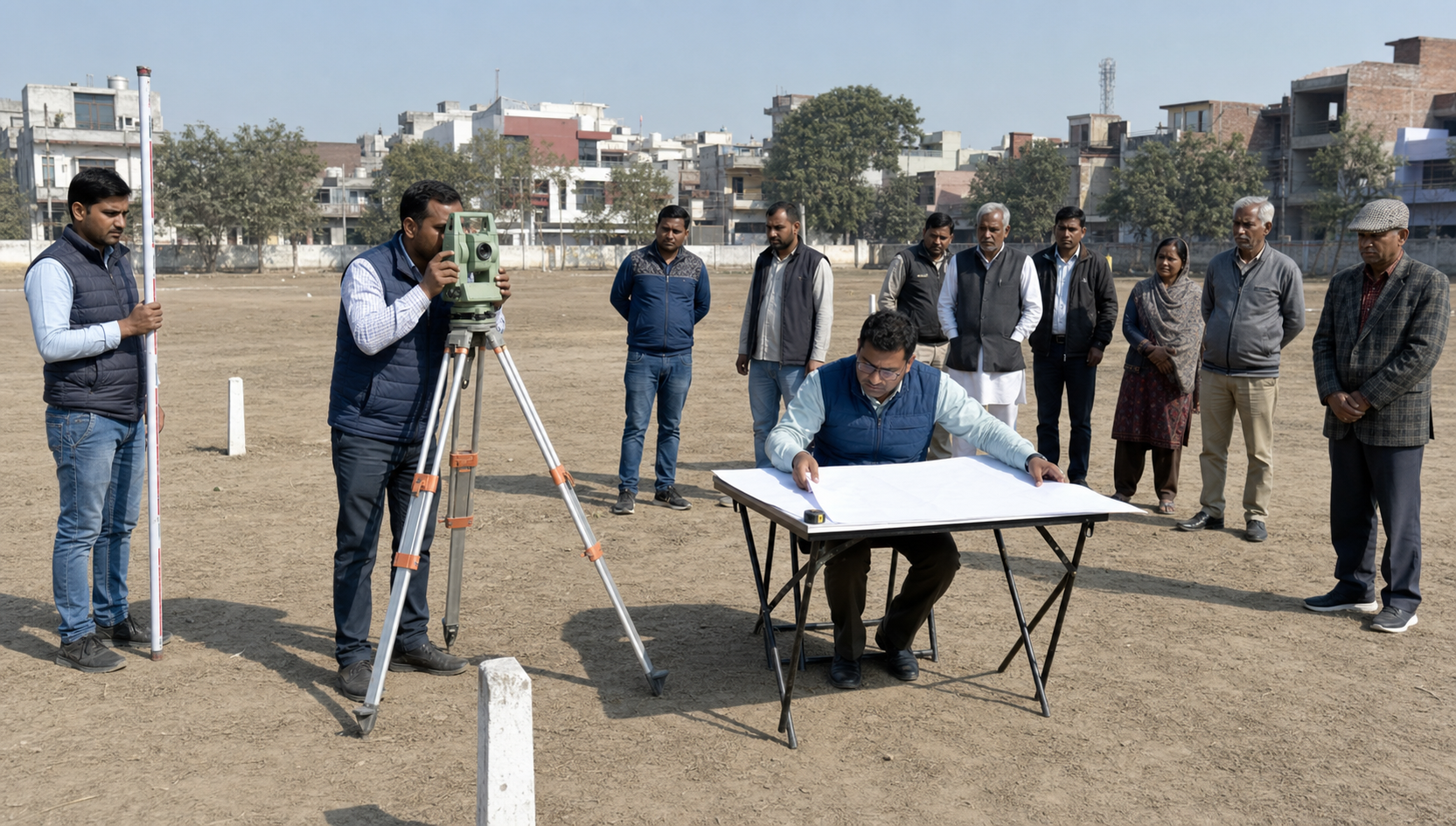
The reports describe a conventional administrative pathway in which revenue officials examine records and conduct a site survey before coercive action is considered. For the Deoria dispute, a transparent sequence would make the administration’s assurance measurable:
- Identify the relevant parcel and verify its recorded owner, classification and reserved use through the applicable revenue, municipal or trust records.
- Conduct a physical demarcation using the cadastral map and current records, with representatives of affected sides able to observe and with the exercise photographed or video-recorded.
- If the survey indicates unauthorized occupation, issue a notice that identifies the land, the alleged obstruction and the legal provision being invoked, while allowing documents and objections to be presented.
- Hold a hearing and issue a reasoned order setting out the evidence, findings, remedy, timetable and available route of appeal or review.
- If removal is lawfully ordered, execute it with an inventory, safety measures and proportionate assistance, then restore the parcel to its recorded use.
The articles mention several potential legal routes, including Section 67 of the Uttar Pradesh Revenue Code, 2006 for unauthorized occupation of qualifying public land, the Uttar Pradesh Public Premises (Eviction of Unauthorised Occupants) Act, 1972, and relevant municipal or planning provisions. These references describe possibilities, not a conclusion about the Deoria parcel. The applicable route depends on the status established from the records and the authority legally responsible for the property.
Speed and due process need not be opposites. Officials can publish the date of inspection, the officer responsible and the expected stages without prejudging the outcome. A joint demarcation and a speaking order may take more discipline at the outset, but they create a defensible record, reduce rumor and make any later enforcement less vulnerable to claims of arbitrariness.
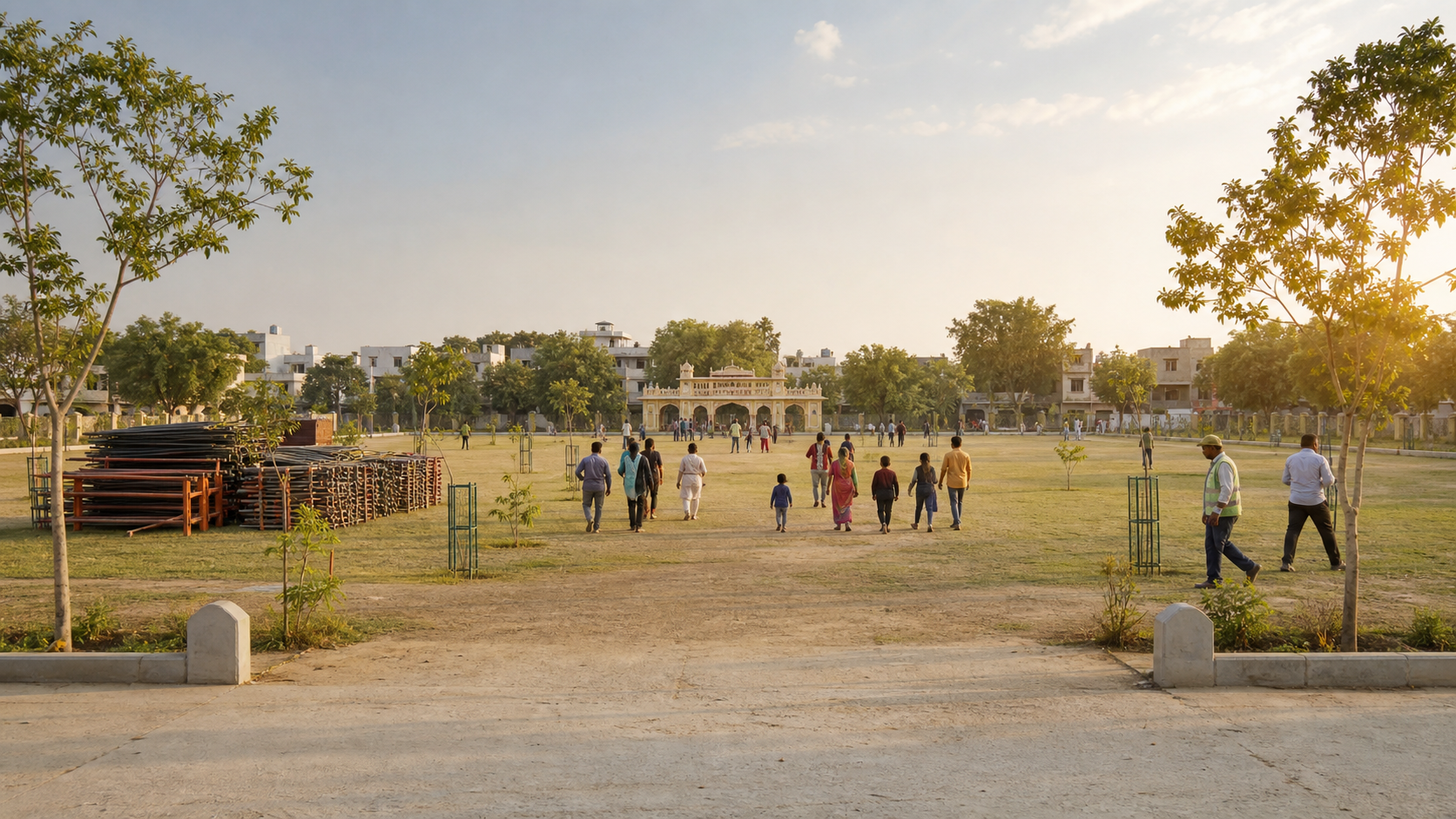
After the immediate case is decided, prevention should become part of restoration. The reports propose visible boundary pillars, QR-linked land information, GIS-supported maps, regulated temporary structures and routine inspections, especially before major events. These measures would be useful only if they reflect the finally verified record and are maintained rather than installed as one-time symbols.
Protecting the ground and protecting life are parallel duties
The reported warning of self-immolation changes the urgency of the situation, but it must not change the standard of proof. A threat of self-harm cannot establish a boundary or determine an alleged occupant’s legal position. Equally, the existence of a land procedure cannot justify treating a danger to life as a secondary concern.
The appropriate response has two tracks. Immediate engagement should seek to prevent harm through calm communication, family or community support, professional care where needed and proportionate public-safety precautions. At the same time, the land inquiry should continue through documents, demarcation and hearing. Keeping the tracks separate prevents a human crisis from becoming leverage over an adjudication while ensuring that procedural formality does not become an excuse for inaction on safety.
Both articles invoke ahimsa and shared civic responsibility, while the second specifically emphasizes care and support for a person experiencing severe stress. In practical terms, that ethical appeal calls for community leaders to discourage self-harm and confrontation, help residents submit evidence through recognized channels, and avoid presenting unverified allegations as final findings.
Public communication is central to de-escalation. A concise administrative update could state what records are being checked, when demarcation will occur, how affected parties may file documents and when the next decision is expected. Once the status is settled, a stewardship arrangement involving the responsible public body, Ramlila organizers and community representatives could monitor temporary uses and report new obstructions before they become entrenched disputes.
The most credible next milestone is not a dramatic confrontation but a documented survey followed by a reasoned decision. If that record is made accessible and followed by durable boundary management, Deoria can protect lawful cultural use while preserving due process, public confidence and human dignity.

References
- DharmaRenaissance Blog – Encroachment on Deoria’s Historic Ramlila Ground Sparks Outcry; Administration Vows Swift Action
- DharmaRenaissance Blog – Deoria Ramlila Ground Encroachment Row: Self-Immolation Warning Prompts Urgent Action