If you first encountered Achyutananda Dasa through a dramatic Malika prediction, or through the claim that he taught sunya, you may be unsure what holds his legacy together. Was he mainly a prophet, a philosopher, a poet, or a devotee of Jagannath?
The clearest answer is to read him as all four, but in the right order. Jagannath-centered bhakti is the foundation. Odia poetry carries that devotion into ordinary life. Sunya gives it philosophical depth. The prophetic literature belongs within that larger devotional and ethical world, not above it.
Key takeaways for reading Achyutananda well
- Begin with bhakti, not prediction. Achyutananda’s world is organized around Jagannath-Krishna, the Divine Name, the guru, disciplined conduct, satsang, and seva.
- Do not translate sunya as mere nothingness. In his Vaishnava setting, it points toward the inexpressible fullness of Brahman, beyond the limits of form and speech.
- Treat Odia as part of the teaching. Accessible language, memorable refrains, alphabetic verse, song, and communal recitation allowed theology to become a household practice.
- Distinguish a traditional attribution from a securely dated authorial line. Palm-leaf copying, oral circulation, textual variation, and later redaction make the corpus layered.
- Recognize plurality without flattening differences. Vaishnava devotion can converse with Shaiva, Shakta, Buddhist, and Jaina thought without turning every path into the same doctrine.
An Odia Vaishnava saint formed at Puri’s crossroads
Achyutananda Dasa belongs to the devotional renaissance of Odisha in the 15th and 16th centuries. He is remembered as one of the Panchasakhas, the five Odia poet-saints: Balarama Dasa, Jagannatha Dasa, Achyutananda Dasa, Sisu Ananta Dasa, and Yasovanta Dasa. Their importance lies not only in what they taught, but in where and how they made sacred learning available.
Puri was more than the location of a famous temple. Under the Gajapati polity, it functioned as a sacral capital and a major pilgrimage center. Vaishnava, Shaiva, Shakta, Buddhist, and Jaina currents already met within Odisha’s religious life. Sri Chaitanya’s arrival in the early 16th century added further energy to the encounter between Gaudiya Vaishnavism and the Utkaliya Vaishnava tradition.
This setting matters because Achyutananda’s breadth did not arise from indifference to religious identity. He remained rooted in devotion to Jagannath and Hari. His openness emerged from a Jagannath-centered world capacious enough to hold personal devotion, contemplative inquiry, temple culture, village teaching, and several inherited currents of Dharma.
You can therefore avoid two common mistakes. The first is to detach him from Vaishnavism and present him as a generic mystic. The second is to treat Odia Vaishnavism as an isolated regional copy of a movement centered elsewhere. Achyutananda makes sense as an Odia Vaishnava thinker shaped by Odisha’s own sacred geography, language, and religious ecology.
Biographical precision requires restraint. Tradition identifies his father as Dinabandhu and associates his birth with Tilakana in Cuttack district. His later memory is especially connected with Nemala, where a matha or gadi preserves the tradition and devotees venerate a samadhi. Hagiographical accounts do not agree on every date or life detail, so these places are firmer anchors than an overly exact chronology.
Vernacular theology changed who could participate
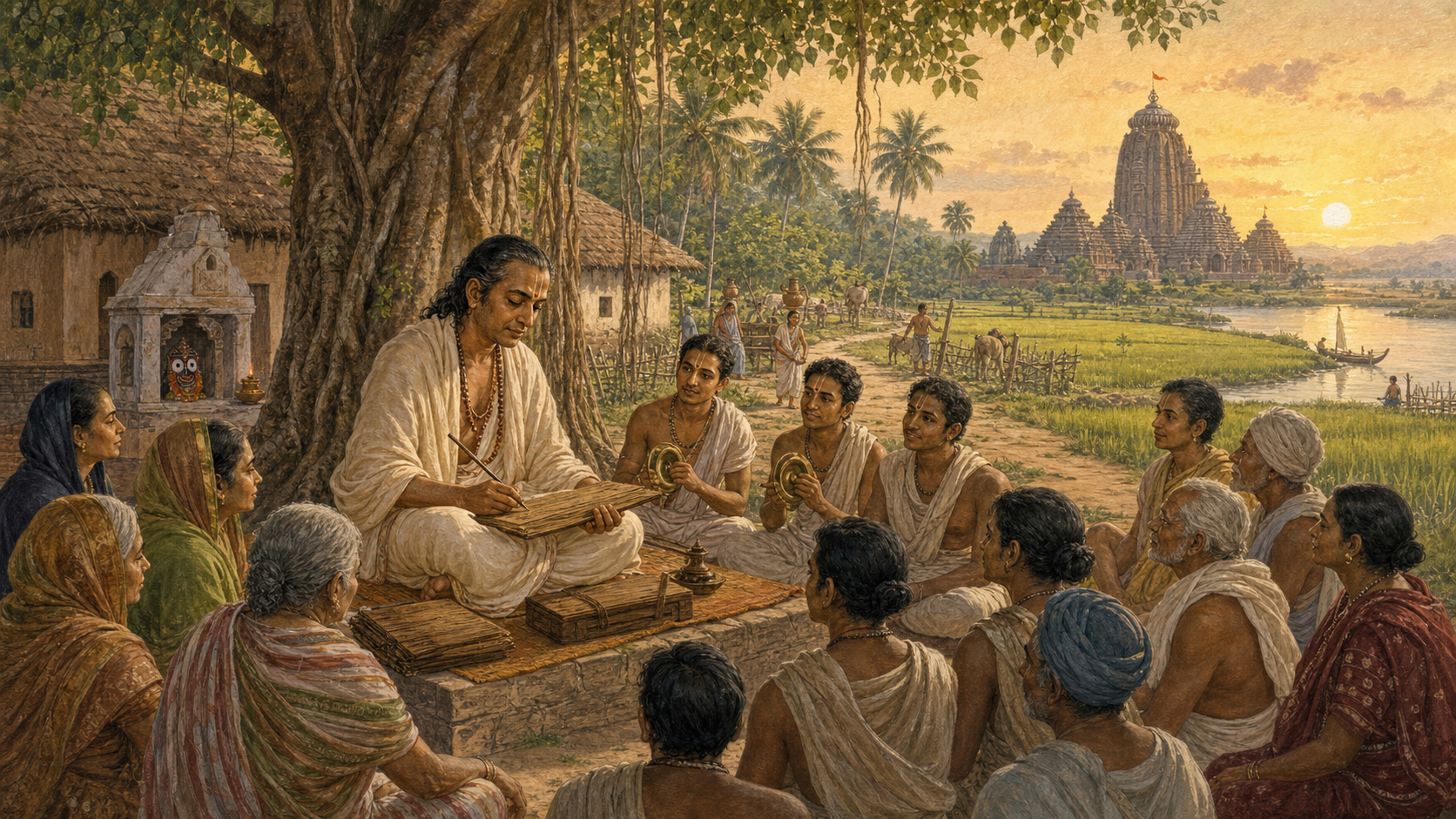
Writing in Odia was not merely a literary preference. It changed the social reach of sacred knowledge. Theology that remained confined to scholastic language depended on access to specialized education. A bhajan, narrative poem, or didactic song in familiar Odia could enter a courtyard, a village gathering, or a family recitation.
The Panchasakhas made clarity a form of service. Their compositions allowed devotees to hear philosophical and ethical teaching through narrative, rhythm, and repetition. Community recitation spaces known as tungis joined learning with fellowship: families could gather, listen, discuss, remember, and carry the verses back into daily conduct. This was not simplification for its own sake. It was a method for turning doctrine into shared discipline.
Achyutananda’s poetic forms show how carefully that method was built. Refrains and parallel structures supported memory. The chautisa arranged verses through the sequence of the Odia alphabet, giving listeners a recognizable framework. Bhajans and jananas joined theology to melody. Narrative works, including an Odia Harivamsa attributed to him, placed sacred history within the linguistic world of Odisha.
If you read Achyutananda only in silent translation, you receive the meaning but can miss part of the mechanism. Whenever possible, listen to the Odia alongside the translation. Notice recurring names, sounds, parallel phrases, and the point at which a philosophical statement becomes a refrain. Ask not only what a verse means, but what its form helps a community remember.
This also explains why literature and religious practice cannot be separated neatly in his legacy. The poem was a vehicle of instruction. Recitation was a form of participation. Kirtan placed remembrance of Hari in the body through voice and rhythm. The audience was not expected merely to admire the poet; it was invited to become a devotional community.
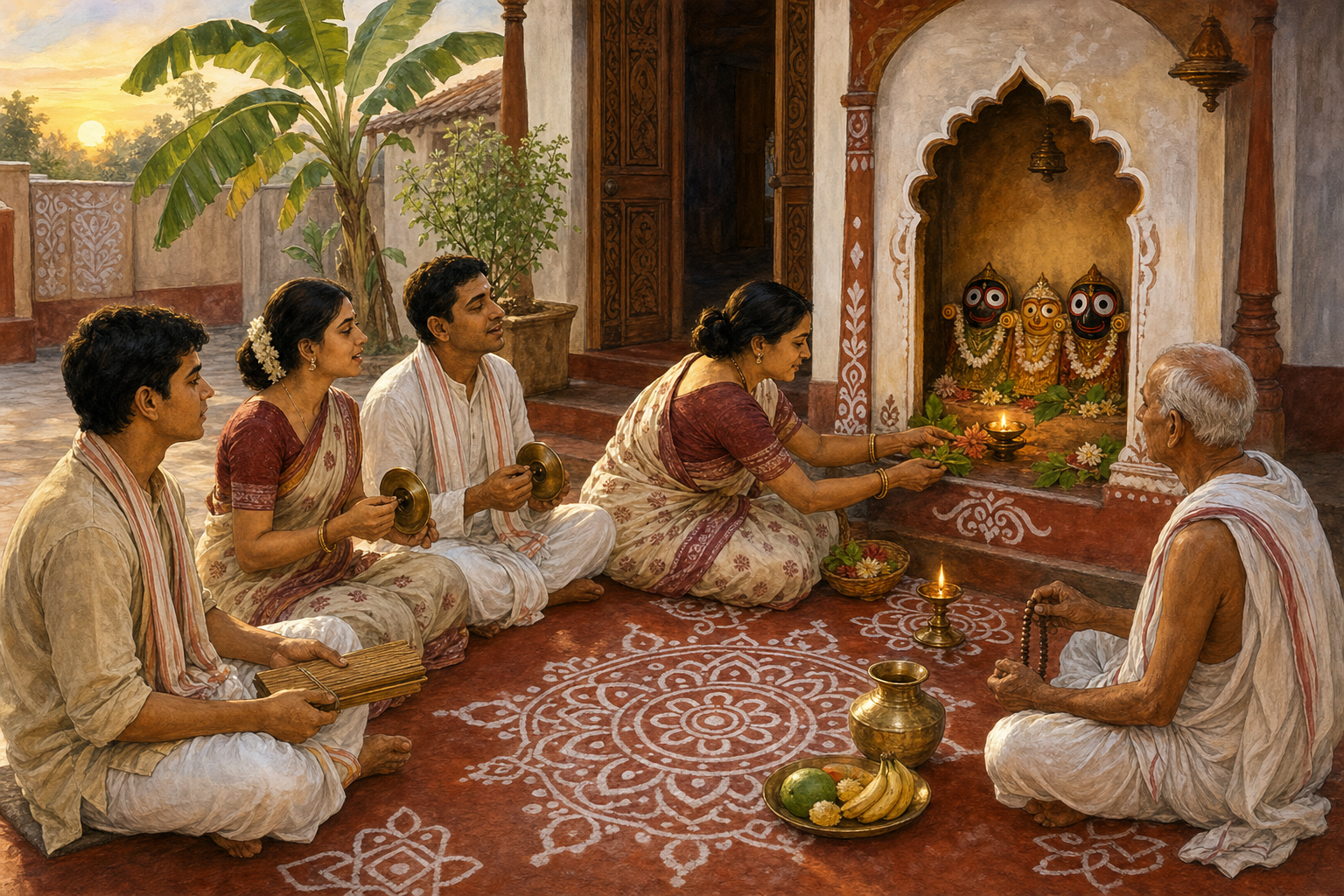
The same principle remains useful for Odia families and the diaspora. A text survives more deeply when one generation hears another pronounce it, sing it, and explain how it bears on conduct. Seasonal kirtans, Panchasakha bhajans, and recitations associated with Odisha’s devotional culture preserve more than literary history. They keep language, memory, and worship in the same room.
Sunya and Jagannath belong in the same vision
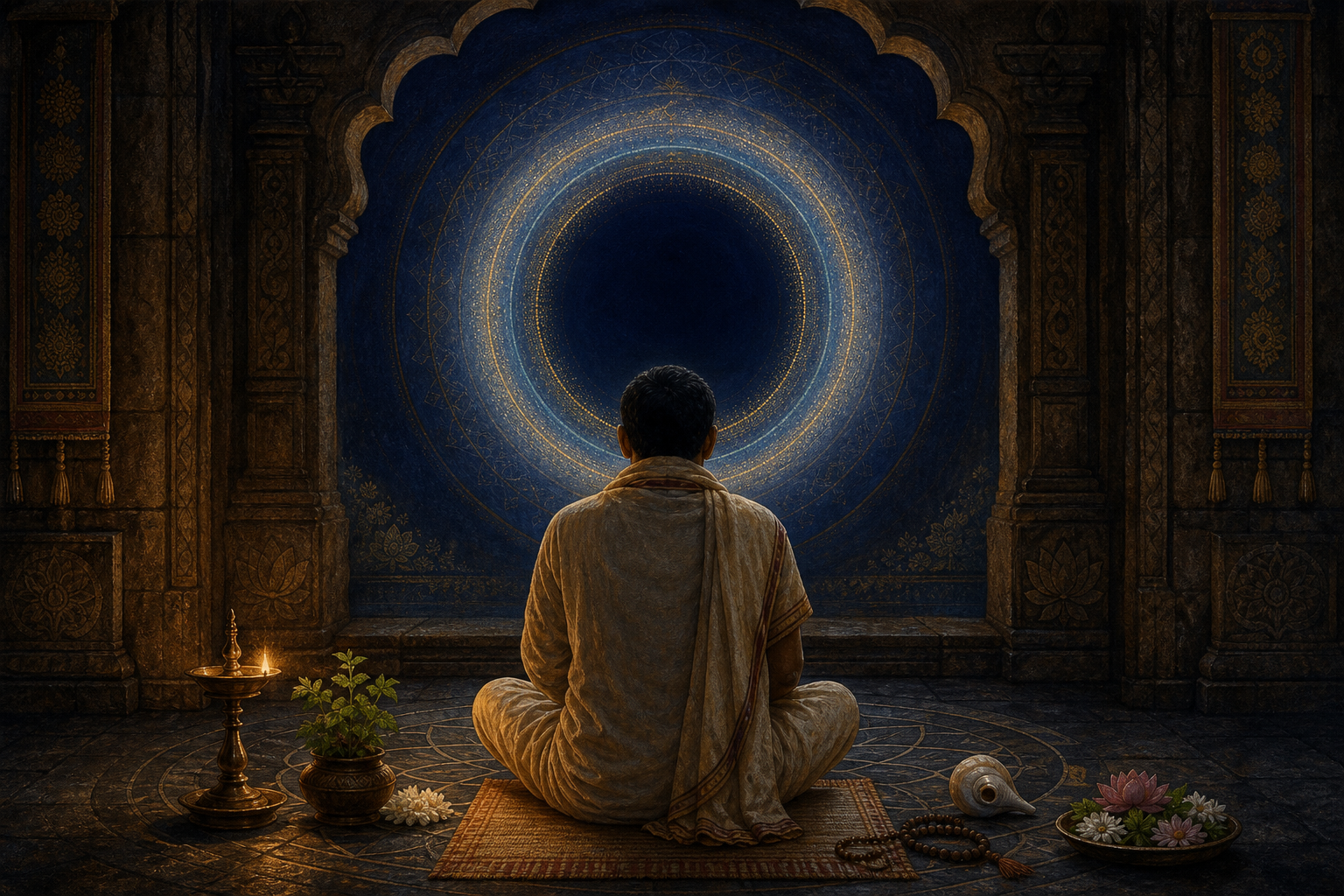
Sunya is the point at which many modern readings lose their way. In ordinary English, emptiness can suggest an absence, a blank, or the denial of reality. Achyutananda’s sunya does not require the devotee to discard Jagannath as an illusion and settle for a vacant Absolute. It names the sacred reality that exceeds complete capture by image, category, or speech.
That is why personal devotion and contemplative insight can coexist. Jagannath is approached through name, form, song, relationship, and loving service. Brahman remains inexhaustible and finally inexpressible. The saguna and nirguna dimensions are not forced into a crude contest in which one must destroy the other. Form makes devotion intimate; the formless prevents the mind from mistaking its own concepts for the whole of the Divine.
This synthesis is sometimes best described as devotional nondualism. Its center of gravity remains Vaishnava: Hari is remembered, the guru guides, the devotee serves, and Jagannath is loved. Yet devotion opens toward a reality that cannot be reduced to the distinction between worshipper and worshipped.
Achyutananda’s language also allows a real conversation with other Dharmic traditions. Sunya carries an evident resonance with Buddhist reflection on emptiness, while the refusal to imprison truth within a single verbal angle can be placed beside the Jaina discipline of many-sidedness, or anekantavada. Odisha’s Jagannath culture also carries Vaishnava, Shaiva, and Shakta resonances. These connections help you see a shared civilizational field, but they should not be used to erase doctrinal distinctions.
Resonance is not identity. Buddhist sunyata, Jaina anekantavada, Vedantic Brahman, and Vaishnava devotion do not become interchangeable because a saint’s language can converse with all of them. A stronger Dharmic reading acknowledges both kinship and difference. It asks how traditions illuminate one another while allowing each to retain its own aims, disciplines, and vocabulary.
A simple test can keep your interpretation balanced. If a reading of sunya erases Jagannath, nama, guru, and seva, it has left too much of Achyutananda behind. If it treats the Divine as completely contained by one image or proposition, it has also missed his contemplative depth. Hold intimacy and inexhaustibility together.
Read the attributed corpus with devotion and discipline
A large and varied Odia corpus is associated with Achyutananda. It includes the Shunya Samhita, also known as the Shunya Purana; bhajans and jananas; chautisas; narrative compositions; and the prophetic writings collectively known as the Achyutananda Malika. These genres do different work, and they should not be read as though every line has the same purpose or historical status.
The Shunya literature develops cosmological and contemplative questions. Devotional songs make remembrance portable and repeatable. Narrative works teach through sacred story. The Malika tradition uses calendrical cycles, end-time imagery, prediction, and moral warning. Its ethical demand is easy to overlook when attention settles entirely on whether a reported event matches a modern headline.
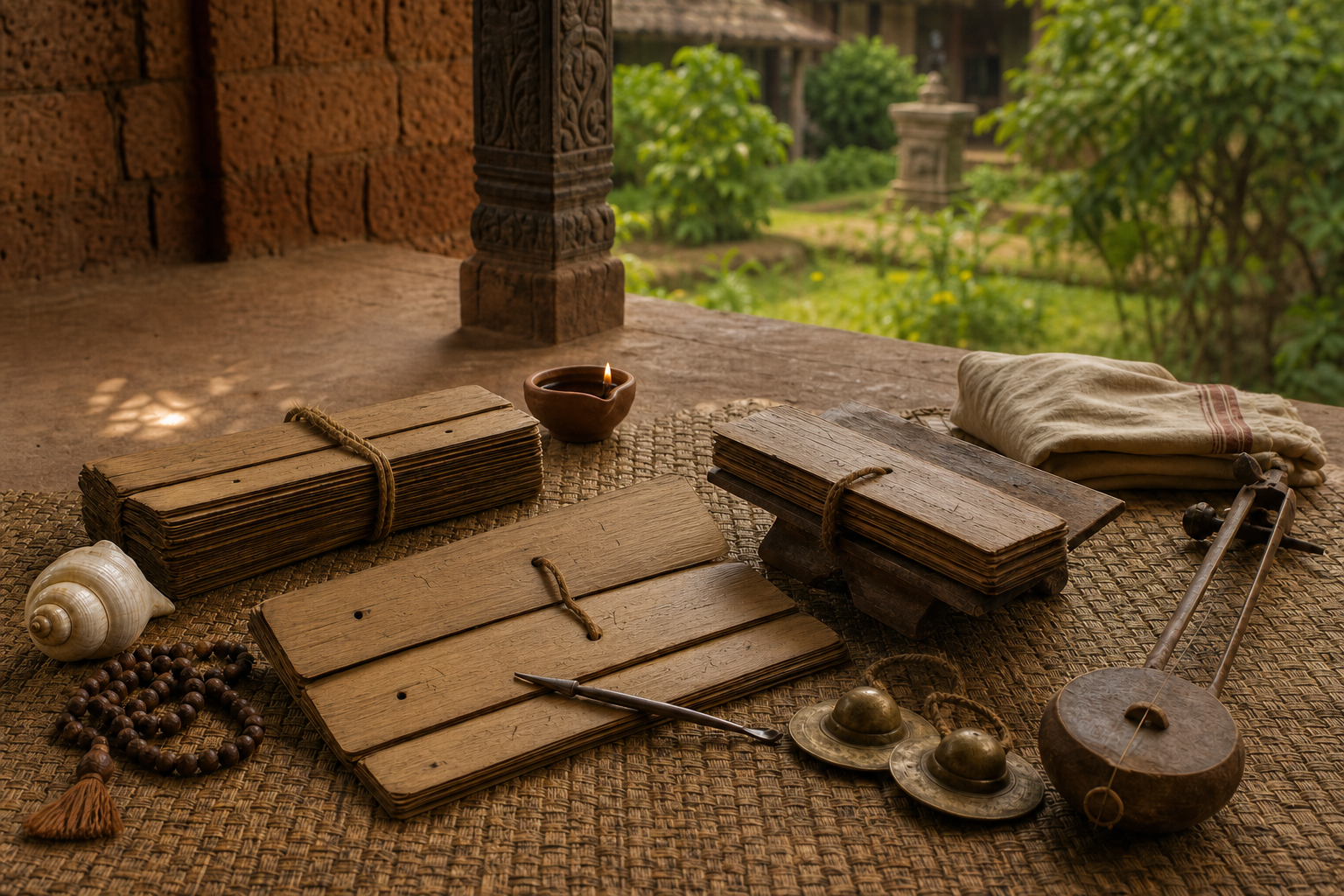
The textual history calls for caution. Palm-leaf transmission and oral circulation produced variation. Later hands could copy, arrange, explain, or add material. Scholars therefore approach the corpus as layered: central devotional and philosophical currents can belong to the early tradition even when every surviving line cannot be confidently assigned to Achyutananda himself.
This distinction does not require contempt for tradition. It requires precision about what kind of claim you are making. Use three labels when evaluating a passage:
<!– wp:list {