
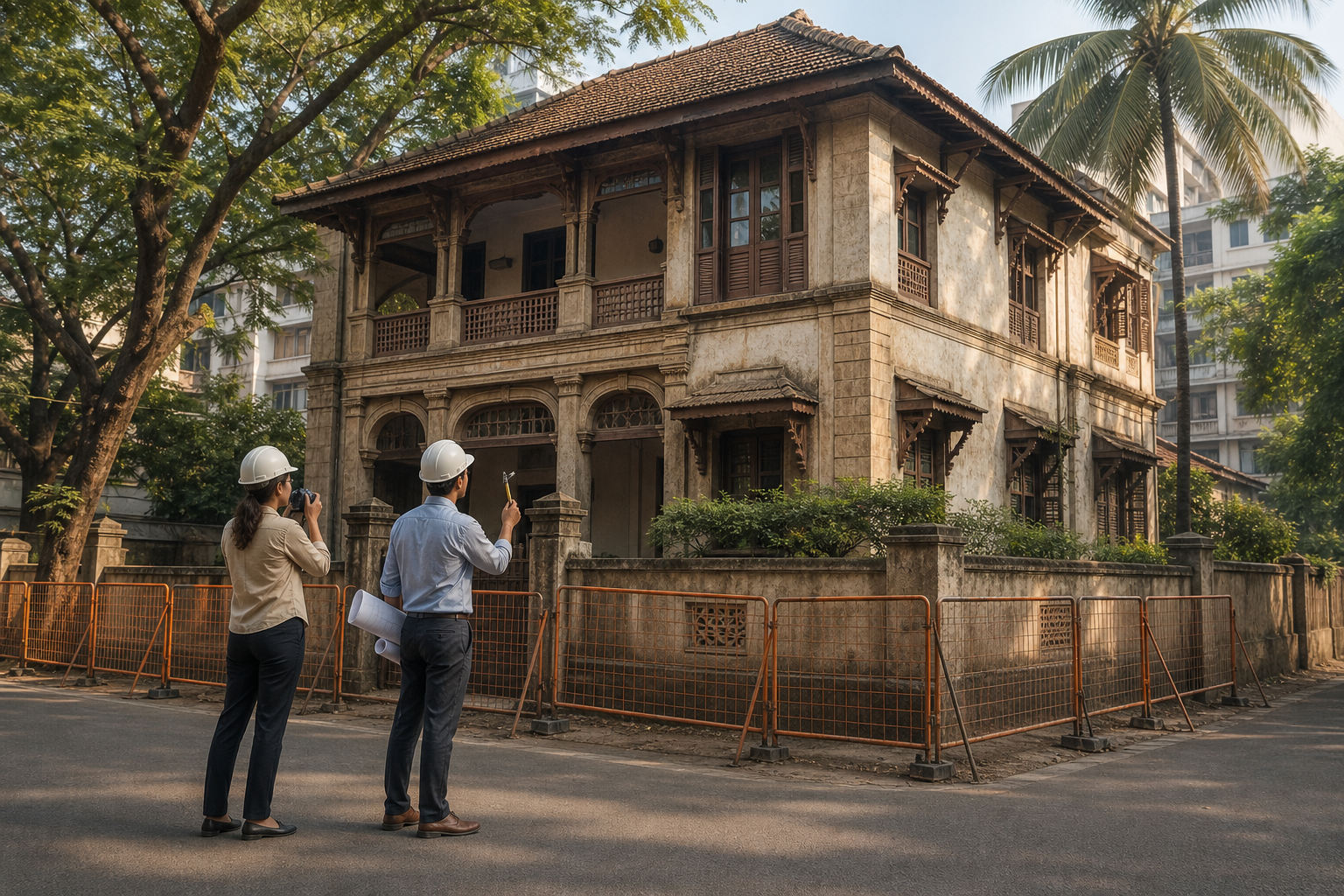
If you are worried that redevelopment could erase Savarkar Sadan, do not begin with the design of a future memorial or wait for national recognition. The first objective is narrower and more urgent: prevent irreversible alteration while the property’s legal status, physical condition and historical significance are formally assessed.
The threat has been reported rather than established here through a complete planning record. That distinction matters. Treat the risk as urgent, but verify the ownership, permissions and proposed work. A credible preservation effort must be fast enough to protect the building and disciplined enough to survive administrative and legal scrutiny.
Key takeaways
- Ask the competent authorities for a written status quo or stop-work direction while the site is assessed.
- Pursue interim state heritage protection without making national status the only route.
- Build a documented case around the property’s identity, Savarkar’s association with it, its surviving fabric and the exact redevelopment risk.
- Record the building before restoration, repair or demolition can remove historical evidence.
- Pair preservation with a viable public use and fair planning solutions for affected private stakeholders.
The first decision is to protect now and classify carefully
Heritage campaigns often collapse three different decisions into one: whether work should pause, whether a property merits state protection, and whether it qualifies as a Monument of National Importance. Those questions operate on different timelines and require different evidence.
The immediate request should be a temporary status quo. It is not a final judgment against an owner or developer. It preserves the possibility of an informed decision by preventing demolition, removal of historic fabric or major alteration during assessment. Ask for the order to cover the building and its curtilage – the surrounding land and setting necessary to understand and protect the place.
| Protection route | What it is meant to do | What to request | Important limit |
|---|---|---|---|
| Immediate administrative protection | Prevent irreversible work while facts are checked | A written status quo or stop-work direction, an inspection and a named nodal officer | It is interim protection, not permanent designation |
| State heritage protection | Recognise and regulate the property through Maharashtra’s heritage framework | Interim listing, expert evaluation, heritage grading and conservation conditions | The competent authority must complete the applicable process and consider the evidence |
| Monument of National Importance | Bring an eligible site under the national AMASR framework | Initiation of a formal significance and eligibility assessment | National status is not automatic; statutory eligibility and the evidentiary case must be established |
Maharashtra has a state pathway under the Maharashtra Ancient Monuments and Archaeological Sites and Remains Act, 1960, together with heritage mechanisms in planning law. A Heritage Conservation Committee can advise the relevant planning authority on listing, grading, permissible work and adaptive reuse. This makes interim state action the practical first protection to pursue while the larger case is prepared.
The national route runs through the Ancient Monuments and Archaeological Sites and Remains Act, 1958, as amended in 2010. If a property is formally notified as a Monument of National Importance, conservation oversight involves the Archaeological Survey of India and the National Monuments Authority. The framework normally includes a 100-metre prohibited area and the following 200-metre regulated area around the protected monument. Those controls apply after the relevant legal protection is in place; they should not be described as though Savarkar Sadan already possesses them.
Associational significance can be powerful, but it does not remove the need to establish statutory eligibility, age, authenticity and surviving physical evidence. The sound demand is therefore conditional and precise: initiate the national evaluation if the documented record supports it. Do not let that longer process delay interim state protection.
Build an evidence file that an authority can use
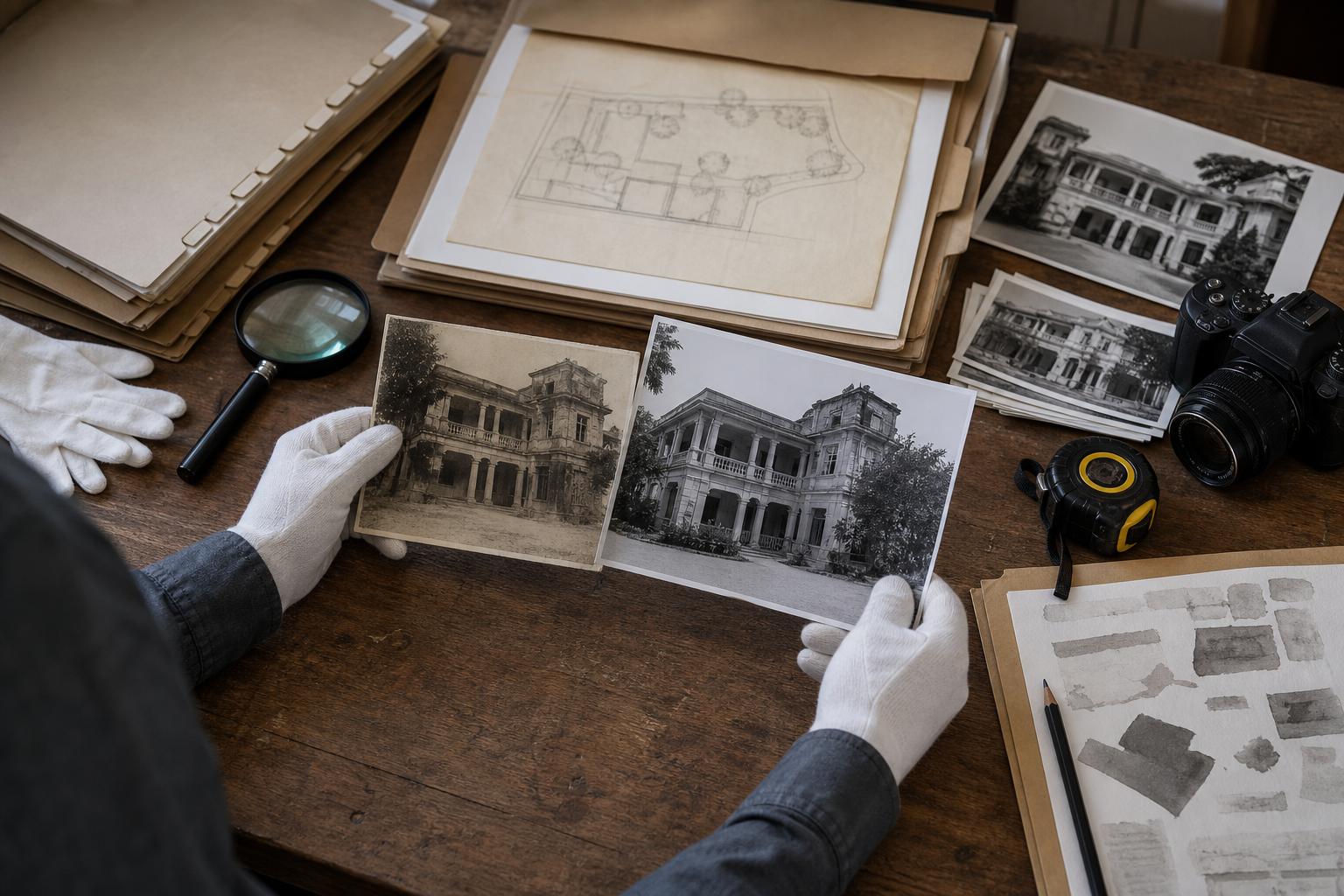
Savarkar Sadan matters because it is closely associated with V. D. Savarkar’s Ratnagiri years, when he was engaged in social reform, intellectual work and local public life. Its value is therefore not limited to ornamental architecture. A residence connected to a consequential phase of a national figure’s life can retain historical value through its rooms, circulation, setting, material fabric and relationship to the surrounding town.
The Ratnagiri context includes the establishment of the Patit Pavan Mandir in 1931 as an institution intended to welcome all sections of society and confront caste exclusion. That context strengthens the public case for preserving evidence of Savarkar’s reformist period. It does not justify claiming that every Ratnagiri initiative was conceived or carried out inside Savarkar Sadan. Where the record is silent, say less and document more.
A useful dossier should contain four clearly separated parts:
- Property identity: the exact official property description, present ownership or title information, site boundary, address and relevant district or planning records. A preservation request aimed at an imprecisely identified property is easy to delay.
- Historical association: dated archival material, letters, photographs, publications, inscriptions, ownership history and expert testimony that connect the property to Savarkar’s Ratnagiri life. Record where every item came from; an image circulating without provenance is weaker than a less dramatic image with a traceable origin.
- Surviving heritage fabric: dated photographs of the exterior, rooms, doors, windows, roof, floors, fixtures, inscriptions, landscape and later additions. Distinguish original or early elements from repairs and recent changes wherever the evidence permits.
- Present risk: the actual redevelopment application, permission, notice, drawing, public record or on-site activity that gives rise to concern. Label an unverified claim as unverified instead of converting it into a fact through repetition.
For each digital file, preserve the date, location, creator, description and chain of custody. Keep an untouched original and a clearly named working copy. Photograph only from public space or with the owner’s permission. Do not trespass, remove objects or interfere with lawful activity in the name of documentation; those acts can create legal problems and weaken the conservation effort.
Ask qualified historians and conservation architects to prepare a short statement of significance. It should answer five questions directly: What is the place? What happened there? Which people and movements are connected to it? What physical evidence survives? What would be lost if the property were demolished or substantially altered? That statement becomes the spine of every representation, inspection and future conservation brief.
Send a representation that produces an administrative decision
A petition can demonstrate public concern, but signatures alone do not tell an official which lawful action is being requested. Send a concise written representation to the competent planning authority, the Ratnagiri district administration and Maharashtra’s archaeology authorities. Request coordination with the ASI for technical input where appropriate. Obtain an acknowledgment and retain the complete submission exactly as sent.
Use a specific subject and five numbered requests
A workable subject line is: Request for immediate status quo protection and heritage assessment of Savarkar Sadan, Ratnagiri. The first paragraph should identify the property precisely, describe the reported risk without exaggeration, and explain that irreversible work could defeat any later heritage assessment.
- Issue a written status quo or stop-work direction preventing demolition and material alteration pending assessment.
- Arrange an urgent joint inspection of the building and its curtilage by planning, archaeology and conservation personnel.
- Begin interim state heritage listing and place the matter before the competent Heritage Conservation Committee.
- Appoint a nodal officer to coordinate the district administration, State Archaeology Department, planning authority, ASI technical input and community stakeholders.
- Set a 30-60 day target for a documented significance, title, provenance and condition assessment, followed by a reasoned decision on state and possible national protection.
Attach a short index rather than an unstructured bundle. Start with a one-page summary, then the property identification, statement of significance, photographic record, evidence of risk, expert endorsements and a chronology. Separate verified records from pending questions. Officials should be able to understand the requested action and locate its supporting evidence within minutes.
If demolition has actually been scheduled, physical work has begun, or an enforceable permission is about to be acted upon, ordinary correspondence may not be fast enough. Seek advice from a Maharashtra lawyer experienced in planning and heritage law about the available remedy and the correct authority. Do not physically obstruct work or assume that a public campaign itself creates a legal stay.
Document the building before deciding how to restore it
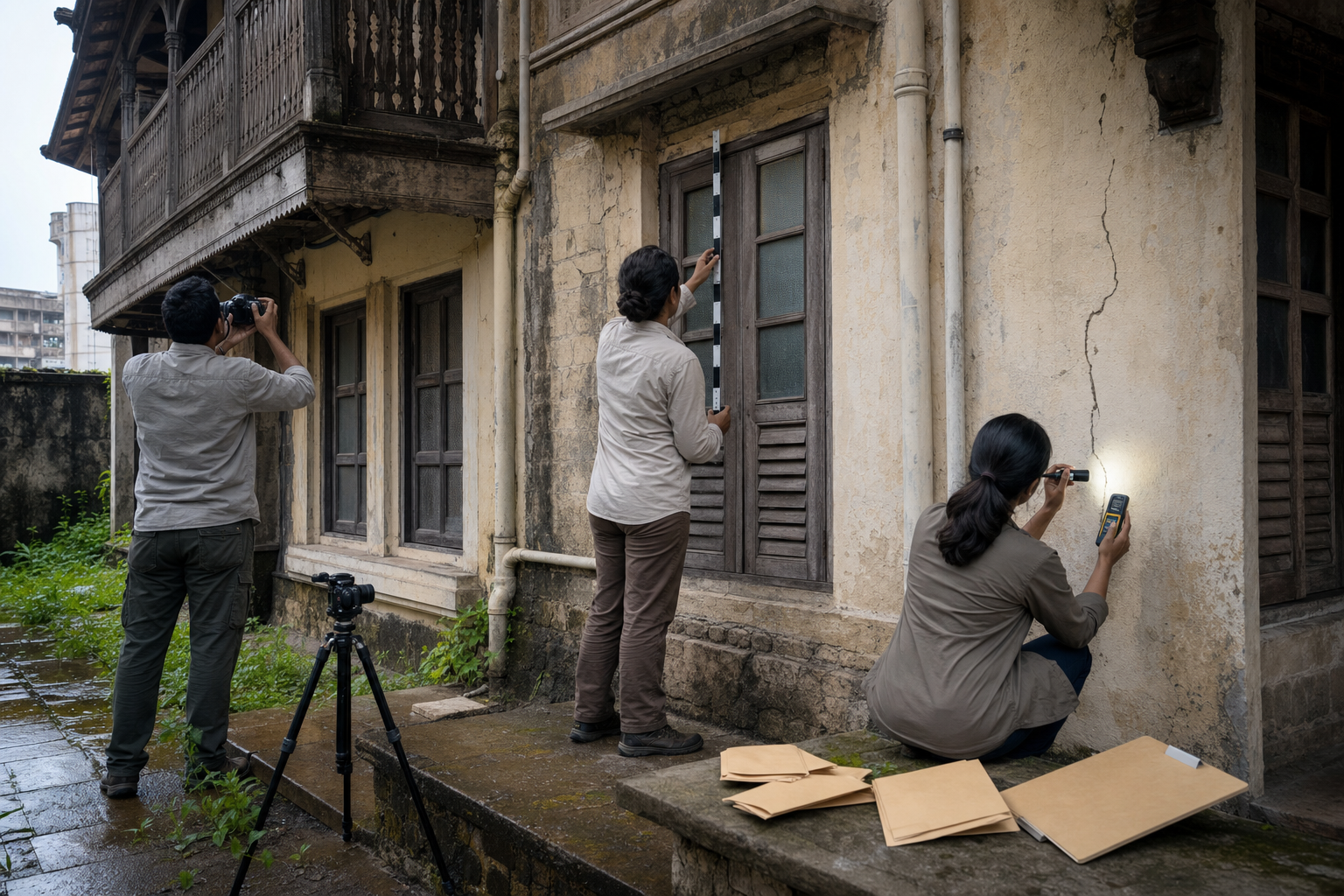
A threatened building can also be damaged by a hurried rescue. New plaster, replacement joinery, aggressive cleaning and reconstructed rooms may make a site look finished while erasing the very evidence that gave it significance. Documentation must precede cosmetic improvement.
The first technical phase should include a condition assessment, structural stability audit, measured drawings and high-resolution photography. Where resources permit, 3D laser scanning can create a detailed digital baseline. Movable material – including letters, photographs, memorabilia and inscriptions – should be inventoried separately, with its present location, ownership and condition recorded.
A digital record is insurance against information loss, not permission to sacrifice the building. A scan cannot preserve original material, spatial experience, craftsmanship, setting or the evidentiary relationship among parts of the place. Use it to plan conservation, monitor change and support research.
Before a final conservation scheme is approved, require a Heritage Impact Assessment. It should test proposed repairs and new construction against the site’s significance and address visitor movement, crowd capacity, traffic, accessibility, services, fire and life-safety needs, and landscape treatment. The assessment should make conflicts visible before contracts are awarded.
Three conservation principles provide a practical test:
- Minimum intervention: repair only as much as safety and continued use require. Do not replace sound historic material merely to achieve visual uniformity.
- Reversibility: where feasible, design new exhibition systems, services and partitions so they can be removed without destroying significant fabric.
- Authenticity: retain genuine material and acknowledge later changes honestly. A well-evidenced, imperfect building teaches more than a polished reconstruction that blurs old and new.
These principles are consistent with the conservation approach associated with the Venice Charter of 1964 and the Burra Charter. They should guide professional judgment rather than serve as decorative names in a proposal.
Give preservation a viable and publicly useful future
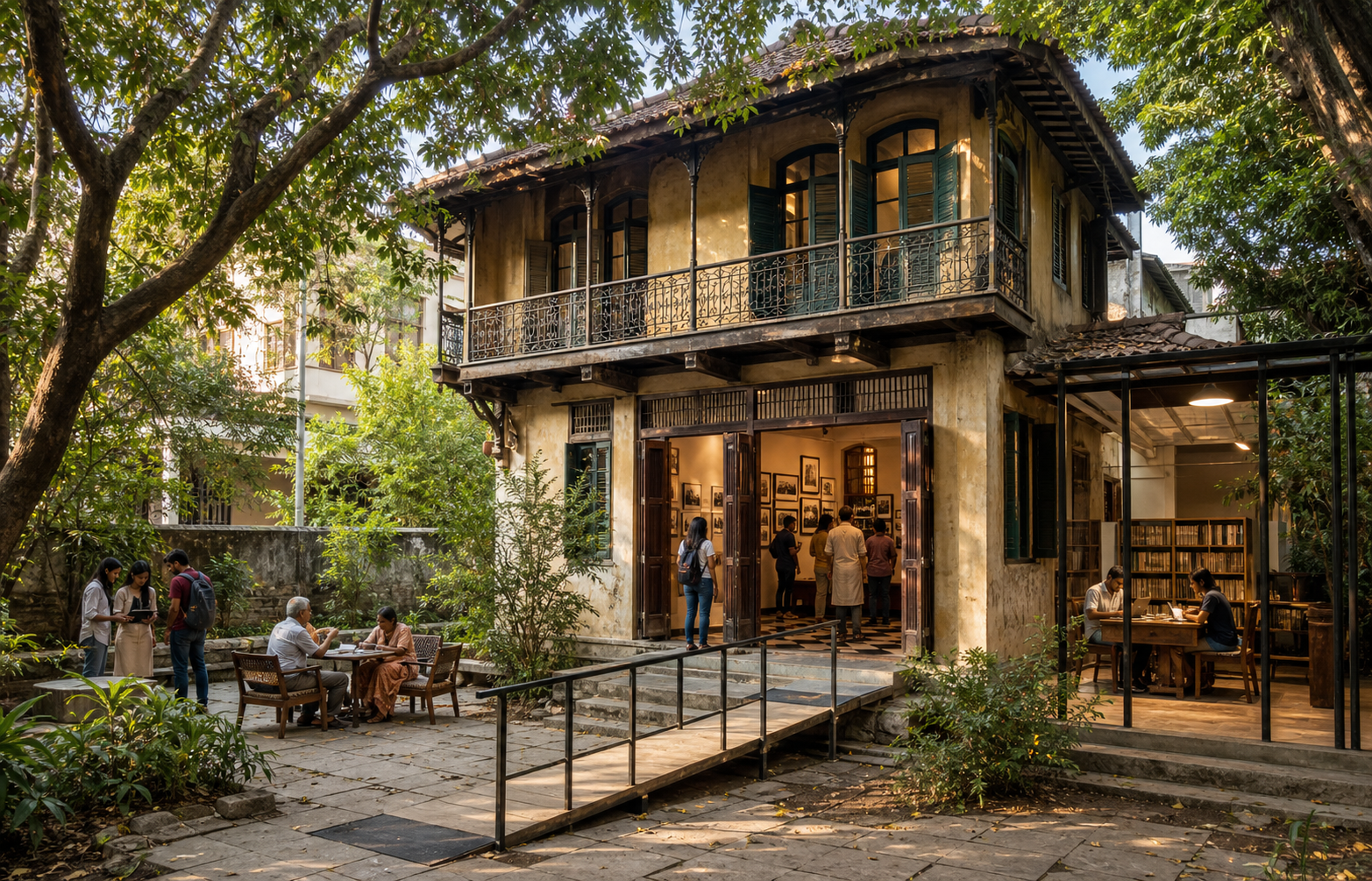
Protection without a use plan can leave a building closed, underfunded and vulnerable to slow deterioration. Savarkar Sadan could function as a compact interpretive centre focused on the Ratnagiri years, the wider freedom struggle and the social-reform debates of the period. A reading room and digital archive would give students and researchers reasons to return rather than treating the property as a one-visit memorial.
The interpretation should be evidence-led. It can present Savarkar’s life and ideas in historical context, explain the campaign against caste exclusion associated with the Patit Pavan Mandir, and connect dignity and social responsibility to a wider Dharmic civic inheritance. Preserving the place need not require pretending that every reader shares one political judgment. It requires accepting that future generations deserve access to the physical evidence from which informed judgments can be made.
A credible operating plan should identify who owns the property, who conserves it, who controls interpretation, who pays for routine maintenance and how public access will work. Capital restoration money does not solve recurring costs. Budget separately for inspections, security, utilities, archive care, staff, programming and periodic repairs.
Private interests should be addressed openly rather than treated as an afterthought. Transfer of Development Rights, alternate-location Floor Space Index offsets and viability-gap support can be examined by the competent authorities as ways to reconcile conservation with legitimate development value. These mechanisms are possibilities under the applicable planning process, not automatic entitlements or promises that campaigners can make.
CSR or public-private funding can help pay for conservation and programming, but the agreement should protect conservation standards, public access and curatorial independence. A donor may support the institution; it should not be allowed to rewrite the evidence or demand damaging alterations in exchange.
At the town scale, Savarkar Sadan can be connected to a Ratnagiri heritage circuit incorporating documented freedom-era and coastal Konkan places. Guided walks, clear wayfinding and locally led interpretation can create work for guides, artisans and hospitality providers. Build that network only after each included site has been accurately documented; a tourism circuit should deepen history, not flatten it into slogans.
If you want to act now, prepare the one-page representation, attach the best verified property and risk evidence available, and ask for an acknowledged status quo decision. The lasting memorial can be debated later. The building must still exist when that debate begins.
References
