
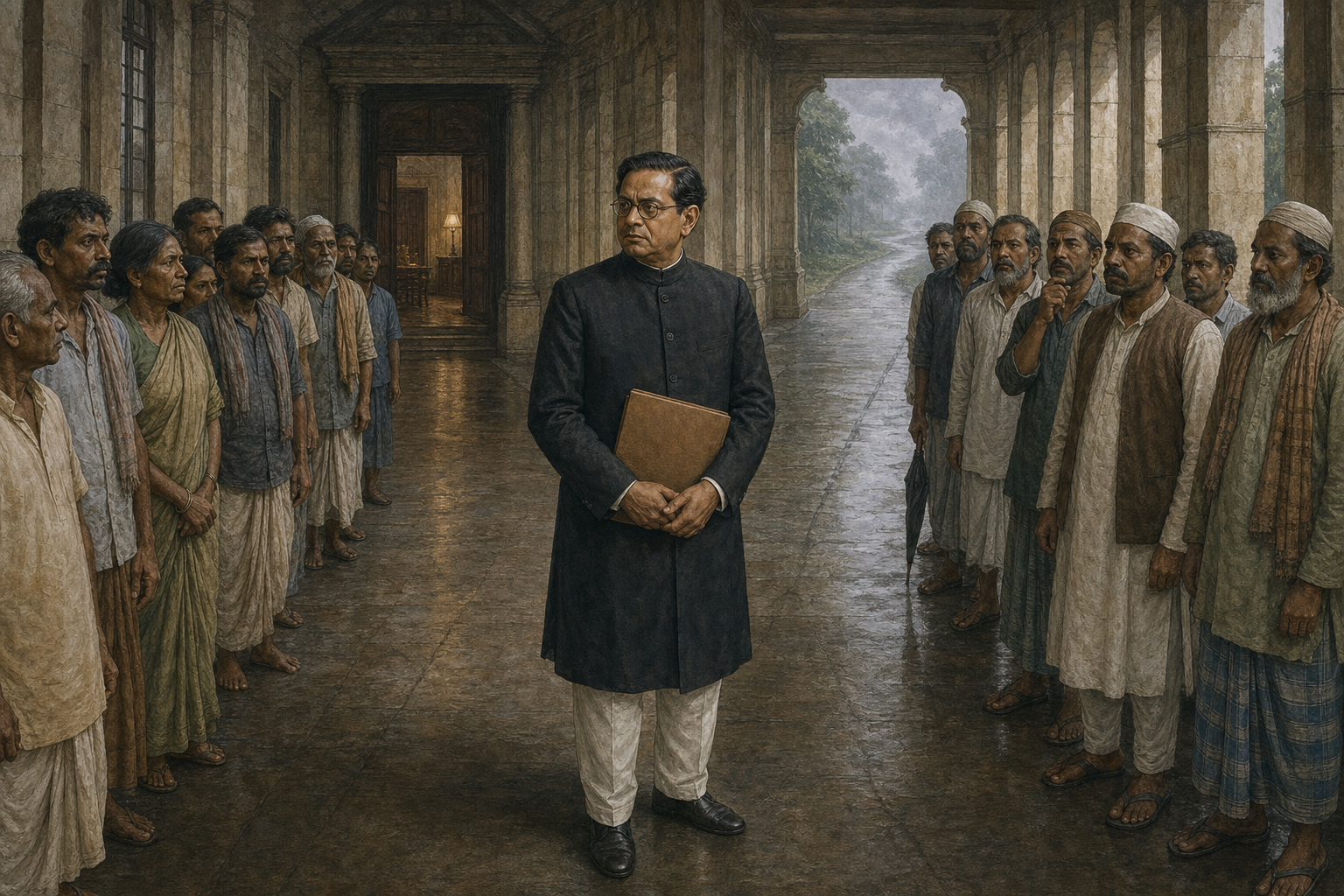
If you have encountered Jogendra Nath Mandal’s name in a present-day political argument, you have probably been offered one of two shortcuts: his career proves Dalit-Muslim unity is natural, or his resignation proves such cooperation must always fail. Neither claim does justice to his choice or equips you to judge the next coalition placed before you.
Mandal’s experience is more useful as a political stress test. It helps you separate a shared grievance from a shared destination, a cabinet appointment from community power, and an electoral arrangement from an enforceable settlement.
Mandal made a political wager, not a symbolic gesture
Jogendra Nath Mandal was a prominent leader of Bengal’s Scheduled Castes, a legislator with an independent political base, and a close political associate of Dr B.R. Ambedkar. He supported the Muslim League’s demand for Pakistan and chose Pakistan at Partition. He then became Pakistan’s first Law and Labour Minister.
That sequence matters. Mandal did not merely accept a ceremonial post after the decisive events had occurred. He backed a political project because he believed cooperation with the Muslim League could give deprived communities justice, protection, and political space. His decision was a calculated attempt to advance the interests of the constituency he represented.
The calculation ended in disillusionment. In his resignation letter dated October 8, 1950, Mandal explained his break with a system he had helped establish and served from within. He resigned from the cabinet and returned to India roughly three years after entering Pakistan with high expectations.
You should notice the difference between motive and outcome. A failed alliance does not prove that its junior partner had no legitimate grievances. Nor does an honourable motive make the alliance sound. Political judgment has to examine both: why a community sought a partner and whether that partner’s larger project could actually accommodate the community’s long-term interests.
Historical precision matters here. Mandal’s organized constituency should be identified as Bengal’s Scheduled Castes; “Dalit” is useful as a broader modern description, but it can hide regional and political differences. His association with Ambedkar also establishes proximity, not automatic agreement. Unless separate evidence is produced, one man’s decision must not be presented as the other’s endorsement.
A shared tactic did not guarantee a shared political future
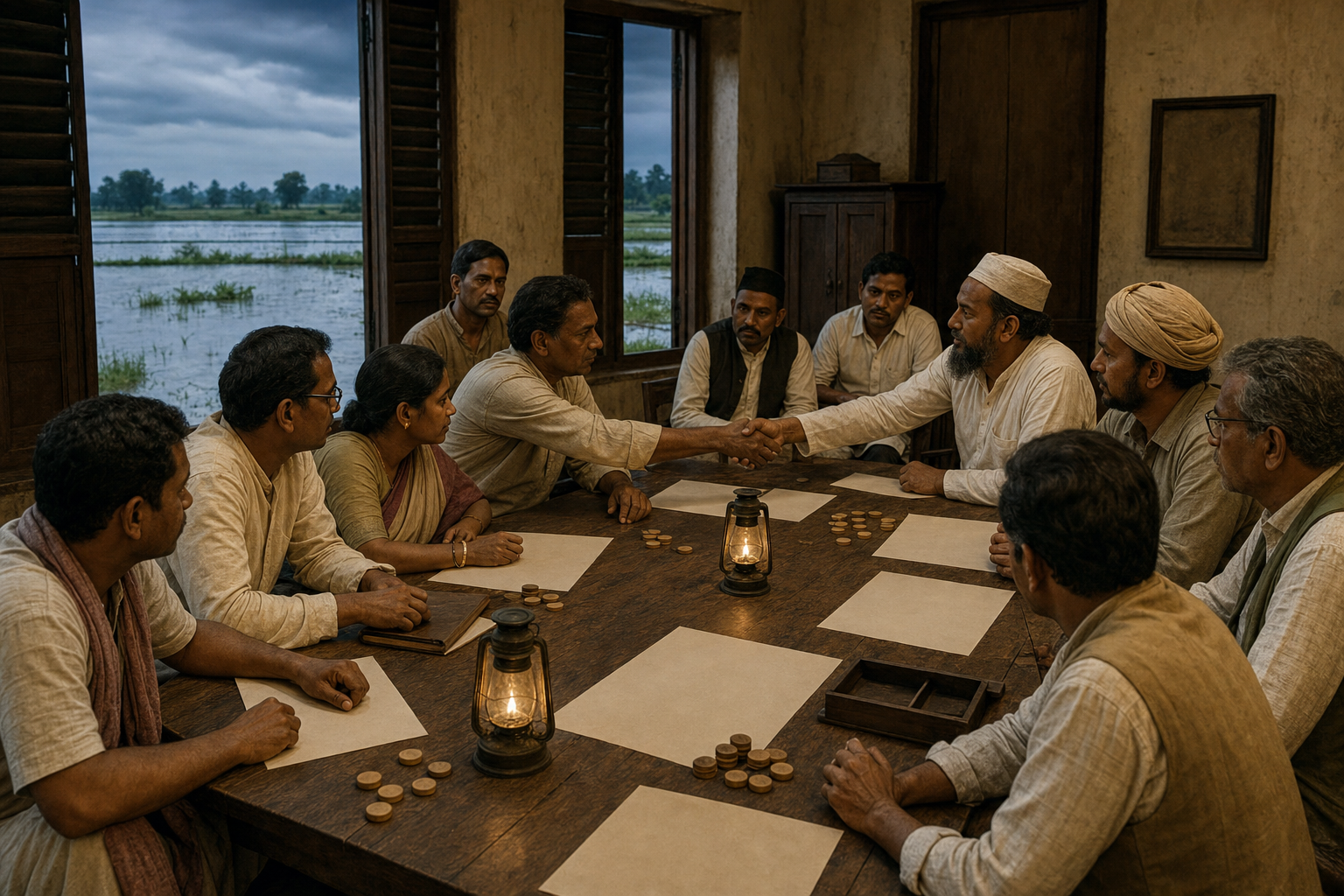
Mandal expected an alliance with the Muslim League to improve the position of the Scheduled Castes. The League’s defining objective, however, was the creation of Pakistan. Those aims could overlap during one political phase without producing agreement about the society and state that would follow.
This is the central distinction to carry into any discussion of Dalit-Muslim political alignment. Communities may cooperate on a particular election, representation dispute, or demand for protection. That is a tactical arrangement. A strategic alignment goes further: it asks each community to trust the other’s conception of power, law, identity, and the future political order.
Before treating a tactical overlap as a durable partnership, you should require clear answers to four questions. What exact objective is shared? What happens after that objective is achieved? Which principles will neither side surrender? What institution will enforce the promises made to the smaller or less powerful partner?
Vague language such as “unity,” “social justice,” or “common struggle” cannot answer those questions. Each phrase must be translated into decisions: candidate selection, freedom to dissent, protection of religious and civic life, distribution of authority, and a remedy when a commitment is broken. If a coalition cannot describe the post-victory arrangement, it is asking for trust without defining its obligations.
Mandal’s trajectory indicates what can happen when the immediate alliance is clearer than the eventual settlement. Once Pakistan had been created, the question was no longer whether the partners could cooperate against an existing political order. The question was whether the new order would protect the minorities whose interests Mandal had expected to advance. He ultimately concluded that it did not.
A Dharmic reading of this history should avoid two convenient errors. The first is to romanticize every coalition formed by groups that describe themselves as marginalized. Shared disadvantage does not erase differences in ideology or political purpose. The second is to use Mandal’s failure as an excuse to ignore caste injustice within Hindu society. If we condemn the alliance but refuse to address the conditions that made an external political partnership attractive, we learn only half the lesson.
The failure of a political arrangement does not justify contempt for whole communities. Muslims are not a single permanent political mind, just as Dalits and Hindus are not. Mandal’s experience warrants close examination of leaders, doctrines, institutions, and results. It does not warrant collective hostility in place of analysis.
A ministerial title was not the same as community power

Becoming Pakistan’s first Law and Labour Minister gave Mandal extraordinary visibility. It also made him a symbol of the inclusive possibility he believed Pakistan could offer. Yet an appointment at the top cannot, by itself, tell you whether the represented community has durable power or security.
When a coalition presents a prominent appointment as proof of inclusion, examine four separate levels:
- Access: Does the representative attend the meetings where decisions are made, or is the office mainly public-facing?
- Leverage: Can the representative change a decision, block a harmful measure, or secure resources for the constituency?
- Enforcement: Are protections embedded in institutions and ordinary administration, or dependent on the goodwill of senior allies?
- Independence: Can the representative criticize the coalition and organize separately without losing all political standing?
These levels are often blurred in public debate. Access produces photographs, titles, and speeches. Leverage and enforcement are harder to display, but they determine whether representation survives a disagreement. Independence reveals whether the smaller partner remains a political actor or has become an ornament of the larger one.
Mandal’s office demonstrated access at the highest level. His eventual resignation demonstrated the limit of treating that access as sufficient proof of success. By leaving the cabinet and returning to India, he made clear that a prestigious position could not compensate for what he regarded as the failure of the state to protect the minorities he had hoped to serve.
This gives you a concrete rule: judge a coalition from the ground upward, not from the cabinet downward. Begin with the safety, voice, institutional protection, and freedom of ordinary community members. Only then ask how many leaders received posts. A senior appointment can be evidence of inclusion, but it cannot substitute for outcomes.
Mandal’s resignation is strong evidence, but not a universal law
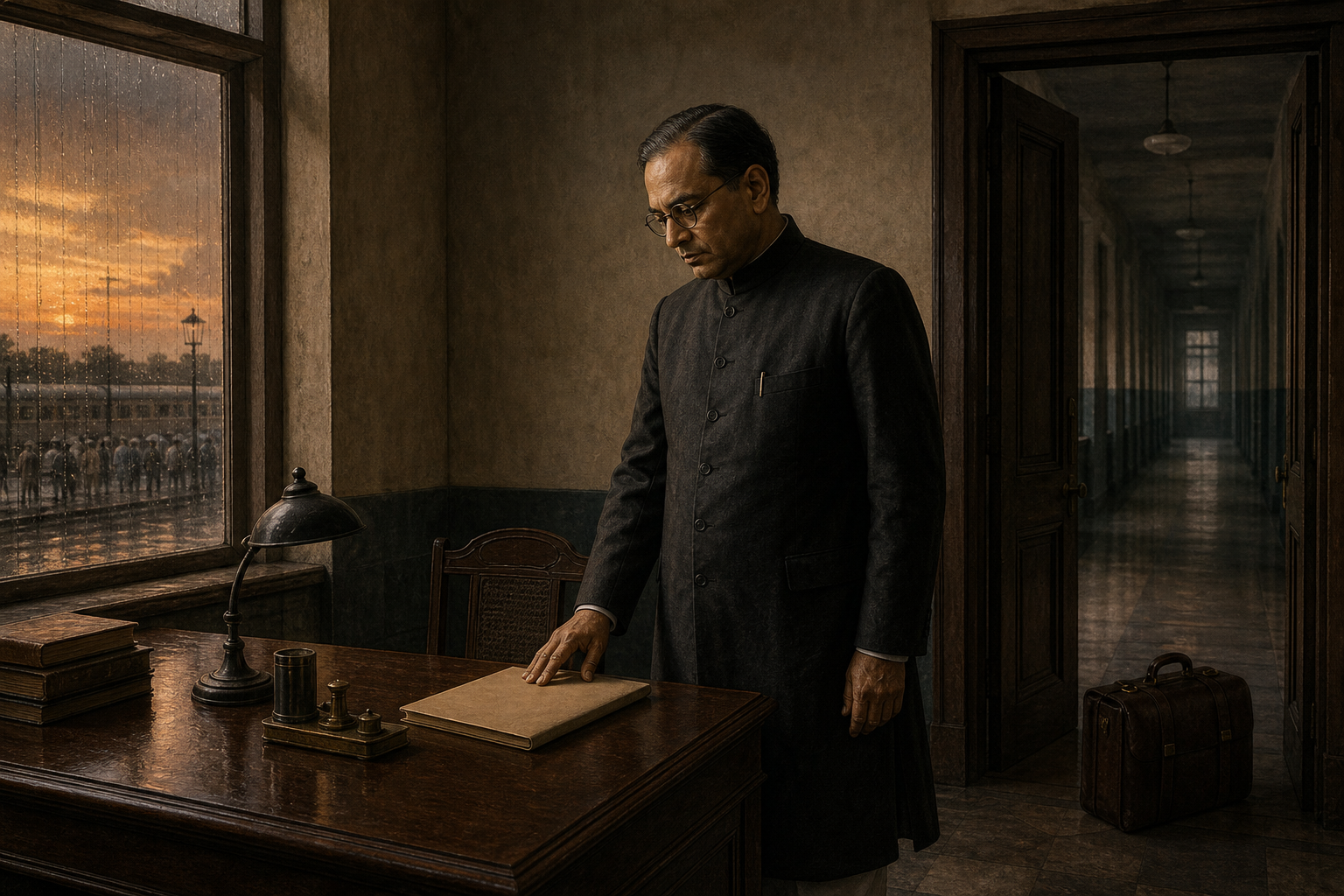
Mandal’s break with Pakistan carries unusual weight because he was not simply an external opponent judging the experiment from afar. He had supported the Muslim League’s demand, defended the alliance, entered the new state, and occupied one of its highest offices. In resigning after serving inside that system, he recorded the collapse of his own expectations.
That makes his resignation direct evidence against three weak arguments: that a high office necessarily proves minority empowerment, that two marginalized constituencies must have compatible long-term interests, and that criticism of the arrangement came only from outsiders hostile to its creation.
It does not establish that every Muslim supported the same politics, that every Scheduled Caste leader faced identical choices, or that every future coalition between Dalit and Muslim organizations must end in betrayal. One political life, however consequential, cannot bear those universal claims.
The defensible conclusion is narrower and more useful: Mandal’s experience warns against an unconditional alignment when a junior partner relies on assurances that are not matched by enforceable power, institutional protection, and an independent capacity to dissent. The identity of the partners matters, but the design of the partnership matters too.
When someone invokes Mandal in an argument, ask them to preserve the complete sequence: his constituency’s legitimate demand for justice, his initial confidence in the alliance, his elevation to high office, and his final judgment expressed through resignation and return. Removing the first stage turns him into a caricature of folly. Removing the last turns him into a permanent endorsement of a project he ultimately rejected.
You should apply the same chronological discipline to any political case. Record what was promised before the alliance, what authority the smaller partner received, what happened when interests diverged, and how leaders responded when commitments appeared to fail. A coalition should be judged across its full life, not at the moment of announcement.
Key takeaways: six tests for the next political alignment

- Define the objective: Replace broad calls for unity with the exact policy, election, protection, or institutional reform the partners are pursuing together.
- Compare the destinations: Ask what each partner wants after the immediate objective is achieved. Temporary agreement can conceal incompatible visions of the future order.
- Protect independence: Confirm that the smaller partner can organize, criticize, and negotiate separately. A coalition that requires silence is absorption, not cooperation.
- Test reciprocity: Identify what each side will do when the other’s vital interests become inconvenient. Promises matter most at the point of conflict.
- Demand enforcement: Look beyond appointments to written commitments, decision rules, institutional safeguards, and consequences for breach.
- Measure ordinary outcomes: Judge the arrangement by the security, dignity, voice, and practical influence of community members, not only by the prominence of leaders.
You can turn these tests into a one-page coalition audit. For each test, write down the public commitment, the mechanism that enforces it, the evidence that it is working, and the consequence if it is violated. A blank space in any of those columns is not a minor communications problem. It identifies where the weaker partner is being asked to rely on faith.
Mandal’s history should also move Hindu society toward action rather than self-congratulation. Oppressed Hindus must receive dignity, fair participation, and credible avenues of leadership within Dharmic and national life. Warnings about a failed alternative cannot replace reform at home.
Cross-community cooperation need not be rejected. It must be made conditional, specific, reciprocal, and accountable. When the next alignment is proposed, do not ask only who stands together on the platform. Ask who retains a voice after victory, who is protected when interests clash, and what the ordinary person gains once the speeches end.
References
