
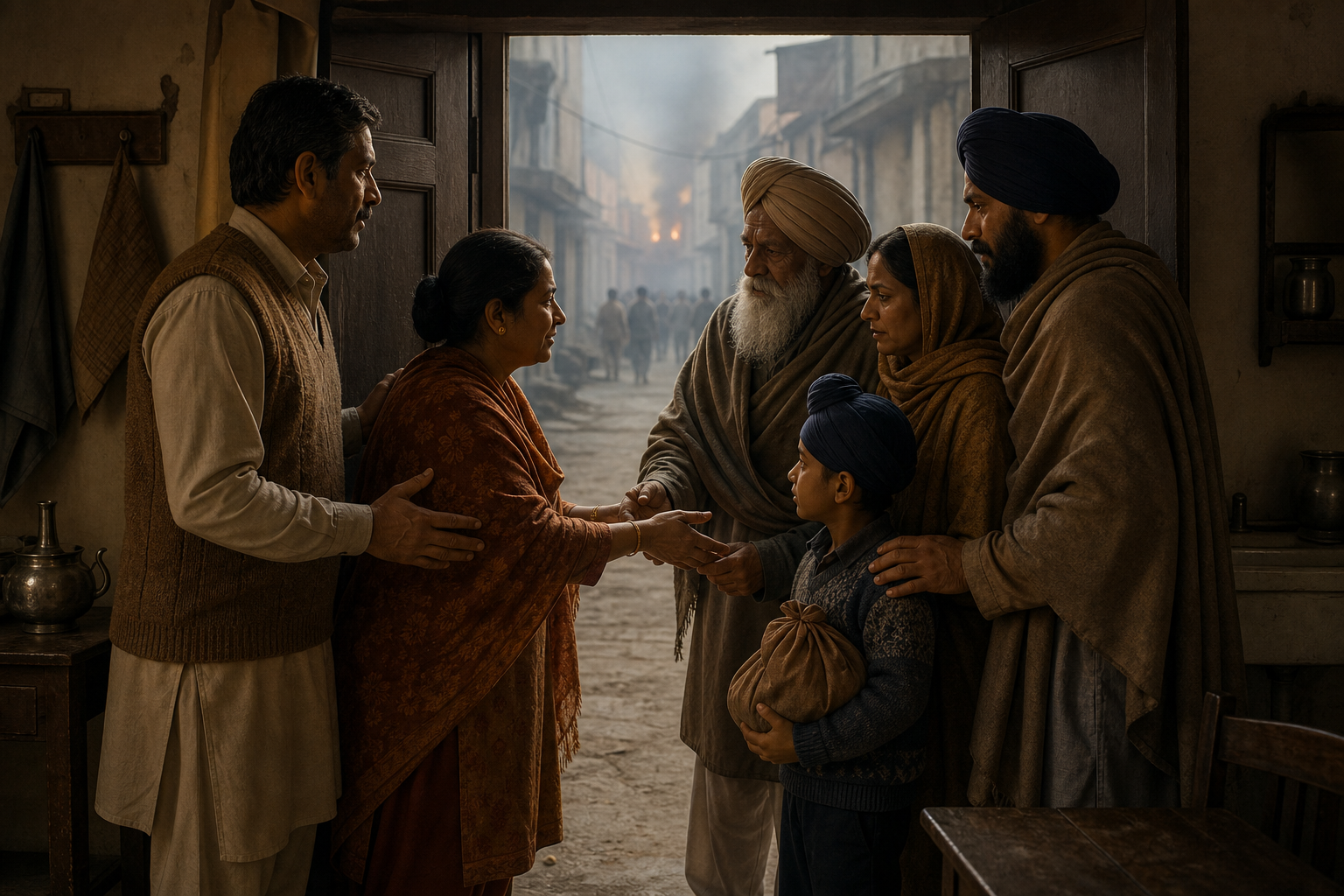
If you are trying to understand 1984 without turning grief into another Hindu-Sikh argument, begin with a hard distinction: solidarity does not cancel targeted violence. It shows what human beings were still capable of doing inside it.
That distinction lets you honour Sikh suffering, recognise Hindu courage where it is documented, and ask a practical question about your own locality: would its bonds of trust survive the first dangerous rumour?
Keep the victim, the protector and the institution in view
Three truths can stand together. Sikh families faced anti-Sikh violence. Some non-Sikh neighbours chose to protect them. Public institutions still carried responsibilities that private bravery could not discharge.
Lose any one of those truths and remembrance becomes distorted. A rescue story must not be used to minimise the violence or imply that goodwill made the victims whole. The conduct of attackers must not be projected onto every Hindu, especially when named Hindus acted in defence of Sikh neighbours. Nor should individual courage become an excuse for ignoring the duties of the state.
The morally useful unit is the choice made under pressure, not the reputation assigned to an entire community. Ask who was endangered, who increased the danger, who reduced it and who had the power to intervene. This keeps both accountability and gratitude attached to real conduct.
What one Meerut family remembered
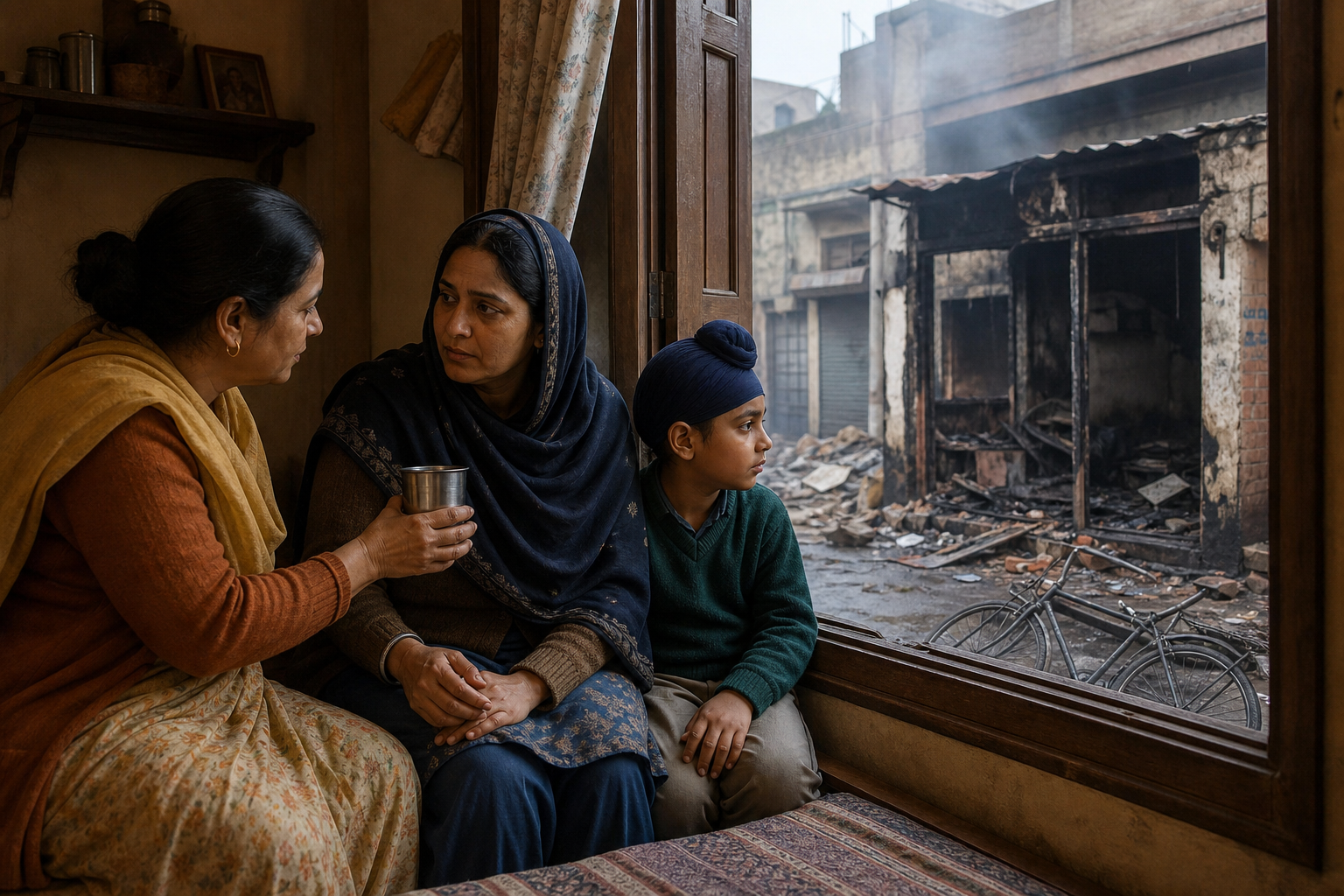
In Meerut, Jagtar Singh Cheema remembered Hindu neighbours Ashok and Ram, together with his landlord Pandit Nevla Prashad, standing by his Sikh family and taking care of them while fear and uncertainty gripped the city. Their names matter because moral language becomes credible when it is attached to identifiable people and definite actions.
The remembered facts are modest but important: a city, a vulnerable family, three protectors, established neighbourhood relationships, and care given during danger. They do not provide a minute-by-minute chronology, establish what happened in every Meerut locality or represent the experience of every Sikh family. A single testimony should be treated as testimony, not stretched into a universal claim.
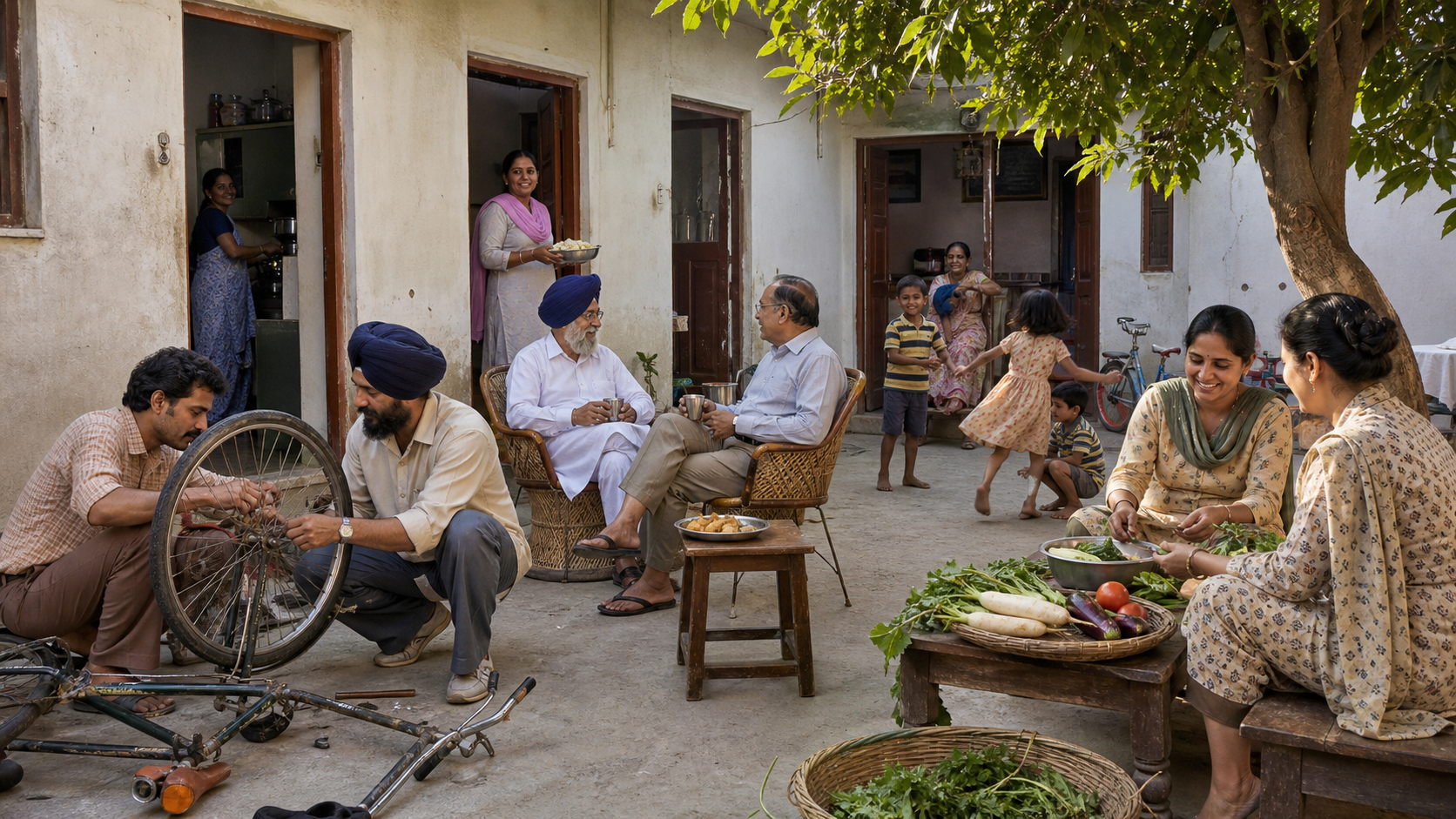
It still reveals something that broad political narratives often miss. Protection is delivered through relationships. A landlord decides whether a tenant is merely a source of rent or a person under his care. A neighbour decides whether the wall between two homes marks the end of responsibility. Familiar names, known doors and accumulated trust can become part of a community’s safety infrastructure.
This is why interfaith solidarity cannot begin and end with ceremonial meetings. The decisive preparation happens earlier: families know one another, ordinary assistance crosses religious lines, and people learn whom they can call without first negotiating identity. You cannot guarantee courage in advance, but you can remove the isolation that makes protection harder.
Four Dharmic duties meet the same civic test
Sikh, Hindu, Buddhist and Jain traditions are not interchangeable. Each has its own teachings, disciplines and history. Yet several of their central ethical ideas direct attention away from communal self-display and toward the suffering person in front of us.
- Sikh seva asks whether you are doing useful work for another person without making yourself the centre of the deed.
- Hindu dharma asks whether you will perform the right duty when silence or withdrawal would be easier.
- Buddhist karuna refuses to treat another person’s suffering as irrelevant merely because it belongs to someone outside your circle.
- Jain ahimsa requires more than refraining from a blow; it turns attention toward preventing injury and reducing the conditions in which harm can spread.
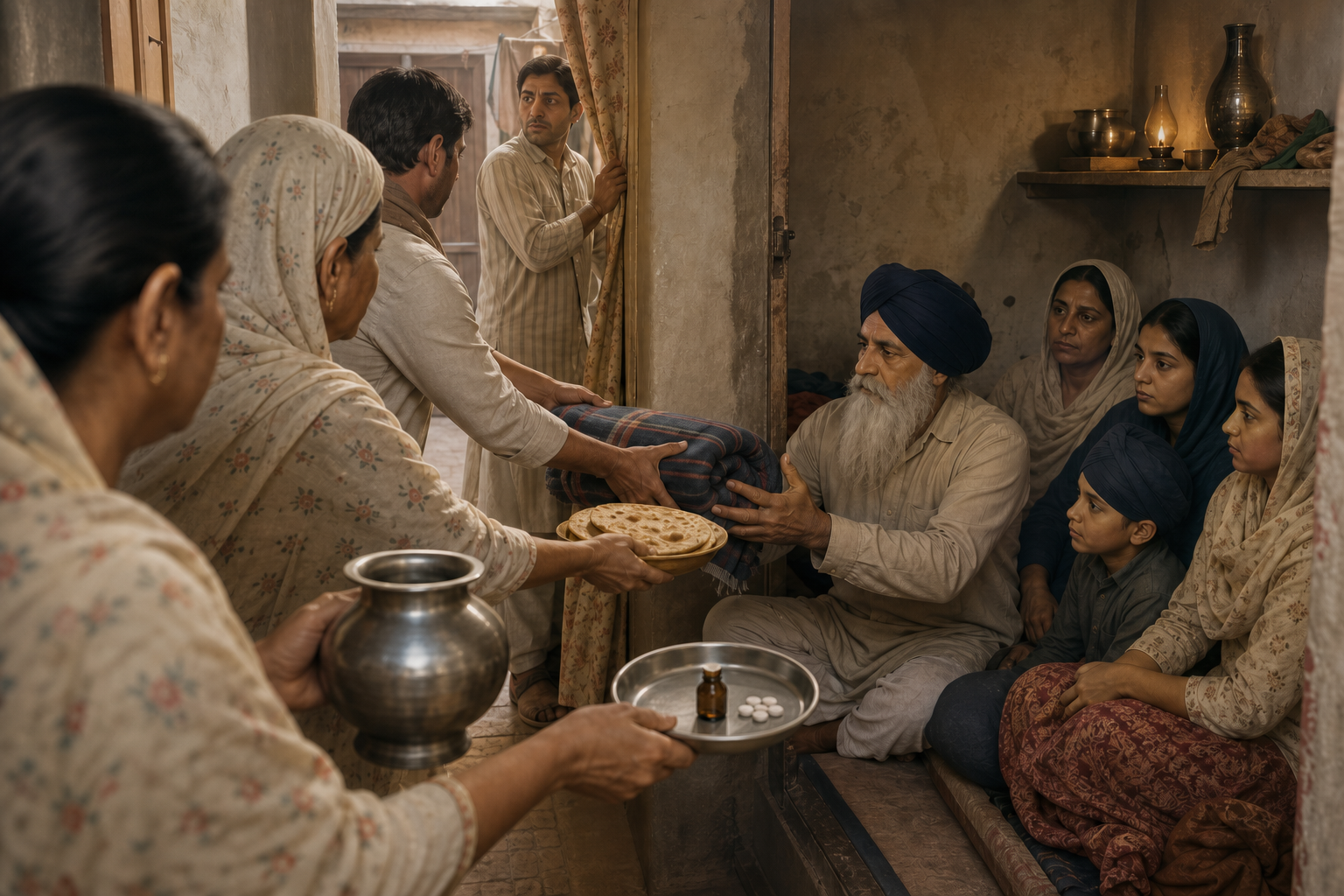
The practical test is simple: who becomes safer because of your conduct? A sacred word can be recited from a distance. Duty becomes visible in logistics – a protected doorway, food delivered, a warning verified, a child kept calm, an elderly person checked on, or a threatened family treated as one’s own neighbours rather than as representatives of another group.
This shared moral ground should not be used to erase religious differences. Its value lies elsewhere. It gives people with distinct convictions reasons, expressed in their own traditions, to defend the same human dignity. Interfaith solidarity is strongest when it does not demand theological sameness as the price of mutual protection.
Turn remembrance into neighbourhood readiness
If you teach, write or speak about communal violence, do not stop at saying that harmony is desirable. Build a record that preserves moral distinctions, then translate it into precautions that real neighbours can use.
- Name the harm precisely. Identify the community that was targeted and the place in which the remembered event occurred. Avoid language that makes organised targeting sound like an equal quarrel between anonymous sides.
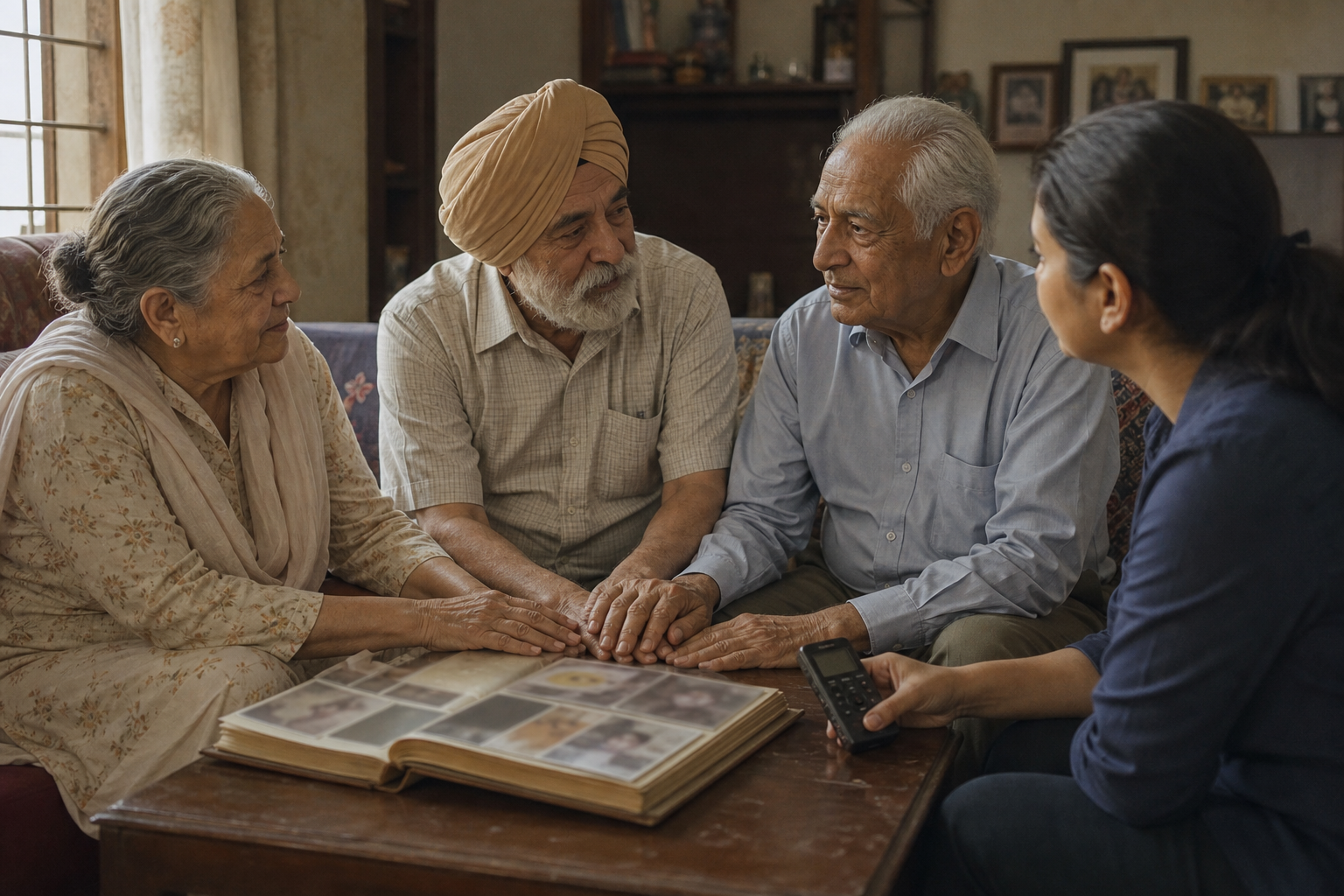
- State the scale of the evidence. Say whether you are recounting one family’s memory, several corroborated testimonies or an institutional record. Do not make a local rescue stand for an entire city, and do not use a citywide narrative to erase a household’s experience.
- Record actions, not just virtues. Ask who offered protection, what kind of care was provided, who else was present, what risks were perceived and what happened afterward. If the person remembering cannot supply a detail, leave the gap visible rather than filling it with dramatic reconstruction.
- Obtain consent before publishing identifying details. A survivor’s address, family links or present location may create privacy or safety concerns. Preserve testimony without making vulnerable people newly discoverable.
- Create a private cross-community contact chain. Include households from more than one religious community, people who can check on children or elders, and people who know how to reach local emergency services. Keep sensitive addresses and names out of public messaging groups.
- Choose safe functions before a crisis. Decide who can verify local information, make calls, provide food or medicine, maintain phone charging and offer temporary indoor shelter where it is safe. Do not ask untrained residents to confront a violent crowd. Protection means reducing exposure and contacting competent authorities, not staging avoidable heroics.
- Adopt rumour discipline. Do not forward an inflammatory claim merely because it matches existing fears. Confirm it through a known local contact or an accountable official channel, and correct false information in the same groups where it appeared.
- Separate relief from complete justice. Cheema also recalled that his family later received Rs 2 lakh in compensation during a Congress regime. Record such payment as part of the institutional aftermath. Do not describe money as erasing trauma or as proof that accountability and repair were complete.
This approach prevents two common failures. The first is sentimental remembrance, in which words such as unity and brotherhood float free of danger, decisions and consequences. The second is polemical remembrance, in which every person is reduced to a communal label and inconvenient acts of courage disappear. A trustworthy history has room for the victim’s wound, the neighbour’s duty and the institution’s unfinished obligations.
Key takeaways
- Interfaith protection does not reduce the seriousness of anti-Sikh violence; it identifies the people who refused to participate in its logic.
- The Meerut memory supports a specific claim about one Sikh family and three Hindu protectors, not a general claim about every neighbourhood.
- Seva, dharma, karuna and ahimsa offer distinct Dharmic reasons to protect a threatened neighbour.
- Compensation belongs in the historical record, but it is not equivalent to restored safety, accountability or erased trauma.
- Communities become more resilient when trusted contacts, safe functions, privacy rules and rumour verification exist before unrest begins.
Choose one concrete act this week. Sit with neighbours from more than one religious community, create a private contact chain and agree who will check on vulnerable households during unrest. Do not wait for danger to discover whether the person next door is only an address or a relationship.
References
