

If you have come to Bhai Vir Singh’s Jammu and Kashmir correspondence looking for a ready-made verdict on present-day Kashmir, slow down. A private request, blessing, report, or reflection cannot safely carry the weight of a political conclusion until you know who addressed whom, when, from where, and for what immediate purpose.
You will get more from the correspondence by asking a narrower question first: what can this particular exchange establish about a relationship, place, concern, and moment? That approach protects the record from polemical misuse while allowing its Sikh, Punjabi, and wider Dharmic significance to emerge on firmer ground.
Do not make Kashmir mean more than the evidence allows
The phrase “Jammu and Kashmir correspondence” gives you a scope, not a complete interpretation. For any individual item, Kashmir might be the writer’s location, the recipient’s location, the subject under discussion, part of a person’s identifying description, or an editorial label applied to a group of materials. Those possibilities are not interchangeable.
Before describing a letter as evidence about Kashmir, answer five questions:
- Is Bhai Vir Singh the sender, the recipient, or a person discussed by someone else?
- Does the date appear in the original text, on an envelope, or only in an editorial heading?
- Does a named place identify where the letter was written, where it was sent, or what it discusses?
- Is the surviving text complete, excerpted, translated, or reconstructed from another publication?
- Does the language address a public question, a personal need, an organisational matter, or a spiritual concern?
Until those points are clear, avoid saying that Bhai Vir Singh wrote “from Kashmir,” “to Kashmir,” or “about Kashmir.” One preposition can turn a modest archival fact into a much larger claim.
Geography also requires care. Jammu, the Kashmir Valley, a particular town, and a larger political unit are not synonyms. Preserve the place-name used in the item, then add a separate note explaining its geographical meaning. Do not silently replace a precise historical location with the broad word Kashmir.
The same restraint applies to chronology. A later political vocabulary should not be projected backward merely because modern readers associate the region with it. First reconstruct the immediate world of the exchange. Only then ask how that world relates to later events.
Build a letter record before forming an interpretation
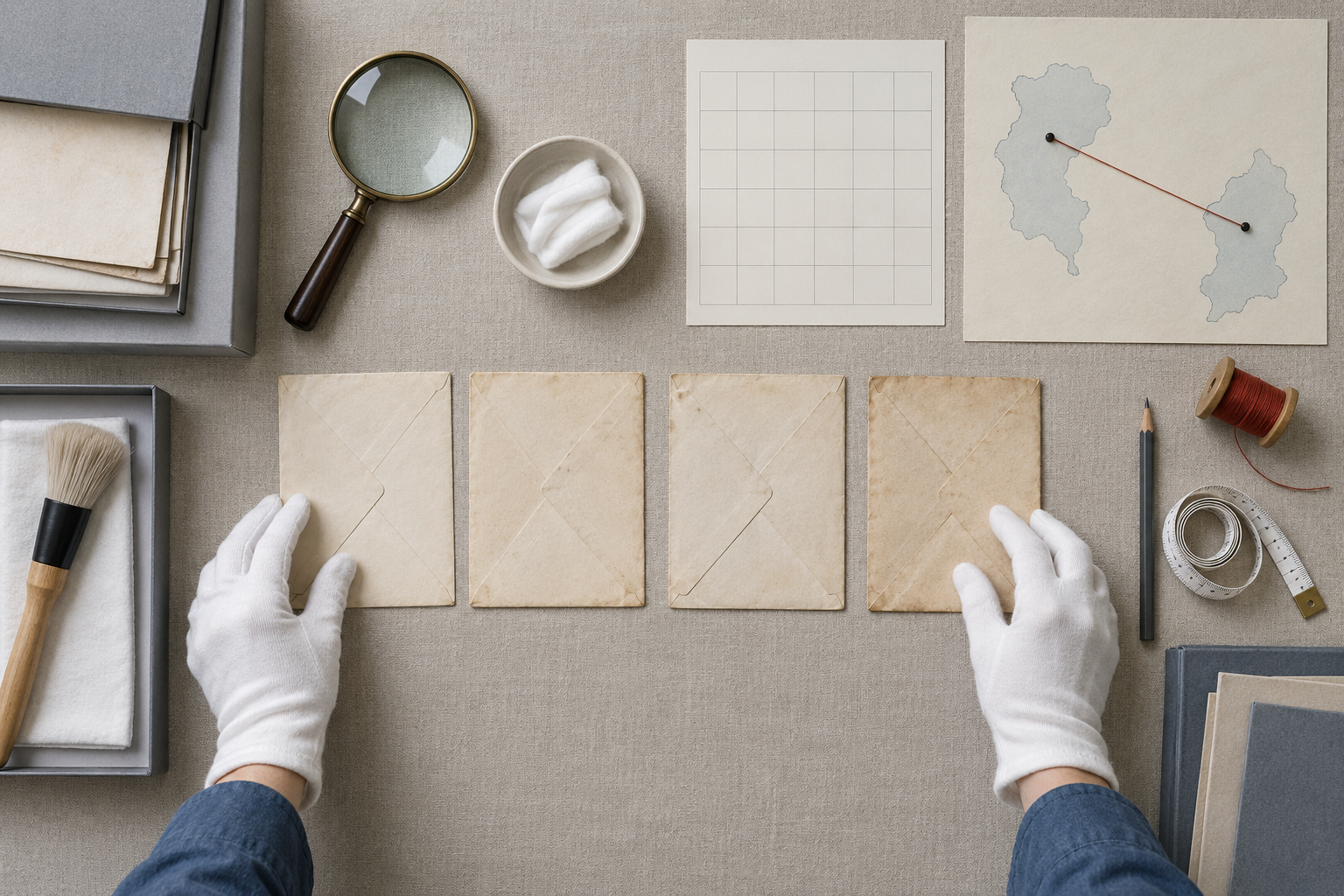
A serious reading begins with a simple working record. Create one row or page for each item and keep interpretation separate from transcription. Use these eight fields:
- Item identifier: Record the page, image, catalogue number, or other locator that will let another reader find the same item.
- Form available: Note whether you have a manuscript image, a printed transcription, a translation, an audio reading, or only an excerpt.
- Direction: Identify incoming and outgoing correspondence. Do not assume that every item in a collection was written by the person named in its title.
- Date: Copy the date exactly as presented. Keep uncertain, inferred, and incomplete dates visibly marked as such.
- Participants: Record sender, recipient, honorifics, kinship terms, and institutional roles without prematurely simplifying them.
- Place: Separate place of composition, destination, place discussed, and modern geographical identification.
- Immediate function: Classify the passage as a greeting, report, request, instruction, consolation, spiritual reflection, literary description, or another clearly observable function.
- Evidence limit: Write one sentence stating what the item does not establish on its own.
The final field is the most valuable. A request proves that something was requested; it does not prove that the request was fulfilled. A report proves that the writer communicated a claim; corroboration is still needed before you treat the reported event as settled fact. An instruction establishes an intention, not an outcome. An affectionate form of address can reveal the tone of a relationship without proving a formal institutional alliance.
Silence deserves even greater caution. Failure to mention a dispute, community, institution, or event does not prove indifference or opposition. The missing subject may have been irrelevant to that exchange, discussed elsewhere, understood by both correspondents, or absent because part of the sequence has not survived.
Translation can create another layer of false certainty. Keep the original term beside its English rendering when the equivalence is debatable. Distinguish a literal translation from a smoother literary one. Mark illegible words and editorial additions openly. Do not repair grammar, spelling, or syntax inside a quotation without telling the reader. Otherwise, an editor’s helpful English can quietly replace the historical voice you intended to study.
Read the relationship with both reverence and discipline
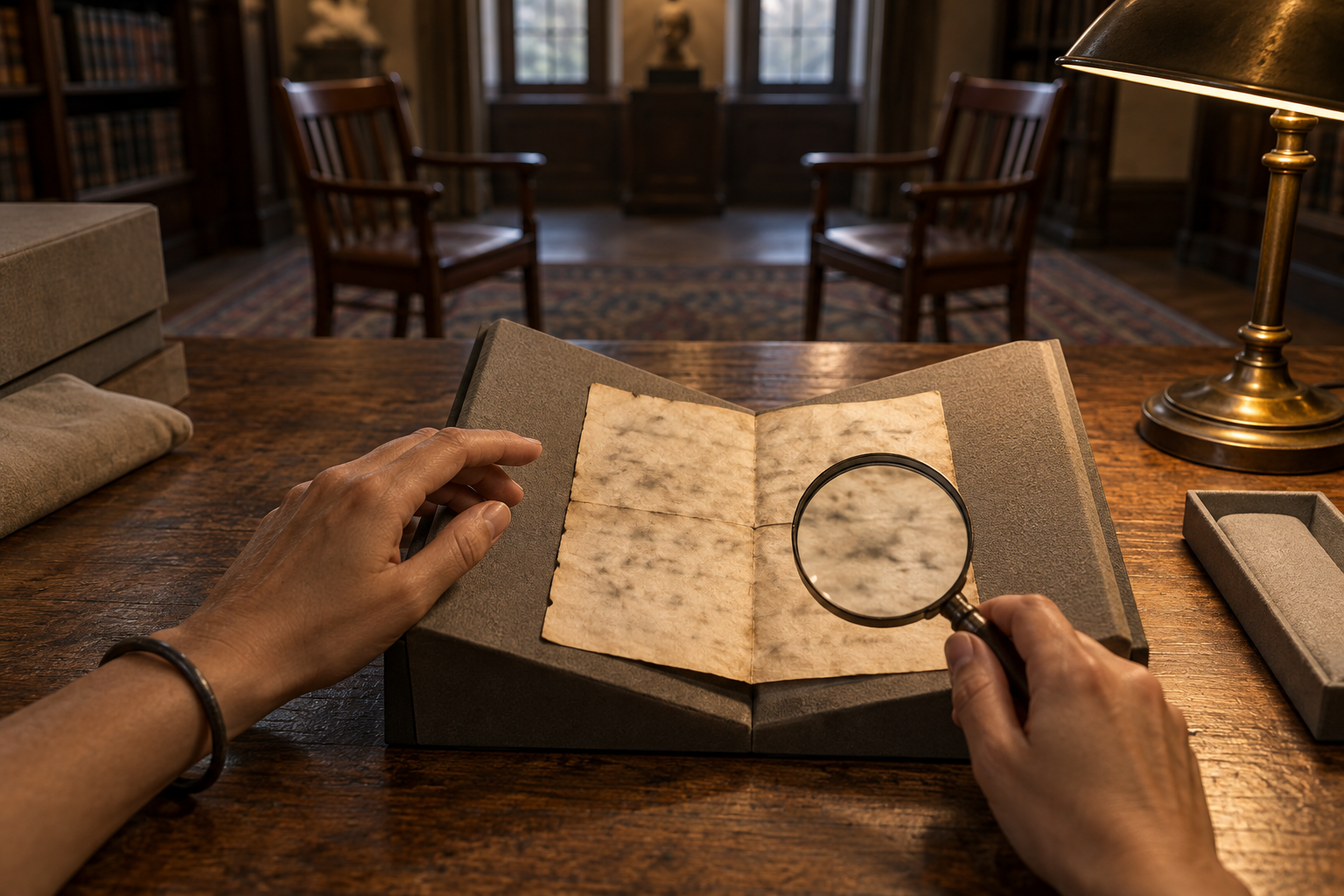
Correspondence is relational evidence. Even when only one side survives, every greeting, explanation, reminder, and blessing is shaped by an intended recipient. Read for that relationship before extracting a standalone quotation.
Two opposite errors are common when a revered Sikh figure is involved. The first turns every personal phrase into a formal doctrinal pronouncement. The second treats devotional language as decorative politeness and strips away the spiritual grammar through which the writer understood duty, affection, suffering, or place. Neither reading is adequate.
Use three passes for each item:
- Historical pass: Mark only explicit people, places, dates, actions, requests, and reported events. Do not interpret motive yet.
- Relational pass: Notice forms of address, differences in status, expressions of trust, corrections, obligations, and what the writer assumes the recipient already knows.
- Spiritual and literary pass: Examine metaphors, scriptural echoes, ethical vocabulary, and changes of tone. If a precise Sikh term appears, preserve it before reaching for a broad English label such as religion, spirituality, or mysticism.
This method also helps a wider Dharmic readership. Shared civilisational concerns can make comparison illuminating, but affinity is not permission to erase distinction. Interpret Sikh vocabulary within Sikh usage first. Compare it with Hindu, Buddhist, or Jain ideas only after you have established the original wording, context, and function. Otherwise, apparent unity may be produced by translation rather than found in the record.
A disciplined Dharmic reading joins satya with maryada: truthfulness about what is present and restraint about what is not. Reverence should make the standard of evidence higher, not lower. It protects Bhai Vir Singh from being reduced either to a decontextualised quotation or to a convenient spokesman for positions the correspondence has not actually established.
Key takeaways
- Treat Jammu and Kashmir as a question to investigate within each item, not as a meaning already supplied by the collection’s label.
- Separate sender, recipient, date, place, purpose, transcription, translation, and interpretation before drawing conclusions.
- Distinguish a request from its fulfilment, a reported claim from a verified event, and a private expression from a public position.
- Read devotional language neither as automatic doctrine nor as empty ornament.
- Connect the correspondence to a broader history only when contextual evidence supplies the missing bridge.
Turn one letter into usable public history
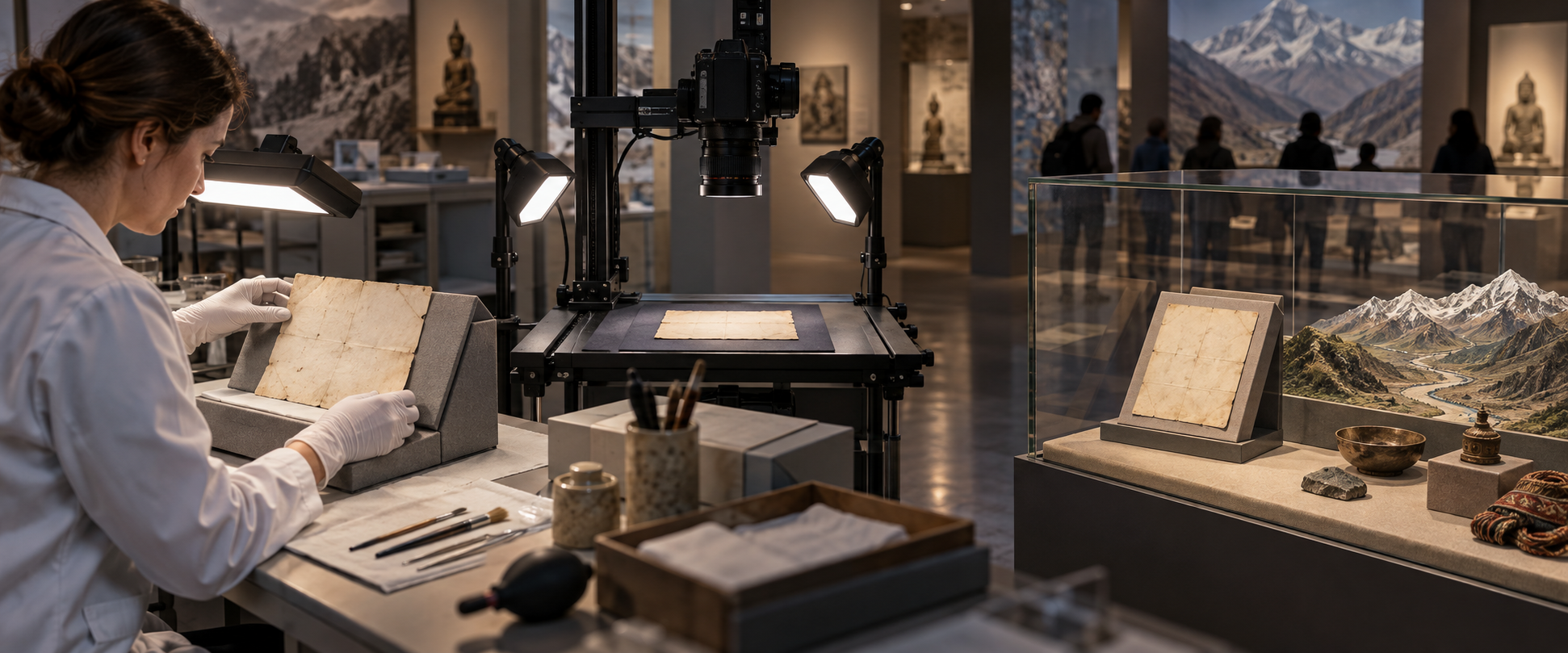
You do not need to master an entire archive before contributing something worthwhile. Begin with one item and prepare a compact dossier containing the image or precise locator, a faithful transcription, a literal translation, a short context note, and two separate lists headed “What this establishes” and “What remains uncertain.” That format makes your reasoning visible and correctable.
For a family reading group, gurdwara class, or Dharmic history circle, give three readers different tasks. One identifies only who, when, and where. Another studies wording, address, and metaphor. The third tests every proposed conclusion against the actual text. Compare their results before discussing whether the passage has wider historical significance. This prevents the strongest opinion in the room from becoming the evidence.
If you preserve a digital copy, keep the image, transcription, and translation as distinct files or clearly separated layers. Record where each came from and who introduced later corrections. A future reader should be able to tell where Bhai Vir Singh’s words end and where editorial explanation begins.
Start with that one carefully documented item. Once your reading can survive checks of authorship, direction, date, place, language, and evidentiary limit, you can connect it to the larger story of Sikh life and Jammu and Kashmir without forcing the conclusion in advance.
References

Leave a Reply
You must be logged in to post a comment.