
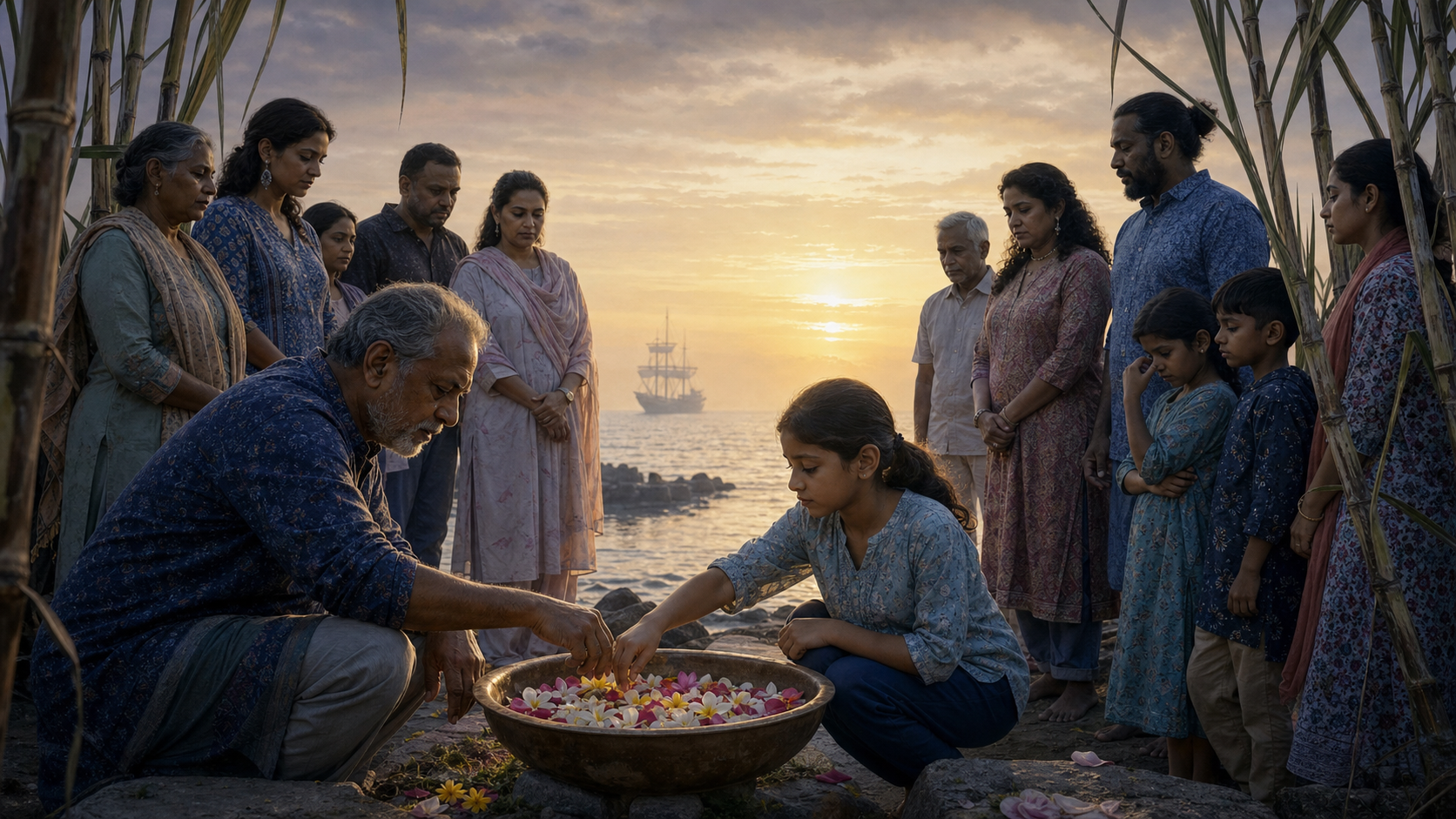
If your temple, cultural association, family network or civic committee is preparing an indenture commemoration, the hardest decision is not the venue or the date. It is what you want a young descendant to understand when the gathering ends. A ceremony that says only that the ancestors arrived can flatten the history. One that speaks only of suffering can leave their cultural achievement invisible.
Build the commemoration around three duties: name the indenture system honestly, honour the people who endured and transformed it, and give the next generation something they can carry forward. The framework below can guide an annual Girmitiya Day, a monument campaign, a school program, a family archive or a public reenactment.
Begin with a memory promise, not a program schedule
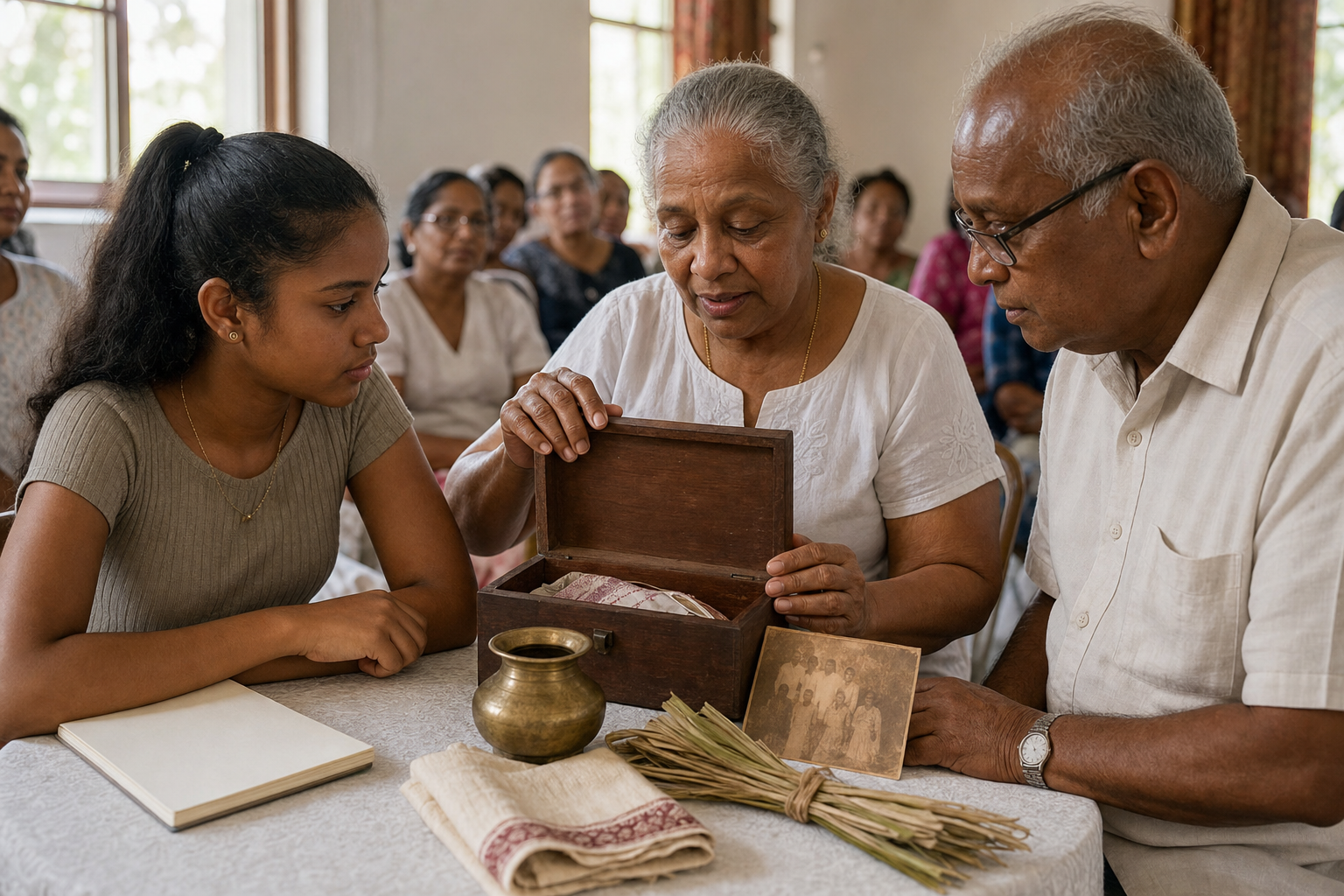
Before booking speakers or choosing performances, write a single sentence that completes this thought: “We commemorate our Girmitiya ancestors so that…” This is your memory promise. Every speech, prayer, inscription and cultural presentation should serve it.
A useful memory promise answers four questions:
- Whom are you honouring: indentured labourers, their descendants, or a broader group whose histories must be distinguished?
- What must be remembered about departure, arrival, labour, colonial pressure and community formation?
- Which languages, rituals, festivals, family traditions or forms of performance carried identity forward?
- What should a young person be able to explain, preserve or do after attending?
These questions prevent the event from becoming a generic celebration of “Indian culture.” Girmitiya memory concerns particular people, routes and places. It needs geographic and historical anchors.
The port area of Kolkata near the Ganges demonstrates why place matters. It contains the Kolkata Indenture Memorial, inaugurated in January 2011, and the Surinam Memorial, unveiled in October 2015. Kolkata was not merely a symbolic point on a map; it was a major centre of departure and a place where the indenture system’s legislative machinery was sustained. The location therefore helps tell the history.
Apply that principle to your own site. A waterfront can connect memory to arrival. A temple can show how ritual continuity outlived colonial disruption. A civic building can declare that Girmitiya history belongs in the national record, not only within a descendant community. If a location has no evident connection, explain why the community has chosen it.
Create an evidence ledger while planning. Separate confirmed historical facts, family testimony and the committee’s interpretation. Record the origin of each name, date and claim used on a plaque or in a script. Oral memory is not inferior to an administrative record, but it is a different kind of evidence and should be identified honestly. This simple discipline protects family testimony without presenting every inherited recollection as independently verified fact.
Define the historical scope just as carefully. The Barachois Memorial in Réunion, unveiled in October 2015, explicitly pays tribute to Indian slaves, indentured labourers and free servants. Those groups belong within a connected history, but they are not interchangeable. If your local story includes more than one status or migration stream, name each group rather than compressing everyone into one category.
Make place, performance and transmission reinforce one another
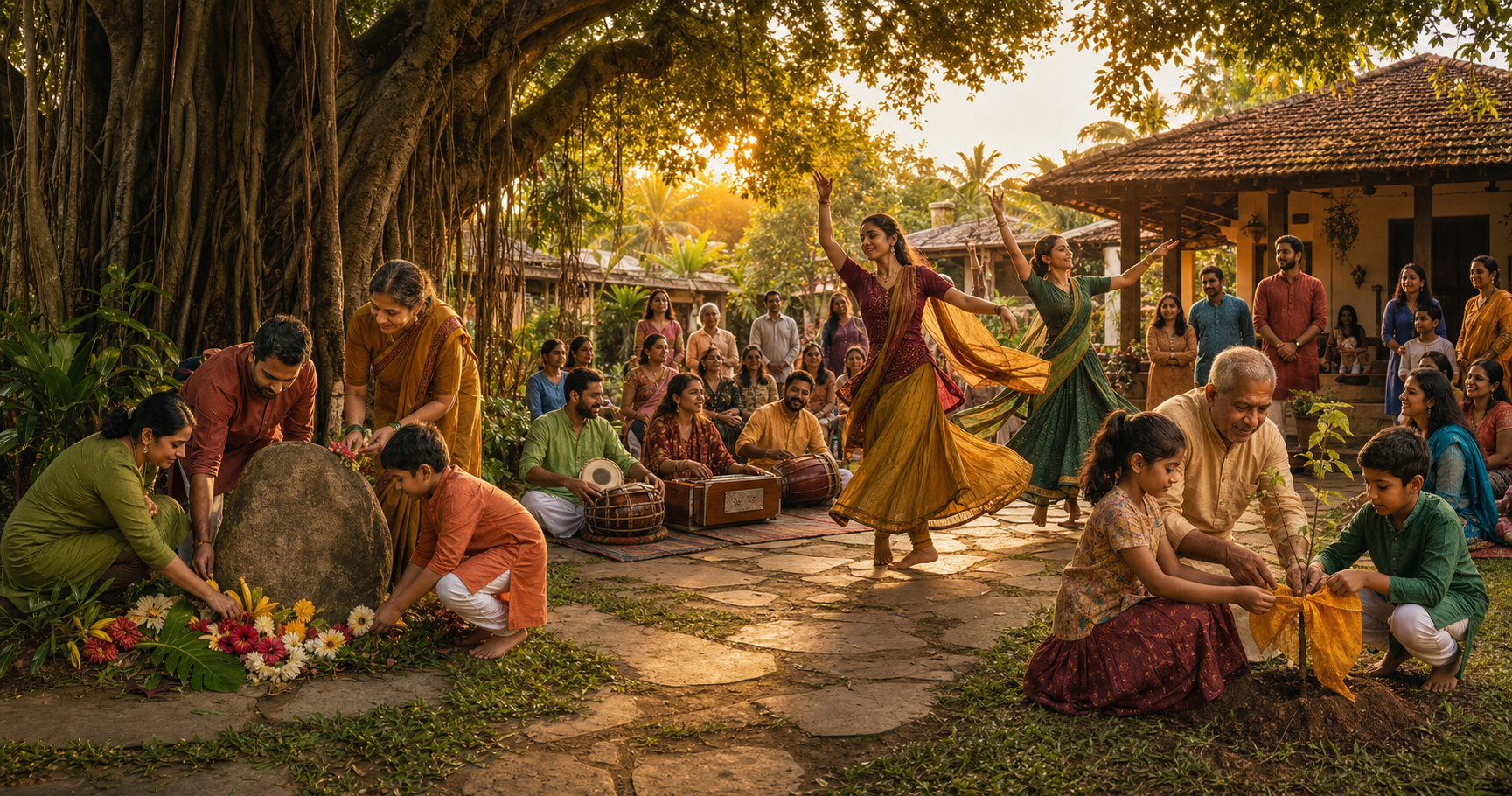
A durable commemoration needs more than a successful annual function. It should work in three connected forms:
- Place: a monument, plaque, departure or arrival site, temple, museum display or other physical marker.
- Performance: prayer, narration, reenactment, music, dance, festival practice or dramatic interpretation.
- Transmission: an archive, school resource, family recording, youth role or other means by which memory moves beyond the people currently in the room.
A physical marker must be understandable when no organiser is standing beside it. Its inscription should identify whom it honours, what happened, why the location matters and where a visitor can find a fuller record. Decide who will maintain it, correct damage and preserve the supporting material before unveiling it. A neglected marker can unintentionally communicate that the history itself has been abandoned.
Performance gives the marker a recurring public life. Annual arrival commemorations across Girmitiya communities have used traditional prayers, dances and public reenactments to preserve heritage and strengthen cohesion. In Réunion, temple ritual, festivals and the dramatic form known as Balataum helped transmit historical and mythological memory even as colonial assimilation weakened Tamil across generations. These practices show that ritual and performance can function as archives, not merely as entertainment.
Treat sacred elements accordingly. Do not place a prayer in the program merely to give the stage an “Indian” atmosphere. Identify the tradition, preserve its integrity and explain why it belongs to this community’s memory. Where several traditions are represented, let each be named rather than blending them into a vague version of spirituality.
A reenactment also needs historical framing. Costumes, music and an imagined shipboard scene can create emotional immediacy, but spectacle without context can turn ancestral suffering into scenery. A responsible sequence can move through the following elements:
- State the place, period and community being represented.
- Offer the appropriate ancestral invocation or prayer.
- Narrate what is historically established about departure, arrival and indenture.
- Use drama, dance or music to embody memory without presenting invented dialogue as a documented quotation.
- Give descendants space to explain what their ancestors preserved and created.
- Direct the audience to an archive, memorial, family-history project or future observance.
Transmission is the part committees most often leave implicit. Give young participants responsibility for something durable: recording an elder with consent, transcribing a family account, preparing a bilingual label, introducing a ritual, mapping a migration connection or producing a school handout. Preserve the event’s full title, date, location, program, participant names and recordings in a repository the community can still access after committee membership changes.
Choose the name with the descendant community

“Indian Arrival Day” and “Girmitiya Day” do different work. Arrival language directs attention toward the beginning of a community in a new land. Girmitiya language directs attention toward the ancestors and the historical condition imposed on them. Neither label should be adopted automatically, because the name determines which part of the story the public sees first.
Indo-Fijian organisers in Canada deliberately adopted Girmitiya Day while trying to protect a distinct history that could otherwise disappear inside the much larger South Asian category. Official proclamations from the City of Surrey and the Province of British Columbia show that a community-defined name can enter civic language without first surrendering its specificity.
Use a simple decision test:
- Choose Girmitiya Day when the principal purpose is to honour indentured ancestors and confront the system that shaped their migration.
- Retain Indian Arrival Day where it is an established public observance and the program still names indenture rather than reducing the occasion to a cheerful arrival story.
- Use a combined title or explanatory subtitle when the public recognises one term but descendants prefer another. “Girmitiya Day: Remembering the Indentured Bhartiyas and Their Living Heritage” is clearer than expecting an unfamiliar audience to infer the meaning.
Define Girmitiya on first use as an indentured Bhartiya labourer or descendant in the context relevant to your event. Explain why you use Bhartiya, Indian, Indo-Fijian, Indo-Caribbean, Tamil or another community name. Precision is especially important in a place such as Canada, where Indo-Fijian identity can be overshadowed by a broader South Asian label, or Réunion, where Indian ancestry developed under a different colonial and linguistic history.
Run the naming discussion with descendants from the communities being represented, including younger participants. Record the final wording and the reasons for it in the organising archive. That record will help a future committee understand that the title was a historical and ethical choice, not a branding exercise.
Seek public recognition without confusing its forms
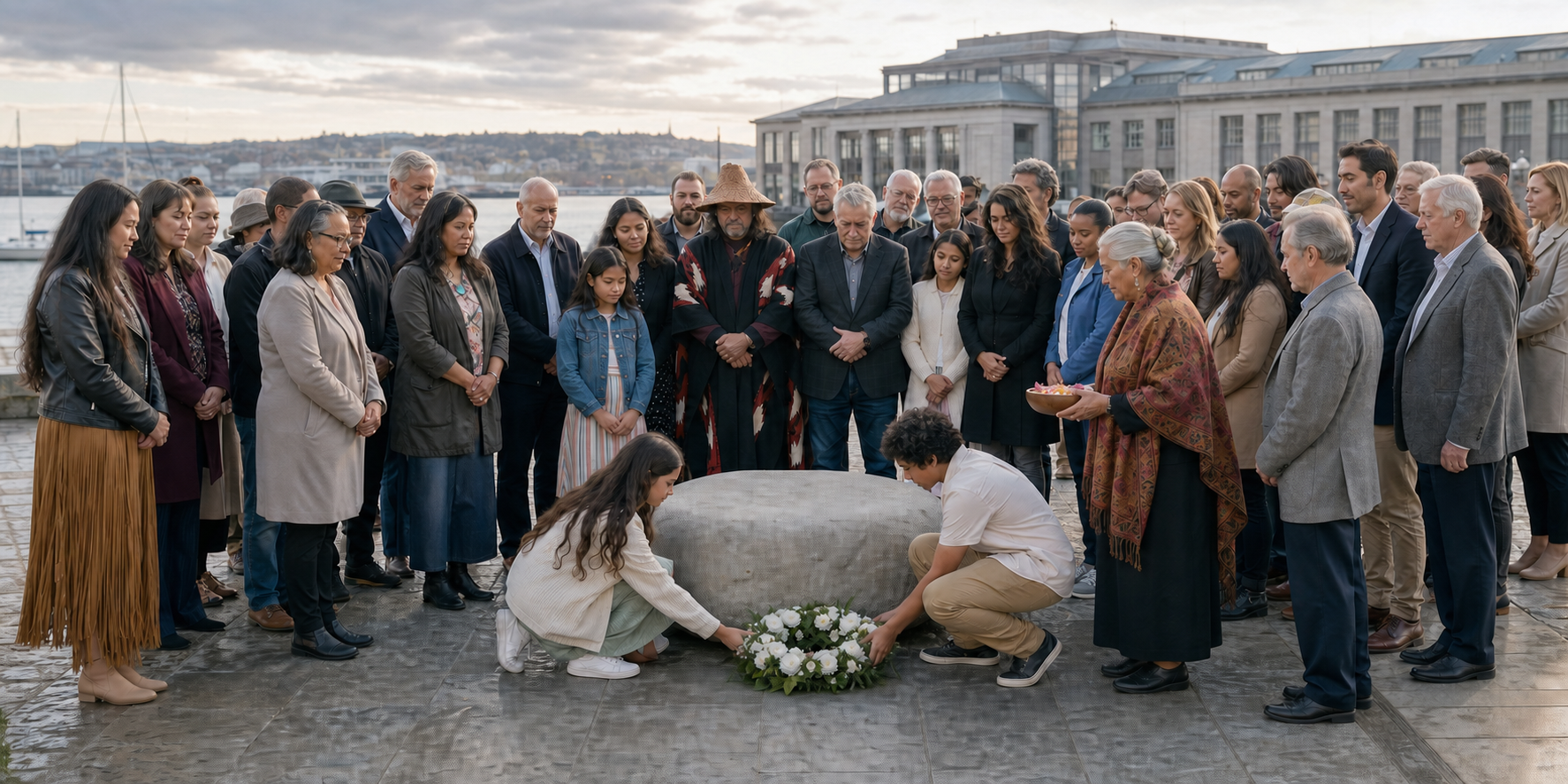
A community observance, civic proclamation, national holiday, monument and heritage designation are not interchangeable achievements. Each makes a different public claim. Confusing them can damage credibility: a proclamation is not a statutory holiday, and a campaign for heritage recognition is not the designation itself.
Girmitiya communities have already pursued several routes. Some countries have enacted laws making arrival anniversaries official national holidays. Surrey and British Columbia have issued proclamations recognising Girmitiya Day. International advocates have also sought collaboration with the Archaeological Survey of India in support of UNESCO heritage recognition for historic departure depots. This range of efforts shows why your committee should decide exactly what recognition it is requesting before approaching an institution.
Prepare a concise recognition brief containing:
- The exact name and date of the observance.
- A factual account of its local connection to indenture.
- The communities and organisations supporting it.
- The commemorative program and its educational purpose.
- The precise action requested, such as a proclamation, marker, recurring observance or heritage assessment.
- A continuity plan showing who will organise, maintain and archive the work.
Ask for the appropriate form of recognition, then describe the result accurately. If you receive a proclamation, publish its exact wording. If you seek a monument, resolve the inscription, location, access and maintenance responsibilities. If you support a heritage campaign, distinguish advocacy from formal recognition at every stage.
Institutional support can extend the reach of a commemoration, but descendant communities should retain authority over how their ancestors are named and represented. Review proposed civic wording before submission. Correct language that converts indenture into uncomplicated migration, and resist any version that celebrates cultural colour while removing the colonial system from view.
The strongest projects also connect both ends of the journey. Memorials at departure points in Bharat and observances in Fiji, Mauritius, Réunion, South Africa, Guyana, Suriname, Trinidad and Tobago, and descendant communities elsewhere belong to a linked geography of remembrance. A partnership between these places can help families see Girmitiya history as a connected Bhartiya and global inheritance rather than an isolated national episode.
Key takeaways
- Write a memory promise before designing the ceremony or monument.
- Name the indenture system, the specific community and the place connecting them.
- Combine a physical marker with recurring performance and a durable archive.
- Treat prayer, temple ritual, festival and drama as carriers of memory, not decorative additions.
- Let descendants decide whether Girmitiya Day, Indian Arrival Day or a combined title best serves the local history.
- Request civic recognition precisely, and never describe a proclamation, holiday or heritage campaign as something it is not.
At your next planning meeting, do not begin with the stage, catering or guest list. Agree on the memory promise, the name of the observance and the evidence behind its central claims. Then assign responsibility for the archive. Those decisions determine whether you create a temporary event or a living inheritance that the next generation can recognise as its own.