

Historical endurance and historical recognition are not the same achievement. One source follows Advocate Monoranjan Dhar through major struggles and institutions in Bengal and Bangladesh, yet asks why his service did not receive the country’s highest civilian honours. The other examines how Girmitiya communities carried Hindu traditions across plantation societies, then asks whether materially successful Hindu Americans can sustain the same inheritance.
Read together, the accounts reveal two routes by which a legacy can disappear. Public institutions can fail to commemorate a contributor, while families can retain an identity but lose the practices that give it substance. The comparison offers a broader framework for preserving Hindu history: document service, scrutinise omissions, maintain living traditions, and build institutions capable of passing both memory and meaning forward.
Neglect occurs both above and below the level of the state
The two sources address different places, periods, and kinds of evidence, so they do not independently corroborate each other’s historical particulars. Their common ground is interpretive. Each describes resilience as an accomplishment that can later be obscured, whether through incomplete public remembrance or weakened intergenerational transmission.
In the Dhar account, neglect is primarily civic and institutional. A political figure is presented as having participated in anti-colonial resistance, the Language Movement, the Liberation War, constitutional affairs, and early state formation, but without receiving either the Independence Award or the Ekushey Padak. The article describes the former as Bangladesh’s highest state honour and the latter as one of its most prestigious civilian recognitions. It treats their absence as a historical question rather than providing a documented explanation for it.
In the Girmitiya account, the immediate historical problem is almost the reverse. Communities with little formal power preserved religious life through households, elders, oral memory, worship, festivals, and gradually constructed institutions. The later danger identified by the article is not an official refusal to honour that inheritance, but the possibility that descendants may possess social standing and financial security without acquiring language, ritual understanding, or a durable relationship with Dharma.
This distinction matters. State recognition can place a life within national memory, but it cannot by itself make that memory culturally active. Household practice can keep a tradition alive, but it may not secure an accurate place for its contributors in textbooks, archives, awards, or public narratives. A resilient community needs both forms of preservation.
A public life can outgrow the stories told about it
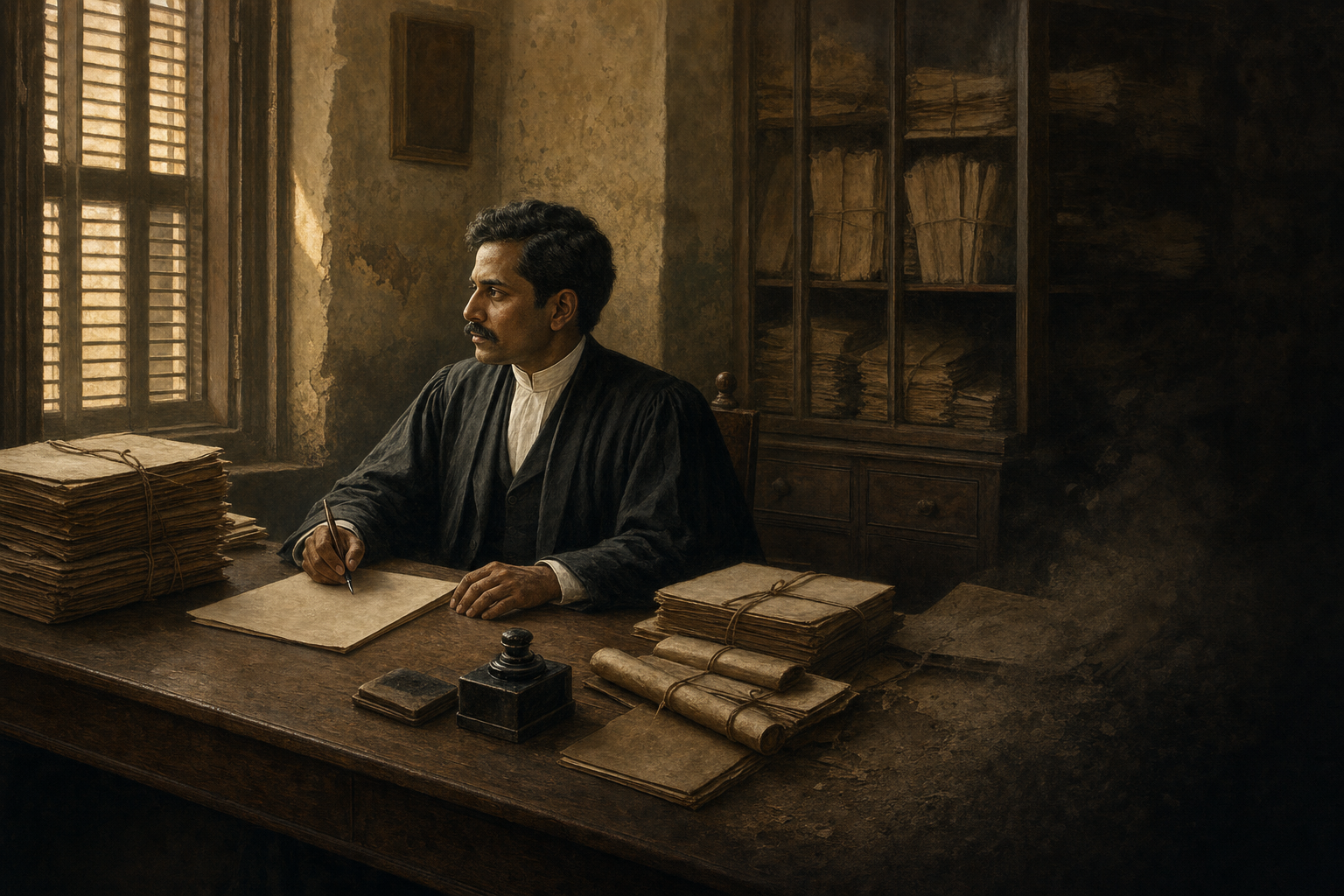
The Monoranjan Dhar article presents a career that crossed several political worlds. It reports that Dhar was born in 1904 in present-day Kishoreganj District, became associated with the Jugantar movement as a teenager, participated in the Non-Cooperation Movement, and acquired master’s and law degrees from the University of Calcutta. It also places him in student leadership, journalism, the Chittagong Armoury Raid, and the movement against the Holwell Monument.
According to that source, British authorities imprisoned Dhar from 1940 until 1946. He then entered the Bengal legislature, participated in Gandhi’s peace mission in East Bengal after partition, and served as general secretary of the Pakistan National Congress. The article further reports his imprisonment during the 1952 Language Movement, election to the East Pakistan Assembly in 1954, appointment as East Pakistan’s finance minister in 1956, and later association with the Mujibnagar Government, early diplomacy, constitutional law, and post-independence governance.
The importance of this chronology lies less in the number of offices than in the boundaries it crosses. Revolutionary resistance, non-violent mobilisation, electoral representation, minority participation, linguistic rights, and state-building are often narrated as separate chapters. A person active across those chapters may fit none of their simplified commemorative categories. The resulting fragmentation can make an extensive public life surprisingly difficult to see as a whole.
The source’s question about national honours should therefore prompt documented historical review, not automatic canonisation. The relevant work would include verifying the record, examining applicable award criteria, locating archival material, and distinguishing an unexplained omission from a demonstrably discriminatory one. Correcting neglect requires evidentiary care; otherwise, a thin official narrative may merely be replaced by an equally thin celebratory narrative.
Girmitiya survival shows how inheritance becomes practice
The Girmitiya article moves from the career of an individual to the endurance of dispersed communities. It describes Indian indentured labourers in Fiji, Guyana, Trinidad, Suriname, Mauritius, South Africa, and other plantation societies as living under economic compulsion, weak legal protection, racial hierarchy, difficult labour conditions, and separation from ancestral homes. The term Girmitiya, it reports, developed from the colonial word agreement as pronounced by labourers.
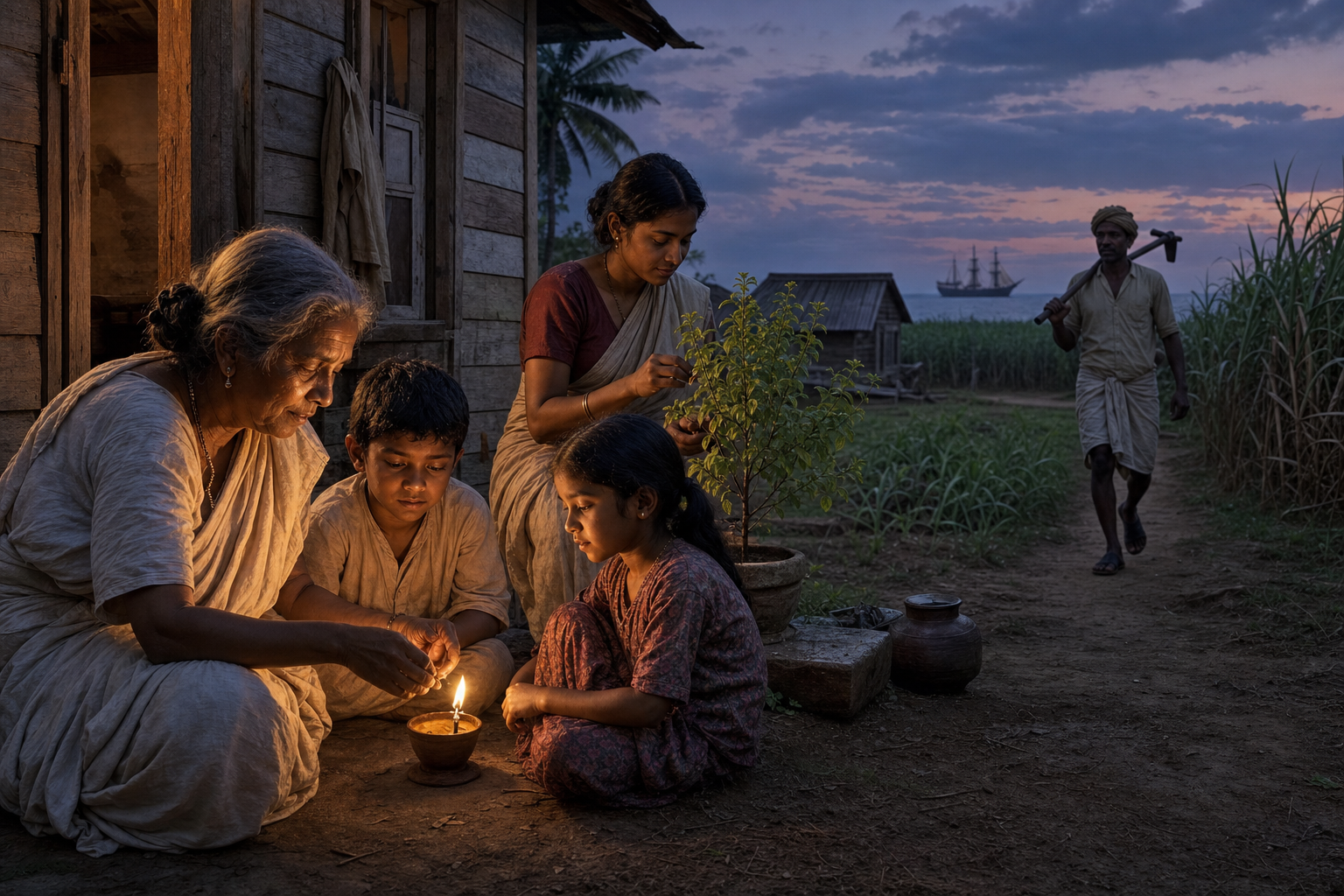
The source does not present survival as effortless or complete. It acknowledges trauma, violence, poverty, broken lineages, and the loss or compression of language and ritual knowledge. What endured did so through limited but repeatable means: remembered sacred narratives, small objects of worship, household observances, bhajans, samskaras, elders’ instruction, and communal gatherings. Mandirs and more formal organisations developed from this less visible foundation.
Festivals acquired a function beyond occasional celebration. The article portrays Diwali, Holi or Phagwa, Navaratri, Ramleela, katha, puja, and communal meals as ways of rebuilding a moral and social world after older networks had been disrupted. It highlights Ramleela in Trinidad and Guyana as a public medium for transmitting story, ethics, language, and belonging. In this account, culture survived because it was enacted repeatedly, not merely remembered sentimentally.
The article then turns that history into a challenge for Hindu Americans. It warns that professional success, high income, prominent temples, and public festivals do not necessarily produce ritual literacy or intergenerational continuity. The historical situations should not be treated as morally equivalent: colonial indenture and contemporary prosperity impose radically different conditions. The valid comparison concerns transmission. Scarcity does not make continuity impossible, and abundance does not make it automatic.
Key takeaways
- Survival, recognition, and transmission are separate achievements; success in one does not guarantee the others.
- Historical neglect can be institutional, as when a consequential public career is poorly integrated into national memory, or intergenerational, as when inherited identity loses its practices and vocabulary.
- Resilience depends on repeatable forms: reliable records in public history and recurring study, worship, language, service, and mentorship in community life.
- Honours and monuments have value when supported by evidence, while festivals and temples have lasting force when connected to education and daily formation.
- Prosperity becomes cultural strength only when resources are converted into teachers, archives, curricula, scholarship, leadership, and accessible institutions.
Turning remembrance into a system of succession
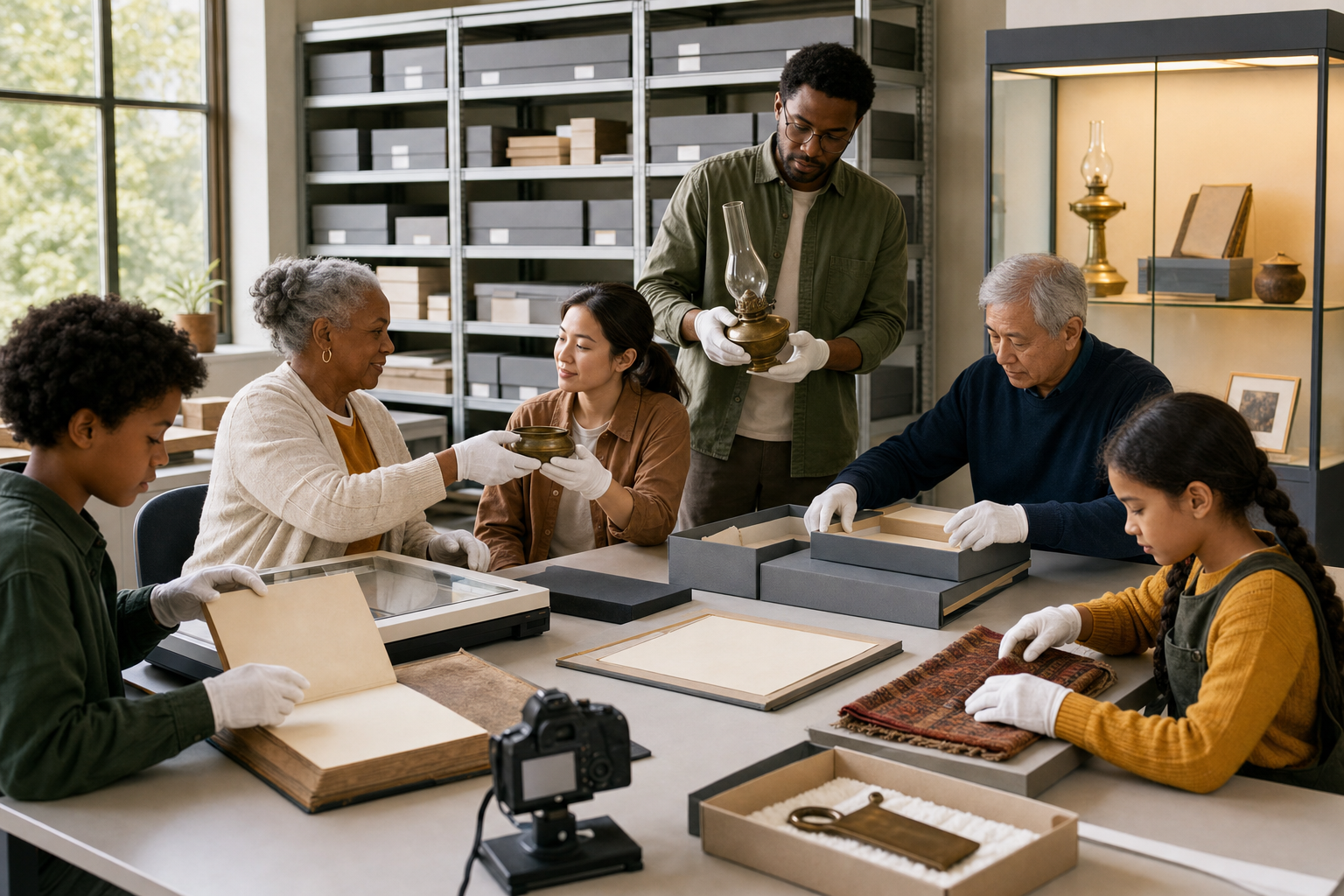
The first practical requirement is to treat archives as infrastructure. Lives such as Dhar’s cannot be evaluated fairly if evidence remains dispersed across political movements, legal records, regional histories, and minority narratives. Biographical research should connect these fields, identify which claims come from which records, preserve disagreement, and make primary material accessible. Public recognition can then emerge from a transparent assessment rather than from reputation alone.
The corresponding task for diaspora communities is to connect occasions with formation. A festival can lead into sustained study; a mandir can support teachers as well as buildings; family worship can include explanation as well as repetition; and language instruction can preserve concepts that translation only partly conveys. The Girmitiya account particularly supports overlapping institutions, including family practice, religious education, youth mentorship, arts, service, and intellectual training. Their strength lies in reinforcing one another.
Recognition and transmission must also meet. A young person who learns ritual without history may inherit practice but not understand the people who defended the conditions for its survival. A reader who encounters a statesman only through an award campaign may learn a name without grasping the ethical and cultural world in which that person acted. Biography should therefore enter community education, while living traditions should give historical remembrance a setting beyond anniversaries.
The next stage of Hindu resilience is not merely to endure. It is to create systems in which service is documented before it disappears, traditions are taught before they become decorative, and prosperity is deliberately converted into continuity.
References
- DharmaRenaissance Blog – The Overlooked Legacy of Monoranjan Dhar in Bangladesh’s Fight for Freedom
- DharmaRenaissance Blog – Girmitiya Resilience and the Urgent Test Facing Prosperous Hindu Americans