
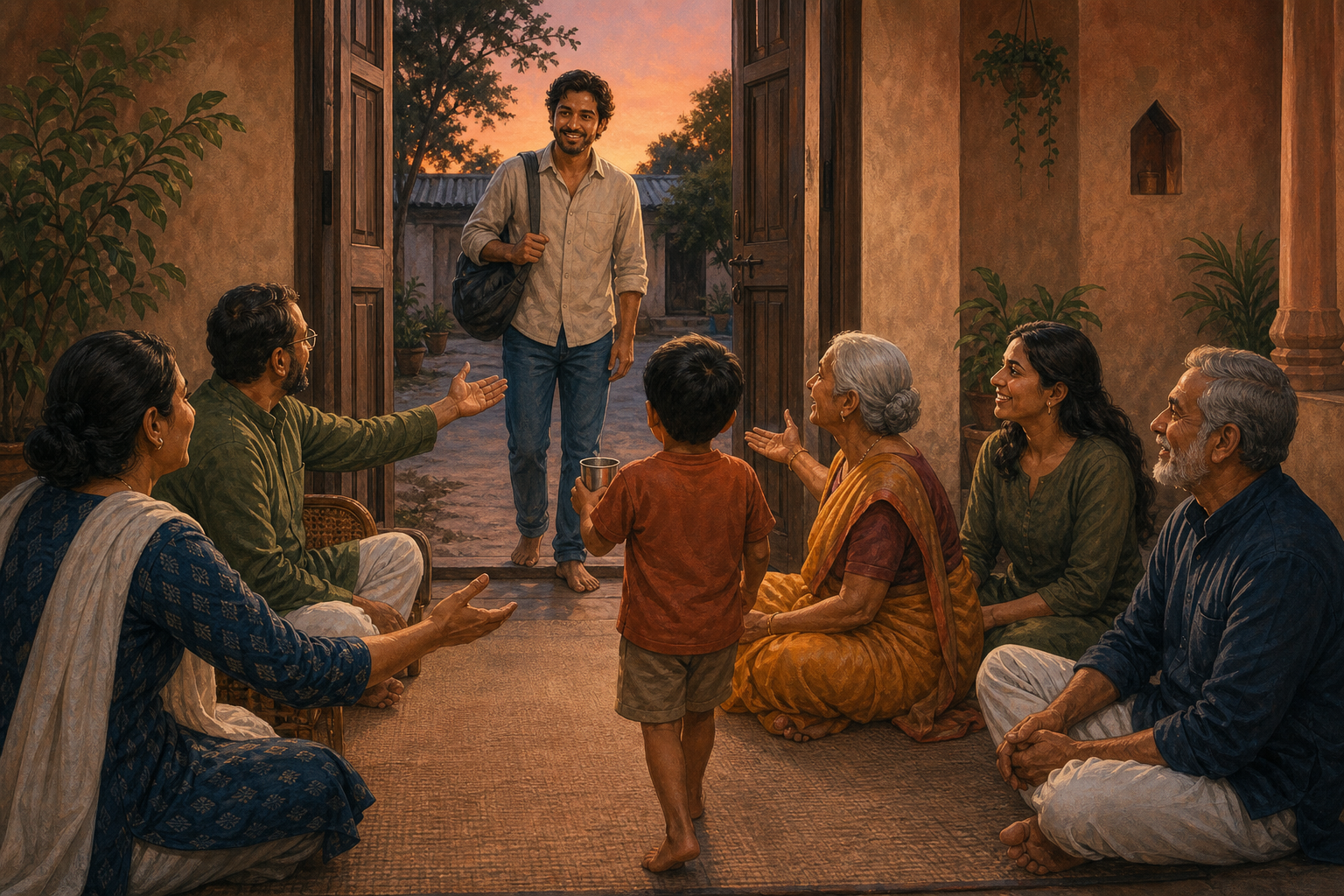
If you are considering Ghar-Wapsi for yourself, helping a family reconnect with ancestral practice, or deciding whether a community initiative deserves your support, the decisive question is not whether a ceremony can be arranged. It is whether the person will be treated as a full member after the lamps are extinguished and the gathering disperses.
History supplies precedents for return, literature reveals its inner tensions, and social experience exposes the point at which many efforts fail: reception. A sound approach joins all three. It protects freedom of conscience, uses a rite appropriate to the person’s tradition, and secures ordinary belonging without stigma.
Key takeaways
- Ghar-Wapsi is properly understood as a voluntary return to an ancestral Dharmic path. Pressure, material inducement, intimidation, or a decision imposed by relatives defeats the meaning of homecoming.
- A ritual can mark a return, but it cannot complete social reintegration. Temple access, participation in festivals, friendship, kinship, and respect in daily life matter after the ceremony.
- Historical precedents are plural. Vijayanagara, Maratha, Arya Samaj, and textual frameworks of restoration did not produce one universal procedure for every Hindu sampradaya.
- Literature is useful for understanding memory, identity, loss, and acceptance. It should not be used as archival proof for a date or historical event.
- Layered customs among communities such as the Meos and Malkana Rajputs should invite careful listening, not presumptions about what people secretly believe or what they owe anyone.
- The practical standard is simple: consent must be specific, the rite must be dignified, publicity must be optional, and community support must continue after the public moment.
History offers several models of return, not one fixed formula
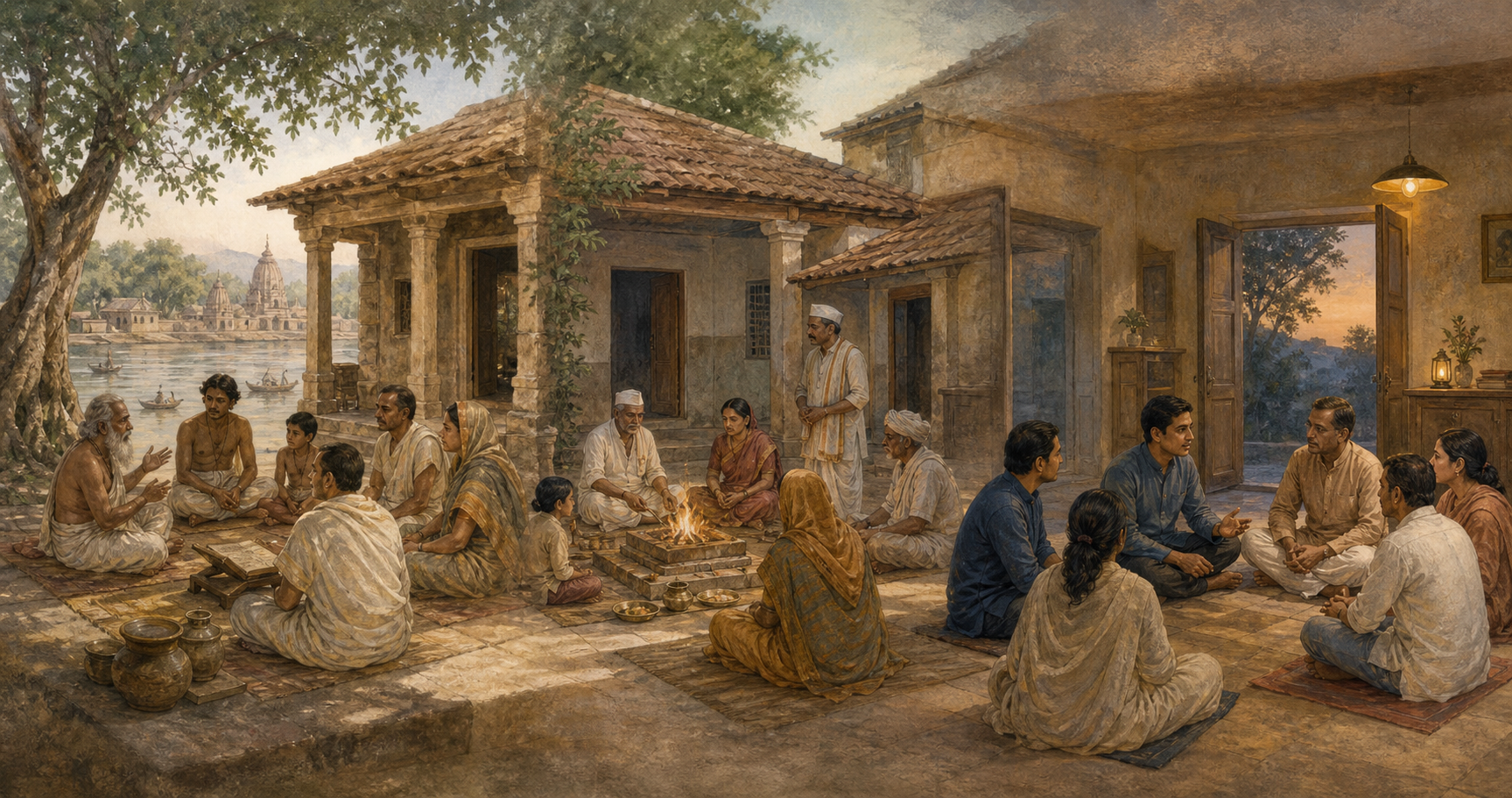
Ghar-Wapsi, literally homecoming, is the widely used modern expression. Parāvartana, or turning back, and Shuddhi, purification or restoration, belong to an older religious vocabulary. These terms overlap, but they are not interchangeable in every context. A person resuming a family tradition, a group returning after coercive conversion, and someone newly entering a Hindu path may all need different pastoral and ritual responses.
That distinction matters because Hindu history does not support the claim that return has always been impossible. It supports a more careful conclusion: communities found ways to restore people when religious authorities and social institutions were willing to do so.
One striking episode is associated with the Bahmani-Vijayanagara conflict in 1398 CE. Tajuddin Firuz is described as having forcibly converted thousands of Hindu captives and held them while pressing Harihara II for a treaty. A mass Shuddhi ceremony subsequently received the captives back. The importance of the episode is not merely its scale. It shows a society distinguishing an act imposed under captivity from a freely chosen abandonment of ancestral Dharma. Restoration answered coercion without making its victims bear a second punishment through permanent exclusion.
Under the Marathas, religious restoration appears in a more institutional form. Chhatrapati Shivaji Maharaja’s council included the Panditarao, who could convene learned Brahmanas to consider the return of people forcibly converted under Mughal power. The mechanism is instructive. A recognised office brought qualified authorities together, creating social legitimacy around the decision instead of leaving a returning family to negotiate separately with every gatekeeper.
The Arya Samaj later placed Shuddhi at the centre of organised Hindu reform. Swami Dayananda Saraswati gave the movement its intellectual direction, while Swami Shraddhananda led return campaigns on a large public scale. Shraddhananda’s assassination also shows that such work unfolded amid grave communal tension. His courage should not be converted into a licence for carelessness. Anyone invoking this legacy should pair conviction with non-violence, truthful communication, and protection of the people whose lives will continue after public attention moves elsewhere.
Older ritual vocabularies such as Vratya-stoma, Mlēccita-śuddhih, and community-led samskaras further weaken the rigid assertion that Hindu identity can only be inherited at birth and can never be restored. P.V. Kane also discussed a simplified form of Parāvartana. These precedents establish possibility; they do not create a single ceremony that every lineage must copy. A Vedic rite, an Arya Samaj process, and the practice of a particular sampradaya may differ in authority, form, and meaning.
If you are arranging a return, use history to ask the right question: which recognised practice can receive this person within the tradition they genuinely wish to follow? Do not select the most dramatic rite found in a historical reference and transplant it into a living community. Consult a competent acharya or authorised institution from the relevant lineage, explain the person’s circumstances honestly, and ask what is necessary rather than what would make the largest spectacle.
Literature reveals what a ceremony cannot settle
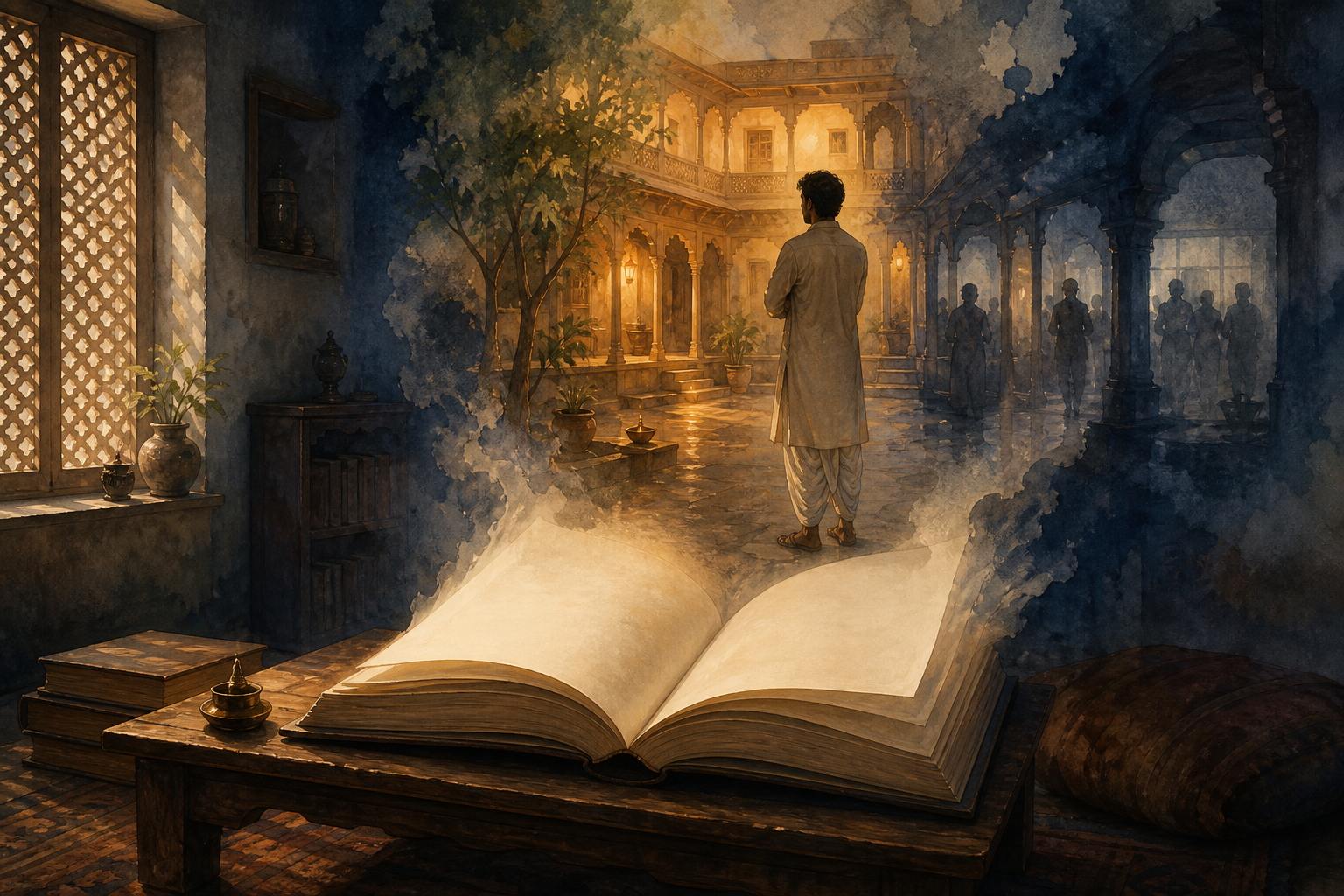
Ghar-Wapsi persists in modern Indian writing because homecoming is a powerful narrative problem. A character can cross a threshold in one scene, yet remain suspended between inherited memory, present conviction, family expectation, and public classification. The religious act may be brief; the human return unfolds through recognition.
This is where literature can teach a community something that a procedural manual cannot. It can show the difference between being admitted and being embraced. It can also preserve awkward continuities: a remembered family deity, a regional wedding song, a grandparent’s story, a local festival, or a kinship vocabulary that survived even when formal religious affiliation changed. Such details do not prove what a person must believe. They show how cultural memory can outlive a clean administrative label.
When you read or write a Ghar-Wapsi narrative, test it with five questions:
- Who names the home? If only an organiser defines it, the returning person’s conscience has disappeared from the story.
- What survived the separation? Language, food, festivals, family memory, ethical practice, and sacred geography may persist in different combinations.
- What does the decision cost? A credible narrative notices possible strain within families and neighbourhoods rather than treating identity as a slogan without consequences.
- Who must change? If the person returns but the receiving community keeps its prejudice, the central conflict remains unresolved.
- Where does the story end? A ceremony supplies emotional closure. The first ordinary act of worship, the next festival, and the next family samskara reveal whether belonging has actually been restored.
Keep the boundary between history and literature clear. A novel, poem, or fictional character can illuminate the felt truth of estrangement and return, but it cannot by itself verify a campaign, a date, or the number of people involved. Use historical evidence for external events and literature for moral perception. Confusing the two weakens both.
There is also a warning for writers and speakers. A person considering return should not be reduced to a symbol of Hindu victory, just as a person who does not return should not be depicted as an enemy. The strongest homecoming narrative leaves room for deliberation. Its moral force comes from a choice that is free enough to mean something.
Meos and Malkana Rajputs expose the real barrier: reception
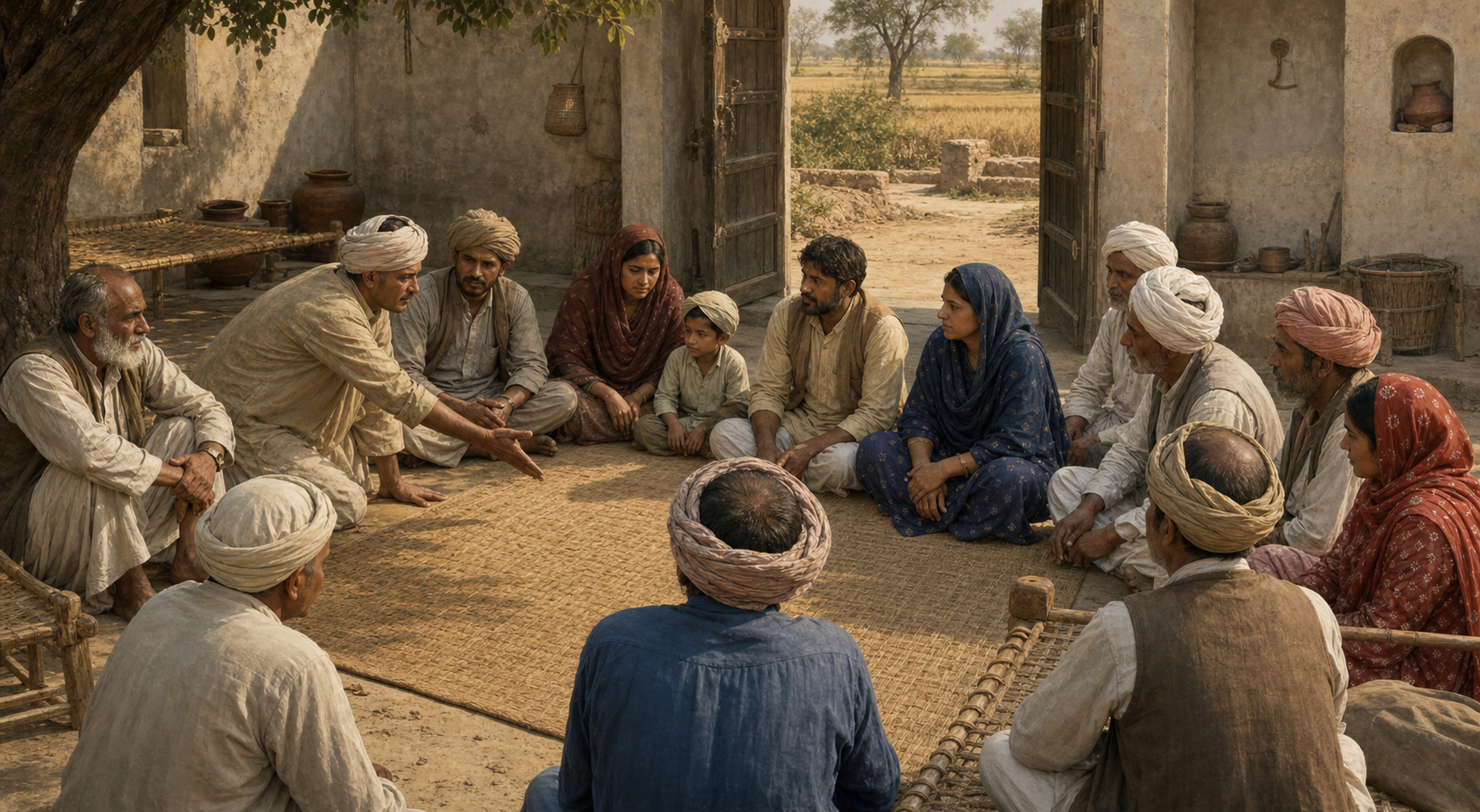
The histories associated with the Meos and Malkana Rajputs complicate any picture of conversion as a single event followed by total cultural erasure. They contain lineage memories, inherited customs, political pressure, adaptation, and survival across generations. That complexity is not an obstacle to understanding Ghar-Wapsi. It is the reason a humane form of it is necessary.
Meos are often discussed through connections to Rajput lineages. Severe campaigns under Sultan Balban in the thirteenth century form part of the explanation offered for subsequent demographic and cultural change. Yet the transition extended across generations and included more than one mechanism: coercion, accommodation, and strategies for survival all belong to the account. Regional customs and social memories continued beside Islamic identification, producing a layered inheritance rather than a blank break with the past.
You should draw a careful lesson from that continuity. A shared custom can open a respectful conversation about ancestry, but it does not entitle an outsider to declare someone’s present identity false. Cultural memory is an invitation to listen, not a deed of ownership over another person’s conscience.
The Malkana Rajput experience makes the institutional problem even clearer. In 1933, D.R. Bhandarkar documented an organised Arya Samaj effort led by Swami Shraddhananda among families who already retained numerous Hindu customs. Willingness within parts of the community was not enough. Opposition came from sections of Islamic clergy, while segments of Hindu orthodoxy also resisted reconversion. The gate closed from both directions.
The Hindu objection rested in part on a restrictive proposition: one must be born Hindu, so a person who has left or whose ancestors left cannot truly return. That position did more than complicate a ritual. It denied social legitimacy after people had expressed a wish to reconnect. A society cannot call people home while preserving a doctrine that leaves them permanently on the doorstep.
This is why the receiving community must settle its own commitments before issuing an invitation. Will the returning family be welcome at worship? Can they participate in festivals and samskaras without repeated interrogation? Will they be treated as neighbours rather than displayed as campaign trophies? Is there a clear person to approach if exclusion occurs? If those questions have no answer, publicity should wait.
Compassion, non-harm, and service offer a shared ethical vocabulary among Hindu, Buddhist, Jain, and Sikh communities. Cooperation on education, cultural memory, language, and seva can strengthen civilisational relationships without absorbing these distinct traditions into a single institutional identity. Dharmic solidarity is strongest when it respects difference and rejects coercion.
A practical process for voluntary and lasting reconnection
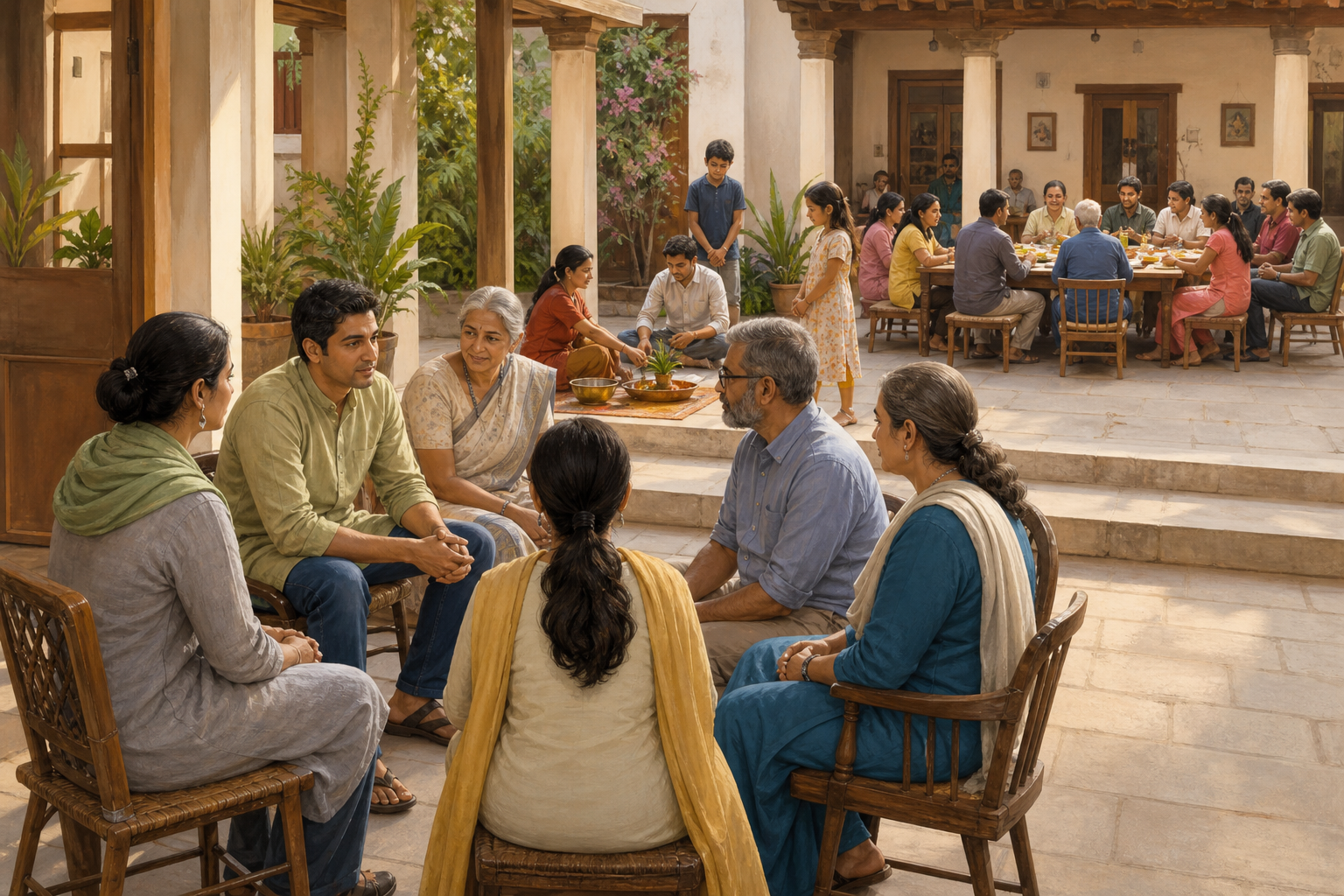
A credible Ghar-Wapsi process has three parts: a free decision, an intelligible rite, and dependable reception. Missing any one of them creates a predictable failure. Consent without reception leaves the person isolated. Reception without consent becomes pressure. A ceremony without either becomes theatre.
- Begin with the person’s request. Ask what they mean by returning and which practice they wish to resume. The initiative must come from a consenting adult, not from a political target, a family ultimatum, or a numerical campaign. Do not count children as independently consenting adults or use them as promotional imagery.
- Separate the decisions that are often bundled together. Agreement to a religious rite is not automatic agreement to a public announcement, a new name, a caste label, a political affiliation, a media appearance, or disclosure of family history. Seek separate and explicit permission for each. Privacy should be the default.
- Map the person’s actual religious life. Ask about family tradition, chosen deity or teaching, daily practice, festivals, dietary observances, and the community in which they expect to worship. This is not an examination of purity. It prevents organisers from assigning a person to a tradition they did not choose.
- Identify a competent receiving authority. Approach an acharya, matha, Arya Samaj body, temple authority, or other recognised institution appropriate to the desired path. Ask which precedent it accepts, what the rite means, and what obligations follow. Terms such as Vratya-stoma, Mlēccita-śuddhih, Shuddhi, or Parāvartana should not be treated as interchangeable labels for an improvised event.
- Secure social reception before the rite. Name at least two responsible community members who will remain available afterward. Confirm how ordinary worship, festival participation, samskaras, and community activities will work. Do not promise social acceptance that local institutions have not agreed to provide.
- Keep the ceremony simple, comprehensible, and free of humiliation. The person should understand the sankalpa or declaration being made. There should be no forced denunciation, degrading confession, or public retelling of painful family history. The rite should restore dignity rather than stage shame.
- Plan the first cycle of belonging. Arrange a normal temple or satsang visit after the ceremony, introduce the person to a dependable point of contact, and include them in the next relevant festival or community observance. The aim is not constant supervision. It is to prevent the ceremonial welcome from being followed by silence.
- Offer seva without a religious price. Education, healthcare, food, livelihood assistance, and emergency help should never be conditional on return. When material dependence is used to obtain religious compliance, consent becomes doubtful. Serve people because seva is Dharmic; let religious conviction stand on its own.
- Prepare for disagreement without manufacturing conflict. Family members may make different choices, and layered customs may remain. Do not demand that a returning person sever every relationship or erase every inherited cultural form. Where safety, civil status, or formal paperwork may be affected, obtain qualified local advice rather than treating a religious ceremony as a substitute for the applicable civil process.
Community leaders should also examine why people became distant in the first place. If education, care, livelihood, caste humiliation, or simple social neglect shaped the estrangement, a ritual alone cannot repair it. The answer is not transactional assistance offered only to potential returnees. It is a durable culture of seva and equal dignity that makes Hindu society worth belonging to before, during, and after any formal homecoming.
No one becomes a civilisational threat merely because of a religious label, and suspicion is a poor foundation for Hindu renewal. A confident Dharmic society can oppose coercive proselytisation while still respecting conscience. It can remember historical wounds without transferring guilt to living individuals. It can welcome a return without treating a human being as evidence in a demographic argument.
If a real person has approached you about Ghar-Wapsi, start quietly. Listen to what they are asking for, identify the community in which they hope to live their Dharma, and secure that community’s welcome before planning a public rite. Homecoming becomes credible when the door remains open after the ceremony.
References
- DharmaRenaissance Blog – Discover the Urgency of Ghar-Wapsi and Hindu Resurgence
- DharmaRenaissance Blog – Discover the Significance of Ghar-Wapsi in Modern Indian Literature
- DharmaRenaissance Blog – Unveiling the Ghar-Wapsi Legacy: Stories of Resilience
- DharmaRenaissance Blog – Discover the Evidence-Based Saga of Meos and Malkana Rajputs: Ghar-Wapsi Lessons for Hindu Society
