
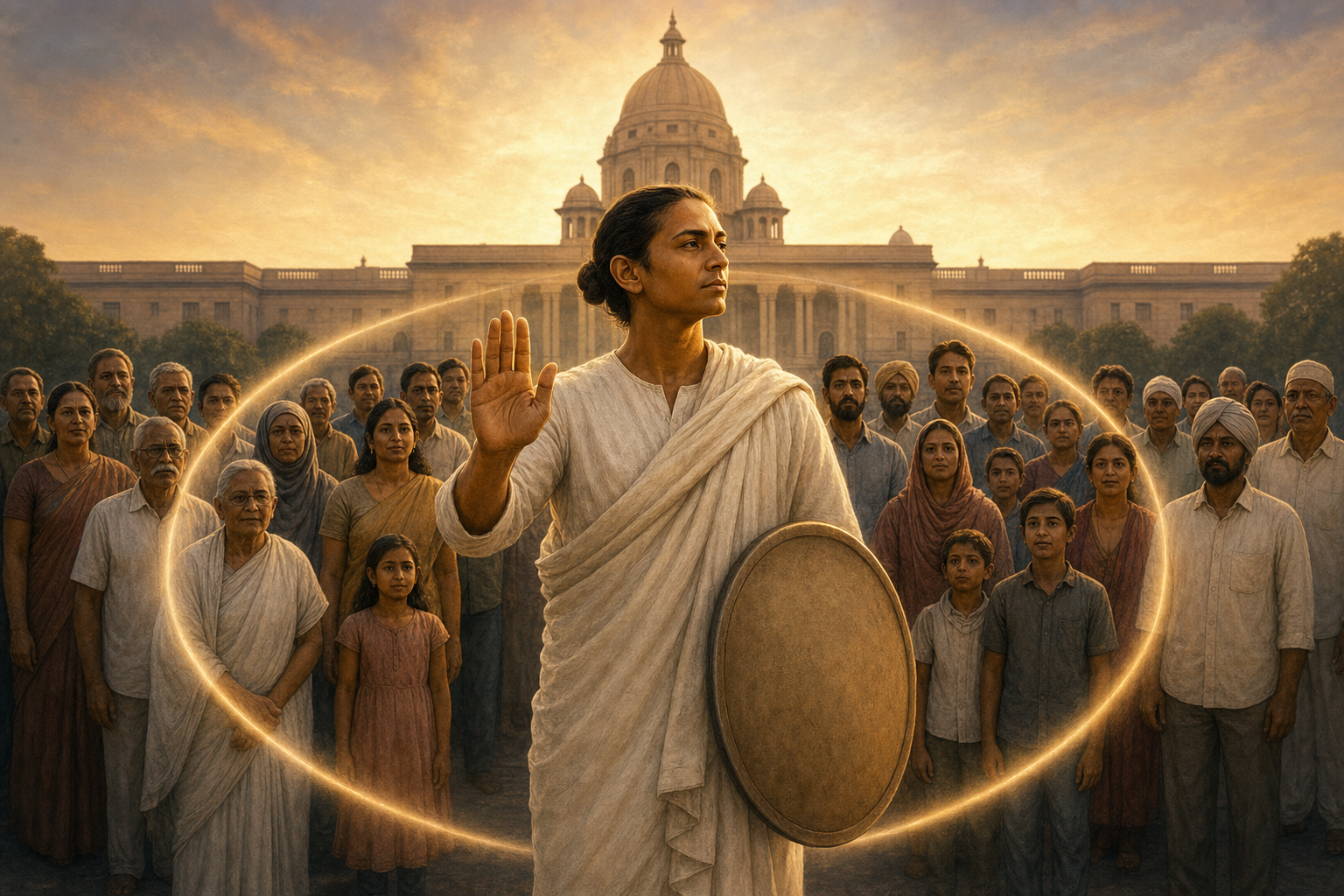
Gandhian non-violence poses its hardest question not in personal conduct but in public responsibility: may a political community renounce force when it is also obliged to protect life, liberty, and constitutional order? The supplied historical account approaches that question through controversies surrounding Gandhi, the Khilafat movement, Congress, and the Muslim League.
Read together, its moral arguments and political episodes suggest a more useful framework than either unconditional pacifism or admiration of force. Ahimsa can govern the purpose and limits of national defence without requiring a state to abandon protective capacity.
Personal non-violence and public duty are not identical
At the personal level, ahimsa asks an individual to master anger, reject cruelty, and avoid unnecessary injury. Political authority carries an additional obligation. A state acts on behalf of people who may not have chosen exposure to aggression, coercion, or disorder. Its restraint therefore has to be judged partly by what that restraint permits others to suffer.
The DharmaRenaissance article presents this distinction through the Dharmic relationship between compassion and Rajadharma. It notes that the same civilisational inheritance that honours self-control also recognises Kshatra Dharma, Dharma-Yuddha, and the responsibility to protect society. In its reading, the Bhagavad Gita does not make violence intrinsically desirable; it confronts action under conditions in which justice and the protection of the vulnerable are at stake.
This produces an important ethical boundary. Defensive force is not justified merely because leaders call it necessary, but neither is abstention automatically virtuous. Purpose, lawful authority, proportionality, discrimination between threats and communities, and accountability all matter. Ahimsa can thus operate as a discipline imposed on power rather than as a demand for institutional helplessness.
Colonial-era disputes turned moral restraint into a security question
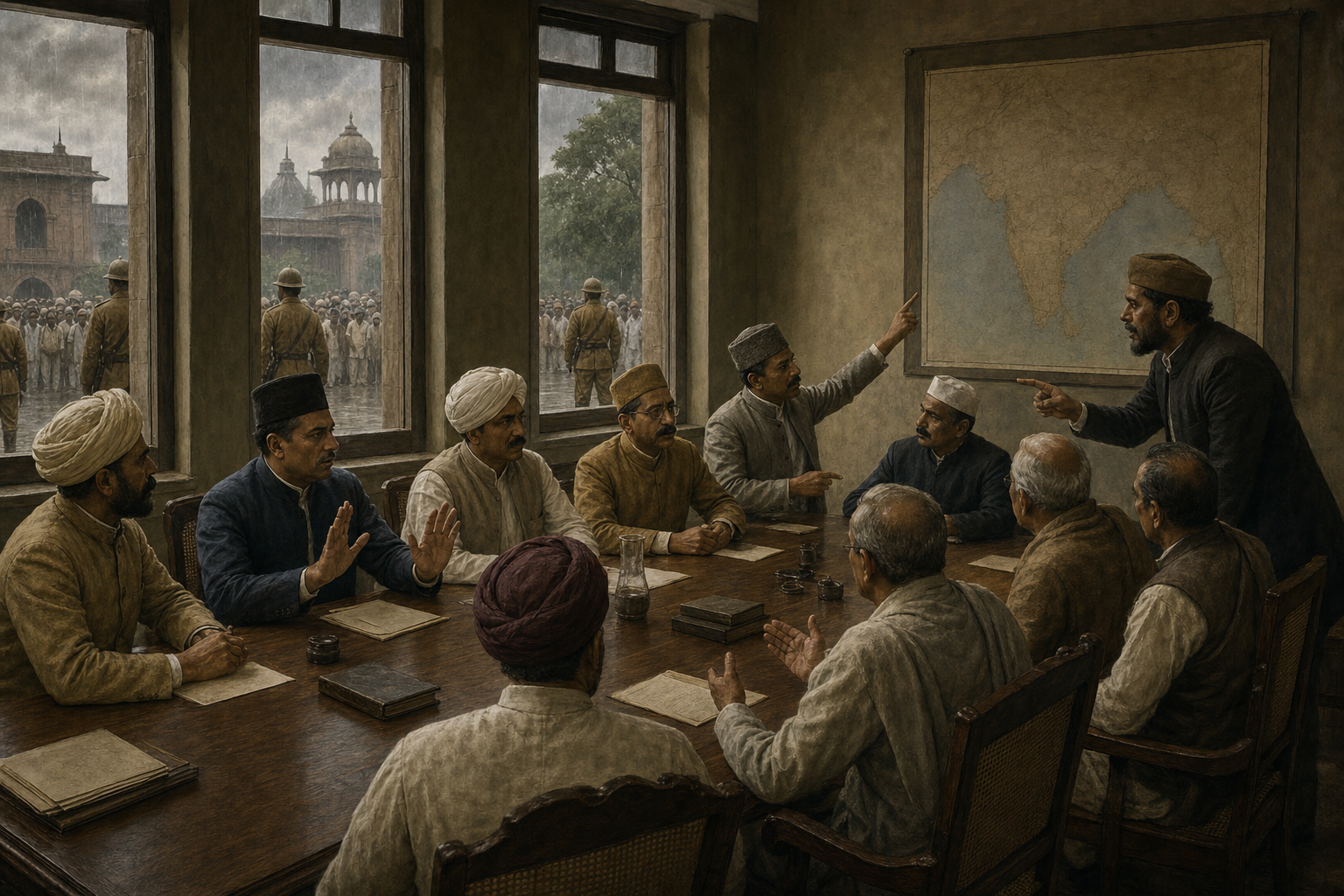
The source article locates the controversy in the political instability of the 1920s through the 1940s, when anti-colonial mobilisation coincided with competing claims about sovereignty and representation. Its examples are reported from a critical tradition and should be treated as that tradition’s evidence and interpretation, not as independently verified findings.
One reported episode concerns a 1921 exchange involving Khilafat leader Shaukat Ali, Gandhi, and a correspondent of The London Times. According to the article, the discussion invoked the categories Dar-ul-Islam and Dar-ul-Harb while asking how a self-governing India would be regarded. The article interprets the reported answer as insufficient reassurance for observers worried that a shared constitutional order might be subordinated to a religiously framed political claim.
The article expressly cautions against extending that concern to Muslims collectively or treating religious diversity as the problem. Its sharper point concerns political movements that make communal identity a competing basis of sovereignty. That distinction is indispensable: national defence protects equal citizenship only when it resists coercive separatism without assigning inherited guilt to an entire community.
A second episode is Muhammad Ali Jinnah’s reported call for a “Day of Deliverance” after Congress ministries resigned in 1939. The article presents several political readings of the moment. Congress regarded the resignations as part of its response to the Viceroy involving India in the Second World War without consulting Indian representatives; the Muslim League used the occasion to strengthen its claim to separate representation; critics saw a warning about the limits of communal accommodation. The episode therefore illustrates how the withdrawal of imperial power raised a second question beyond independence: who would possess legitimate authority in the state that followed?
Interfaith empathy needs constitutional reciprocity
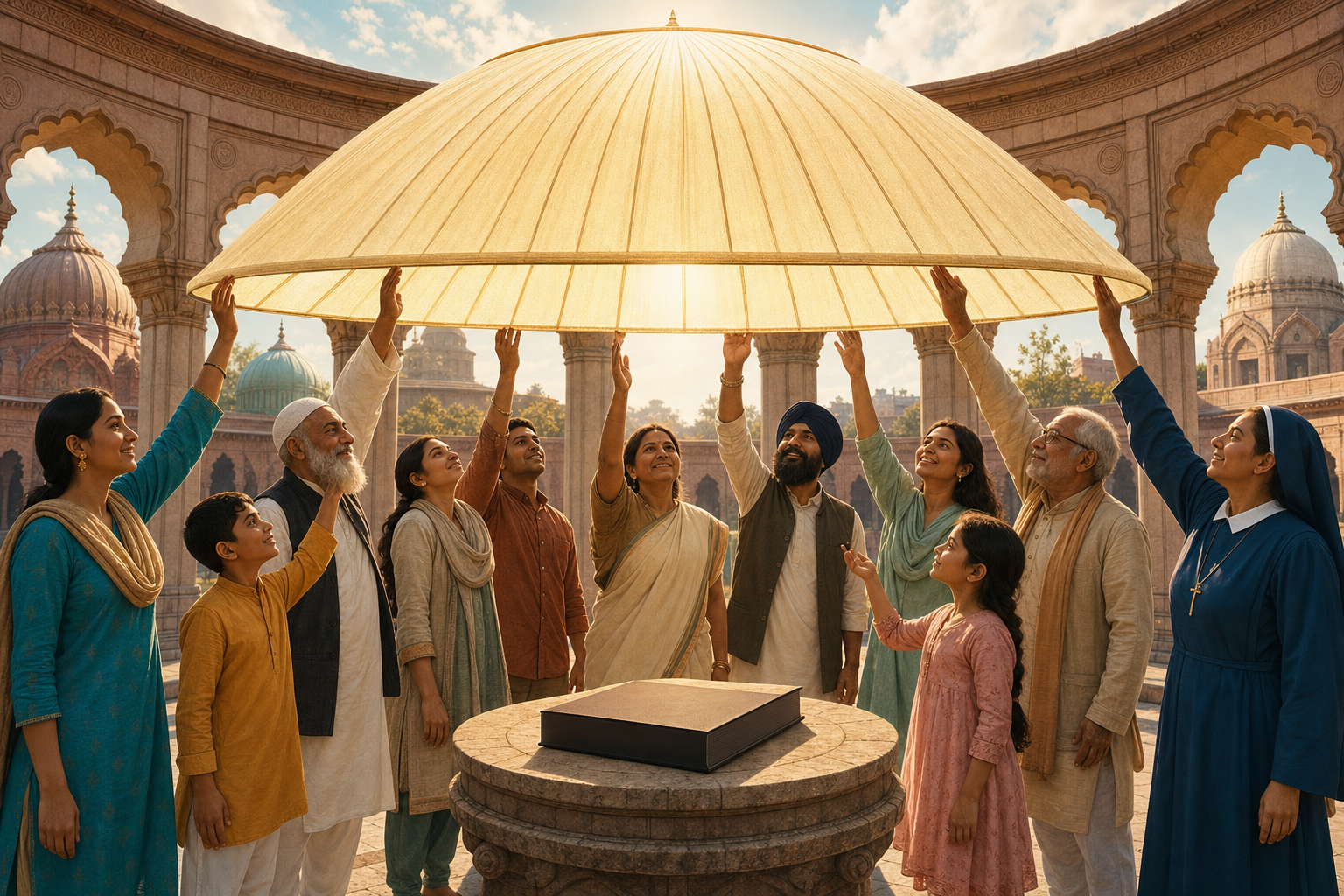
The source also reports Gandhi’s 1924 statement in Young India that he had “cultivated that respect for Islam” held by his Muslim audience. It offers two readings. The language can be understood as an attempt to build trust during communal tension, yet critics regarded it as part of an asymmetric politics in which Hindus were expected to exercise exceptional restraint without receiving equally firm protection for their own cultural and security concerns.
The defensible principle lies between indifference and appeasement. Respect for another tradition should not require embarrassment about one’s own, while civilisational confidence should not become a warrant for collective suspicion. Reciprocity means that every community receives freedom and protection under the same law, and every political organisation accepts the same constitutional limits.
The article applies a similar test to an extract it attributes to a History of the Congress published by the Maharashtra Congress Committee. That passage reportedly contemplated a post-Swaraj policy toward independent Muslim countries compatible with Islamic tenets. Whatever the passage’s intended scope, the concern it raises is institutional: foreign policy may accommodate the convictions of citizens, but it cannot be governed by the theology of one community or an external religious bloc. Territorial integrity, equal citizenship, constitutional commitments, and reciprocal relations have to remain the state’s common standards.
A Dharmic defence doctrine would bind strength to restraint
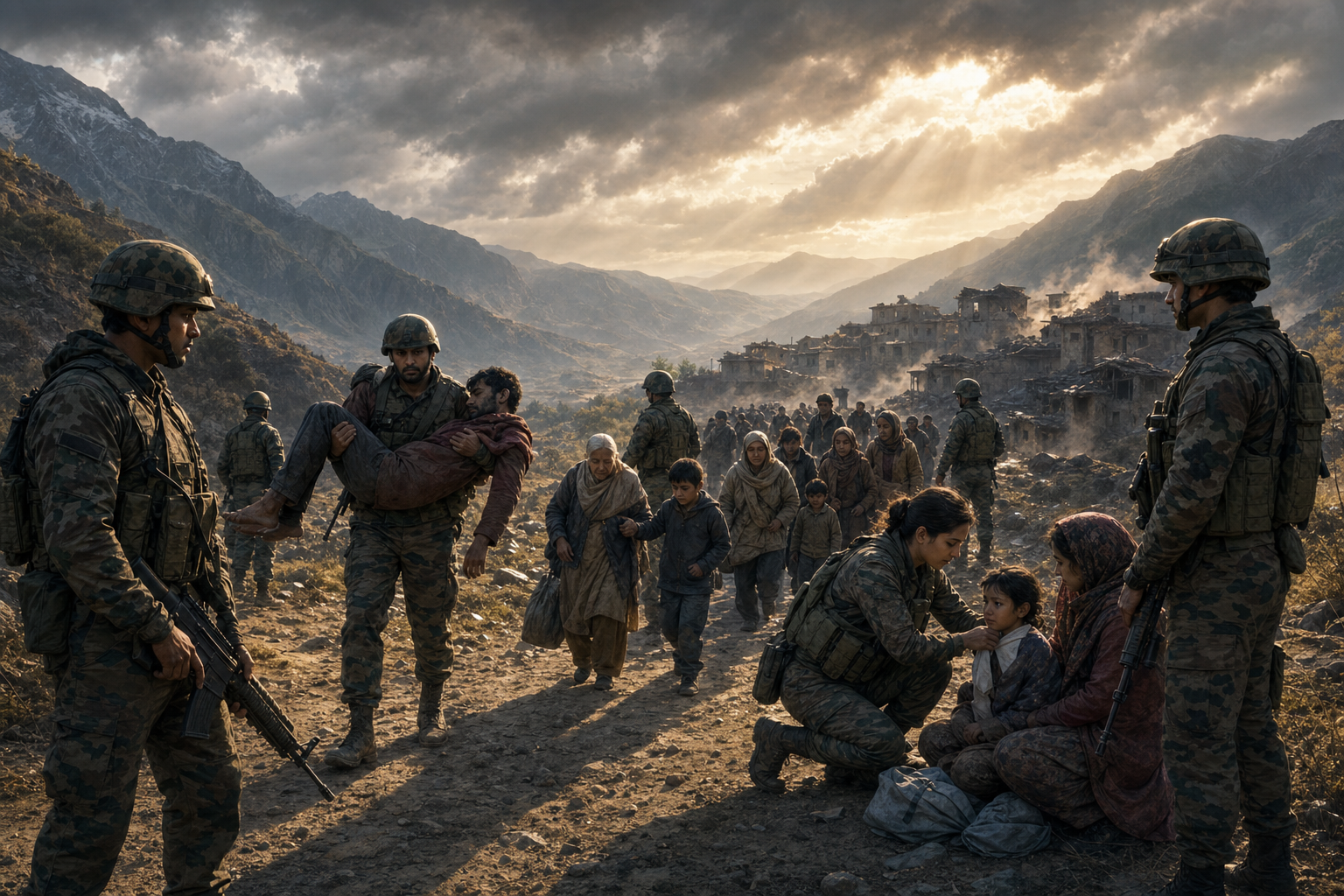
A synthesis of these arguments does not require choosing between Gandhian ethics and national survival. It requires separating moral ends from operational means. The end is a peace in which citizens can live without domination. The means may include negotiation, civic solidarity, constitutional enforcement, preparedness, and, when protection cannot otherwise be secured, bounded defensive force.
Such a doctrine would reject aggression, vengeance, and the glorification of violence. It would also reject the idea that refusing to prepare is morally neutral. Preparedness can deter coercion and reduce the likelihood that force will be needed, provided it remains answerable to law and directed toward protection rather than conquest.
The same framework clarifies the place of trust. Durable national unity cannot be constructed from suspicion alone, as the source article acknowledges. Yet trust is not the absence of safeguards. It becomes politically sustainable when concessions are reciprocal, rules apply equally, cultural self-respect is protected, and no movement is permitted to replace common citizenship with coercive communal claims.
FAQ: Non-violence, force, and national protection
Does ahimsa require a state to reject every use of force?
Not under the distinction developed here. Personal renunciation and public protection involve different responsibilities. Ahimsa can require that force remain exceptional, proportionate, protective, and accountable without prohibiting every defensive act.
Is criticism of communal politics criticism of a religious community?
No. The source itself distinguishes India’s religious diversity from the political use of identity to advance separatism or reject shared constitutional norms. Policies and organisations can be scrutinised without attributing their conduct to all adherents of a faith.
What would reconcile Gandhian restraint with credible defence?
The reconciliation lies in disciplined capability: preference for peaceful settlement, equal law, readiness to protect the vulnerable, and strict limits on coercive power. Defence then serves peace without pretending that peace can always be preserved by moral example alone.
The continuing task is to translate restraint into institutions rather than slogans. A secure constitutional order should possess the capacity to defend itself while ensuring that every exercise of power remains governed by justice, reciprocity, and regard for human life.