
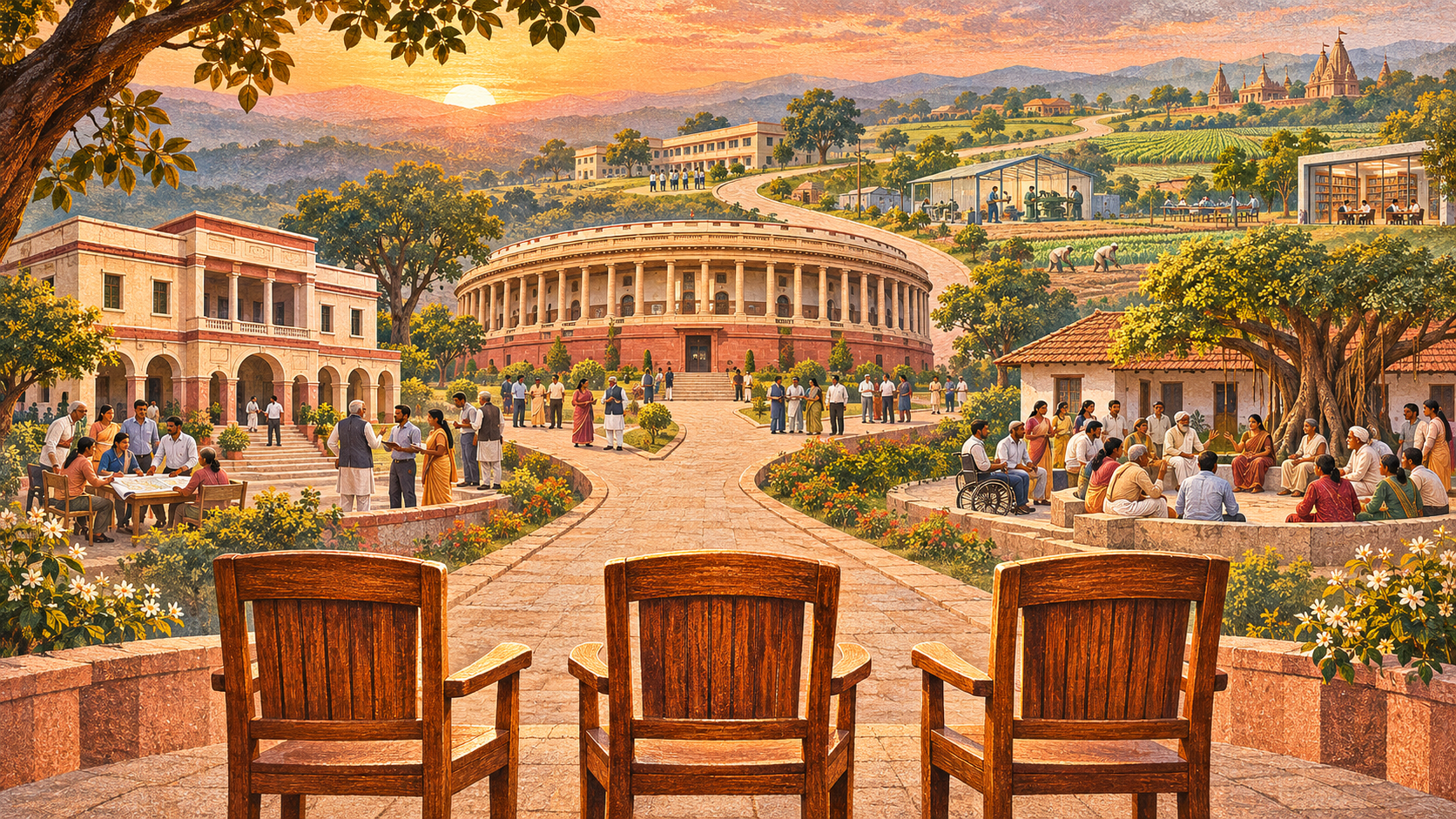
If you came looking for a simple anniversary tribute, the numbers already supply one: a political movement that began with three Lok Sabha seats now has a local network so large that training its block-level representatives has become a logistical problem. But celebration alone won’t tell you whether the Jana Sangh-BJP journey has fulfilled its original purpose.
For a pro-Dharmic reader, the more useful question is this: has political power produced durable civilisational change, or has victory merely created the capacity to begin that work? At 75, the record deserves respect. It also deserves a more demanding standard than election results.
Three seats became a political tradition, not merely a party
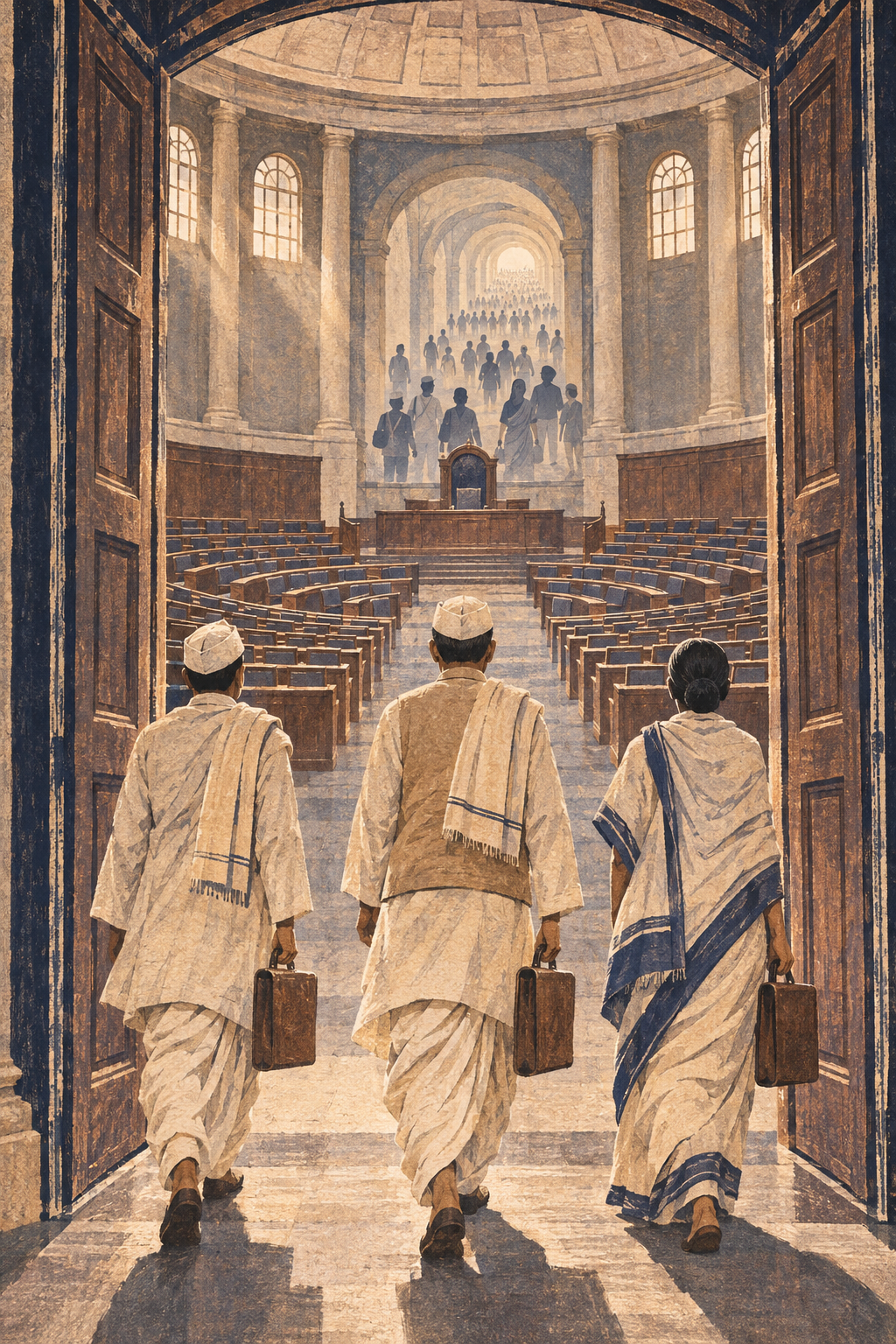
The Bharatiya Jana Sangh was founded at a girls’ school in Delhi on 21 October 1951. In the first general election a few months later, it secured three Lok Sabha seats and roughly 3 per cent of the vote. Those figures matter because they show how far outside the political centre its founding ideas once stood.
The intervening history was not a smooth ascent. It ran through the leadership and ideas associated with Syama Prasad Mookerjee and Deendayal Upadhyaya, the Emergency, and the Janata Party phase. Organisations often survive one poor election. Far fewer preserve a recognisable political purpose across repression, coalition, institutional change and generational turnover.
That durability is the first achievement to notice. The Jana Sangh did not simply leave behind a successor with a more successful electoral machine. It helped establish a continuous political tradition in which Bharatiya identity, national integration and civilisational self-respect could be argued as matters of statecraft rather than confined to cultural associations.
You should therefore judge the 75-year journey at three levels. Electoral growth tells you whether people accepted the movement. Policy change tells you whether it could act after winning. Institutional continuity tells you whether its ideas can outlast particular leaders. Confusing these levels produces either hagiography or dismissal.
Article 370 and Ayodhya were victories, not finishing lines

Two demands long identified with this political family have moved from agitation to accomplished policy: the abrogation of Article 370 and the Ayodhya temple. For supporters, these were not ordinary manifesto items. One concerned the constitutional expression of national integration; the other concerned whether Hindu civilisational memory would receive public recognition after a prolonged political and legal struggle.
It would be equally mistaken to minimise those outcomes or to treat them as proof that the larger task is complete. A legal decision can remove an exceptional arrangement. It cannot by itself create capable administration, social confidence or lasting public agreement. A temple can embody historical redress and collective devotion. It cannot by itself reform the institutions that teach Indians how to interpret their civilisation.
When you assess a celebrated achievement, ask three separate questions. Was the immediate demand fulfilled? Has the resulting change been embedded in institutions? Has it improved the ordinary citizen’s relationship with the nation? A movement may answer the first question decisively while still having serious work to do on the second and third.
This distinction protects a pro-Hindu assessment from becoming merely ceremonial. It allows you to honour a civilisational milestone without suspending judgement about governance, education, cultural confidence or implementation. A mature movement should be able to count victories and examine their limits at the same time.
More than 48,000 councillors turn expansion into a training test
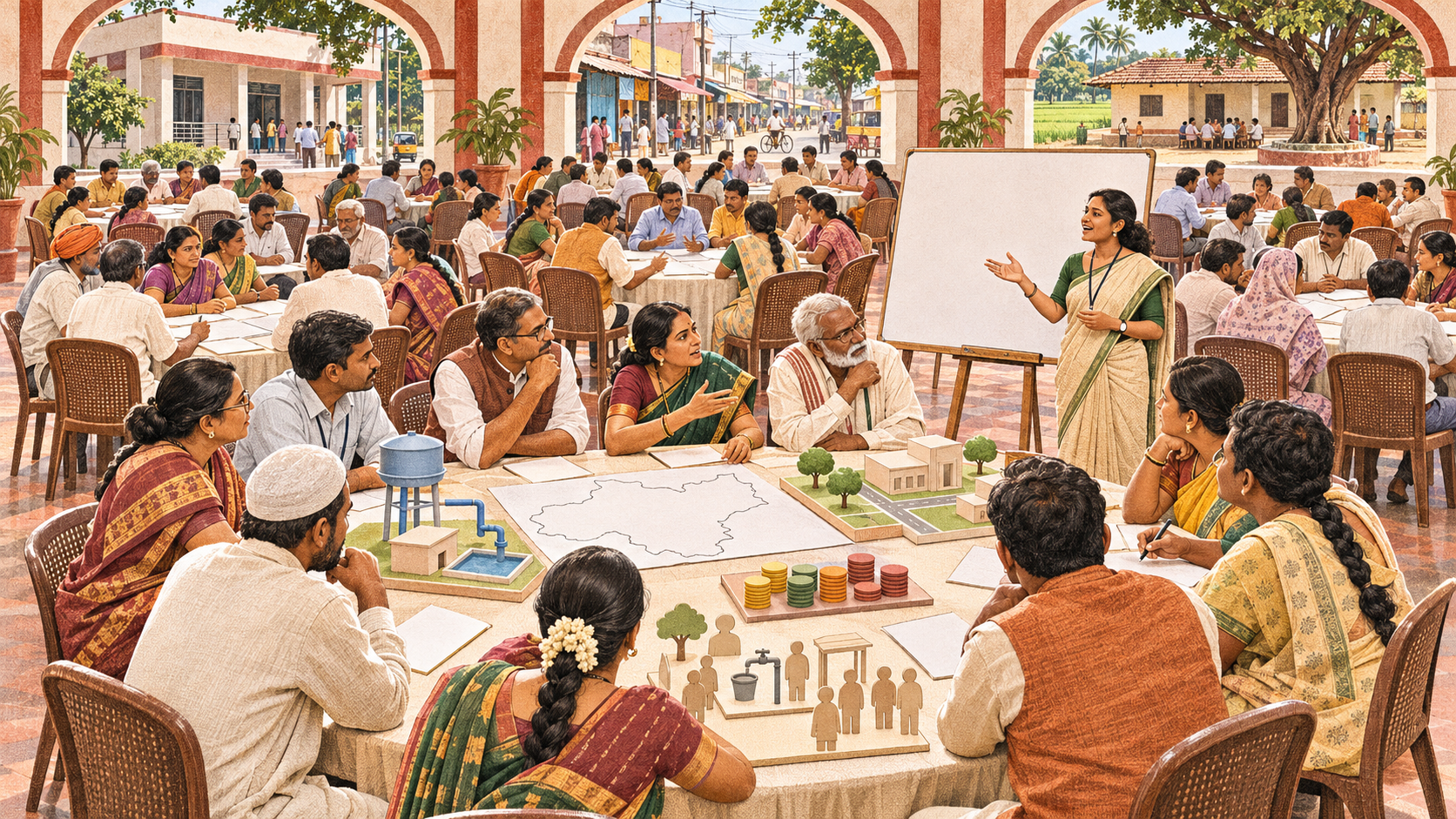
The organisational scale is now striking. When the BJP counted the representatives it needed to train, block-level councillors alone numbered more than 48,000. Existing camp arrangements could not accommodate them, so a new training model had to be designed.
That number is evidence of reach, but it also exposes the next risk. A small organisation can transmit its worldview through close personal formation. A mass organisation cannot rely on proximity. If political education, ethical discipline and practical competence fail to scale with membership, the party name begins to substitute for the purpose the organisation was built to serve.
The local representative is where a grand civilisational argument meets daily government. A voter rarely experiences political philosophy as a speech. The voter experiences it as accessibility, fair treatment, competent delivery, honest use of authority and attention to local problems. Poor conduct at this level can discredit ideas that the representative may not even understand well enough to explain.
If you are a supporter or karyakarta, examine your local unit more closely than its slogans. Can its representatives explain the movement’s purpose in language ordinary citizens understand? Can they translate that purpose into a local priority? Do they carry complaints upward and report decisions back? Are they preparing capable successors, or merely protecting positions?
Training should therefore do more than standardise campaign messages. It must connect philosophy to judgement: how a councillor exercises power, handles disagreement, responds to failure and distinguishes public duty from partisan advantage. The larger the organisation becomes, the more deliberately it must reproduce character as well as technique.
The harder frontier joins decolonisation to development
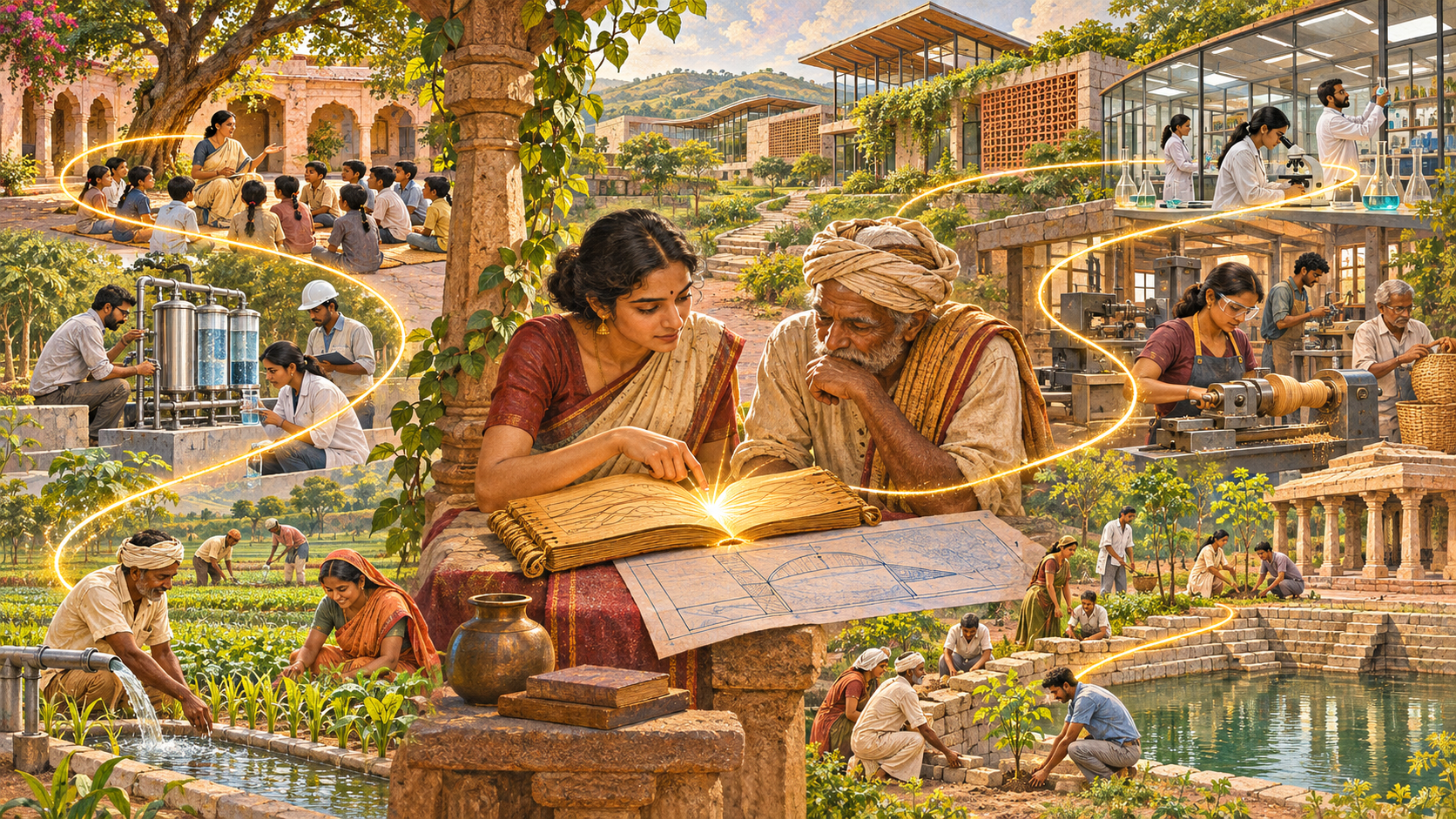
B L Santhosh frames the work ahead around decolonisation, development and the opportunities presented by artificial intelligence and Industry 4.0. These challenges are less visible than an election victory or a completed temple. They are also more difficult to claim as finished.
Decolonisation should not mean indiscriminate rejection of every institution or idea that came from elsewhere. Its serious purpose is to recover the freedom to define Bharat through Bharatiya categories, evidence and priorities. An institution remains mentally dependent when it treats indigenous knowledge as decorative, requires outside validation before respecting Indian experience, or mistakes distance from its own civilisation for intellectual neutrality.
You can test decolonisation without relying on rhetoric. Ask what categories an institution uses when it describes Indian society. Ask whether Bharatiya traditions appear as living systems of thought or only as objects from the past. Ask whether Indian languages carry serious knowledge and administration, or are confined to symbolism. Ask whether imported assumptions are examined with the same rigour routinely applied to indigenous claims.
Development presents a complementary test. Civilisational confidence without material capability can become nostalgia. Material growth without civilisational direction can produce a wealthier society that understands itself less clearly. The political task is to avoid both failures.
The claim within the party that the BJP is uniquely capable of building a Viksit Bharat is a political proposition, not a self-proving fact. It must be earned through execution. Plans for AI and the next industrial transition should be judged by whether they build Indian capability, widen access to useful skills, improve institutional performance and make technology work in Indian languages and conditions. Importing prestigious systems without developing domestic competence would change the tools while leaving dependence intact.
A Dharmic assessment must also ask what development is for. Productivity, infrastructure and technological power matter, but they are means. The human questions remain: Does growth strengthen families and communities? Does it enlarge human agency? Does it allow Bharat to modernise without treating cultural inheritance as an obstacle to be cleared away? A Viksit Bharat should be recognisably Bharatiya, not merely prosperous within categories designed elsewhere.
Key takeaways: a practical scorecard for the 75-year record
- Separate electoral reach from civilisational change. Winning power creates the means to act; it does not prove that institutions or public habits have changed.
- Count Article 370 and Ayodhya as substantive achievements. Then examine administration, institutional durability and social consequences instead of treating the initial decision as the end of the work.
- Read 48,000-plus councillors as a capacity challenge. Local conduct, political education and feedback systems now matter as much as national messaging.
- Audit decolonisation where it is hardest to photograph. Look at the categories used in education, administration and public argument, not only at names, ceremonies or symbols.
- Demand proof behind the Viksit Bharat claim. AI and Industry 4.0 should build Indian skills, state capacity and productive independence while remaining answerable to a Bharatiya vision of human flourishing.
The next time you hear an anniversary speech, sort each claim into four boxes: electoral reach, policy achievement, institutional change and lived outcome. That simple exercise will show where the Jana Sangh-BJP tradition has decisively succeeded, where implementation remains incomplete and where a slogan is being asked to carry more weight than the evidence.
Seventy-five years earned this movement a place at the centre of Indian politics. The next phase will be judged by a harder standard: whether its vast organisation can turn civilisational conviction into competent institutions, disciplined public service and development that leaves Bharat more capable without making it less Bharatiya. Start that judgement locally, with the representatives and institutions you can actually observe.
References

Leave a Reply
You must be logged in to post a comment.