
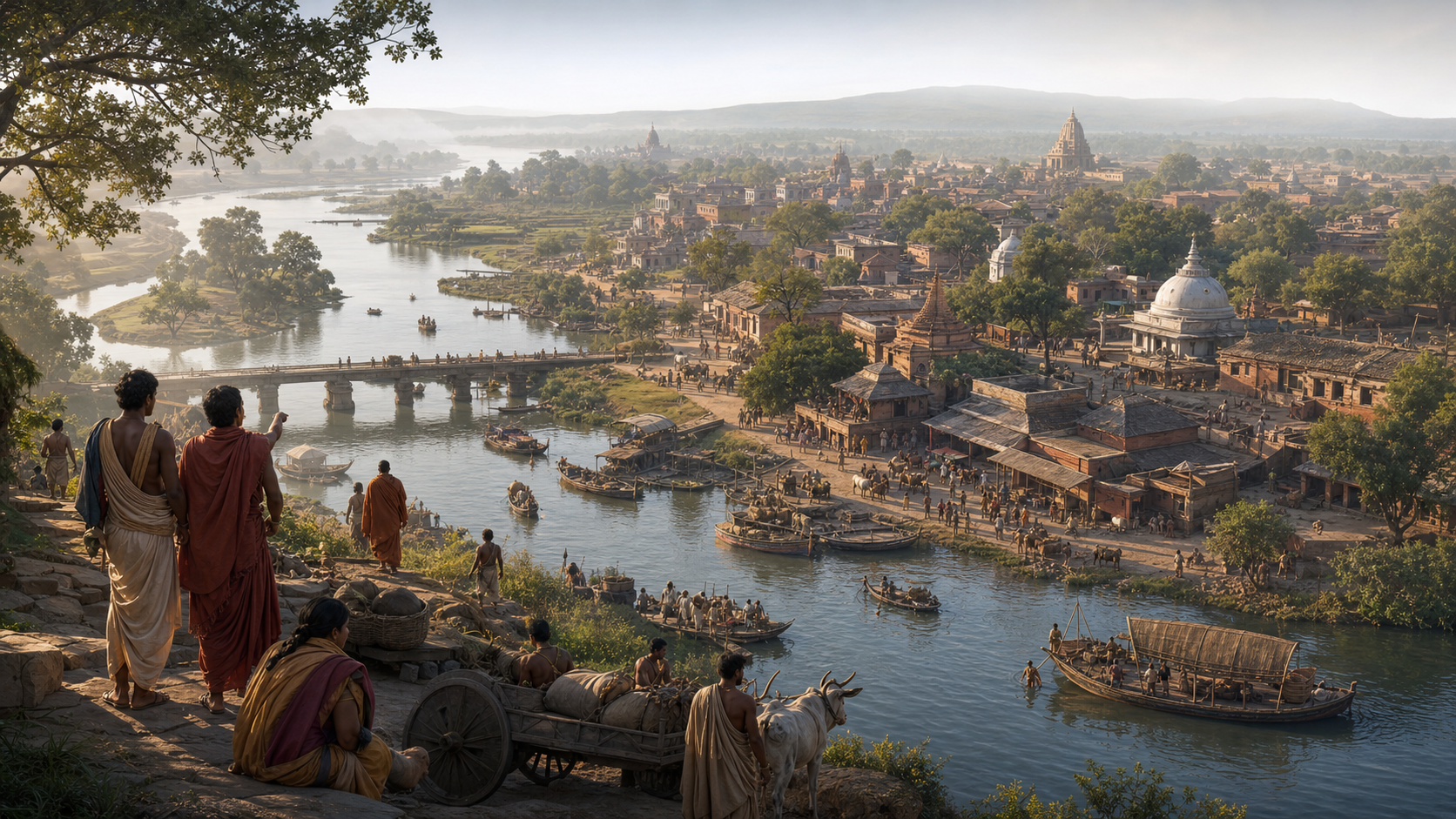
If you have met Vidisha only as a place-name attached to ruins, there is an easy trap: a damaged site can make a damaged past look small. Vidisha’s surviving memory points in the other direction. Your task is not to romanticize a vanished golden age, but to recover how landscape, prosperity, Dharma, literature, and political power met in one city.
You can do that without pretending every record proves the same thing. Read the rivers as geography, the names as continuity, sacred narrative as civilizational memory, literary praise as civic reputation, and later administration as political history. This sequence turns Vidisha from a collection of impressive references into a legible model of a Dharmic city.
Start with the two rivers, because geography came first
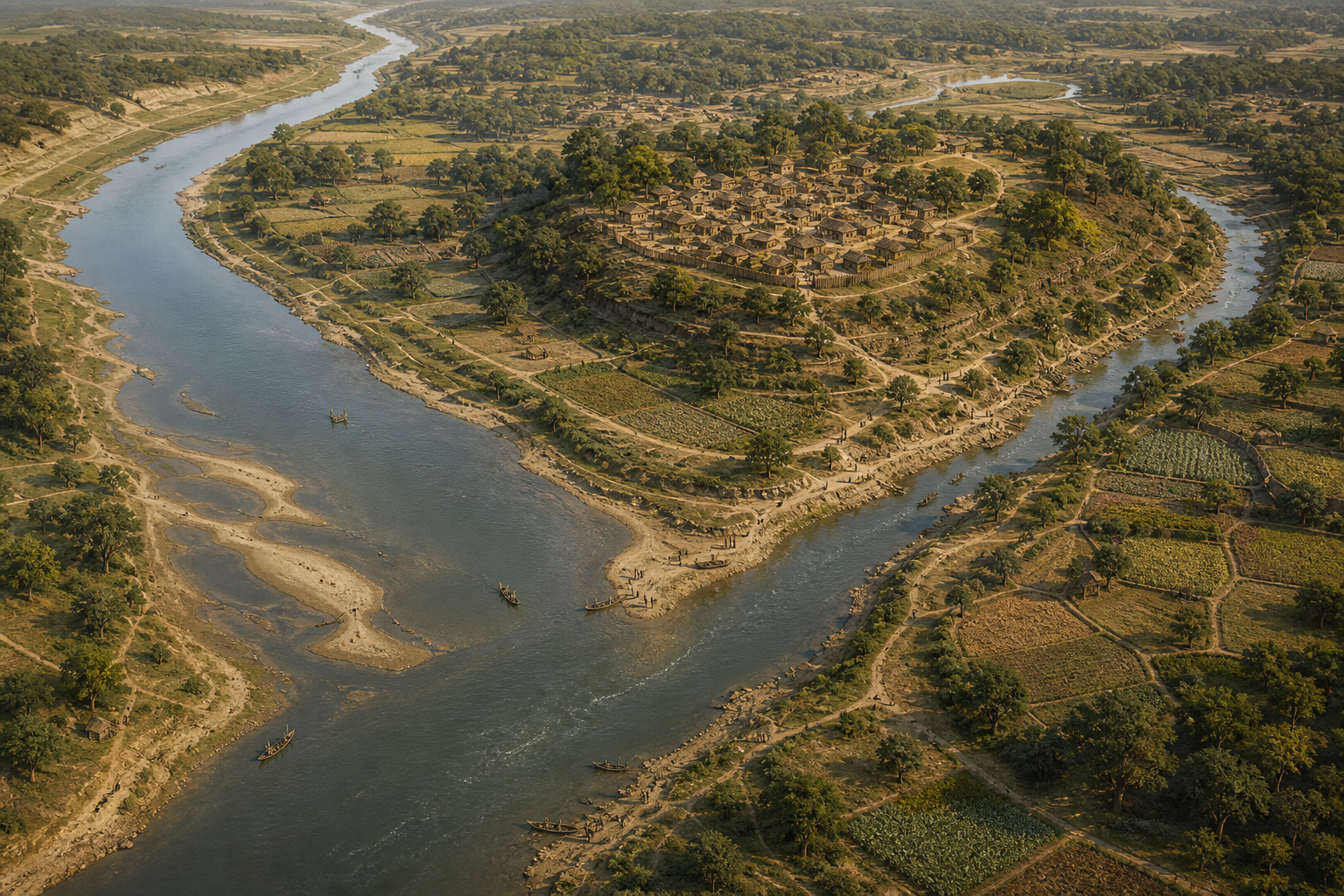
The first fact to place on your map is physical: Vidisha stood at the fork of the Vidisha, or Bes, and the Vetravati, or Betwa, rivers. The ancient and later names of both the city and its rivers belong together. Separating them makes the historical landscape harder to recognize.
A river junction can concentrate movement, settlement, exchange, and ritual imagination. Geography alone cannot prove the scale of Vidisha’s commerce, but it makes the city’s remembered combination of wealth, varied populations, and political importance intelligible. A city at such a junction is not merely a point on a map. It is a meeting place between routes and regions.
When you study Vidisha, begin with three simple actions:
- Write both names beside each river: Vidisha or Bes, and Vetravati or Betwa.
- Draw the city between the waterways instead of treating it as an isolated archaeological dot.
- Ask whether each claim you encounter concerns access, exchange, settlement, sacred association, or political control. Do not collapse those into one vague claim about importance.
This map-first approach corrects a common mistake. The ruins show what remains at one stage; the river system shows why a substantial city could arise there in the first place.
Keep Vidisha’s different names in the same historical file
Traditions concerning the city preserve a cluster of connected names: Vidisha, Vaishyanagar, and Besnagar, with its inhabitants called Vaidisas. By the eve of Independence, Besnagar was the familiar name. These variants are not decorative spellings. They are part of the evidence for continuity through linguistic and political change.
Names must still be handled carefully. Vaishyanagar may invite a commercial interpretation, especially beside the city’s reputation for wealth, but a suggestive name is not a complete economic history. Besnagar’s relationship to the older nomenclature is a clue to continuity, not a license to invent an exact chronology.
If you are researching, teaching, or writing about the city, use this method:
- Record Vidisha, Vaishyanagar, Besnagar, and Vaidisas together before searching or taking notes.
- Label whether a name refers to the city, its inhabitants, a literary setting, or a later administrative context.
- Preserve the Sanskritized form Vidisha at first mention, then give the familiar variant. That helps readers connect civilizational memory with the surviving place-name.
- Do not treat the failure of one spelling to appear in a search as evidence that the city disappeared from memory.
This discipline matters beyond Vidisha. A place can vanish from a modern search result long before it vanishes from the historical record.
Read each kind of record for what it can actually establish
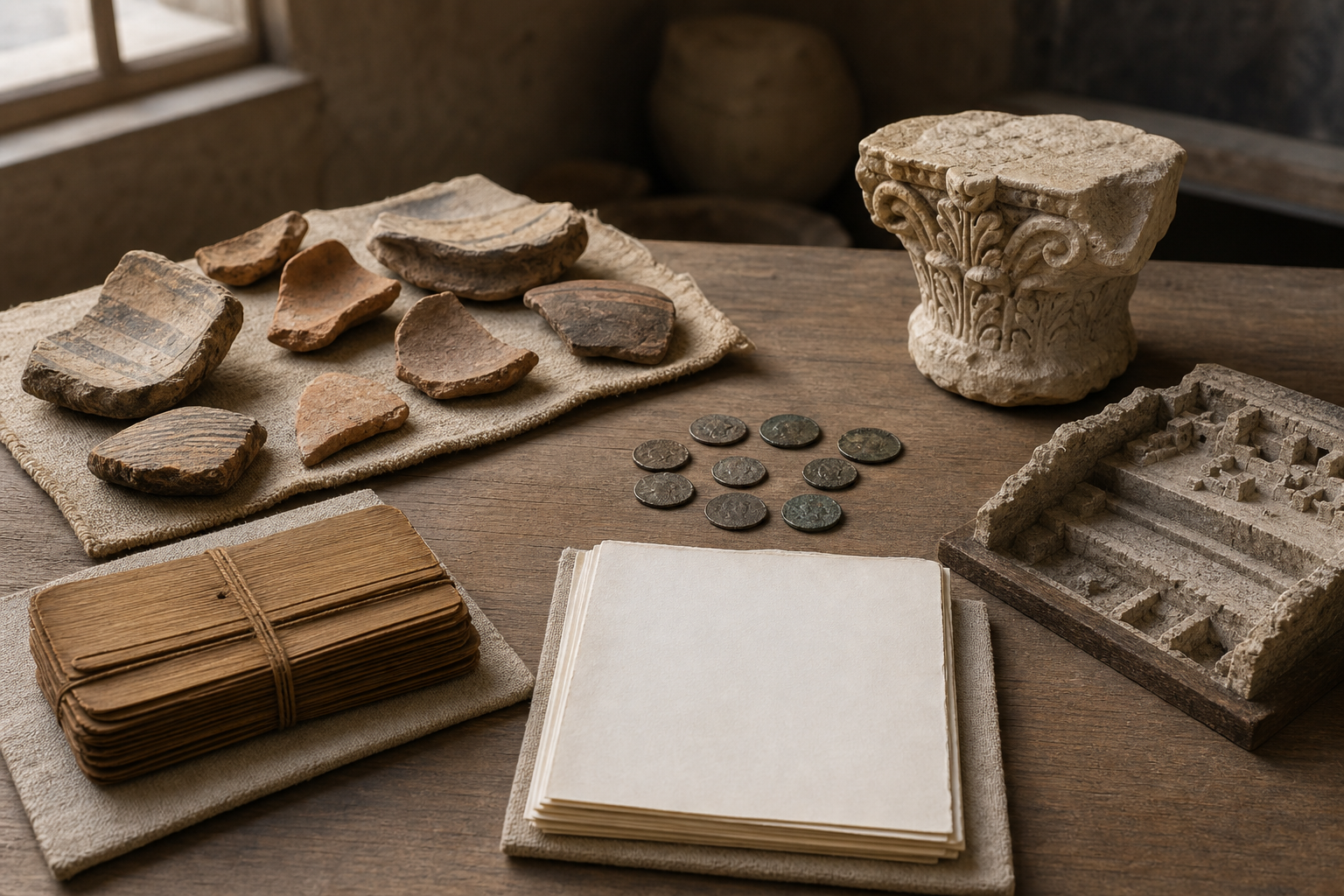
Vidisha appears in sacred narrative, Purana, kavya, and later political history. Its legacy becomes clearer when you let each form of memory answer the question it is equipped to answer.
The Ramayana places Vidisha within sacred sovereignty
In Chapter 121 of the Uttarakanda, Sri Ramachandra bestows the city upon Shatrughna. This is not the same kind of evidence as a dated administrative grant. Its civilizational meaning is nonetheless precise: Vidisha is situated within the political and moral geography of the Ramayana and associated with legitimate sovereignty.
When you cite this tradition, use the right verb. Say that the Ramayana situates, remembers, or associates Vidisha with Shatrughna. Do not say that the passage, by itself, establishes a modern archaeological date. Respect for sacred memory does not require confusing literary function with material chronology.
The Garuda Purana and Kalidasa preserve civic stature
The Garuda Purana presents Vidisha as a city of wealth and happiness, populated by people from different janapadas and filled with jewels, mansions, and palaces. It also remembers the city as a home of multiple Dharmas, sects, and schools. Kalidasa gives Vidisha a further place in the Sanskrit imagination through the Meghaduta.
These registers preserve reputation rather than statistics. A Purana’s language of abundance is not a tax ledger, and kavya is not a census. What you can safely conclude is that Vidisha possessed enough civilizational stature to be remembered as prosperous, beautiful, religiously varied, and worthy of literary celebration.
That distinction makes your argument stronger. Use literary praise to establish the qualities associated with the city. Reserve quantified claims about population, trade, or revenue for evidence capable of supporting numbers.
The later political layer records change, not an automatic cause
By the eve of Independence, Besnagar was described as a ruined city within the former princely State of Bhopal. Bhopal officially professed Islam and used the motto Nasr min Allah, while Vidisha had also been administered by Gwalior at different points.
The contrast with the Puranic image is striking: a city remembered for prosperity, palaces, and many Dharmic schools later survived in a diminished material condition under different political arrangements. But the contrast does not, by itself, tell you exactly when or why the old urban grandeur receded. Political succession, material decline, and cultural loss are separate propositions. Connecting them requires chronology and evidence, not implication.
This is especially important in civilizational writing. You do not defend Bharat’s past by making a causal claim larger than its evidence. You defend it by refusing to let either earlier achievement or later rupture disappear.
Vidisha joined prosperity and Dharmic plurality
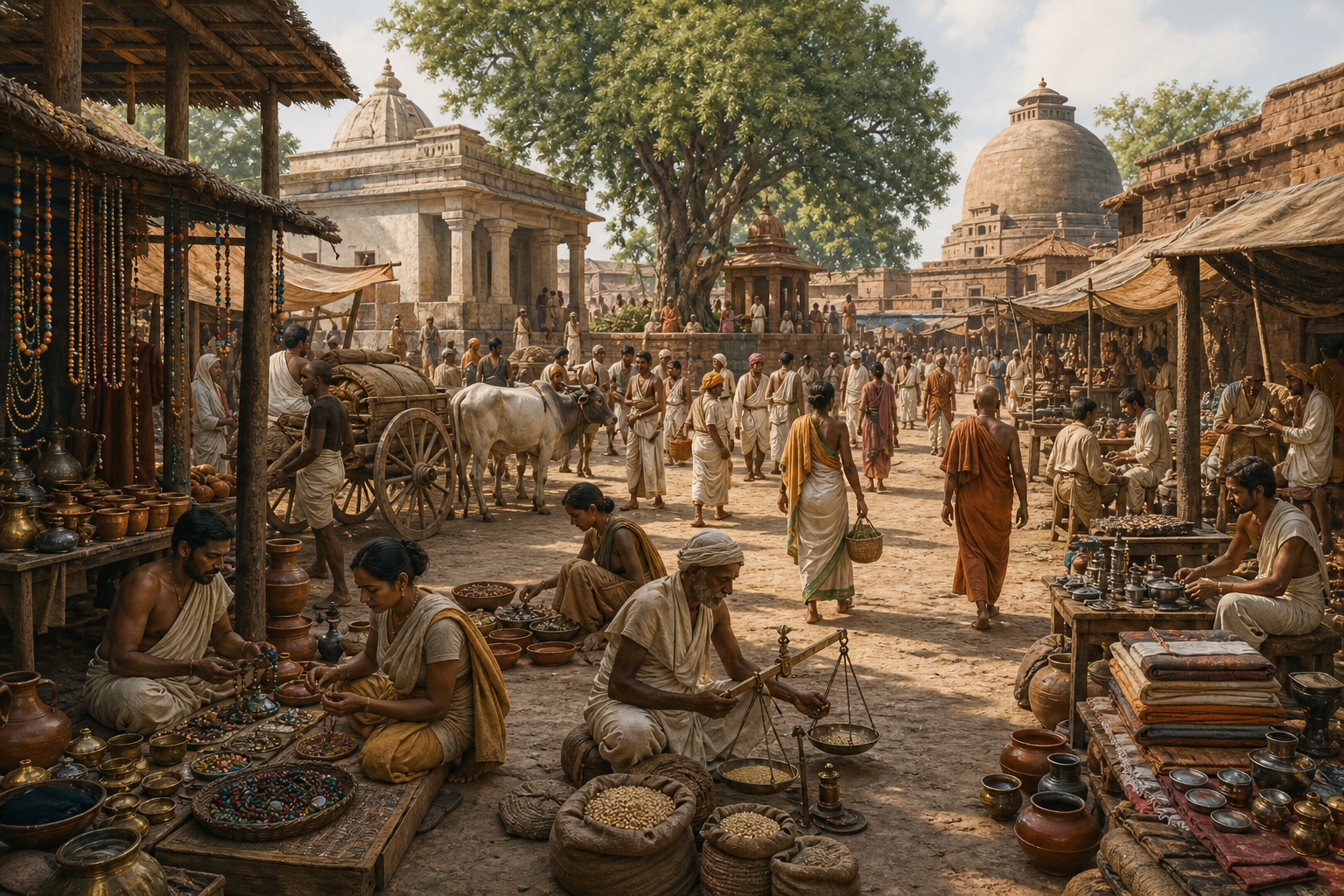
Vidisha challenges the habit of treating Dharma as something detached from urban and economic life. Its remembered profile places jewels, substantial residences, people from multiple janapadas, and several Dharmas, sects, and schools inside the same civic frame. Prosperity and religious life were not presented as rival domains.
Nor should this plurality be translated carelessly into a modern political slogan. Multiple Dharmic schools do not imply the absence of a civilizational center, while a shared Dharmic setting does not imply complete uniformity. The careful conclusion is more useful: Vidisha was remembered as capable of holding diversity, learning, wealth, and sacred belonging together.
Use a four-part test when you encounter a claim about Vidisha or another ancient Bharatiya city:
- Ecological base: What features of the landscape made durable settlement and movement possible? At Vidisha, begin with the Bes and Betwa.
- Civic density: What signs indicate concentrated wealth, population, architecture, or exchange? Here the remembered janapadas, jewels, mansions, and palaces belong together.
- Dharmic ecology: Does the city support one institution only, or a network of sects, schools, and practices? Vidisha’s Puranic memory points to the latter.
- Memory and sovereignty: How does the place appear in sacred narrative, literature, and later political administration? The Ramayana, Meghaduta, Bhopal, and Gwalior answer different parts of that question.
A retelling that gives you only ruins loses the functioning city. One that gives you only sacred glory loses historical change. One that gives you only later political injury loses the mechanisms that created Vidisha’s importance. The four-part test keeps the city whole without pretending the record is complete.
Questions to ask before calling Vidisha a lost city
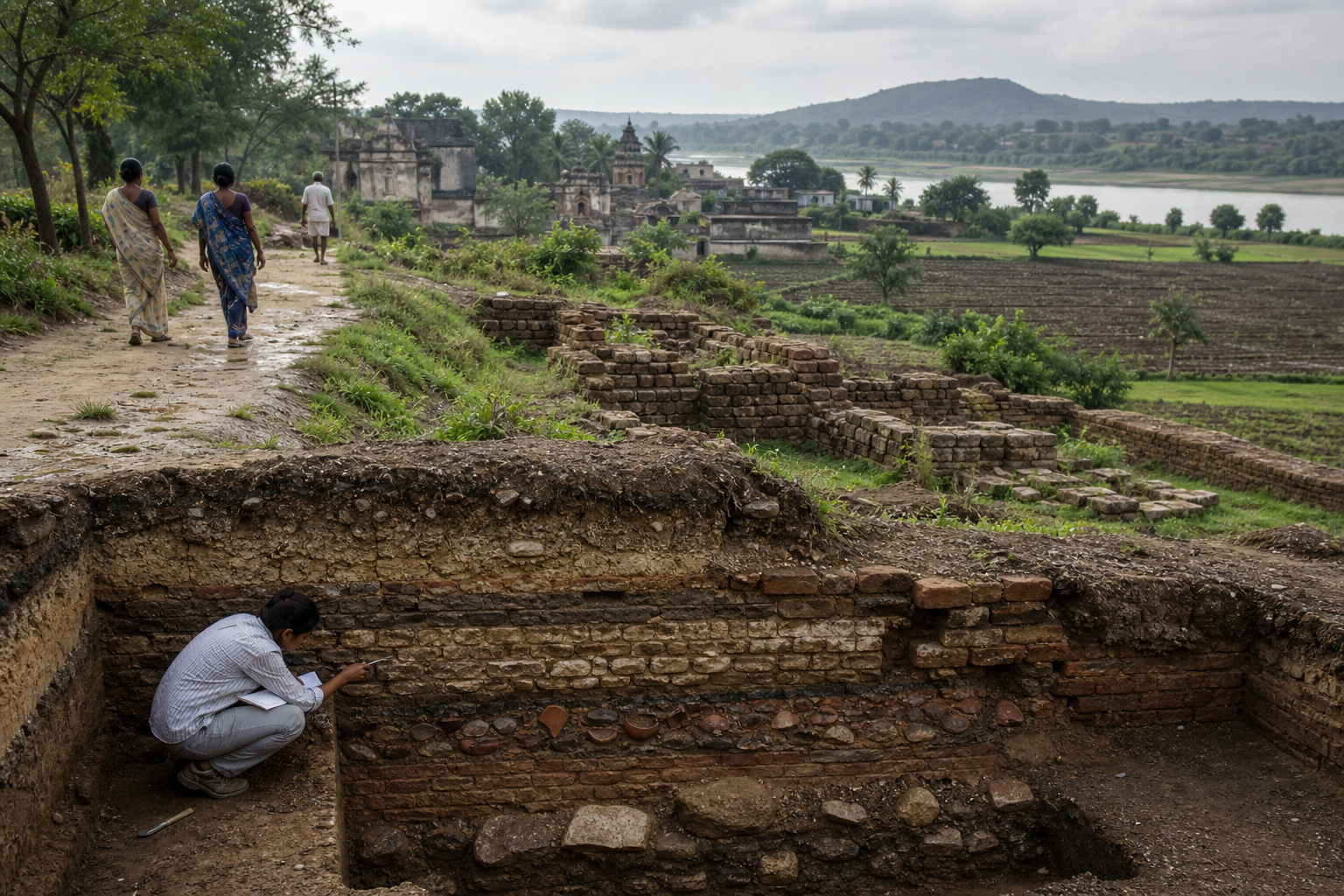
Does ruined mean forgotten?
No. Ruin describes a material condition. Vidisha’s presence in the Ramayana tradition, the Garuda Purana, and Kalidasa shows continued civilizational memory. The precise formulation is that the city’s material grandeur diminished while its sacred and literary identity endured.
Can the Ramayana reference date the historical city?
Not by itself. The Uttarakanda passage establishes Vidisha’s place within sacred geography and the tradition of Rama’s sovereignty. Archaeological dating requires a different category of evidence. Keeping those claims separate allows you to take both sacred tradition and historical method seriously.
What is the most useful first project for a reader?
Make a one-page Vidisha dossier with five headings: Name, Evidence Type, Claim, Safe Inference, and Open Question. Begin with the river fork; the Vidisha, Vaishyanagar, Besnagar, and Vaidisa name cluster; Uttarakanda Chapter 121; the Garuda Purana’s civic portrait; Kalidasa’s Meghaduta; and the later Bhopal-Gwalior political layer. You will see where several forms of memory reinforce one another and where further evidence is still needed.
If you visit, teach, or write about Vidisha, draw that map and evidence sheet before forming your narrative. The city’s civilizational legacy does not rest on one monument or one evocative claim. It emerges from the disciplined reconnection of waters, names, Dharma, prosperity, literature, and power.
References
