
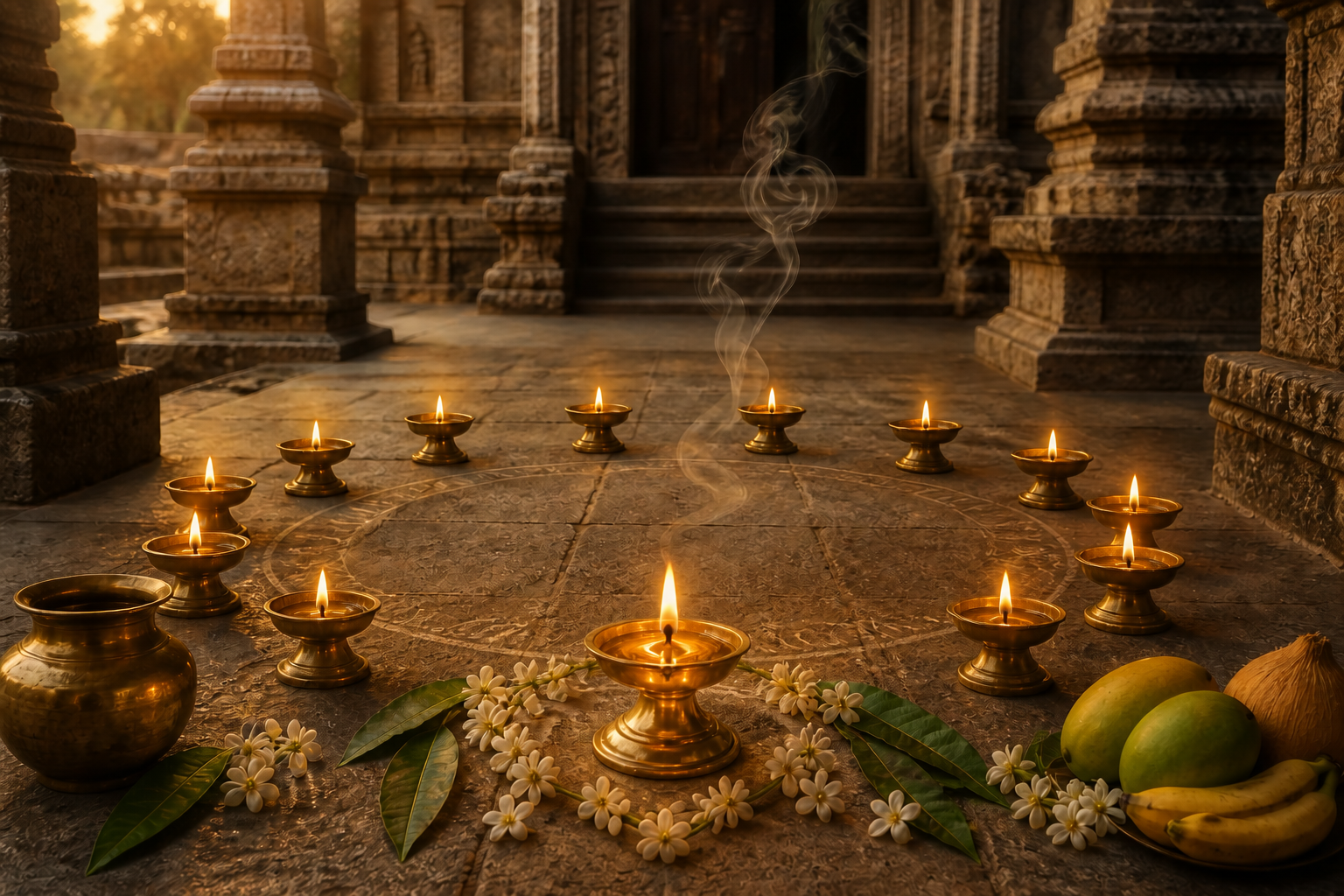
If you encountered the name Mahakora in a Tamil calendar or temple notice, you probably want a clear answer: Who is she, why is she connected with Vaikasi, and how should you honour her without inventing a ritual?
The safest approach is to understand Mahakora within the Dvadasa Masa Devis, the twelve goddesses associated with the months. That gives you a meaningful way to observe Vaikasi while leaving specialised mantra, iconography and temple procedure where they belong: with the Agamic tradition or lineage that preserves them.
The shortest reliable answer: Mahakora belongs to Vaikasi
Mahakora is the Devi associated with Vaikasi in Shaiva Agamic and Tamil Shaiva traditions. She belongs to a twelvefold cycle in which a goddess presides over each month.
The traditional expression explains the basic structure. Dvadasa means twelve, masa means month, and Devi means goddess. The Dvadasa Masa Devis are therefore the twelve monthly goddesses. Mahakora is the Vaikasi member of that sacred cycle.
The qualifier matters. This is a particular Shaiva and Tamil Shaiva way of sacralising the year, not a claim that every Hindu community uses the same monthly names or rites. If your family calendar, temple or sampradaya follows another system, you do not need to discard it. Hindu sacred time can be organised through several overlapping calendars and observances.
To say that Mahakora presides over Vaikasi also does not require you to decide whether she is an entirely separate goddess or an aspect of the one Devi. Monthly worship works at the level of relationship: during Vaikasi, the devotee attends to divine presence through the name Mahakora.
Key takeaways
- Mahakora is associated with Vaikasi in a Shaiva Agamic and Tamil Shaiva setting.
- She belongs to the Dvadasa Masa Devis, a cycle of twelve goddesses corresponding to the twelve months.
- The cycle treats changing time as a field of divine presence, not merely as a way to count days.
- A simple household remembrance is appropriate when you have no received Mahakora ritual; specialised mantra and Agamic worship require reliable guidance.
The twelve monthly Devis turn a calendar into sadhana
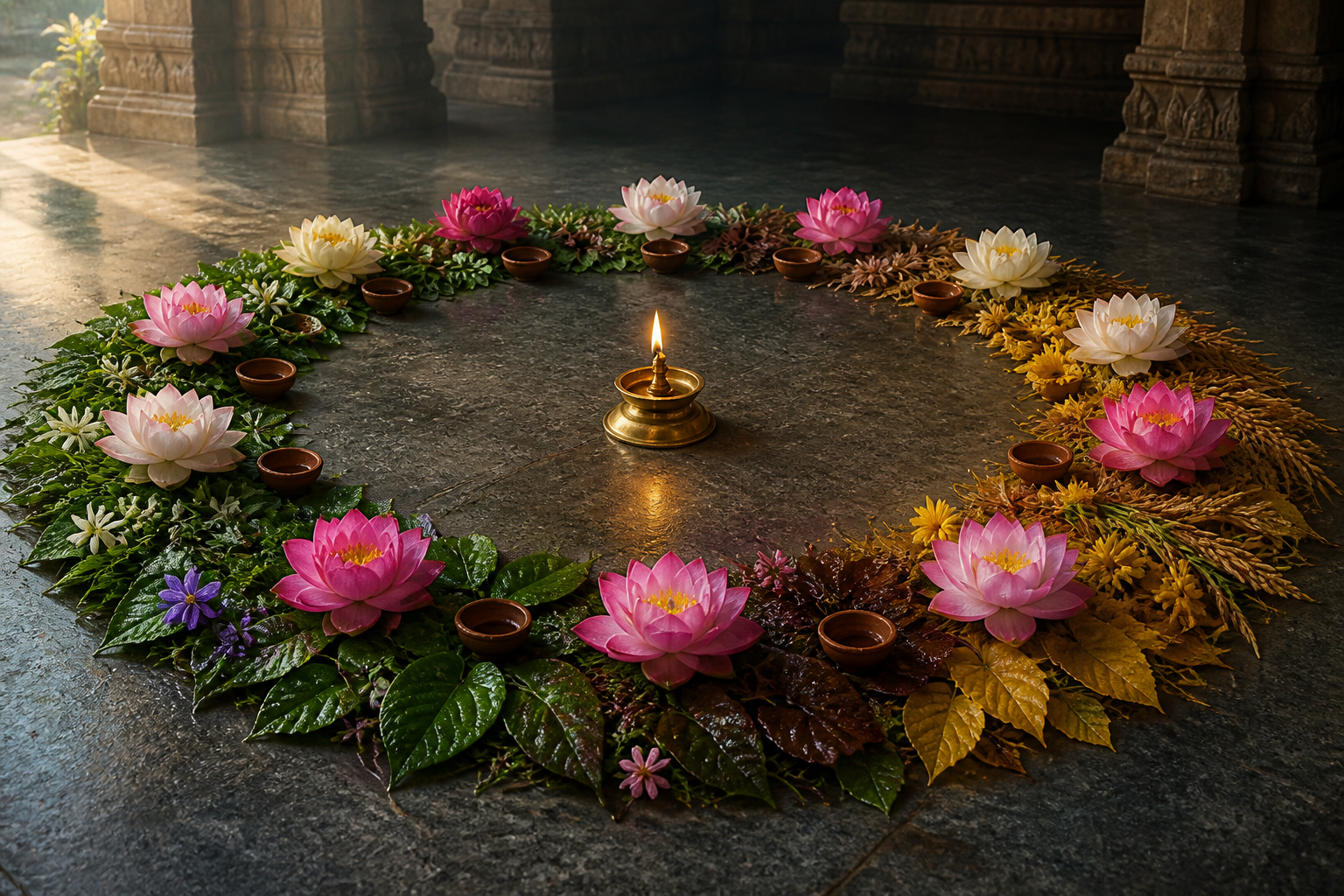
An ordinary calendar tells you when something happens. A sacred calendar also asks how you will inhabit that portion of time. The Dvadasa Masa Devi cycle answers by giving each month a divine presence. The year is no longer an empty container into which festivals are inserted. Its movement becomes part of worship.
This is especially useful if your spiritual life has become confined to isolated festival days. Monthly remembrance creates continuity. One observance ends, the calendar turns, and another form of attention begins. Change itself becomes the thread connecting the practices.
That does not mean twelve unrelated deities compete for twelve compartments of the year. The practical emphasis is rhythm. Each month can disclose a distinct devotional relationship while the annual cycle remains whole. The devotee learns to notice transition without treating it as spiritual interruption.
You can apply this insight even before you know the complete sequence of monthly names. At the opening of Vaikasi, name Mahakora. During the month, maintain one realistic discipline. At its close, notice how you used the time entrusted to you. The calendar then becomes an aid to attention rather than a list of dates you meant to remember.
This understanding also corrects a common modern habit. We often treat sacredness as something located only in an image, shrine or exceptional event. The monthly Devi tradition places sacredness in duration. The question is no longer only, “Where is Devi worshipped?” It also becomes, “How is Devi remembered in this month?”
Keep firm tradition separate from attractive additions
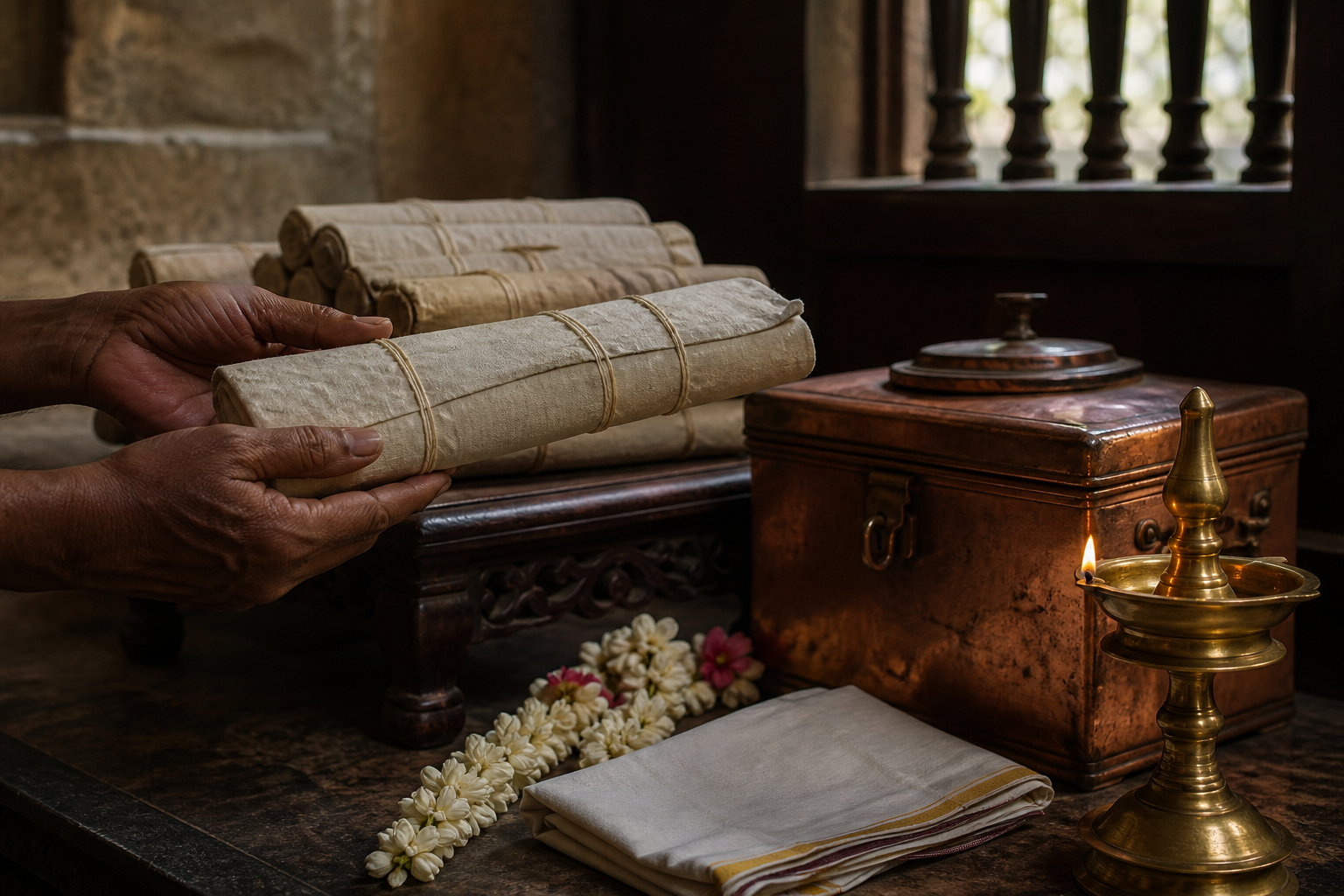
Mahakora is not among the Devi names most devotees encounter every day. That makes careful handling more important. A vivid online description can appear authoritative merely because it supplies a colour, weapon, direction, vehicle, yantra, seed syllable and promised result. Detail is not the same as evidence.
You can state four points firmly: the name is Mahakora; the corresponding month is Vaikasi; the setting is Shaiva Agamic and Tamil Shaiva; and the larger framework is a cycle of twelve monthly goddesses in which time is understood as sacred.
Other claims need a named textual or living basis. Verify them before repeating or practising them, especially when they concern:
- Mahakora’s complexion, posture, weapons, ornaments, vehicle or accompanying deities;
- a bija, mula mantra, dhyana verse, kavacha, yantra or prescribed number of repetitions;
- specific flowers, foods, colours, directions or promised material benefits;
- the complete names and order of all twelve Masa Devis;
- nyasa, homa, abhishekam or another formal ritual procedure;
- claims that the observance is mandatory or universal for all Hindus.
An unverified detail is not necessarily false. It may belong to a local temple, manuscript, paddhati or oral lineage. But a local or lineage-specific rule should be presented as such. Until you can identify its basis, do not turn it into a universal instruction.
Spelling also deserves care. Do not silently replace Mahakora with a more familiar divine name because the latter produces more search results. Similar-looking names are not automatically interchangeable. Preserve the name given by the calendar or tradition you are consulting, and ask a knowledgeable Tamil Shaiva teacher about pronunciation or textual variants.
A simple Vaikasi observance without invented liturgy
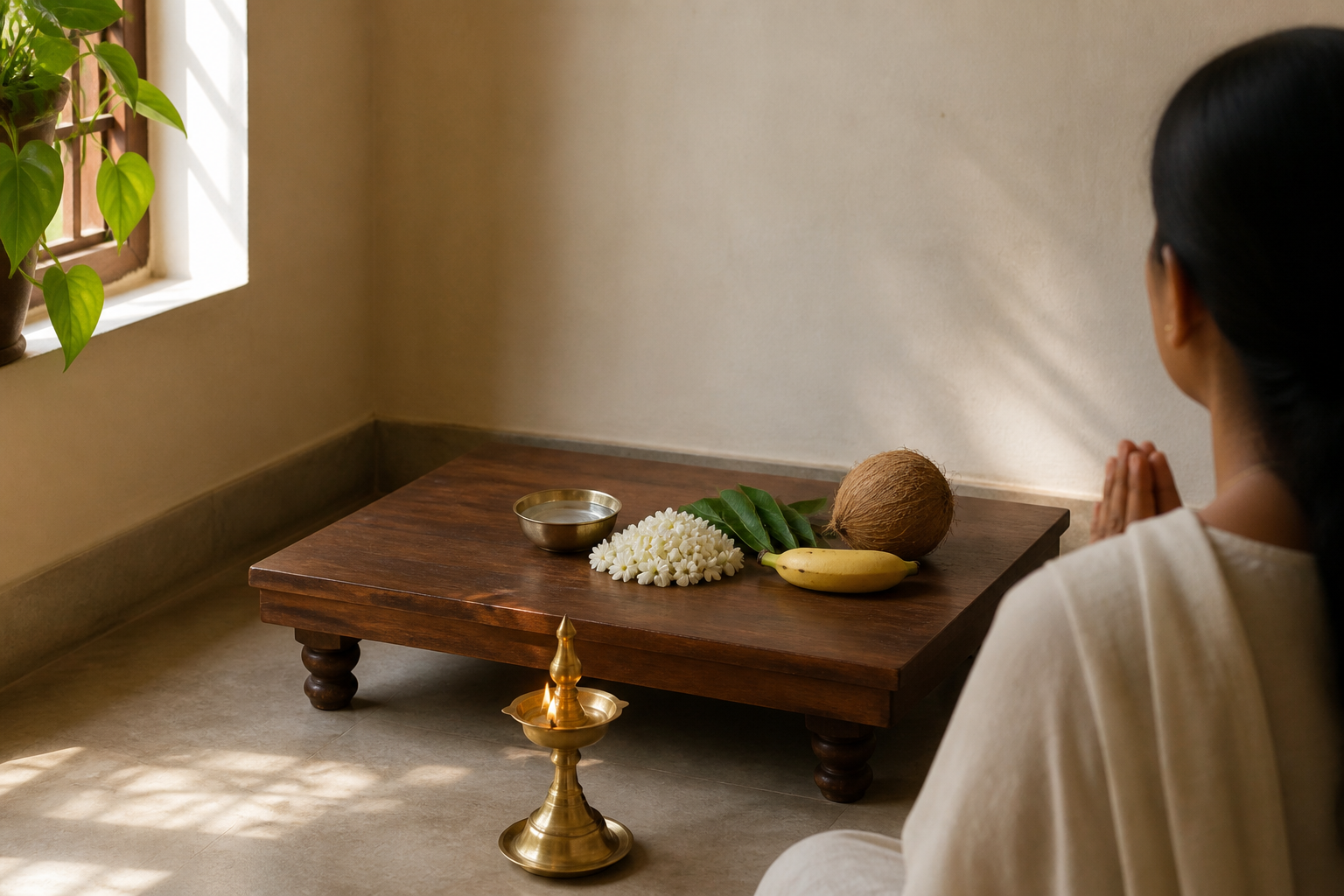
If you have not received a Mahakora paddhati, you can still mark Vaikasi respectfully. Treat the following as a modest household remembrance, not as a substitute for an Agamic temple puja.
- Confirm the month locally. Use a dependable Tamil calendar or the calendar followed by your temple. Do not permanently equate Vaikasi with one fixed range of Gregorian dates.
- Use the altar you already maintain. You do not need to buy or manufacture an image labelled Mahakora when you cannot verify its iconography. A familiar image of Devi, Shiva with Shakti, or your household deity can remain the focus.
- State a plain intention. You might say, “May this Vaikasi be held in remembrance of Devi Mahakora, and may this time be used in dharma.” This is an English devotional intention, not a claimed traditional mantra.
- Make only familiar offerings. Water, a flower, fruit or a safely lit lamp may be offered if these already belong to your household practice. There is no need to assign Mahakora a special colour, ingredient or number without guidance.
- Recite what you have actually received. Use a familiar prayer to Devi or Shiva, or follow your family’s established practice. Do not copy an unfamiliar bija or mantra simply because it is labelled powerful or secret online.
- Give the month a discipline. Choose one practice small enough to sustain through Vaikasi: a daily period of prayer, regular reading, dana, service, restraint in speech or another established dharmic commitment. Record it at the start of the month and review it at the end.
- Seek lineage guidance for anything more elaborate. If you want Mahakora-specific mantra, visualization, nyasa, yantra or puja, ask a temple priest, Agamic practitioner or teacher who can identify the relevant tradition and explain who the procedure is intended for.
The sixth step is what prevents the observance from becoming decorative. If sacred time changes nothing about how you use time, the monthly name remains calendar trivia. A sustained discipline allows Vaikasi to leave a trace in conduct.
Keep the commitment proportionate. A short practice maintained throughout the month is more honest than an elaborate opening ceremony followed by neglect. The point is not to demonstrate intensity. It is to meet the month with steadiness.
Ask better questions when you want the full tradition
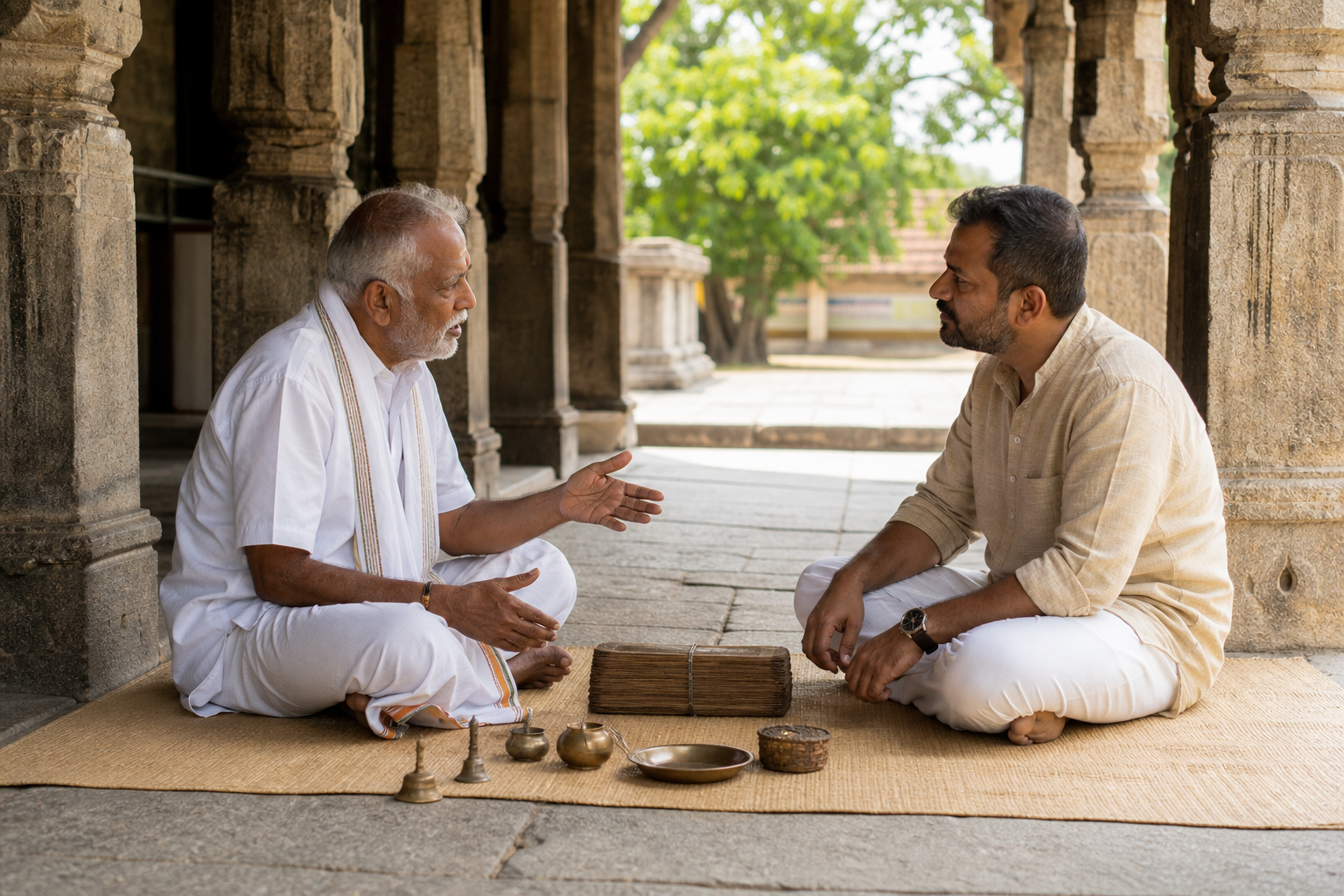
Agamic worship is not a collection of aesthetic correspondences that can be assembled into a do-it-yourself ritual. Deity, mantra, iconography, gesture, offering, temple role and ritual sequence belong within an ordered practice. Some instructions may be public and suitable for householders; others may be temple-specific, role-specific or dependent on initiation.
When you approach a temple or teacher, precise questions will take you further than asking only, “How do I worship Mahakora?” Ask:
- Is Mahakora ritually worshipped here during Vaikasi, or is she acknowledged principally as the month’s presiding Devi?
- Which Agama, paddhati, temple tradition or oral lineage supplies the form and procedure?
- Is the instruction intended for temple priests, initiated practitioners or ordinary householders?
- Is there a recognised image or dhyana description, and where is it preserved?
- Which parts may a householder practise without initiation?
- How does this temple determine the beginning and end of Vaikasi?
A trustworthy answer should be able to locate its details within a tradition. “This is how our temple observes it” is a useful answer. “Every Hindu must do this” requires far stronger support. The distinction protects both the practitioner and the diversity of Hindu practice.
Begin this Vaikasi with the name that is securely preserved: Mahakora. Mark the month, keep one dharmic commitment, and let any deeper ritual knowledge come through a lineage capable of carrying it. That is enough to move from curiosity to reverent practice without filling the gaps with invention.
References
