
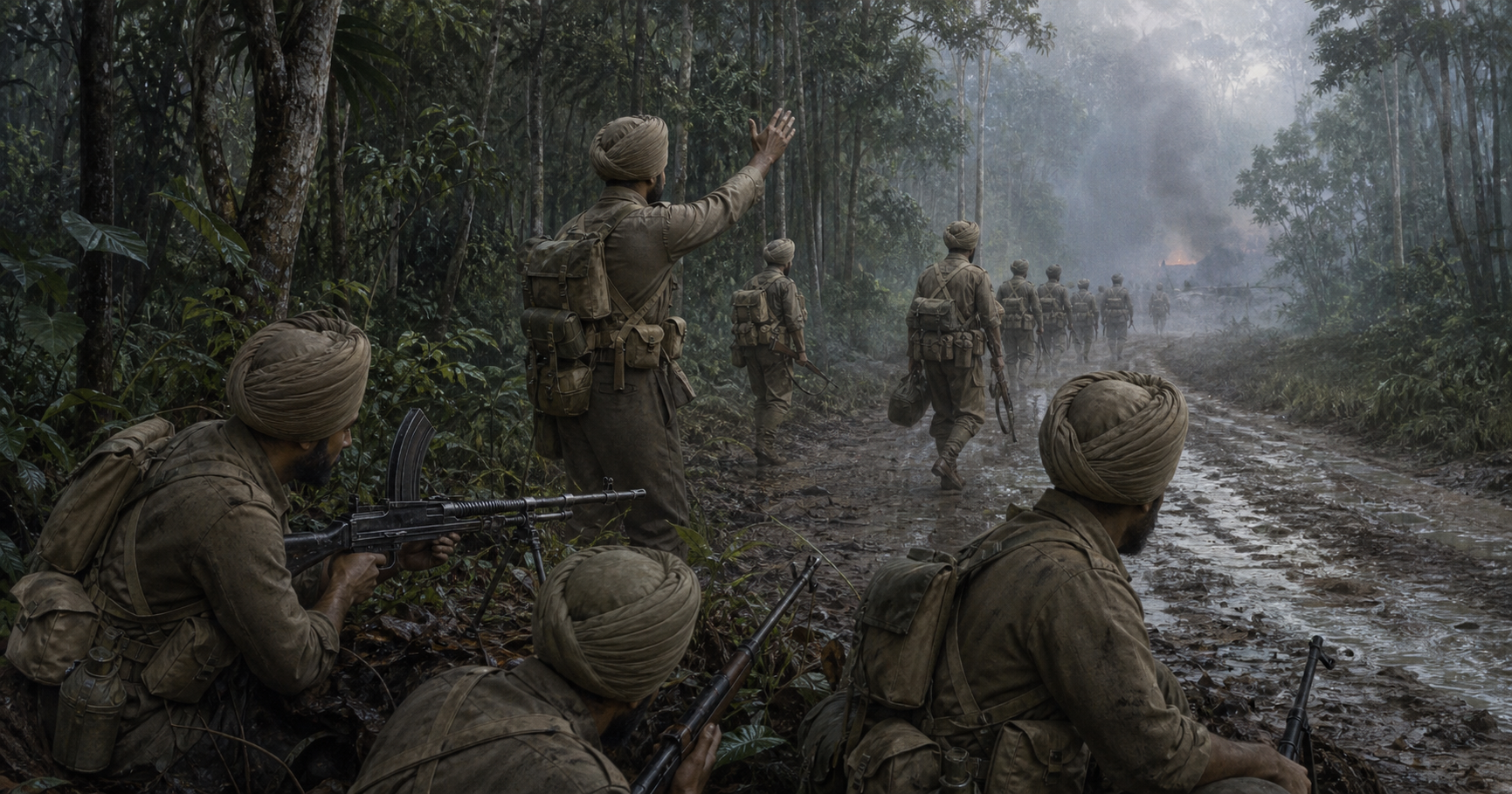
If you came looking for why the 5/11 Sikh Regiment is remembered in Malaya, begin with an important correction: do not reduce its service to one cinematic image of soldiers refusing to retreat. Its significance lies in the harder task of controlling a retreat while enemy pressure, difficult terrain and failing time threatened to turn withdrawal into collapse.
During the 1941–42 Malaya Campaign, the 5th Battalion, 11th Sikh Regiment served in the British Indian Army and undertook rear-guard and protective withdrawal duties. To understand its courage, you need to see what those duties demanded, whom they protected and why disciplined withdrawal can reveal as much about a fighting unit as an advance.
Key takeaways
- The designation 5/11 means the 5th Battalion of the 11th Sikh Regiment.
- The battalion’s importance in Malaya rests chiefly on disciplined rear-guard actions, protective withdrawals and cohesion under severe pressure.
- A rear guard does not merely remain behind. It buys time, protects movement routes and prevents a retreating formation from being overtaken or thrown into disorder.
- The courage involved was collective as well as individual: soldiers had to trust orders, hold positions, disengage when required and preserve the battalion as an effective unit.
- A Dharmic interpretation can illuminate duty, protection and moral restraint, but it should not replace Sikh specificity or unsupported battlefield detail.
Why the rear guard explains the battalion’s importance
Popular memory naturally gravitates toward attacks, captured ground and conspicuous victories. A rear-guard mission reverses that picture. The ground may eventually be yielded. The immediate measure of success is whether the main formation gains enough time and distance to move away in order.
The sequence is simple to describe and dangerous to execute. The main body begins withdrawing. A smaller force maintains resistance along the route of movement, compelling the enemy to deploy, pause or fight rather than pursue freely. That force must then disengage before it is isolated, rejoin the withdrawal and, if ordered, repeat the task farther back.
This is why a rear guard cannot be understood as a group that merely fights until it is overwhelmed. It must balance two competing requirements: hold long enough to make a difference, but retain enough control to withdraw when its purpose has been served. Holding too briefly exposes the main body. Holding without regard to timing can sacrifice the rear guard without securing a corresponding operational benefit.
The 5/11 Sikh Regiment’s steadfastness therefore mattered beyond the positions immediately in front of it. Its delaying actions helped protect withdrawing columns and vulnerable non-combatants along critical movement axes. Every hour gained could widen the distance between an organized withdrawal and an enemy advance. You should measure that achievement in time preserved, movement protected and order maintained, not only in terrain occupied.
What Malaya demanded from an organized battalion
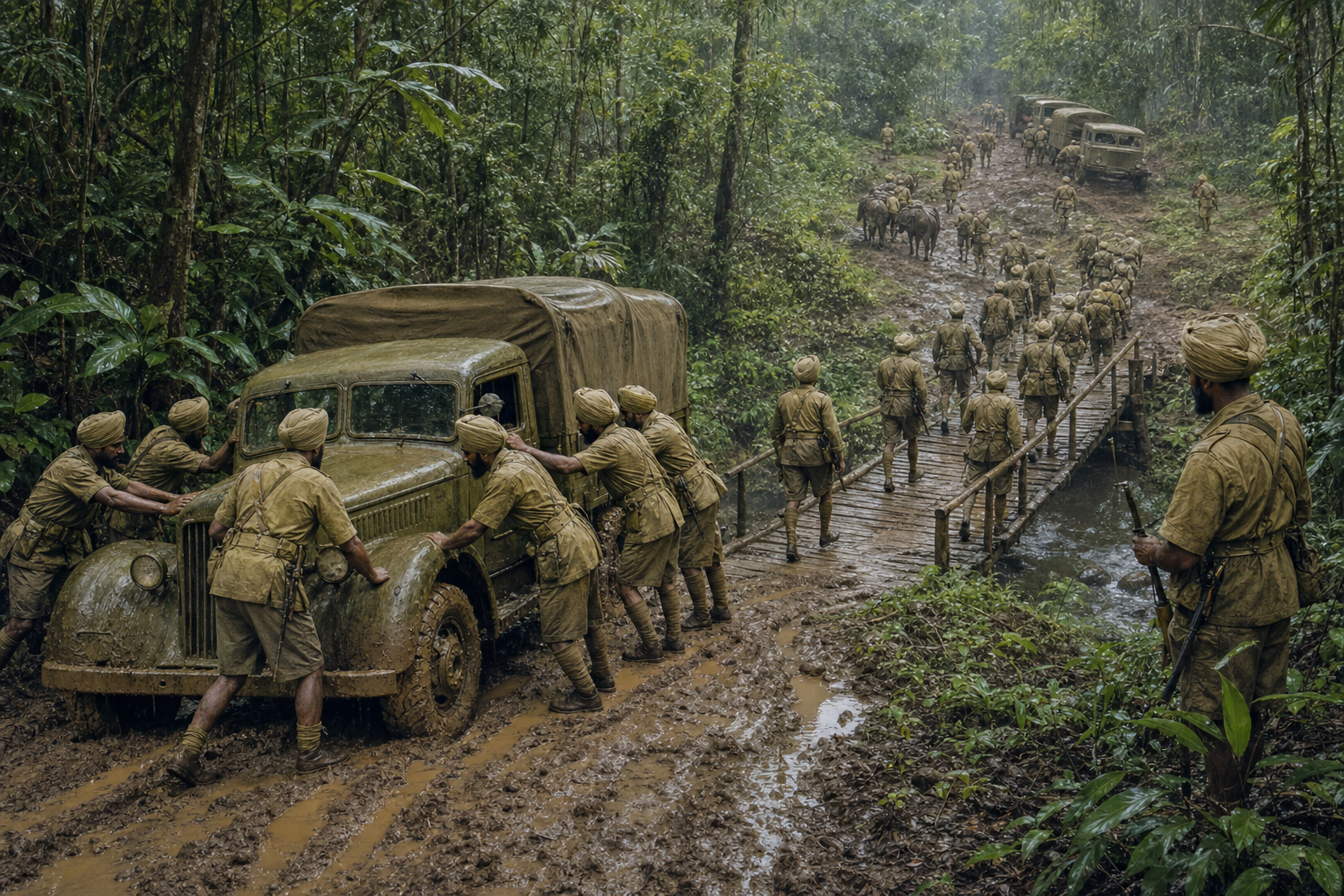
The battalion operated amid tropical terrain, extended supply lines and rapid enemy movement. Each condition magnified the others. Difficult terrain constrains routes. Constrained routes concentrate vehicles, troops and non-combatants. Long supply lines make ammunition, food, medical support and communications harder to sustain. A fast advance leaves commanders less time to correct a delayed order or a broken connection.
Under those conditions, bravery without control is not enough. A useful reading of the battalion’s performance looks for four connected military qualities:
- Discipline: remaining at an exposed position because the wider formation still needs time, rather than moving simply because danger is increasing.
- Cohesion: preserving trust between soldiers, detachments and commanders while units are moving under pressure.
- Tactical patience: resisting both premature withdrawal and purposeless delay.
- Moral restraint: using force for an operational purpose while continuing to recognize obligations toward comrades and vulnerable people.
These qualities explain why the battalion’s conduct should not be remembered only through the language of defiance. Its soldiers were doing professional work inside a deteriorating strategic situation. The distinction matters. Defiance can be momentary and individual. An effective delaying action requires repeated coordination from people who know that their danger is creating an opportunity for someone else to escape.
The human meaning follows from the mission itself. Soldiers carrying out a rear-guard task know that time has become a form of protection. They may never see the people whose survival or orderly movement depends on the position being held. Their duty is still concrete: remain together, resist effectively and keep the withdrawal from becoming a rout.
Indian courage within an imperial military structure
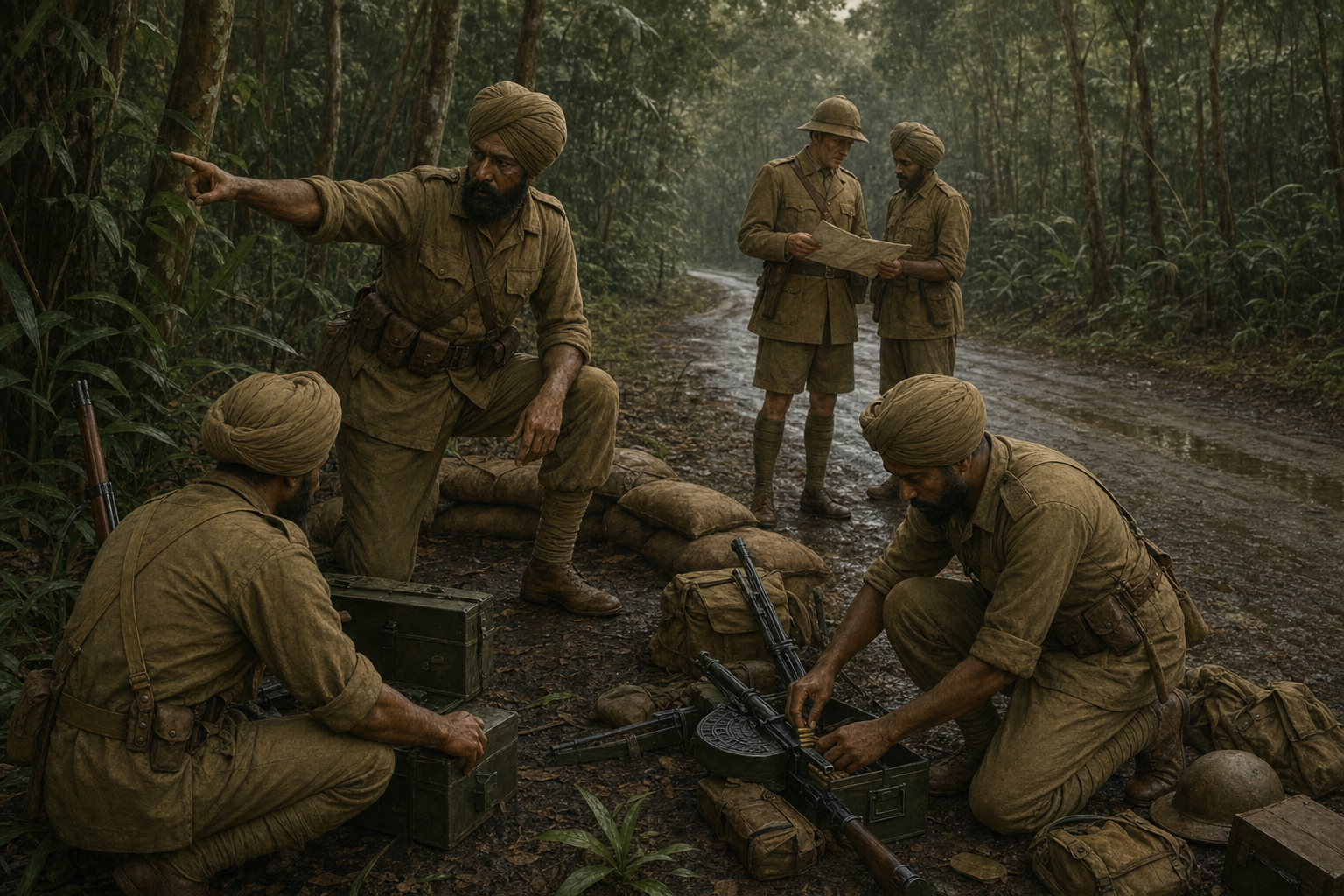
The 5/11 Sikh Regiment fought as part of the British Indian Army. That institutional fact should neither be concealed nor allowed to swallow the identity of the men who served. Calling the formation British Indian is historical accuracy; treating Indian courage as British property is not.
Two easy distortions should be avoided. One removes the imperial chain of command and presents the battalion as though it were operating for an independent Indian state. The other reduces Indian soldiers to anonymous instruments and grants them no professionalism, agency or ethical seriousness of their own. Neither approach helps you understand what occurred.
A better approach keeps both realities visible. The soldiers served within a colonial military system, yet the discipline, solidarity and risk were theirs. Their conduct belongs to the history of Indian arms and to Sikh military memory, even when the strategic decisions above them belonged to an imperial command.
This distinction also protects the battalion from shallow political use. You do not need to romanticize the empire to honour Indian soldiers. Nor do you need to dismiss their service in order to criticize the structure under which they fought. Historical maturity means being able to judge the institution and the soldiers at different levels.
How dharma and the kshatra ideal clarify the episode
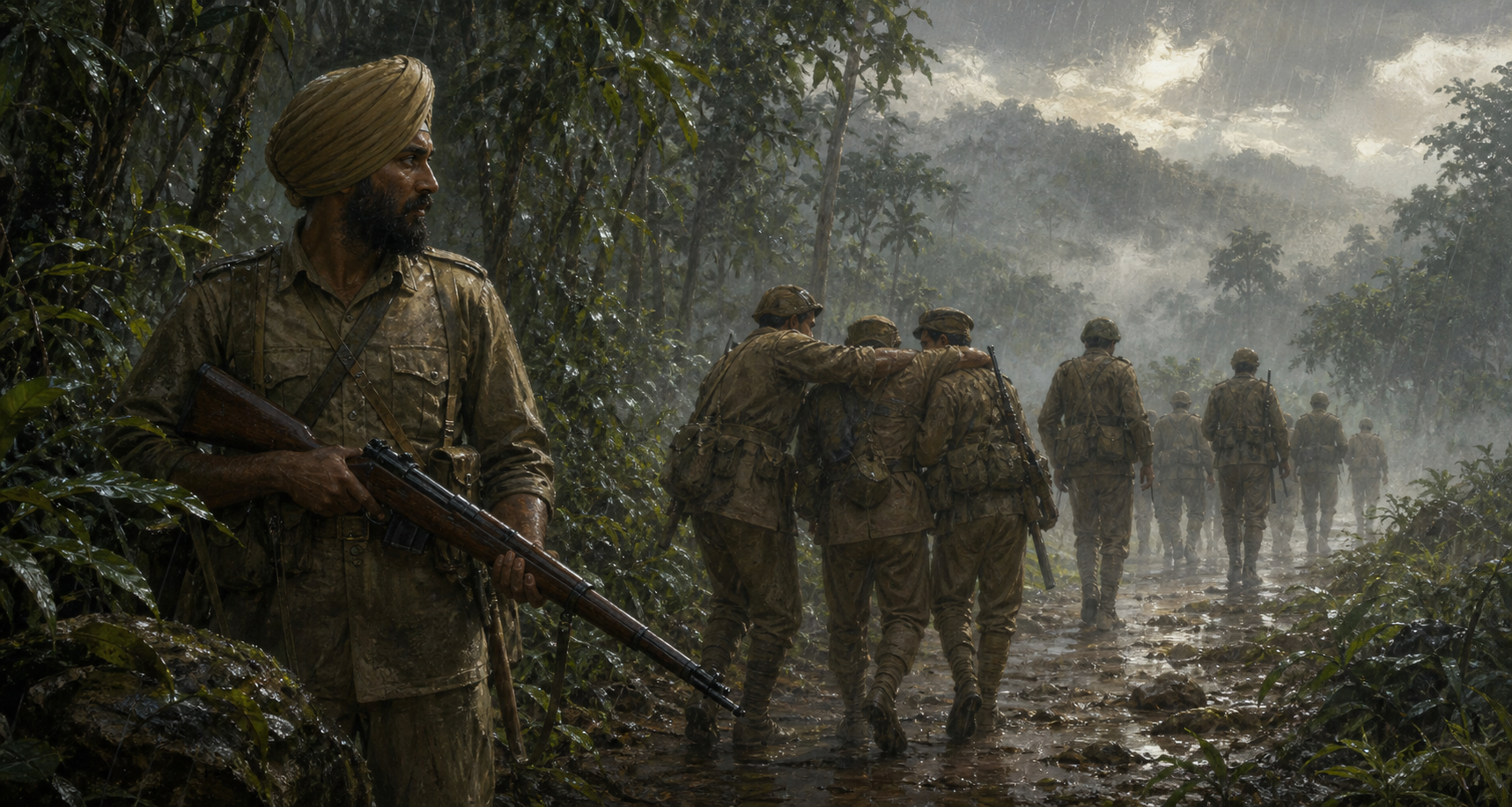
A Dharmic reading begins with the relationship between courage and obligation. Dharma here is not a decorative synonym for bravery. It directs attention to duty performed for a purpose: protecting others, remaining answerable to one’s role and restraining personal fear or impulse when collective survival depends on disciplined action.
The kshatra ideal adds another distinction. Principled martial courage is not the same as aggression, anger or a desire for destruction. A rear-guard mission makes that distinction unusually clear. The fighter accepts danger so that a larger body can withdraw and vulnerable people can gain time. Force becomes protective service rather than self-display.
This interpretation resonates with values found across Sikh, Hindu, Buddhist and Jain traditions: self-command, service, responsibility and protection from harm. The traditions do not express martial duty in identical terms, and shared civilizational values should never be used to erase their differences. Sikh identity must remain central when remembering a Sikh battalion.
We should also avoid turning an ethical interpretation into a claim about every soldier’s private thoughts. Conduct can embody duty, mutual trust and restraint without giving us access to each man’s theology. The responsible conclusion is narrower and stronger: the battalion’s documented pattern of protective service can be understood through a Dharmic moral vocabulary, not that every individual consciously described his actions in precisely those terms.
That restraint strengthens rather than weakens the lesson. Military valour and moral limitation are sometimes treated as opposites. The 5/11 Sikhs’ role in Malaya shows why they can be complementary. Courage determines whether a soldier can remain under pressure; dharma determines what that courage is for.
How to commemorate the 5/11 Sikhs without inventing history
If you are preparing a remembrance, classroom lesson, community address or social-media thread, accuracy begins with a few disciplined choices. They prevent sincere admiration from hardening uncertain details into supposed fact.
- Name the unit precisely. Use “5th Battalion, 11th Sikh Regiment” on first reference and “5/11 Sikh Regiment” or “5/11 Sikhs” afterward.
- Place it in the correct campaign. Identify the 1941–42 Malaya Campaign and the British Indian Army rather than referring vaguely to an unnamed Asian battlefield.
- Explain the mission before praising it. Say that rear-guard actions and protective withdrawals were intended to buy time for withdrawing formations and help protect vulnerable non-combatants.
- Use “final stand” carefully. Do not convert a broad pattern of delaying actions into one precisely located battle unless you have evidence for that location, date and sequence.
- Separate fact from moral interpretation. State the military conduct first. Then explain why you understand it through seva, dharma, principled courage or the kshatra ideal.
- Do not add decorative precision. Names, quotations, casualty totals, weapon details and minute-by-minute narratives should appear only when independently supported. An unverified number does not make a tribute more authoritative.
A concise and defensible remembrance can read as follows: “During the 1941–42 Malaya Campaign, the 5th Battalion, 11th Sikh Regiment served under intense pressure as part of the British Indian Army. Its rear-guard actions and protective withdrawals bought time for other formations to move and helped shield vulnerable non-combatants. The battalion’s cohesion, duty and restraint deserve a secure place in Indian and Sikh military memory.”
Use that foundation when you next tell the story. Add exact places, individual names or battlefield figures only after verifying them. The 5/11 Sikhs need no invented embellishment: the disciplined decision to stand, protect and withdraw in order already carries the weight of remembrance.
References
