
If you are trying to decide whether Nepal’s Hindu state demand represents a durable popular movement or a temporary reaction, do not let the loudest slogan make the decision for you. Ask what kind of Hindu state is being proposed, how broad the mandate is, and what would actually change for citizens.
There is a meaningful signal of public sympathy, but not yet enough evidence here to declare a settled national consensus. The responsible pro-Dharma position is neither dismissal nor unconditional endorsement. It is to test the movement by its mandate, constitutional clarity, conduct and capacity to turn civilizational attachment into just governance.
The demand is real; its national depth remains unproven
On August 12, 2026, residents encountered in Siddharthanagar, across the Sonauli border, expressed the view that Nepal is already Hindu in its underlying identity, even if its formal political description says otherwise. The renewed demand was also linked to communal conflict in Sunsari. That combination matters: a civilizational identity that never disappeared from public memory can become an urgent political demand when people believe social harmony or cultural security is under strain.
Yet local conversations are not a national plebiscite. They establish that the demand has recognizable public resonance in at least one observed setting; they do not establish its scale across Nepal, the intensity of support, or agreement on a constitutional model. No national sample, membership count, electoral test or agreed policy text is supplied. Treat the evidence as a signal worth following, not as permission to say that all of Nepal has already spoken.
You should therefore listen for the precision of the claim. “Many Nepalis continue to understand their country through a Hindu civilizational identity” is supported by the reported reactions. “Nepalis have approved one particular Hindu-state settlement” goes much further than the evidence allows.
Three meanings of “Hindu state” must not be collapsed
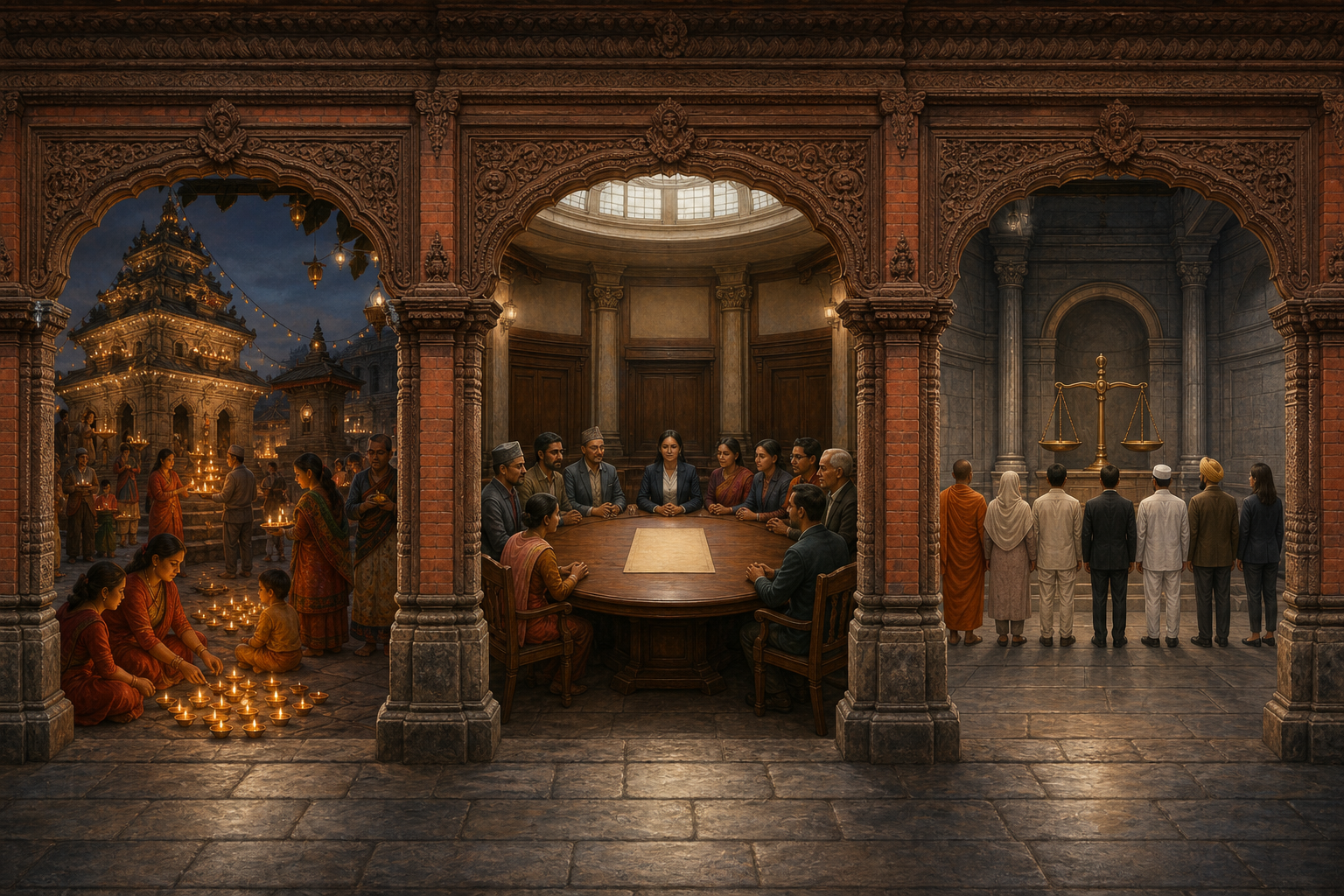
Much of the confusion disappears once you separate three propositions that are often bundled into one phrase:
- A civilizational proposition: Nepal’s inherited public identity, sacred geography and cultural memory are Hindu in character.
- A constitutional proposition: The state should formally describe itself as Hindu rather than secular.
- A governing proposition: Institutions, laws, education, heritage policy or public ceremonies should operate differently because of that constitutional identity.
A person may accept the first proposition without having decided the second. Someone may support the second while opposing coercive policies under the third. Another supporter may use “Hindu state” to mean cultural recognition and equal citizenship, while a different supporter expects direct religious supervision of government. Until those distinctions are stated, apparent agreement can conceal incompatible expectations.
This is why a constitutional label cannot be the entire programme. It does not by itself decide the form of government, the powers of officials, the treatment of religious institutions, or the rights of people outside the majority tradition. Those questions require text, procedures and enforceable limits.
When you hear someone endorse the movement, ask one clarifying question: “Which change do you mean—civilizational recognition, constitutional wording, or new state powers?” The answer tells you whether you are hearing a cultural affirmation, a legal proposal or an undefined aspiration.
Five tests separate a serious movement from a slogan
A movement seeking to reorder a country’s constitutional identity must meet a higher standard than a wave of visible enthusiasm. Use these five tests before treating any campaign, speech or demonstration as evidence of a workable mandate.
- Test the mandate. Ask where support was measured, who was asked, how participants were selected, what exact question they answered and when the exercise occurred. Crowd size and roadside conversations can reveal energy; they cannot substitute for representative evidence. If organizers claim nationwide support, they should be able to show nationwide evidence.
- Demand exact constitutional language. “Restore the Hindu state” is an objective, not a legal design. Ask for the proposed wording and an explanation of every power, duty or restriction it would create. If advocates cannot say what changes on the day after adoption, voters are being asked to endorse a symbol without knowing its institutional consequences.
- Protect equal citizenship explicitly. A credible proposal should state how freedom of worship, access to public institutions, eligibility for office, property, schooling and due process would operate for every citizen. Supporters should not leave these matters to reassuring speeches. Rights and limits belong in the actual settlement.
- Define who interprets the Hindu character. Hindu civilization contains many lineages, customs and regional forms. If a state body gains authority to decide which practices are authentic, political control can replace civilizational pluralism. Ask who appoints that body, what its jurisdiction is, how decisions can be challenged and which matters remain outside state control.
- Judge the movement by its conduct. A demand intensified by communal tension must not reproduce the same tension in another form. Lawful assembly, disciplined speech, protection of places of worship and rejection of collective blame are not public-relations extras. They show whether Dharma is functioning as a governing ethic rather than merely as an identity marker.
The fifth test is especially important. A Hindu state worthy of the name cannot be built through conduct that abandons restraint, duty and justice. If intimidation becomes the method, the movement weakens the moral claim it is trying to constitutionalize.
A positive programme must also answer ordinary governing questions. How would Nepal preserve temples and other inherited cultural sites? What would students learn about the country’s civilizational past? How would authorities respond to communal conflict without selective enforcement? What boundaries would prevent parties from using sacred identity as a shield for corruption or incompetence? A movement becomes durable when it supplies answers that still make sense after the demonstration ends.
Support from Bharat should strengthen Nepalese agency
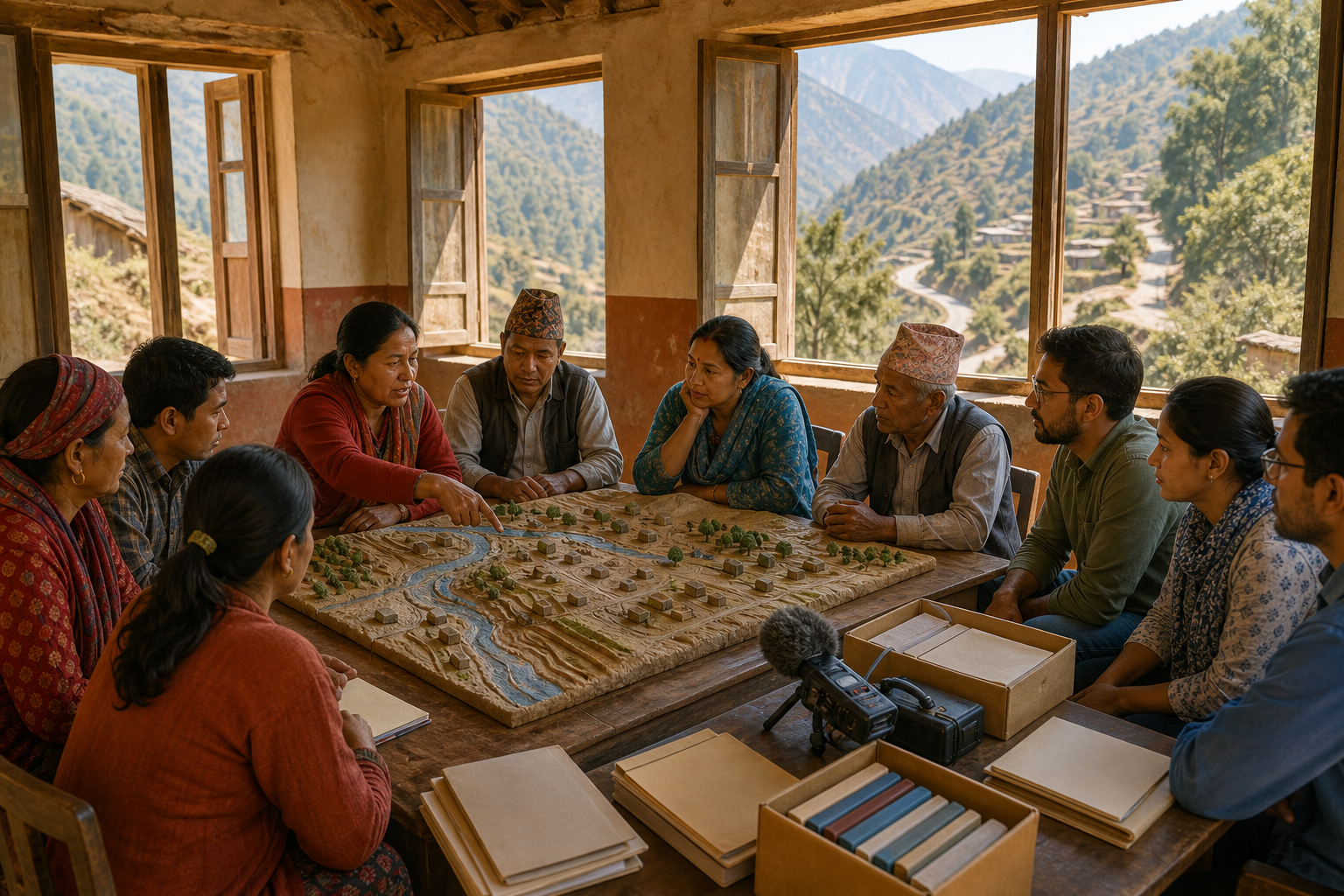
The Sonauli setting makes the issue immediately legible to readers in Bharat. Cultural proximity, pilgrimage, temples and shared civilizational vocabulary can create sincere solidarity. But proximity can also tempt outside observers to treat a Nepalese constitutional question as an extension of Indian party politics.
If you are following the movement from Bharat, keep four disciplines:
<!– wp:list {