
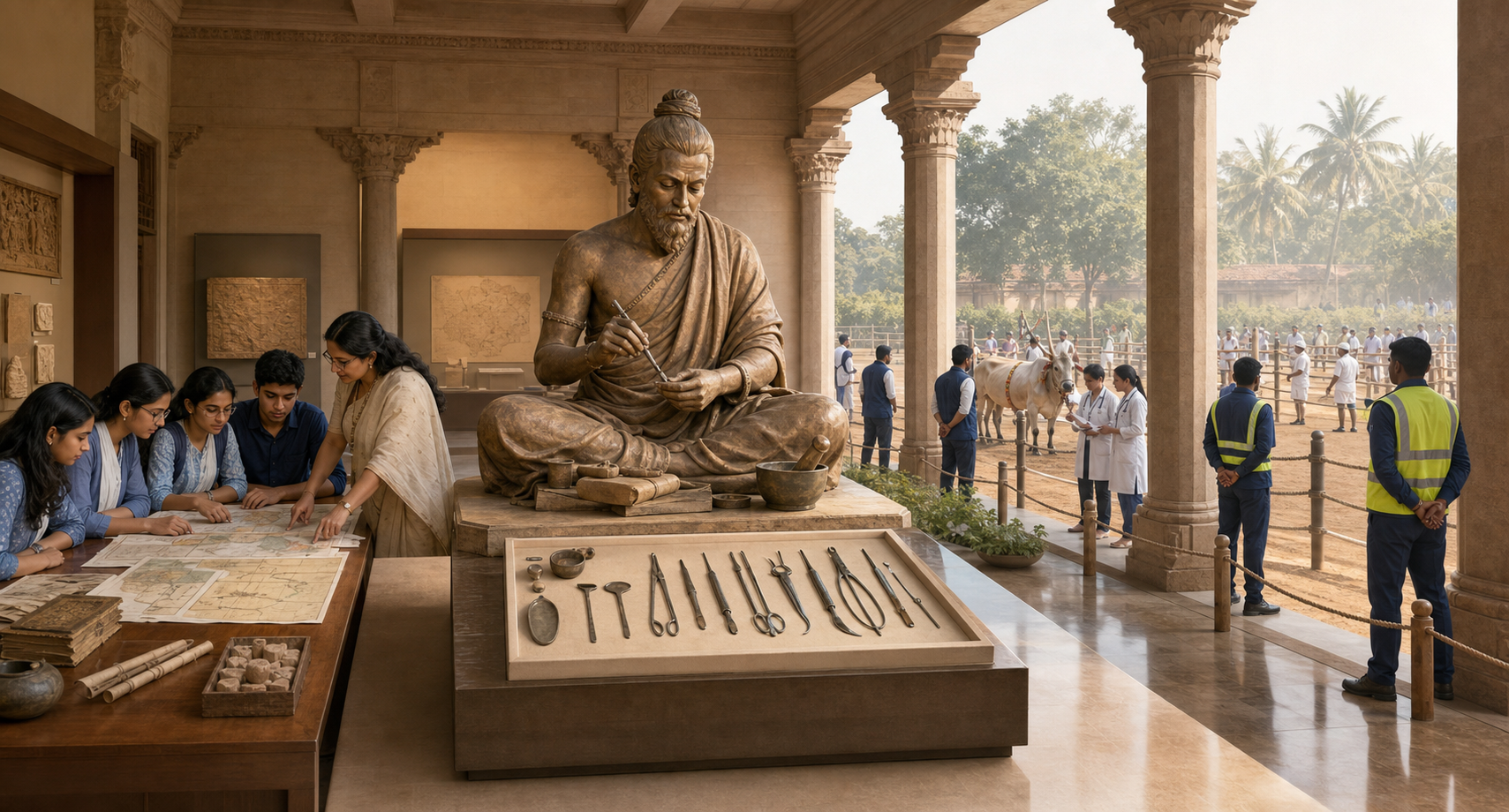
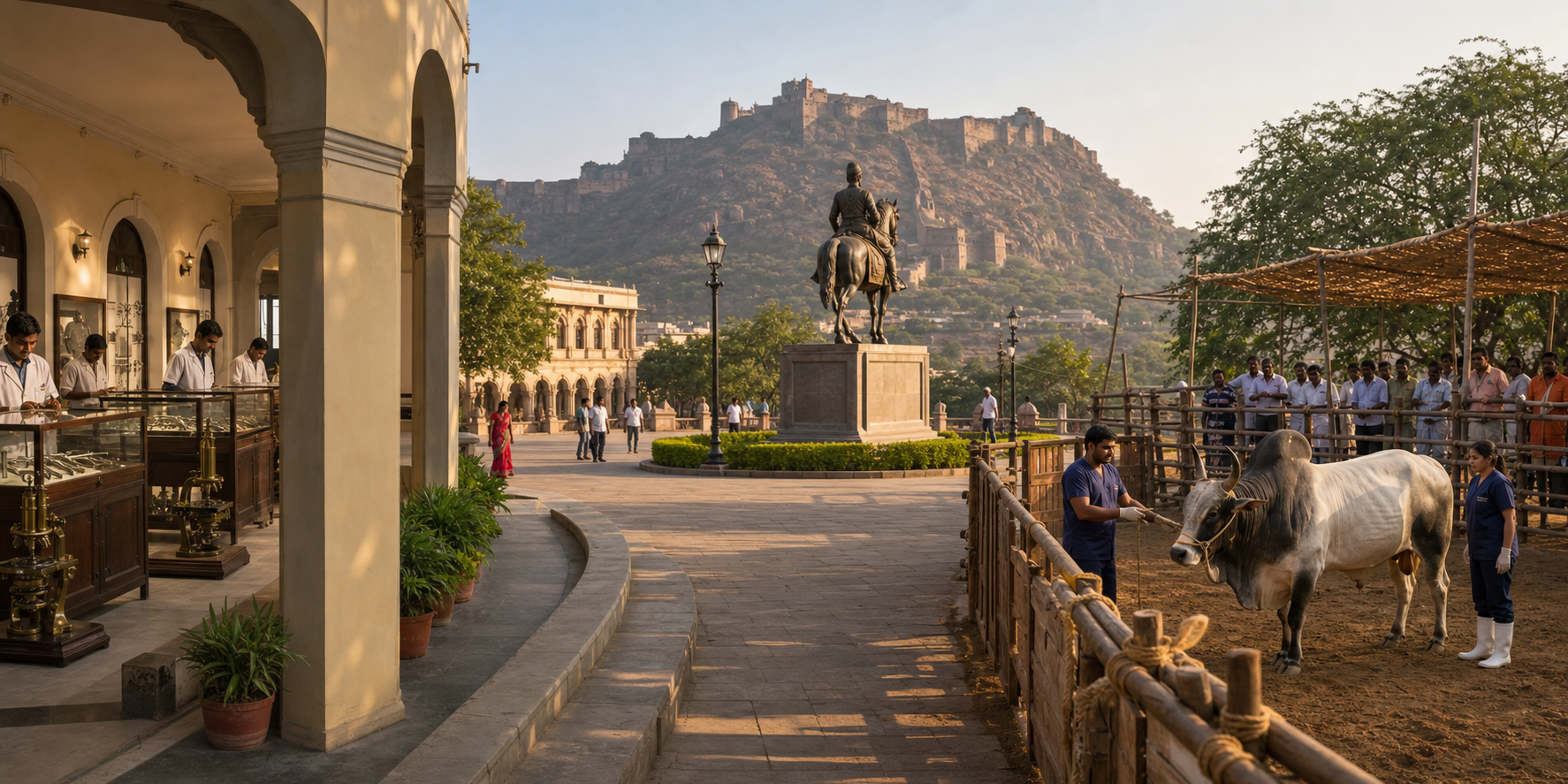
A statue in a surgical college, a disputed textbook map and a regulated bull-taming festival may appear to pose unrelated questions. Together, however, the source accounts on Maharshi Sushruta, Chhatrapati Shivaji Maharaj and Jallikattu reveal a common institutional challenge: how should India recognise civilisational inheritance without reducing it to decoration, political messaging or immunity from scrutiny?
These cases show that meaningful recognition requires more than adding famous names to public spaces. Medical institutions must connect commemoration with intellectual history, curriculum bodies must combine proportion with historical precision, and governments must protect living traditions through enforceable duties. The resulting standard is neither uncritical celebration nor cultural detachment, but evidence-based stewardship.
What the three cases reveal about institutional memory
Public institutions do not merely preserve information. Through campuses, textbooks, laws and administrative practice, they decide which parts of inherited memory become visible, how those inheritances are interpreted, and what responsibilities accompany their recognition. The three sources address different institutional arenas, but all resist a false choice between civilisational confidence and critical standards.
Key takeaways
- Commemoration has educational value when a portrait, statue or plaque opens a documented account of a knowledge tradition.
- Curricular inclusion should give important Indian figures sufficient proportion while clearly marking uncertainty, contested interpretations and different forms of political authority.
- Recognition of living heritage must carry operational duties, including welfare protections, safety measures, supervision and accountability.
- Historical acknowledgement is not the same as restoring an ancient practice unchanged or treating every inherited claim as established fact.
This framework makes room for different kinds of heritage. Sushruta represents an intellectual and professional lineage; Shivaji Maharaj and the Maratha world raise questions of national and regional historical representation; Jallikattu is a continuing community practice with cultural, agrarian, legal and ethical dimensions. Each therefore requires a different institutional response, even though all require evidence and context.
Commemoration becomes valuable when it teaches
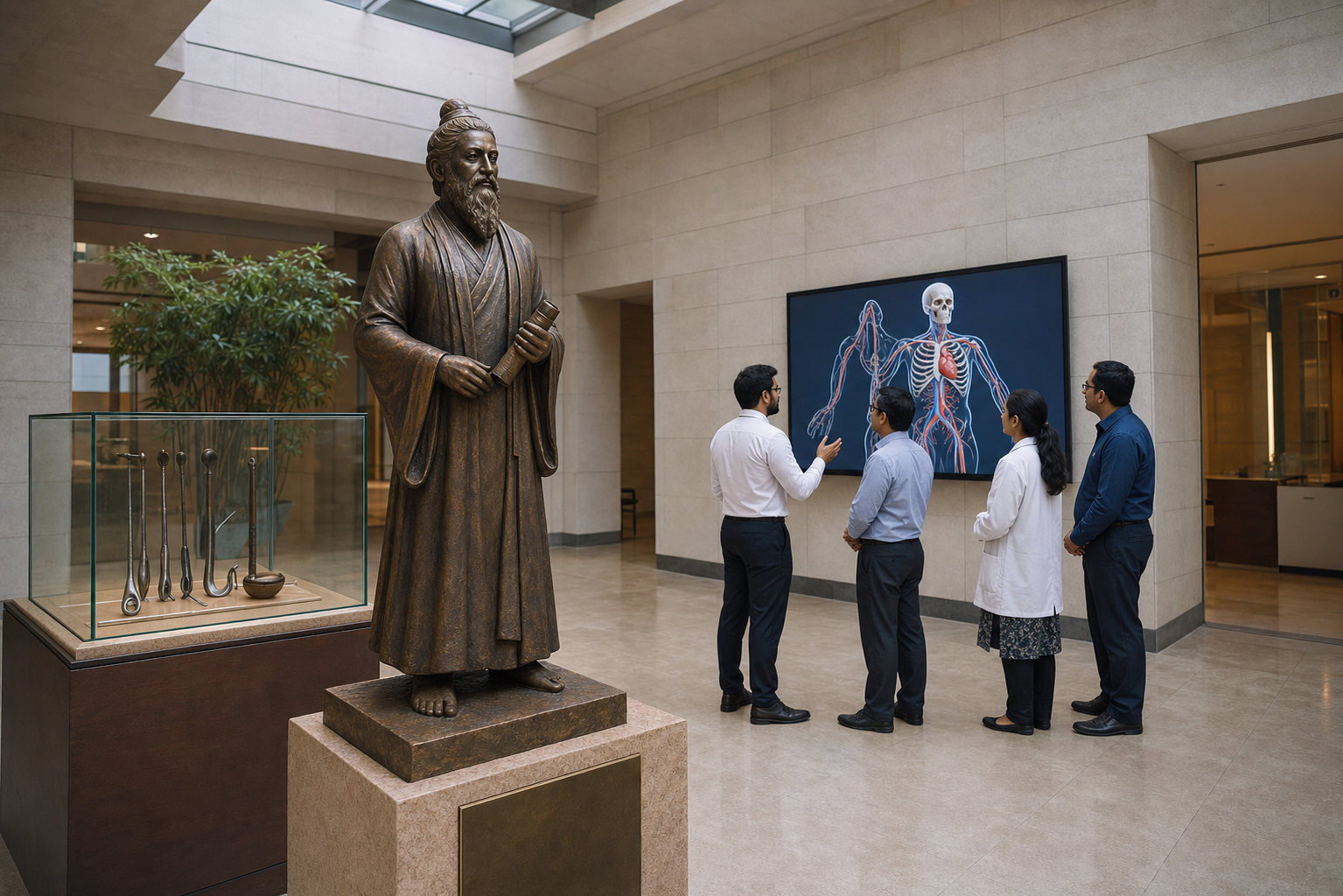
The source article on Maharshi Sushruta reports that the Royal College of Surgeons of Edinburgh unveiled a bronze sculpture of him on June 19, 2026. It also notes that the Royal Australasian College of Surgeons in Melbourne installed a marble statue in 2018. Against those examples, the article describes recognition across India’s medical and educational institutions as uneven, although it identifies commemorations at institutions in Kochi and Mysore and statues commissioned by Raj Bhavan, Goa.
The important issue is not a competition over the number of statues. A commemorative object can serve as a compact institutional syllabus. The Sushruta article associates the Sushruta Samhita with anatomy, diagnosis, surgical procedures, instruments, wound care and professional conduct. It also reports descriptions of students practising techniques on materials that simulated bodily tissue before working on patients. Presented carefully, such material can introduce medical students to the plurality of medicine’s history and to enduring questions about observation, manual preparation, supervision and ethical responsibility.
That educational function depends on an explicit distinction between historical recognition and present-day clinical guidance. Honouring Sushruta need not imply that ancient descriptions supersede contemporary evidence, technology or standards of care. Medical institutions already study historical figures without treating every historical theory as clinically valid. The same method can place Indian knowledge traditions within global medical history while preserving the authority of modern research and professional regulation.
A credible display would therefore do more than name a civilisational ancestor. It would identify the relevant text and tradition, explain the historically significant ideas attributed to them, distinguish documented material from later interpretation, and state clearly why the subject matters to contemporary learners. In this form, commemoration becomes an invitation to study rather than a demand for reverence.
Curricula need proportion, context and visible uncertainty
The source account on Shivaji Maharaj and NCERT textbooks describes discussions sought by the Maharashtra Government with NCERT and the Central Government over the treatment of Shivaji Maharaj and the Maratha Empire. It also refers to public reporting in 2026 about the omission or revision of a Maratha Empire map in Class VIII social science material, including objections concerning territorial representation. Those details are reported by the source and should not be read as independently verified here.
The case illustrates why inclusion and accuracy cannot be separated. The source presents Shivaji Maharaj as a state-builder whose significance includes Swaraj, forts, revenue administration, intelligence, maritime strategy and the political conditions of the Deccan. It also stresses that later Maratha influence did not always take a single form: direct control, tribute, alliance, military pressure and political suzerainty should not automatically be collapsed into one territorial category.
This is particularly important for maps. A single colour can imply uniform sovereignty even when the underlying relationships were varied or disputed. If the evidence does not support a simple boundary, an educational institution has options other than either maximalist depiction or omission. An annotated map, more than one chronological layer, a note on categories of influence, or a short explanation of competing interpretations can make uncertainty part of the lesson.
The same principle applies beyond political history. Sushruta should not appear in medical education as an isolated emblem detached from texts and methods, just as Shivaji Maharaj should not be reduced to a name, portrait or simplified expanse on a map. In both cases, adequate representation requires proportion, supporting evidence and an account of institutional or intellectual achievement. Cultural sensitivity should guide the questions asked; it should not predetermine every answer.
Living heritage requires protection through governance
Jallikattu presents a different problem because it is described not simply as remembered history but as a continuing practice. The source article on Krishna, cattle culture and Jallikattu situates the event within Tamil agrarian and devotional life, especially Pongal and Mattu Pongal. It notes the older expression Eru Thazhuvuthal, translated there as embracing the bull, and distinguishes the practice from spectacles organised around killing the animal. The article also connects Jallikattu with community prestige and arguments for maintaining indigenous cattle breeds.
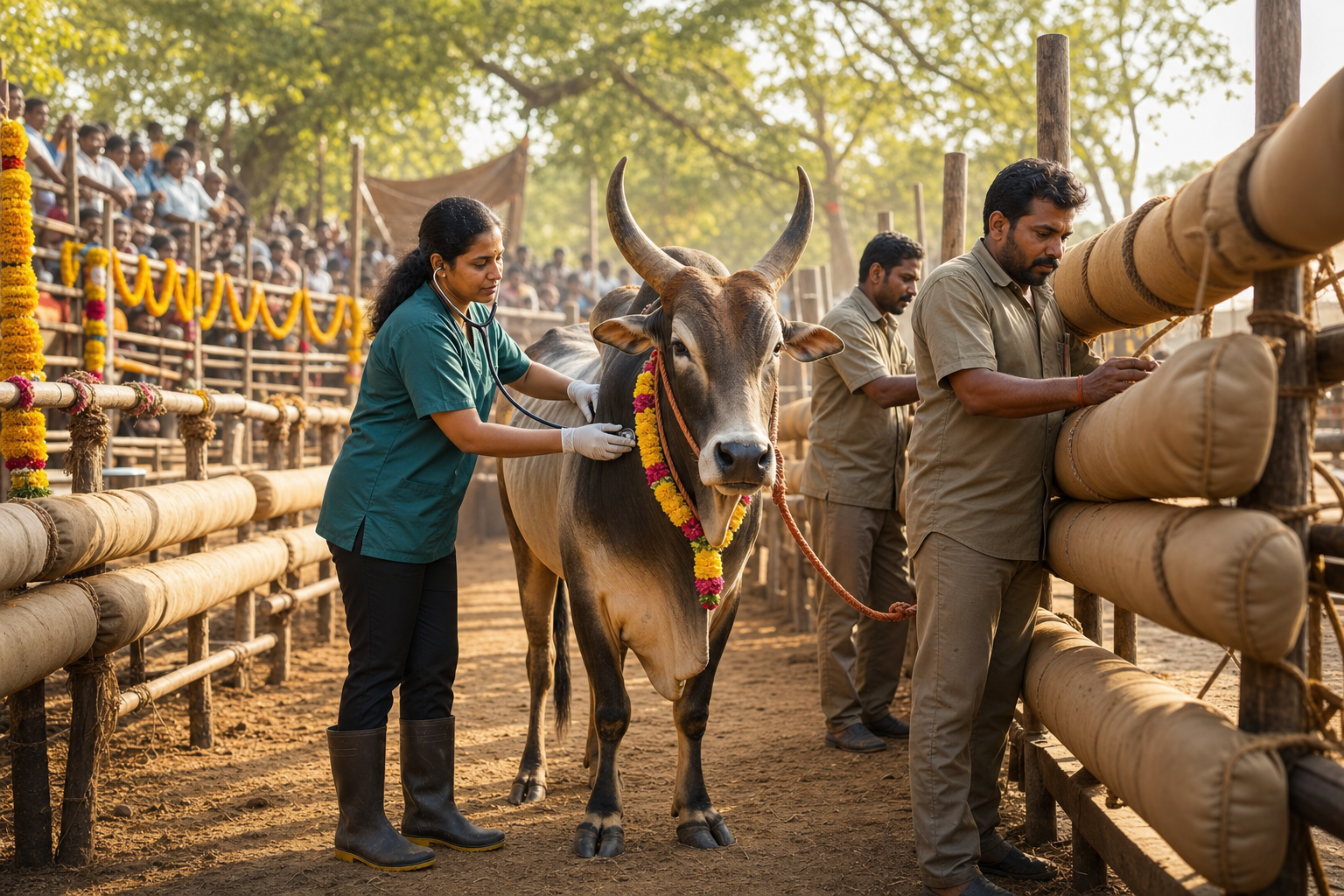
Those cultural claims do not settle the ethical question. The same source argues that continuity cannot excuse abusive handling and identifies concerns including beating, tail-twisting, irritants, unsafe enclosures and poor crowd control. Its account therefore places reverence and welfare in a reciprocal relationship: public recognition is credible only when treatment of the animal reflects the value claimed for it.
The article reports a legal sequence that includes the Prevention of Cruelty to Animals Act, 1960; increased scrutiny after bulls were included in performing-animal restrictions in 2011; the Supreme Court’s 2014 judgment in Animal Welfare Board of India v. A. Nagaraja; Tamil Nadu’s 2017 amendment; and a five-judge Constitution Bench decision in May 2023 upholding state amendments permitting Jallikattu, Kambala and bullock-cart races. As presented by the source, lawful recognition remains tied to regulation and animal-welfare safeguards.
This shifts the institutional question from whether heritage should merely survive to how it should be governed. Legislatures can define a legal pathway, but implementation rests with organisers, veterinarians, district administrations, participants and other responsible authorities. Rules must be observable, violations must have consequences, and welfare and public safety cannot remain ceremonial language. A living tradition is protected most durably when institutions help it meet defensible standards.
A credible standard for civilisational inclusion
Evidence before assertion
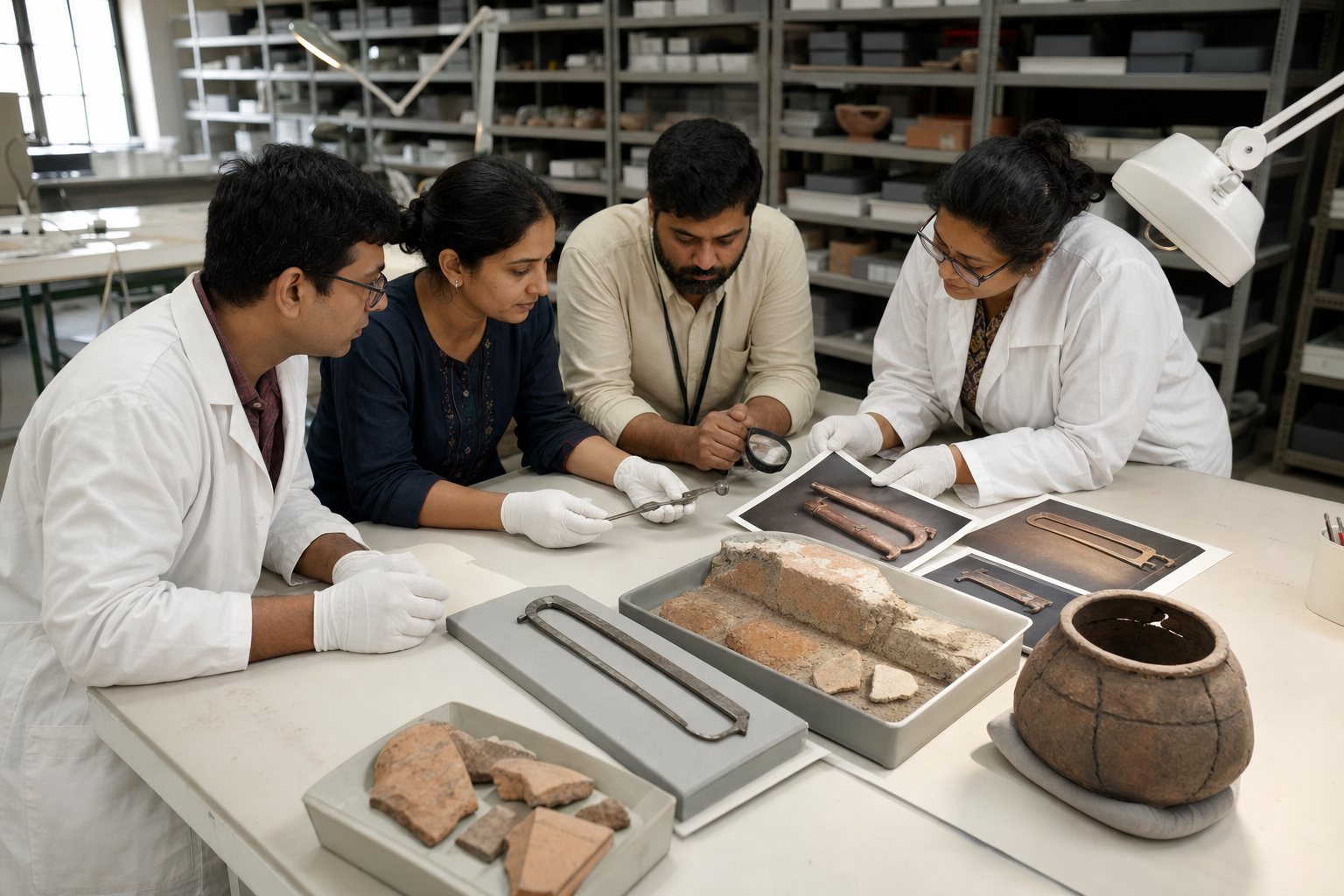
Every institutional claim should be traceable to a text, material record, documented practice, legal source or recognised body of scholarship appropriate to the subject. When the evidence permits more than one interpretation, the uncertainty should be displayed rather than concealed. This protects civilisational history from exaggeration and protects students and the public from mistaking advocacy for settled knowledge.
Interpretation alongside visibility
Visibility alone is a weak measure of restoration. A Sushruta statue requires historical explanation; a Shivaji Maharaj chapter needs political and geographical context; recognition of Jallikattu needs an account of both cultural meaning and present obligations. The best institutional treatment tells people what is being remembered, why it matters, what evidence supports it and where legitimate debate remains.
Responsibility alongside recognition
Different institutions carry different duties. Universities and professional colleges must separate historical learning from current technical prescription. Curriculum bodies must balance national breadth, regional depth and age-appropriate complexity. Legislatures and administrations must translate cultural accommodation into workable safeguards. Courts, where involved, assess legal questions rather than supplying the entire cultural narrative.
Indian civilisational heritage will gain a stronger public presence when institutions treat it as a field of knowledge and responsibility, not simply as a collection of symbols. The next step is to build displays, curricula and regulatory systems that can withstand scholarly examination while remaining intelligible and meaningful to the communities whose inheritance they carry.
References
- HinduPost — Maharshi Sushruta: The Forgotten Surgical Genius Bharat Must Honour Now
- DharmaRenaissance Blog — Krishna, Jallikattu and the Sacred Power of Bull-Taming in Indian History
- Hindu Janajagruti Samiti — Restoring Shivaji Maharaj in NCERT Textbooks: Why Maratha History Matters