Maharashtra’s reported decision to prohibit alcohol at music concerts turns a narrow question about beverage service into a wider test of public-event governance. The central issue is not whether concerts should be curtailed, but whether licensing, venue operations, medical care and enforcement can work together before foreseeable risks become emergencies.
The supplied report connects the measure to two fatal incidents, an investigation into the Sunburn Festival and earlier judicial concern over liquor permissions. Read together, these developments show why alcohol regulation may reduce risk but cannot substitute for an end-to-end safety system.
Key takeaways
- The reported alcohol ban changes one part of the concert environment, but access control, crowd management and medical readiness remain equally important.
- The deaths described in the source remain subject to medical, forensic and investigative findings; policy analysis should not turn preliminary allegations into settled causes.
- Security must cover service entrances, backstage routes and other weak points, not merely the most visible public gates.
- Effective regulation should make illicit supply difficult while ensuring that an attendee in distress can seek immediate help without avoidable fear or delay.
A ban addresses exposure, not the entire chain of risk
The DharmaRenaissance Blog article reports that the Maharashtra Government banned alcohol at all music concerts and ordered a detailed probe into the Sunburn Festival. It presents the prohibition as a response to recent concert-related deaths in Mumbai rather than as an objection to music or youth culture.
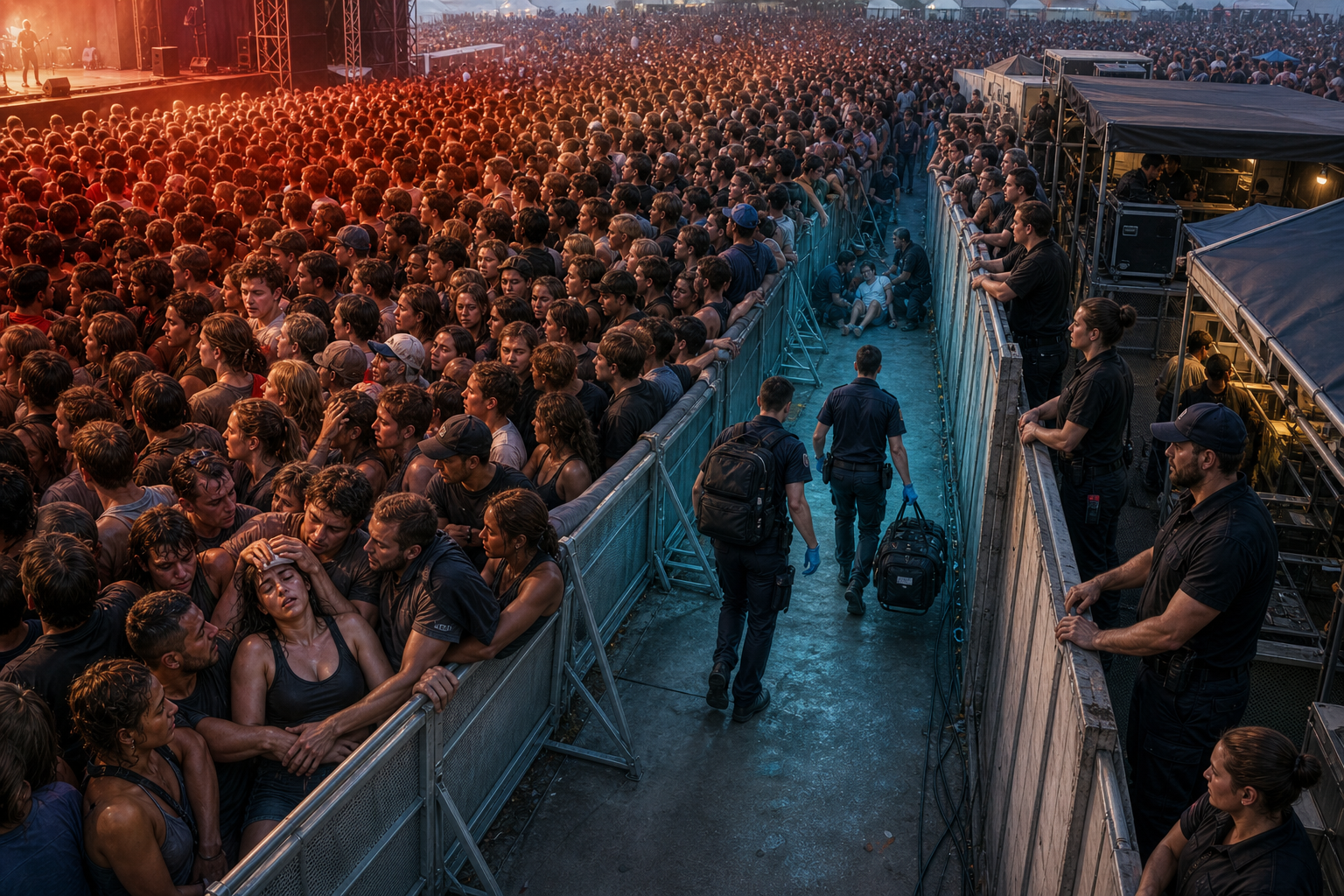
That distinction matters. Alcohol can affect judgment, coordination and the ability to recognize physical distress. Within a dense concert environment, the source argues, it can also interact with prolonged standing or dancing, dehydration, heat, loud sound, lighting effects and difficult crowd movement. Removing licensed alcohol sales may therefore reduce one source of exposure, but it does not automatically control what attendees consume before arrival, what enters through poorly supervised access points or how rapidly staff respond when someone becomes ill.
A meaningful policy must consequently define the scope of the restriction. Entry procedures need a safe way to identify attendees who are already severely impaired. Organizers also need clear arrangements for VIP areas and other spaces that might otherwise operate under different assumptions. Refusing admission cannot be the only response: an impaired person displaced into an unmanaged area outside the venue may still require assistance.
The source also reports that the Bombay High Court questioned Maharashtra’s permission for liquor at the Sunburn Festival in Mumbai in December 2025 and urged reconsideration of the policy. As presented in the article, that episode places the later prohibition within a sequence of warnings and responses. It suggests that licensing decisions should be treated as risk judgments, not routine administrative approvals.
Two reported incidents reveal different investigative questions
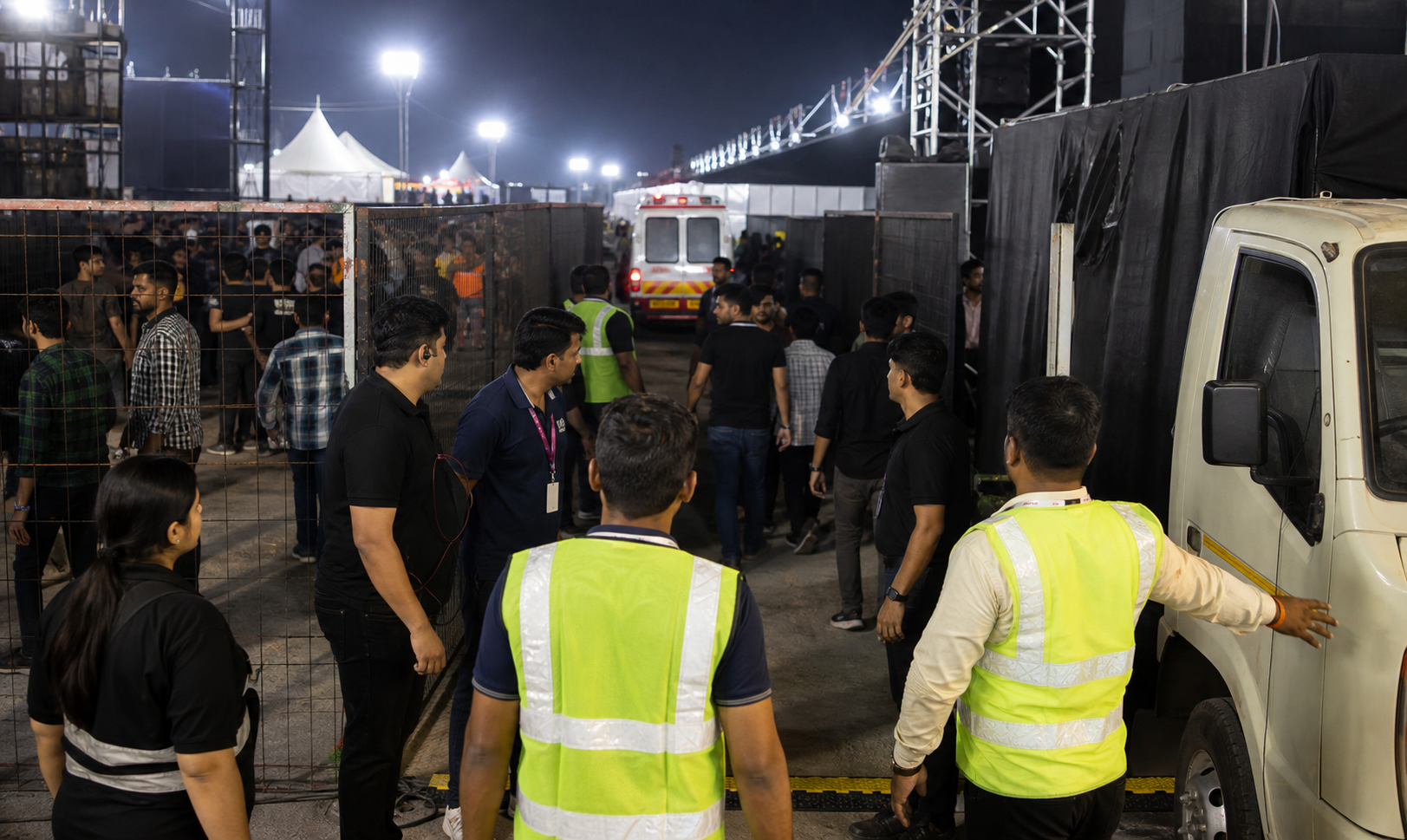
According to the source, two MBA students died after allegedly consuming ecstasy pills at a Goregaon music concert in April 2026, while another attendee reportedly became seriously ill. The article says police made multiple arrests and examined alleged drug circulation, unauthorized access and possible security gaps, including concerns involving a rear entrance.
The same article separately reports that a 28-year-old law graduate died after becoming ill at a June 2026 music event at the NSCI Dome in Worli, while a woman was hospitalized. It describes suspected excessive alcohol consumption as part of the preliminary account. These details should remain carefully attributed: the source itself notes the importance of final medical and forensic findings, and the reported circumstances do not by themselves establish a definitive cause of either death.
The two accounts nevertheless identify complementary regulatory questions. The Goregaon case raises questions about perimeter integrity, screening and illicit substances. The Worli case directs attention toward intoxication, observation and timely treatment. Their shared lesson is not that every concert presents the same danger, but that safety can fail at several connected points: before entry, at an overlooked access route, during consumption, when symptoms first appear or while emergency care is being arranged.
This is also why a prohibition should not become a shortcut in subsequent investigations. If authorities attribute every emergency to individual misconduct, they may overlook operational failures. If organizers treat the ban as complete protection, they may underinvest in screening, medical staffing and crowd supervision. Each serious incident requires a documented reconstruction of what entered the venue, what staff observed, what actions followed and how long critical handoffs took, without presuming the medical conclusion.
Concert safety works only as a joined-up operating system
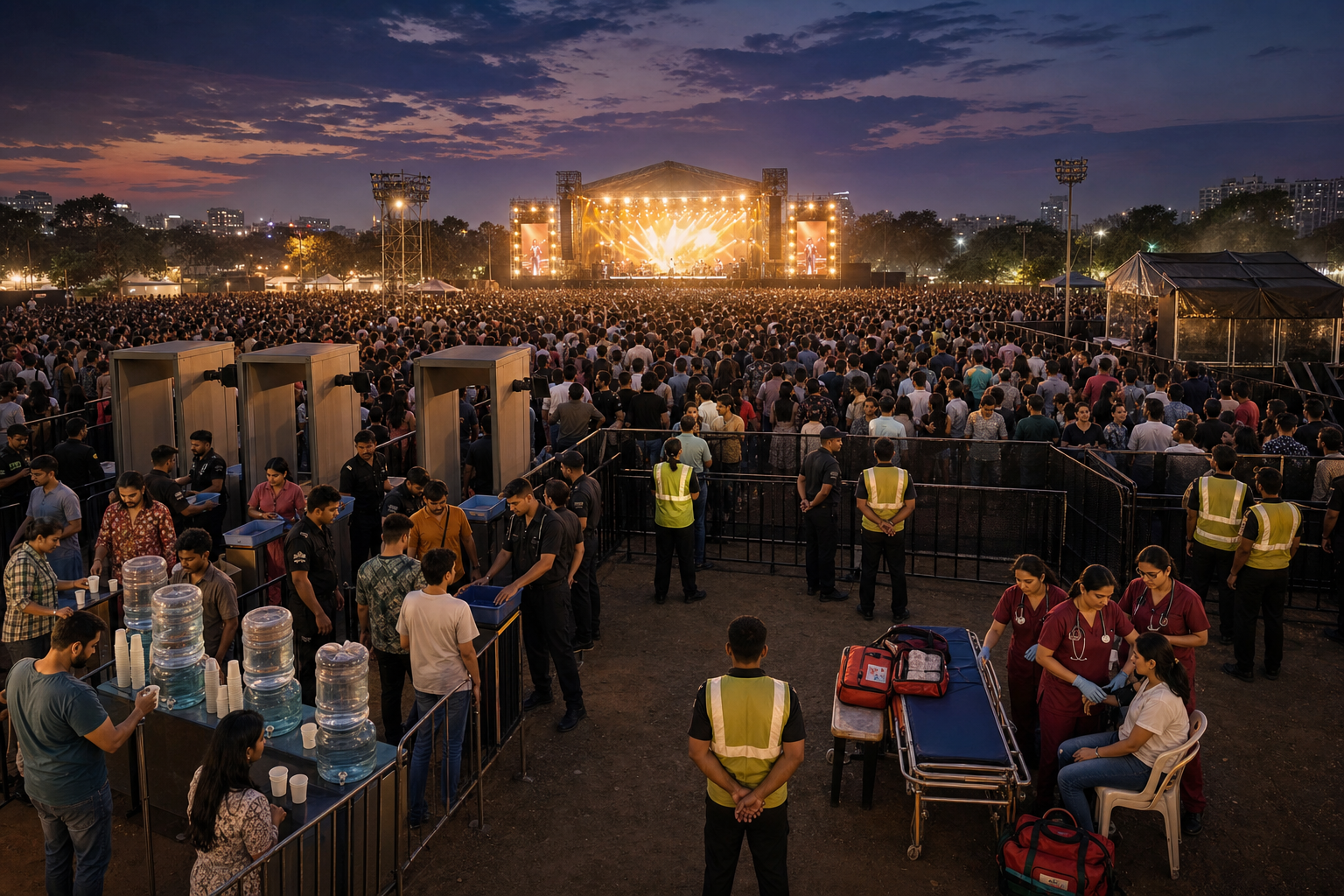
As a general governance principle, safety depends on several controls reinforcing one another. The source identifies crowd-capacity planning, entry and exit maps, security rosters, medical deployment, CCTV coverage, evacuation procedures, anti-narcotics measures and coordination among police, traffic, fire, municipal, excise and venue authorities. A weakness in one element can undermine the others.
Access control illustrates the point. A well-equipped main gate offers limited protection if a service entrance, backstage path or loading area is poorly monitored. Every route into the controlled area should be assigned to a responsible team, supported by ticket or credential checks appropriate to that route, and included in the same incident-recording process. Temporary changes to a gate or barrier during an event should not occur informally, because the safety plan depends on knowing where people and materials can move.
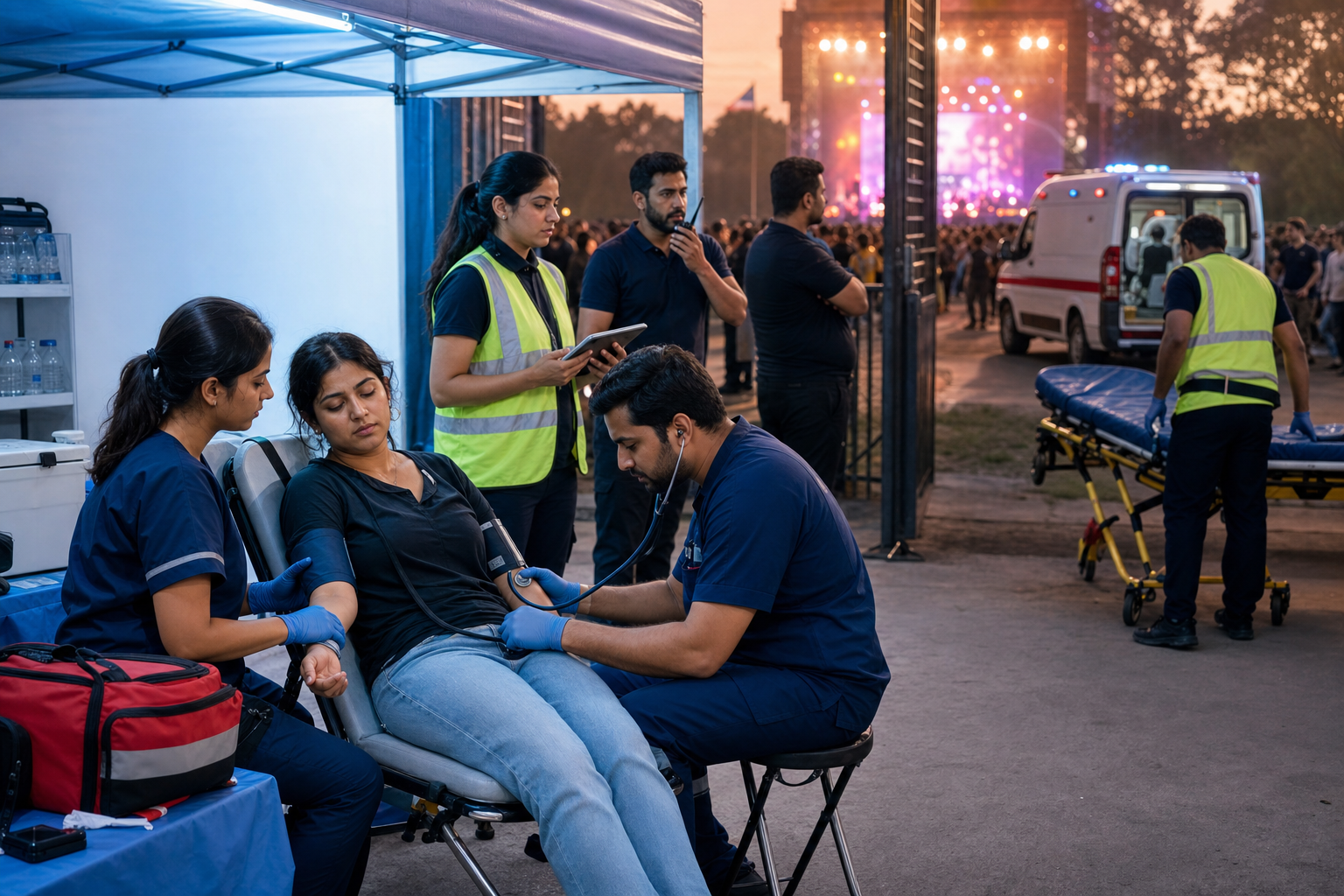
Medical readiness must be equally visible. The article calls attention to first-aid stations, trained personnel, hydration points, rest areas and rapid hospital referral. These measures are most effective when attendees can locate them easily and staff can recognize distress before collapse. Security personnel, volunteers and medical teams need compatible escalation procedures so that confusion, overheating or loss of coordination is treated first as a possible health emergency rather than merely as disorderly behavior.
The source further argues for an amnesty-style approach to requests for medical help. This does not require tolerance of illegal supply. It reflects a practical separation between enforcement against trafficking or unauthorized sales and the immediate duty to protect a person whose condition may be deteriorating. A credible safety message should make both points clear: prohibited conduct can be investigated, but seeking urgent care should never be delayed by fear of automatic punishment.
Accountability should begin before the audience arrives
The reported Sunburn probe can be useful only if it examines the full operating chain rather than searching for a single visible lapse. The source characterizes a festival of that scale as involving ticketing, private security, artist and venue logistics, barriers, emergency medicine, excise permissions, police deployment and fire compliance. An inquiry can therefore test not just whether documents existed, but whether the plan matched the venue and was actually followed.
Roles should be explicit. Organizers control many commercial and operational decisions; venue operators understand the building and its access routes; private security implements much of the frontline plan; medical providers handle clinical escalation; and public authorities set and enforce permission conditions. Shared responsibility should not become diffused responsibility. Each control needs an identifiable owner, a record that it was checked and a procedure for raising unresolved concerns.
Regulators can strengthen this chain by making permission conditional on evidence proportionate to the event. Plans should address expected attendance, safe capacity, all access points, emergency movement, medical coverage, substance controls and communication among teams. A pre-event inspection can verify physical arrangements, while a post-event review can compare the plan with incidents and near misses. The purpose is preventive learning, not paperwork accumulated for its own sake.
Public reporting also matters. Investigative conclusions should distinguish confirmed findings from allegations and explain which controls failed, which worked and which standards will change. That approach protects procedural fairness while giving families, attendees and responsible event businesses a clearer basis for trust.
The durable test for Maharashtra’s policy
The lasting measure of the alcohol ban will be whether it becomes one enforceable component of a broader concert-safety standard. A useful framework would connect licensing conditions to whole-perimeter security, early medical intervention, documented accountability and review after significant incidents, while preserving the distinction between suspected circumstances and proven causes.
Maharashtra can support a vibrant live-entertainment culture without treating preventable harm as its inevitable cost. The next step is to convert the concerns identified in the reported incidents and festival probe into consistent operating requirements that organizers, venues and authorities can apply before the next audience enters.