
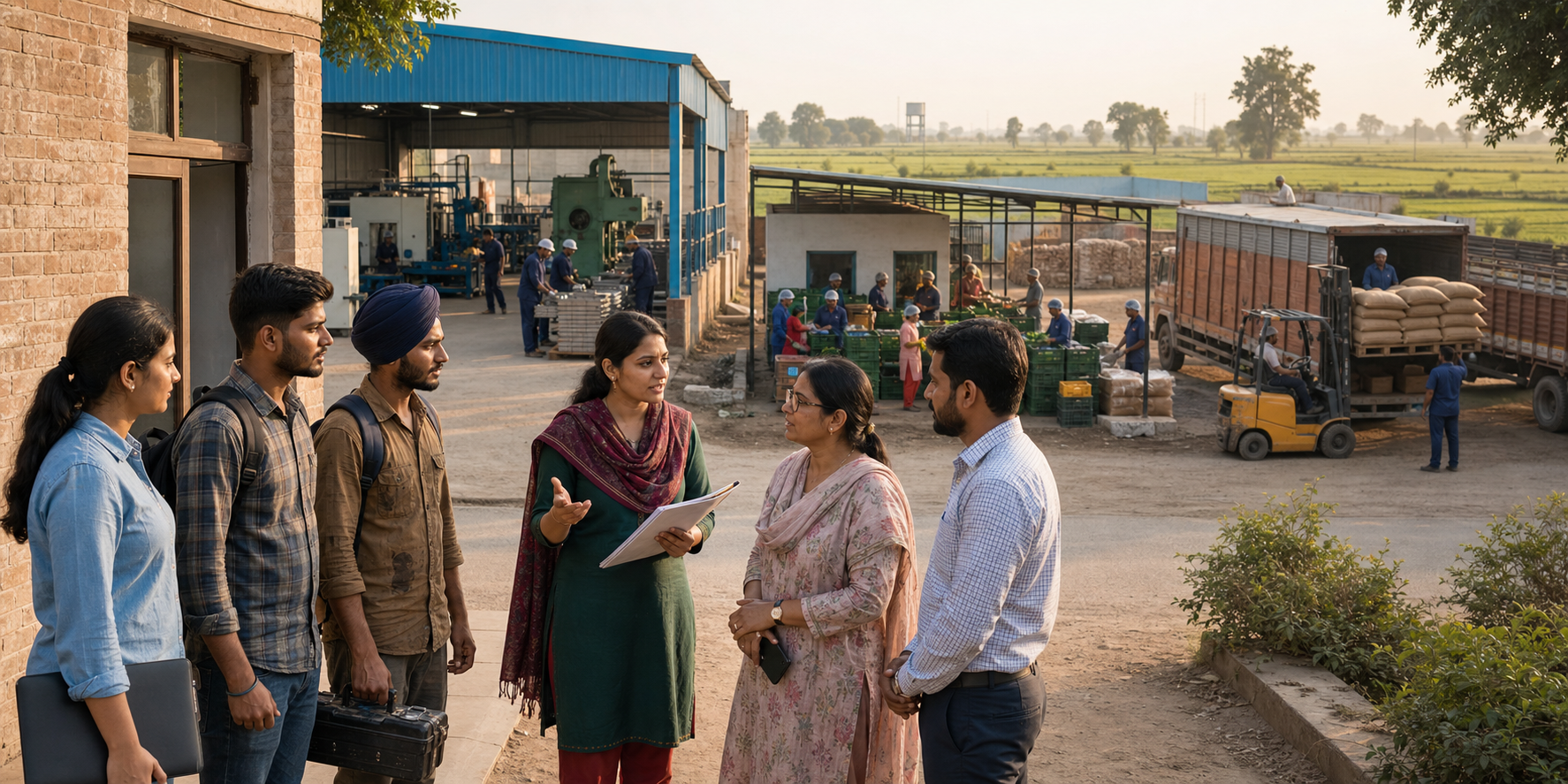
If you are the person in your town being asked to support another youth training scheme, do not begin with the course brochure. Begin with the job. Who is hiring, for which occupation, on what shift, at what location, and with what path beyond the first paycheque?
Punjab does not have a simple shortage of talent. It has a broken sequence: education is often separated from employer demand, small firms cannot always finance expansion, women face barriers before they reach the workplace, and overseas migration can look more credible than a local career ladder. The result is a costly paradox in which young people struggle to find productive work while employers struggle to recruit technicians, machinists, quality controllers and digital production planners. A useful employment strategy must repair that sequence from vacancy to skill, from skill to retention, and from retention to advancement.
Key takeaways
- Count verified vacancies and paid apprenticeship commitments before approving training seats.
- Use apprenticeships as the normal bridge into technical work, with NSQF-aligned credentials, NAPS support where applicable, and Recognition of Prior Learning for experienced workers.
- Create demand through connected value chains: diversified agriculture and food processing, higher-complexity manufacturing, green industry, logistics and deliberately designed services.
- Treat transport, childcare, workplace safety, shift design and recovery support as employment infrastructure, not as optional welfare additions.
- Judge every intervention by conversion into work, retention after 90 days, wage progression and repeat hiring by employers. Certificates alone are not a jobs outcome.
Start with a live vacancy ledger, not a catalogue of courses
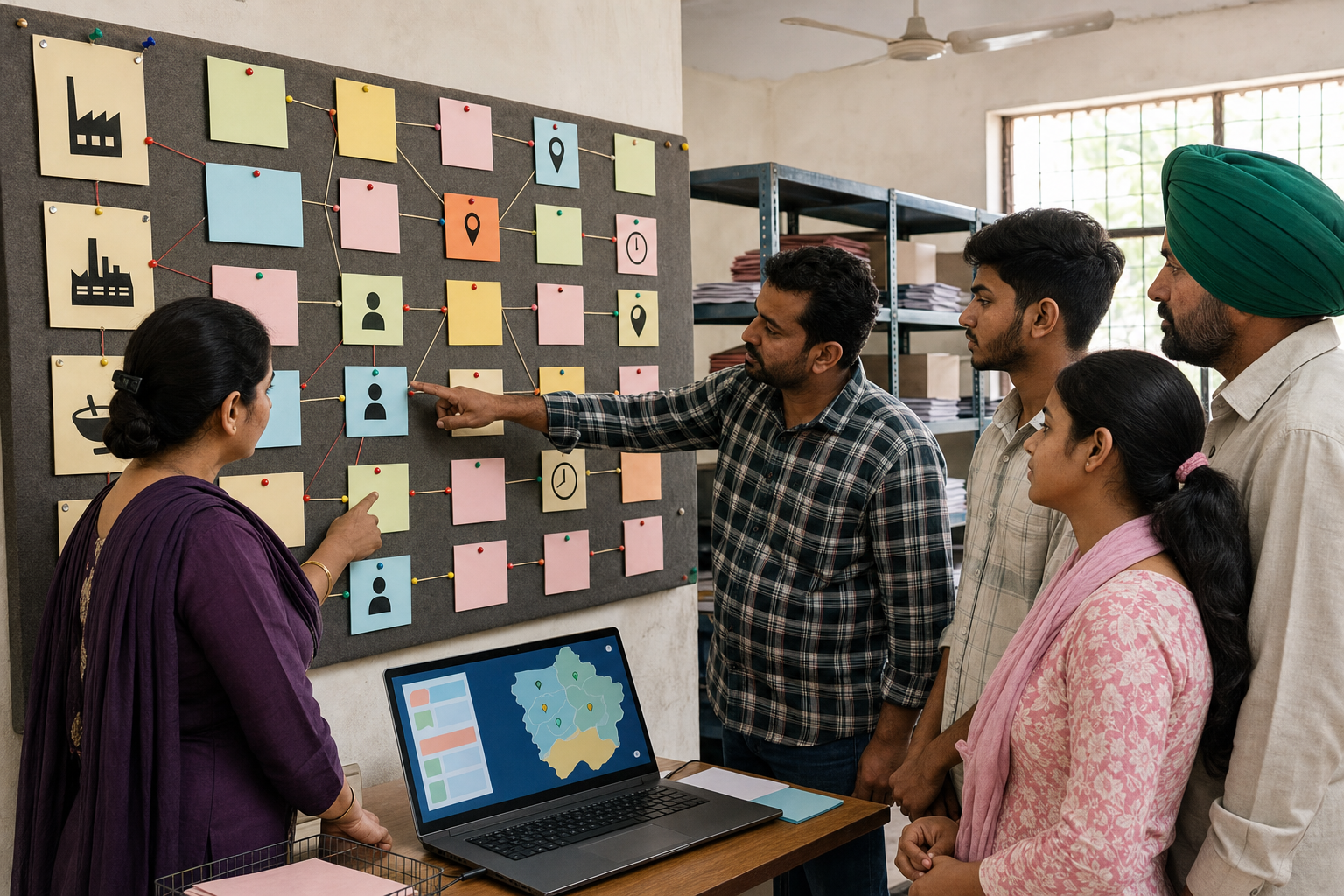
A district cannot train intelligently if it does not know which occupations are actually in demand. General statements such as industry needs digital skills or youth need soft skills are too vague to commission a course, choose equipment or advise a family. The operating unit should be a verified vacancy or apprenticeship attached to a named occupation.
For each opening, record the employer, work location, occupation, essential tasks, minimum entry skills, shift, pay, contract type, transport availability, start condition and possible next role. That information turns an advertisement into an occupation card. It also exposes mismatches early. A candidate who cannot reach an industrial estate for the opening shift does not have a viable placement, however well the classroom assessment went.
The state job-matching layer should connect these occupation cards with the National Career Service rather than create another isolated portal. Youth profiles can carry verified skills, assessments and micro-credentials. Employers should be able to mark a vacancy as open, filled or withdrawn, preventing old listings from inflating demand. Local-language aptitude and workplace-readiness assessments can help match a person to the right first rung without treating English fluency or a general degree as a proxy for technical ability.
A practical commissioning sequence looks like this:
- Ask employers and producer organisations to submit current vacancies and expected apprenticeship positions by occupation.
- Validate the work itself through an industry representative who understands the machinery, process, safety requirements or service standard involved.
- Compare the required tasks with NSQF qualifications and identify the smallest missing skill module.
- Launch a cohort only when employers will interview candidates, provide paid workplace learning or make a credible hiring commitment.
- Keep the matching team involved through onboarding and the first 90 days instead of declaring success when an offer letter is issued.
Apprenticeship should be the default bridge wherever competence depends on real equipment, production discipline or customer interaction. The National Apprenticeship Promotion Scheme can support expansion, while NSQF alignment gives employers and learners a common description of skill levels. Recognition of Prior Learning matters just as much: an experienced fabricator, machine operator or food worker should not have to repeat beginner instruction merely because the skill was learned informally.
The placement team still has work after a candidate joins. Post-placement support through the first 90 days should identify transport failures, shift misunderstandings, supervisor conflict, safety concerns and skill gaps before they become resignations. The same record should capture whether the worker advances toward certified mastery and higher pay.
This approach also gives families better information. Do not compare a technical apprenticeship with a desk job only by title. Compare the starting role, skills acquired on the job, recognised certification, next occupation and likely responsibility after mastery. Punjab will narrow its aspiration gap only when a young person can see a respected local progression from apprentice to technician, specialist, supervisor or entrepreneur.
Create demand in sectors Punjab can actually compound

A matching system can reveal openings, but it cannot manufacture demand by itself. Punjab needs enterprises that can sell more, invest more and therefore hire more. The strongest opportunities build on capabilities already present in farms, workshops, trading networks, educational centres and religious destinations.
Move agricultural employment beyond acreage
Mechanisation means that acreage alone cannot absorb all the labour Punjab needs to employ. The larger opportunity sits before and after cultivation: input planning, aggregation, grading, sorting, storage, testing, processing, traceability, cold-chain operations, equipment maintenance and market coordination.
Diversification into pulses, oilseeds, horticulture and fodder can support this employment chain, but asking an individual farmer to change crops without a buyer, aggregation system or risk plan transfers market risk to the household. The safer order is to establish demand and handling capacity first. Farmer Producer Organizations can aggregate produce; packhouses and cold chains can preserve quality; direct market links can clarify specifications; and trained youth can operate the resulting logistics, testing and record systems. The employment gain comes from value addition and quality assurance, not simply from replacing one crop with another.
Crop residue creates a second value chain. Biomass-to-energy and compressed-biogas activity needs feedstock collection, transport coordination, plant operations, instrumentation, safety and preventive maintenance. A green-jobs program should therefore train against the actual operating requirements of a plant or collection contractor. A generic environmental-awareness certificate will not qualify someone to maintain machinery or manage a safe industrial process.
Help manufacturing clusters sell more complex products
Punjab does not need to abandon its industrial strengths. It needs to climb from basic capacity into products and processes that require greater precision, testing and production planning. Ludhiana’s cycle, auto-component and fabrication base can pursue e-bike and light-electric-vehicle components. Jalandhar’s sports-goods capabilities and the textile strengths around Jalandhar and Amritsar can support advanced textiles and protective equipment. Mohali and SAS Nagar can deepen work around medical devices and disposables. Precision tools, dies and quality systems cut across these clusters.
Small manufacturers often cannot justify a testing laboratory, specialised toolroom or expensive certification equipment on their own. Common facility centres can spread that cost across a cluster. Before public money is committed, however, participating firms should identify the machines or tests they will use, their expected demand and the occupations the facility will create. A building filled with equipment is not an industrial strategy unless firms repeatedly use it to win orders and improve quality.
Working capital is part of the employment equation. A small supplier waiting for payment may have an order book but still be unable to add a shift, buy material or hire an apprentice. ERP-lite systems, e-invoicing and formal transaction records can make cash flow more visible. Account Aggregators and OCEN can support formal credit pathways, while TReDS can help eligible suppliers discount invoices owed by larger buyers. The local employment cell need not become a lender, but it should connect viable MSMEs with digital, accounting and receivables support. Training workers without helping healthy firms finance production leaves half the jobs problem untouched.
Design services around Punjab’s places and connections
Punjab’s connection to the national freight network near Ludhiana, along with highways and dry-port capacity, can support export-oriented light manufacturing and cold-chain food logistics. Firms seeking buyers in West Asia, Africa and Southeast Asia will need standards compliance, documentation, reliable packaging and last-mile coordination. Those are trainable occupations, but they should be tied to exporters and logistics operators rather than taught as abstract international-trade theory.
Tourism can provide another ladder when it is treated as an operating system rather than a slogan. Heritage and spiritual circuits around Amritsar, rural homestays and culinary experiences need consistent sanitation, safety, booking, guest handling and truthful storytelling. Each local tourism program should specify who will maintain the standard, how workers will be assessed and which establishments are ready to hire.
Healthcare support, diagnostics and telemedicine can grow around medical-education hubs. Business-process operations can expand in Tier-2 cities where talent and property costs make delivery practical. These service roles are not automatically good jobs. Program designers should examine hours, contracts, safety, skill transfer and progression before counting an opening. Deliberate service growth means building a path from entry-level work to greater competence and responsibility.
Build access and community delivery into every job pathway
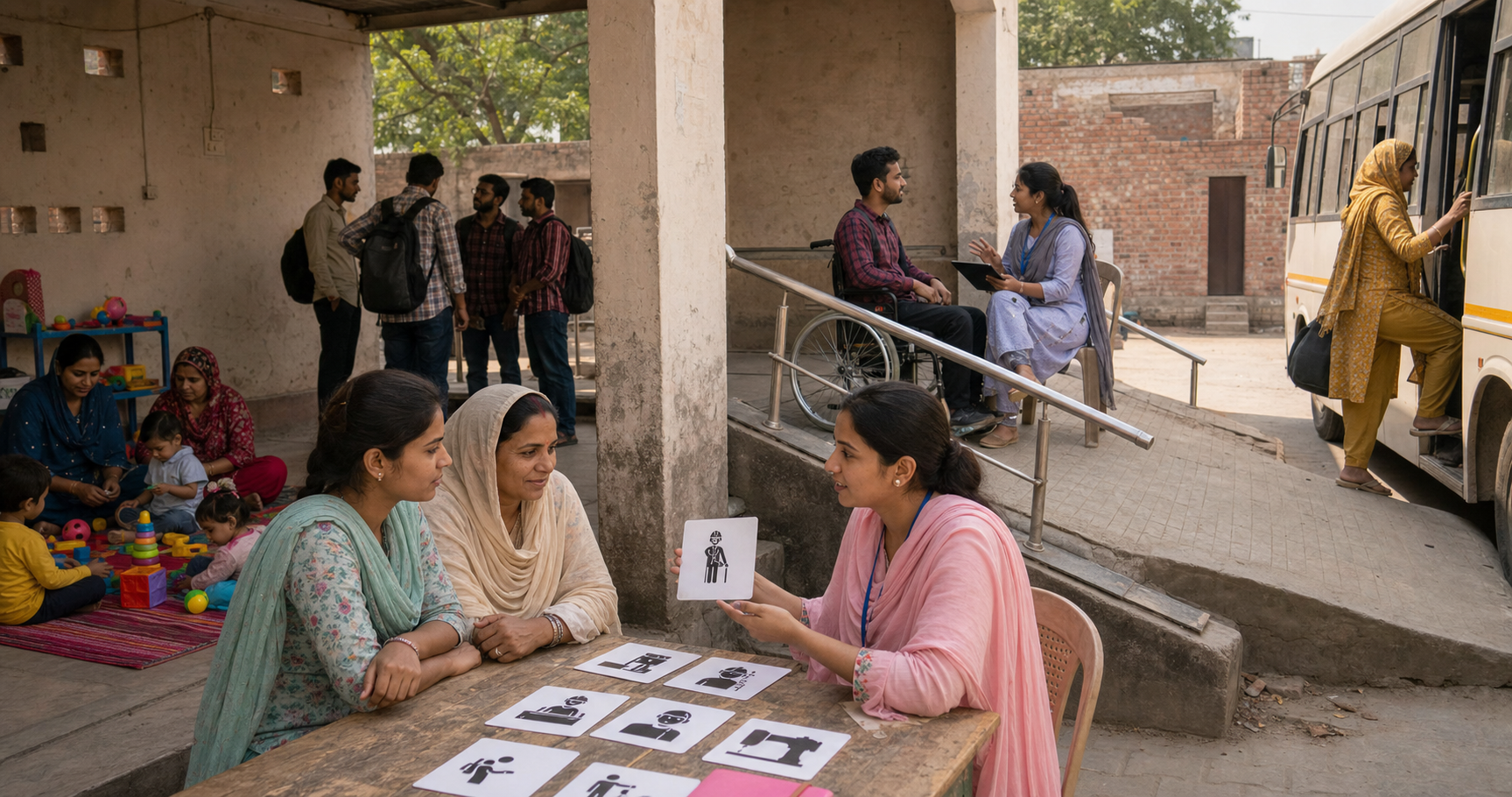
A vacancy is only real for someone who can safely reach it, remain in it and manage the responsibilities surrounding it. This is especially important for women, whose participation can raise household income while expanding the talent available to employers. Transport, childcare, workplace facilities, suitable shifts and safe accommodation near industrial estates are therefore core components of a jobs plan.
Before opening applications for a women-focused employment program, the organiser should be able to answer these questions:
- Where are the pickup points, and do transport times align with the actual shift?
- Is childcare available during training and employment hours, and who is accountable for its operation?
- Does the workplace have appropriate sanitation, safety procedures and a functioning grievance channel?
- Can modular shifts be offered without trapping workers in permanently low-responsibility roles?
- If dormitory accommodation is proposed, who controls access, security, supervision and complaints?
- What certified skill and next occupation can a worker reach after the entry role?
Food testing and quality assurance, healthcare assistance, electronics assembly, supply-chain operations and digital customer support are credible pathways only when those access questions have credible answers. Self-defence and legal-awareness sessions can improve confidence and knowledge, but they do not replace safe transport, responsible management or enforceable workplace procedures. Financial literacy should help workers receive, retain and manage their own earnings.
Substance misuse requires an equally careful distinction. Early screening, peer support and employability modules can help a person rebuild routine and reconnect with work. Employment is not a substitute for medical or psychological treatment. Rehabilitation pathways should involve qualified health professionals, while employment teams address punctuality, teamwork, basic digital literacy, occupational safety and a supported return to work. Treating recovery as a moral failure will drive people away from both care and opportunity.
Gurdwaras and mandirs can make the delivery network more trustworthy and more local. They already organise kitchens, clinics and community service. With employers and qualified trainers involved, they can host short job-linked courses, registration support, career orientation and mentoring. They can also reach women, families and recovering youth who may never attend a conventional job fair.
The boundary must remain clear: seva can open the door, but it should not be used to disguise unpaid labour or replace professional training. Sarbat da bhala becomes an economic principle when the pathway is open to every eligible person, selection is transparent, work is dignified and employers pay fairly for productive labour.
A workable local division of responsibility is straightforward. Employers define tasks, provide workplace learning and report retention. Colleges and training institutions align modules with those tasks. FPOs and industry associations aggregate demand that individual firms cannot express alone. Gurdwaras, mandirs and community organisations conduct trusted outreach and mentoring. The district employment team validates vacancies, connects records with the National Career Service and publishes outcomes. Each participant does the part it is equipped to do.
Fund outcomes, not enrolment announcements
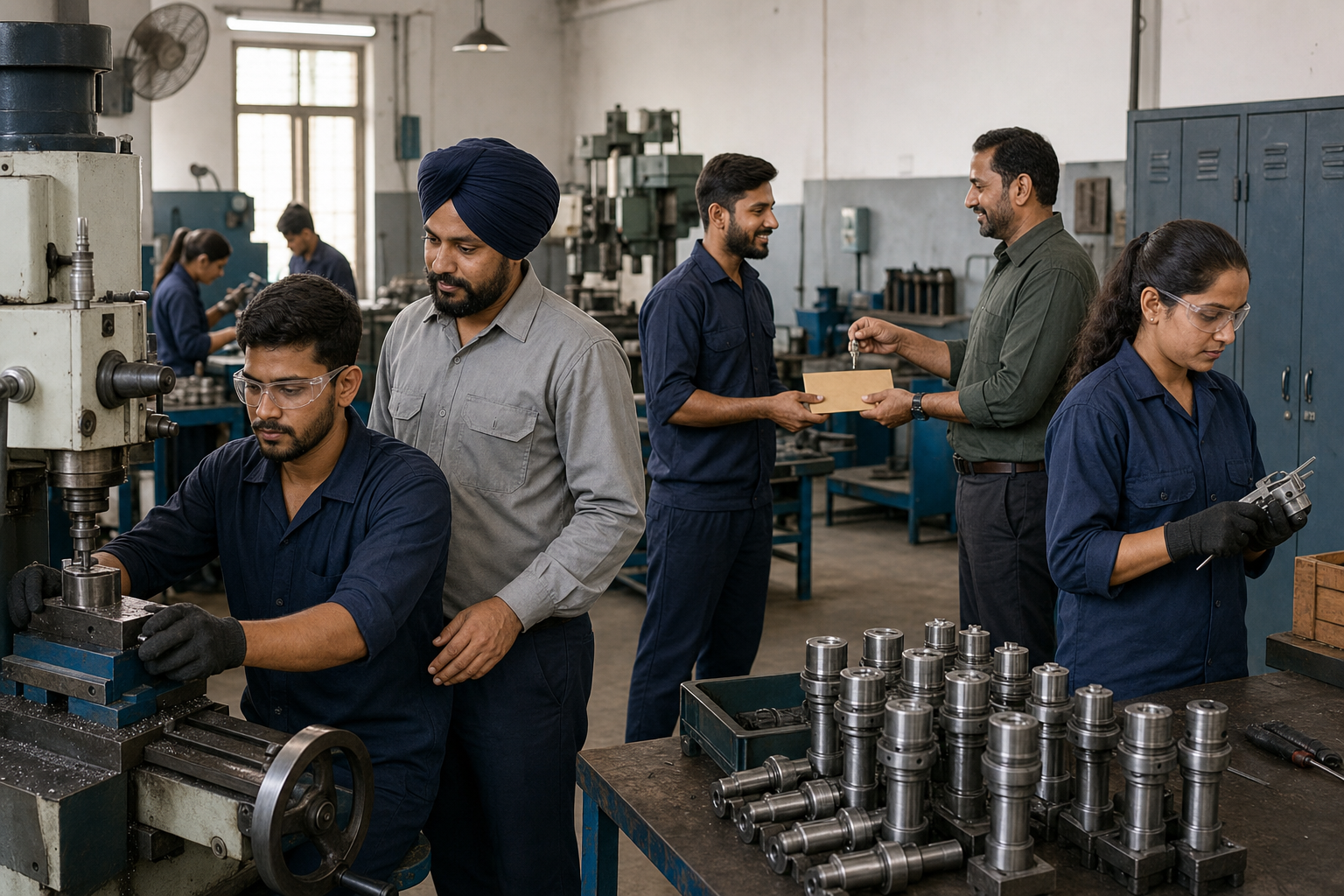
The wrong scoreboard can make a weak scheme look successful. Enrolments, classroom hours and certificates describe activity. They do not tell you whether a young person obtained work, remained employed or advanced. Every funded pathway should publish a compact outcome scorecard by district and occupation, with personal information protected.
| Measure | What should be recorded | Decision it should trigger |
|---|---|---|
| Verified demand | Open roles linked to named employers, locations, tasks, shifts and pay | Remove stale or duplicate vacancies before commissioning seats |
| Apprenticeship conversion | Candidates who move from assessment into paid workplace learning | Rework screening or employer commitments when conversion is weak |
| Placement quality | Actual joining, contract type, occupation and match with the trained skill | Do not count an offer letter or unrelated casual work as a completed placement |
| 90-day retention | Workers still in the role, along with documented reasons for departure | Correct transport, supervision, safety, wage or skill problems |
| Progression | New responsibilities, recognised credentials and wage movement after skill acquisition | Drop pathways that offer no credible ladder beyond the entry role |
| Women’s access and retention | Applications, starts, joining and retention by occupation | Locate the drop-off and repair the relevant access or workplace barrier |
| Employer repeat demand | Firms returning for another apprentice or worker cohort | Expand pathways that employers repeatedly trust; audit those they abandon |
Raw totals should not be used to hide poor fit. A large training cohort attached to a handful of vacancies is a warning. So is a placement claim that stops at an interview, an offer or a few days of attendance. If women apply but do not join, examine transport, family-facing information and shift conditions. If workers join but leave quickly, examine the workplace, wage expectations, supervision and the accuracy of the occupation card. If employers never return, investigate whether the training matched the job.
The same discipline applies to enterprise support. A common facility centre should report firm usage, orders enabled and occupations created. An MSME digitisation effort should show whether firms adopted the system and improved their ability to manage invoices and working capital. An FPO-linked investment should show whether aggregation, grading or processing created dependable work. Public funding should follow a functioning employment chain, not the visibility of a launch event.
At your next local jobs meeting, ask for five things before approving a scheme: a named employer, a precise occupation card, a paid learning path, an access plan and a method for checking 90-day retention. If any one is missing, send the proposal back for completion. Start with a cluster where all five can be made real, learn from actual joining and retention, and add occupations only when the demand is verified. That is how Punjab can turn seva, skill and enterprise into careers that young people can credibly choose at home.