
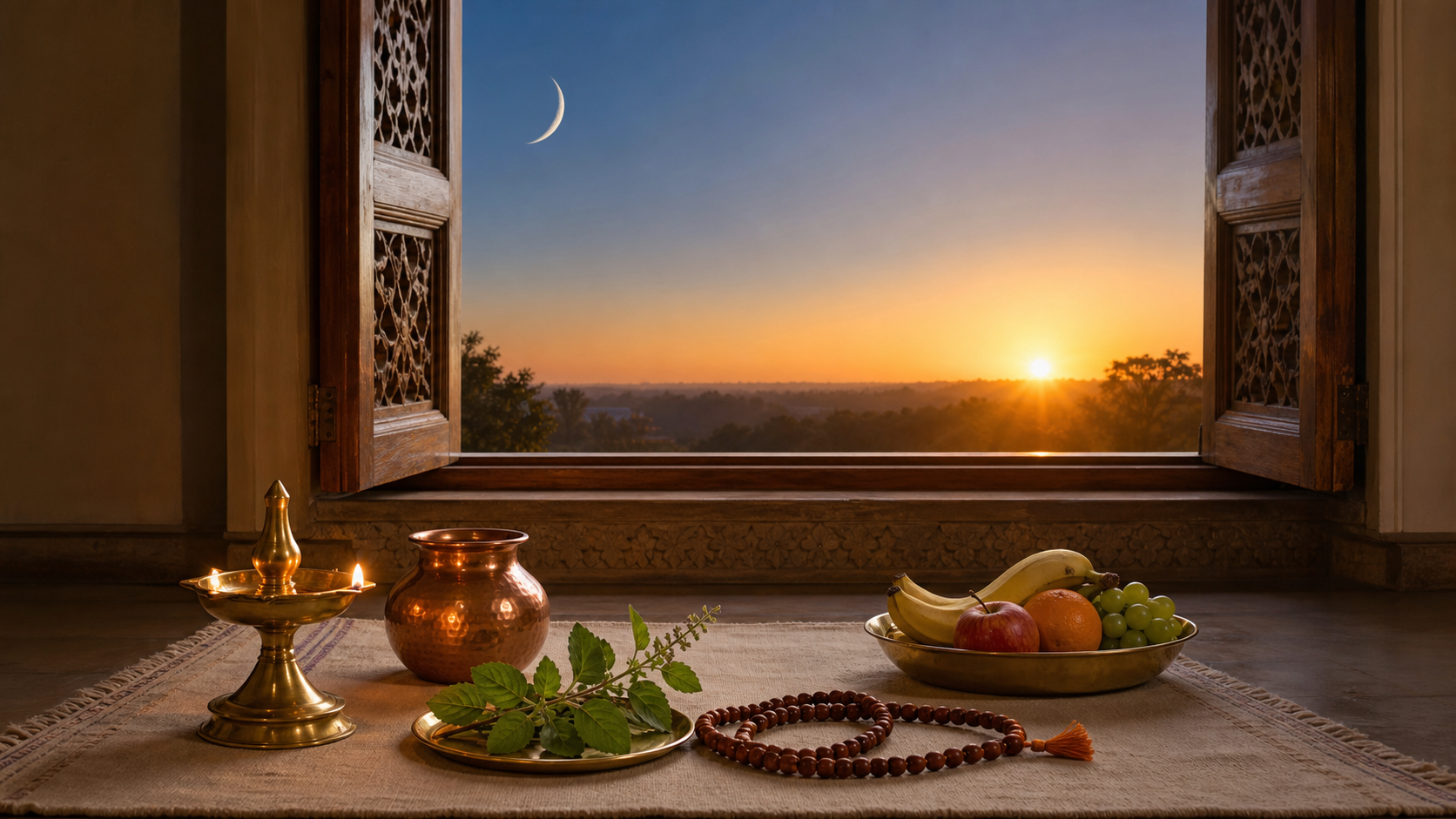
If your calendar shows both Dashami and Ekadashi on May 12, the 9:47 AM boundary can look like a command to begin the fast at that moment. It is not. On Tuesday, May 12, 2026, Krishna Paksha Dashami remains until 9:47 AM and Ekadashi follows, but many traditions determine the vrata date by the tithi prevailing at sunrise.
This distinction matters. You can honor the beginning of Ekadashi on May 12 without assuming that every Smarta or Vaishnava calendar will prescribe the main fast that day. Your local Panchang and lineage decide the fasting date; the 9:47 AM transition tells you how the lunar day changes.
The 9:47 AM change identifies the tithi, not automatically the vrata date
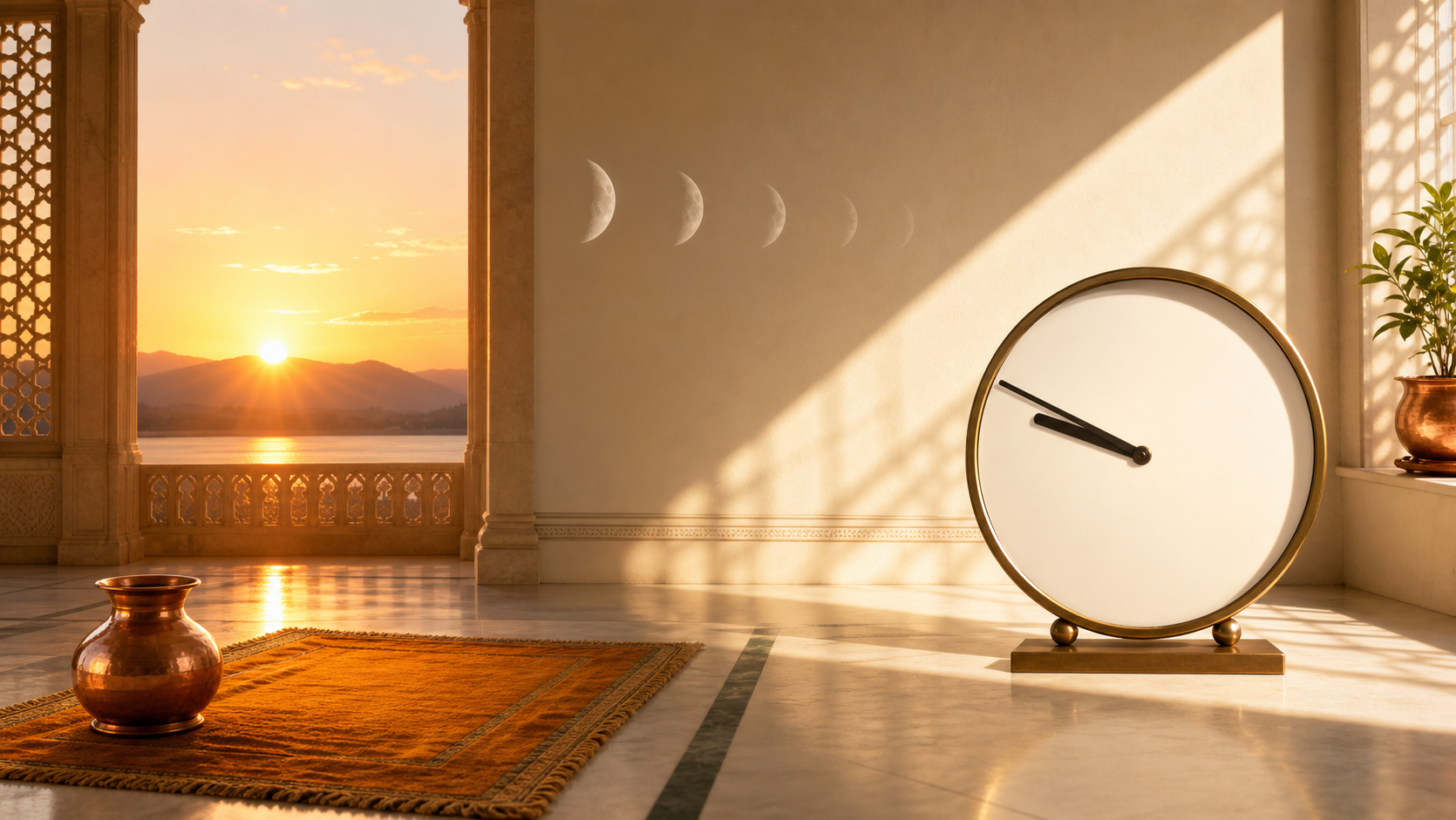
A tithi is not a civil date running from midnight to midnight. It is determined by the changing angular relationship between the Moon and the Sun. Each tithi covers a 12-degree increment in that relationship, so its beginning and end can fall at any clock time.
For the May 12 timing, Dashami occupies the first part of the day and Ekadashi begins at 9:47 AM. Ekadashi then continues through the remainder of the day. The practical mistake is to treat 9:47 AM as a universal switch at which everyone must stop eating or begin a formal vrata.
In many traditions, the decisive question is whether Ekadashi prevails at sunrise. Where sunrise occurs before the local Dashami-Ekadashi transition, Dashami is the sunrise tithi. The applicable calendar may therefore place the formal fast on the following civil date. Smarta and Vaishnava calculations can also differ when they account for viddha, or tithi overlap.
That difference is not a dispute over whether Ekadashi begins on May 12. It comes from different rules for assigning a vrata to a sunrise and avoiding an unsuitable overlap. If your temple lists a fasting date that seems to conflict with the 9:47 AM onset, follow the temple’s calendar for your sampradaya rather than trying to settle the question from the onset time alone.
Key takeaways for May 12
- Krishna Paksha Dashami remains in effect until 9:47 AM in the stated timing; Ekadashi begins afterward.
- Use the morning as a period of preparation when your local calendar assigns the full Ekadashi vrata to the next sunrise.
- Do not begin or break a formal fast solely because the clock reaches 9:47 AM.
- Confirm three local details: the prescribed fasting date, your Dwadashi parana window, and whether your calendar follows Smarta or Vaishnava rules.
- After Ekadashi begins, you can deepen japa, parayana, kirtan, dana, mindful speech, or quiet meditation even if the formal fasting day falls later.
A practical observance plan for the Dashami-Ekadashi passage
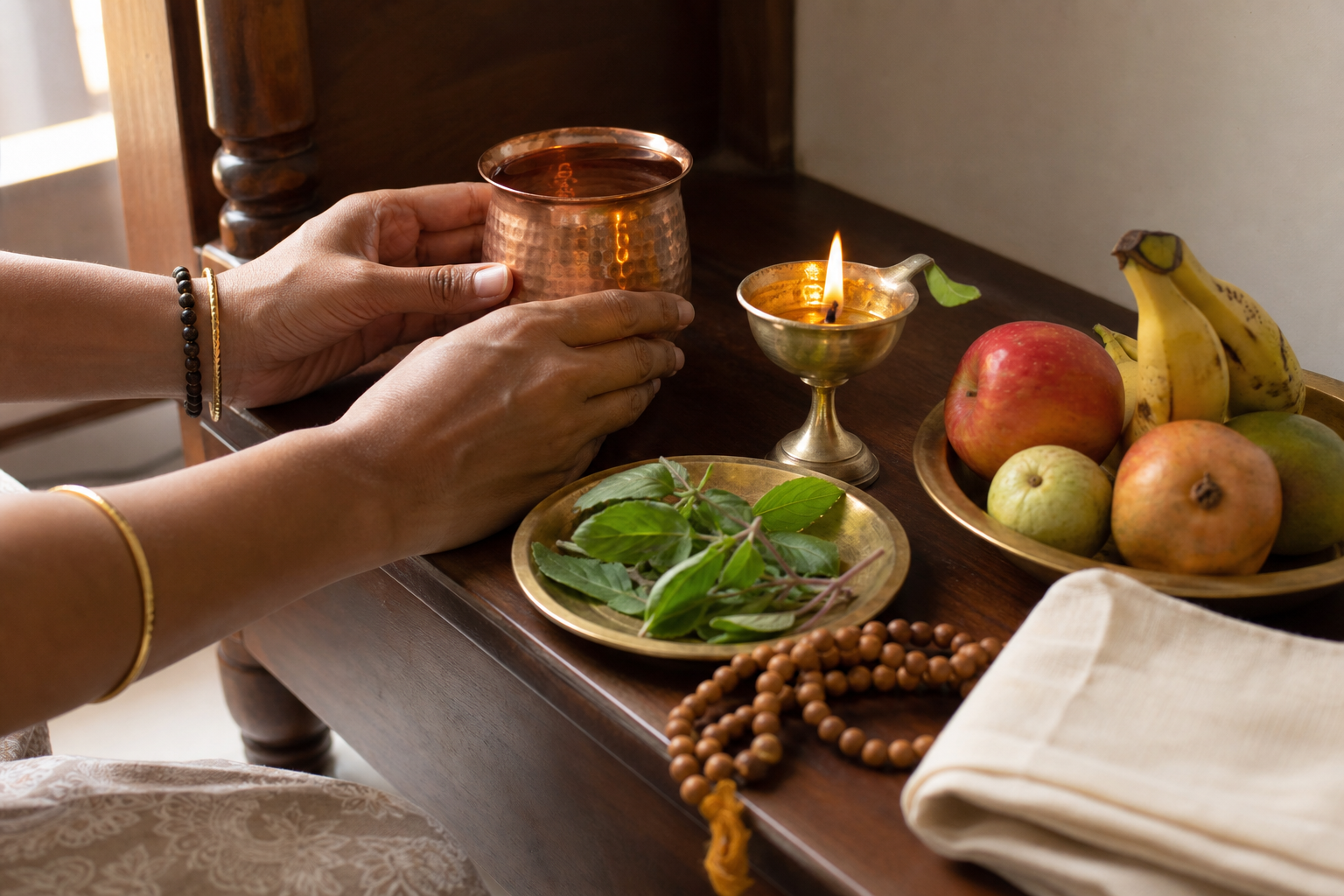
You do not need an elaborate household ceremony to observe the transition well. You do need a clear sankalpa and a plan that agrees with your local calendar.
- Check the local ruling before setting your fast. Use a Panchang calculated for your city or the bulletin of the temple whose tradition you follow. Record the vrata date and the Dwadashi parana window together; one without the other is an incomplete plan.
- Keep the Dashami morning orderly. If your calendar places the fast on the following day, reduce avoidable busyness, choose simple sattvic food, and settle work that would distract you during the vrata. Preparation is part of the discipline, not merely meal planning.
- Mark the 9:47 AM transition as a devotional turning point, subject to local variation. After Ekadashi begins, add a definite practice rather than relying on a vague intention: a set period of japa, a chosen parayana, temple darshan, kirtan, or quiet meditation.
- Use speech as part of the vrata. Avoid needless argument, gossip, and harshness. Pair dietary restraint with compassion, dana, or practical service so that the observance changes conduct as well as the menu.
- Keep the evening light and focused. A short period of silence can protect the attention you cultivated during the day. If you are preparing to fast at the next sunrise, finish necessary household tasks early and avoid turning the evening into a heavy feast before restraint.
- Break the fast only in the prescribed Dwadashi period. Parana is normally performed after sunrise on Dwadashi, after Hari Vasara has elapsed. Do not assume that sunrise itself is automatically the opening of parana; use the exact local window supplied by your Panchang or temple.
Food austerity is not the only measure of sincerity. If a full fast is not appropriate for you, do not override medical guidance or your physical needs. A partial dietary restraint or a non-food discipline centered on remembrance, dana, silence, and considerate conduct can still give the day a serious devotional form.
Calculate Tuesday’s time periods from local sunrise and sunset
The tithi timing does not provide universal clock times for Rahu Kaal, Yamaganda, Gulika Kaal, or Abhijit Muhurta. These periods depend on the local span between sunrise and sunset. Copying a schedule from another city can therefore produce a misleading result.
For the daytime cautionary periods, subtract sunrise from sunset and divide the result into eight equal segments. Because May 12, 2026 is a Tuesday, Yamaganda occupies the third segment, Gulika Kaal the fifth, and Rahu Kaal the seventh. If you are planning a fresh financial commitment, ceremonial beginning, or another new undertaking, place it outside the applicable segment used by your tradition.
Abhijit Muhurta is centered on local solar noon and lasts approximately one-fifteenth of the daylight duration. Calculate the length of the day, divide it by 15, and place that interval around solar noon. This gives you a location-sensitive approximation for focused prayer or a necessary undertaking when another suitable muhurta is unavailable.
If your household follows Choghadiya, divide the daytime and nighttime separately into eight blocks. Do not simply assume that every block is a fixed 90 minutes; its actual length changes with the duration of day or night. Amrit, Shubh, and Labh are generally preferred for favorable activity, but the correct sequence still depends on the local day and night calculation.
Nakshatra and Chandra Rashi add another layer, especially for a detailed sankalpa, travel, or contract signing. Because either can change within the day, they should not be guessed from the tithi alone. Obtain them for your location and intended clock time.
Month names and regional calendars should not create confusion
An Amanta calendar ends the lunar month with Amavasya, while a Purnimanta calendar ends it with Purnima. This can cause the same Krishna Paksha Ekadashi to appear under different month names, including Vaishakh or Jyeshtha in this part of the year. The naming difference does not change the underlying Dashami-Ekadashi transition.
When two calendars seem inconsistent, compare them in the right order. First check the city or locality. Then check the Smarta or Vaishnava convention. Next compare the sunrise tithi and the stated vrata date. Only after that should you worry about the lunar month label. Starting with the month name often creates a disagreement that disappears once the calendrical system is identified.
Your next step is simple: open the Panchang or temple bulletin for your own location, copy both the vrata and parana times into your calendar, and use the May 12 transition to shape the day. Keep the Dashami morning steady, deepen your observance as Ekadashi begins, and let your own lineage determine when the formal fast is kept.