

If you are trying to mark Thula Masam correctly, the first question is not which ritual to perform. It is whether you are looking for the beginning of the month, the precise solar transition, or the full period during which your family plans to maintain an observance.
Once you separate those three needs, the calendar becomes much easier to use. You can verify the right local timing, coordinate with your temple, and choose a household practice that remains meaningful after the opening day has passed.
Thula Sankramanam is a moment; Thula Masam is a month

Thula Masam, also called Thulam, is the third month of the traditional Malayalam calendar. It is observed across Kerala and in parts of the Malabar region of Karnataka. Thula Sankramanam is the calendrical transition that opens it: the Sun enters Thula rashi, or Libra, in the solar reckoning used by the calendar.
The simplest distinction is this: Sankramanam is the boundary, while Masam is the span that follows. If a temple notice mentions Thula Sankramanam, you may need the time of the solar ingress. If your family is planning for Thula Masam, you need the entire date range. Treating the terms as interchangeable is how people end up checking the right month but the wrong time.
Thula is therefore not merely a name borrowed from the zodiac. In this setting, it performs a practical calendar function. You do not need to turn it into a personal horoscope in order to understand or observe the transition.
Use the annual dates for planning and the local time for observance
The confirmed 2025 calendar reference is straightforward: Thula Masam began on 18 October 2025 and ended on 16 November 2025. Those dates are useful as a dated example, but they should not be copied into another year’s calendar. The relationship between a solar month and the Gregorian calendar must be checked again each year.
| Calendar point | 2025 date | How to use it |
|---|---|---|
| Thula Sankramanam and the opening of Thula Masam | 18 October 2025 | Mark the transition and verify the locality-specific ingress time if your observance is time-bound. |
| Final date of Thula Masam | 16 November 2025 | Plan any month-long prayer, study, service, or temple routine through this date. |
The date and the exact clock time answer different questions. A civil date is normally enough when you are arranging a family gathering, setting aside an evening for prayer, or making plans to visit a temple. A precise ingress time matters when your family tradition or temple follows a time-specific Sankramanam observance.
The exact Sankramanam timing can vary by location. If you live outside India, do not copy a Kerala clock time without converting it for your locality. A time-zone conversion can cross midnight, so a familiar Indian date does not by itself settle the local clock time. Use a panchangam configured for the place where you will actually observe the transition, or follow the published schedule of the temple you attend.
A dependable checking sequence is:
- Select the city or locality where the observance will take place.
- Confirm that the calendar is for the correct year and uses the Malayalam solar month.
- Record both the civil date and the displayed Sankramanam time rather than copying only one of them.
- Check your temple’s schedule separately, because its public puja or gathering may be arranged around local practical needs.
- If your family follows a particular sampradaya or inherited household custom, let that tradition determine whether the precise ingress time is required.
If you are not undertaking a time-bound rite, do not let uncertainty about the exact minute prevent a sincere observance. Choose a calm morning or evening on the confirmed date. Precision should support dharma, not turn an accessible household practice into avoidable anxiety.
Build an observance you can carry through the month
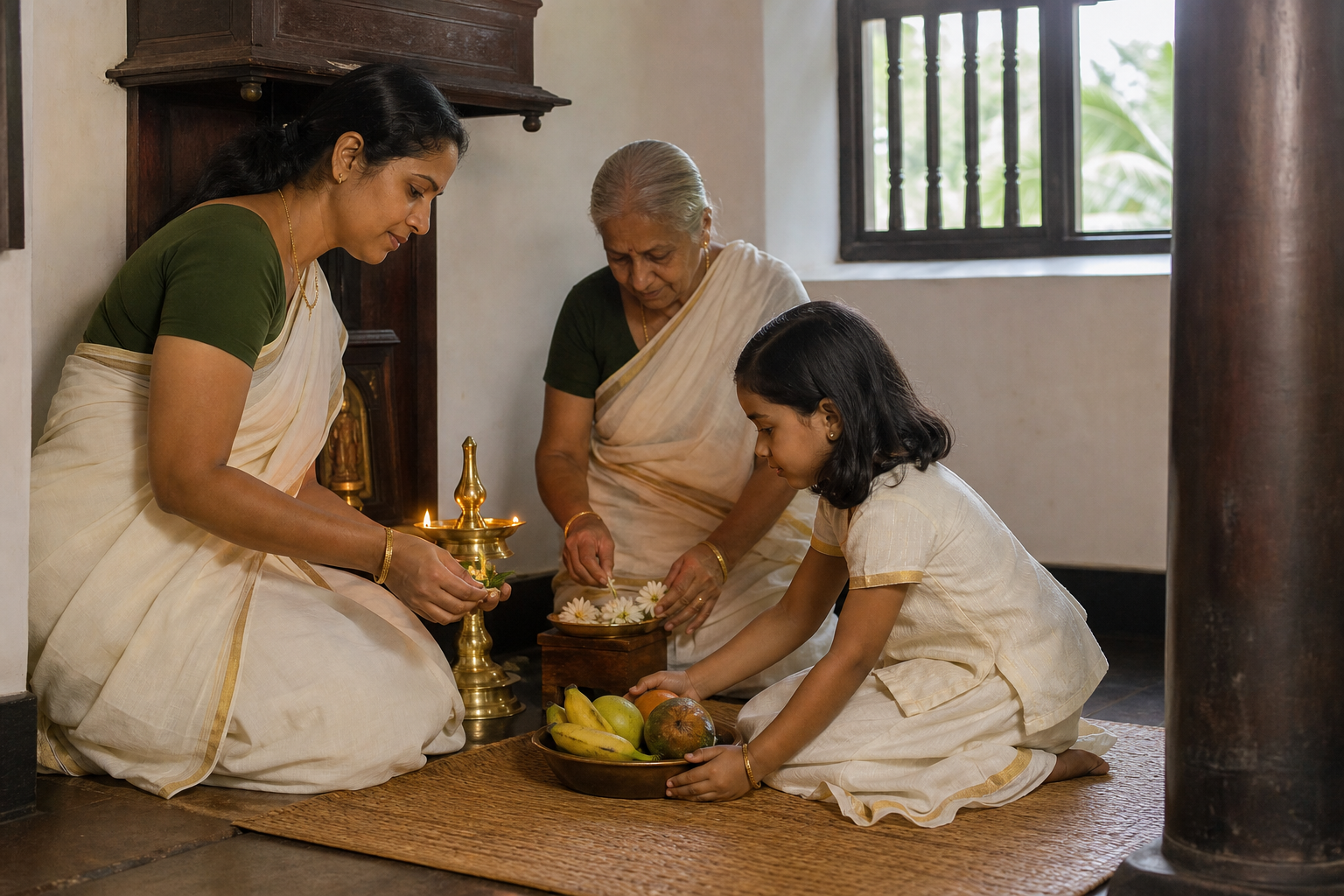
The opening day can receive special attention, but the deeper opportunity lies in the weeks that follow. Thula Sankramanam gives you a clear point at which to begin; Thula Masam gives you enough time to make devotion, learning, and service part of ordinary life.
There is no need to assemble an elaborate ritual from unrelated customs. Start with the practices already familiar to your household. A lamp, a simple offering, a known prayer or recitation, quiet contemplation, and charitable giving are all suitable elements. Select what you can perform with attention rather than trying to include every possible act.
A practical household plan can look like this:
- Before Sankramanam: verify the calendar, check the temple programme, prepare any simple offering, and decide what act of charity you will complete. Naming the recipient or cause in advance keeps generosity from remaining a vague intention.
- On the transition day: use the exact local time if your tradition calls for it. Otherwise, reserve an undistracted morning or evening period for lamp lighting, prayer, recitation, or contemplation.
- During Thula Masam: continue one manageable discipline. It may be regular prayer, scriptural study, a recurring act of service, or a deliberate combination of study, service, and devotion.
- For a temple visit: confirm opening hours and special observances before travelling. The astronomical transition and the temple’s congregational schedule do not have to occur at the same clock time.
- At the end of the month: notice which practice became steadier and decide whether it deserves a place in your life beyond Thulam.
This approach also works when family members live in different time zones. Agree on the shared intention and date range, then allow each household to use its correct local timing. Dharma is not strengthened by pretending that every clock displays the same hour.
Thulam joins astronomical order to Kerala’s seasonal life
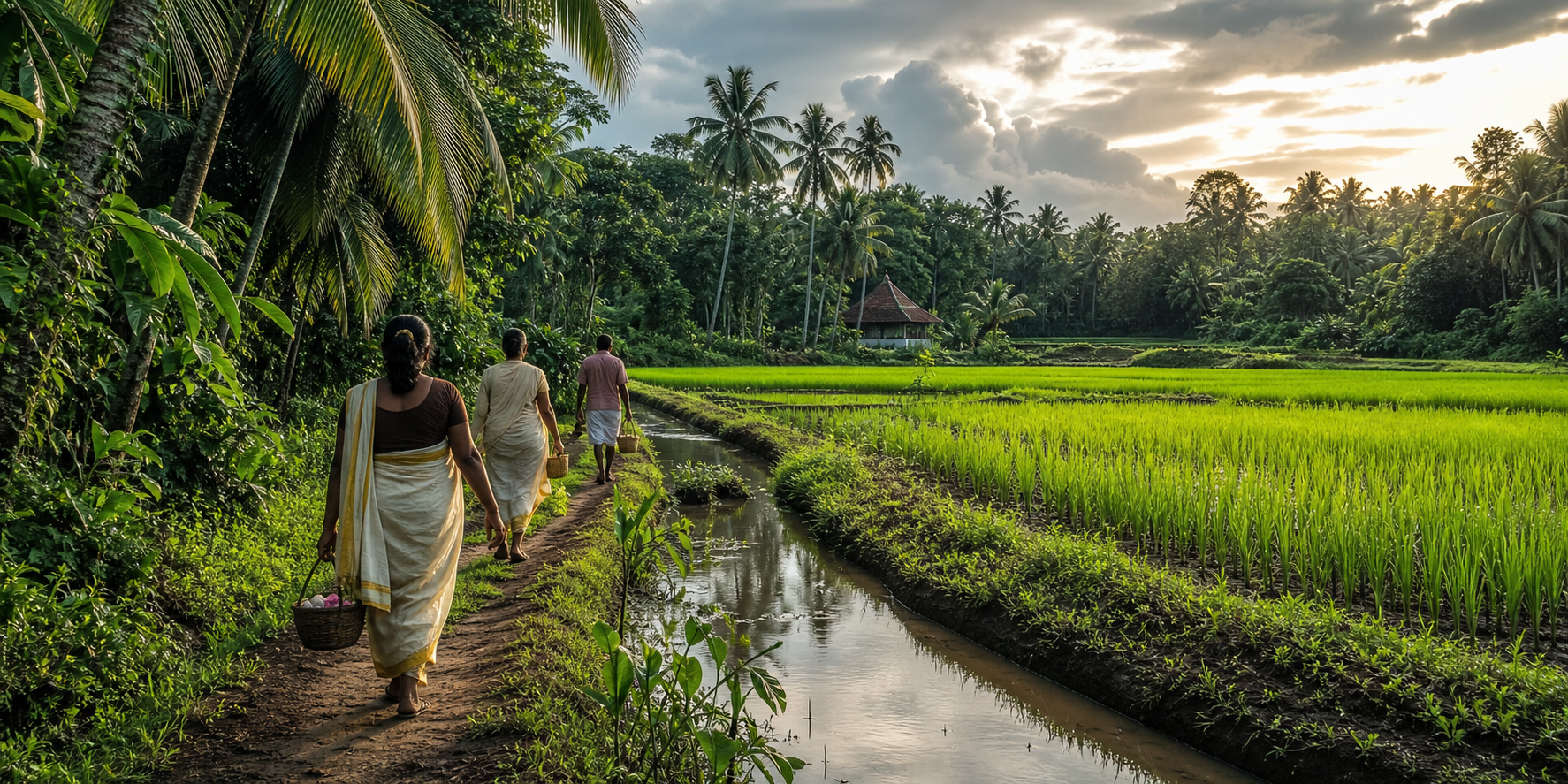
In Kerala, Thula Masam arrives as the monsoon is retreating and another festive stretch of the year is approaching. That seasonal position helps explain the month’s reflective character. Temple visits, household prayer, learning, livelihood, health, and charitable action are not isolated concerns; they are ways of bringing human life back into rhythm as the natural season changes.
This is one of the strengths of Bharatiya calendar traditions. Time is not reduced to a sequence of numbered dates. A solar movement, a regional season, temple life, household duties, and ethical intention can meet within the same calendar period. You are not simply told when a month starts; you are given a recurring occasion to examine how you are using your time.
The wider Dharmic meaning should be expressed without flattening distinct traditions. Hindu, Buddhist, Jain, and Sikh communities do not need to observe the Malayalam month in an identical way for common values to be visible. Reverence for natural rhythms, disciplined attention, ethical conduct, generosity, and mindful living offer genuine common ground. Unity becomes more credible when it respects different calendars and practices instead of claiming that they are all the same.
That gives you a useful measure for the month. Do not ask only whether the correct date was marked. Ask whether your prayer became more regular, whether your learning received protected time, whether an intended act of charity was completed, and whether your temple or family ties grew stronger. A calendar transition has done its work when it changes how you inhabit the days that follow.
Key takeaways
- Thula Sankramanam is the solar ingress into Thula rashi; Thula Masam is the Malayalam solar month that begins with that transition.
- Thulam is the third month of the traditional Malayalam calendar and is especially associated with Kerala and parts of the Malabar region of Karnataka.
- In 2025, Thula Masam ran from 18 October through 16 November. Recheck the dates for every other year.
- Use the annual civil date for general planning, but consult a locality-specific panchangam or temple schedule when the exact ingress time matters.
- A simple observance can combine a familiar prayer or recitation, lamp lighting, a modest offering, contemplation, charity, and one sustainable month-long discipline.
- Shared Dharmic respect for nature, ethical living, and mindful time does not require every tradition to follow the same regional calendar.
For the next Thula Sankramanam you plan to observe, write down three things: the verified local timing, the temple or household commitment you will keep, and one practice you will carry through the month. That small record turns a calendar date into a dharmic intention you can actually fulfil.
References
