

Shravan in 2026 does not have one Gregorian date range for every community. The source guides describe overlapping Purnimanta, Amanta and solar calendars, each of which places the sacred month differently. The practical payoff is simple: identify the calendar first, then select the relevant Monday fasts, festivals and ritual timings.
Read together, the cross-regional overview, the dedicated Somwar guide and the Bengali Srabon guide show why several date lists can be internally correct. They also show substantial continuity beneath the differences: Shiva worship remains central, while regional calendars incorporate observances dedicated to Gauri, Lakshmi, Vishnu, Krishna, Ganesha, the Nagas, Manasa Devi and other sacred forms.
Three calendar systems behind the reported date ranges

The two principal lunar systems name months by different endpoints. A Purnimanta month concludes at the full moon, while an Amanta or Amavasyant month concludes at the new moon. They follow the same lunar phases but assign the name Shravan to partly different fortnights. Bengali Srabon, by contrast, is presented in the source material as a solar month. The Somwar guide reports another solar-calendar range for Nepal and some Himalayan communities.
| Calendar framework | Reported regional setting | Reported 2026 span | Mondays within the span |
|---|---|---|---|
| Purnimanta lunar Shravan | Much of North India | July 30-August 28 | August 3, 10, 17 and 24 |
| Amanta lunar Shravan | Maharashtra, Gujarat, Goa and several southern communities | August 13-September 11 | August 17, 24 and 31; September 7 |
| West Bengal solar Srabon 1433 | West Bengal-oriented Bengali calendar | July 18-August 17 | July 20 and 27; August 3, 10 and 17 |
| Nepal-linked solar Shravan | Nepal and some communities in Uttarakhand and Himachal Pradesh | July 16-August 16 | July 20 and 27; August 3 and 10 |
The first two ranges and their Monday schedules are reported by both the national comparison and the Somwar article. The Bengali guide reports that Srabon 1433 contains 31 days, from July 18 through August 17, and explicitly identifies its conversion as West Bengal-oriented. It cautions against substituting a Bangladesh civil-calendar conversion or another regional panjika without checking the applicable rules.
Where the calendars overlap and where they part company
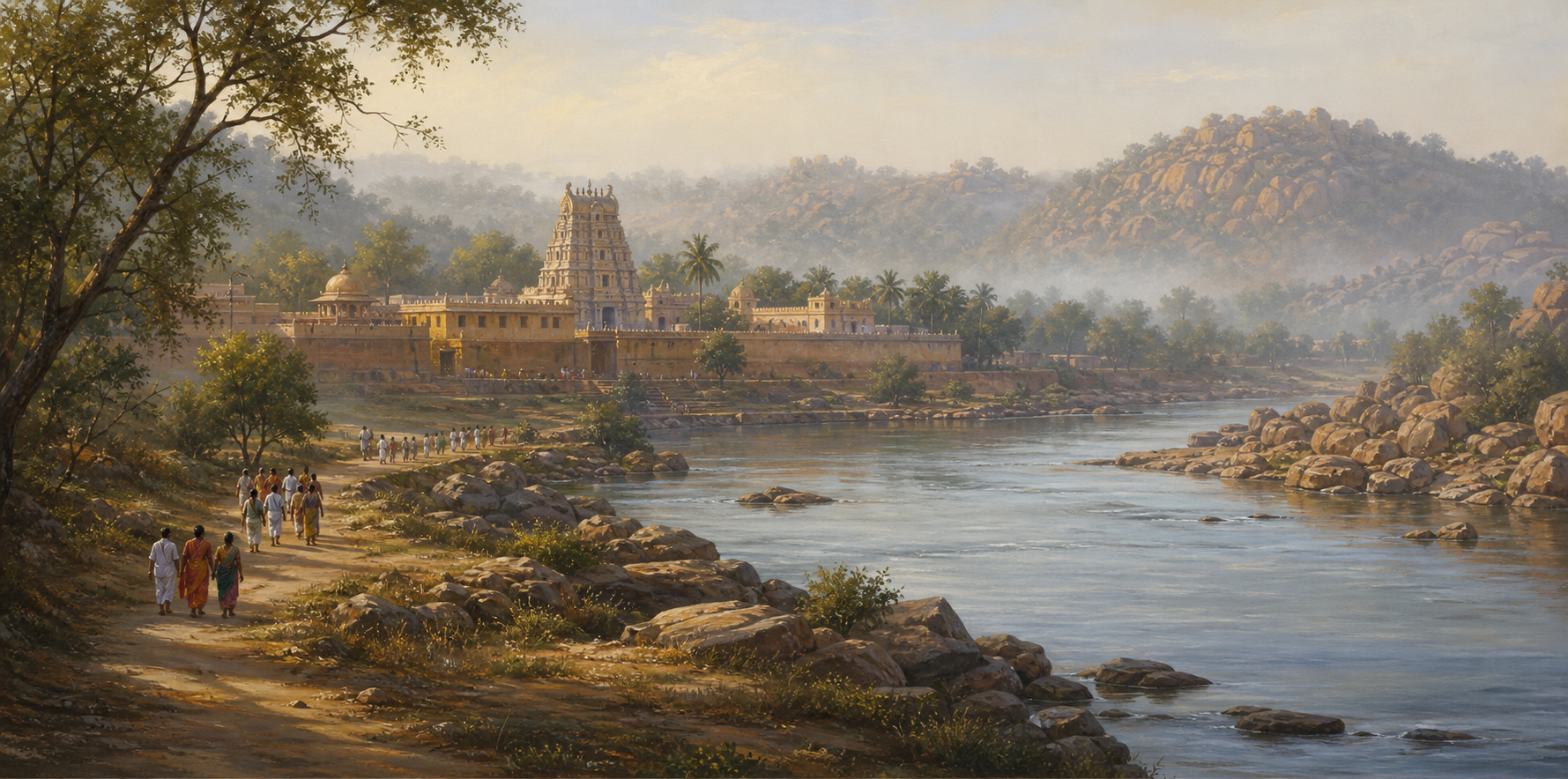
The most useful bridge between the two lunar calendars is August 13-28. The cross-regional guide identifies this as a common Shravana Shukla Paksha: both Purnimanta and Amanta calendars apply the name Shravana to this bright fortnight. That overlap explains why August 17 and August 24 appear in both lunar Somwar schedules. The northern list adds the earlier Mondays of August 3 and 10, while the Amanta list continues with August 31 and September 7.
Even calendars with the same 2026 boundaries can describe the month’s place in the year differently. The Gujarati guide calls Shravan the tenth month when counting from Kartak, the month of the Gujarati New Year. The Marathi guide calls it the fifth month of its traditional lunar calendar. Both nevertheless report the same Amanta span of August 13 through September 11 and the same four Mondays.
Festival dates reveal both convergence and regional emphasis. The Marathi article reports Nag Panchami on August 17, coinciding with the first Amanta Shravan Monday. The Bengali article places that date on 31 Srabon, the final day of its solar month, and connects it with Nag Panchami and an important Manasa Devi observance. The Gujarati guide reports Shravana Putrada or Pavitra Ekadashi on August 23, with some Vaishnava observances on August 24, and places Raksha Bandhan on the full moon of August 28.
A festival commonly associated with Shravana elsewhere should therefore not be inserted automatically into Bengali Srabon. The Bengali guide specifically reports that Raksha Bandhan, Varalakshmi Vratam and Krishna Janmashtami occur outside its July 18-August 17 solar span in 2026. Month names may sound equivalent in English while referring to different calendrical containers.
A regional observance map beyond the Monday fast

All five guides give Shiva worship a central place, but none reduces the month to a single deity or practice. Monday observance can include bathing, a sankalpa, water abhishekam, bilva offerings, a lamp, temple darshan, mantra recitation, study, charity or a dietary vrata. The Somwar guide interprets upavasa as a discipline of drawing attention nearer to the sacred, rather than treating food restriction as the whole purpose of the day.
The weekly pattern broadens in western India. The Gujarati and Marathi guides place Mangal Gauri observances on August 18 and 25 and September 1 and 8. These Tuesday traditions emphasize Gauri or Parvati and are associated in the reports with household welfare, marital harmony and women-led cultural transmission. The Gujarati guide also lists Shravan Fridays on August 14, 21 and 28 and September 4 and 11, describing Lakshmi worship through prayer, a clean shrine, lamps and customary offerings.
Southern practice adds further accents. The cross-regional article describes Varalakshmi Vratam as a major southern observance and reports August 21 as the principal date in some 2026 calendars, subject to regional panchang rules. It also notes the importance of Shravana Saturdays for Venkateswara worship in Telugu and Kannada traditions. These practices sit alongside, rather than compete with, the month’s Shaiva disciplines.
The Bengali guide places Shiva worship in a monsoon setting shaped by water, vegetation, agriculture and serpent traditions. It reports Guru Purnima on July 29 and Nag Panchami on August 17 within Srabon 1433, while emphasizing Manasa Devi in its account of the month’s regional character. This demonstrates how a solar month can contain festivals determined by lunar tithis without becoming a lunar month itself.
Key takeaways
- North Indian Purnimanta Shravan is reported as July 30-August 28, while Amanta Shravan is reported as August 13-September 11.
- West Bengal-oriented Srabon 1433 is reported as July 18-August 17; the Nepal-linked solar range in the Somwar guide is July 16-August 16.
- August 13-28 is the shared Shravana Shukla Paksha in the two lunar systems, and August 17 and 24 are their common Shravan Mondays.
- A regional month range does not by itself settle every vrata. Location, tithi, ritual period and sampradaya rules can still select adjacent civil dates.
Turning a regional date list into an actionable calendar
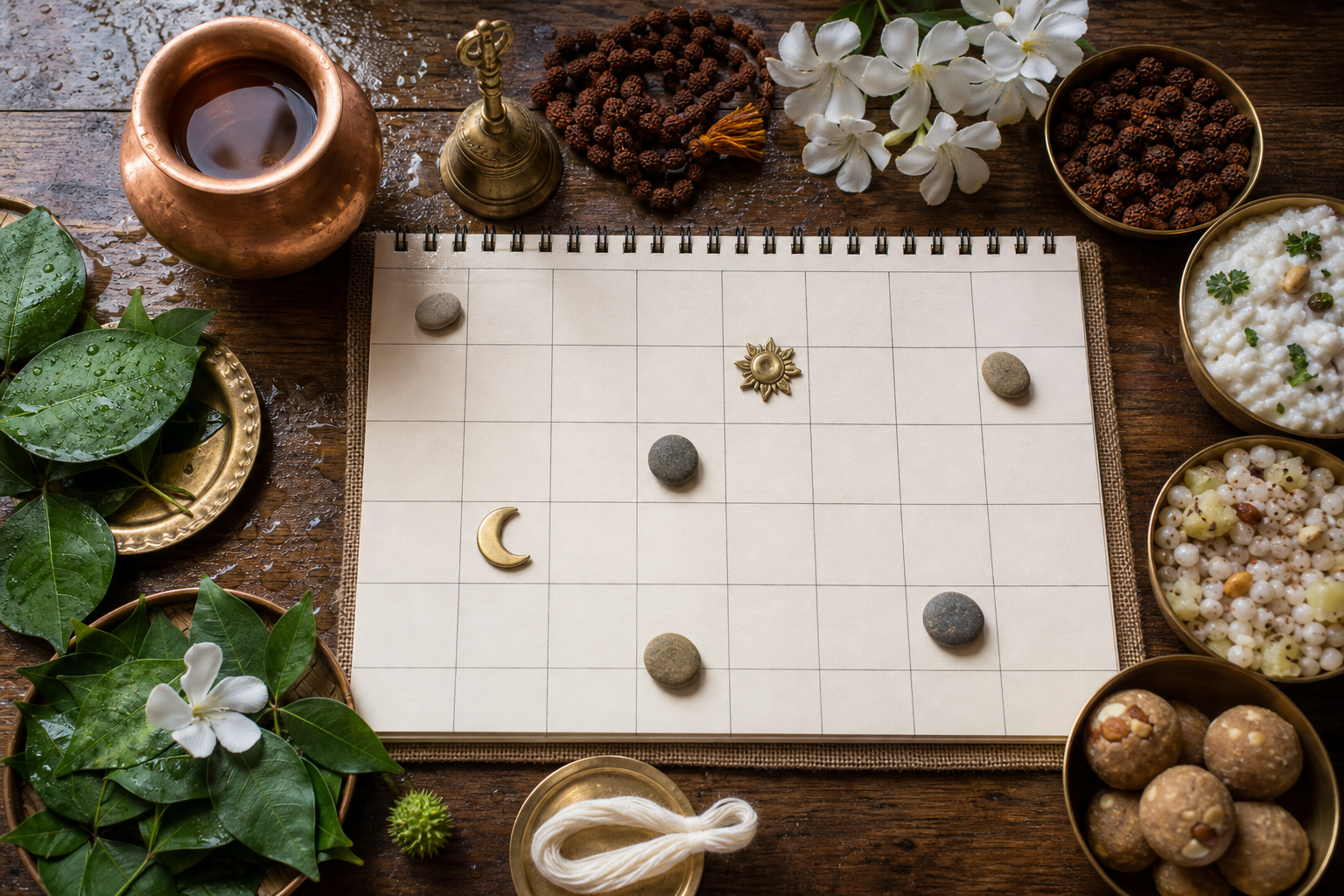
The first decision is not which online date appears most often, but which calendar the household, temple or sampradaya actually follows. Residence is a useful clue, not a complete answer: a family may retain a Marathi, Gujarati, Bengali, Telugu, Kannada, North Indian or Nepalese convention while living elsewhere. The relevant local panchang should then be checked for the city where the observance will occur.
This local check matters because a tithi is calculated from successive 12-degree changes in the angular separation of the Sun and Moon; it is not a fixed midnight-to-midnight day. The source guides explain that different rites can depend on the tithi present at sunrise, sunset, moonrise, midnight or another prescribed period. The Gujarati article’s August 23-24 Ekadashi distinction illustrates how observance rules can produce adjacent dates without making either calendar careless.
The form of a vrata can also be matched to capacity. The Gujarati and Marathi guides describe practices ranging from strict fasting to water, fruit, milk or one sattvic meal, while advising adaptation for health, age and daily responsibilities. When dietary restriction is unsuitable, prayer, japa, study, service or a modest personal discipline can retain the devotional intention. For abhishekam and other offerings, household lineage and temple instructions should take priority over generalized online checklists.
For shared observances in 2026, invitations and family calendars can state both the Gregorian date and the convention being followed, such as Purnimanta Shravan, Amanta Shravan or Bengali Srabon. Confirming that choice before arranging a fast, puja or gathering should make coordination clearer while allowing each regional tradition to retain its own integrity.
References
- DharmaRenaissance Blog — Shravan Maas 2026 in Gujarat: Essential Dates, Vrats, Puja and Calendar Guide
- DharmaRenaissance Blog — Shravan Maas 2026: Sacred Marathi Calendar Dates, Vrats and Complete Festival Guide
- DharmaRenaissance Blog — Shravan Month 2026: Essential Sawan Dates, Vrats and Sacred Traditions Explained
- DharmaRenaissance Blog — Shravan Somwar Vrat 2026: Essential Dates, Calendar Guide and Shiva Puja Practice
- DharmaRenaissance Blog — Shraban Month 2026: Essential Srabon 1433 Dates, Rituals and Calendar Guide