
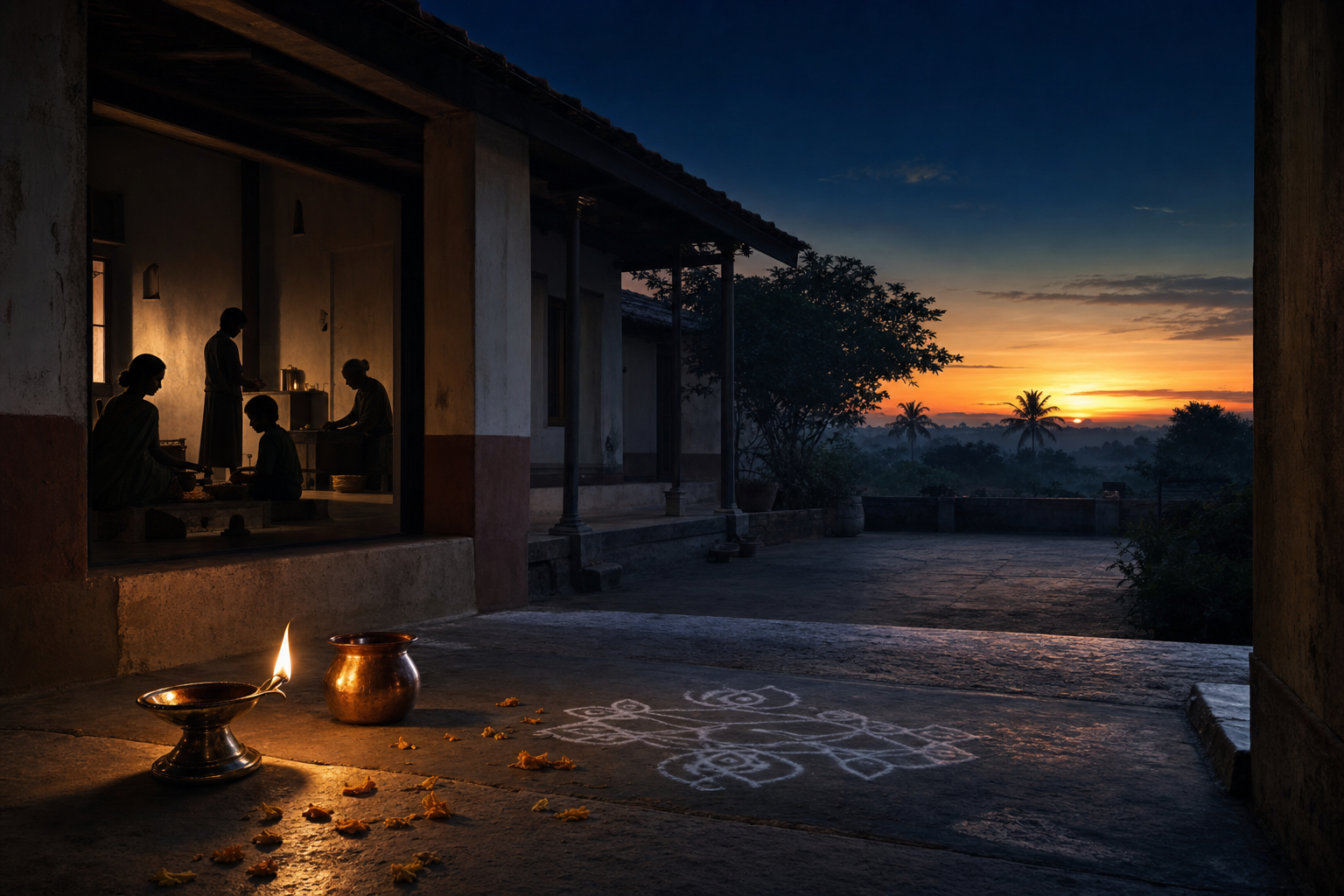
You may see 18 March 2026 called Phalgun Amavasya, Chaitra Amavasya, Navreh Mavas, Ugadi Amavasya or Gudi Padwa Amavasya. The names can look contradictory. In practice, they tell you which regional calendar and New Year tradition a household is following.
If you are planning worship, tarpanam or a family New Year observance, do not settle the question by choosing whichever label appears most often online. First identify your calendar system, family sampradaya and location. That small check protects both the date and the meaning of the observance.
Key takeaways for the 2026 transition
- Telugu, Marathi, Gujarati and Kannada Amanta calendars place Phalgun Amavasya on 18 March 2026. In the New Year setting, it is also called Ugadi Amavasya or Gudi Padwa Amavasya.
- The Kashmiri Saptarshi Panchang identifies 18 March 2026 as Navreh Mavas, a Chaitra Amavasya that closes the old year before Navreh.
- Navreh, Ugadi and Gudi Padwa belong to the bright-fortnight beginning associated with Chaitra Shukla Pratipada. Amavasya is the preparatory threshold, not the New Year celebration itself.
- The North Indian Purnimanta date called Falgun Amavasya falls on 17 February 2026. A month name by itself is therefore not enough to identify the intended observance.
- Exact tithi windows can vary by location. Use a regional panchang or temple notice before undertaking a time-bound vrata, sankalpa or ancestral rite.
Why the same threshold acquires different names

A Gregorian date answers one question: where does the day fall in the civil calendar? A panchang answers several others. It identifies the lunar tithi, fortnight, month, regional reckoning and, where relevant, the ritual window attached to sunrise or another local condition.
The Amanta and Purnimanta systems do not close a lunar month at the same point. An Amanta month ends with Amavasya; a Purnimanta month ends with Purnima. Consequently, two households can use the name Phalgun while referring to different civil dates. In 2026, that difference appears sharply: the North Indian Purnimanta Falgun Amavasya is on 17 February, while the Amanta date used in several western and southern regional calendars is 18 March.
Kashmiri Hindu reckoning adds another legitimate vocabulary. In the Saptarshi Panchang, 18 March is Navreh Mavas and is described as Chaitra Amavasya, the concluding day of the year before Navreh on Chaitra Shukla Pratipada. The date is shared with the Amanta New Year threshold, but the inherited name and cultural expression are Kashmiri.
This is not a contest over which region has the correct word. Hindu calendrical unity does not require uniform nomenclature. The useful question is narrower: which reckoning governs the rite you intend to perform?
Observe the passage as closure followed by renewal
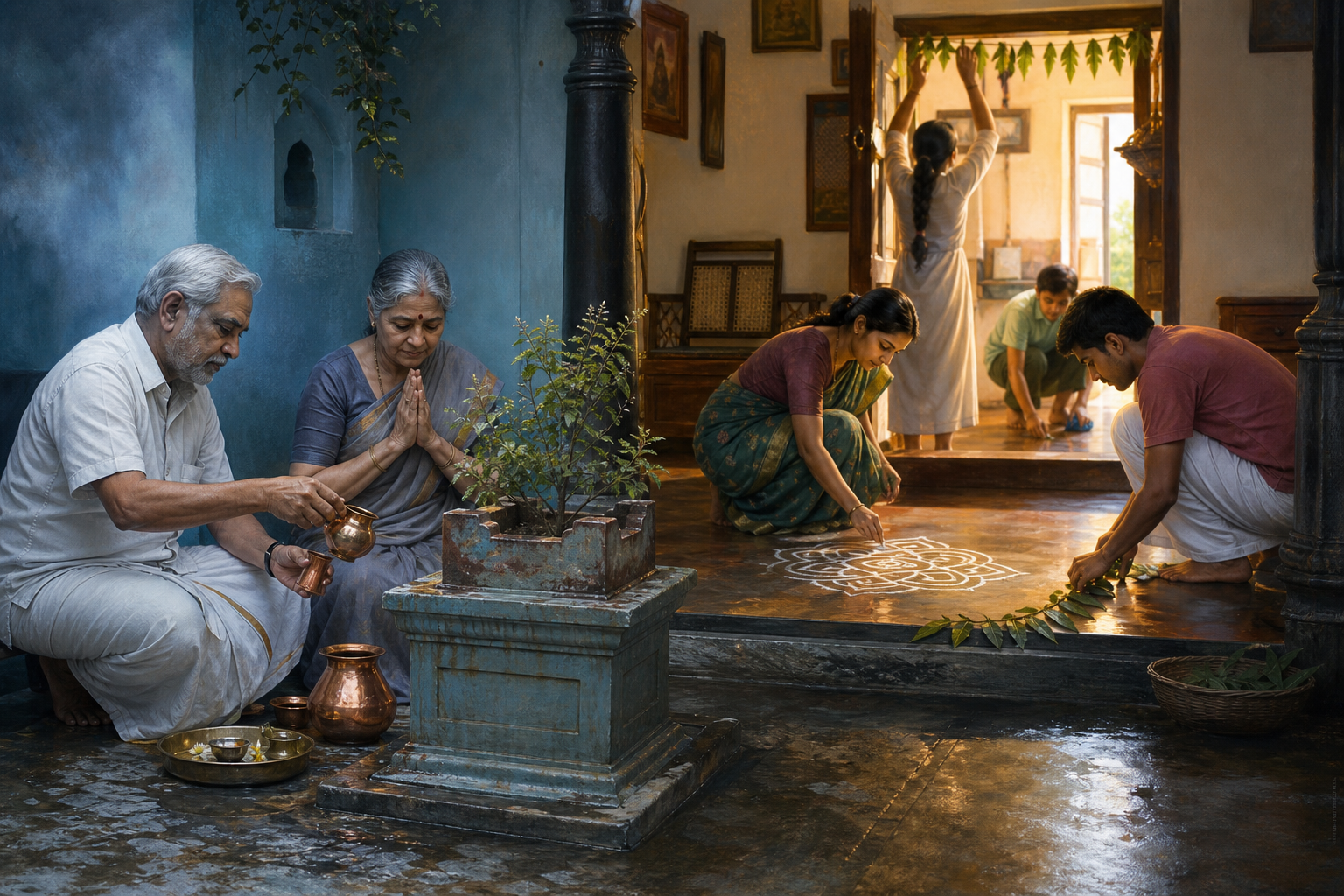
The cleanest way to understand this transition is as a two-part movement. Amavasya gathers the old cycle inward. Shukla Pratipada opens the new one. When the two moods are collapsed into a single generic celebration, the discipline of ending well is easily lost.
- Confirm the tradition before fixing the programme. Ask whether your household follows Navreh, Ugadi, Gudi Padwa or another regional observance, and record the panchang system with the date.
- Finish practical preparation before the New Year opening. Clean the worship space and arrange required household materials on Amavasya. Treat this as preparation rather than as a universal ritual command.
- Keep the Amavasya routine restrained. Depending on family practice, suitable observances can include japa, simple prayer, lighting a lamp, charitable conduct and sattvic food. The point is collected attention, not ceremonial excess.
- Perform ancestral observances only where they belong. Pitru-tarpana or tarpanam should follow family sampradaya and the relevant local timing. Do not add it merely because Amavasya is commonly associated with ancestors.
- Prepare the regional New Year form separately. Kashmiri Pandit households may ready the Navreh thaal for its auspicious early-morning viewing. Families observing Ugadi or Gudi Padwa should follow their own inherited preparations rather than borrowing the thaal as a generic Chaitra custom.
- Let Pratipada carry the beginning. Move from the quiet of Amavasya into the New Year observance when the applicable panchang places Chaitra Shukla Pratipada.
This sequence makes the transition usable even in a busy household. You do not need to manufacture a grand programme. Give one period to clearing, remembering and preparing; give the next to auspicious beginning.
Preserve regional practice without creating a ritual collage
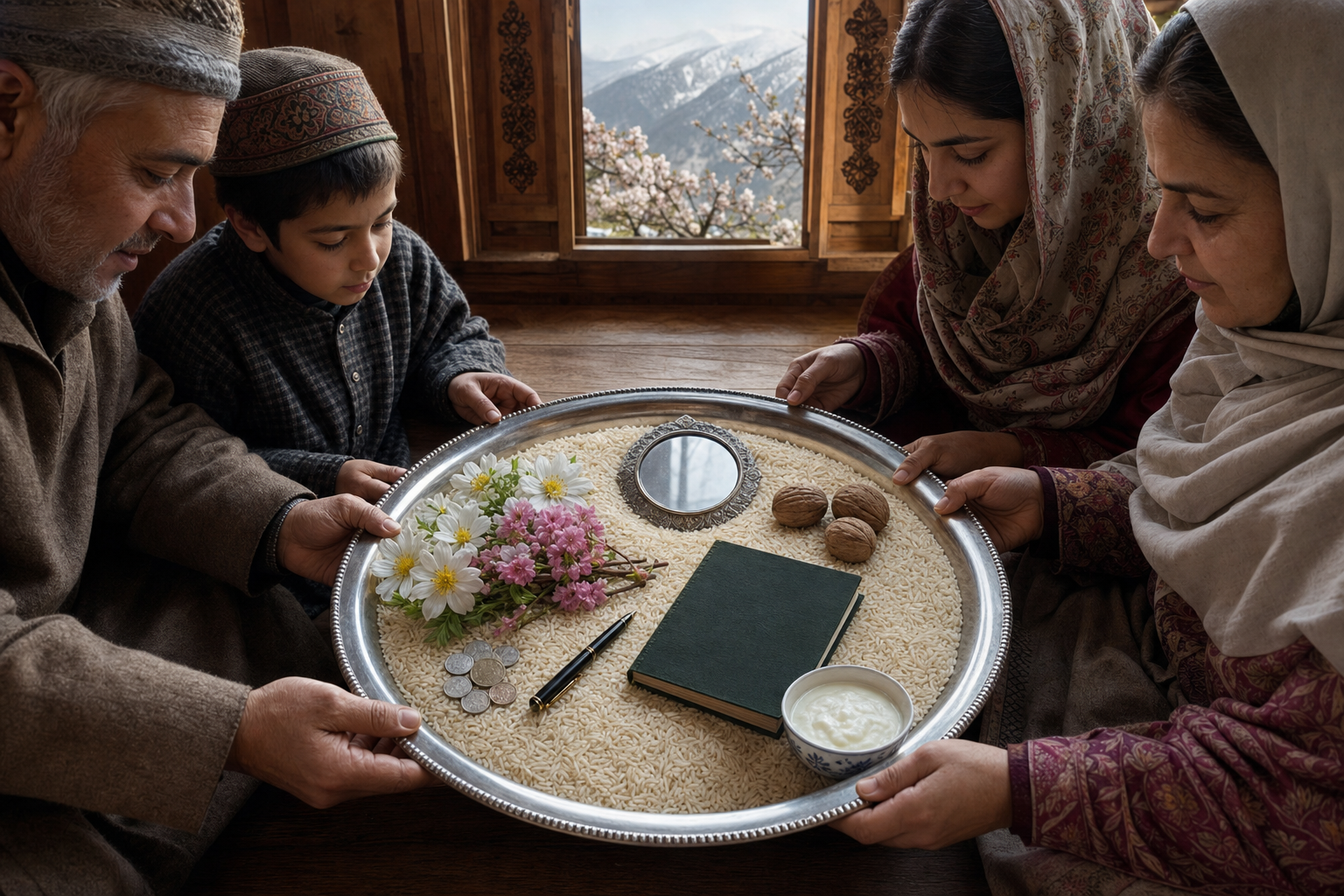
Shared values do not make every custom interchangeable. Navreh Mavas carries Kashmiri memory through the Saptarshi Panchang and the Navreh thaal. Ugadi and Gudi Padwa carry other regional forms. Their proximity on the lunar calendar reveals a common pattern of renewal, but it does not erase their distinct lineages.
This matters especially in diaspora families and households formed across regional traditions. An internet search can place several practices on one screen and make them look like parts of a single mandatory ceremony. They are not. Before adding an element, classify it:
- Formal calendrical requirement: the tithi, local observance window and calendar convention governing a vrata, sankalpa or tarpanam.
- Family sampradaya: the prayer, food discipline, ancestral practice or sequence actually transmitted within the household.
- Regional cultural practice: a New Year preparation such as the Navreh thaal, meaningful within the community that preserves it.
- Personal preparation: cleaning, simplifying the day, giving in charity or setting an ethical intention without claiming that every Hindu must do the same.
A mixed household can honour more than one inheritance. The honest way is to name each practice correctly and follow its own logic. One tradition need not be diluted to make room for another.
Let your local panchang settle the final timing
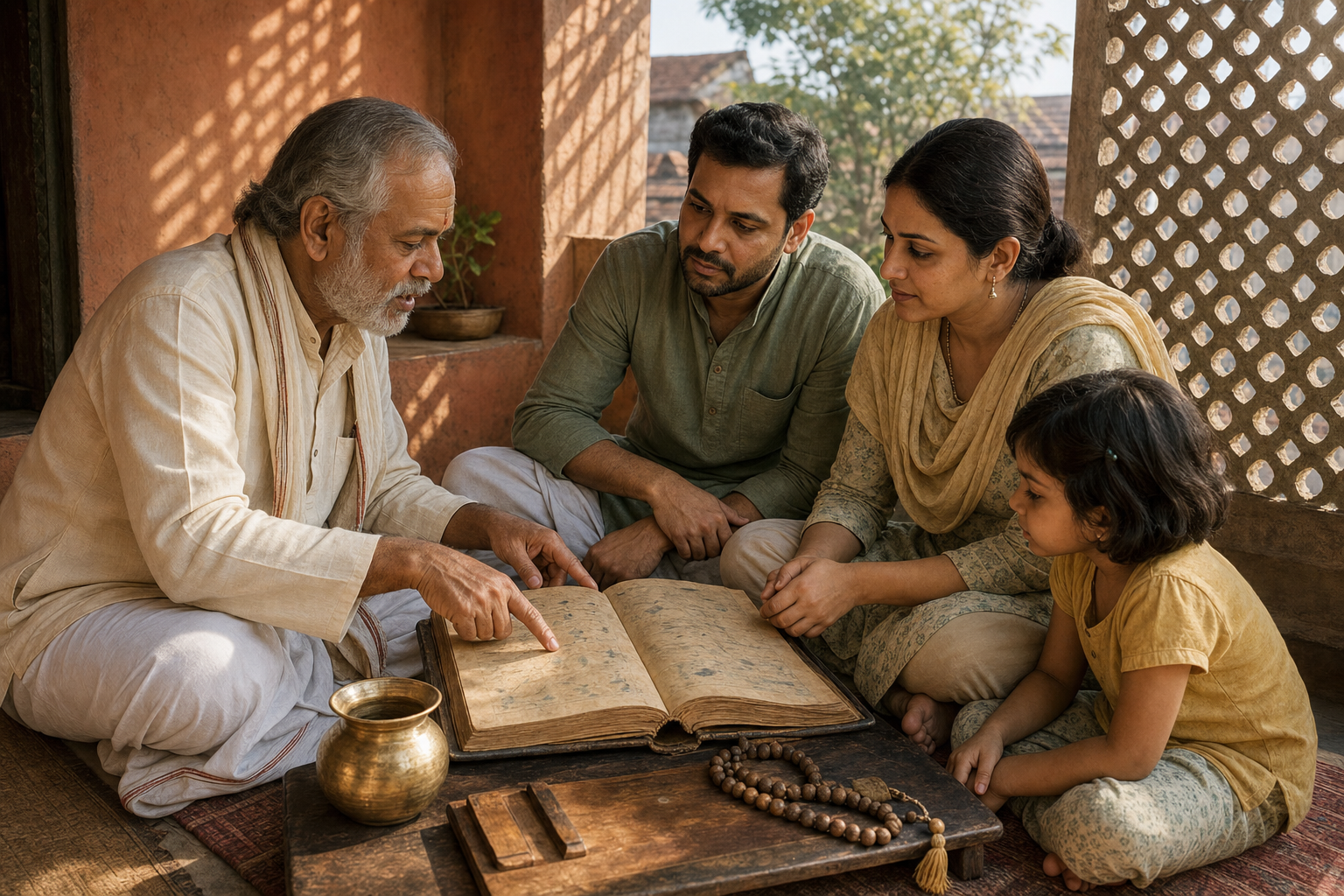
The civil date is enough for planning a family gathering, but it may not be enough for a time-bound religious act. Tithi start and end times are calculated astronomically, while observance rules can also depend on local sunrise or moonset. A timetable prepared for one city should not automatically be transferred to another.
Before making a sankalpa or fixing tarpanam, check five details:
- The city or geographic location used by the panchang.
- Whether the calendar is Amanta, Purnimanta or the Kashmiri Saptarshi Panchang.
- The local start and end of Amavasya Tithi.
- The sunrise or other timing rule relevant to the intended observance.
- Any instruction issued by the temple, priest or family tradition you actually follow.
If two calendars still appear to disagree, compare their system and location before comparing their dates. Most apparent contradictions begin there. For 2026, write “18 March – Amanta New Year threshold” or “18 March – Navreh Mavas, Saptarshi Panchang” in your family calendar rather than recording only “Amavasya.” Then use the day to finish what should not be carried forward, and meet Shukla Pratipada with a genuinely clear beginning.
References
- DharmaRenaissance Blog – Falgun Amavasya 2026: Exact Dates, Regional Calendars, and Sacred Observance Guide
- DharmaRenaissance Blog – Navreh Mavas 2026: Sacred Chaitra Amavasya in Kashmir and the Dawn of Navreh
