

Across the Ashadha-Shravan boundary, two families can observe the same Moon on the same night yet use different names for the lunar month. The five source articles form a coherent 2026 sequence only when purnimant and amavasyant reckoning, tithi, weekday and regional practice are read together.
The resulting calendar is more than a list of fasts. It shows how Chandra Darshan, Bhadali Navami, Ashadha Friday Lakshmi worship, Evrat Jivrat and the weekly vrats of Shravan use different forms of restraint to cultivate attention, household wellbeing and devotional continuity.
Why Shravan has two valid starting dates

According to the Shravan Month 2026 guide, purnimant calendars used widely in North India place Shravan from July 30 through August 28, beginning with Krishna Pratipada after the Ashadha full moon. Amavasyant calendars followed prominently in western and southern regions place it from August 13 through September 11, beginning with Shukla Pratipada after Ashadha Amavasya.
These are not two different lunar cycles. The source explains that both systems preserve the same phases and tithis but divide and name the months differently: a purnimant month places the waning fortnight first, whereas an amavasyant month places the waxing fortnight first. North Indian devotees can consequently be in Shravan while Gujarati, Maharashtrian or southern households are still completing Ashadha.
The surrounding reports illustrate that overlap. The Chandra Darshan article identifies July 15 with the first crescent after Amavasya and describes it as an Ashada observance that also points toward Shravana in some devotional contexts. The Bhadali Navami report places July 23 in Ashadha Shukla Paksha under North Indian purnimanta reckoning. Meanwhile, the Lakshmi Vratam source continues its South Indian Ashada Friday sequence through August 7, and the Evrat Jivrat article still uses Gujarati Ashad Vad terminology for its August 12 observance.
Location matters at a second level as well. The sources emphasize that tithi boundaries can cross civil days according to local sunrise rules, while crescent visibility also depends on sunset, moonset, atmospheric clarity and the horizon. A published Gregorian date is therefore a planning reference rather than a substitute for the local panchang or established family calendar.
A source-reported map of the 2026 observances
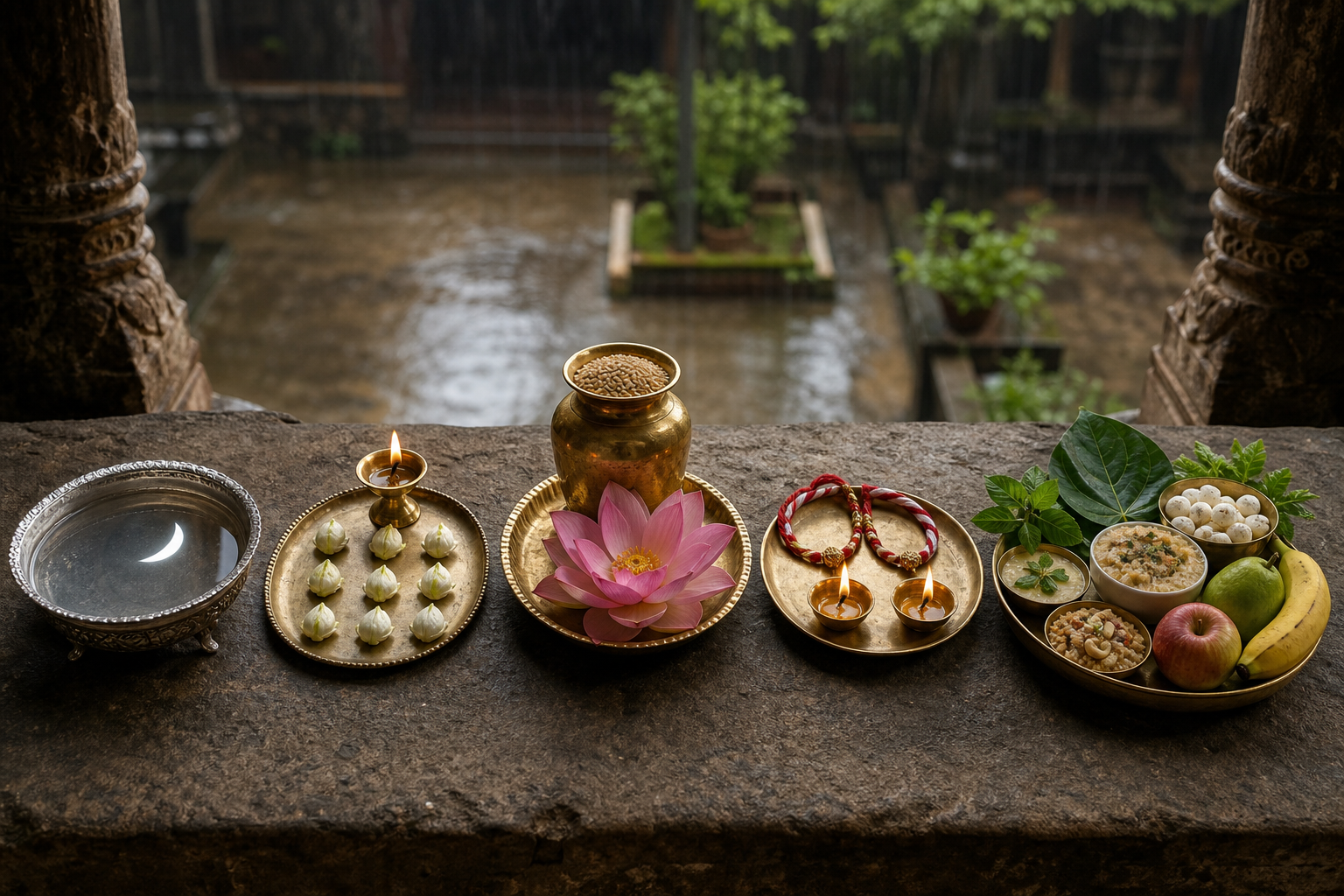
The following dates reproduce the reporting in the five source articles; they have not been independently verified. The calendar frame in the final column is essential because a date without its regional reckoning can be misleading.
| Reported 2026 date or span | Observance | Calendar frame and emphasis |
|---|---|---|
| July 15 | Chandra Darshan | The Chandra Darshan source identifies the first visible crescent after Amavasya, with evening sighting, prayer and optional fasting in the Ashada-to-Shravana setting. |
| July 17, 24 and 31; August 7 | Ashada Shukravara Lakshmi Vratam | The Lakshmi Vratam source reports four Ashada Fridays and identifies July 24, Ashada Shudda Dashami in its calendar tradition, as Lakshmi Vrata Arambham. |
| July 23 | Bhadali Navami | The Bhadali Navami source places it on Ashadha Shukla Navami in North Indian purnimanta reckoning and associates the day with Vishnu and Bhadrakali worship. |
| July 30-August 28 | Purnimant Shravan | The Shravan guide reports this span for many North Indian calendars, beginning with Shravan Krishna Pratipada. |
| August 13-September 11 | Amavasyant Shravan | The same guide reports this later span for Maharashtra, Gujarat, Karnataka, Andhra Pradesh, Telangana and Goa, beginning with Shravan Shukla Pratipada. |
| August 3, 10, 17 and 24; or August 17, 24 and 31 and September 7 | Shravan Somvar Vrat | The first set is reported for purnimant Shravan and the second for amavasyant Shravan. August 17 and 24 occur in both lists. |
| August 4, 11, 18 and 25 | Mangala Gauri Vrat | The Shravan guide reports these Tuesday dates for the purnimant cycle and recommends local confirmation for the later amavasyant span. |
| August 12 | Evrat Jivrat Vrat | The Gujarati source identifies this date and describes the observance more broadly as a three-day vow from Ashad Vad Trayodashi through Ashad Amavasya. |
| August 21 | Varalakshmi Vratham | The Lakshmi Vratam article says many Telugu calendar references identify this date, while distinguishing Varalakshmi Vratham from the earlier Ashada Friday cycle. |
What the fasts share, and where their purposes differ
Read together, the sources present vrata as a structure for reorganizing daily conduct around a sacred intention. Food restriction is one element, but worship, offerings, clean surroundings, careful speech, remembrance, charity and repeated observance can be equally important. None of the reports proposes one universal fasting menu; the form changes with the deity, household, health, lineage and purpose of the vow.
Lunar attention and a threshold before Chaturmasya
Chandra Darshan directs attention outward to a brief natural event and inward to the state of the mind. Its source describes fasting, evening worship, arghya and crescent sighting as possible elements, while connecting Chandra with mental balance and renewal after Amavasya. Monsoon clouds may prevent an actual sighting, making patience and acceptance part of the practice rather than a failure of it.
Bhadali Navami has a different ritual center. Its source combines devotion to Vishnu, representing preservation and order, with worship of Bhadrakali as protective and purifying power. It also reports popular regard for the date as an auspicious point before the more restrained Chaturmasya period. Importantly, the article cautions that the festival date alone does not replace a complete muhurat calculation for a marriage or another major rite.
Household prosperity and family wellbeing
The Ashada Lakshmi observance establishes a Friday rhythm of household worship. Its source frames prosperity broadly, including food, health, harmony, dignified livelihood and generosity rather than money alone. A lamp, flowers, turmeric, kumkum, fruit, naivedyam and, in some homes, a kalasham give domestic space a ritual focus. The article also keeps this Ashada sequence distinct from Varalakshmi Vratham in Shravana.
Evrat Jivrat is more regionally and relationally specific. The Gujarati report describes a three-day observance traditionally undertaken by married women for a husband’s health and longevity, incorporating fasting, Maa puja, naivedya, jagran and charity. It further reports that the vow is traditionally maintained for five years and associates its katha with Dharmadas and Shraddha of Kanakpur. The extended commitment, story and act of giving make it a vehicle for transmitting family memory as well as seeking family welfare.
Shravan turns restraint into a weekly rhythm
The Shravan source organizes devotion around recurring weekdays. Mondays center Shiva through fasting, mantra, temple worship and offerings such as water to the Shiva Linga; Tuesdays bring Mangala Gauri worship associated with marital harmony and household auspiciousness. Its two Monday schedules overlap on August 17 and 24, showing how practitioners using different month boundaries can sometimes meet on the same observance dates.
The same report places household fasting beside public and embodied practices such as Kanwar Yatra, Jalabhishek and Rudrabhishek. It describes food disciplines ranging from fruit or milk to one simple meal, while treating truthfulness, compassion, cleanliness and reduced distraction as part of the vow. The shared principle across these traditions is therefore not maximal physical hardship but a sustainable alignment of body, attention and conduct.
How to build a reliable family calendar
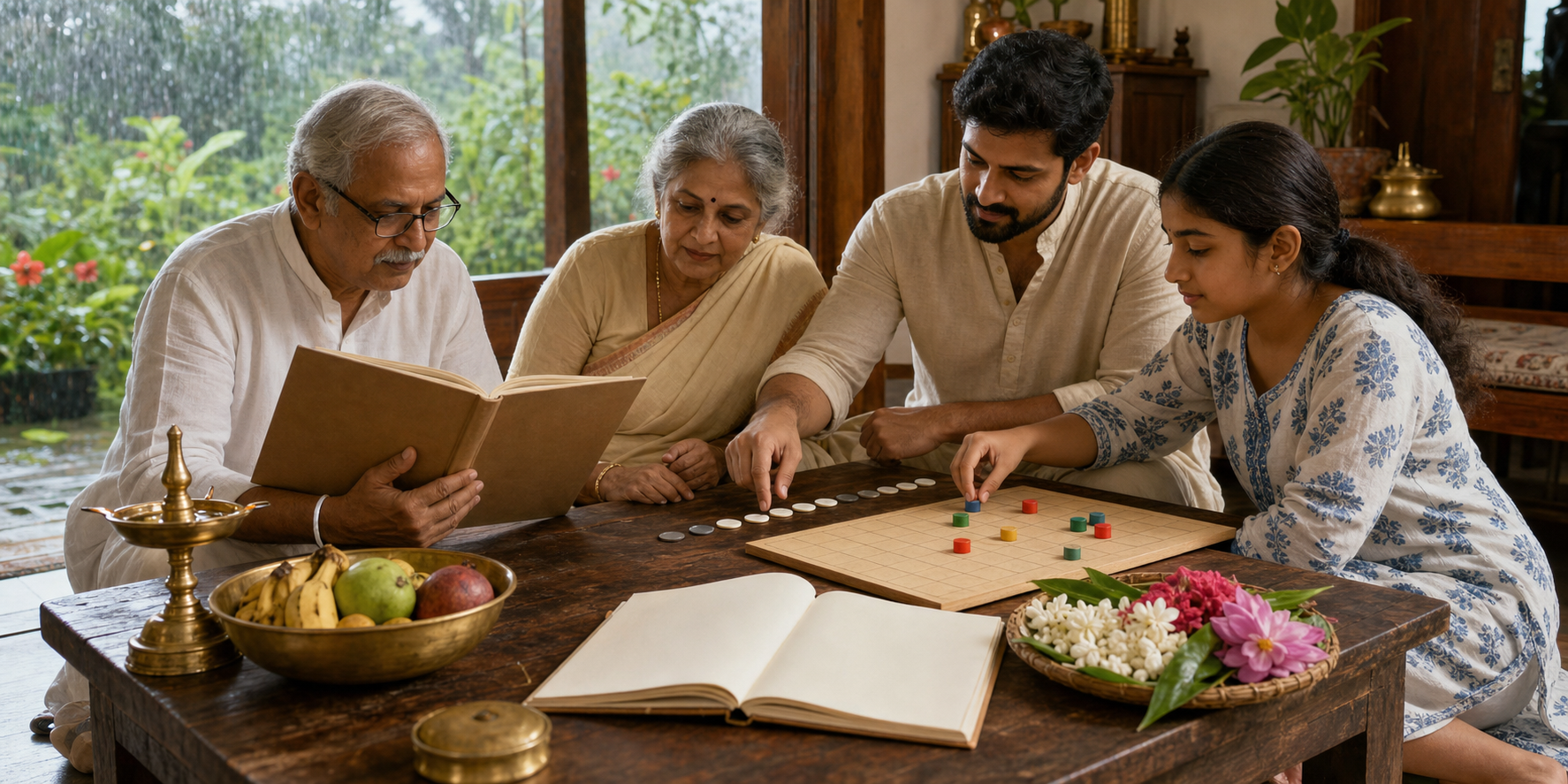
A useful observance calendar needs more information than festival names and Gregorian dates. It should preserve the logic that produced each date and the family custom that gives the vrata its particular form.
Key takeaways
- Record whether the household follows purnimant, amavasyant or another regional calendar before assigning the name Ashadha or Shravan.
- Keep the relevant tithi and weekday beside every civil date; month name alone is not enough to identify an observance.
- Use the reported 2026 dates for planning, then confirm local sunrise rules, tithi boundaries and crescent-viewing conditions through a trusted local panchang.
- Preserve each vow’s distinguishing action: lunar sighting for Chandra Darshan, Friday Lakshmi worship, the multi-day Evrat Jivrat discipline, or weekly Shiva and Mangala Gauri observance.
- Adapt the food fast to health and responsibility without discarding the deeper commitments to restraint, considerate speech, worship, charity and family care.
For 2026, a family record that includes calendar system, locality, tithi, weekday and inherited practice will remain useful after a copied date list becomes obsolete. Documenting why each vow is kept can also help the next generation inherit a living discipline rather than an unexplained appointment.
References
- DharmaRenaissance Blog — Evrat Jivrat Vrat 2026: Powerful Gujarati Fasting Tradition for Family Wellbeing
- DharmaRenaissance Blog — Bhadali Navami 2026: Powerful Meaning, Date, Rituals and Sacred Wisdom
- DharmaRenaissance Blog — Chandra Darshan July 2026: Powerful Guide to Shravana Moon Sighting Rituals
- DharmaRenaissance Blog — Shravan Month 2026 Begins: Sacred Dates, Calendar Logic, and Shiva Vrat Guide
- DharmaRenaissance Blog — Lakshmi Vratam 2026: Powerful Ashada Friday Dates, Ritual Meaning and Practice