

You may have come to the Tamil Siddhas through stories of impossible cures, unusual powers or ascetics who seemed untouched by ordinary human limits. If so, don’t begin by deciding whether every extraordinary account is literally true. Begin with the more useful question: what did the Siddhas seek to master within themselves?
That question lets you approach the tradition with reverence without making credulity the price of admission. It also turns “mastery of nature” from a claim about controlling the world into a demanding path of self-knowledge, disciplined observation and harmony with the conditions of life.
A Siddha is not defined by a display
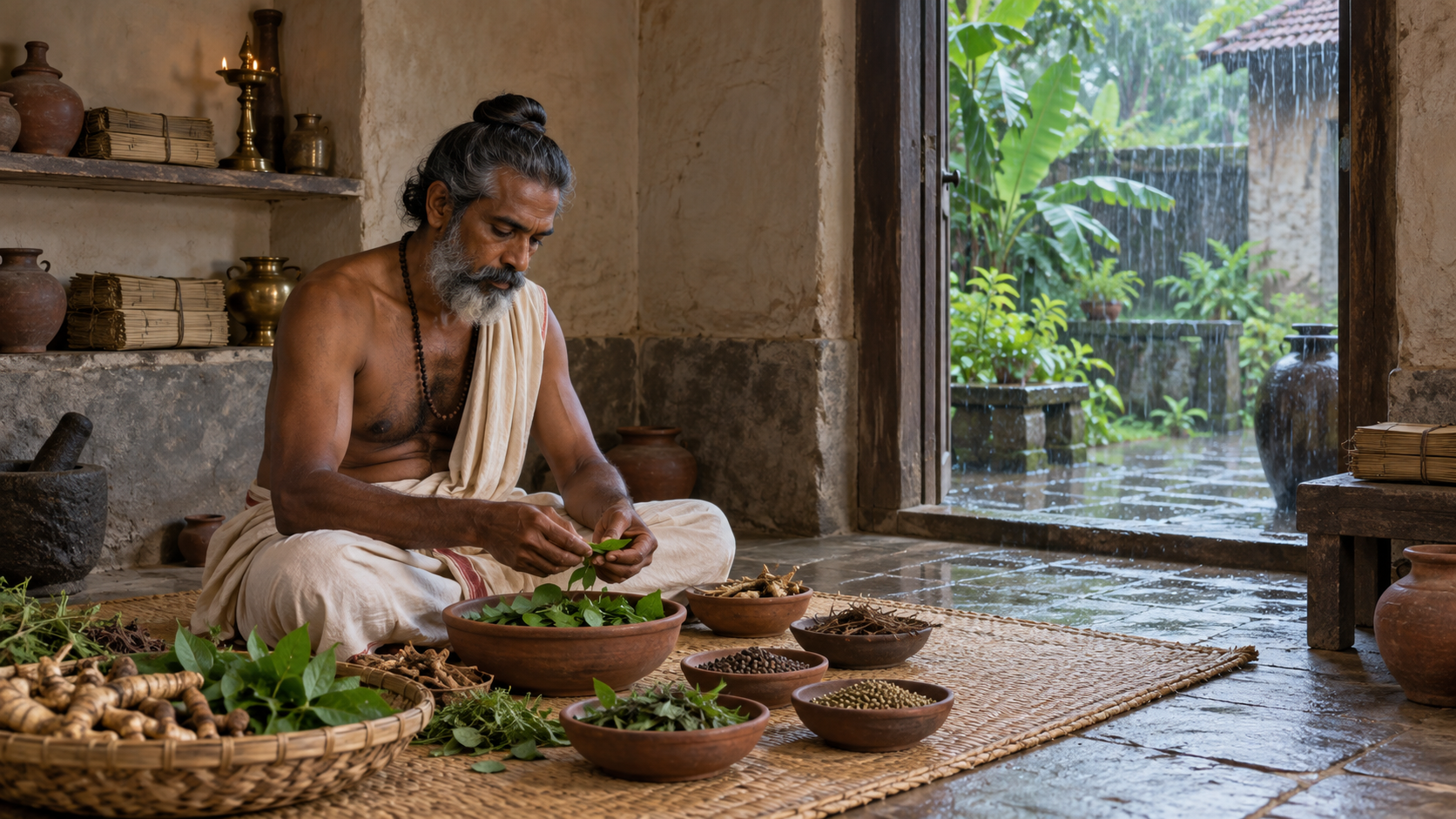
The Tamil Siddha tradition holds together medicine, yoga, alchemy and spiritual realisation. That breadth is part of its fascination. It also makes the tradition easy to sensationalise. Healing knowledge becomes a promise of instant cures, alchemy becomes a hunt for magical substances, and spiritual attainment becomes a catalogue of paranormal feats.
But a miracle is an exceptional event. Mastery is an established capacity. The first draws attention to what supposedly happened once; the second asks what kind of discipline transformed the person. When the miracle becomes the centre, the seeker turns into a spectator. When mastery becomes the centre, the seeker must examine how he or she lives.
You can apply a simple filter whenever you encounter a dramatic Siddha claim:
- If the extraordinary story were removed, would the teaching still offer a coherent path of self-knowledge?
- Does it ask for discipline, ethical responsibility and sustained practice, or only belief in the teacher’s powers?
- Can its practical instructions be followed without denying obvious risks, bodily limits or cause and effect?
- Does admiration mature into greater clarity and humility, or into dependence on ever more astonishing claims?
This filter does not require you to mock sacred accounts or strip them of symbolic meaning. It simply prevents wonder from replacing discernment. A story can inspire devotion while you suspend judgment about its literal mechanism. What you should not do is treat spectacle as proof of spiritual maturity.
Mastery means cooperating with causality

Nature is not merely the landscape outside you. Your body, breath, appetite, fatigue, emotions, habits and mortality all belong to nature as you directly experience it. The human being who wants to conquer nature is therefore divided against himself. He demands peace while cultivating agitation, resents exhaustion while ignoring the conditions that produce it, and blames the world for conflicts repeatedly fed by his own speech.
A more grounded interpretation of mastery begins with causality. You learn which conditions produce a state, stop feeding the conditions you claim to oppose, and work with the body and mind as they actually are. This is not passive submission. It is intelligent participation.
You can test that principle without pretending to perform an esoteric Siddha practice. Use this low-risk observation exercise in one recurring part of your life:
- Name the disturbance concretely. “I become impatient” is vague; “I interrupt when I feel criticised” gives you something observable.
- Trace what comes before it. Notice the setting, the thought, the bodily tension and the impulse that usually precede the reaction.
- Find the earliest point at which choice is still possible. It may be when your breathing changes, your jaw tightens or you begin preparing a defensive reply.
- Make one safe upstream change. Pause for a natural breath, postpone the reply, alter an avoidable condition or state what you heard before defending yourself.
- Judge the result by function. Did you notice the pattern sooner? Did you create less harm? Were you able to act with more freedom and less compulsion?
This exercise is not an initiation and should not be advertised as a secret Siddha technique. It is a practical way to understand the principle at stake: mastery grows when awareness reaches a cause before the cause hardens into consequence.
Test spiritual knowledge by what becomes functional
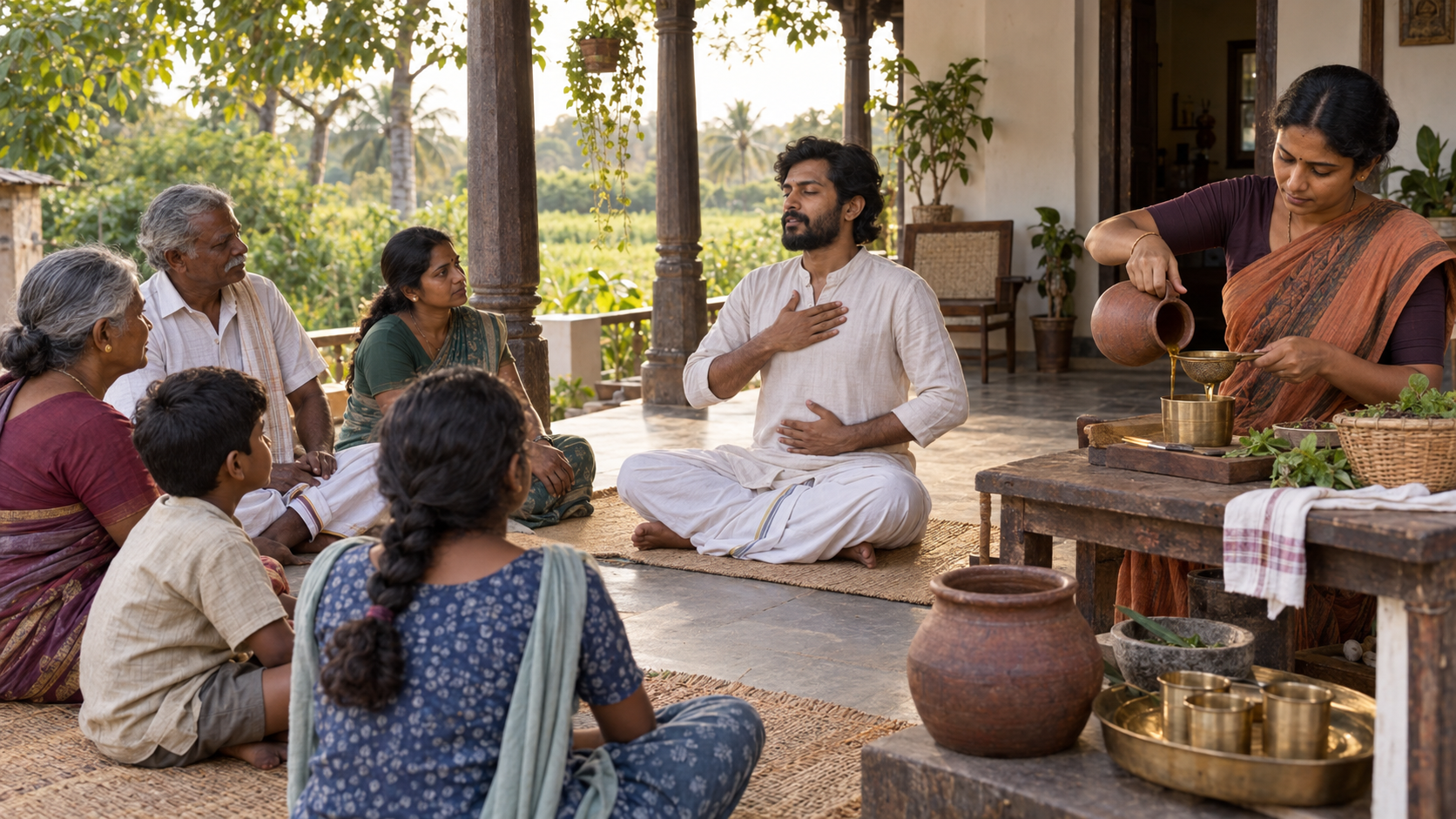
Spiritual vocabulary has never been easier to acquire. A person can collect teachings, repeat technical terms and use artificial intelligence to produce polished explanations without undergoing any corresponding change. Eloquence is therefore weak evidence of attainment.
The more demanding standard is functional spirituality: knowledge that becomes available when ordinary life applies pressure. You don’t need to ask whether you can explain equanimity in a quiet room. Ask whether you can find it when contradicted. Don’t ask whether you understand restraint as a concept. Ask whether restraint appears before damaging words leave your mouth.
A useful practice audit has four parts:
- What you know: State the principle without ornament or borrowed terminology.
- Where it fails: Identify the ordinary situation in which that knowledge disappears from your conduct.
- What you practise: Choose a small, repeatable response that is physically safe and ethically clear.
- What changes: Look for earlier awareness, less compulsion, more truthful speech and quicker repair after a mistake.
Do not use intensity as your main measure. A powerful sensation, vision or emotional surge may be meaningful to you, but it does not by itself establish spiritual rank. The less theatrical signs are harder to counterfeit: you become more responsible for your effects on others, less hungry to appear advanced and more capable of correcting yourself.
This also protects you from turning practice into self-image. If you constantly need others to recognise your progress, the need for recognition has become part of the material to be mastered.
Approach medicine and teachers with mature caution

The Siddha tradition’s medical dimension deserves respect, but respect is not permission to self-medicate. Do not ingest unidentified herbs or alchemical preparations, undertake extreme fasting or breath retention, or stop prescribed treatment because a spiritual personality makes a sweeping health claim. The possible harm is physical, and spiritual charisma is not a medical qualification.
If you want Siddha medical care, verify the practitioner’s legally recognised training and credentials in your jurisdiction. Tell the qualified clinician already treating you about substances or practices you are considering, especially when you have an existing condition or take medication. Spiritual practice may support how you live with illness, but it must not be presented as a substitute for appropriate diagnosis or treatment.
The Guru–shishya relationship calls for a similar combination of openness and discrimination. Real instruction may require trust, correction and patient practice. Those demands make the teacher’s conduct more important, not less. Before accepting guidance, notice whether:
- The practice, its purpose and its safety limits can be explained in language you understand.
- Sincere questions receive proportionate answers rather than humiliation, threats or claims that doubt itself proves spiritual failure.
- Medical competence, spiritual authority and personal loyalty are kept distinct.
- Expectations concerning money, privacy, physical contact, time and confidentiality are stated clearly.
- You remain free to seek medical care, maintain healthy relationships and decline a practice that feels unsafe.
- The relationship makes you more responsible and discerning rather than progressively dependent on the teacher for every decision.
Secrecy alone proves nothing. It may protect staged instruction in a genuine lineage, or it may shield a claim from examination. You can respect the privacy of esoteric teaching while still requiring clear answers about consent, physical risk and practical boundaries. Tamil terminology, a reclusive lifestyle or a dramatic biography cannot replace those answers.
Questions to carry into the Siddha path
Do I have to believe every miracle account?
No. You can receive an account as devotional memory, symbolic teaching or an unresolved claim without pretending to possess certainty. Ask what discipline, virtue or insight the account is meant to illuminate. If its only function is to suspend your judgment in favour of a personality, proceed carefully.
Is Siddha medicine the whole Siddha tradition?
No. Medicine is one important expression of a wider spiritual world that also includes yoga, alchemy and the search for realisation. Reducing the tradition to remedies loses its spiritual horizon; reducing it to mysticism ignores its concern with embodied life.
Does the Siddha path require withdrawal from ordinary life?
Not in the interpretation developed here. Its aim is a more natural, spontaneous and integrated way of living, not escape for its own sake. Your work, relationships, health decisions and speech are therefore not distractions from practice. They are where claims of inner mastery become visible and testable.
Start with one place where you already know the cause of your agitation but continue reproducing it. Observe the chain, make the smallest safe correction upstream, and watch for steadiness rather than drama. If a teaching helps you see causes more clearly and act with less compulsion, you have begun to understand what mastery of nature can mean. If it only gives you better stories to repeat, keep looking.
References

Leave a Reply
You must be logged in to post a comment.