
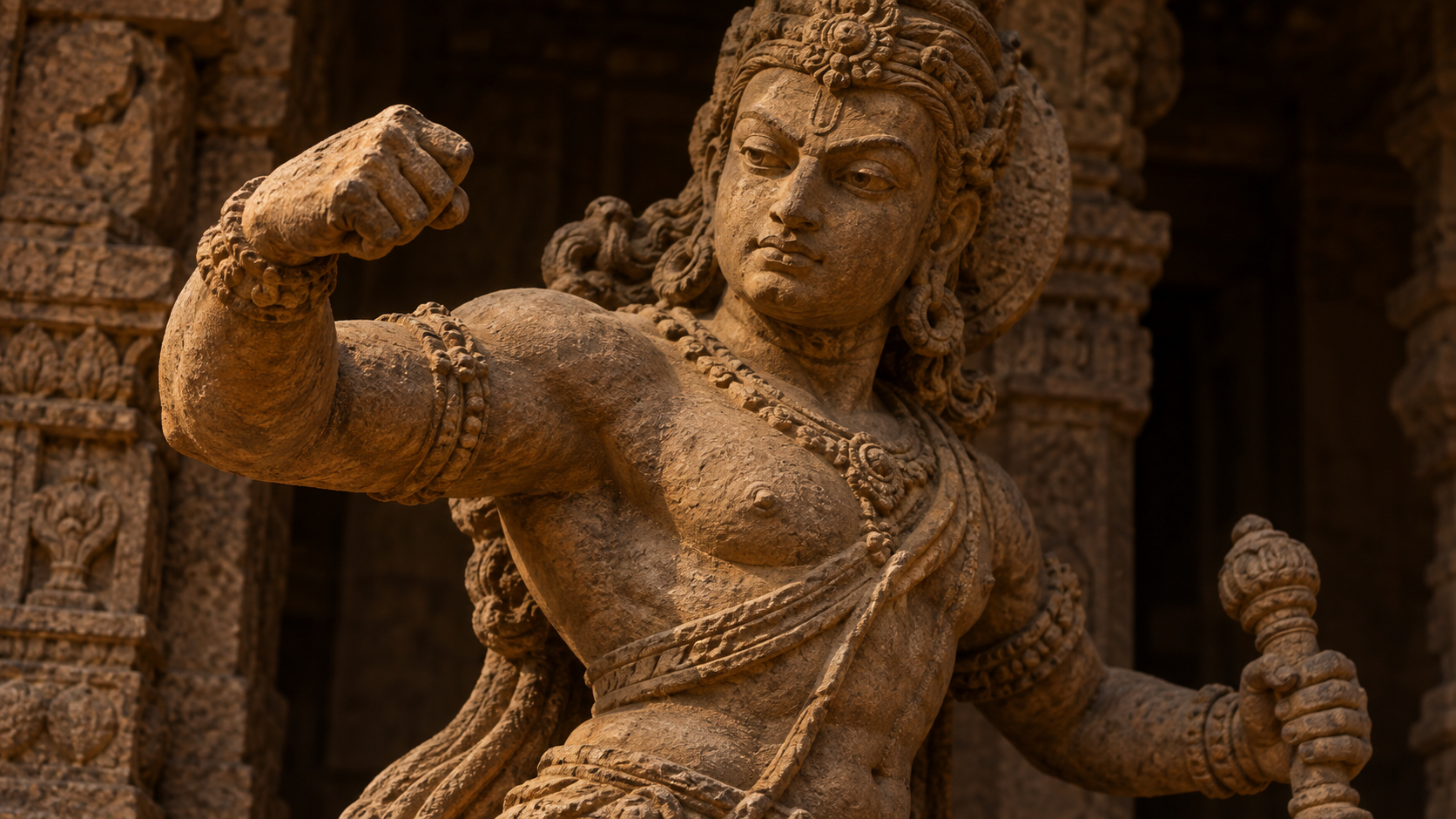
You are looking at a Hindu sculpture, and one hand seems charged with movement. It is not resting, offering, or simply filling space. The figure appears ready to act. If the hand is poised to strike, you may be looking at Tadana Hasta Mudra.
Recognizing the name is only the beginning. To understand what the gesture contributes to the image, you must read it with the arm, body, other hands, and surrounding figures. This approach lets you notice the action without inventing a story that the sculpture does not actually show.
What Tadana Hasta Mudra actually communicates
In Hindu sculpture and painting, the placement of a deity’s hands is meaningful rather than incidental. A hand position, described as a hasta or mudra, works as part of the image’s visual language. Tadana means striking or beating, and Tadana Hasta depicts a hand ready to strike.
The crucial word is ready. The gesture presents force as an imminent action. It catches the figure at a charged point before the movement has been completed. In this sense, Tadana Hasta is less like a static emblem and more like a verb: the figure is about to do something.
That definition also sets a firm limit. Tadana Hasta identifies the kind of action represented by the hand, but it does not, by itself, identify the target, motive, moral meaning, deity, or episode. Those conclusions must come from the rest of the composition.
Read the gesture as a verb, not a complete story
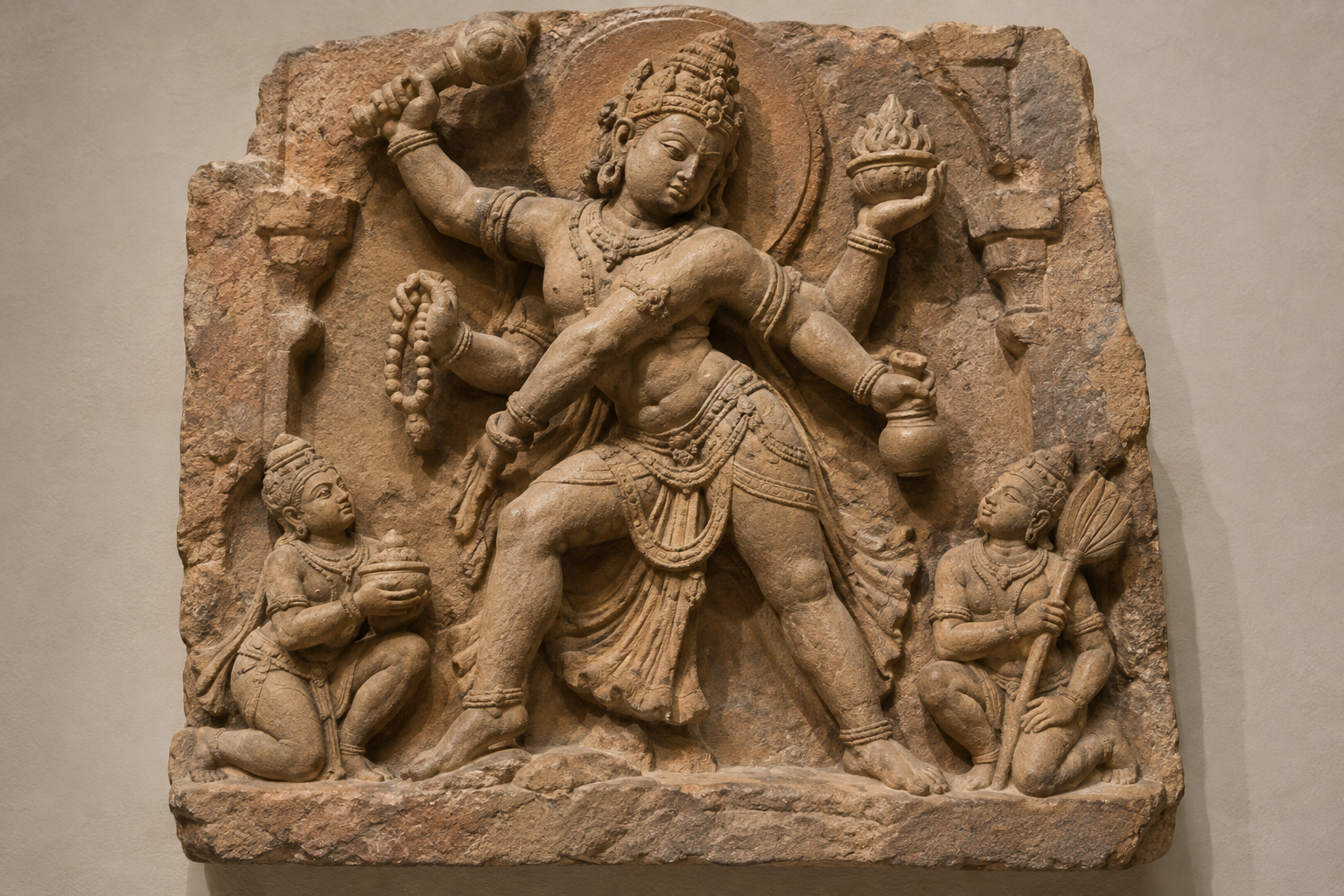
A useful way to read Hindu iconography is to separate three questions: What is the hand doing? Who is doing it? Why is it happening? Tadana Hasta helps with the first question. The figure’s attributes, posture, companions, opponents, and setting must answer the other two.
This distinction protects you from a common mistake: turning visible force into an instant moral judgment. A hand prepared to strike tells you that the image contains directed energy. It does not automatically tell you whether that energy is protective, punitive, adversarial, or part of a larger narrative. You need evidence within the image before choosing among those readings.
The suspended action matters because sculpture has to suggest time without literally moving. Tadana Hasta directs your attention toward the next imagined moment. Ask where the movement would travel if the figure came to life. The likely direction of the arm can help you find the visual relationship that deserves closer examination, but it should begin your inquiry rather than settle it.
A five-step method for examining the sculpture
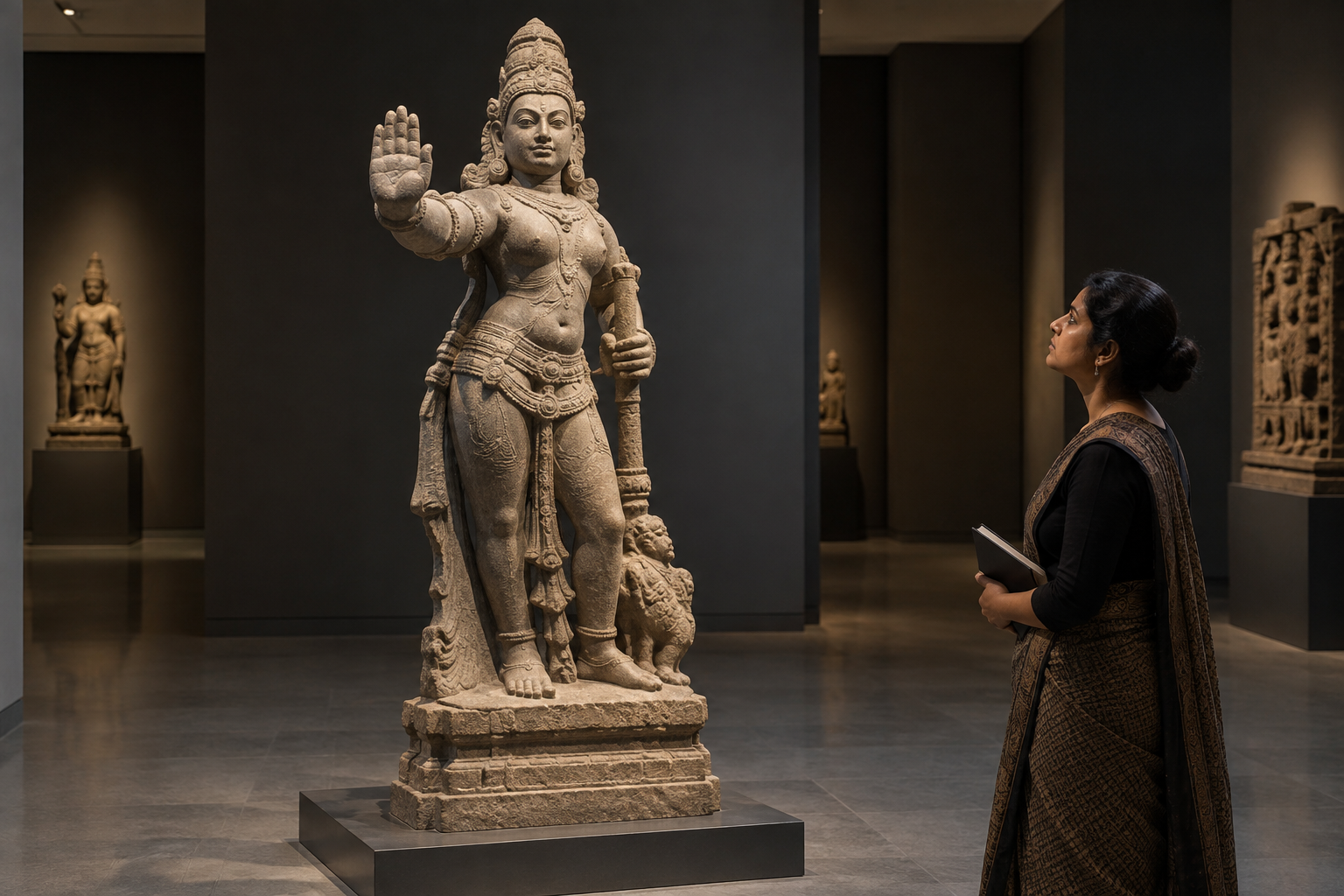
When you encounter a possible Tadana Hasta in a temple, museum, photograph, or painting, work from the whole composition toward the interpretation. Do not begin by forcing the image to match a remembered label.
- Locate the active hand. First decide whether the hand truly appears prepared for an action. Separate what you can see from what you expect to see.
- Follow the hand into the arm. Notice the direction of the forearm, elbow, and shoulder. A gesture belongs to a bodily movement, not to an isolated set of fingers.
- Read the figure’s total posture. Look at the torso, head, stance, and balance. Determine whether they reinforce the impression of imminent action.
- Examine the surrounding relationships. Look for another figure, object, or narrative element toward which the movement may be directed. If no target is clear, leave the target unidentified.
- Use the remaining hands as context. In a multi-armed form, one hand may show force while others carry attributes or communicate different aspects of the figure. Read the hands together before deciding what the image means.
Write your observation in two layers if you are taking notes. The first layer should record only what is visible: for example, “the raised hand appears poised to strike.” The second may offer a conditional interpretation: “this may indicate action directed toward the adjacent figure.” Keeping observation and inference separate makes your reading more accurate and easier to revise.
Misreadings that hide more than they reveal
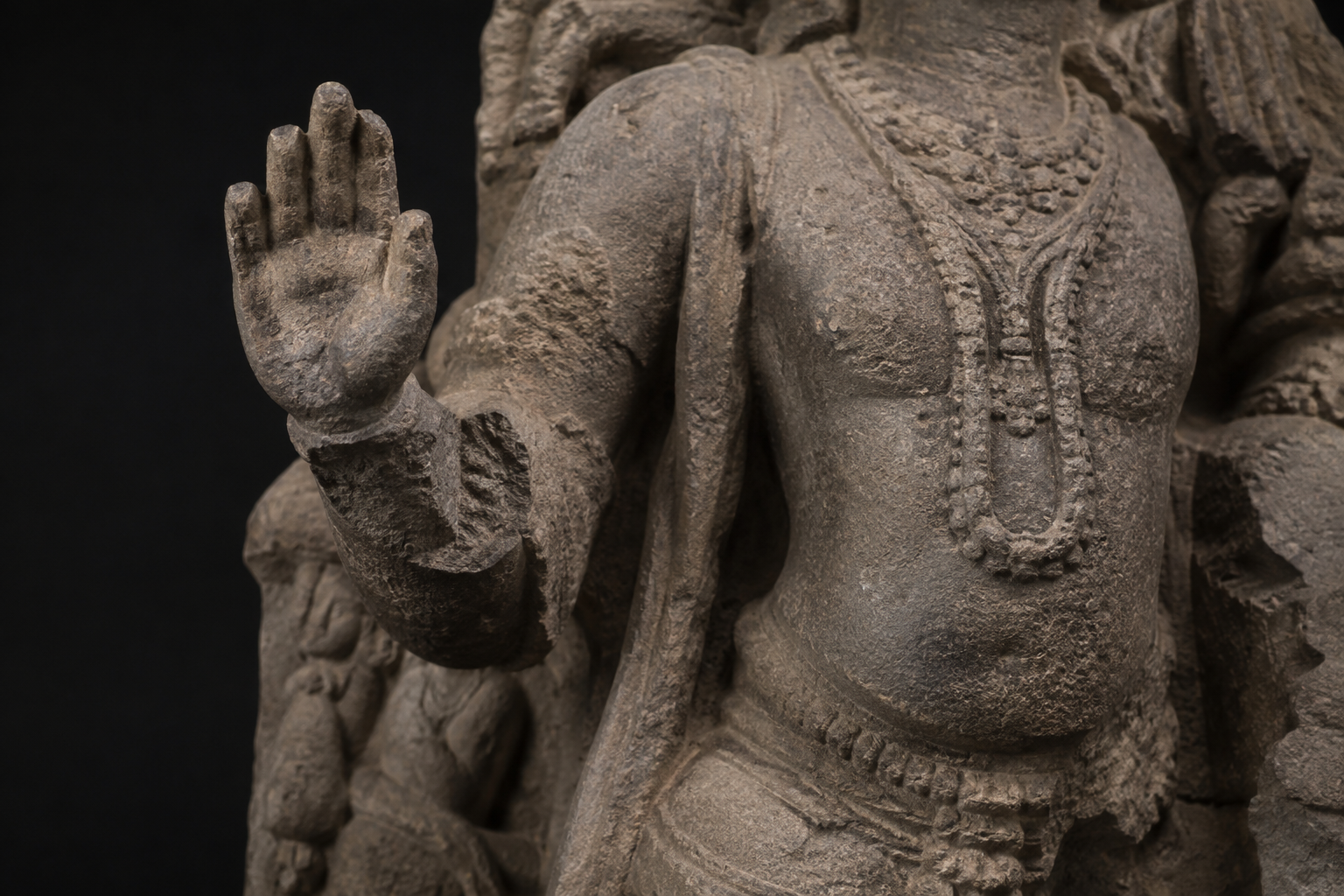
- Identifying the mudra from the hand alone: The hand may be damaged, viewed from an awkward angle, or separated from its original context. Check the arm and body before assigning a name.
- Treating “striking” as the entire meaning: Tadana names the represented action. The larger iconographic meaning depends on who acts, what the action addresses, and how the rest of the image frames it.
- Using modern body language as the main key: A contemporary viewer may read any raised hand as anger, threat, or aggression. Iconographic gestures belong to a structured sacred image and must be read within that visual system.
- Identifying a deity from this gesture alone: An action-bearing hand is not a complete identity card. Look for the full combination of attributes, posture, attendant figures, and narrative context.
- Inventing missing details: If erosion, a break, or a cropped photograph conceals the hand, acknowledge the uncertainty. A cautious identification is more useful than a confident guess.
The safest vocabulary reflects the strength of the evidence. Use “shows” when the action is visually clear, “appears to show” when the form is partly obscured, and “may be” when contextual clues are incomplete. That small discipline prevents a tentative recognition from hardening into a false certainty.
Key takeaways for your next viewing
- Tadana means striking or beating, and Tadana Hasta represents a hand ready to strike.
- The gesture supplies an action, not a complete identification or moral interpretation.
- Read the hand through the arm, posture, other hands, and surrounding figures.
- Keep visible observation separate from narrative inference.
- If damage or missing context prevents a firm identification, preserve that uncertainty in your notes.
The next time a raised hand catches your attention, pause before naming the scene. Trace the movement through the entire figure and ask what the sculpture actually permits you to conclude. Tadana Hasta becomes genuinely legible when you see it not as an isolated sign, but as one active word within the larger visual sentence.
References

Leave a Reply
You must be logged in to post a comment.