
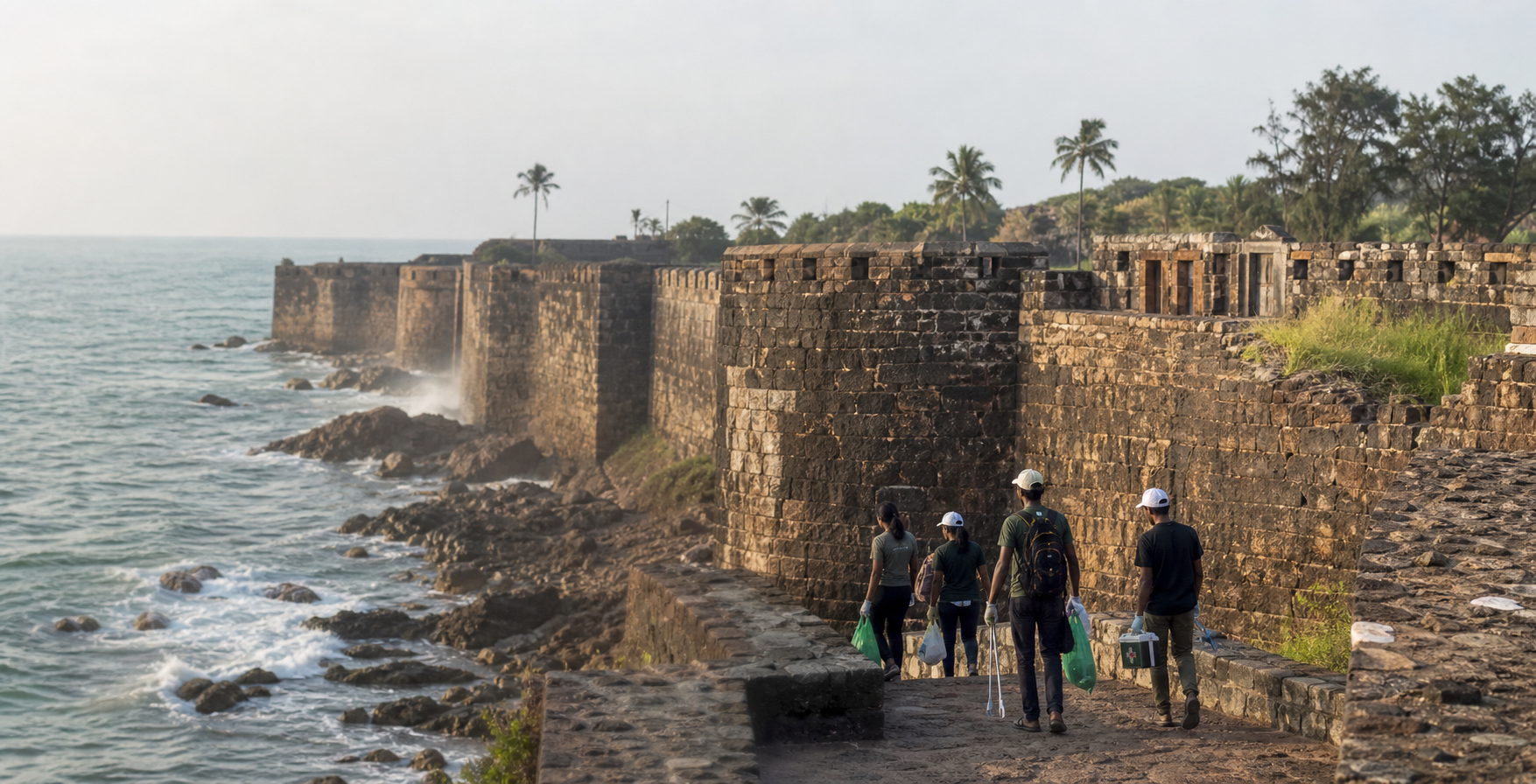
If you are planning a visit or a volunteer drive at Sindhudurg Fort, the most useful question is not how much waste you can collect. It is what you can improve without damaging historic fabric, endangering volunteers, or leaving bags of rubbish for someone else to handle.
A responsible effort follows a clear chain: obtain permission, define the no-touch boundary, clean approved visitor-use areas, segregate and remove the waste, record concerns, and give that record to the people responsible for the site. This turns seva into heritage stewardship rather than a one-day display.
Begin with the boundary between cleaning and conservation
Sindhudurg is not merely an outdoor venue that happens to contain old walls. It was built under the leadership of Chhatrapati Shivaji Maharaj in the 17th century and carries the memory of maritime strategy, statecraft, courage, and cultural resilience. That significance changes how you should work there.
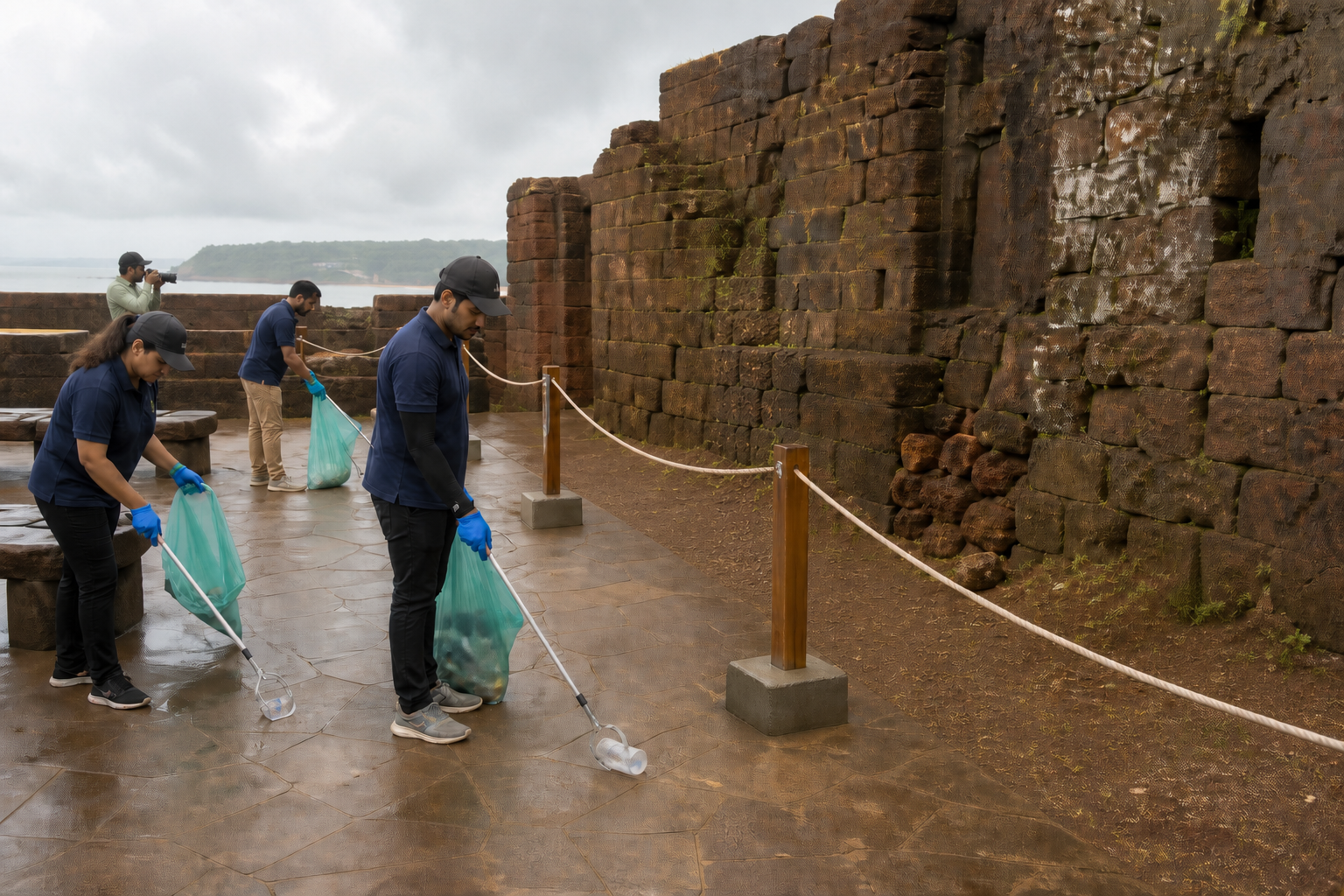
Cleaning supports conservation, but it is not the same as repairing masonry. Volunteers can make an immediate contribution while remaining within three firm lanes:
- Act: Pick up loose litter from approved paths and visitor areas, segregate it, and ensure that it reaches an agreed disposal point.
- Observe: Record anything that appears unstable or damaging, such as shifted stones, deep cracks, rooted plant growth, standing water, or repeated litter accumulation.
- Escalate: Send condition concerns to the responsible site manager. Describe what you saw and where you saw it without attempting to diagnose or repair it.
Do not scrape historic surfaces, pull plants from masonry, relocate stones, pressure-wash walls, apply paint or chemicals, or fill gaps with mortar unless qualified conservators and the competent authority have expressly approved the work. An improvised repair can remove an old surface, conceal evidence, worsen moisture problems, or injure the person attempting it. When you are uncertain, photograph the concern from a safe and permitted position, note its location, and leave the physical fabric untouched.
Plan the entire waste journey before volunteers arrive
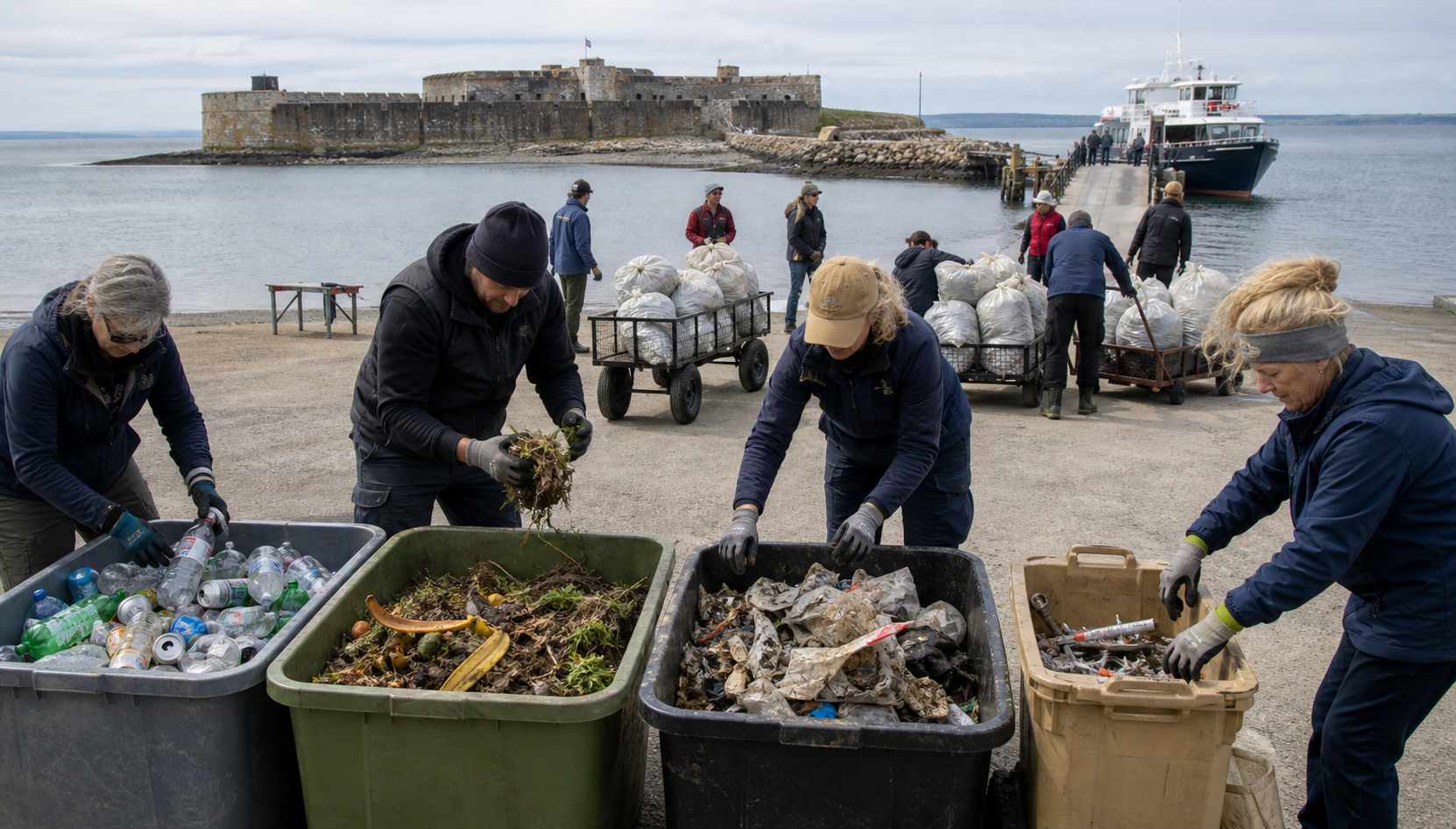
A cleanliness drive is incomplete if the collection bags remain beside a gate or are mixed again after volunteers segregate them. Before announcing the activity, contact the responsible site manager and confirm the whole route from pickup to final handoff.
- The approved date, work period, assembly point, and areas open to volunteers.
- Restricted or fragile areas that nobody in the group may enter or touch.
- The tools, bags, and cleaning materials permitted at the monument.
- The waste categories to be separated and the place where each category will be accepted.
- The person or service receiving the collected waste.
- The site contact to call if volunteers find hazardous waste, an unstable area, or a visitor in difficulty.
- Any restrictions on photography, signage, group size, or public announcements.
Send these details to every team lead. A verbal instruction heard only by the main organiser is easily lost once people spread across the fort.
More than 50 Shivpremis demonstrated a workable pattern by dividing into small teams, clearing litter from pathways, segregating waste for disposal, and encouraging visitors to keep the fort clean. You can adapt that pattern through roles rather than letting everyone do the same task:
- Site liaison: Keeps the activity within the authorised area and communicates with site personnel.
- Pickup teams: Work along assigned routes so that effort is not duplicated and no zone is assumed to have been covered.
- Segregation team: Receives the collected material at the designated point and prevents categories from being mixed.
- Visitor-guidance team: Explains the activity and makes the desired visitor behaviour clear without obstructing movement.
- Recorder and safety spotter: Maintains the activity log, notes concerns, tracks the group, and stops work when a location or object appears unsafe.
A small group can combine roles, but it should not omit them. The point is accountability: somebody must know the boundary, somebody must own the waste handoff, and somebody must preserve the observations.
Use a simple operating sequence on the day:
- Brief volunteers at the assembly point on permitted zones, no-touch surfaces, waste separation, safe movement, and the emergency contact.
- Assign each team a defined route and confirm where it must return its collected material.
- Remove only loose, safely reachable litter. Do not reach over edges, climb ramparts, enter unstable spaces, or lift heavy objects.
- Stop and isolate the area if anyone finds a sharp object, unknown substance, hazardous waste, or suspected structural danger. Ask authorised personnel to handle it.
- Segregate the waste at the agreed point and check every collection route before closing the activity.
- Complete the handoff. Record who received the waste and note any category that could not be accepted.
- Give the site contact a concise condition and activity report before the group disperses.
Closed footwear, suitable gloves, drinking water, weather protection, and permitted litter-picking tools are basic precautions. They do not make a dangerous location safe. The site boundary and the judgement of the responsible authority still take priority over the desire to collect one more item.
Use cultural memory to change visitor behaviour
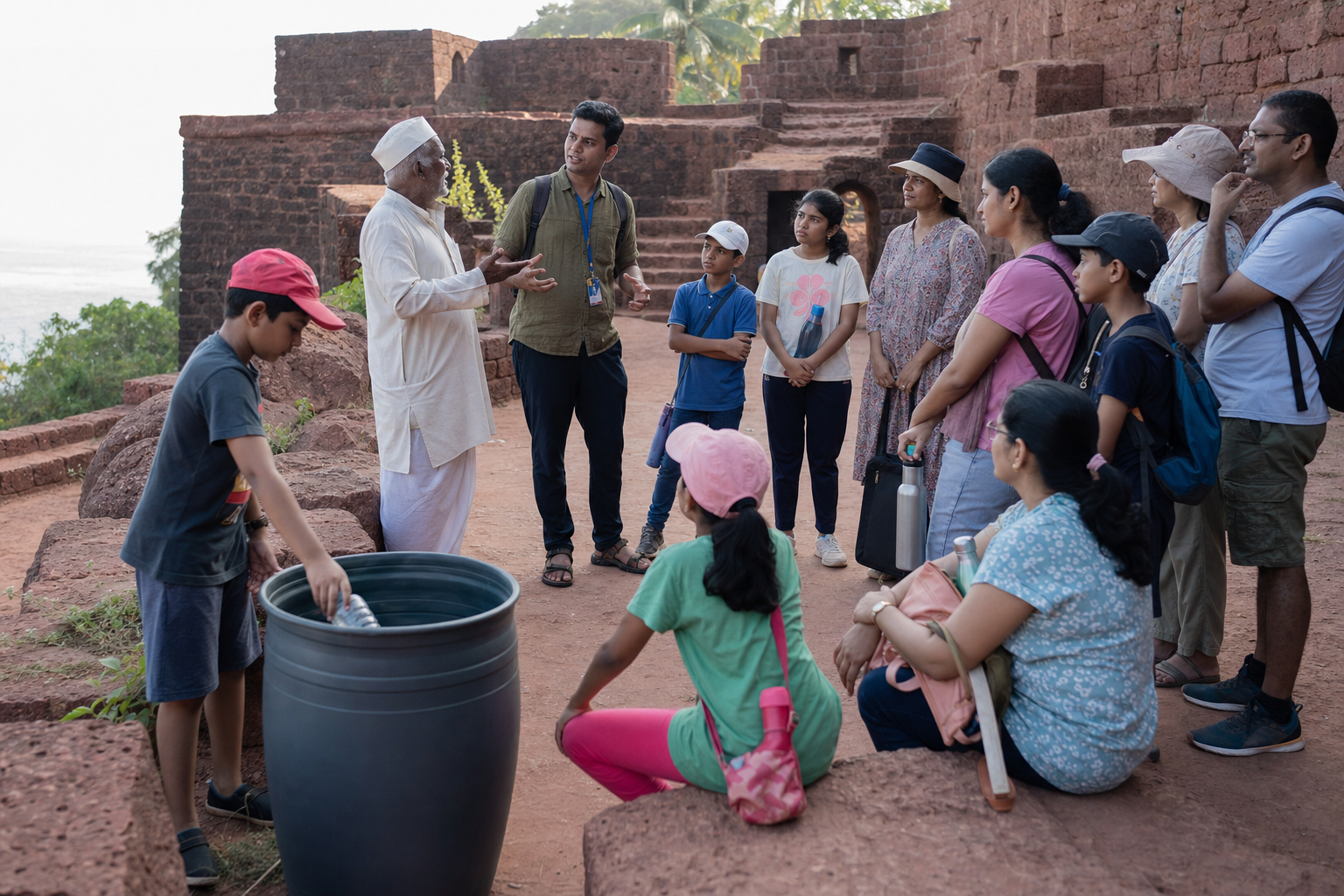
A clean pathway is an immediate result. A visitor who stops leaving waste is a longer result. Your public message should therefore connect conduct to place, not merely tell people that litter is unattractive.
Keep the message brief and usable. Name the place, state the behaviour, and show the practical next step: Sindhudurg carries the legacy of Chhatrapati Shivaji Maharaj; please keep your waste with you or place it in the designated collection point. If there is no confirmed disposal point nearby, do not invent one. Ask the visitor to carry the waste out.
- Explain before correcting: A visitor is more likely to cooperate when the request is tied to respect for the fort rather than delivered as a rebuke.
- Make the action unambiguous: Point to the actual collection location or ask the person to carry the item away.
- Model the rule: Volunteers should not leave food packaging, disposable cups, banners, tape, flowers, or activity materials behind.
- Avoid confrontation: If someone refuses or behaves aggressively, disengage and refer the matter to authorised site personnel.
- Welcome questions: Use curiosity about the drive to explain why preserving the fort requires both public discipline and professional care.
This is where a Dharmic framework becomes practical. Seva means doing necessary work without treating the monument as a backdrop for self-promotion. Ahimsa means causing no damage while trying to help. Discipline means respecting the authorised boundary. Mindful action means following the waste to its proper destination. Community welfare means leaving a cleaner, more respectful environment for residents, pilgrims, tourists, and future visitors.
Hindu, Buddhist, Jain, and Sikh communities use distinct religious vocabularies and practices, but service, restraint, attentive conduct, and concern for collective welfare offer a shared basis for heritage care. Do not flatten those traditions into a slogan. Tie each value to a visible behaviour that volunteers can practise at the fort.
Turn a one-day drive into a conservation feedback loop
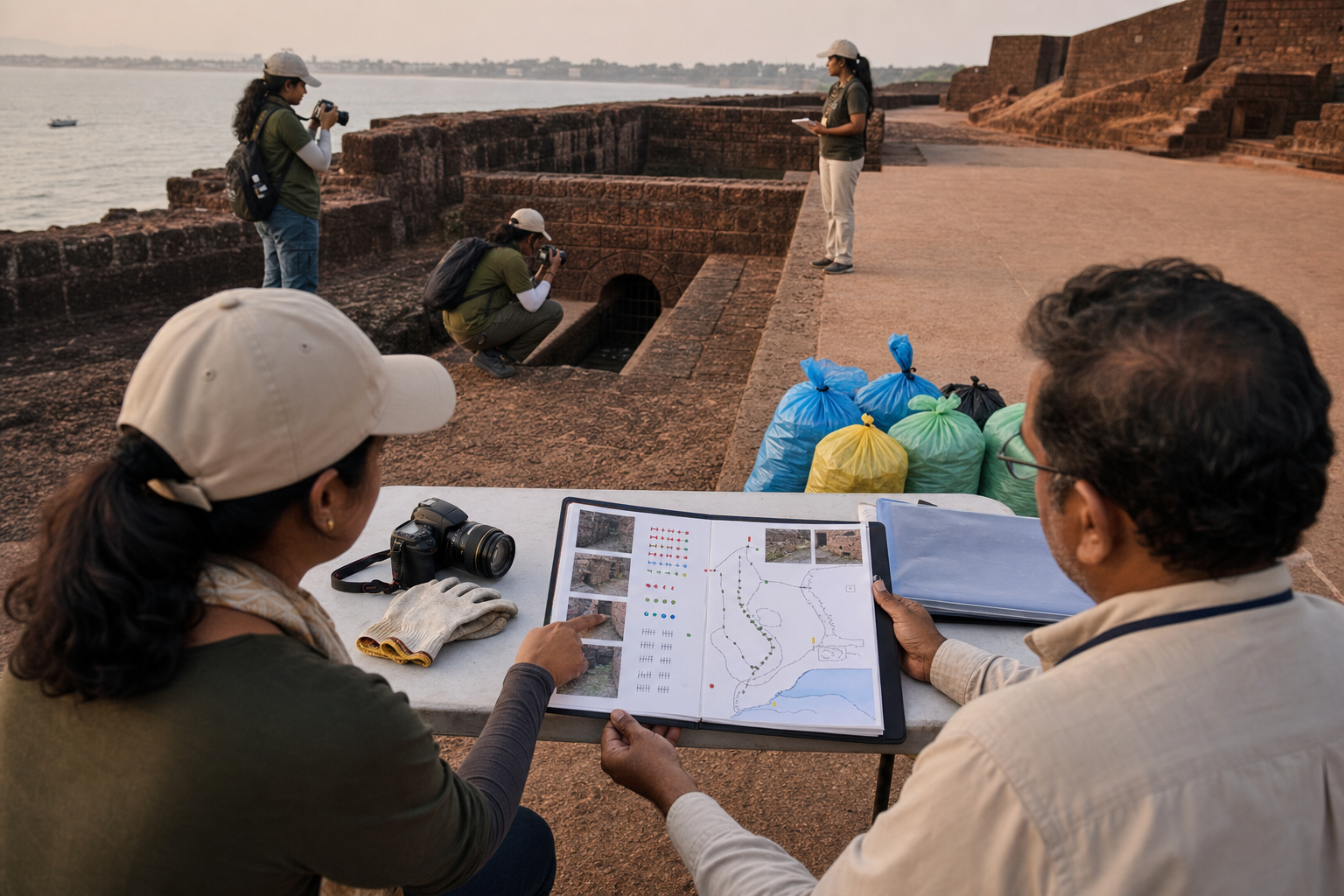
The most valuable record is not the largest group photograph. It is a short field log that helps the next organiser and the site manager make a better decision. Use the same format after every approved activity so patterns become visible.
- Date, work period, authorised area, team leads, and participating headcount.
- Routes completed and any route left incomplete.
- Waste categories collected and the method actually used to measure them. If you counted bags, report bags; do not present an estimated weight as a measurement.
- Recurring litter locations described with stable landmarks rather than vague labels such as near the wall.
- Condition concerns, with photograph identifiers where photography was permitted.
- Areas avoided for safety or conservation reasons.
- Questions visitors repeatedly asked or instructions they commonly misunderstood.
- Waste recipient, handoff time, and any material that was refused or required separate handling.
- Actions requested from the site manager and the person responsible for following up.
Take before-and-after photographs from the same safe, permitted position when possible. Keep the framing on the condition you are documenting. This makes the record useful without turning conservation into a contest for dramatic images.
After the activity, review the log through four levels of impact:
- Immediate hygiene: Was loose waste removed from every approved route and transferred properly?
- Visitor conduct: Which instructions were understood, and where did confusion persist?
- Preventive attention: Were recurring hotspots or possible threats recorded clearly enough for someone else to locate them?
- Management follow-through: Did observations reach a named recipient, and which questions remain open?
Let that evidence determine the next action. If litter repeatedly returns to one visitor area, focus education and authorised collection support there. If disposal repeatedly fails at the same handoff, solve that agreement before recruiting another large group. If a condition concern remains unresolved, follow up through the proper channel rather than attempting a volunteer repair.
A repeated programme should also preserve continuity. Store the permission record, route map, safety briefing, field logs, and contact list where the next coordinator can find them. The organiser may change; the duty of care should not.
Key takeaways
- Cleaning is a valid conservation contribution when volunteers remain in approved visitor areas and leave historic fabric untouched.
- Confirm the waste handoff before the drive. Collection without removal merely relocates the problem.
- Divide volunteers by responsibility: site liaison, pickup, segregation, visitor guidance, recording, and safety.
- Use Chhatrapati Shivaji Maharaj’s legacy to encourage respectful conduct, but translate reverence into clear actions rather than ceremonial language alone.
- Document recurring litter and condition concerns without diagnosing or repairing them.
- Judge success by what remains after the volunteers leave: a clean route, a completed disposal handoff, a usable record, and a stronger visitor norm.
Your next step can be modest and concrete. Contact the responsible site manager with a one-page proposal containing the proposed work area, volunteer roles, permitted tools, safety boundary, segregation method, disposal recipient, and reporting plan. If those seven items are settled, your seva can help Sindhudurg without asking the monument to bear the cost of your enthusiasm.
References
