
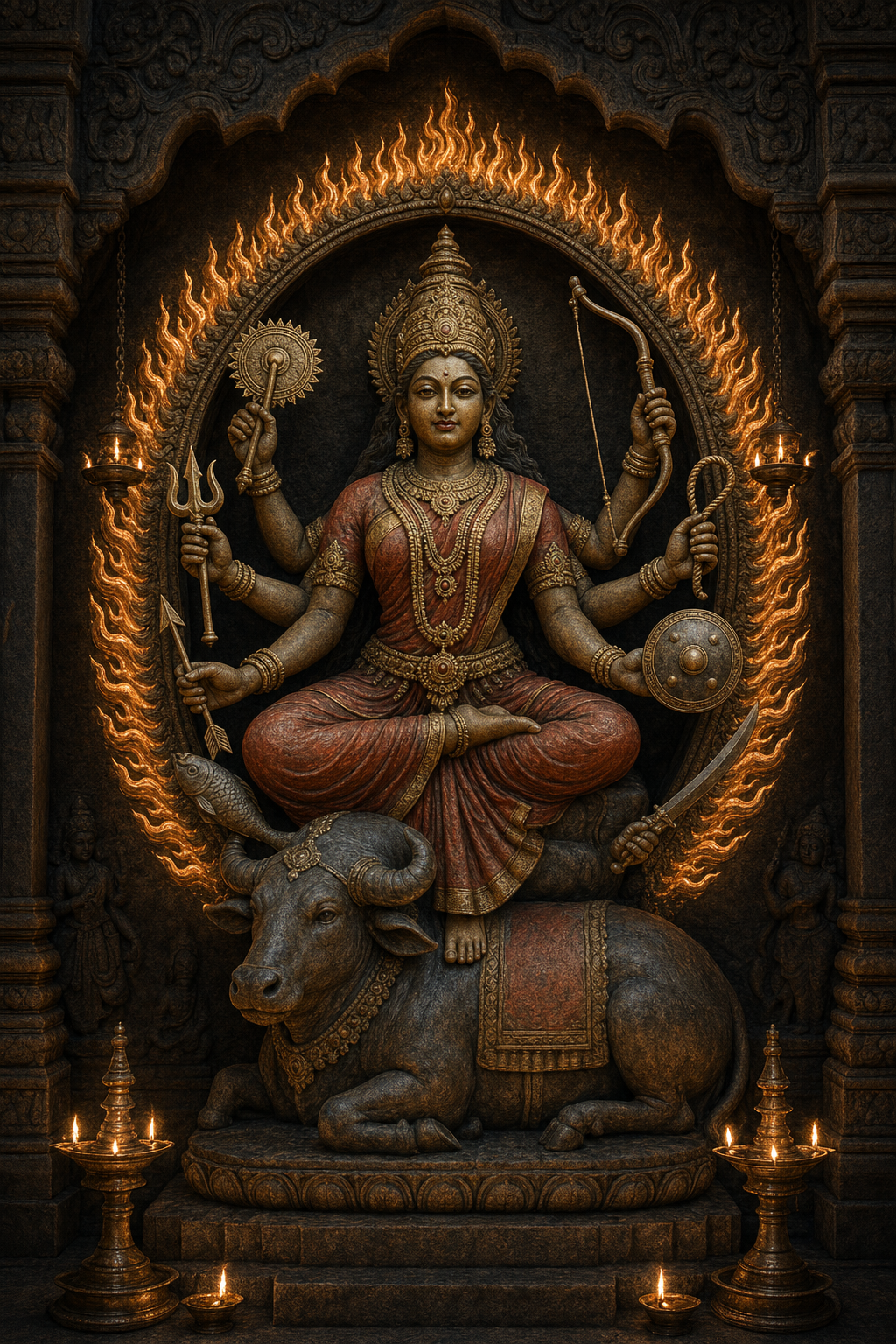
Jwalamalini Devi is best approached by asking what fire does within her image. It is simultaneously an adornment, a field of sacred presence and a sign of the power that protects by transforming.
The supplied DharmaRenaissance account brings together theology, devotional psychology and sculptural analysis. Read critically, these perspectives clarify both the significance of the flame-garlanded form and the limits of identifying a deity from flames alone.
The flame is a theology, not a backdrop
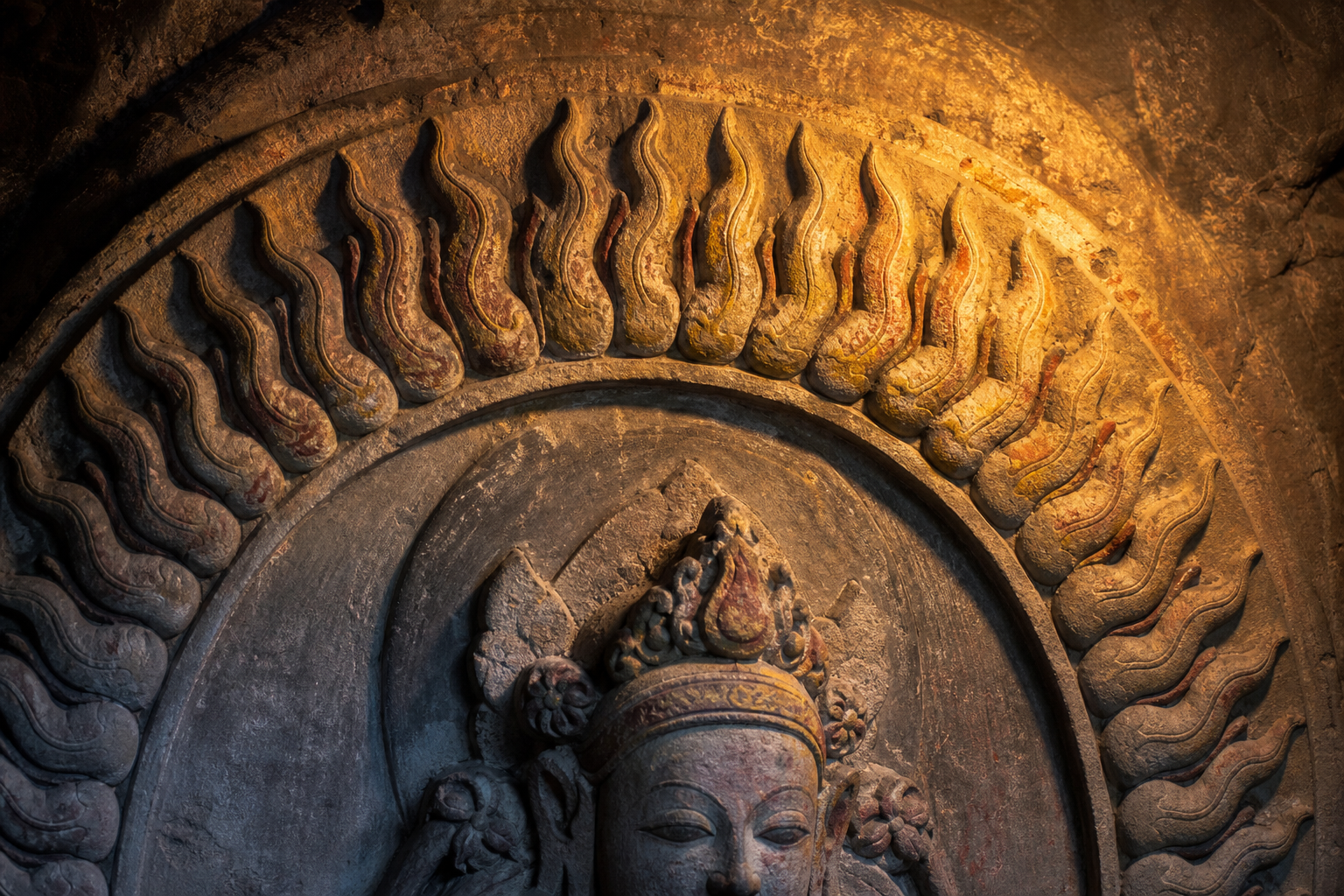
The source begins with the name: jwala means flame, while malini denotes one who is garlanded. This makes fire central to Jwalamalini’s identity rather than a decorative effect placed around an otherwise complete figure. The image presents a goddess whose presence is constituted by radiance and transformative energy.
A garland ordinarily conveys honor, beauty and consecration. Replacing flowers with flames changes the meaning without discarding those associations. Fire becomes an ornament, but the ornament also declares what the deity does: reveal, purify, protect and move existence from one condition to another. The source similarly connects the motif with tapas, or disciplined inner heat, making the surrounding blaze relevant to the aspirant’s transformation as well as the goddess’s power.
The same flame can carry different nuances according to its position. Around the head, it may be read in relation to a crown and therefore to sovereignty. Behind the body, it can form an aureole of sacred radiance. Encircling the figure, it resembles both a garland and a protective boundary. These possibilities belong to one visual argument: Jwalamalini does not borrow power from an external source but manifests Shakti as luminous agency.
The source situates this imagery within a broader ritual understanding of Agni as purifier, witness and carrier of offerings. That context helps explain why fire need not signify uncontrolled destruction. A sacred flame can consume impurity while illuminating, sustaining ritual and mediating between worshipper and divine presence.
How still material becomes living energy
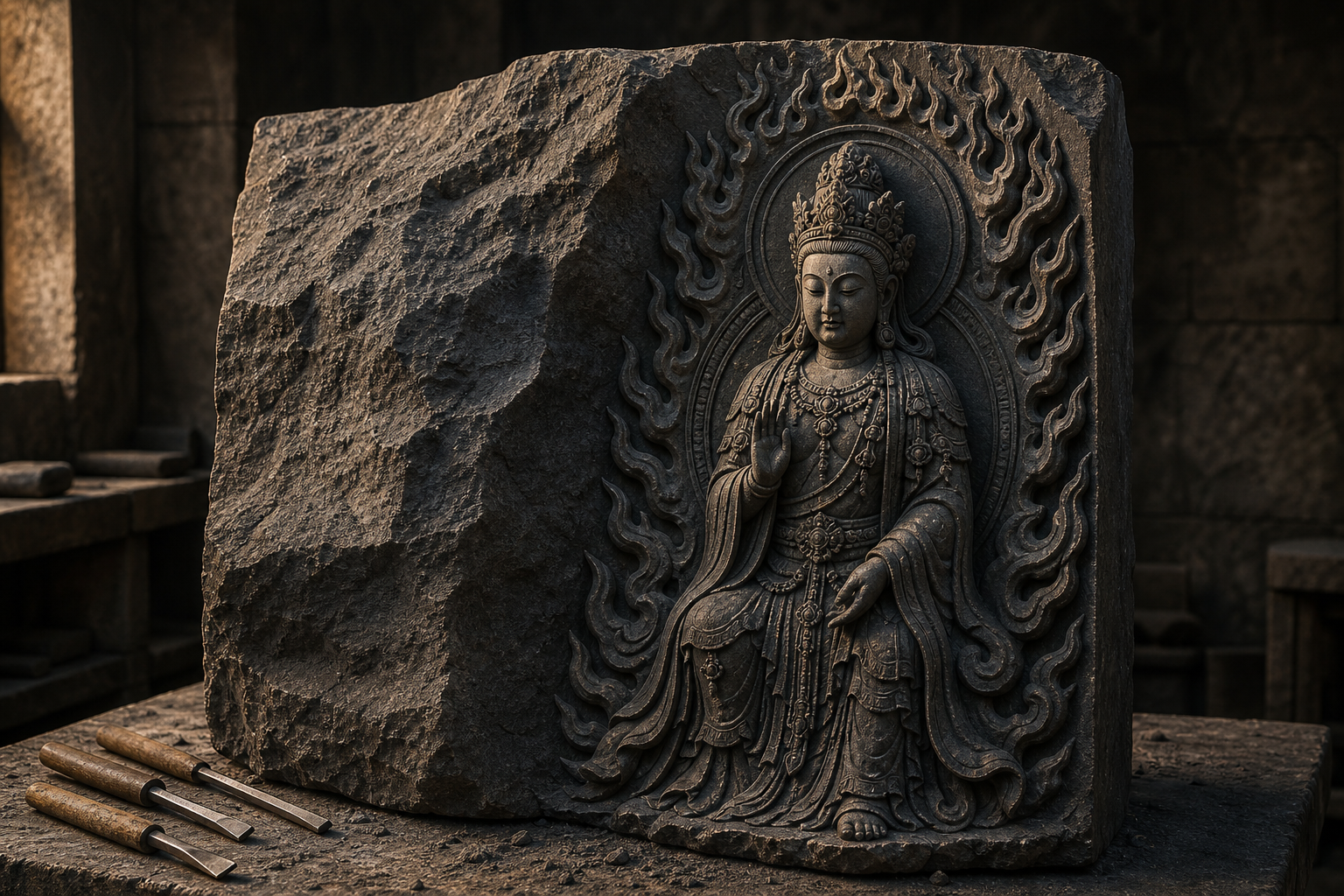
Jwalamalini’s iconography poses a technical problem for the artist: stone, metal, wood or pigment must suggest heat and motion. According to the source, repeated curves and rhythmically arranged flame forms can make an immobile image appear to pulse or rise. The treatment of the motif may vary with artistic school, region, period and material, while its basic function remains the communication of purifying and protective energy.
This observation offers a practical way to read such an image. Attention should move from the individual flame to the pattern created by the whole ensemble. Direction, repetition and the relationship between the fiery border and the central figure determine whether the composition feels contained, radiant or dynamically expansive. Formal analysis and theological interpretation therefore reinforce one another: the sculptural rhythm makes transformation perceptible, while the religious symbolism explains why that movement matters.
Care is nevertheless required when assigning attributes. The source places multiple arms, weapons, dynamic postures and intense expressions within the wider vocabulary of fierce Goddess traditions, where they can signify capacities beyond human limitation and opposition to adharma. It does not establish that every representation of Jwalamalini contains all of these features. They are comparative clues, not a universal checklist.
Nor is a flaming aureole by itself a conclusive label. The source notes that halos, fiery arches and luminous crowns occur across Hindu, Buddhist and Jain sacred art. Flame can support an identification of Jwalamalini, especially when it behaves like her defining garland, but the wider visual and devotional context must govern the final reading.
Fierceness as protection and disciplined transformation
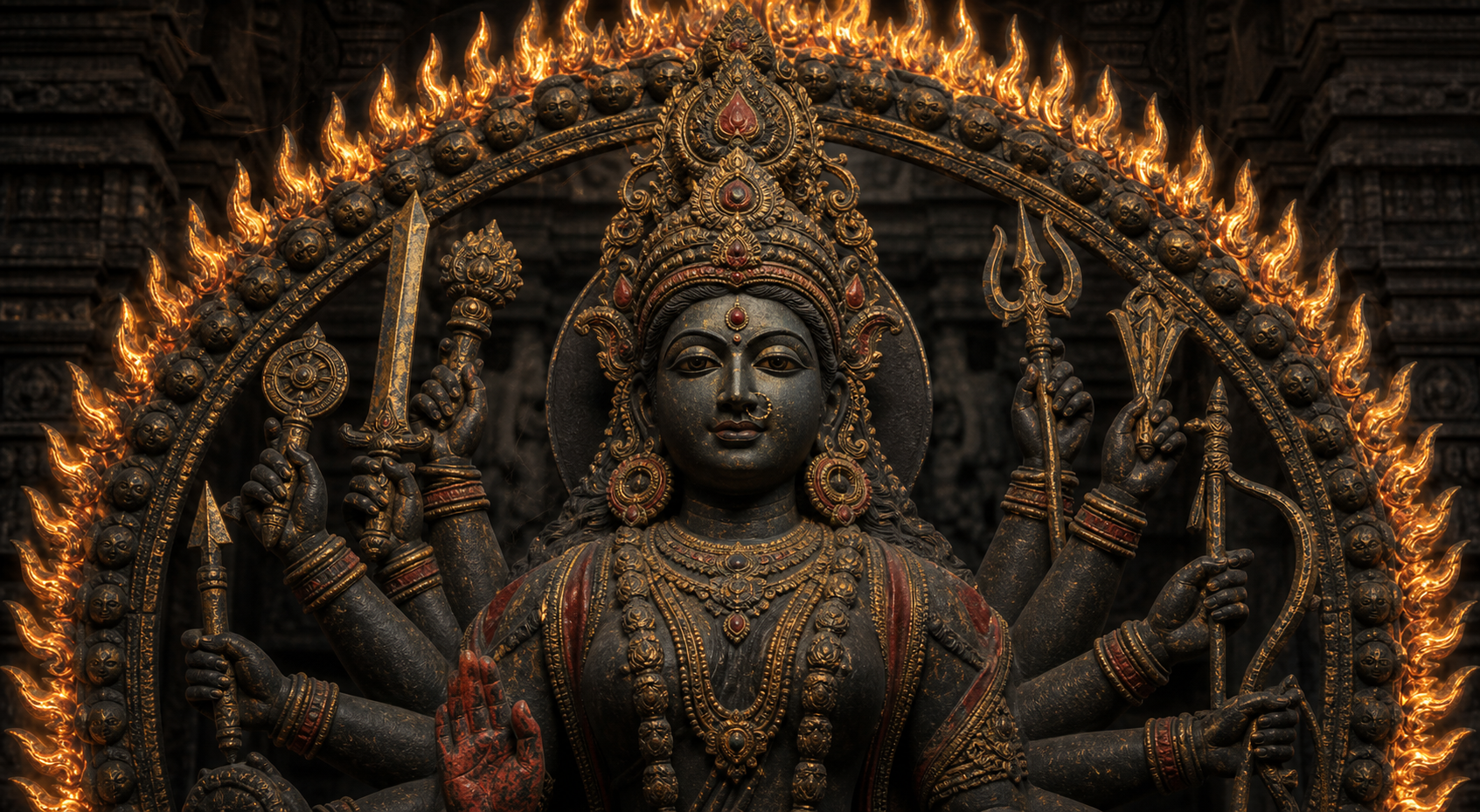
A fiery appearance can be misread if fierceness is equated automatically with cruelty or rage. The source instead interprets Jwalamalini through the idea of fierce grace: compassion may guard, discipline and remove danger rather than offer reassurance alone. On this reading, her flames do not glorify violence. They visualize the intensity required to confront fear, attachment, pride, ignorance and forces that disturb dharma.
This interpretation also expands the meaning of divine motherhood. A maternal deity may nourish, but she may also warn and defend. Jwalamalini’s protective character joins these functions by making fire a boundary against harm and a refining force within the devotee. Outer protection and inner discipline are thus not competing explanations of the image; they are two expressions of the same transformative power.
The symbolism depends upon fire’s double capacity. It can consume, yet it can also provide light, prepare food, sanctify a vow and mark ritual presence. Jwalamalini’s iconography holds these capacities together. The blaze is formidable because transformation is demanding, but it remains oriented toward purification, guidance and protection rather than destruction for its own sake.
A shared Indic symbol does not mean a shared theology
The source also reports that Jvalamalini appears in Jain tradition as a protective yakshi, especially in Digambara Jain contexts. This is important for iconographic study because it places the flame-garlanded feminine figure within more than one religious framework. It also creates a risk: visual resemblance can tempt an observer to collapse distinct traditions into a single theology.
A more careful reading recognizes a shared Indic vocabulary without assuming doctrinal identity. Fire, radiance, discipline and protection can travel across artistic worlds while being interpreted according to different metaphysical commitments and ritual purposes. In Hindu Shakti theology, Jwalamalini can be understood through the Goddess as animating power. A Jain protective figure must be interpreted within Jain devotional and ritual structures rather than treated as merely another name for a Hindu form.
The distinction improves comparative study. Similar motifs reveal cultural conversation and common artistic resources; differences reveal how communities make those resources their own. Iconographic comparison is most useful when it preserves both dimensions.
Key takeaways
- Jwalamalini’s flames are identity-bearing symbols of radiance, purification, protection and transformation, not merely a dramatic background.
- The crown, garland and aureole readings overlap but emphasize different ideas: sovereignty, consecrated adornment and sacred presence.
- Weapons, multiple arms and intense expressions belong to a broader fierce-deity vocabulary and should not be presumed in every Jwalamalini image.
- A flaming halo is not sufficient for definitive identification because related motifs occur across several Indic traditions.
- Hindu and Jain appearances of the flame-garlanded feminine figure can be compared without treating their theological settings as interchangeable.
Further study can deepen this reading by bringing particular images, their materials and their living ritual settings into conversation. That approach would show not only what the flames symbolize in principle, but how individual communities make their heat, protection and presence meaningful.