
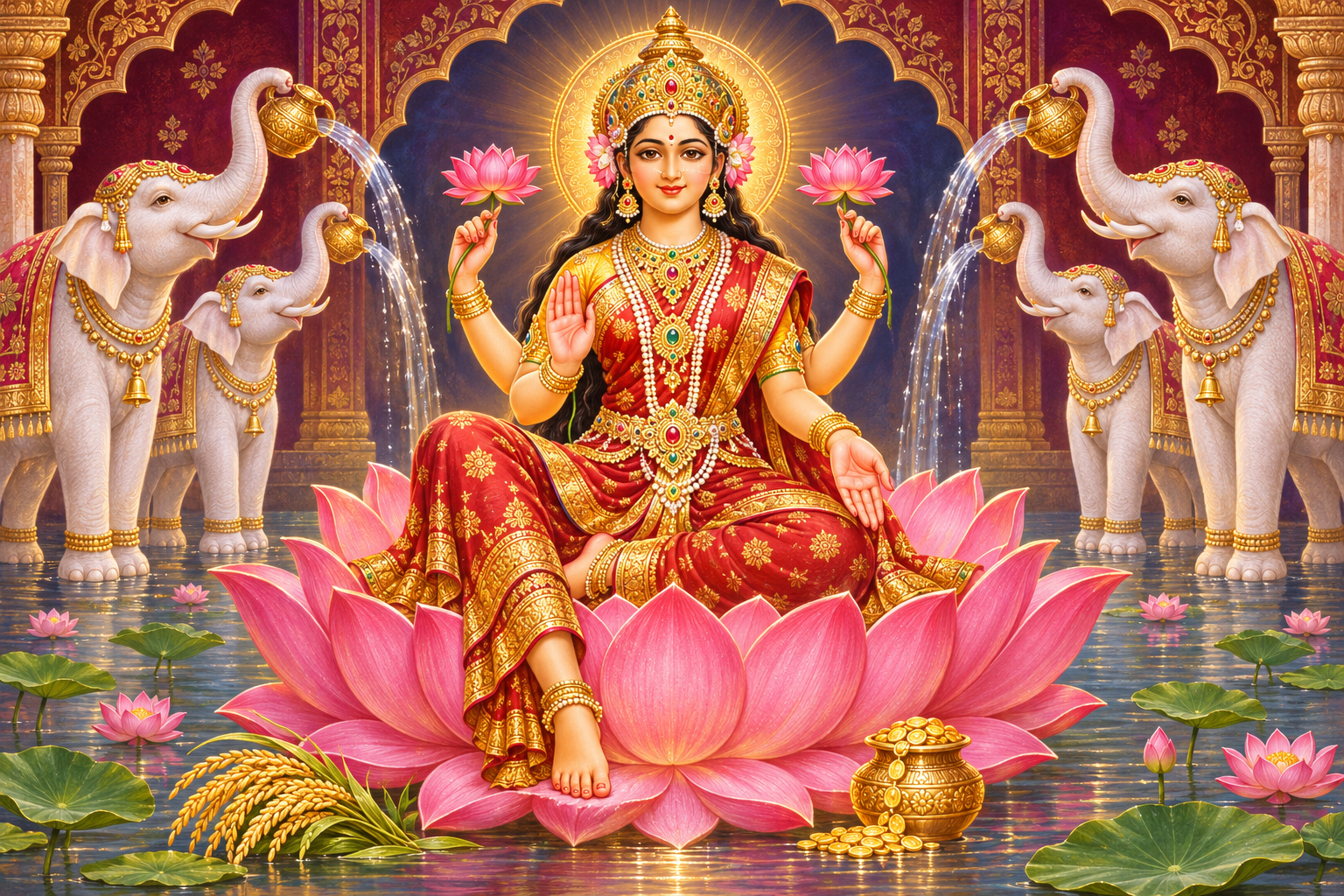
If you are looking at an image identified as Kamala Devi and wondering whether you are really seeing Lakshmi, the answer is not a simple either-or. The resemblance matters, but so do the name, the surrounding figures, the devotional setting and the image’s place within the Mahavidya tradition.
Kamala, also known as Kamalatmika, is the tenth and concluding form among the ten Mahavidyas. She is closely associated with Devi Lakshmi and with prosperity, abundance and grace. Once you understand that relationship, her iconography becomes easier to read without either collapsing her into a generic Lakshmi image or exaggerating the differences between them.
Identify Kamala by context before counting symbols
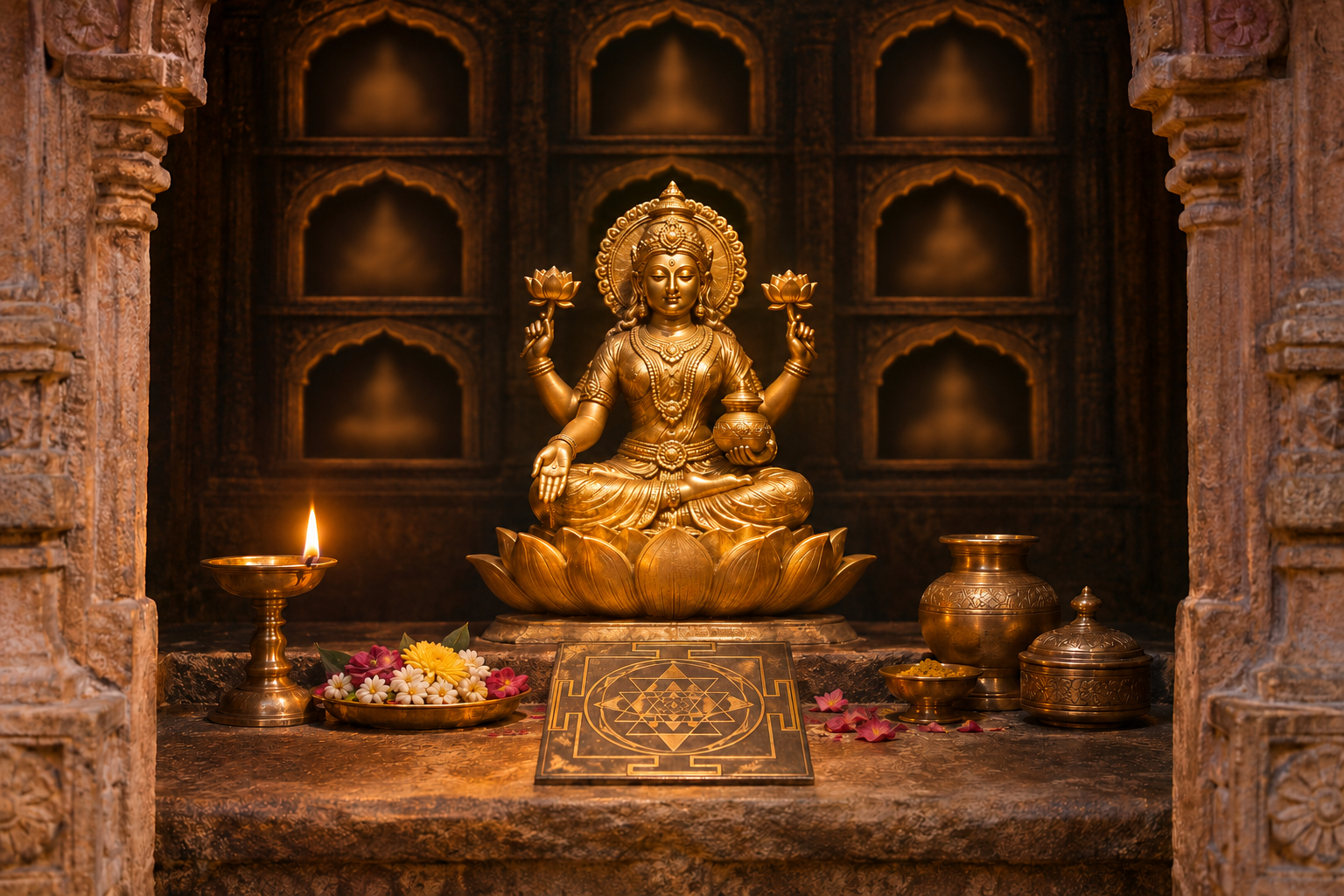
Iconography is a visual grammar. A deity is identified through a combination of name, attributes, posture, gestures, attendants, setting and ritual context. No single feature should carry more weight than the whole composition can support.
For Kamala, begin with the information closest to the image rather than with a memorised checklist:
- Read the caption, inscription or temple label. “Kamala” and “Kamalatmika” directly identify the Mahavidya form.
- Ask whether the image belongs to a group of ten Mahavidyas. A series context is stronger evidence than a general resemblance to another goddess.
- Look for the lotus and note how it structures the composition. It may identify the divine field more reliably than a decorative detail at the edge of the image.
- Notice the overall devotional register. Kamala occupies a place of great auspiciousness within the Mahavidya group.
- Keep the final identification proportional to the evidence. An isolated, unlabelled image may justify “possibly Kamala” rather than a categorical attribution.
Kamala’s position as the tenth and concluding Mahavidya is a theological classification. It does not require every painted set, shrine or printed diagram to place her physically at the end of a row. Use the complete context, not location alone.
Read the lotus together with auspiciousness and abundance
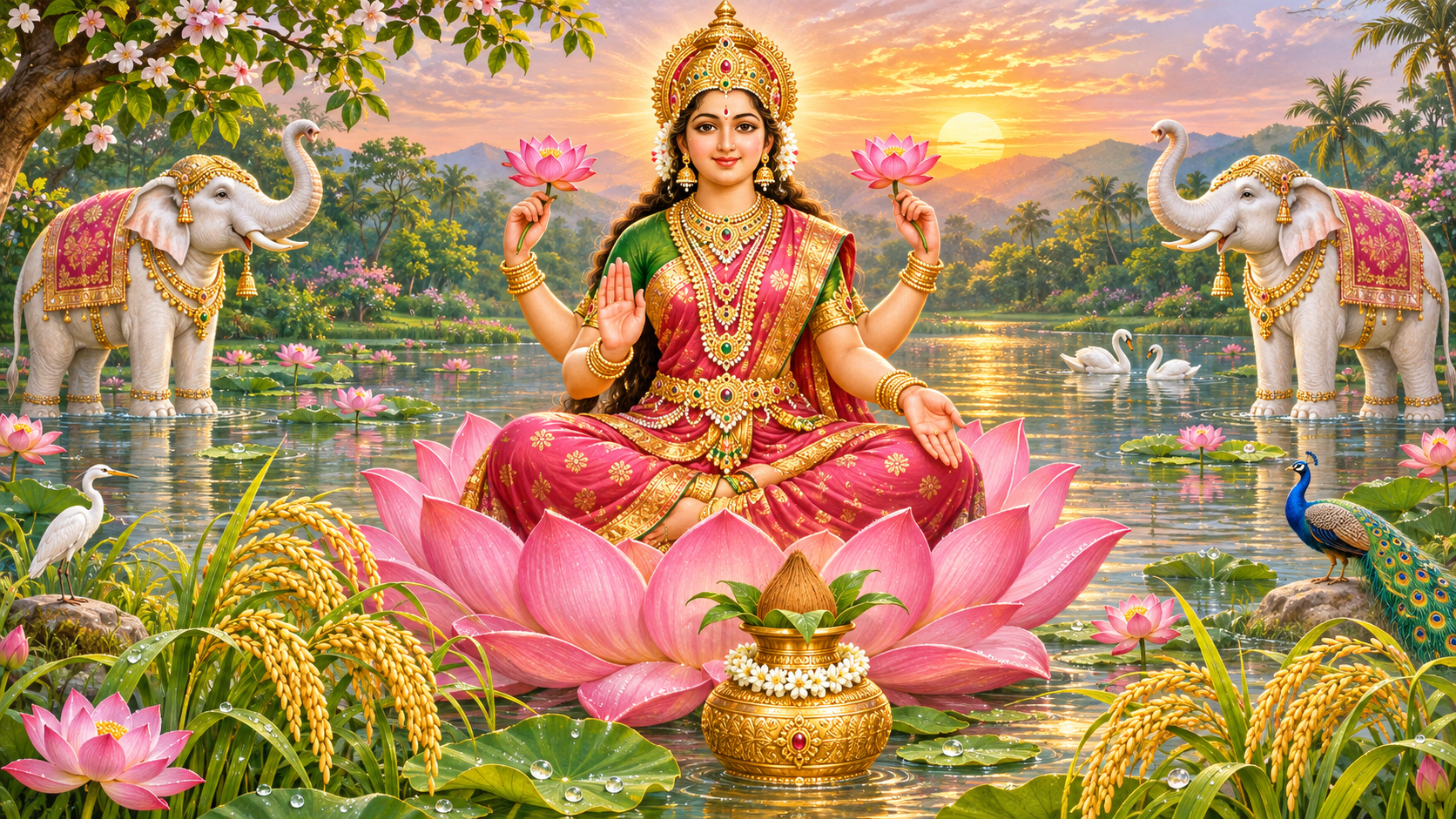
The lotus is central to Kamala’s identity, not merely an attractive ornament. Yet “there is a lotus” is only the beginning of an interpretation. You still need to ask what the lotus is doing within the image.
- Is the lotus the goddess’s support, an emblem associated with her, a repeated visual motif or part of the surrounding sacred space?
- Does the composition make the lotus visually central, or is it incidental decoration added by the artist?
- Do the name and Mahavidya context reinforce the lotus identification?
- Does the image communicate an auspicious presence consistent with prosperity, abundance and grace?
These questions prevent two opposite errors. The first is treating every lotus as proof of Kamala. The second is noticing her Mahavidya identity while ignoring the lotus-centred, auspicious field that distinguishes her within that group.
Prosperity should not be reduced to cash or acquisition. Kamala’s association joins prosperity with abundance and grace. That wider cluster invites you to read the image in terms of flourishing, sufficiency, generosity, beauty and benevolent presence, while remembering that a particular community may give those ideas a more precise ritual or theological meaning.
Colour can contribute to the effect of an image, but it is weak evidence when separated from local convention. Paint fades, regional styles vary and modern prints may alter a palette. Do not build an identification on colour when the caption, series context and central symbols point elsewhere.
Distinguish Kamala from Lakshmi without creating a false divide
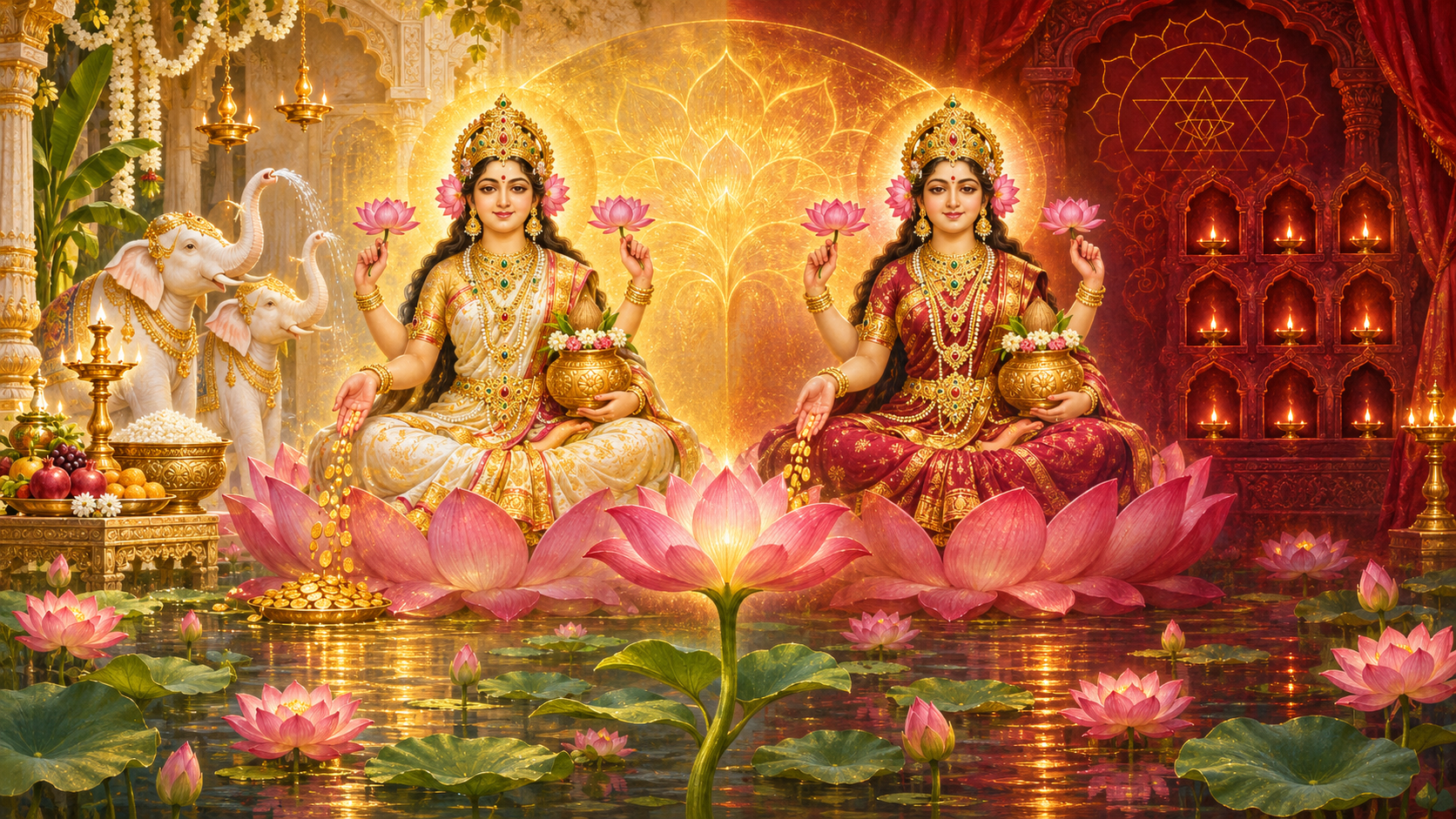
Kamala is closely associated with Devi Lakshmi, the embodiment of prosperity, abundance and grace. Visual and theological overlap is therefore expected. Resemblance is not evidence of careless copying, but neither does it permit you to relabel every Lakshmi image as Kamala.
| Evidence in front of you | Most defensible reading | Why |
|---|---|---|
| The name Kamala or Kamalatmika appears with the image | Identify her as the Mahavidya Kamala | The explicit name carries more weight than general resemblance |
| The image belongs to a clearly identified group of ten Mahavidyas | Read it within the Mahavidya framework | The series supplies the theological context |
| The image is independently labelled Lakshmi | Keep the identification as Lakshmi | Close association does not erase the image’s own stated identity |
| An isolated, unlabelled auspicious goddess appears with lotus imagery | Leave the identification open | The shared visual field is not enough to decide between closely related forms |
This distinction is especially important when you are cataloguing a print, writing a museum label, describing a family image or teaching from an illustration. “Kamala, the Lakshmi-associated Mahavidya” preserves both relationship and context. “This is definitely Kamala because it has a lotus” claims more than the symbol alone can prove.
If an inherited object has no documentation, record what you can actually observe before assigning a name. Note any inscription, the number and arrangement of surrounding figures, the central symbols and the object’s known devotional setting. Provenance may settle an identification that appearance alone cannot.
Use a repeatable method and avoid the common misreadings
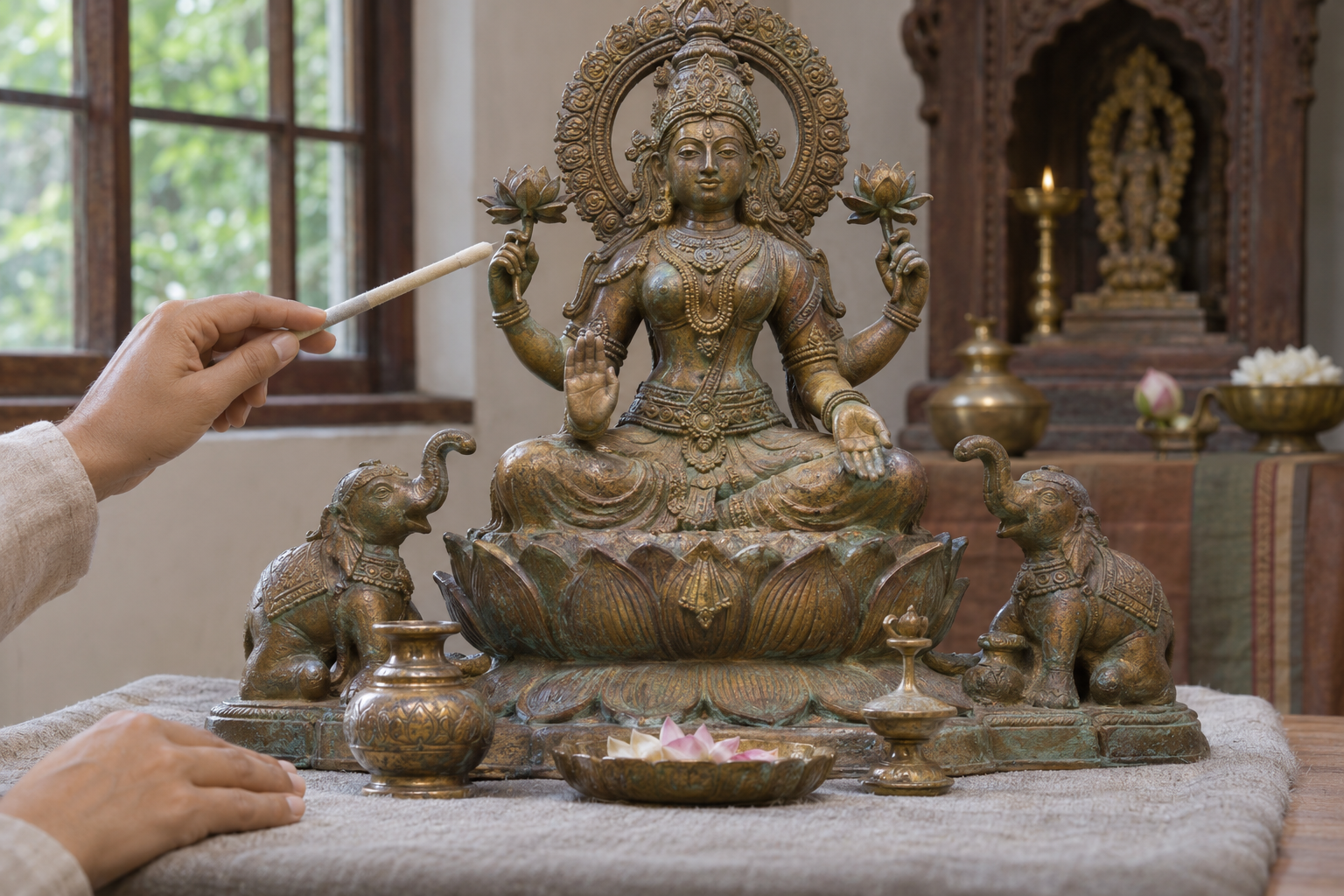
A five-question reading method
- Who is named? Begin with the inscription, caption or established ritual name.
- What is the larger program? Determine whether the image stands alone or belongs to a Dasa Mahavidya group.
- How does the lotus function? Describe its position and prominence before interpreting it.
- What qualities organise the image? For Kamala, look for a coherent field of auspiciousness, prosperity, abundance and grace rather than expecting every Mahavidya to communicate the same mood.
- How confident can you be? Use “identified as,” “probably” or “possibly” when the available evidence calls for qualification.
This method separates observation from interpretation. “A lotus is central to the composition” is an observation. “The figure must therefore be Kamala” is an attribution that still needs support from a name or Mahavidya context.
Four mistakes that distort the image
- Collapsing Kamala into generic Lakshmi imagery. Their close association is essential, but Kamala’s identity as the concluding Mahavidya gives the image a specific Shakta frame.
- Assuming every Mahavidya must appear fearsome. Kamala’s great auspiciousness shows why the ten forms should not be forced into one emotional or visual template.
- Reducing prosperity to personal wealth. Read prosperity beside abundance and grace, not as a detached promise of money.
- Filling gaps with remembered details. When an image is damaged, cropped or unlabelled, describe what remains and preserve uncertainty instead of reconstructing an identity from expectation.
That last point matters because devotional art is not manufactured from one universal template. A regional artist, temple tradition or modern publisher may emphasise different parts of the iconographic vocabulary. Variation does not make the image meaningless; it makes context indispensable.
Key takeaways
- Kamala, or Kamalatmika, is the tenth and concluding Mahavidya in the Shakta group of ten.
- Her close association with Devi Lakshmi explains the shared field of prosperity, abundance, grace and lotus imagery.
- A lotus supports an identification but does not settle it by itself.
- A caption, inscription or clear Mahavidya-series context is stronger than general visual resemblance.
- Kamala’s auspicious character corrects the assumption that all Mahavidyas must be interpreted through a uniformly fearsome visual mood.
- When the evidence is incomplete, a qualified identification is more accurate than a confident guess.
The next time you encounter Kamala Devi, write down four things before reaching a conclusion: the given name, the larger context, the function of the lotus and your level of confidence. That small discipline will help you see both her kinship with Lakshmi and her distinct place within the Mahavidya tradition.
References

Leave a Reply
You must be logged in to post a comment.