
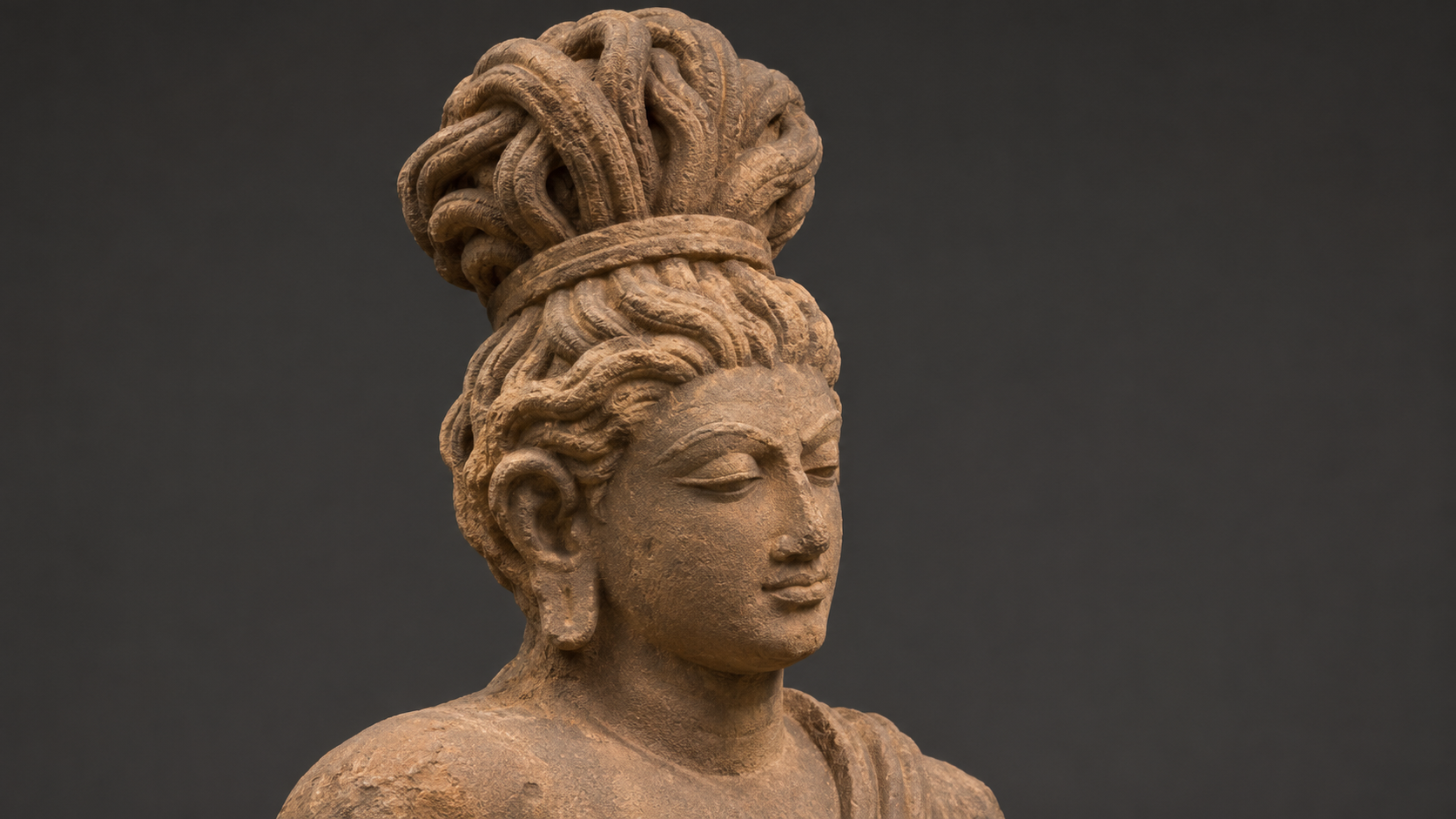
You are looking at a Hindu sculpture whose hair rises in a dense, deliberate arrangement. The museum label may call it jata-bandha, or it may say nothing about the hair at all. Before treating the coiffure as decoration, pause over the action represented in it: the locks have been gathered and held.
That observation gives you a reliable starting point. It lets you recognize the form, understand its spiritual force without reducing it to a slogan, and avoid identifying an image from one feature alone.
Begin with the binding, not the deity’s identity
Jata-bandha names a particular arrangement in which matted locks, or jatas, are gathered and fastened into a controlled form. The second part of the term, bandha, means binding or fastening. The name therefore describes what has been done to the hair, not merely its height, size, or ornamental richness.
This distinction matters. Matted hair and bound matted hair are not interchangeable descriptions. The first tells you about the character of the locks; the second adds an organizing action. To call a feature jata-bandha, you should be able to recognize both elements: the hair is treated as locks, and those locks have been brought together under restraint.
Do not begin by deciding who the figure must be and then forcing the hair to support that answer. Begin with what the sculptor has made visible. Iconographic reading is more dependable when description comes before identification.
Read the sculpted hair in four passes
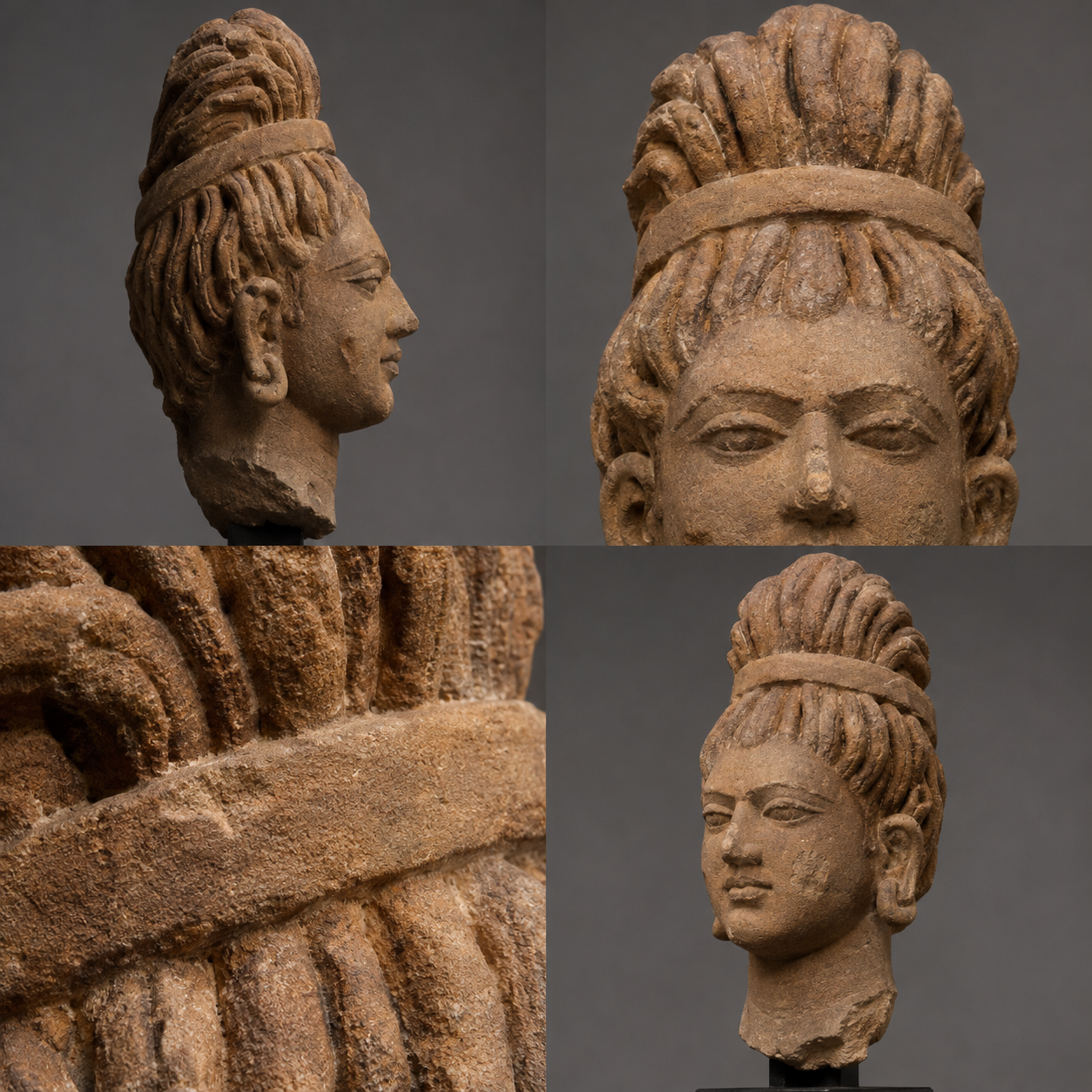
You do not need specialist equipment to make a careful first reading. Move from the individual locks to the complete arrangement:
- Look for locks rather than a smooth mass. Ask whether the surface is articulated as separate or grouped strands. A high coiffure by itself is not enough; the defining material is matted hair.
- Trace the direction of the locks. Follow them with your eyes. If they converge toward a common arrangement instead of simply spreading around the head, gathering is part of the design.
- Find the visual evidence of fastening. Look for a point, band, crossing, compression, or change of direction that makes the locks appear secured. You are trying to establish that the hair is bound, not merely piled up.
- Read the silhouette as a whole. Step back and ask whether the final form communicates containment and deliberate order. The details and the overall outline should support the same description.
Condition affects certainty. A broken fastening, worn surface, dark recess, or obstructed rear view can remove precisely the evidence you need. If you can see matted locks but cannot verify their binding, record the narrower observation instead of upgrading it into a firm identification. “Gathered matted locks; fastening unclear” is more useful than a confident label that the surviving sculpture cannot sustain.
Photographs create another trap. Strong frontal lighting can flatten shallow carving, while one camera angle can hide how the locks meet at the back. When possible, inspect the sculpture from more than one side. If you have only an image, separate what is visible from what you are inferring.
The spiritual meaning lies in the tension between jata and bandha
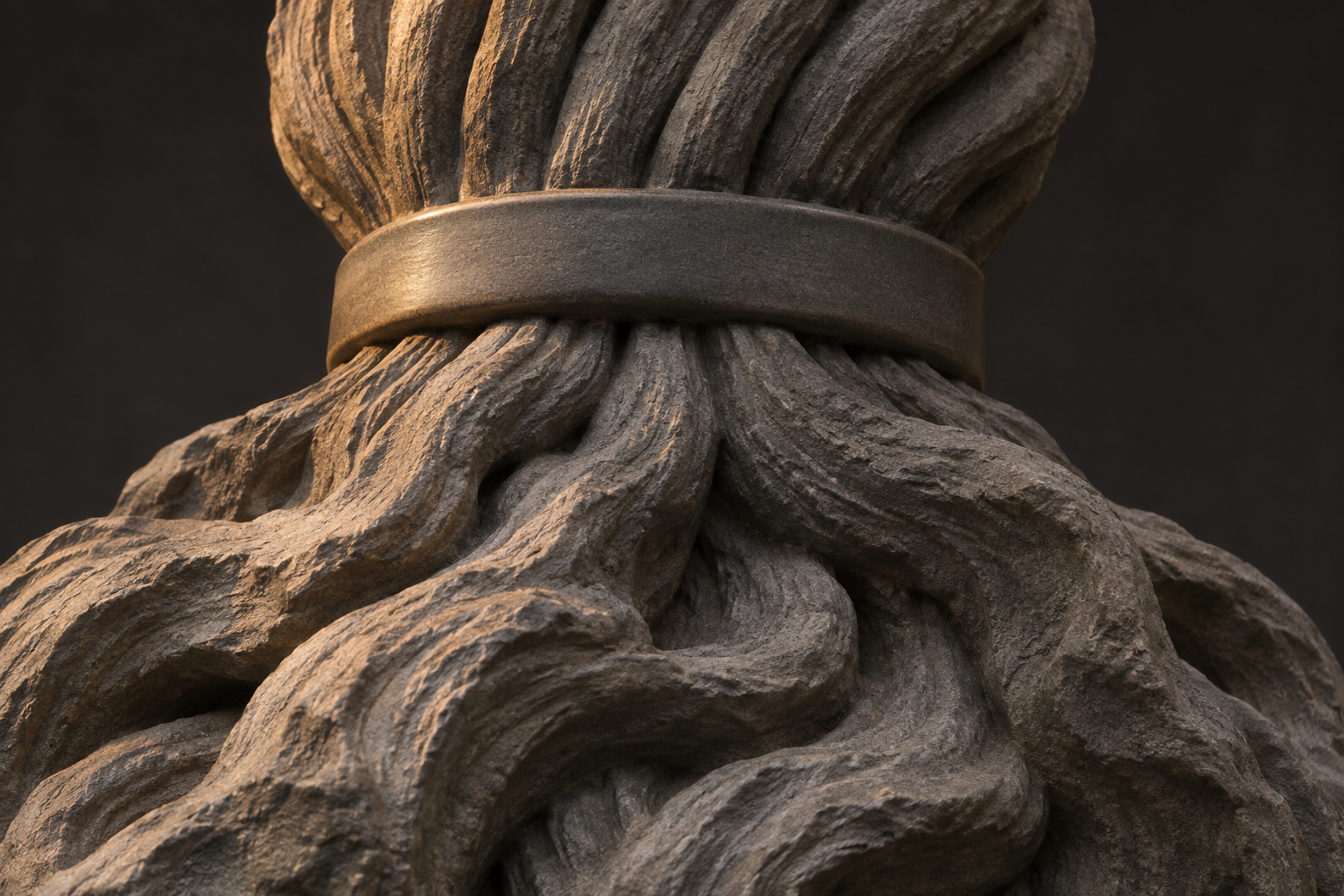
The form’s meaning begins with its visual grammar. Jata preserves the signs of ascetic life: hair has taken the form of matted locks rather than an ordinary, carefully combed coiffure. Bandha introduces direction, restraint, and conscious ordering. Neither half should be allowed to erase the other.
That combination supports a spiritually powerful reading: ascetic force has not disappeared, but it is held in disciplined form. The image does not have to choose between potency and composure. The locks retain their distinct character while participating in an ordered whole. Jata-bandha can therefore make disciplined power visible without suggesting that discipline means weakness or suppression.
Read this as a possibility carried by the form, not as a universal translation mechanically attached to every example. Hindu sacred images work through relationships among posture, gesture, expression, attributes, ornaments, setting, and hair. Jata-bandha contributes to that network. It does not cancel the need to read the rest of the image.
A useful question is not simply, “What does this hairstyle symbolize?” Ask instead, “What kind of presence does the binding of matted locks help create here?” A composed face may make the restraint especially prominent. A forceful bodily stance may bring the contained energy to the foreground. In both cases, you are relating the hair to visible evidence rather than assigning it an isolated dictionary meaning.
Do not make the hair prove more than it can
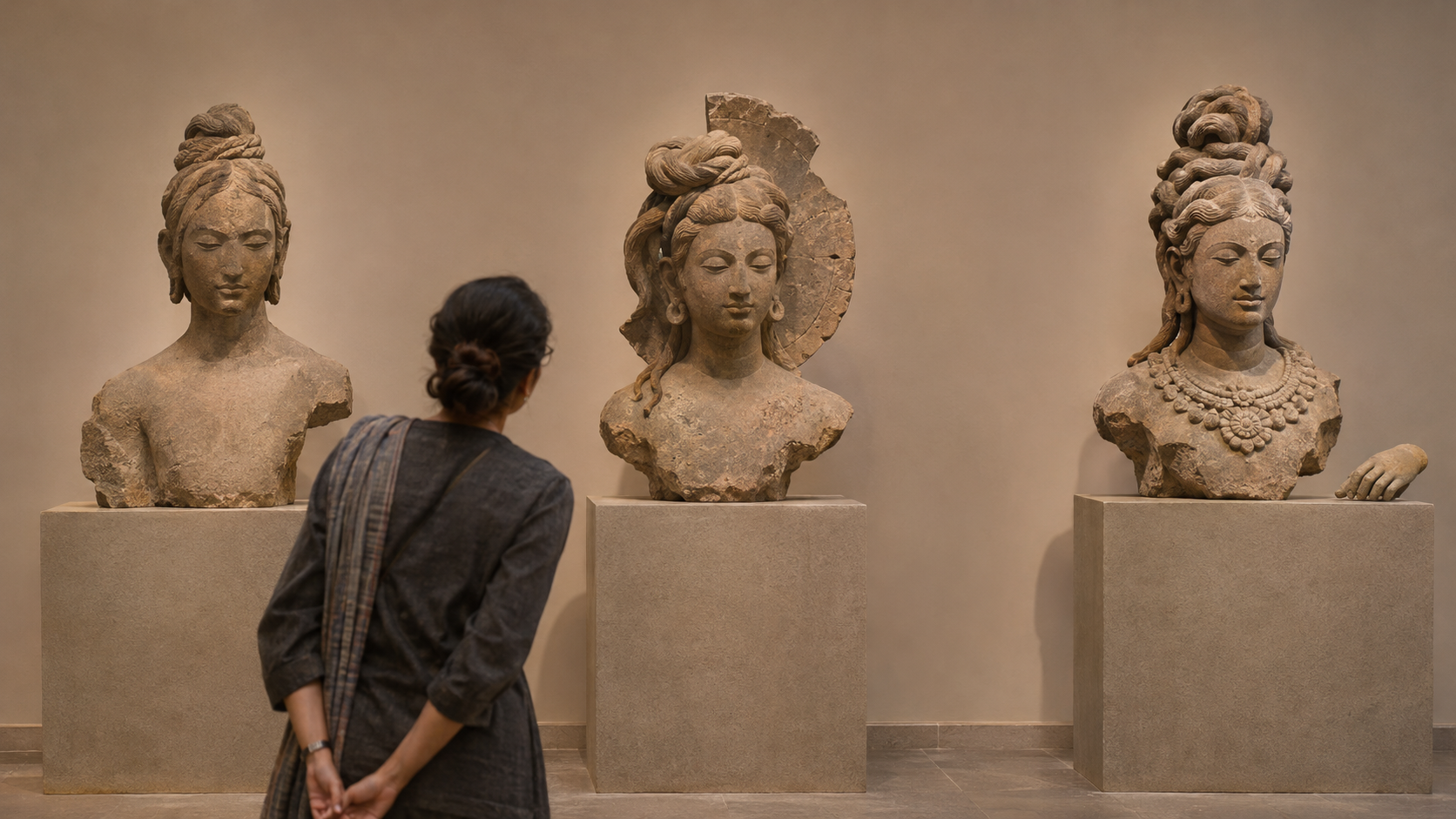
Jata-bandha is an iconographic clue, not a complete identification system. Once you recognize it, resist four common overreaches:
- Do not identify the figure from the coiffure alone. Confirm the reading with attributes, gestures, posture, companions, and the image’s architectural or ritual setting.
- Do not treat every elevated hairstyle as jata-bandha. Height tells you where the hair sits. The term requires matted locks and evidence that they have been bound.
- Do not infer a date, region, or sect from this feature by itself. Those conclusions require comparative and contextual evidence beyond the basic form.
- Do not reduce sacred matted hair to neglect. In the image, the locks are deliberately rendered and deliberately organized. Their formal treatment is part of the religious statement.
You can keep observation and interpretation honest by using a three-level note. First write what is directly visible: “individual matted locks converge above the head.” Then name the form if the evidence permits: “the locks appear fastened in a jata-bandha.” Only after that add an interpretation: “the arrangement may express ascetic potency brought under discipline.” This order makes it clear which part of your reading rests on stone and which part rests on meaning.
The same method helps when a catalogue, guide, or display label uses the term without explanation. Test the label against the sculpture. Can you locate the locks, the gathering, and the fastening? If you can, the Sanskrit name becomes intelligible rather than decorative terminology. If you cannot, uncertainty is the correct result until another view or better documentation supplies the missing evidence.
Key takeaways for your next temple or museum visit
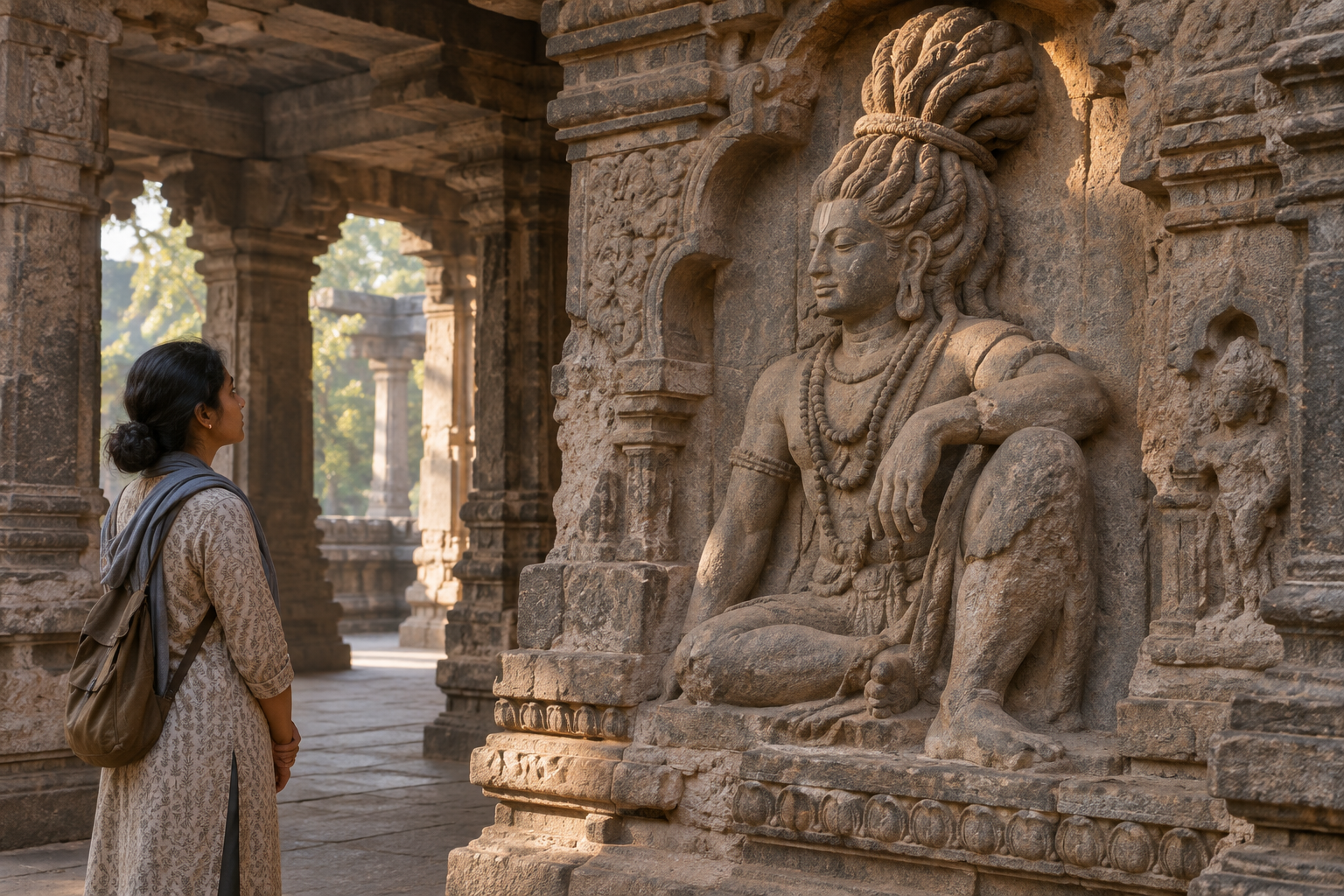
- Jata-bandha is bound matted hair, not a generic name for any tall or elaborate coiffure.
- Confirm three visible features: locks, convergence, and fastening.
- Read its central tension carefully: ascetic character remains present while the locks are brought into deliberate order.
- Use the coiffure as one clue among posture, gesture, attributes, expression, and setting.
- When damage or a limited viewing angle hides the fastening, describe what survives and leave the classification provisional.
The next time you stand before a Hindu sculpture, give the hair thirty quiet seconds before moving to the familiar attributes. Trace the locks, find where they gather, and ask what their restraint contributes to the figure’s presence. That small change in attention can turn an overlooked sculptural detail into a precise encounter with the image’s spiritual intelligence.
References

Leave a Reply
You must be logged in to post a comment.