
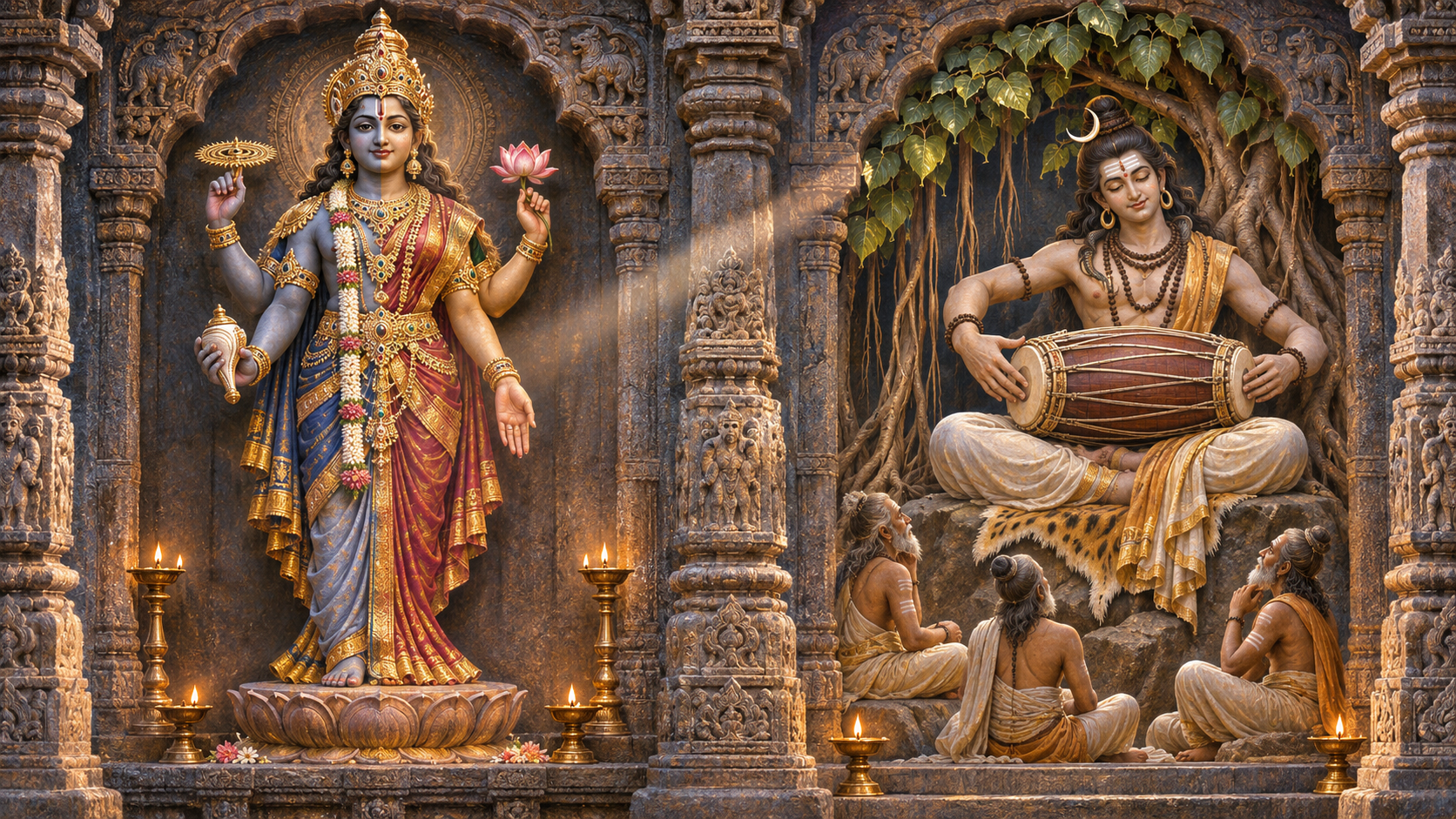
You recognize the deity, yet the image refuses to fit the form you know. Vishnu and Lakshmi occupy one divided body, or Dakshinamurthy plays a mridanga. If you reduce either image to “an unusual version,” you miss the teaching carried by its most unusual feature.
These two forms offer a practical lesson in reading Hindu sacred art. Begin with what the murti visibly does, distinguish identification from interpretation, and verify the local name before filling gaps with a familiar story.
The rare feature is the key, not a decorative exception
Read an unfamiliar image through three layers: structure, action and relationship. Structure asks whether you see one body or several. Action asks whether an object is merely present or is actively being used. Relationship asks whether the divine figures stand beside one another, mirror one another or share a single form.
The decisive feature is often the one your mind initially treats as an odd detail. A shared body communicates something different from two deities standing together. An instrument being played communicates something different from an instrument carried as an emblem. The feature changes the identity and meaning of the whole image.
Describe before you interpret. You might write, “One body appears to contain two divine identities,” or, “The deity is shown actively playing a drum.” That literal sentence gives you something you can check. Beginning with a remembered story encourages you to explain details that may not actually be present.
Damage makes this discipline even more important. If a hand, attribute or side of the body is missing, record it as unknown. Do not mentally restore the image merely because a familiar identification seems likely.
Vaikuntha Kamalaja makes divine partnership bodily
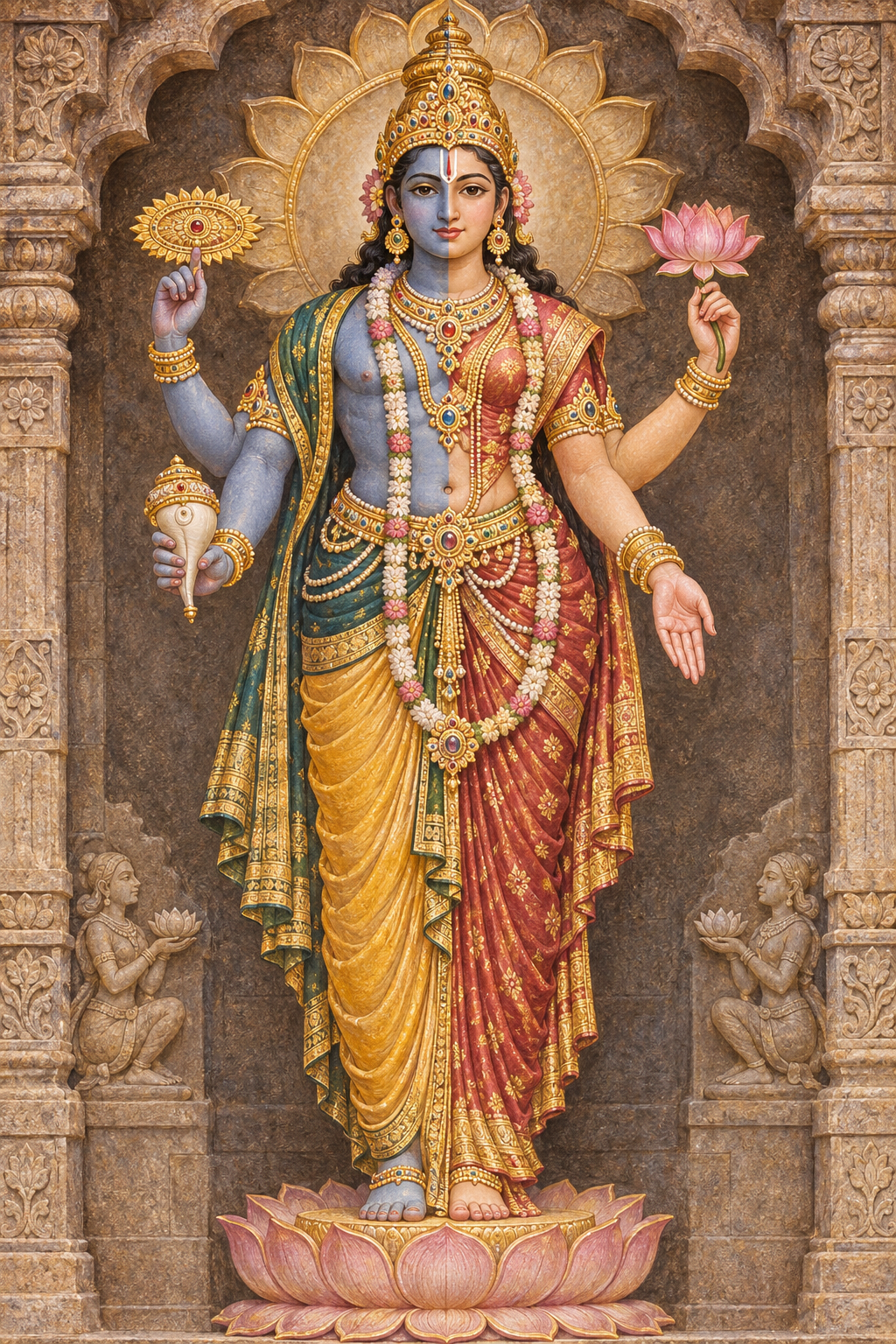
Vaikuntha Kamalaja combines Vishnu and Lakshmi in a divided bodily form and can also be called Lakshmi-Narayana. Its composition is comparable to the better-known Ardhanarishvara form of Shiva and Parvati: one deity shares a portion of the body with the divine consort.
The first identification test is therefore structural. Are you looking at a single integrated body, or at Vishnu and Lakshmi as two adjacent figures? The divine names may be the same in either setting, but the composition is not saying the same thing. In Vaikuntha Kamalaja, bodily integration is the central statement rather than a secondary ornament.
The shared form invites you to hold unity and distinction together. Vishnu is not simply accompanied by Lakshmi, and Lakshmi has not been reduced to an accessory beside him. The image gives their relationship a bodily grammar: distinguishable identities are presented within one form.
Use the comparison with Ardhanarishvara carefully. It helps you recognize the visual method, but it does not make the two forms interchangeable. The deities and devotional settings remain different. “Comparable in composition” is more accurate than calling Vaikuntha Kamalaja another name for Ardhanarishvara.
A caption reading “Lakshmi-Narayana” should prompt closer inspection rather than an immediate conclusion. The name identifies the divine pair; the body tells you how that relationship is being presented. Look for actual bodily division, consult the local identification, and avoid assigning sides or missing attributes when the surviving image does not establish them.
The form is worshipped within some sectarian settings. That distinction matters. Rare does not mean imaginary, merely decorative or spiritually unimportant. It may instead mean that a form belongs to a narrower devotional inheritance than the images most visitors encounter.
Pushkara Dakshinamurthy teaches through performed rhythm
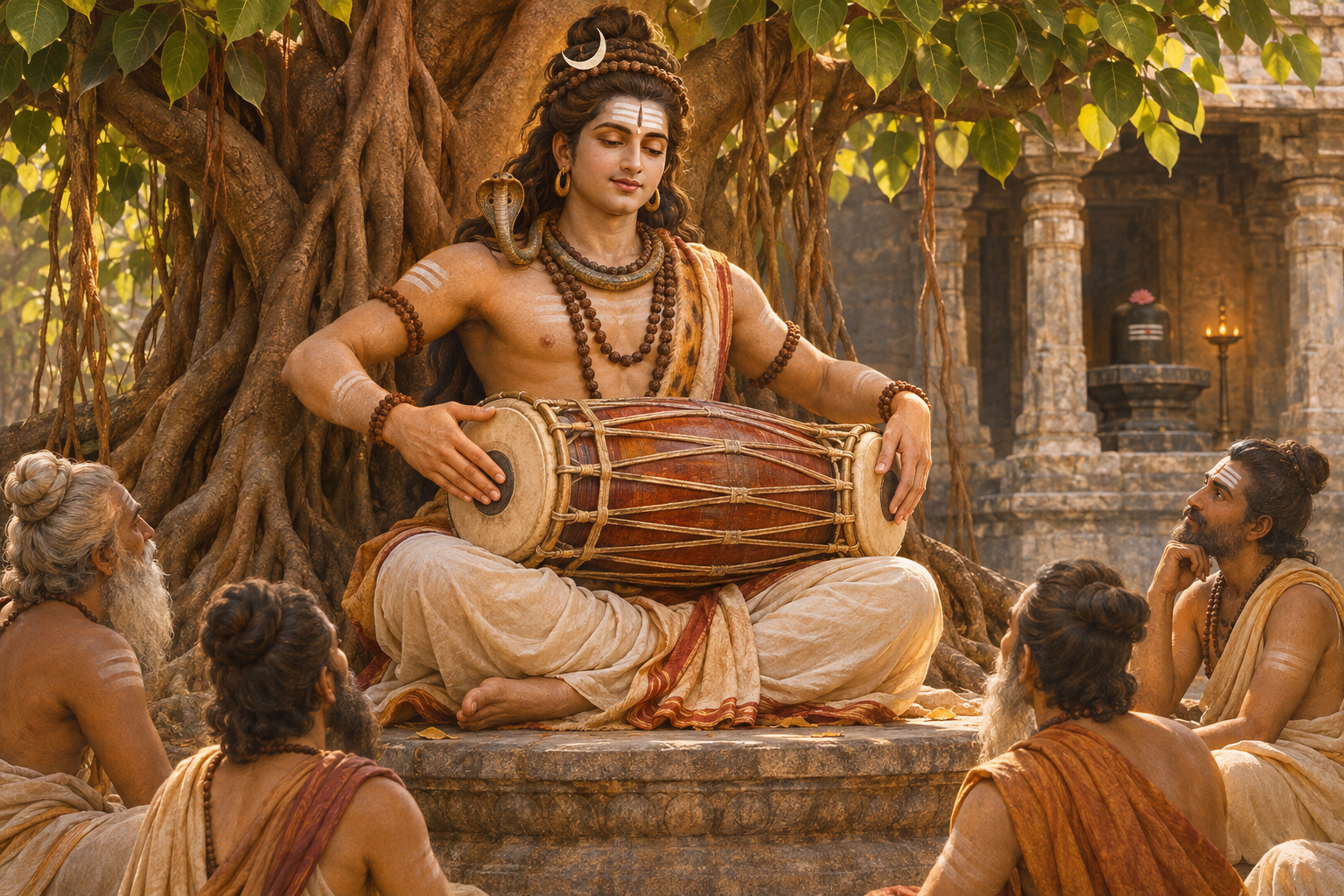
Pushkara Dakshinamurthy is a form of Dakshinamurthy, a manifestation of Shiva, shown playing the mridanga. The verb matters: the instrument is being played. The musical action is the iconographic hinge that distinguishes this form.
When examining such an image, do not stop after noticing a drum. Look at the relationship between the hands and the instrument. Does the posture depict performance? Is the instrument positioned as something producing rhythm rather than merely being carried? If damage or a poor photograph obscures that action, keep the identification tentative until a local name or clearer view confirms it.
The name Pushkara carries a lotus association connected with purity and enlightenment, while the musical form represents cosmic rhythm and harmony. The name and action therefore contribute different layers. One supplies symbolic resonance; the other directs your attention to an ordered universe expressed through rhythm.
A reading that stops at “Shiva as a musician” remains incomplete. The mridanga is not incidental entertainment. It turns rhythm into a way of contemplating coherence: movement need not be disorder, and difference need not destroy harmony. The instrument gives that principle a visible and audible analogy.
If you are explaining the image to someone else, ask them to describe the action before supplying the name. Once they notice that Dakshinamurthy is actively playing, “cosmic rhythm” becomes an interpretation grounded in the icon rather than an abstract phrase placed on top of it.
A field method for identifying an unfamiliar murti
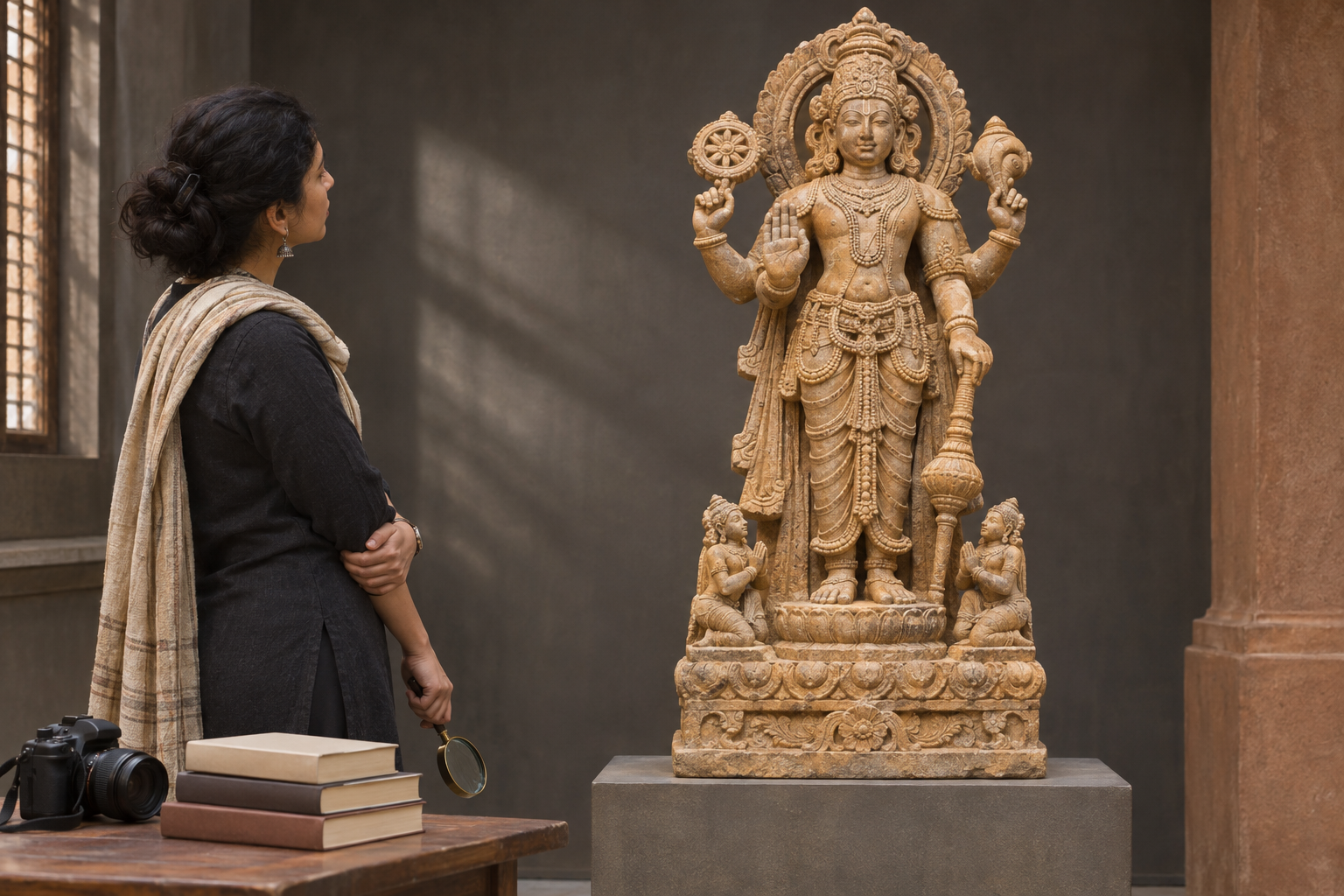
Record structure before recalling a story
Note whether the image has one body, a divided body, multiple complete bodies or accompanying figures. Then record posture, hand activity, prominent objects and damaged areas. This neutral inventory keeps recognition separate from assumption.
Find the iconographic hinge
Ask which feature would change the identification if it were absent. For Vaikuntha Kamalaja, the hinge is the bodily integration of Vishnu and Lakshmi. For Pushkara Dakshinamurthy, it is the active playing of the mridanga. Give that feature more interpretive weight than ornaments that may appear across many forms.
Separate the visible fact from its theological meaning
Write the observation first and the interpretation second. “Two divine identities share one body” is an observation; unity without erasing distinction is an interpretation. “Dakshinamurthy plays the mridanga” is an observation; cosmic harmony expressed through rhythm is an interpretation. Keeping the two lines distinct lets you explain why a reading follows from the image.
Confirm the local name and its scope
Record the exact name supplied by the temple, community or catalogue, including alternative names. A useful field note contains the body structure, action, principal object, accompanying figures, damaged elements and local identification. If no reliable name is available, use a descriptive label and mark your conclusion as provisional.
Do not universalize a sect-specific form into a claim about every Hindu tradition. Local worship is evidence of a living or inherited devotional context, not proof that every Vaishnava or Shaiva community interprets the form in precisely the same way.
Key takeaways
- In Vaikuntha Kamalaja, the integrated body of Vishnu and Lakshmi is the essential clue; two adjacent figures are not the same composition.
- Ardhanarishvara provides a useful structural comparison, but the two forms should not be treated as interchangeable.
- In Pushkara Dakshinamurthy, the decisive action is the playing of the mridanga, which expresses cosmic rhythm and harmony.
- Describe structure and action before interpreting symbolism, and mark damaged or invisible features as unknown.
- Confirm the name locally and preserve sectarian specificity instead of turning a rare form into a universal claim.
When you next meet an unfamiliar murti, resist the urge to name it immediately. Give the unusual feature a literal sentence, identify the visual hinge, and then verify the local name. That small discipline allows the form to teach on its own terms before familiarity talks over it.
References
- Hindu Pad — Vaikuntha Kamalaja | Half Vishnu, Half Lakshmi Form | Vishnu’s Ardhanarishvara Form
- Hindu Blog — Pushkara Dakshinamurthy

Leave a Reply
You must be logged in to post a comment.