
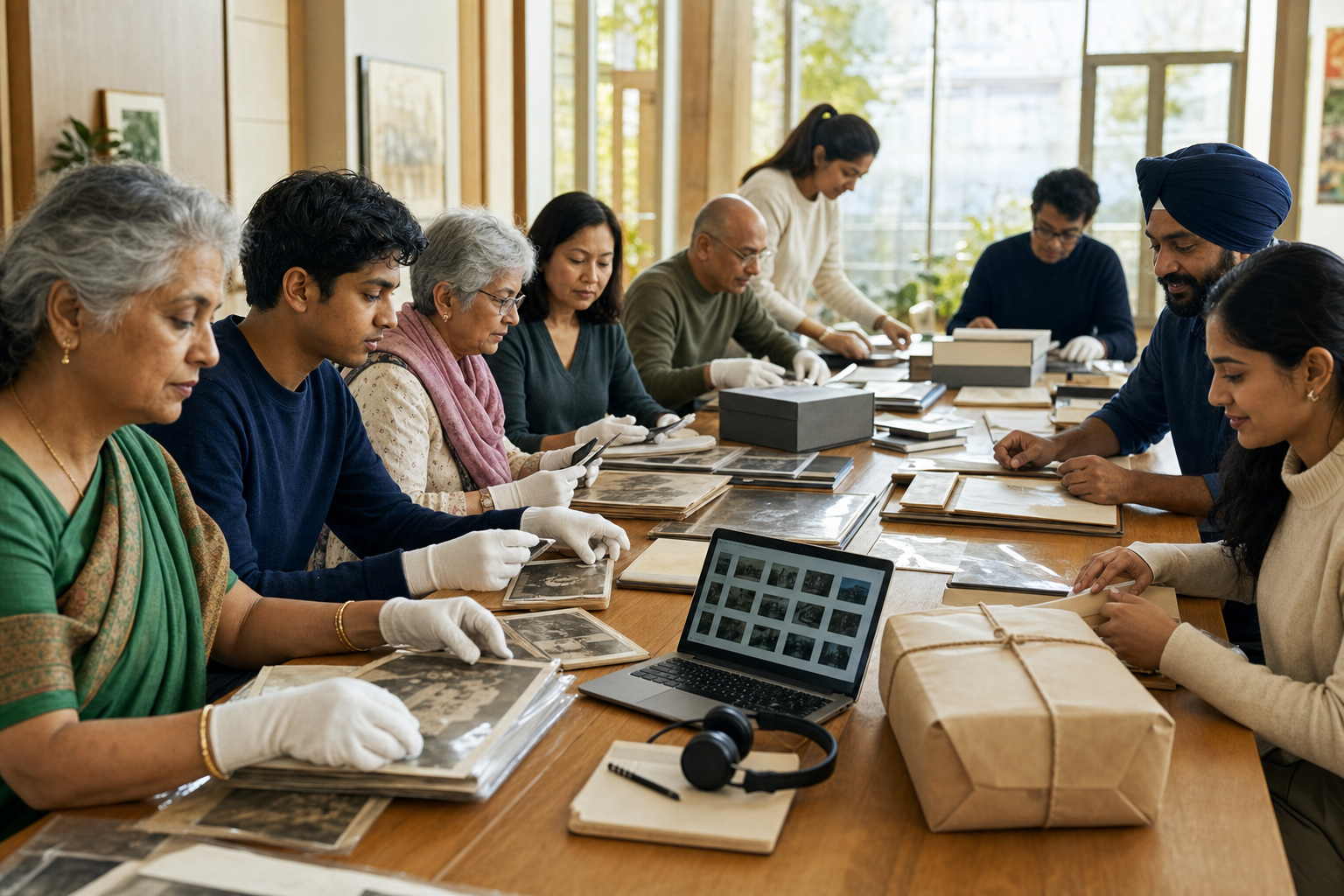
You may have boxes of photographs, scattered digital files, and elders who still remember the missing names. You may also have Hindu, Buddhist, Jain, and Sikh participants who recognise shared values but do not want their distinct traditions reduced to a vague claim that everyone believes the same thing.
You do not have to choose between unity and accuracy. The practical task is to preserve evidence carefully, let each tradition speak in its own voice, and organise the inheritance around forms of service that other people can continue.
Define global impact before you claim it
Global impact is not a synonym for fame. A person can receive wide attention and leave little that remains useful. Another can begin in a small community, serve consistently, and create practices, relationships, or institutions that continue far beyond the original setting.
A seventy-four-year life arc from Ede in the Netherlands to Sandy Ridge in North Carolina illustrates why geography belongs in a legacy narrative. The places are not decorative details. They help you see which habits were formed locally, what travelled, what had to adapt, and what others eventually inherited.
Before writing a tribute or building an archive, test the legacy through four lenses:
- Reach: Which people, places, communities, or institutions encountered the work? Pair every location with a relationship or activity. A list of countries is not evidence of influence by itself.
- Relevance: What remains useful after the original moment has passed? Name the practice, teaching, method, institution, or example that another person can still apply.
- Resilience: What changed when the work entered a new setting, and what purpose remained constant? Adaptation is part of continuity when the underlying obligation is preserved.
- Remembrance: Who can verify the history, where are the records, and how will future custodians understand them? Memory becomes fragile when it depends on a single person or device.
Create a brief with a separate heading for each lens. Under every heading, add evidence rather than praise. A letter connecting two communities supports reach. Continued use of a teaching supports relevance. A revised programme that preserves its original purpose supports resilience. A catalogued photograph with names, date, place, rights, and provenance supports remembrance.
Keep verified facts, attributed memories, and editorial interpretation visibly separate. A verified fact has a record or a named witness. An attributed memory tells the reader who remembers it. An interpretation explains what you believe the event means. This distinction does not weaken a tribute. It makes the tribute trustworthy enough to survive scrutiny.
Build unity around conduct, not doctrinal sameness
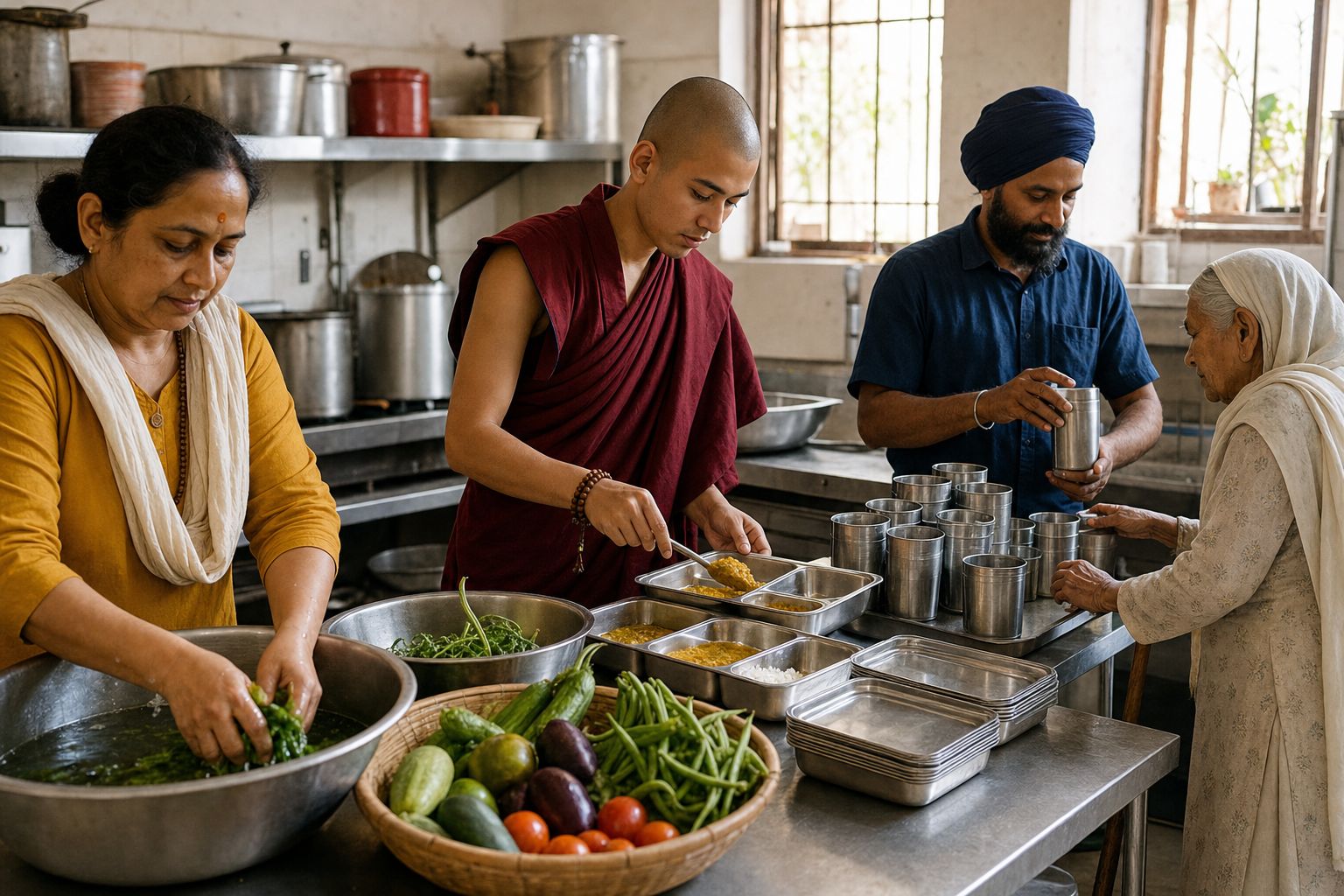
Hinduism, Buddhism, Jainism, and Sikhism possess distinct teachings, histories, practices, and institutions. Dharmic unity becomes brittle when it requires those differences to disappear. It becomes useful when people can name their differences honestly and still accept shared duties.
Several ethical terms provide practical common ground: ahimsa as nonviolence, karuna as compassion, dana or seva as generosity and service, satya as truthfulness, and shraddha as reverent dedication. Do not place them on a banner and stop there. Turn each term into a working question:
- Ahimsa: Who could be harmed, excluded, caricatured, or erased by the way we tell this history?
- Karuna: Whose grief, vulnerability, or difficult memory must be heard before we decide what to publish?
- Dana and seva: What can each participant contribute without demanding control or recognition in return?
- Satya: Which claims can we verify, which rely on memory, and where must uncertainty remain visible?
- Shraddha: Which inherited commitments deserve careful treatment even when an outsider does not share them?
For a community project, write a short unity compact before disagreements arise. State the common purpose, allow participants to describe their own traditions, identify the work they will undertake together, and record the differences the project is not trying to settle. Assign responsibility for decisions and make clear how corrections will be handled.
A sound compact says, in effect, “we can do this together.” It does not force everyone to say, “we understand ultimate reality in the same way.” If a statement of unity requires participants to conceal a conviction central to their path, rewrite the statement.
Interfaith dialogue is most productive when it has a task. Heritage preservation, education, and community service give participants something concrete to examine and improve. Ask each group what its tradition contributes to the task, what boundary it needs respected, and what shared result it is prepared to support. That format reduces caricature without turning dialogue into doctrinal merger.
Create an archive that can survive scrutiny
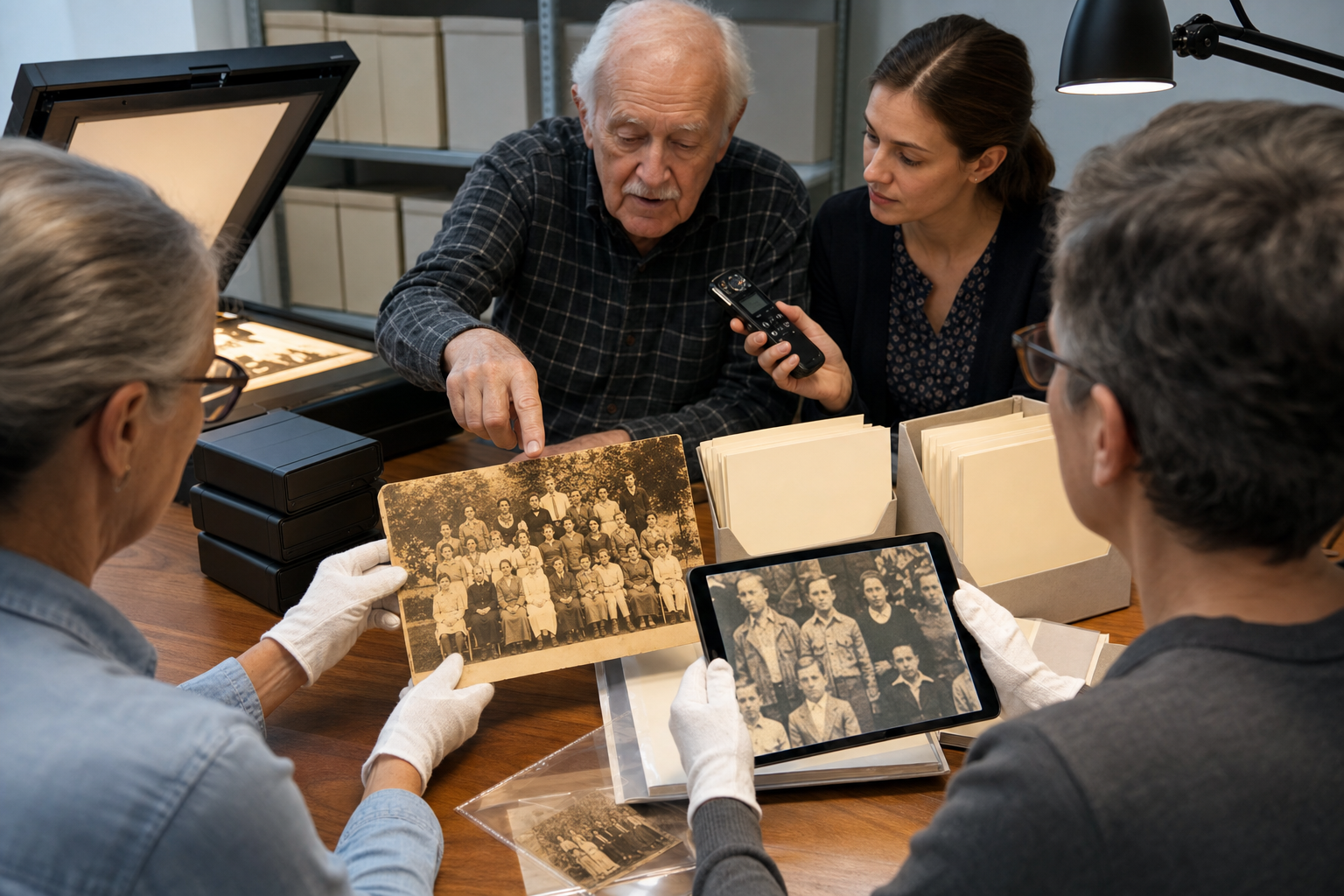
A beautiful commemorative page is not yet an archive. An archive must allow another custodian to identify an item, trace where it came from, understand its context, verify that the digital file has not silently changed, and determine how it may be used.
Capture provenance before presentation
Begin with an inventory. Do not immediately rename everything, rearrange albums, or discard envelopes and annotations. First record the existing order and the relationship among the materials. An ordinary envelope may carry the only surviving clue about a photograph’s sender, recipient, date, or journey.
Give each item a stable identifier and a metadata record. Dublin Core or schema.org can provide a consistent structure. At minimum, capture the title, creator, date or stated uncertainty, place, people represented, language, description, provenance, present custodian, rights, and access conditions.
Use authority control for names and places. Choose a preferred form, record known alternatives, and apply the same form throughout the collection. Without that discipline, records for the same guru, family member, town, temple, or organisation can become difficult to find because different spellings create false separation.
- Preserve images in TIFF or PNG when those formats suit the material.
- Preserve audio in WAV.
- Preserve documents in PDF/A or plain UTF-8 text where appropriate.
- Generate a SHA-256 checksum for each preservation file and retain it in a fixity record. A later comparison can reveal whether the file has changed.
- Keep redundant copies in geographically separate storage locations. A local backup does not protect the collection from every failure affecting the original location.
- Record versions of edited transcripts, captions, timelines, and interpretive narratives. Never make a correction by silently replacing the intellectual history of the record.
Conversion is not preservation if the original is discarded and the preservation file is repeatedly overwritten. Keep the original carrier where practicable, maintain an untouched preservation master, and create separate access copies for ordinary viewing or listening. If a conversion fails or an edit proves mistaken, the preservation master remains available.
Decide access ethically before publishing
Technical neatness does not override consent. Personal information may require redaction or access control. Sacred, culturally restricted, or intimate material may require permission from the people or communities with authority to decide. Rights metadata should tell a future user what may be copied, quoted, displayed, or adapted.
Do this review before making files public. Once sensitive material has been copied and redistributed, withdrawing the original page may not retrieve the copies. When consent or cultural permission is uncertain, restrict access while the appropriate family or community representatives review it.
FAIR and CARE provide complementary tests. FAIR asks whether records are Findable, Accessible, Interoperable, and Reusable. CARE asks whether stewardship provides Collective Benefit, recognises Authority to Control, accepts Responsibility, and acts with Ethics.
Accessible does not have to mean publicly downloadable. A catalogue can tell a reader that an item exists while the item itself remains access-controlled. Likewise, a technically reusable file may still be unsuitable for reuse when the community has not consented or when the surrounding context would be lost.
Before releasing a collection, ask who benefits from access, who has authority over culturally significant material, who will answer correction or removal requests, and what harm could result from decontextualised reuse. Record the decisions. Shared custodianship works best when families and communities supply meaning, technical stewards maintain integrity, and educators translate material without claiming ownership of the memory.
Turn preserved memory into living public value
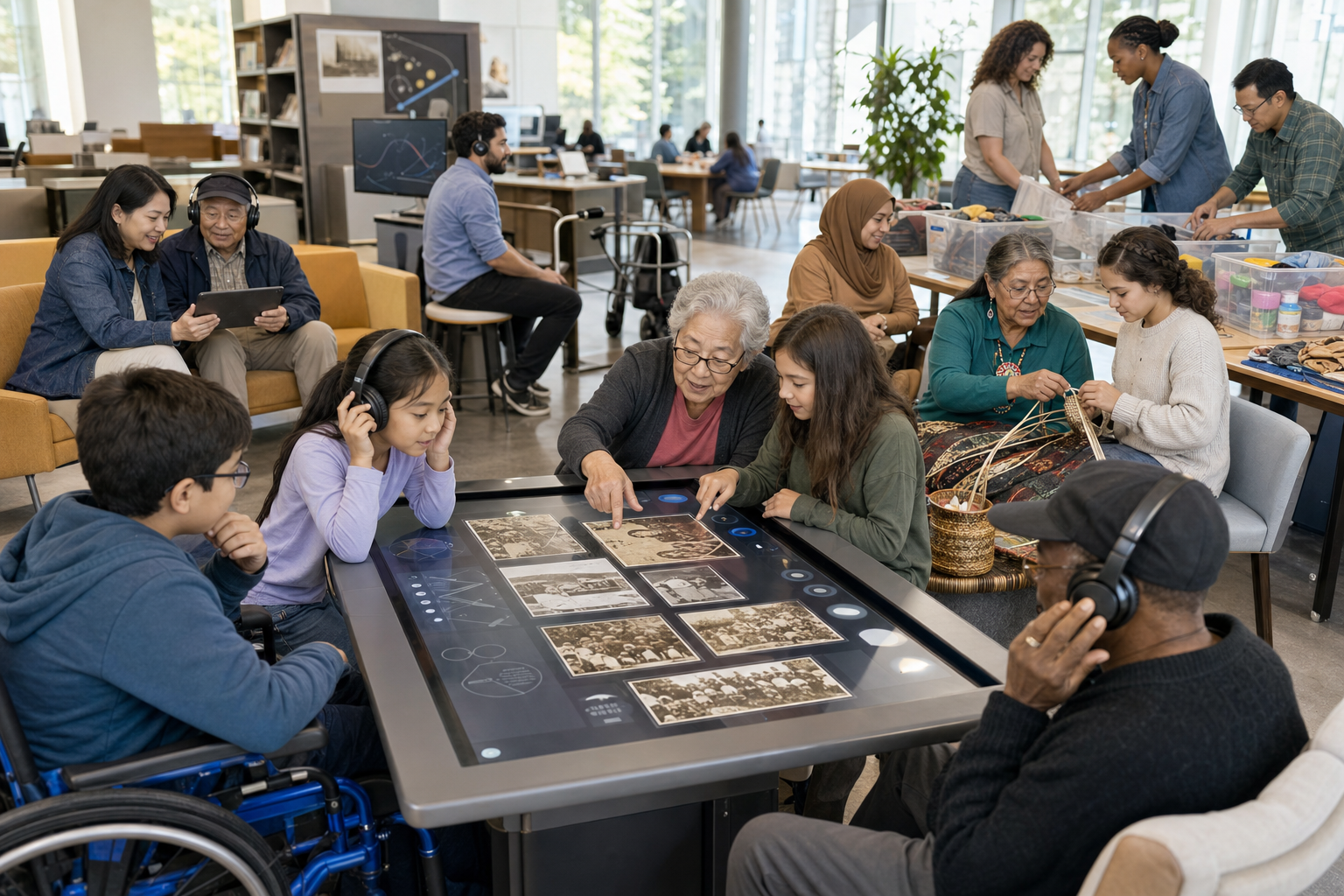
Preservation prevents loss. It does not automatically make a legacy useful. People outside the immediate family or institution need enough context to understand why a record matters, what it can teach, and where interpretation begins.
Build public material in layers. Start with a factual catalogue record. Add a context note explaining the people, place, practice, and historical setting. Then add a clearly identified reflection showing how the material may inform service, ethical action, education, or dialogue. Keeping those layers distinct allows a reader to learn from the record without mistaking interpretation for fact.
Choose the form according to the person who will use it:
- For a family, prepare an annotated chronology that marks uncertain dates and invites corrections from named relatives.
- For a local community, curate a focused display or gathering around a place, period, relationship, or service project.
- For educators, supply selected records with provenance, contextual notes, permissions, and questions that distinguish observation from interpretation.
- For Dharmic organisations, create a service case that shows how ahimsa, karuna, dana or seva, satya, and shraddha affected actual decisions without claiming that every tradition explains those values identically.
- For interfaith participants, centre discussion on a shared ethical problem and let each tradition articulate its own reasoning, commitments, and boundaries.
Start with a focused collection rather than releasing everything at once. Choose a coherent theme, complete its provenance and permissions, create preservation and access files, and ask people outside the original circle to review the context. Notice where they guess incorrectly. Those misunderstandings tell you which names, relationships, terms, and transitions still need explanation.
Measure use rather than attention alone. Record who requested the material, how it was used, whether attribution and context were retained, what corrections the community supplied, and whether the work generated further preservation, education, service, or dialogue. These observations reveal relevance and remembrance more honestly than a bare audience count.
Local roots should remain visible as the legacy travels. Name the mentors, associations, family relationships, civic habits, and places that formed the person or institution. Global circulation becomes shallow when it celebrates scale while deleting the relationships that made the work possible.
Key takeaways
- Test a legacy through reach, relevance, resilience, and remembrance. Do not substitute praise or geographic scale for evidence.
- Base Dharmic unity on shared ethical work while allowing Hindu, Buddhist, Jain, and Sikh participants to retain distinct teachings and identities.
- Separate verified facts, attributed memories, and interpretation so future readers can tell what kind of claim they are encountering.
- Preserve provenance, consistent metadata, archival formats, checksums, redundant storage, rights information, and version history.
- Apply FAIR and CARE together so discoverability never outruns consent, community authority, responsibility, or ethics.
- Publish material in forms a defined audience can use, then improve the context in response to corrections and genuine misunderstandings.
Begin with a single representative item: a photograph, letter, recording, teaching note, or record of service. Identify it, document its provenance, settle its rights and access conditions, create a preservation file and checksum, and ask an appropriate community member to review the description. That modest act is already Dharmic continuity in practice: truth protected by care, memory directed toward service, and inheritance prepared for hands you may never meet.