

If a message on your phone claims that cow remains have been found in Agra, you may feel pressure to condemn someone, forward the images, or join a gathering before the facts catch up. Do not let that urgency make the decision for you. In March 2026, suspected bovine remains prompted protests and heightened security in Agra, but the species identity still required laboratory confirmation.
Protecting Gau Mata and protecting due process are not rival duties. If an offence occurred, disciplined evidence gives the authorities the strongest basis for firm action. If an allegation is wrong, restraint prevents innocent people from being punished by rumour. Your useful role is therefore clear: preserve evidence, demand timely facts, keep protest lawful, and refuse collective blame.
Key takeaways
- The recovered material remains suspected, not confirmed, until a forensic laboratory identifies the species.
- Do not touch, move, clean, collect, or privately transport possible evidence. Report its precise location to the police and keep people away from it.
- Ask whether the site was documented, the specimens were sealed, the samples reached a recognised Forensic Science Laboratory, and an official update has been scheduled.
- Do not attach a person’s name or a community identity to the discovery without verified evidence connecting them to it.
- A legitimate protest should demand evidence preservation, transparent investigation, enforcement of Uttar Pradesh’s bovine-protection law if an offence is proved, and protection for residents.
- Use three labels in every conversation: what is known, what remains unknown, and what official milestone comes next.
What the evidence can prove, and what it cannot

A photograph cannot identify the species
Colour, texture, smell, packaging, or a caption added to an image cannot establish whether tissue came from a cow or from another animal. A widely forwarded picture may not even show the place or date claimed. Treat visual material as a reason to notify the authorities, not as a laboratory result.
Forensic identification can use several methods. Histology examines muscle and connective-tissue structure. ELISA can provide rapid immunological screening. Species-specific PCR can examine mitochondrial DNA markers such as cytochrome b or COI. When specimens are degraded or difficult to classify, collagen peptide fingerprinting and mass-spectrometry techniques can provide additional evidence. Investigators need not use every available method in every case; the appropriate combination depends on the condition of the specimens and the laboratory question.
The first result answers a narrow but decisive question: what animal did the material come from? It does not automatically reveal who put it there, whether it was discarded accidentally, whether it was planted deliberately, when it arrived, or whether anyone intended to provoke religious anger. Those are separate investigative questions. Do not turn a species finding into an accusation against a named person unless evidence establishes that connection.
Chain of custody determines whether the result can carry weight
A technically accurate test can still be disputed if no one can show where the sample came from or who handled it. Investigators should photograph and document the material where it was found, assign unique identifiers, use tamper-evident packaging, and record dates, times, locations, handlers and witness signatures. The sealed specimen then needs to reach a recognised laboratory through a traceable process.
If you are among the first people to encounter suspected remains, follow a simple sequence:
- Step back and do not handle the material, even with a bag, cloth or improvised tool.
- From a safe position, note the exact location and the time you saw it. Do not enter restricted property or expose yourself to a crowd or traffic hazard.
- Inform the local police promptly. Municipal cleaning should take place after investigators have secured any evidence, not before.
- Discourage bystanders from touching the site, but do not confront them physically.
- Do not collect your own specimen. Private handling can contaminate evidence, create health risks and produce a second chain-of-custody dispute.
- Do not circulate graphic close-ups or captions naming alleged culprits. Send useful location information to the authorities rather than broadcasting it to an angry audience.
Forensic turnaround time can vary with laboratory workload and specimen condition. That is not a reason for indefinite silence, but it is a reason not to invent a deadline. Ask the administration for the next reporting milestone: confirmation that the samples arrived, an expected reporting window, and publication of non-sensitive findings when legally permissible.
Turn concern for Gau Mata into a lawful, focused demand
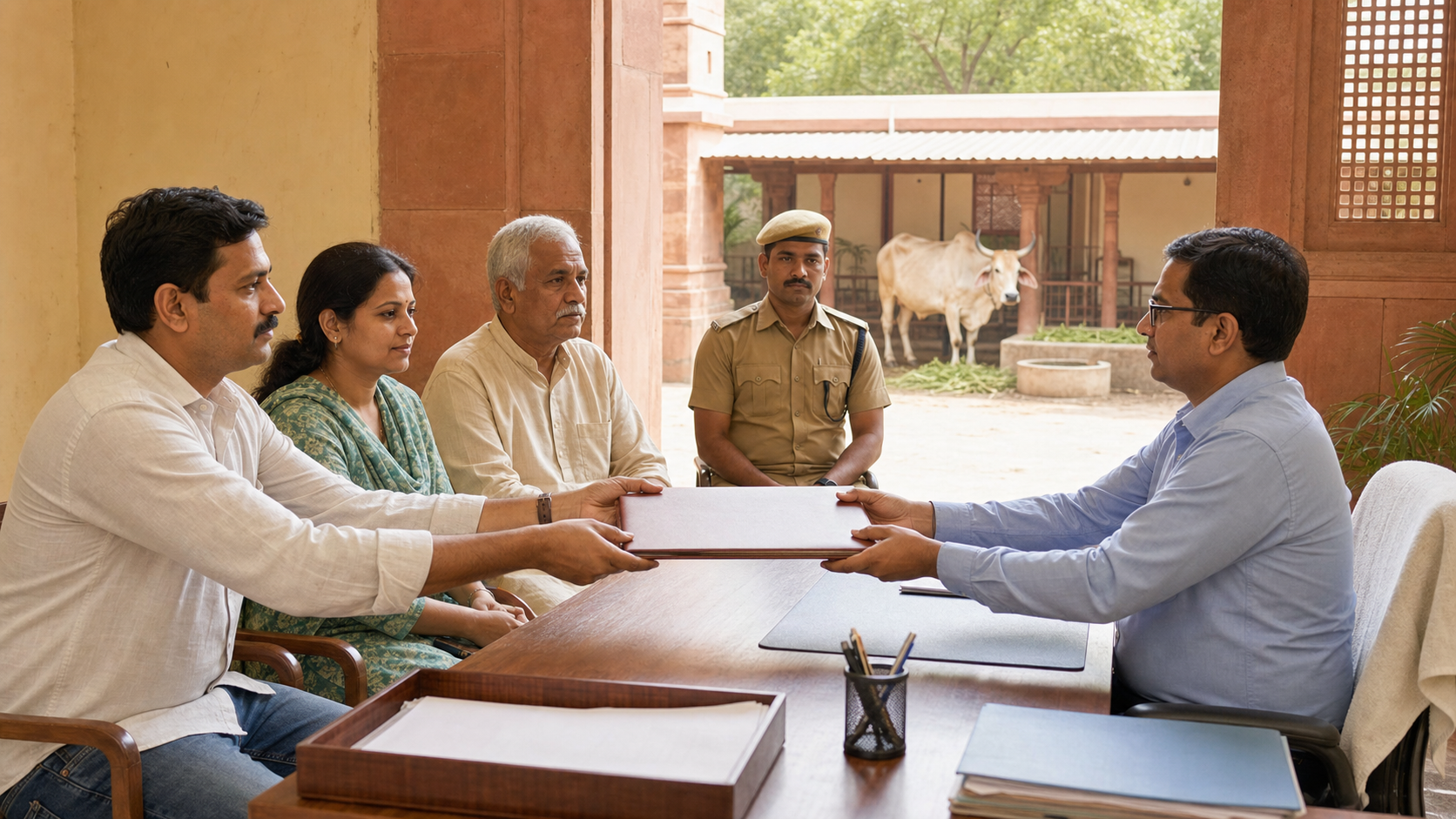
The cow’s sacred place in Hindu life deserves more than an emotional reaction that fades with the next rumour. It deserves a case that can withstand scrutiny. The Uttar Pradesh Prevention of Cow Slaughter Act, 1955, as amended, provides a legal route for action concerning prohibited slaughter, transport for slaughter and the sale of beef. Potential offences involving deliberate religious provocation or the promotion of group enmity require evidence of conduct and intent. Firm enforcement must therefore remain tied to verified facts and due process.
A productive public representation should ask for five things:
- Secure documentation of the recovery site and an intact chain of custody.
- Prompt species testing by a recognised forensic laboratory.
- Investigation of the material’s origin, the people actually connected to it, and any evidence of deliberate provocation.
- Enforcement of bovine-protection and public-order law if the evidence satisfies the relevant legal requirements.
- Regular factual briefings that distinguish confirmed findings from unresolved questions.
These demands are stronger than calls for an immediate arrest based on a forwarded image. Arresting the wrong person does not protect Gau Mata. It diverts attention from the actual offender, weakens confidence in the investigation and gives anyone seeking communal disorder exactly the reaction they wanted.
If you participate in a protest, check the local restrictions and the organiser’s arrangements before you attend. The organiser should have a police liaison, written demands, volunteers able to calm the gathering, and a clear plan for dispersal. Slogans should address cow protection, evidence and enforcement rather than threatening a religious community. Do not carry weapons, damage property, obstruct emergency movement, cross barricades or attempt to detain and interrogate anyone. Leave the gathering and notify the police if speakers begin calling for violence.
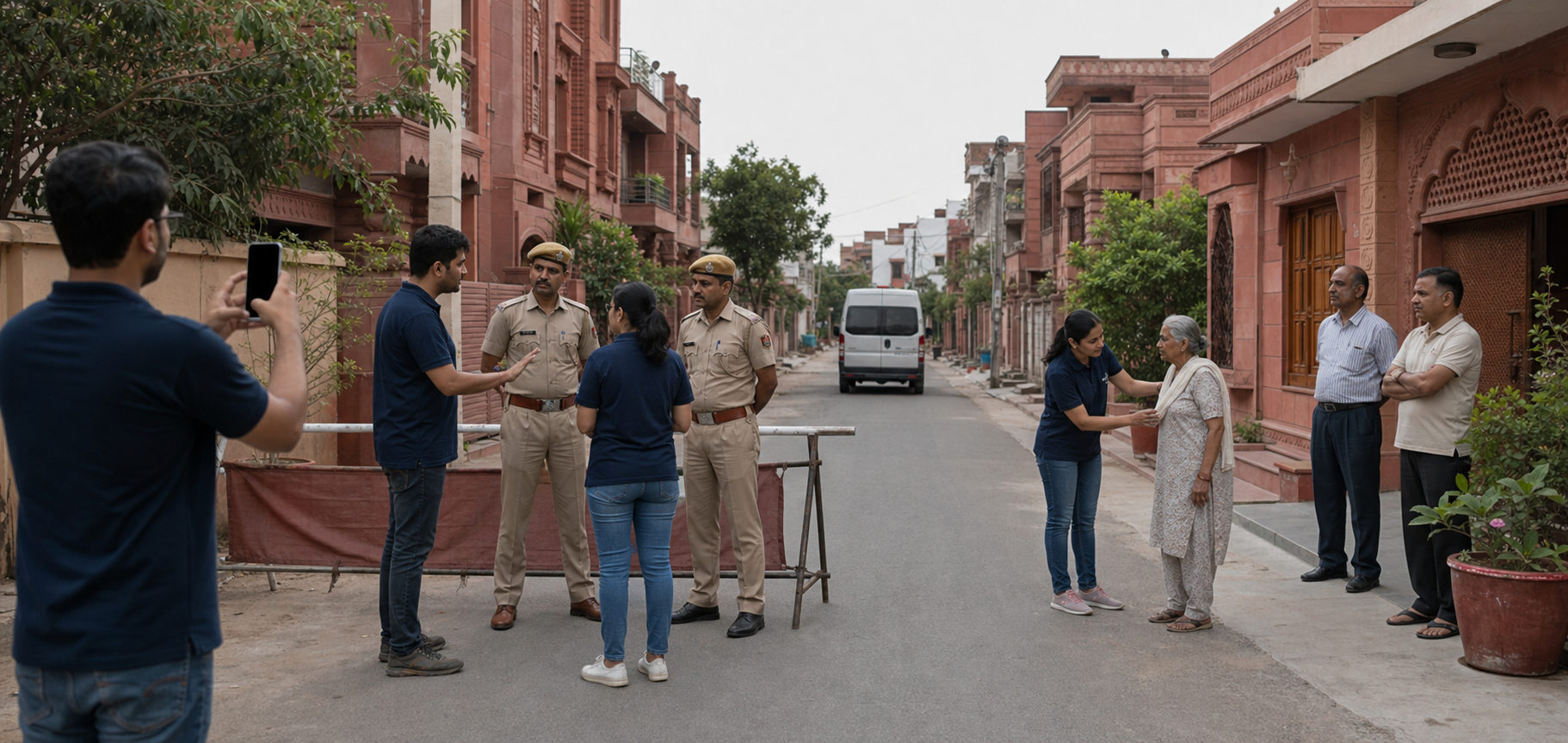
Extra patrols, fixed pickets, spot checks or temporary restrictions on assembly may feel alarming, but their presence is not proof that every rumour is true. They are preventive measures intended to stop a sensitive situation from turning violent. Follow lawful directions at the scene. Organisers can seek clarity about the area covered, the duration of restrictions and the route available for a peaceful representation.
A practical playbook for residents, organisers and leaders
Before you forward a claim
Pause at the point where outrage usually outruns verification. Open the original statement rather than relying on a cropped screenshot. Check the date, the location and the issuing authority. Look for the exact status word: suspected, sent for testing, confirmed, excluded or inconclusive. If the message supplies an accusation but no traceable official statement, do not forward it.
A useful neighbourhood update has only three parts:
- Known: what the police or district administration has publicly confirmed.
- Unknown: species, origin, responsible individual or intent that has not yet been established.
- Next: the expected official milestone, such as laboratory receipt or release of a finding.
Keep opinion out of the first update. If later information proves your earlier message wrong, send the correction to the same groups that received the claim. Quietly deleting your own copy does not repair a rumour that has already travelled.
While security measures affect daily life
Check route and closure information through current police or district-administration channels before leaving for work, school or worship. Do not stop near barricades to film the crowd; that adds congestion and can place you between demonstrators and police. Keep children and older relatives away from a recovery site or an unpredictable gathering.
Shops, schools, temples and residential associations should nominate one person to monitor official updates. A single verified message is more useful than several volunteers forwarding different versions. Businesses should tell staff whether a route or opening time has actually changed, not merely that tension has been reported. If there is an immediate threat to a person or property, contact the local emergency authorities instead of trying to manage the confrontation through a group chat.
What community and religious leaders should request
A local peace meeting should not be a ceremonial photograph. Representatives of Hindu, Jain, Buddhist and Sikh institutions, along with resident and market associations where appropriate, should leave with named contacts and an update schedule. Their joint message can be concise: religious sentiments deserve respect; species and culpability must be established by evidence; any offence should be prosecuted; no community should be blamed without proof.
Ask the administration to communicate four milestones: recovery-site documentation, sealing and dispatch of samples, receipt by the forensic laboratory, and release of the permissible findings. Do not demand publication of witness identities or operational details that could compromise the investigation. Transparency means explaining the process and its status, not conducting the case in public.
Leaders should also prepare for more than one result. If bovine origin is confirmed, they should support lawful prosecution and continue to reject collective punishment. If bovine origin is excluded, they should correct the original allegation with equal visibility. If testing is inconclusive, they should preserve that uncertainty rather than replacing it with a preferred conclusion.
Let the forensic result govern the next dharmic step
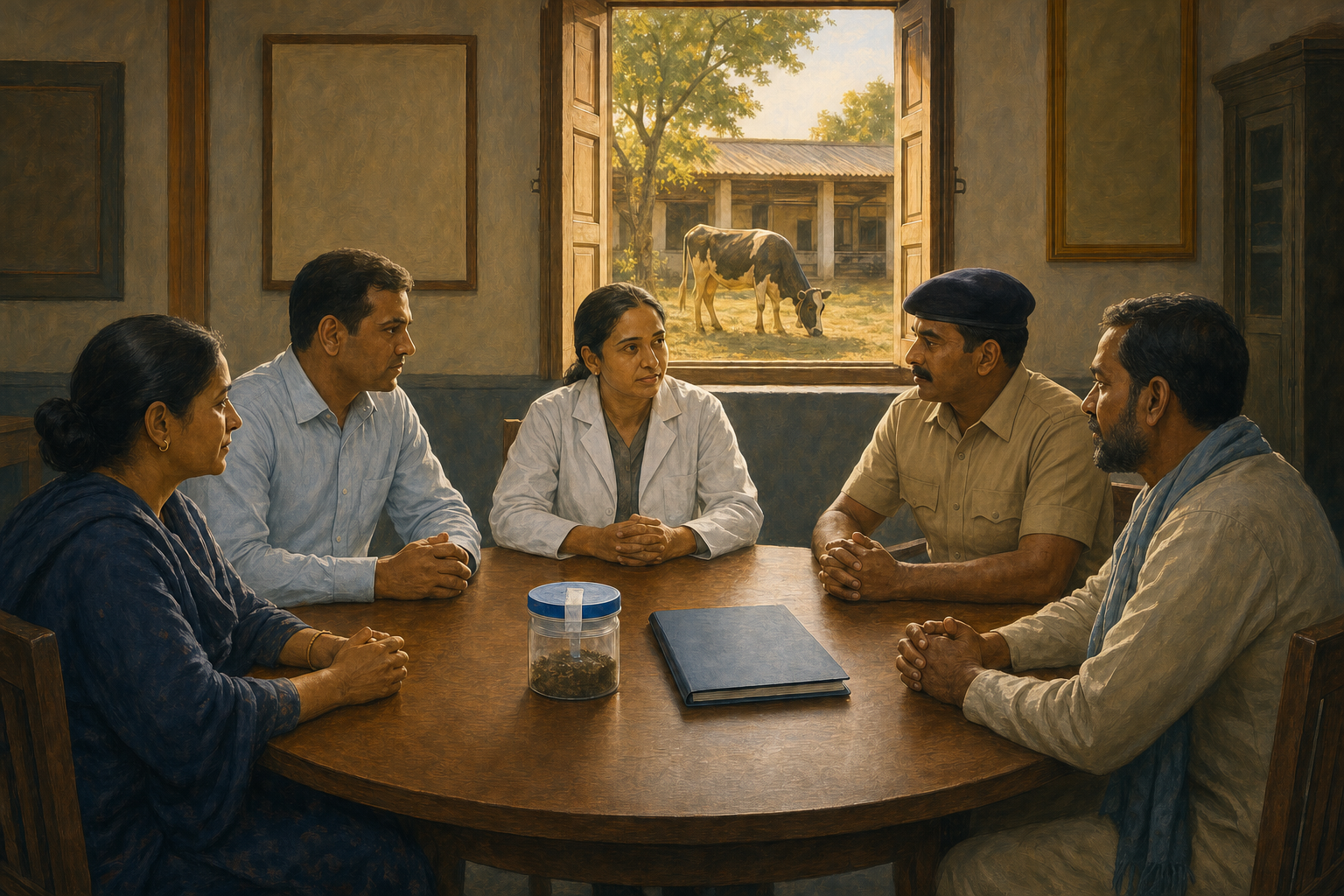
Hindu reverence for Gau Mata should be stated without embarrassment or dilution. Yet reverence does not release us from satya, disciplined speech or responsibility for the consequences of our actions. Jain ahimsa, Buddhist compassion and non-harm, and the Sikh ethics of seva and human dignity do not erase the traditions’ theological differences. They do offer a shared civic discipline: protect life, tell the truth, serve neighbours and deny provocateurs the violence they seek.
Ahimsa in this situation does not mean indifference. It means refusing methods that injure an innocent person, contaminate a case or turn devotion into mob power. Restraint is not surrender when it preserves the evidence needed to identify and punish a genuine offence.
When the official finding arrives, adjust your conduct to what it actually establishes:
- If the material is confirmed as bovine: demand action under the applicable law, but keep species identity separate from proof of ownership, placement and intent. The laboratory result begins the attribution inquiry; it does not complete it.
- If bovine origin is excluded: remove or correct claims that treated the allegation as fact. Do not invent a laboratory conspiracy merely because the result is unwelcome.
- If the result is inconclusive: continue using conditional language. Authorities may consider additional testing where the specimen permits it, but uncertainty must not be represented as either confirmation or exoneration.
- If evidence shows deliberate planting or incitement: seek proportionate prosecution of the responsible individuals. Do not transfer their culpability to an entire neighbourhood, caste or religious community.
The next time an alarming claim reaches you, ask three questions before doing anything else: What is known? What is still unknown? What official event will clarify it? If the sender cannot answer, do not add your name to the chain. Put your energy into evidence preservation, transparent updates and disciplined, peaceful advocacy. That is how concern for Gau Mata becomes durable protection under law rather than fuel for someone else’s provocation.