
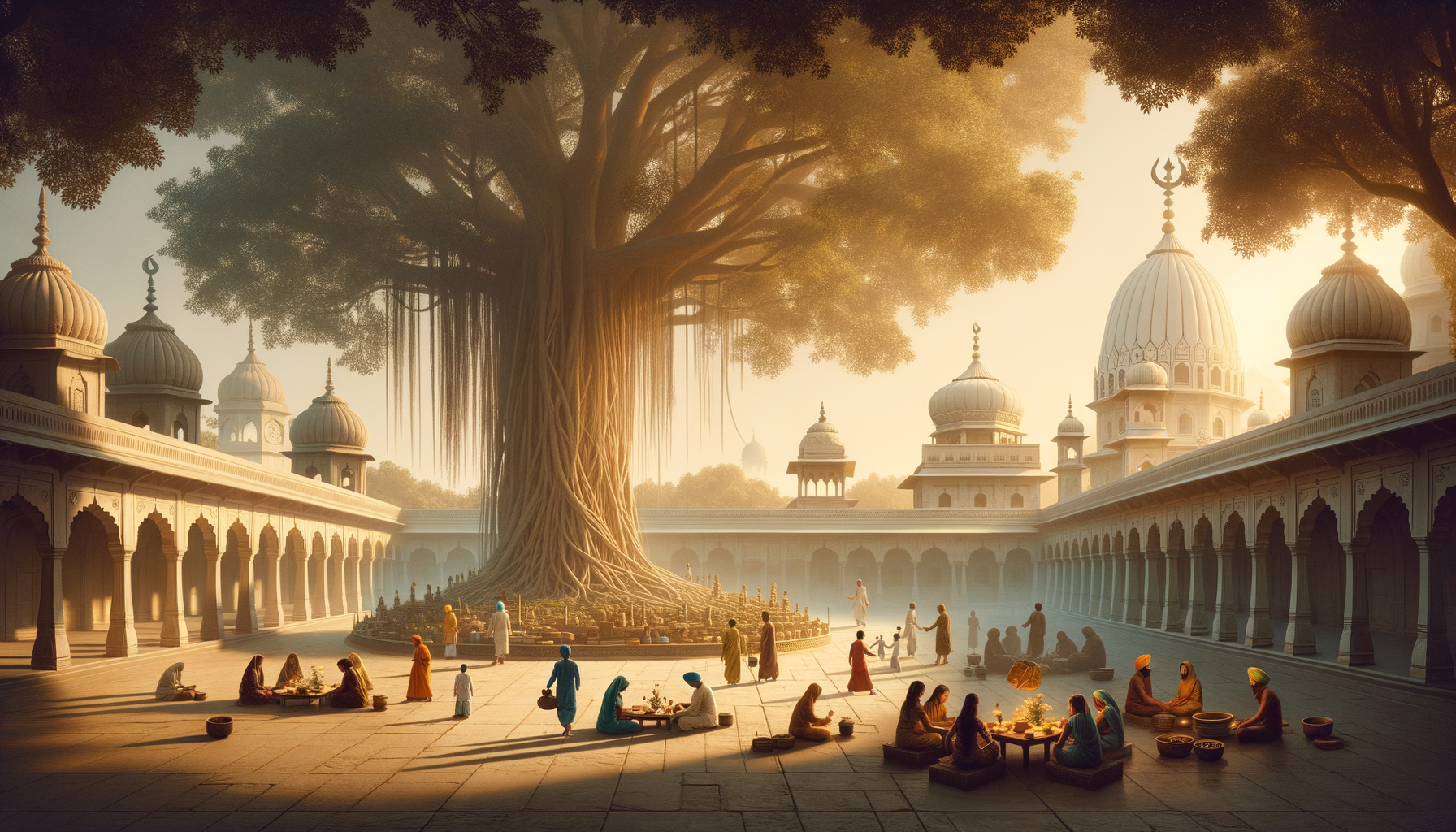
The GAAVANI Historic India Tour, as shared by Navpreet Kaur with SikhNet, presents a reflective exploration of India’s cultural heritage and sacred geography. Framed through lived encounters rather than itinerary detail, the narrative foregrounds how Hinduism, Buddhism, Jainism, and Sikhism continue to nurture a shared ethic of compassion, service, and truth-seeking in contemporary society. The account highlights how India’s unity in diversity is not merely an idea but a daily practice manifest in collective worship, community service, and intergenerational learning.
Centered on dharmic traditions and their interconnections, the tour illustrates how gurdwaras, temples, viharas, and derasars function as living institutions of memory and meaning. Without privileging one path over another, the observations show convergences across seva, dana, ahimsa, maitri, and satyaprinciples that guide ethical conduct and social cohesion. In this way, the GAAVANI Historic India Tour, as conveyed to SikhNet, becomes a study in pluralism, continuity, and responsible stewardship of heritage.
Navpreet Kaur’s reflections convey a measured sense of wonder and responsibility. The narrative captures how ordinary practiceskirtan, aarti, contemplation, and shared mealsnurture community bonds while inviting quiet introspection. The tone remains academic and factual, yet the emotional undercurrent is evident in moments of gratitude for elders’ guidance, reverence for sacred spaces, and empathy for communities safeguarding traditions under changing social conditions.
Interfaith dialogue emerges as a recurring theme. The account underscores how Sikh principles such as seva and sarbat da bhala align naturally with Hindu ahimsa, Buddhist karuṇā, and Jain aparigraha, creating a durable framework for cooperation. This shared ethical foundation helps young people, educators, and community leaders cultivate trust, reduce polarization, and build a future anchored in mutual respect across dharmic traditions.
Heritage preservation is presented as both a cultural and civic priority. The narrative emphasizes the value of oral histories, vernacular architecture, manuscripts, and ritual arts as repositories of collective memory. It encourages local stewardship, documentation, and inclusive programming that invite wider participationensuring that sacred sites remain accessible, well-cared-for, and contextually understood by residents, pilgrims, and visitors alike.
The social fabric woven by elders, women, and youth receives careful attention. Elders transmit lived wisdom; women sustain devotion, education, and care networks; youth bring organizational energy and digital literacy to amplify preservation efforts. Together, these roles exemplify how dharmic communities adapt to contemporary realities while remaining grounded in timeless values.
Ethical travel and pilgrimage are framed as practices of humility and mindfulness. The account highlights respectful conduct in sacred spaces, attentive listening to local voices, and eco-conscious choices that minimize impact. Such practices model how visitors can contribute positivelythrough learning, volunteering, and dignified representationwhile honoring the sanctity and rhythms of community life.
For educators and parents, the GAAVANI Historic India Tour offers a participatory pedagogy of pluralism. Integrating field visits, service learning, and reflective study enables learners to encounter dharmic traditions in context and appreciate their shared ethical grammar. This approach strengthens cultural literacy, reduces misconceptions, and nurtures interfaith understanding as a lifelong competency.
The narrative points to practical pathways for community engagement: seva-driven initiatives, inclusive langar, community kitchens, heritage clean-ups, tree planting around sacred precincts, and cross-tradition study circles. Such efforts embody sarva dharma sambhava and transform appreciation into actionsupporting both spiritual well-being and social resilience.
In sum, the GAAVANI Historic India Tourrelayed by Navpreet Kaur to SikhNetserves as a compelling testament to India’s living heritage and the enduring unity of its dharmic traditions. By centering compassion, service, and wisdom, the narrative invites readers to safeguard cultural legacies, deepen interfaith dialogue, and practice inclusive citizenship. The result is a vision of cultural heritage that is not only preserved but also continually reanimated through ethical action and shared hope.
Inspired by this post on SikhNet – News.
