
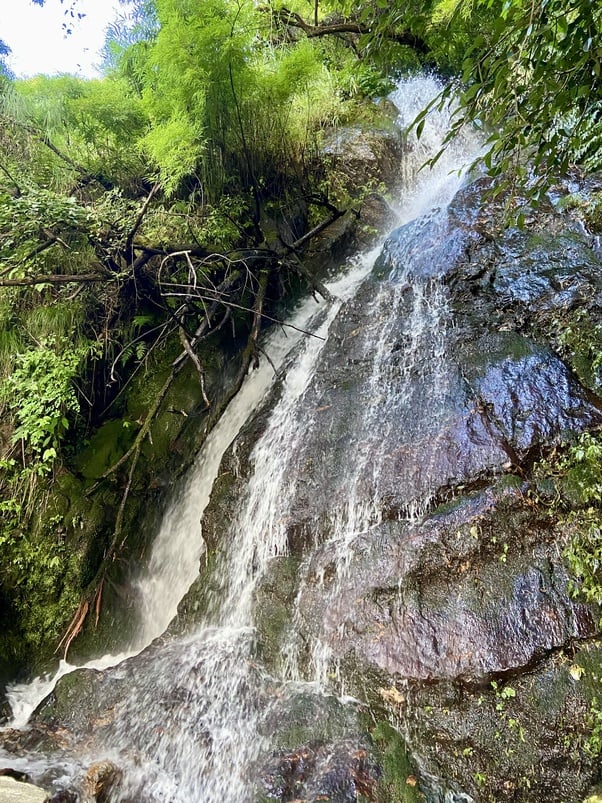
Journeying into the Hindu Himalaya, the group halted at Gangnani in Uttarakhand, a modest roadside pilgrims’ base that shelters seekers en route to the high mountains. The famed Gangnani hot springs offered immediate respite; the warmth of the waters contrasted vividly with the cold mountain air, restoring the body after winding ascents along the Ganga valley.
One companion, long familiar with Gangnani, revealed layers of local knowledge that elude most passersby. According to villagers, a great saintan avadhut who dwells primarily in the forested highlands rather than human settlementsperiodically descends to spend the night at a temple here. On that day, goatherds had reported a sighting in the nearby hills, heightening the sense that an encounter might be imminent.
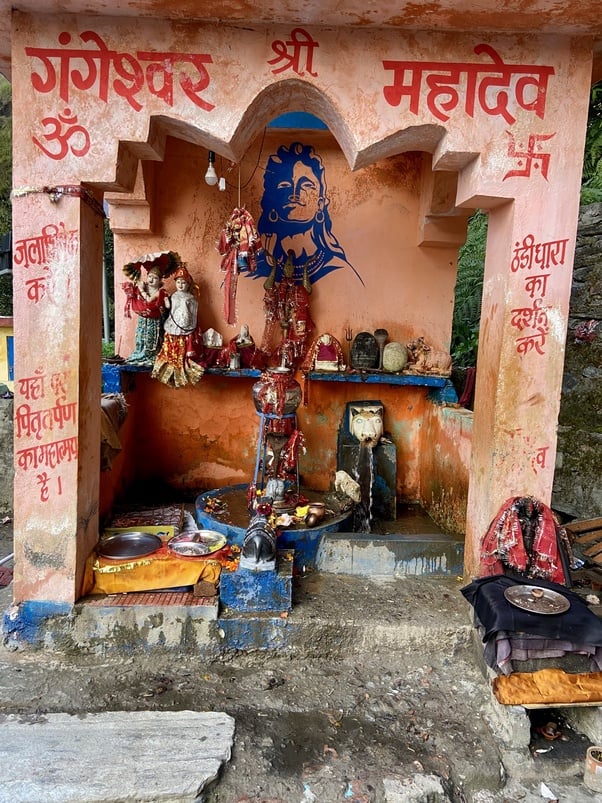
Exploration unfolded at a measured pace: a brief climb up a small waterfall and a visit to the understated local temple framed the afternoon. Above the hot springs, tradition holds that Maharishi Parashara once dwelt in a cave and performed Tapasya, anchoring Gangnani in a deeper sacred geography that ties landscape and lineage across centuries.
Hospitality came generously. Villager friends served a simple, superb Garhwali dinnervegetables from their own fields and an unforgettable local specialty: enormous cucumbers. In this setting, food, conversation, and crisp mountain air combined to create the calm that precedes meaningful encounters.
Late that night, a village boy quietly arrived with news: the Baba had appeared in Parashara’s cave. The group ascended in haste. In the cool darkness, a lone Naga babaof the Juna Akhara order of sannyasinssat in serene composure. He was known locally as Om Giri Baba. In common practice, “Giri Baba” marks the initiate of Juna Akhara, and “Om” is not a conventional name but the primordial syllable; together they function as a deliberate anonymity, a humility before the Absolute.
He spoke at length on subjects not meant for public circulation. When asked about Nagas, he offered a specific account: a little over twenty kilometers east into the hills lies a hidden Naga lake. A Maninagbearing a radiant Nagamanidwells beneath its waters. Locals come by night for darshan of the gem’s glow. The lake, he emphasized, is approachable only by a long, trackless hike through wild, forested mountains. The narrative resonated as a living thread in the broader tapestry of Naga lore that pervades the Himalaya.
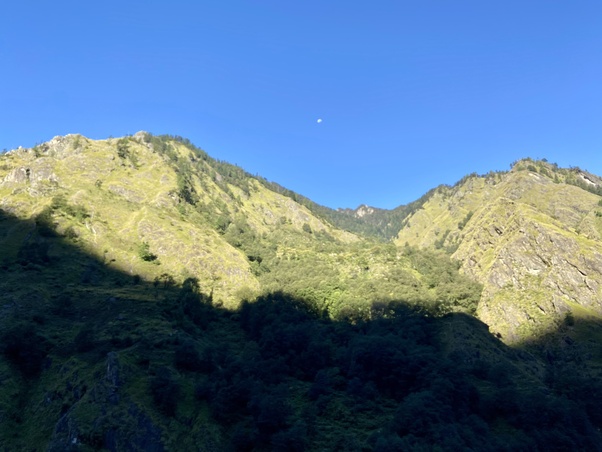
Before parting, the ascetic noted he would begin sadhana at 2 a.m. He was gone by morning. Dawn light captured snowy ridgelines while the moon lingered above the western horizona quiet tableau matching the Baba’s unannounced arrival and departure.
The following day brought a more strenuous objective. Behind the roadside ashram near the hot springs, an unmarked footpathhidden from the casual eyeswitchbacks up a steep, overgrown slope to a secluded village of Naga worshippers. Few outsiders ever find it without local guidance. The ascent took just under two hours; on the way, two men descending expressed surprise to see strangers on their mountain trail.
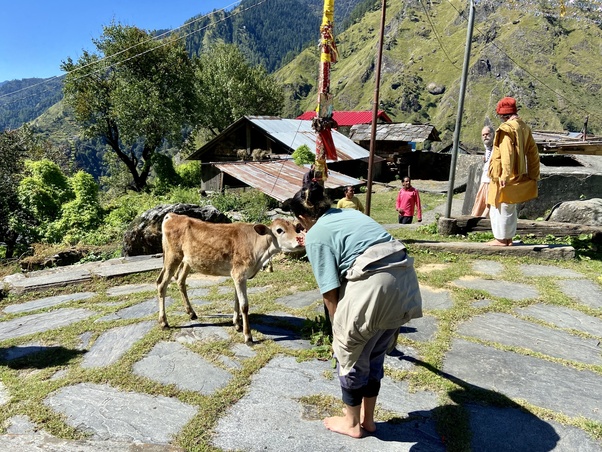
The settlement is small and widely dispersed: approximately 149 people spread across nearly fourteen kilometers of mountainside, with family homes set beside tiny crop terraces, goat pastures, and thickets of cedar and deodar. Some dwellings possess new electric connections; many still do not. There is no roadonly footpathsso water comes from streams, goods from donkeys, and news by word of mouth. Landslides, the villagers cautioned, are often triggered by goats and require constant vigilance.
Local life reflects intimate reciprocity with place. A farmer proudly rinsed an immense cucumber in the stream, planning to sell fresh slices to visitors at the hot springs. Dozens of small lizards sunned themselves on nearby rocks, curious and skittishsilent, ubiquitous witnesses to a thriving alpine ecology.
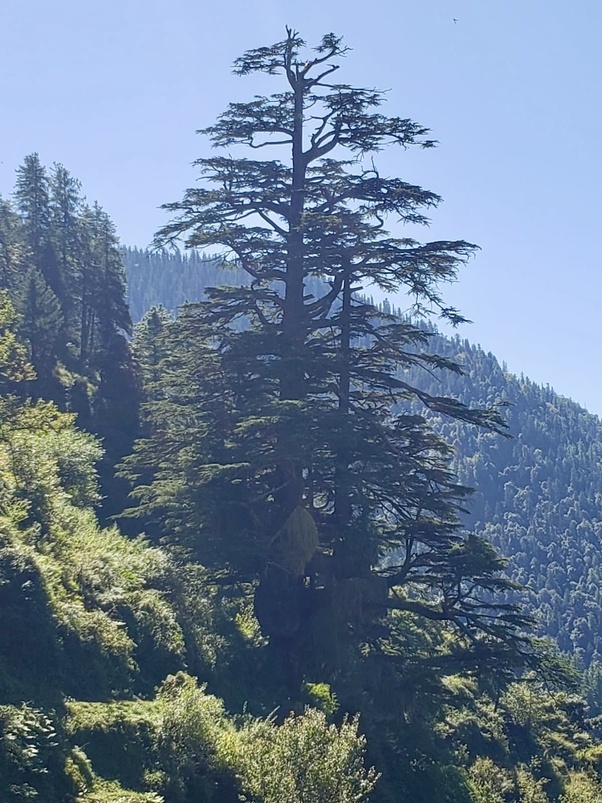
Their primary reverence focuses on two beings: a local Naga who resides in the streams and forest, and a magnificent deodar cedar (Devadaru). Shiva and an obscure village Devi are also honored, though secondarily. The devotional balance underscores a Himalayan religiosity in which landscape, watercourses, and trees constitute a living temple.
The deodar, said to be around 450 years old, commands awe at first sight. Bundles of grass hung from its branches to dry, a practical act that also signals kinship with the tree’s sheltering presence. Seated within the wide hollows of its trunk, the group meditated, sensing the convergence of ecological time and spiritual continuity.
Conversations with residents illuminated a distinctive Naga worldview. Many believed they themselves had been Nagas in recent memory and are now born as humans. The Nagas, they explained, do not reside in the temple; they inhabit the streams and woods. The temple is a human-arranged point of veneration where Nagas may visit by their will. The villagers described a relationship of mutual respect: before building, they ask the Nagas’ permission to avoid disharmony; they seek help in curing ailments of people, herds, and crops; and they honor the possibility that Nagas can teach hidden tantras and impart protective knowledge.
In that spirit, a Naga Puja was performed in a serene stream. Cleanliness was paramount: the group scrubbed bird droppings from a flat-topped stone used as an altar and arranged offerings with order and care. The invocations first honored Manasa and Kaliya as regional Naga rulers, affirming lawful alignment. Protective Naga Lords were then invoked in the eight directionsmoving clockwise from east: Ananta, Vasuki, Shankhapala, Kulika, Takshaka, Mahapadma, Karkotaka, and Padmaaccompanied by quiet statements of goodwill, non-harm, and cooperative intent.
Historical memory in the region preserves episodes of conflict between humans and serpent-beings. Within the Dharma traditionsHindu, Buddhist, and Jainannual acts of atonement and restorative practice foster a shared ethic of ahimsa and reconciliation, reinforcing unity across paths while honoring the guardianship of nature-beings.
The group chanted the Sarpa Mantras from Yajur Veda, Maitrayani Sanhita 2.7.15, along with additional Naga mantras. Offerings included cardamom, nutmeg, cloves, sugar, honey, sesame, walnuts, local apples, and fresh green shootsingredients known in traditional practice to please Nagas.
Villagers observed the Puja with quiet interest. At one moment, an elderly woman appeared on a ledge above the streamone-eyed, staff in hand, dignified and intentwatching in silence. When the rite concluded and heads turned, she had already departed, leaving behind a lingering impression of ancestral watchfulness.
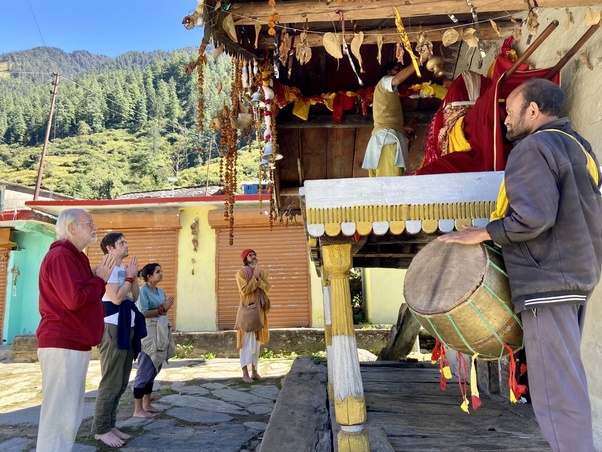
Afterward, the hosts guided the group to their Naga temple and demonstrated their own Puja, similar to rites at Sem Mukhem. They also venerate a trident, a sacred wooden post, their village Mother deity, Lord Shiva, and a ceremonial Naga drum used in the ritesound, symbol, and devotion coalescing in a pattern of worship that is both local and continuous across Garhwal.
As the day waned, the journey through Gangnani and its hidden village clarified a central insight: in the Hindu Himalaya, sacred geography is not metaphor but lived reality. Hot springs, caves, cedars, streams, and serpentine guardians weave a cohesive dharmic ecology in which reverence for life, interdependence, and restraint are shared values across Hinduism, Buddhism, and Jainism, and harmonious with Sikh commitments to service and environmental stewardship. The path through Uttarkashi toward the Gangotri region thus becomes more than travel; it is an invitation to witness living traditions that safeguard both people and place.
Note: This journey occurred in autumn 2022. Linked information on temples and places is current as of mid‑2025; logistical details can change quickly and should be verified independently. All photos © Devala Rees.
Inspired by this post on Hindu America.
