
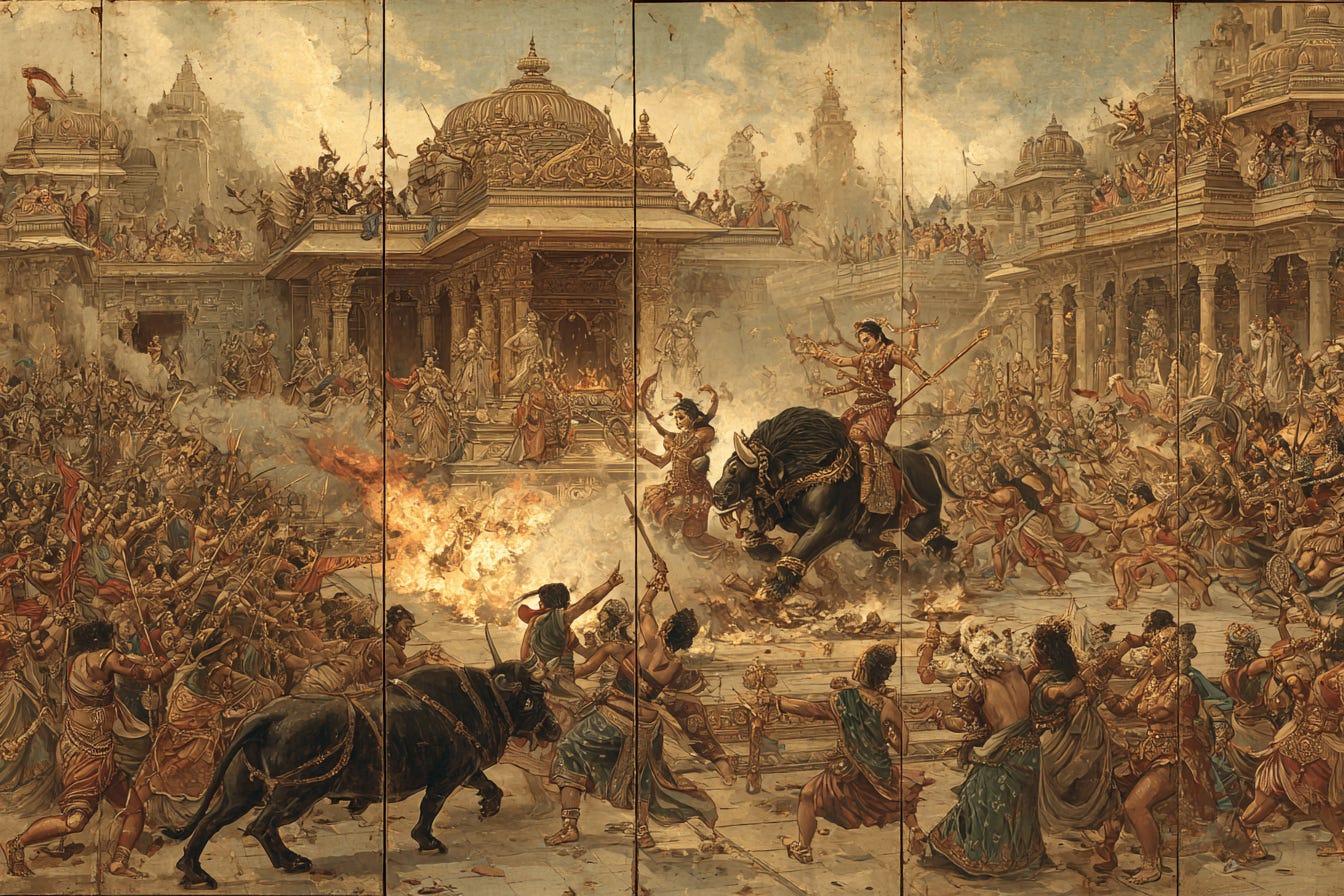
On the sacred festival of Vijayadashami (also Vijaya Dasami/Dusserah), The Dharma Dispatch extends respectful greetings to all who honor India’s civilisational heritage. As the culmination of Navaratri, this day symbolizes the triumph of dharma over adharma and the renewal of ethical resolve. Across Hinduism, Buddhism, Jainism, and Sikhism, its spirit resonates through shared values of courage, wisdom, compassion, and self-masteryprinciples that sustain cultural harmony and unity in diversity.
Guided by a sense of sacred civilisational duty to Sanatana Dharma, The Dharma Dispatch documents and interprets India’s cultural heritage through independent scholarship. Its workrooted in research, field visits, interviews, writing, and careful editingseeks to present rigorous, accessible, and historically grounded insights. This editorial ethos aims to illuminate the continuities of tradition and the living relevance of dharmic wisdom in contemporary society.
Vijayadashami also offers an opportunity to reaffirm a core ideal: unity in spiritual diversity. The Dharma Dispatch upholds religious pluralism as an enduring civilisational strengthhonoring many paths, many practices, and many perspectives, while remaining anchored in shared ethical foundations. This commitment to dharmic traditions encourages interfaith harmony among Hinduism, Buddhism, Jainism, and Sikhism, and promotes dialogue that nurtures cultural resilience and mutual respect.
|| दं दुर्गायै नमः ||
In this spirit, readers are invited to engage thoughtfully: study the stories and symbols of Navaratri and Durga; reflect on how dharma informs daily life; and share these conversations within families and communities. By embracing seva (service), satya (truth), and karuṇa (compassion), society can translate festival inspiration into everyday actionstrengthening cultural continuity, civic responsibility, and social cohesion.
As the festival concludes, Vijayadashami becomes a moment of renewalan academic and ethical commitment to truth-seeking, cultural preservation, and responsible stewardship of India’s civilisational legacy. The Dharma Dispatch remains dedicated to presenting nuanced perspectives on Hindu festivals, cultural traditions, and Sanatana Dharmafostering understanding that is inclusive, rigorous, and unifying.