
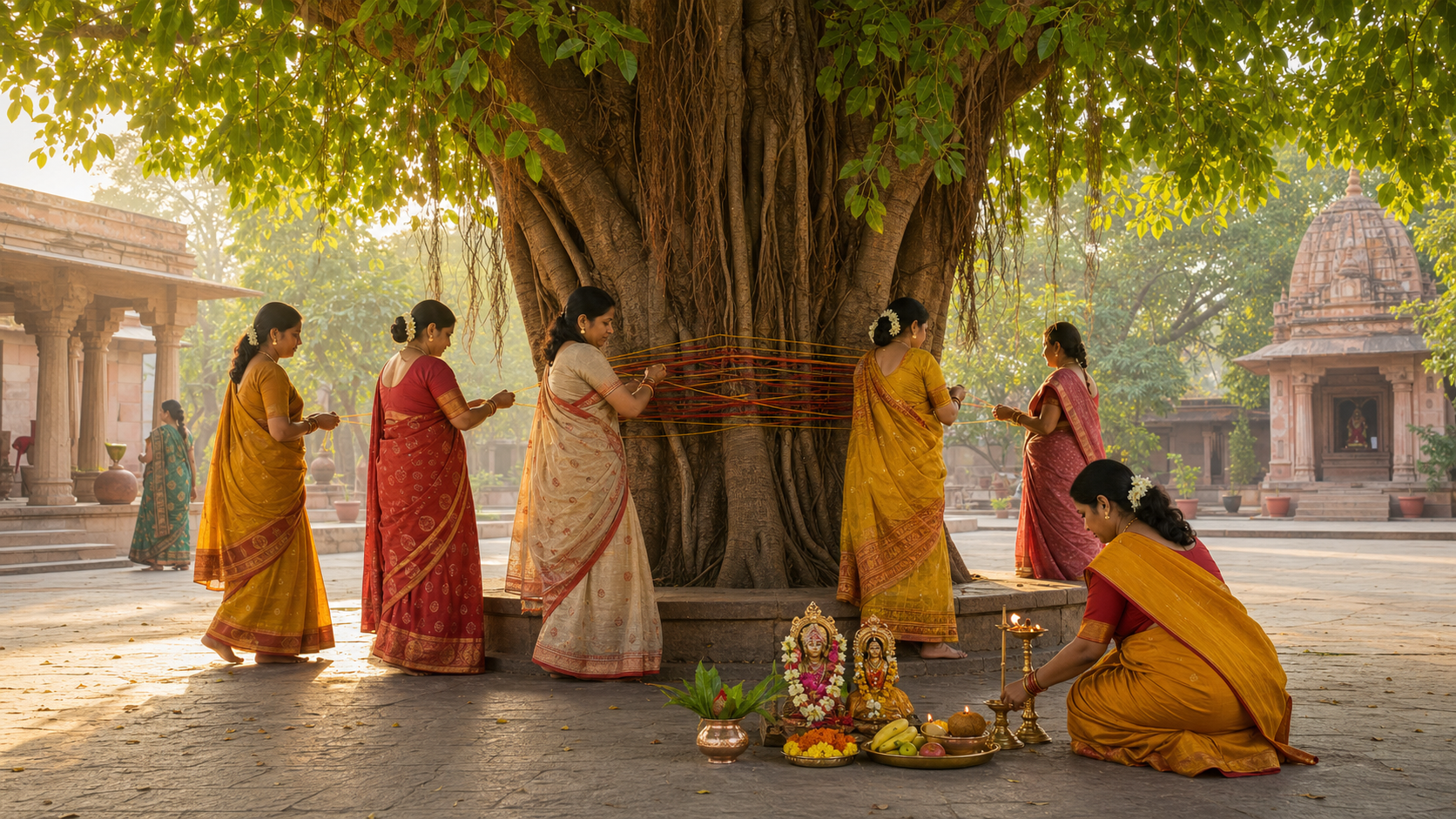
If you have found one calendar placing Vat Savitri on Purnima and another placing it on Amavasya, you do not have to decide that one community is mistaken. The observance has two established regional streams, and the right date for you depends on the panchang and family tradition you actually follow.
Once that question is settled, keep the vrata simple enough to remain sincere. Confirm the local tithi, prepare a modest Savitri-Gauri puja, hear the Savitri-Satyavan katha attentively, worship the banyan without damaging it, and connect your prayer for family well-being to one concrete act of care.
First settle the date: Purnima and Amavasya are both valid traditions
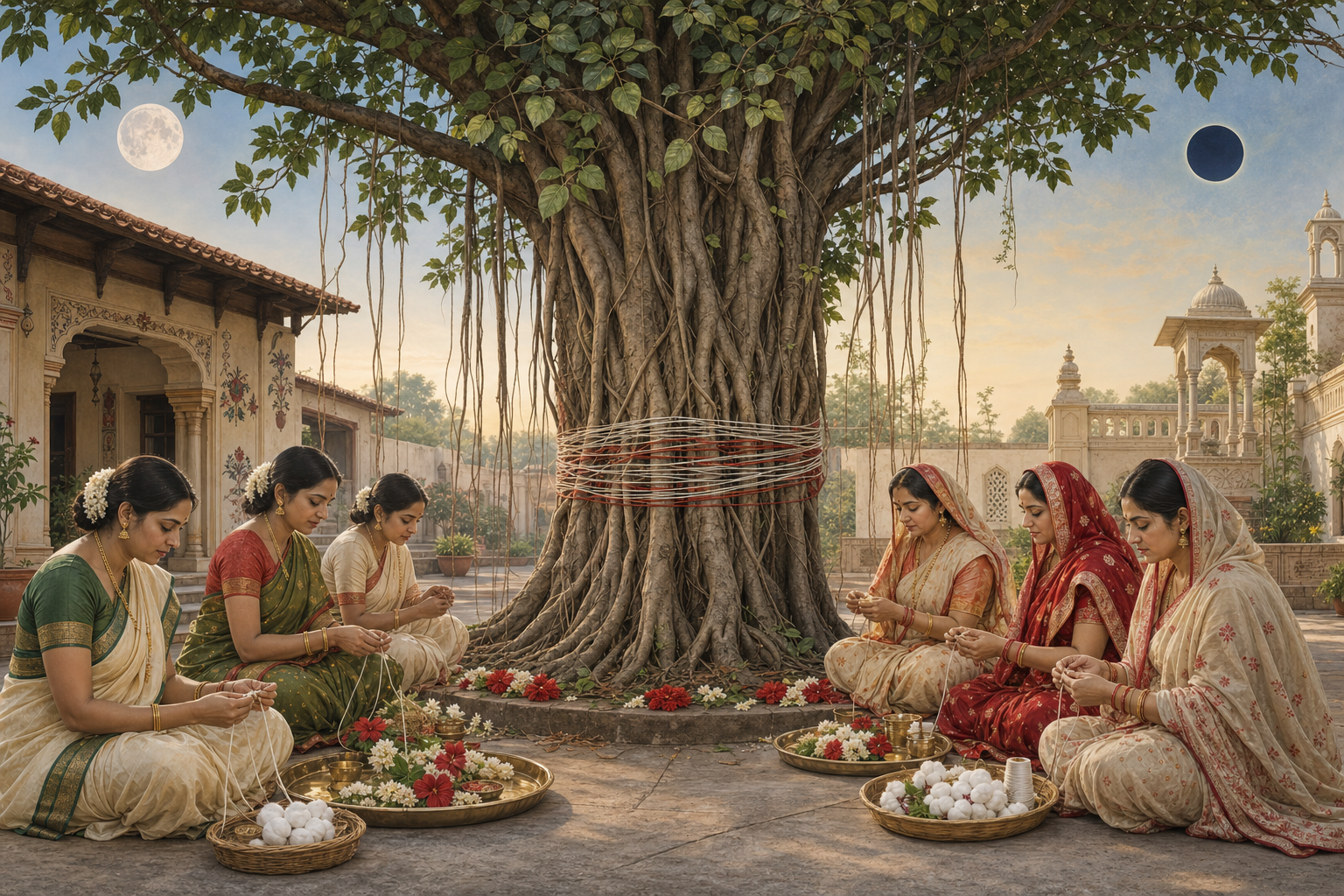
Vat Purnima and Vat Savitri Vrat share the same devotional center, but regional calendars do not always assign the observance to the same lunar day. Many communities in North India, Andhra Pradesh, Telangana, and Karnataka observe it on Jyeshta Purnima. Maharashtra, Goa, and Gujarat prominently preserve the closely related Jyeshta Amavasya observance.
| Regional stream | Lunar day | Commonly associated regions | What you should do |
|---|---|---|---|
| Vat Purnima | Jyeshta Purnima | Many parts of North India; Andhra Pradesh, Telangana, and Karnataka | For 2026, begin with June 29, then confirm the local tithi and puja time. |
| Vat Savitri Vrat | Jyeshta Amavasya | Maharashtra, Goa, and Gujarat | Use the Jyeshta Amavasya date given by your local panchang and family custom. |
The distinction matters because an internet search may return the date followed in another region. Before buying puja items or arranging a temple visit, ask one precise question: does your household observe Savitri on Jyeshta Purnima or Jyeshta Amavasya? A family elder, the temple where you will perform the parikrama, or a reliable local panchang can answer it.
For the Purnima observance in 2026, Vat Purnima falls on June 29. The puja is generally performed in the morning after sunrise, with many households completing the principal worship and banyan parikrama before midday. Where a tithi transition affects the date, the customary rule is to follow the day on which Purnima prevails at sunrise. Local calculations can differ, so do not use a time copied from another city without checking it against your location.
The two dates do not produce two different spiritual purposes. Both preserve Savitri-Gauri worship, reverence for the Vata-vriksha, prayer for saubhagya, and a vow directed toward the well-being and continuity of household life. Follow your lineage without turning regional variation into a dispute over authenticity.
Read Savitri as an agent of dharma, not a passive ideal
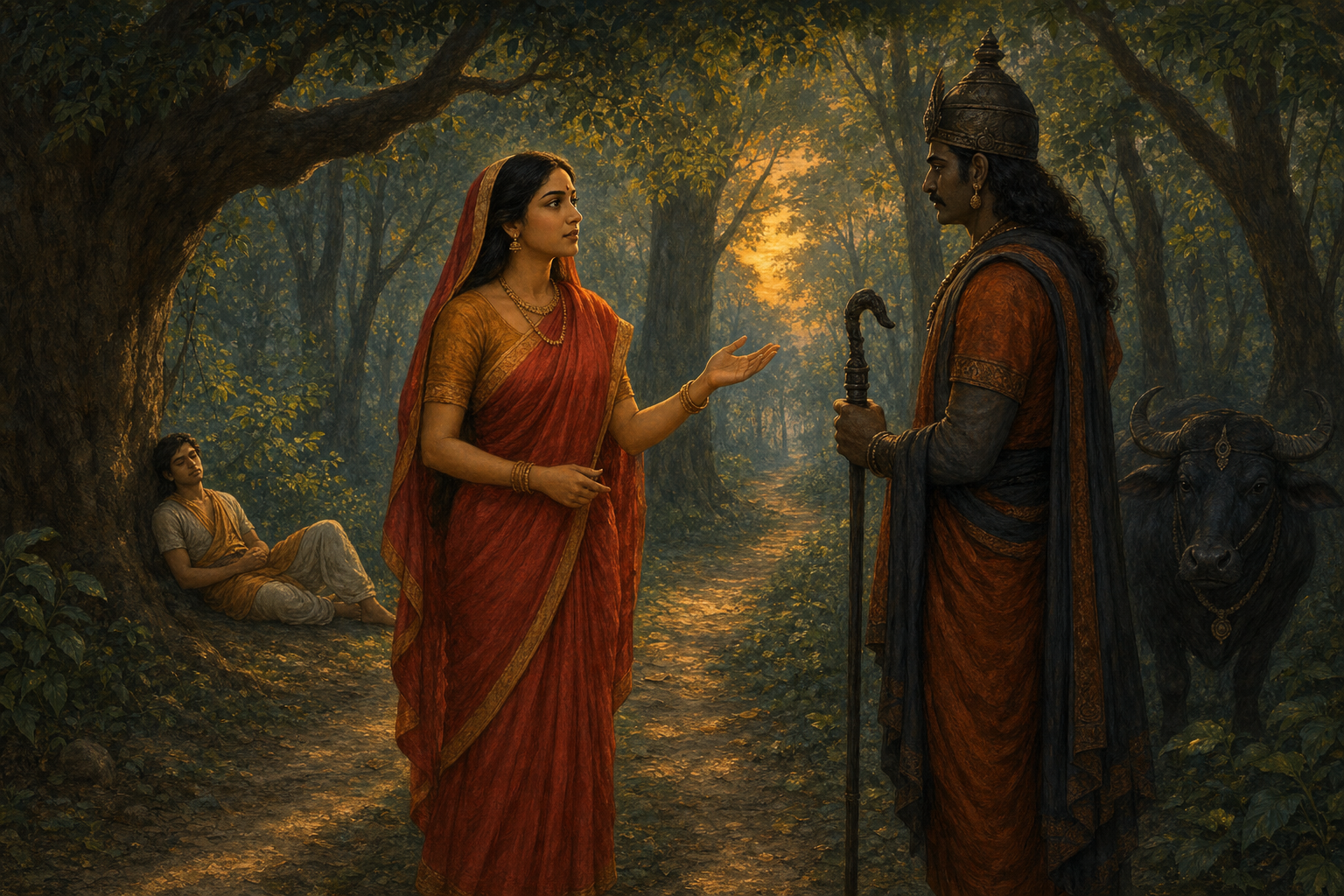
The Savitri-Satyavan narrative in the Mahabharata’s Vana Parva is sometimes reduced to a single sentence: a devoted wife saves her husband. That shorthand misses the qualities through which Savitri acts. She is learned, disciplined, composed before death, and extraordinarily precise in speech. She does not overcome Yama through panic or force. Her vrata, discernment, spiritual merit, and dharmic reasoning give weight to her words.
As Savitri follows Yama, her requests are directed toward the restoration of a larger moral order: the welfare of her elders-in-law, the continuation of lineage, and finally the return of Satyavan’s prana. Her steadfastness is therefore more than attachment to one person. It protects relationships and duties extending across generations.
This gives you a better focus while listening to the katha. Notice four disciplines rather than waiting only for the miraculous conclusion:
- Vrata: Savitri keeps her chosen commitment when it becomes difficult.
- Vak-shuddhi: her speech remains truthful, purposeful, and free from confusion.
- Dhriti: she stays composed in the presence of loss.
- Viveka: she understands what to ask for and how each request serves dharmic continuity.
Those qualities prevent the vrata from becoming a one-sided demand that a wife must bear every burden for a marriage. The ethical horizon is fidelity and mutual care within grihastha ashrama. If you are keeping the vrata, pair the prayer for your spouse’s long life with an honest question about shared life: What act of truthful speech, reliability, care for elders, or reconciliation does this household require from me now?
That question does not replace the ritual. It makes the ritual accountable to the katha. A thread around a tree symbolizes continuity; your conduct supplies the continuity with substance.
Perform a complete puja without making it needlessly complicated
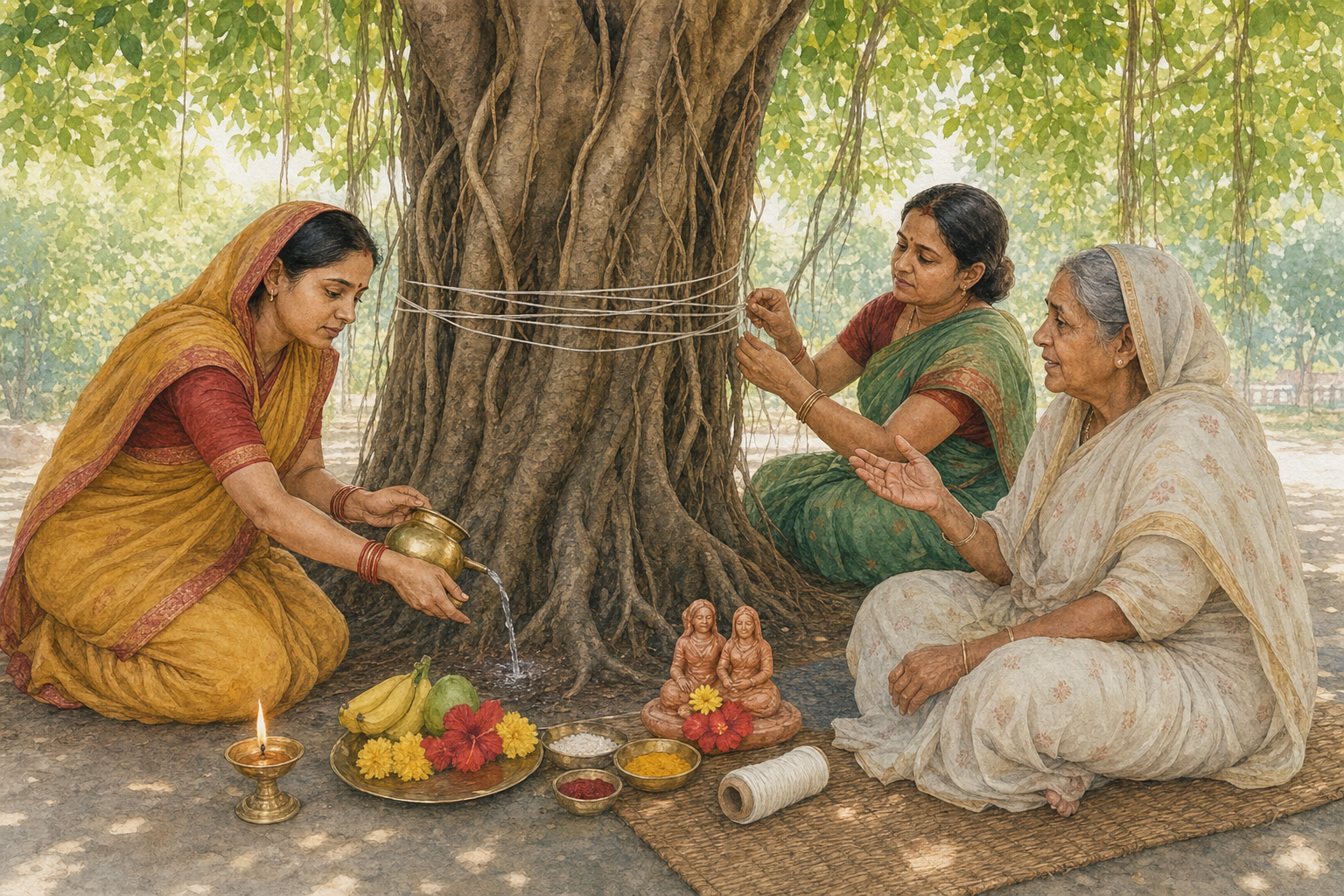
No single shopping list overrides regional and family custom. A practical set of commonly used items includes a lamp with sesame oil or cow ghee, incense, flowers, akshata, kumkum, haldi, sandal paste, cotton sacred thread, fruit, seasonal sweets, and a small lota of clean water. Betel leaf and nut may be included where customary. Some households also offer cloth, a mirror, bangles, or a mangal-sutra token as symbols of saubhagya.
Arrange an image or murti of Savitri and Gauri at a clean home altar, along with a kalasha and deepa if those belong to your practice. Then use this sequence as a framework, allowing your family’s paddhati to determine the precise mantras and number of offerings:
- Begin with snana and sankalpa. After bathing, state the name of the vrata, the date and place, and your intention for the well-being and harmony of the family. A clear intention is better than hurriedly reciting words you do not understand.
- Invoke Ganesha. Offer a brief prayer for the unobstructed completion of the worship.
- Worship Gauri and Savitri. Simple invocations such as Om Gauryai Namah and Om Savitryai Namah may be repeated with attention. Offer fragrance, flowers, incense, lamp, and naivedya according to a panchopachara or the fuller custom followed at home.
- Hear or recite the katha. Do not treat it as background sound while arranging offerings. Give attention to Savitri’s resolve, truthful speech, care for family continuity, and discernment before Yama.
- Worship the Vata-vriksha. Pour a modest amount of water at a safe distance from the trunk. Place flowers and akshata near the roots without cutting, scraping, or otherwise harming the tree.
- Perform parikrama with cotton thread. Circumambulate prayerfully while tying the raksha-sutra. Families may prescribe three, five, seven, eleven, sixteen, twenty-one, or another number of rounds; some traditions undertake as many as 108. Follow the number you have inherited rather than treating a larger count as proof of greater devotion.
- Conclude with prayer, dana, and parana. Pray for mutual well-being and offer charity within your means. Some families break the fast after puja and dana, some after moonrise, and others at the next sunrise. Follow the rule attached to your vrata.
The banyan is not merely a convenient ritual location. Its long life, vast canopy, and aerial roots make it a powerful image of stability, shelter, and intergenerational continuity. Its association with akshaya, the inexhaustible, explains why the thread represents a commitment meant to endure through changing circumstances. The ritual form and the natural life of the tree reinforce one another.
If you cannot reach a living banyan, do not abandon the vrata. Complete the Savitri-Gauri worship and katha at home, using a potted banyan or a respectful symbolic representation if available. You can then arrange a later visit to a temple courtyard banyan for parikrama. What should be avoided is damaging an unsuitable tree, entering an unsafe location, or turning access to a particular tree into a condition for sincere worship.
Fasting also varies. The vrata may be observed as nirjala, with fruit, or with one sattvik meal. A waterless fast is not a test of moral worth. Pregnant or nursing women, elders, and anyone with a health constraint should follow medical counsel and retain the devotional core through puja, katha, parikrama, and dana without endangering health. If you are supporting someone who is fasting, help with travel, shade, puja arrangements, and an appropriate parana rather than leaving the practical burden to the person keeping the vow.
Carry the vow beyond the thread around the banyan

A Vata tree is a living being, not ritual equipment. Ficus species support birds, pollinators, and small mammals, help stabilize soil, and moderate the immediate microclimate. That ecological role gives you a simple test for every offering: if an action injures the bark, crowds the roots, or leaves non-biodegradable material behind, it contradicts the reverence the ritual is meant to express.
Use cotton thread and biodegradable offerings. Place water carefully rather than flooding or trampling the roots. Choose flowers and food offerings that can be handled without leaving plastic packaging at the site. Supporting the care or planting of suitable trees can extend a single morning’s worship into long-term stewardship.
This union of reverence and ecological responsibility belongs to a wider Dharmic sensibility. Hindu traditions honor sacred trees; Jain chaitya-vriksha traditions recognize trees such as the nyagrodha; Buddhist communities venerate the Bodhi tree; and Sikh teaching describes air as guru, water as father, and the great earth as mother. These are distinct traditions, not interchangeable rituals, but they cultivate a shared habit of gratitude toward the natural world.
Dana gives the same outward direction to the vrata. You might distribute sattvik food, support girls’ education, contribute to responsible tree planting, or provide water for birds and animals during the summer. Choose one act you can complete, record it as part of your sankalpa, and do it promptly. This turns a private prayer for household welfare into lokasangraha, the work of sustaining the wider world.
Key takeaways
- Vat Purnima falls on June 29 in 2026, but Maharashtra, Goa, and Gujarat prominently keep the related Vat Savitri Vrat on Jyeshta Amavasya. Confirm your regional panchang before acting on an online date.
- For the Purnima stream, the main worship is generally performed after sunrise in the morning, often before midday; local tithi calculations still govern.
- The heart of the katha is Savitri’s disciplined commitment, pure speech, fortitude, and discernment before Yama, not austerity detached from ethical conduct.
- A simple puja needs Savitri-Gauri worship, attentive hearing of the katha, respectful Vata parikrama, prayer, and dana. Elaborate materials are secondary to family paddhati and sincere attention.
- Use cotton thread and biodegradable offerings, protect the banyan’s roots and bark, and adjust the fast when age, pregnancy, nursing, or health makes austerity unsafe.
- Before the vrata, confirm the date with your family or temple, gather only the materials you need, and choose one specific act of household care or seva to fulfill afterward.
Your most useful preparation is therefore not a longer shopping list. It is a three-part decision made in advance: which tithi your family follows, where you can worship without harming the tree, and which concrete act will carry Savitri’s dhriti and care into the days after the vrata.