
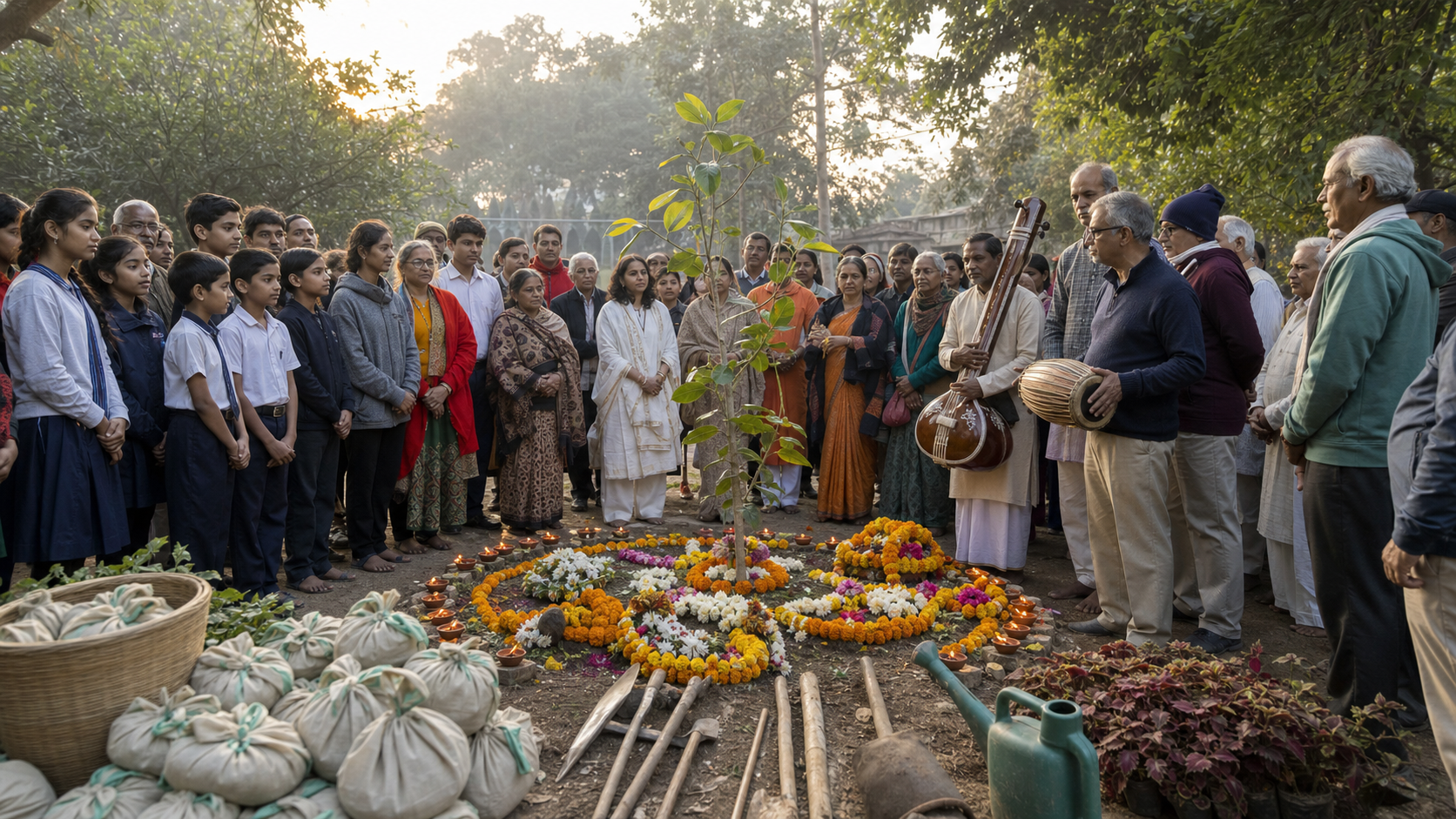
You may be planning a Vande Mataram anniversary programme for a school, temple, cultural association, neighbourhood, or local dharmic organisation. The difficult part is not arranging a group rendition. It is making sure people leave with a clearer memory of Bharat’s history, a stronger bond with one another, and a duty they are prepared to carry into ordinary life.
A meaningful commemoration therefore needs more than a stage, a microphone, and an audience. Give participants enough historical context to understand what they are singing, enough guidance to join without embarrassment, and a practical way to turn patriotic feeling into service.
Remember the historical journey, not just the anniversary
Vande Mataram carries several layers of memory. Bankim Chandra Chattopadhyay composed it in the late nineteenth century; Rabindranath Tagore first sang it publicly in 1896; it became a defining expression of India’s freedom struggle and was adopted as the National Song. That journey from composition to public voice, national awakening, and civic inheritance is the reason the anniversary deserves more than a ceremonial recital.
For an organiser, this history supplies a clear narrative. Begin with the creator and the period. Mark the significance of the 1896 public rendition. Then explain how the song came to embody cultural confidence during the freedom movement. End by asking what inheriting that legacy requires from citizens now.
Keep this explanation concise enough to be remembered. Place the names, the 1896 date, the freedom-struggle connection, and the National Song status on a programme sheet or display. A participant who arrived knowing only the melody should leave able to explain why the song matters.
Do not use the historical introduction to claim ownership for a party, sect, or organisation. Vande Mataram belongs to the national inheritance of Bharat. A dharmic commemoration can state its civilizational perspective confidently while welcoming every participant who approaches the occasion with respect.
Design the gathering around participation, understanding, and service
People experience a collective song from inside the crowd, not from the organiser’s table. Plan every element from that perspective. Can a newcomer find the words? Can a student follow the rhythm? Can an elder hear the cue? Does a family know what will happen before and after the rendition?
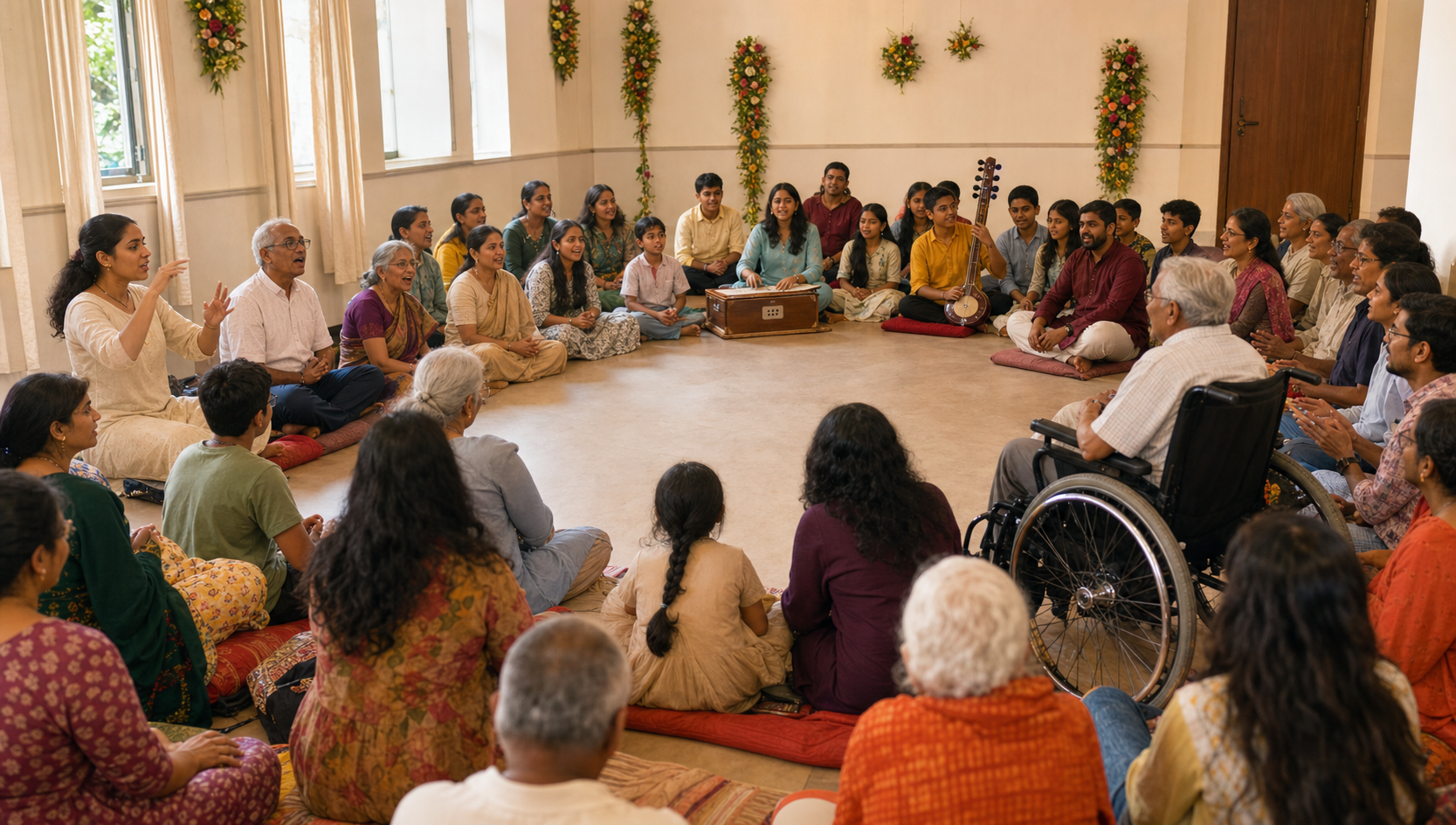
A useful model emerged in Kolhapur, where families, students, professionals, and elders participated together. Cultural groups and educators supplied accessible cues, while the gathering maintained disciplined enthusiasm rather than turning the commemoration into spectacle. The result was both a public observance and an intergenerational setting for cultural and civic learning.
Remove avoidable barriers before the event
Circulate or display the lyrics in a form participants can read easily. If you provide transliteration or pronunciation help, ask a knowledgeable language teacher or cultural educator to review it. A confident group voice begins with preparation; it should not depend on participants pretending to know words they have never been taught.
Your invitation should describe the actual programme: historical context, pronunciation or rhythm guidance, the collective rendition, a moment of reflection, and a follow-up act of service. That clarity helps parents, first-time participants, and members of different traditions understand how they can take part.
Choose a lead singer or cue-giver who can keep a steady cadence without turning the event into a solo performance. Test the sound arrangement from the audience area. The purpose of amplification is to support the collective voice, not replace it.
Give the programme a purposeful sequence
- Welcome participants and explain that the gathering joins remembrance with present-day responsibility.
- Give the essential historical context: Bankim Chandra Chattopadhyay, the late nineteenth-century composition, Rabindranath Tagore’s public rendition in 1896, the freedom-struggle connection, and the song’s place as the National Song.
- Guide participants through pronunciation, rhythm, and the cues they will need. Keep corrections calm and practical.
- Invite the assembled community to render the song together with attention and dignity.
- Allow space for reflection on gratitude toward the land, its people, and the generations that carried the national movement.
- Name the service activity or civic commitment through which participants can continue the observance after they leave.
Resist the temptation to make the central rendition louder, longer, or more theatrical than it needs to be. Composure is not a lack of patriotic feeling. It gives people room to listen to one another, attend to the words, and recognise themselves as part of a shared national voice.
Make the follow-through visible
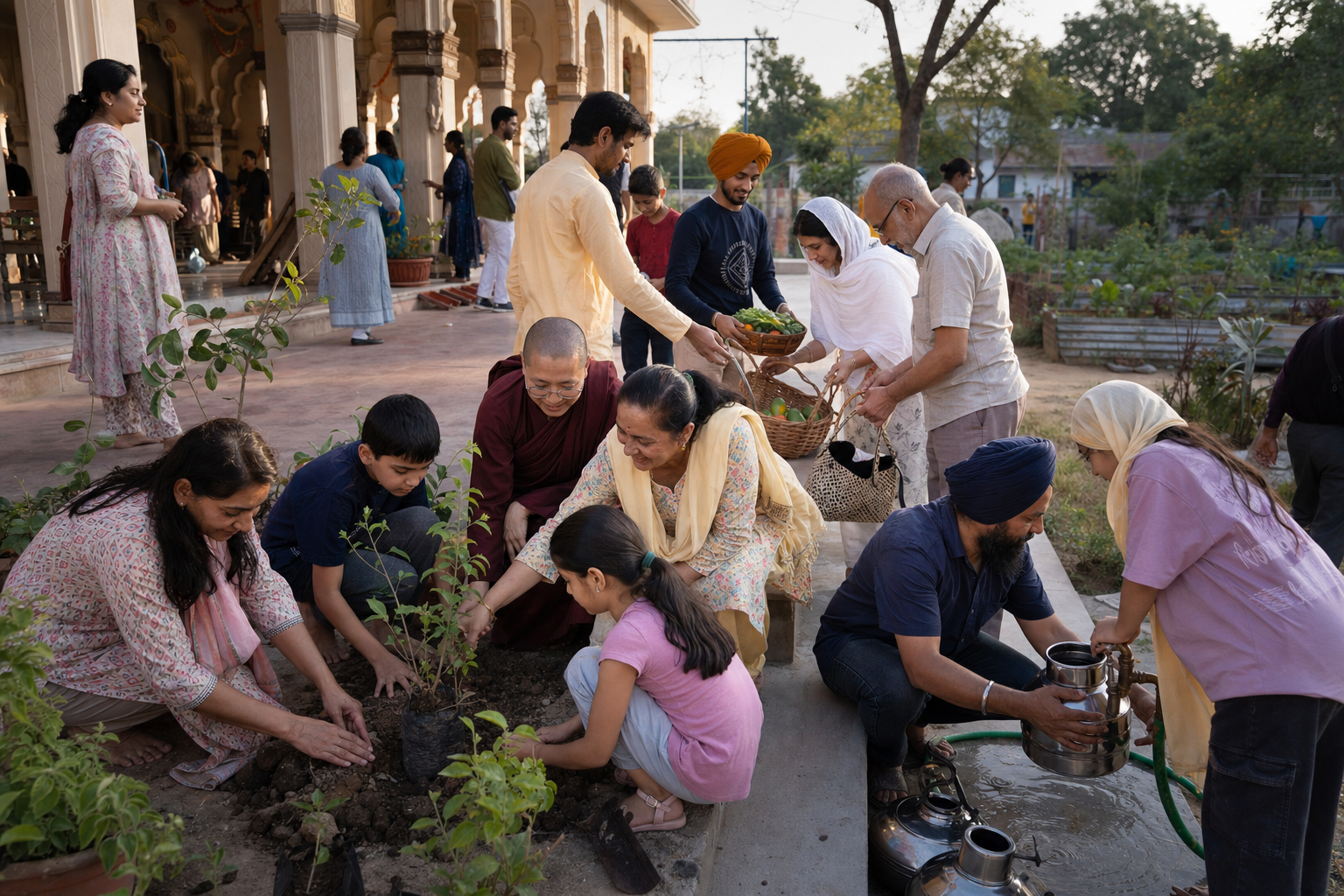
Do not end with applause and photographs. Connect the anniversary to an achievable community responsibility: a cultural-learning session for children, help for a local library, care for a shared public place, support for families in need, or another service activity suited to your locality. Announce how participants can join and identify who will coordinate it.
After the gathering, ask whether newcomers could follow the rendition, whether different generations participated, what people learned about the song, and whether they understood the next civic action. These questions reveal more than attendance alone. They show whether the event created participation or merely assembled spectators.
Practise dharmic unity without erasing real differences
Hindu, Buddhist, Jain, and Sikh traditions are not interchangeable. They have distinct teachings, practices, institutions, and histories. Dharmic unity does not require anyone to conceal those differences. It asks whether diverse paths can meet in gratitude for the land, respect for one another, and service to the common good.
That distinction should shape the programme. Invite representatives of locally present dharmic traditions to express a shared civic responsibility in language natural to their own tradition. Do not hand everyone an artificial statement of theological agreement. The point is coordinated duty, not manufactured sameness.
A simple test helps: can a Hindu from another sampradaya, a Buddhist, a Jain, or a Sikh participate without being asked to perform agreement with someone else’s doctrine or ritual? If not, revise that part of the programme. The collective rendition can remain the common centre while tradition-specific observances retain their proper settings.
This approach avoids two opposite failures. The first strips the occasion of its history until it becomes a generic cultural programme. The second treats Vande Mataram as factional property and makes fellow citizens feel they are entering someone else’s enclosure. Historical specificity and broad civic welcome belong together.
A pro-Dharma commemoration need not be defensive or strident. It can show confidence through hospitality, disciplined conduct, accurate teaching, and respect for plural paths. That is a stronger demonstration of civilizational continuity than slogans unsupported by practice.
Key takeaways
- Anchor the commemoration in the song’s historical journey: Bankim Chandra Chattopadhyay, the late nineteenth century, Rabindranath Tagore’s 1896 public rendition, the freedom struggle, and National Song status.
- Provide readable lyrics and reliable pronunciation or rhythm cues so first-time participants can join with confidence.
- Invite students, families, professionals, and elders as active participants rather than arranging a performance for a passive audience.
- Present dharmic unity as shared gratitude and civic duty among distinct Hindu, Buddhist, Jain, and Sikh traditions, not as theological sameness.
- End with a named service activity, a coordinator, and a clear way for participants to continue the commitment.
Your next step is to draft a short programme note. Put the historical anchors at the beginning, participation cues in the middle, and the follow-up service commitment at the end. Ask a cultural educator and representatives of the participating communities to check it for accuracy, clarity, and respectful language.
The voices raised during the anniversary will be memorable. What your community does afterward will decide whether Vande Mataram was treated as heritage performed for a day or as a duty renewed in everyday life.

References
