
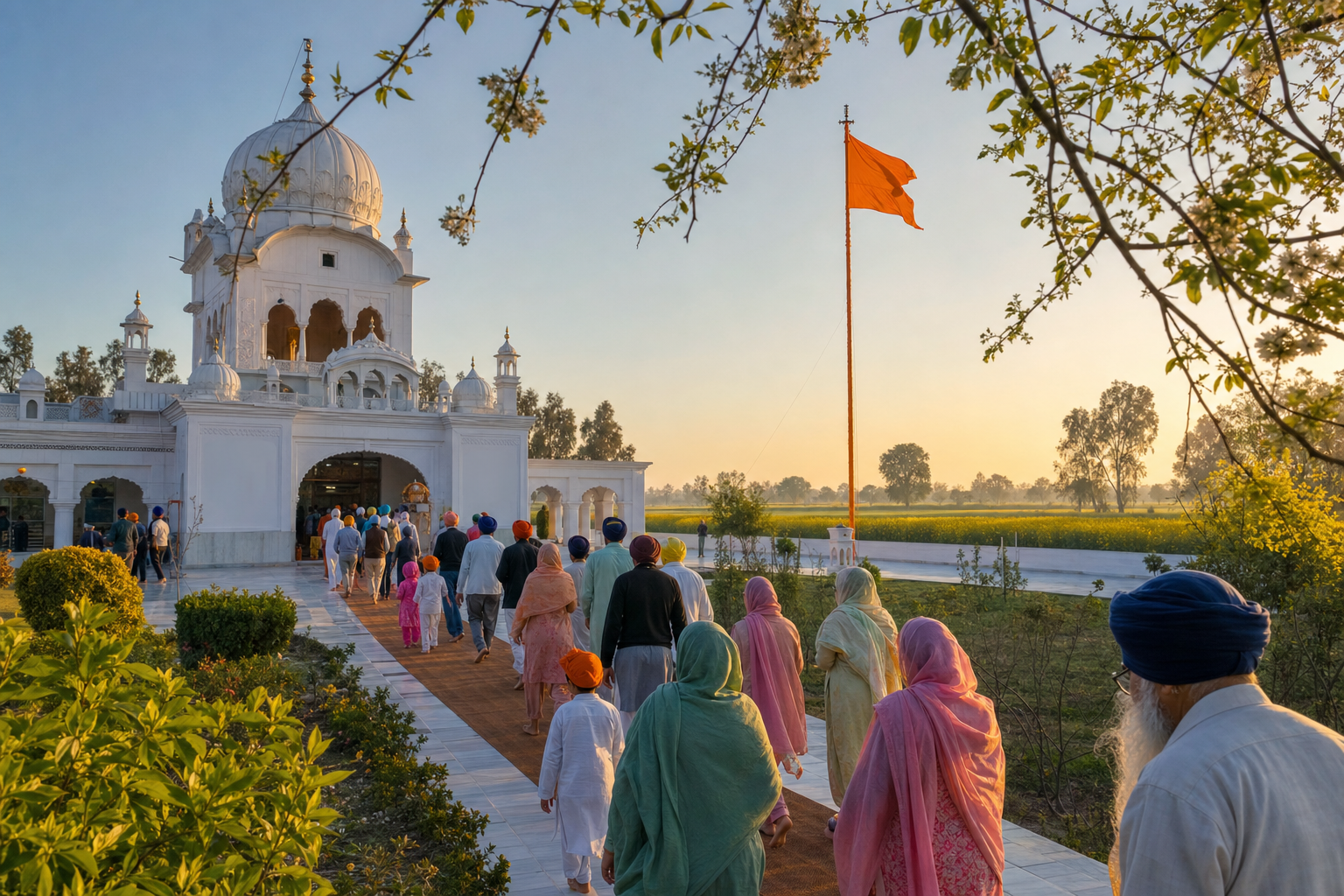
If you are trying to decide whether the Sikh New Year falls in March or at Vaisakhi in April, you have encountered a real feature of Sikh life rather than a simple calendrical mistake. Both moments matter, but they foreground different dimensions of renewal.
For you, the practical answer is not to make one date defeat the other. Learn what each observance means, check the calendar followed by the local gurdwara, and let the season change something more substantial than the date displayed on your phone.
First decide which New Year you mean
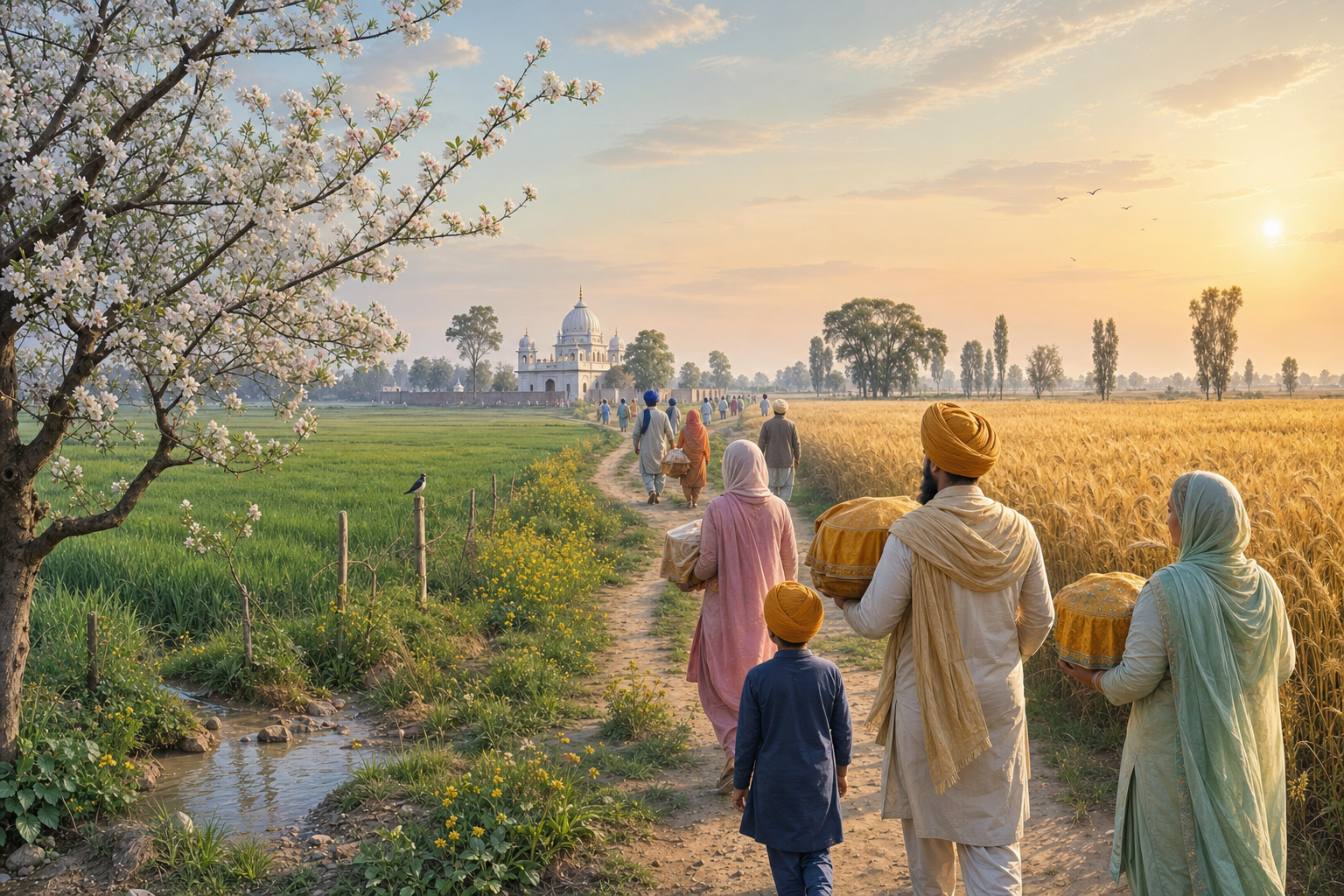
The beginning of Chet falls around 14 March, while Vaisakhi is observed around 13-14 April. The first is the opening of the year in the Nanakshahi calendar. The second carries the memory of the Khalsa’s inauguration and, in Punjab’s agrarian setting, gratitude for the harvest.
| Observance | Usual timing | What it foregrounds | How you can prepare |
|---|---|---|---|
| 1 Chet | Around 14 March | The opening of the Nanakshahi year, reflection on time, and personal spiritual realignment | Review your daily discipline, attend the local programme, and choose a practice you can sustain |
| Vaisakhi | Around 13-14 April | The formation of the Khalsa in 1699, collective courage, service, and harvest gratitude | Join congregational worship or seva and connect remembrance of the Khalsa with a present duty |
The distinction prevents two common errors. Calling 1 Chet merely a technical calendar date empties it of devotional purpose. Calling Vaisakhi only a Punjabi harvest festival leaves out the event that gave it exceptional force in Sikh memory.
The Nanakshahi calendar was developed as a solar framework tied to the tropical year, helping reduce annual drift and making dates more predictable for geographically dispersed communities. Bikrami reckoning nevertheless remains important in many households and gurdwaras. Local schedules may therefore reflect inherited custom as well as calendar design. Sunrise, latitude, and time-zone differences can also shape the practical timing of programmes.
If you are arranging a family gathering, school presentation, interfaith visit, or public greeting, ask the gurdwara which date and name it uses. Put that date on the invitation and explain its significance in one sentence. This is more respectful than declaring a universal date and treating every other practice as an error.
Key takeaways
- 1 Chet and Vaisakhi are not rival claimants to one empty label. One marks the calendar’s opening; the other concentrates Sikh history, identity, and public duty.
- Sikh renewal begins with alignment to hukam, not the fantasy that a new date erases the consequences of the old year.
- Effort matters through remembrance, honest work, sharing, sangat, and seva, but Sikh theology does not treat liberation as an achievement of the ego.
- Vaisakhi is understood most fully when remembrance of the Khalsa leads to courage, protection of dignity, and service beyond one’s own circle.
- A useful New Year commitment joins one inward discipline to one outward responsibility.
Renewal begins with Akal and hukam
A calendar changes; the Timeless does not
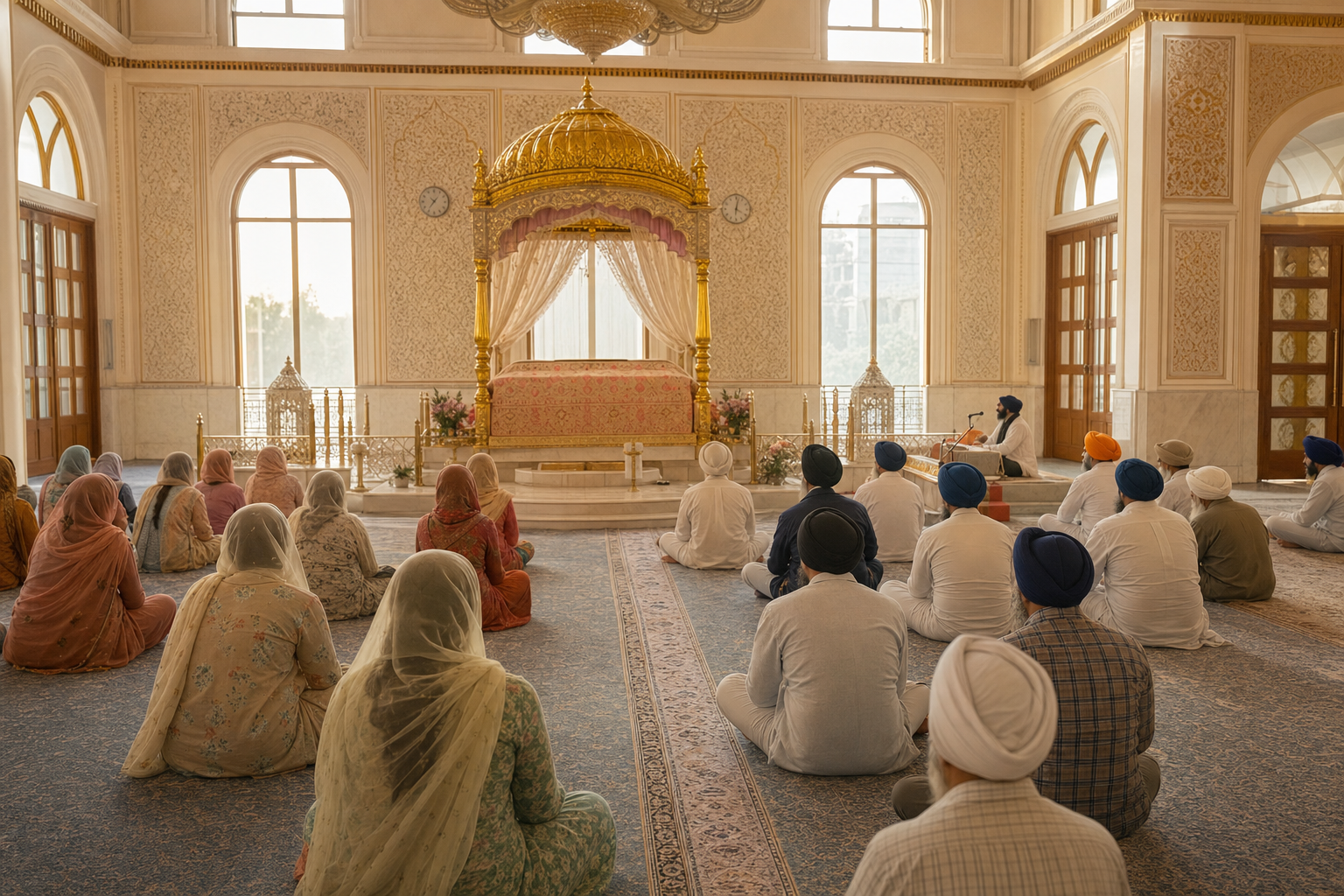
Sikh theology places the changing year within the reality of Akal, the Timeless. Days and seasons pass, communities remember, and human lives move through birth, labour, responsibility, and death. Akal is not carried along by that movement. This is why the Sikh New Year cannot be reduced to optimism about a fresh start.
Time becomes spiritually useful when you live within hukam, the divine order in which creation unfolds. Hukam does not provide an excuse for passivity. The Sikh tradition binds contemplation to honest work, service, and the defence of dignity. Acceptance of hukam therefore means relinquishing the ego’s demand to control everything while remaining answerable for what you actually do.
A practical New Year examination can begin with three questions: Where did attachment to control make you dishonest or harsh? Which responsibility did you avoid while calling the avoidance acceptance? What would faithful action look like if praise, status, and resentment were removed from the decision?
Gur Prasad keeps discipline from becoming ego
Gur Prasad, the closing expression of the Mool Mantar, places grace at the heart of spiritual orientation. Grace may also be spoken of as nadar or kirpa. It is not a loophole that makes practice unnecessary, and it is not a wage paid after enough religious labour. It names the divine gift by which the hold of haumai, the self-centred ego, is overcome.
This produces a demanding balance. You practise Naam Japna, honest labour through Kirat Karna, and sharing through Vand Chhakna. You join sangat, undertake seva, listen to kirtan, and shape the day through prayer. Yet you do not turn those actions into a spiritual account balance. Practice prepares and clears the field; grace accomplishes what self-assertion cannot.
This distinction should change how you make a resolution. Do not promise a dramatic religious performance so that you can admire the person making it. Choose a discipline that exposes and weakens haumai: remember Naam when irritation rises, serve where nobody will applaud, or repair an unfair act without making your apology another display of self-importance.
Jivan mukti makes freedom a present responsibility
The Sikh goal of jivan mukti is liberation while living. It is not an escape from ordinary duties into a private spiritual enclosure. As the mind becomes attuned to Naam and shabad, freedom becomes visible in conduct: less domination by ego, steadier remembrance, honest livelihood, generosity, and concern for the whole community.
Hindu, Buddhist, and Jain readers will recognise related Dharmic questions here. Hindu traditions speak of moksha, Buddhist traditions of nirvana, and Jain traditions of kevala jnana. Sikh teaching uses its own grammar of Naam, shabad, hukam, haumai, the Guru, and grace. These vocabularies should not be flattened into interchangeable formulas. Their practical kinship lies in disciplined ethical life, cultivation of the mind, truthfulness, and freedom from the narrower self. Use comparison to listen more carefully, not to translate away the differences.
Vaisakhi turns spiritual renewal into public duty
At Anandpur Sahib in 1699, Guru Gobind Singh inaugurated the Khalsa through the Panj Piare. Vaisakhi therefore remembers more than the founding of an institution. It recalls a disciplined community in which devotion, identity, courage, and responsibility were joined.
The saint-soldier ideal, often expressed as sant-sipahi and illuminated by miri-piri, refuses a split between the inward and outward life. Simran without concern for injustice can become withdrawal. Activism without inner discipline can be captured by anger and ego. The Sikh answer holds spiritual attention and righteous action together.
The ethical horizon is the protection of conscience and human dignity, especially where the vulnerable cannot defend themselves. Khalsa memory should not be recruited into contempt for another community. Courage is tested by whether it protects, not merely by how loudly identity is asserted.
You can examine your Vaisakhi observance through three concrete tests:
- Courage: Is there a truthful word, fair decision, or act of support that fear has kept you from offering?
- Discipline: Does your daily conduct honour the principles you celebrate publicly, especially in speech, work, and digital behaviour?
- Protection: Can you name the person or community whose dignity will be safer because of something you do this year?
These questions move Vaisakhi beyond costume, food, and spectacle without dismissing cultural celebration. Joy and public identity have a rightful place. Their deeper measure is whether they form people capable of seva, restraint, and principled bravery.
Traditions teach through participation, not display
New Year programmes may include akhand paath, kirtan, katha, Nishan Sahib seva, Nagar Kirtan, amrit sanchar, and an expanded langar. Each practice works on a different part of the person and community. The point is not to collect religious activities but to let participation train attention, emotion, humility, and responsibility.
- Akhand paath and katha centre sustained engagement with Gurbani and its teaching. Do not measure participation only by how long you were present; leave with one instruction you can carry into conduct.
- Kirtan directs emotion toward devotion through shabad. Listen for the teaching rather than treating the music as background to a social event.
- Ardas and hukamnama place intention before the Guru and orient the next action. Receive a hukamnama as guidance for thought and deed, not as a prediction detached from responsibility.
- Nishan Sahib seva and Nagar Kirtan make collective identity visible. Let that visibility prompt a question about what the community’s presence offers its neighbours.
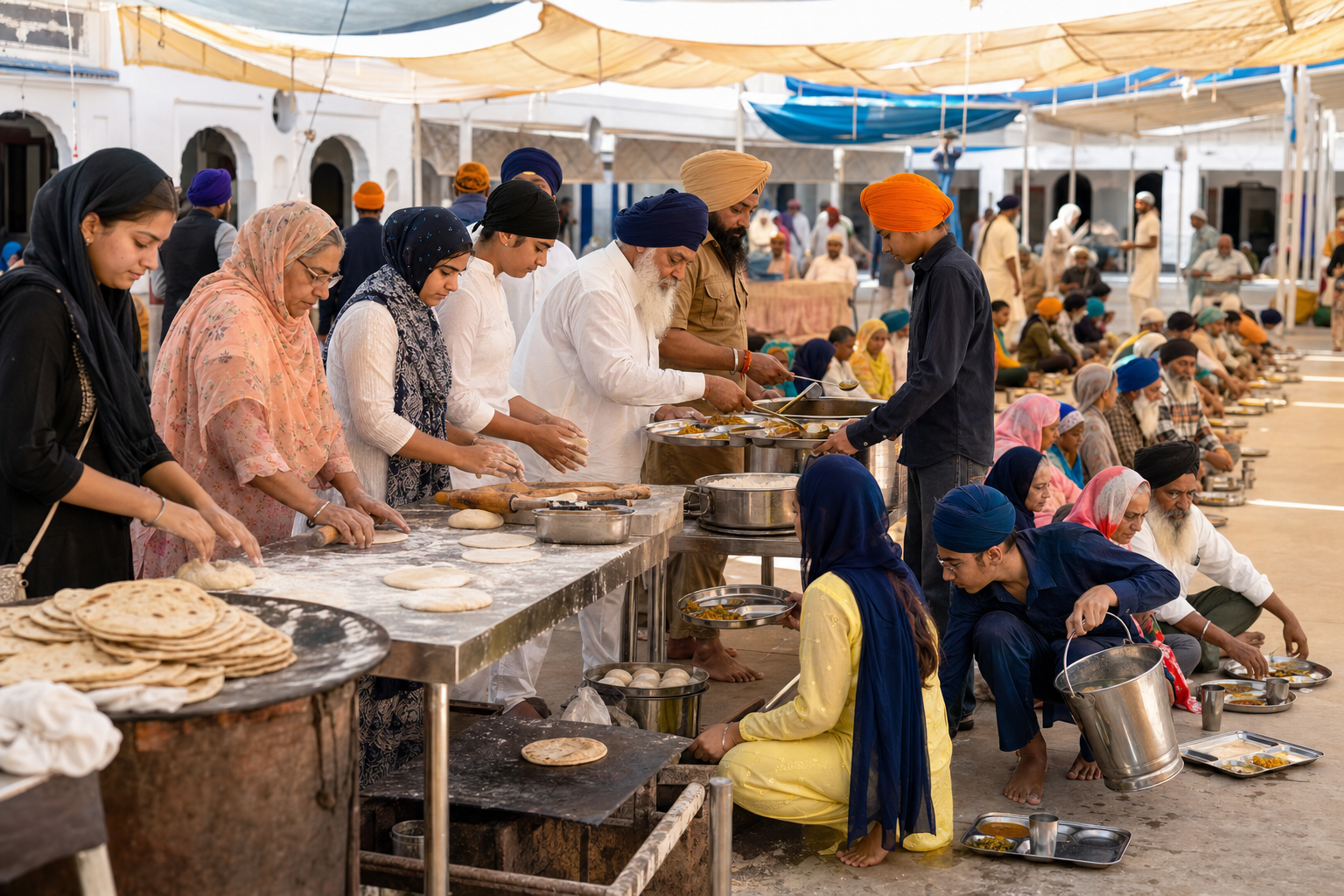
- Langar embodies equality through shared food and service. Preparing, serving, cleaning, donating, and sitting in the common meal can be more formative than watching from the edge.
- Amrit sanchar concerns disciplined commitment and should not be approached as public entertainment. Follow the directions and boundaries set by the organising gurdwara.
In agrarian settings, Vaisakhi also expresses gratitude for harvest, earth, labour, and sustenance. That meaning can travel beyond Punjab without becoming decorative nostalgia. A city congregation can honour it by reducing waste in langar, respecting the labour behind food, supporting those who face hunger, or directing seva toward the material needs of its neighbourhood.
If this will be your first gurdwara visit, check the announced schedule rather than assuming every programme happens on the same day. Follow the local guidance on head covering, footwear, seating, photography, and participation. Ask where help is needed. The most respectful visitor is not the one who already knows every term, but the one willing to listen and serve without making the occasion about being noticed.
Build a rule of life that survives the festival

A resolution becomes useful when it has a place in your day, a relationship to your duties, and a visible effect beyond yourself. Vague promises to become more spiritual usually disappear because they specify neither a practice nor the moment when it will happen.
Use the Sikh triad of remembrance, honest work, and sharing to make the commitment concrete:
- Place remembrance in real time. Choose where simran or an appropriate Nitnem practice belongs in your existing day. Amrit vela offers quiet attention before worldly duties begin. Japji Sahib, Jaap Sahib, and Rehras Sahib can give the day a devotional rhythm according to the discipline you follow.
- Name the behaviour that must change. Connect remembrance to a recurring point of haumai: impatient speech, the need to win every disagreement, dishonest work, resentment, or compulsive digital attention.
- Audit your livelihood. Kirat Karna asks more than whether income is technically earned. Examine whether your work is honest, whether you exploit another person’s weakness, and whether your methods agree with the values invoked in prayer.
- Make sharing dependable. Give Vand Chhakna a stable form through langar, education, health, neighbourhood support, or another concrete need. Decide what you will contribute and when, rather than waiting to feel unusually generous.
- Join personal practice to sangat and seva. Put congregational worship, study, kirtan, or service into the same calendar that holds professional obligations. A commitment that exists only in private intention is easy to renegotiate away.
- Review the fruit rather than the performance. Ask whether agitation is loosening, speech is becoming cleaner, work is more honest, and another person is being served. If practice is feeding pride or hostility, the method needs correction even when the outward routine looks impressive.
The aspiration behind these commitments is sarbat da bhala, the well-being of all. This prevents the New Year from shrinking into personal optimisation. Your discipline should improve the quality of your attention, but it should also make your family, workplace, congregation, and neighbourhood more just and humane.
Before the next observance, confirm the date used by your local gurdwara, put one inward practice into your schedule, and name one outward act of service. Carry both commitments into Ardas. Then let the coming year reveal whether remembrance is becoming character.