

If you are checking when Sharabha Jayanti occurred in 2026, the civil-calendar answer is 1 May. If you are recording the observance in a family diary or temple calendar, however, that date is only the anchor. The local beginning and end of the Purnima tithi determine the practical worship window where you live.
Also called Sharabheshwara Swamy Jayanti, the day commemorates the avirbhava, or first appearance, of Lord Sharabha. Its central lesson is direct: spiritual strength is not proved by letting fierce energy run unchecked. Strength becomes dharmic when it is mastered and redirected toward protection, compassion and peace.
Key takeaways for Sharabha Jayanti 2026
- Sharabha Jayanti in 2026 is associated with Vaishakh Purnima on 1 May.
- Use 1 May as the civil-date reference, but verify the local Purnima tithi before recording a puja time or attending a temple programme.
- A simple home observance can include a sankalpa, deepa, Shiva archana or abhishekam, bilva-patra, flowers, satvik naivedya, mantra japa, aarti and prasada.
- Om Namah Shivaya is the central accessible mantra. Shiva Sahasranama or Lingashtakam may be added according to your family practice and available time.
- Upavasa should be undertaken according to capacity. Dana, annadana and another concrete act of seva complete the movement from personal discipline to public welfare.
- Sharabha’s winged, leonine form should lead you toward inner mastery, not toward a sectarian contest between Hindu sampradayas.
Why the local panchang still matters

Vaishakh Purnima is a lunar designation. Tamil and Malayalam calendars, by contrast, name their months according to the Sun’s sidereal movement. The same observance can therefore be described with different month labels without anyone necessarily having chosen a different full moon.
| Calendar context | How 1 May 2026 may be described | What you should do |
|---|---|---|
| Lunar Hindu calendar | Vaishakh Purnima | Confirm the local start and end of the Purnima tithi. |
| Tamil solar calendar | Near the Chithirai-Vaigasi seasonal transition; some local almanacs may index the date under Chithirai | Follow the Tamil panchang used by your temple or household. |
| Malayalam solar calendar | Near the Medam-Edava seasonal transition; some local almanacs may index the date under Medam | Follow the Malayalam panchang used in your region. |
| Diaspora location | The tithi may cross a different civil date because of the time zone | Do not copy an India-based timetable without converting and verifying it locally. |
Vaigasi and Edava generally begin around the middle of May, which explains why a 1 May full moon can appear under Chithirai or Medam even when broader discussions place the season near the transition into Vaigasi or Edava. Amanta and Purnimanta systems also divide lunar months at different points. These naming differences do not alter the underlying Purnima tithi.
Before fixing a temple visit or family puja, ask three precise questions: When does Purnima begin and end in this location? Does the temple base its main observance on the tithi at sunrise, moonrise or its established ritual schedule? Could the local time zone place any part of the observance on the preceding or following civil day? A regional panchang or the temple conducting the worship should settle those questions.
A practical Sharabha Jayanti home puja
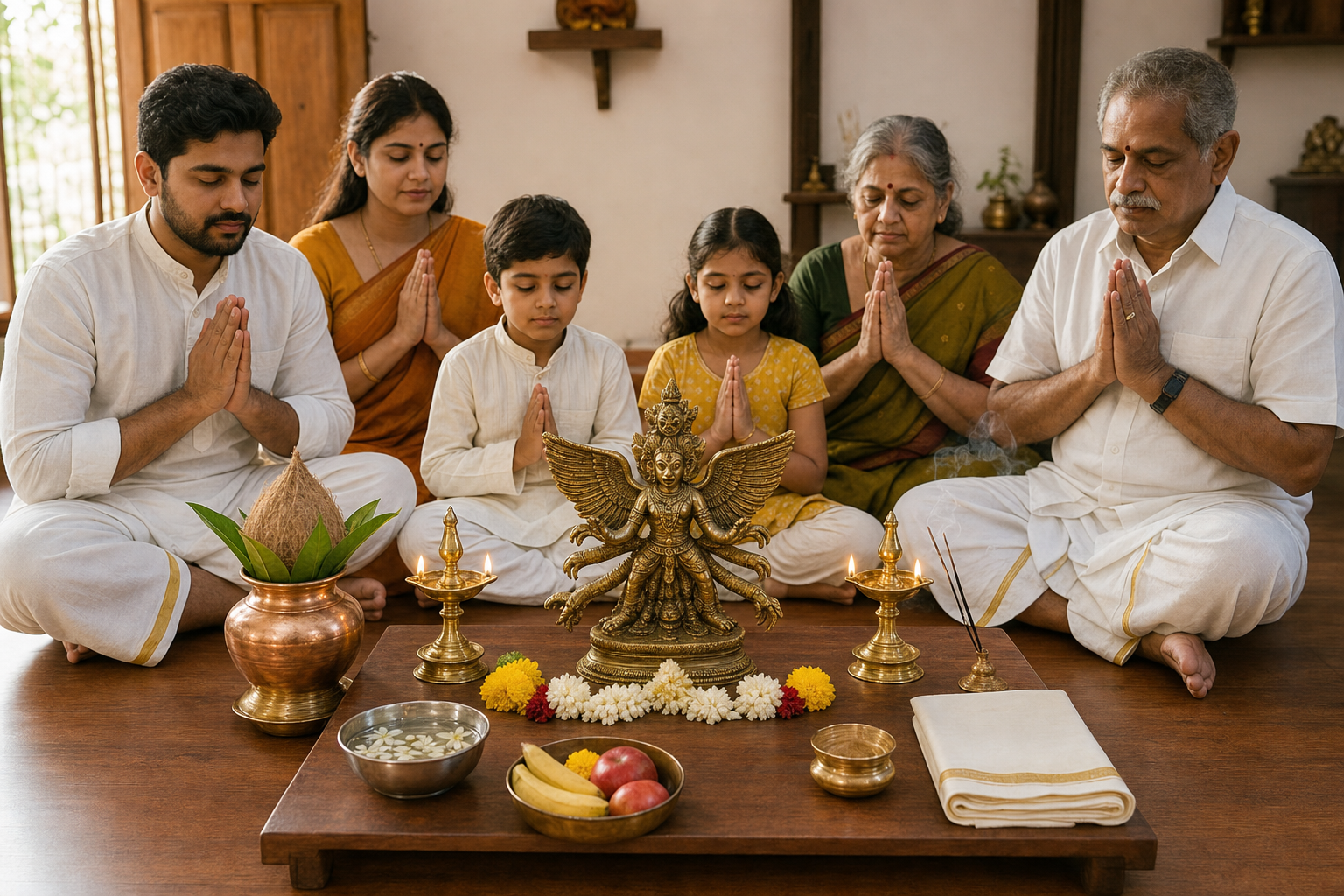
If your guru, temple or family sampradaya gives you a specific paddhati, follow that tradition. Otherwise, the following sequence keeps the observance focused without pretending that every household needs an elaborate ritual.
- Confirm the local tithi. Set the puja within the window advised by your regional panchang or temple rather than relying only on the printed date.
- Prepare a clean worship space. Arrange the Shiva or Sharabheshwara form ordinarily honoured in your home, a deepa, flowers, bilva-patra, customary abhishekam materials and a simple satvik naivedya.
- Make a sankalpa. If your schedule and panchang permit, begin around sunrise. Dedicate the worship to mastery of anger and fear, protection of those in your care, and the welfare of all beings.
- Light the deepa and perform archana. Offer abhishekam if that is part of your household practice. Follow it with bilva-patra and flowers, keeping the offering attentive rather than hurried.
- Undertake mantra japa. Repeat Om Namah Shivaya with a steady mind. No invented count is necessary. If you know Shiva Sahasranama or Lingashtakam, include one of them rather than turning the puja into an exhausting checklist.
- Sit with the meaning. Bring to mind one fierce impulse that needs direction: anger, pride, panic, retaliation or the desire to dominate. Decide what protective and compassionate action should replace its uncontrolled expression.
- Close outwardly. Perform aarti, share prasada and offer a shanti-prarthana for all beings. Complete the observance through dana, annadana or another practical form of seva.
Upavasa can support restraint, but it should be scaled to your capacity and customary practice. Children, pregnant people, older adults, anyone who is unwell and anyone managing medication should not treat a full fast as the default. Necessary food, hydration and medicine take priority; devotion is not measured by avoidable physical harm.
If time is limited, preserve the devotional arc rather than abandoning the day. Light a deepa, offer bilva or flowers, chant Om Namah Shivaya, sit quietly with one intention, and arrange one act of giving. That is more coherent than attempting every possible recitation while missing the festival’s central discipline.
Read Sharabha as discipline, not a divine scoreboard
Sharabha is represented especially in South Indian temple art as a composite, winged and leonine protector associated with Shiva. The form is deliberately fierce. Yet its theological purpose is pacification: overwhelming momentum is stabilized, instinct is brought under insight, and raw courage is redirected toward benevolent guardianship.
Hindu sampradayas can narrate divine relationships through distinct theological frameworks. You do not need to turn those differences into a ranking of deities in order to observe Sharabha Jayanti faithfully. A constructive Shaiva reading asks what Shiva’s protective manifestation is teaching the worshipper. The answer is not that power must disappear. Its purpose must change.
- Notice the force before it acts. Identify krodha, fear or wounded pride while you can still choose your response.
- Name what genuinely needs protection. Separate the defence of dharma or another person’s welfare from the defence of your own ego.
- Redirect rather than discharge. Choose a firm action that protects without indulging cruelty, humiliation or revenge.
This is what makes the icon relevant beyond the shrine. A harsh message left unsent until the mind is steady, an argument changed into a clear boundary, or personal strength used to shield someone vulnerable gives the symbolism a lived form.
Shared Dharmic values without erasing differences
The full moon of Vaishakh is also observed as Vesak or Buddha Purnima by many Buddhist communities. That shared timing does not make Sharabha Jayanti and Vesak the same festival. It does place distinct observances within a season marked by reflection on wisdom, restraint and compassion.
The transformation of afflictive emotion has a clear resonance with Buddhist contemplation. Redirecting impulse away from harm recalls the Jain discipline of ahimsa. Protective courage joined to service can be understood alongside the Sikh ideals of seva and sant-sipahi. These are resonances among Dharmic traditions, not claims that every tradition worships Sharabha or tells the same sacred narrative. Keeping that distinction allows genuine kinship without flattening difference.
Make a temple visit end in seva
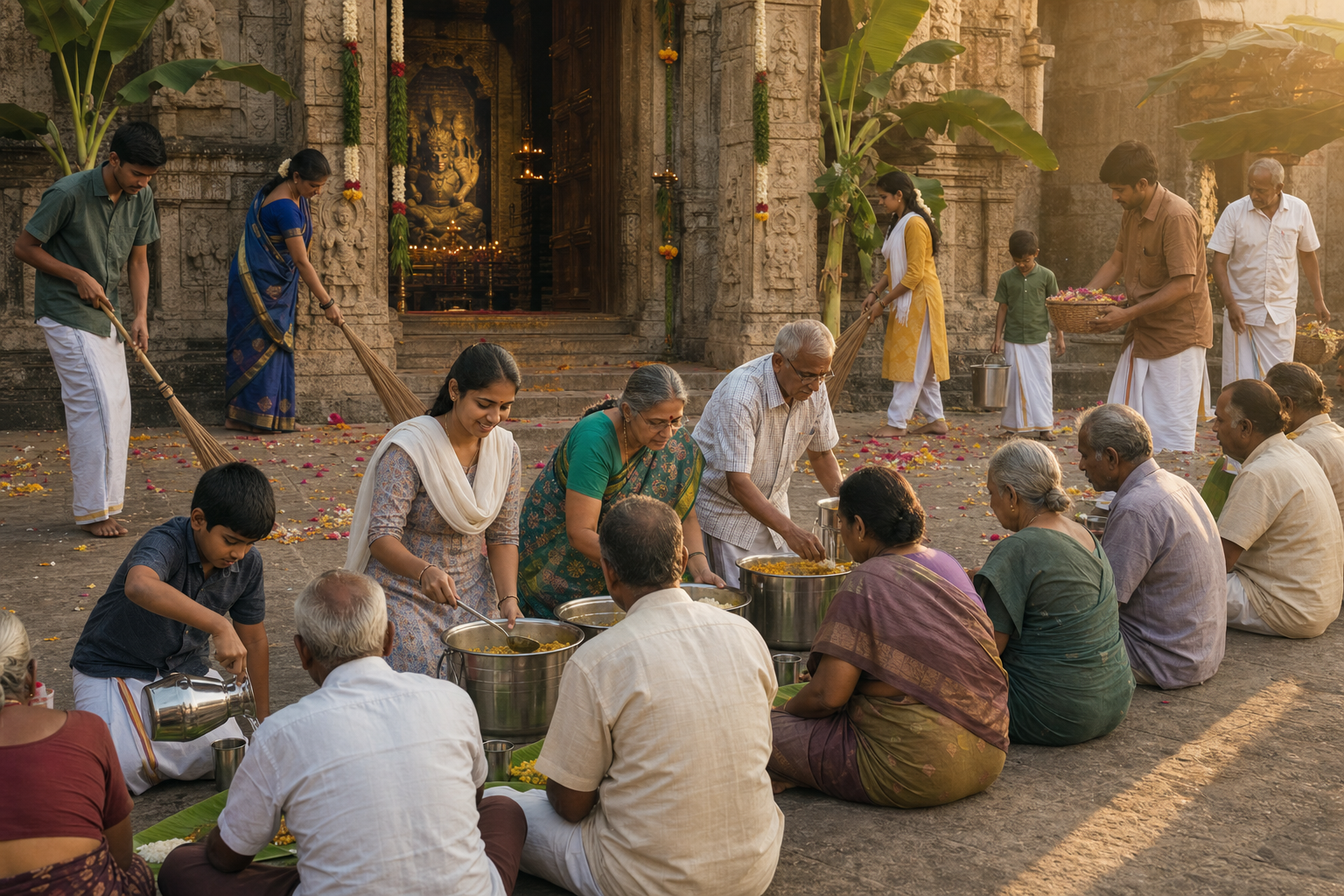
If you want to study Sharabha iconography, the Sarabeswarar shrine at the Kampaheswarar Temple in Tribhuvanam, near Kumbakonam, is an important point of reference. Related Chola-era sites across the Kaveri delta also preserve Sharabha imagery and its protective Shaiva significance.
Shiva temples in Tamil Nadu, Andhra Pradesh, Karnataka and Kerala may mark the observance with homa, special alankara and deepa-aradhana. That regional pattern is not a guarantee that a particular temple held every programme in 2026. For an accurate visit or historical record, contact the individual temple and ask:
- Which local date and tithi window did the temple follow for Sharabha Jayanti 2026?
- Was there a separate abhishekam, homa, alankara or deepa-aradhana schedule?
- Could devotees participate in annadana, contribute permitted materials or volunteer?
- Did attendance or ritual participation require advance registration?
At home or in a community gathering, keep the material footprint consistent with the prayer. Reuse puja vessels and decorations where practical, choose locally available flowers, and minimize single-use plastic. Dharmic stewardship loses credibility when an offering for cosmic harmony leaves avoidable waste behind.
For an accurate family record of Sharabha Jayanti 2026, write down both 1 May and the local Purnima window your community followed. Then record the practice that mattered: the mantra, the act of restraint and the seva that followed. At the next observance, begin with the same panchang check and let the visible rite culminate again in protective action.
References
