
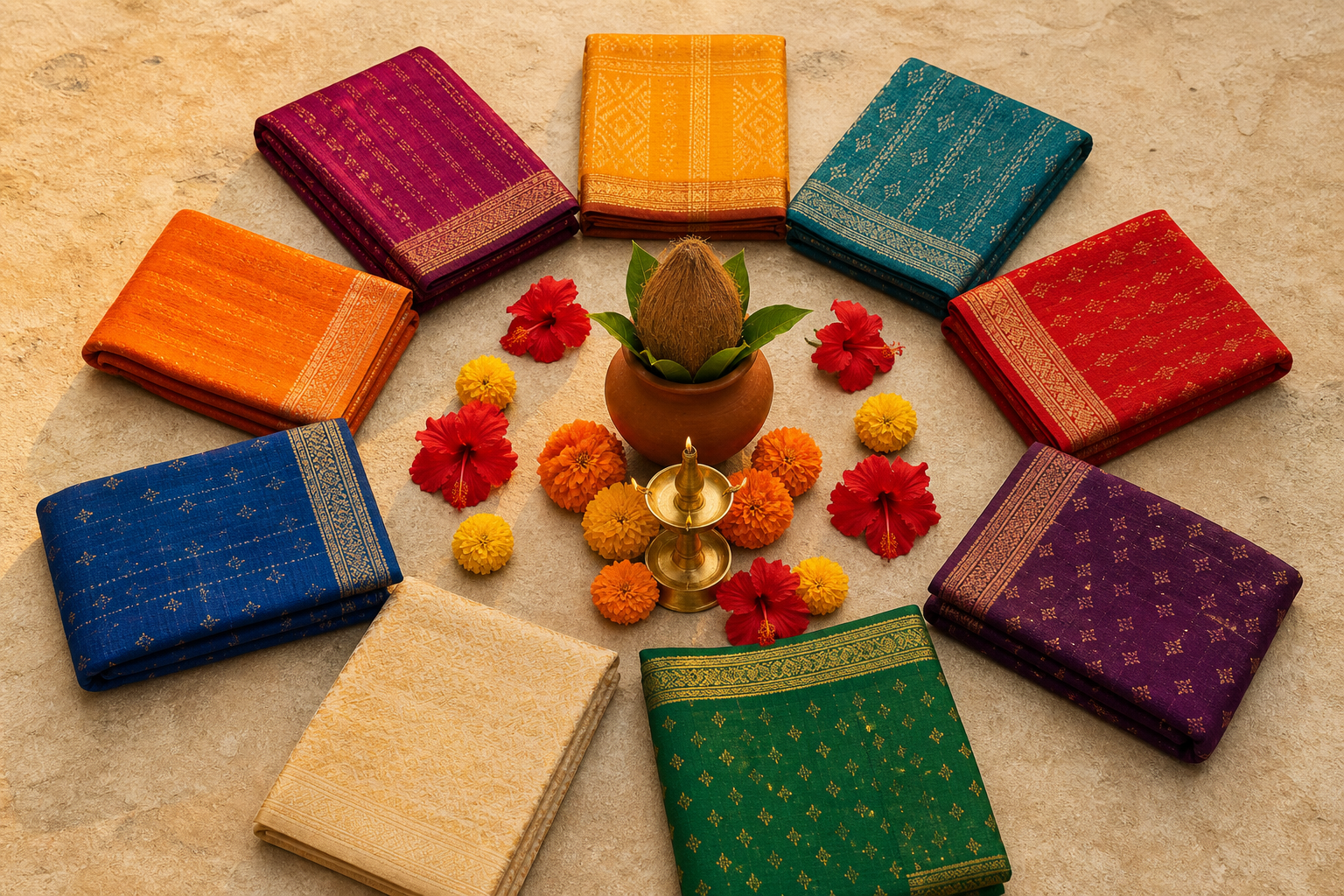
You came for the nine daily colours, but the practical problem is larger than finding a list. You need to know that your family, temple, mandal, workplace, or garba group is following the same 2026 sequence before you arrange nine outfits.
The custom of wearing nine colours during Navratri is especially common among women in Maharashtra and Gujarat. Because its most visible expression is collective, the useful list is not merely one that looks plausible. It is the list your community will actually use.
Choose one Navratri 2026 colour schedule first
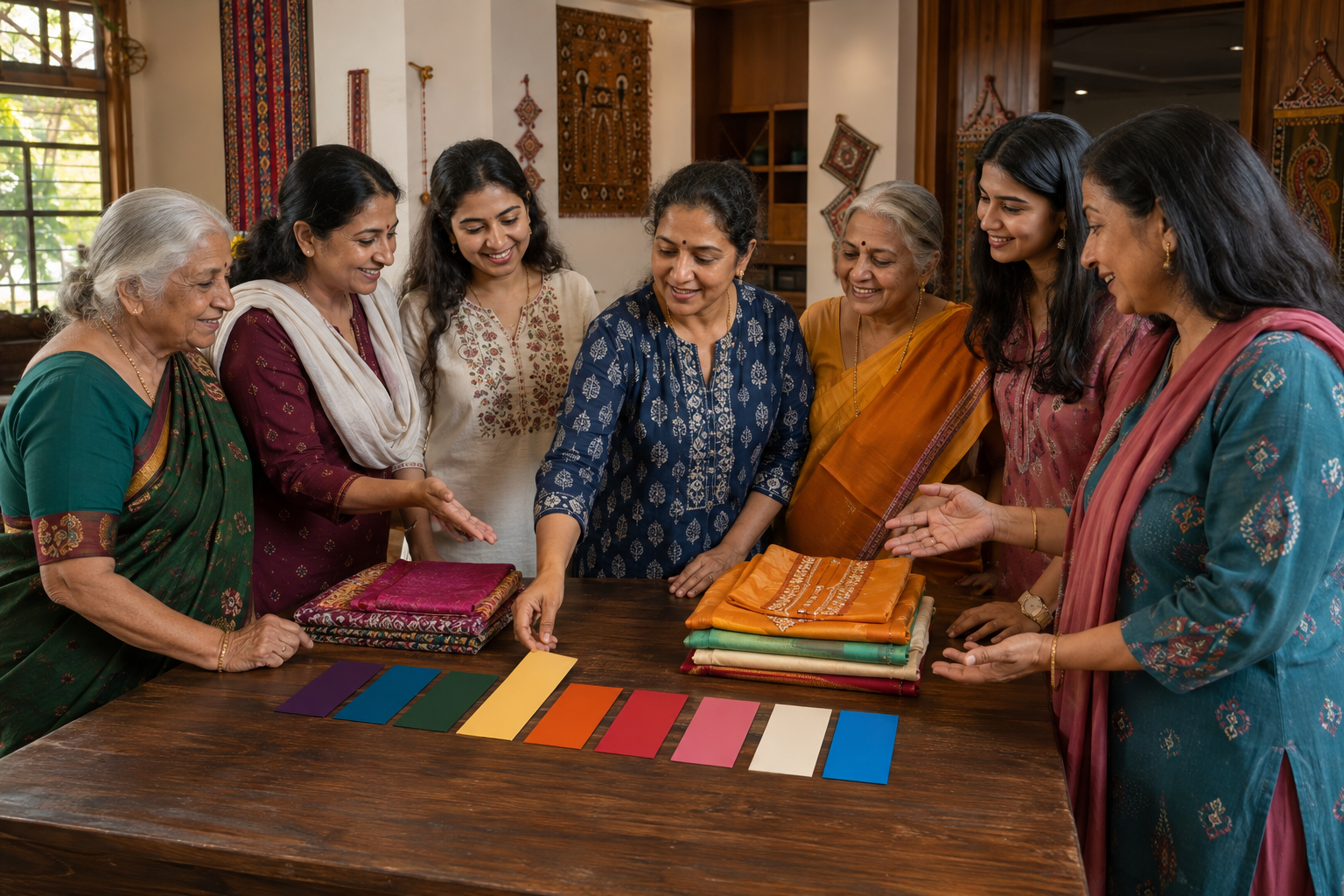
Do not assemble your plan from several social-media graphics. If two lists disagree, combining them will not produce a better answer. It will leave you uncertain about which colour belongs to which day.
Choose your controlling schedule according to where you will observe Navratri:
- At home: ask the family member coordinating the puja or daily observance which 2026 list the household will follow.
- At a temple or mandal: use the schedule circulated by that organiser, especially when devotees are being invited to dress together.
- At work or with friends: follow the list posted by the person coordinating the group activity. Shared expectations matter more than silently substituting another sequence.
- On your own: select one explicitly labelled 2026 daily-colour schedule and use it consistently from Day 1 through Day 9.
Check three details before copying anything: the year must be 2026, every colour must be attached to a numbered Navratri day, and the order must match the message used by your group. A colourful graphic without a visible year is not enough. It may have been saved from an earlier celebration.
The day-by-day colour names are the one part you should not fill from memory. Copy them exactly from the chosen schedule. If a local organiser later circulates a different order, decide immediately which list controls your group and update everyone who is participating.
Turn the colour list into a nine-day plan
A list of colours is easy to save and easy to forget. Convert it into a working plan while the information is in front of you. This takes a few minutes and exposes wardrobe gaps before they become last-minute purchases.
- Write Day 1 through Day 9 in a note, calendar, or spreadsheet.
- Copy one confirmed colour beside each day. Preserve any shade description instead of shortening it to a broader colour family.
- Add the corresponding date only after checking the calendar used by your household or organiser.
- Mark where you expect to be: home puja, temple, work, community gathering, garba, travel, or an ordinary day.
- Assign something you already own before making a shopping list.
- Circle only the days for which you have no workable garment or accessory.
- Lay out or photograph the completed combinations so that you do not have to rebuild the plan every morning.
You can copy this planner into your notes and fill the colour column from the confirmed 2026 schedule:
| Navratri day | Confirmed 2026 colour | Outfit or accessory | Where you will wear it |
|---|---|---|---|
| Day 1 | To confirm | To plan | To plan |
| Day 2 | To confirm | To plan | To plan |
| Day 3 | To confirm | To plan | To plan |
| Day 4 | To confirm | To plan | To plan |
| Day 5 | To confirm | To plan | To plan |
| Day 6 | To confirm | To plan | To plan |
| Day 7 | To confirm | To plan | To plan |
| Day 8 | To confirm | To plan | To plan |
| Day 9 | To confirm | To plan | To plan |
Keep the numbered day and the date in separate columns. That distinction prevents a common planning mistake: remembering the right colour but attaching it to the wrong morning.
You do not need nine completely new outfits
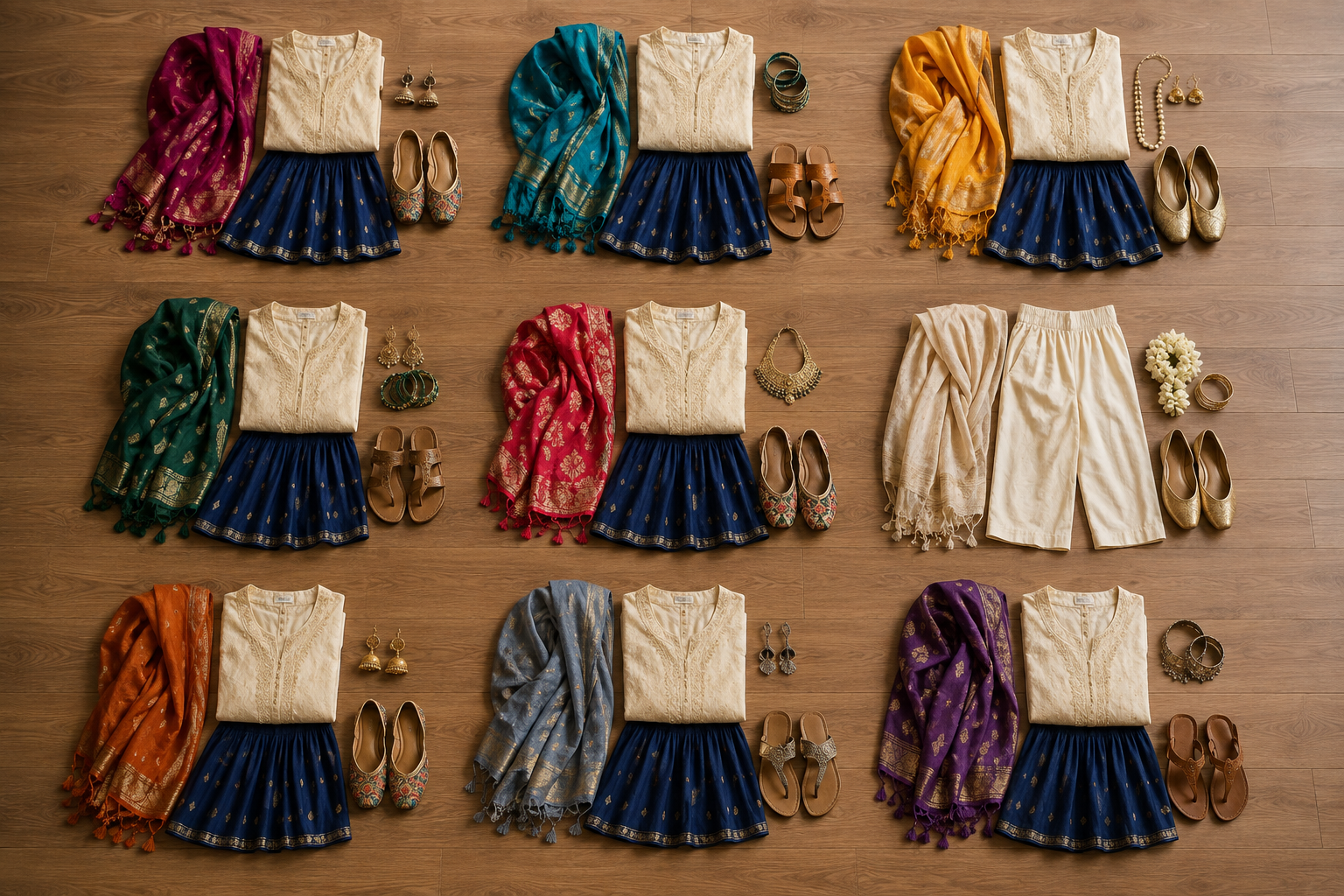
Nine daily colours can sound like a demand for nine purchases. It is not. Start with what you own, then make the required colour visible through one deliberate element.
- Use a neutral base: pair a familiar saree, kurta, salwar suit, or other appropriate garment with a dupatta, blouse, waistcoat, stole, or scarf in the day’s colour.
- Let one piece carry the colour: bangles, a shawl, a turban, a pocket square, a fabric bag, or another clearly visible accessory may complete a simple outfit.
- Borrow before buying: exchange dupattas, blouses, stoles, or jewellery within the household. Make the borrowing plan now so that the same piece is not promised to two people on the same day.
- Repeat the garment shape: there is no practical need to invent a different silhouette every day. A comfortable combination in changing colours is easier to maintain through the full observance.
- Ask about acceptable shades: if the organiser names a precise shade and you own only a neighbouring one, ask whether it fits the group’s plan rather than guessing.
- Reserve elaborate clothing for the right setting: choose simpler combinations for work, travel, or home duties and keep the more festive garment for the gathering where you will appreciate it.
For a household participating together, plan by shared items rather than by person. Place the accessories for each day in one labelled bag or on one hanger. That makes it easier for adults and children to join without nine separate wardrobe projects.
If you must purchase something, wait until the planner is complete. Buy the smallest versatile piece that closes a real gap. A garment that works only once is harder to justify than an accessory you can use again in future celebrations.
Keep the colour tradition centred on Devi, not display
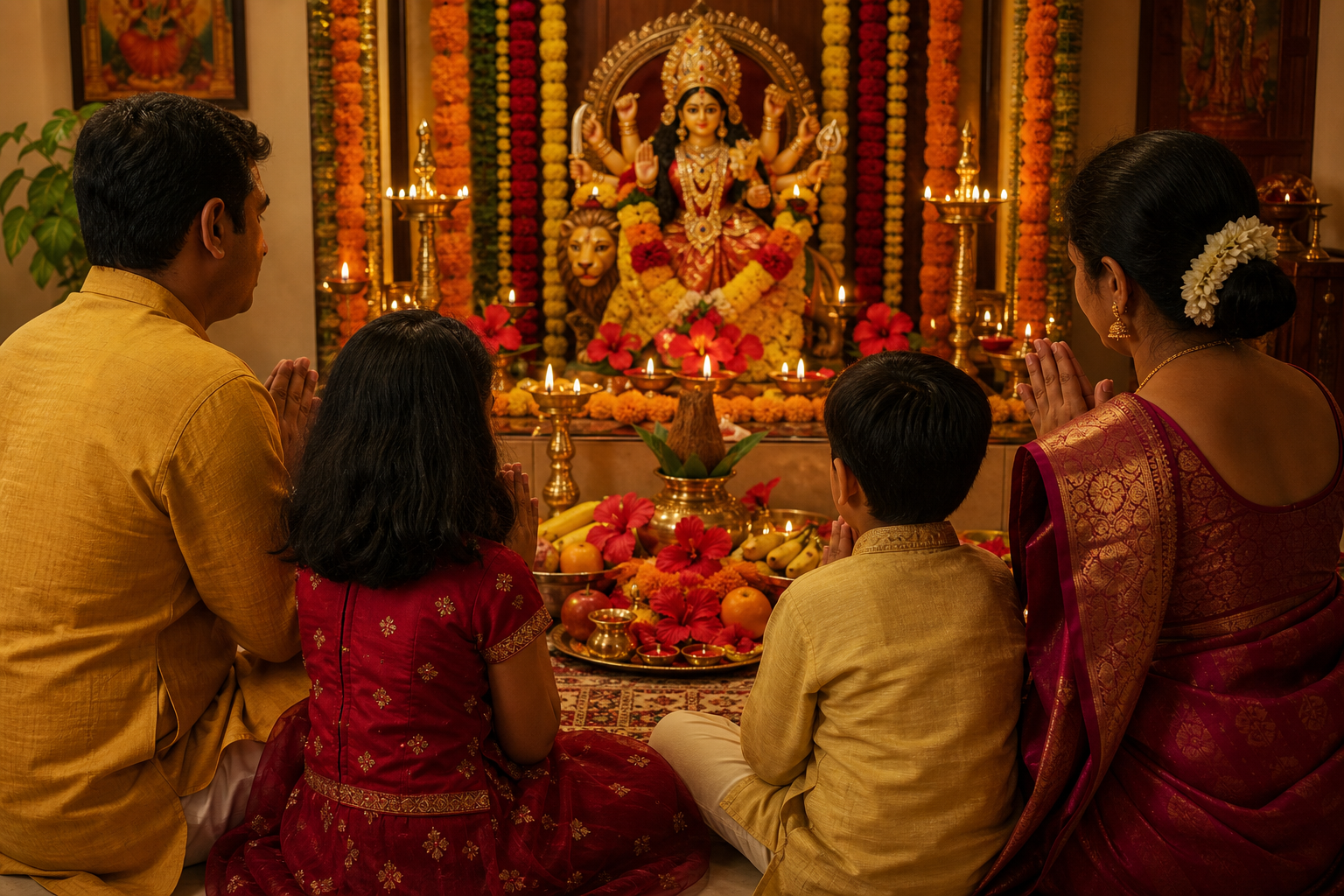
The colours can give each morning a distinct rhythm. Choosing the day’s clothing in advance can also become a small discipline: prepare carefully, approach the observance attentively, and remember why these days are being marked.
At the same time, clothing should not become a gate through which devotees must pass. Someone may lack a particular shade, receive a different list, be travelling, work a uniformed shift, or simply be unable to coordinate every day. A modest accessory can still express participation. So can joining the puja with reverence while wearing something else.
Do not turn a joyful shared custom into an occasion for correcting or embarrassing another person. If coordination matters for a photograph or organised event, communicate the schedule early and privately answer questions about shades. Clear planning serves the community; public fault-finding does not.
This proportion is worth preserving. Dress can support bhava, belonging, and remembrance, but the wardrobe is not the worshipper’s measure. Let the visible colour direct attention toward Devi and the shared celebration rather than toward expense or competition.
Key takeaways
- Use one schedule explicitly labelled for Navratri 2026; do not merge conflicting graphics.
- When you are joining a group, confirm the sequence with its organiser before buying or borrowing clothes.
- Copy all nine colours into a day-by-day planner, then add dates, events, outfits, and accessories.
- Start with your existing wardrobe. A visible dupatta, stole, blouse, waistcoat, scarf, or other accessory can carry the day’s colour.
- Ask when a precise shade is unclear, and do not shame someone who follows another list or cannot match the colour.
- Use the tradition to deepen attention and community, not to create unnecessary expense or competition.
Your best next step is simple: send one message to the person coordinating your observance, confirm the 2026 sequence, and fill all nine rows of the planner. Once that is done, the clothes become the easy part.
References
