
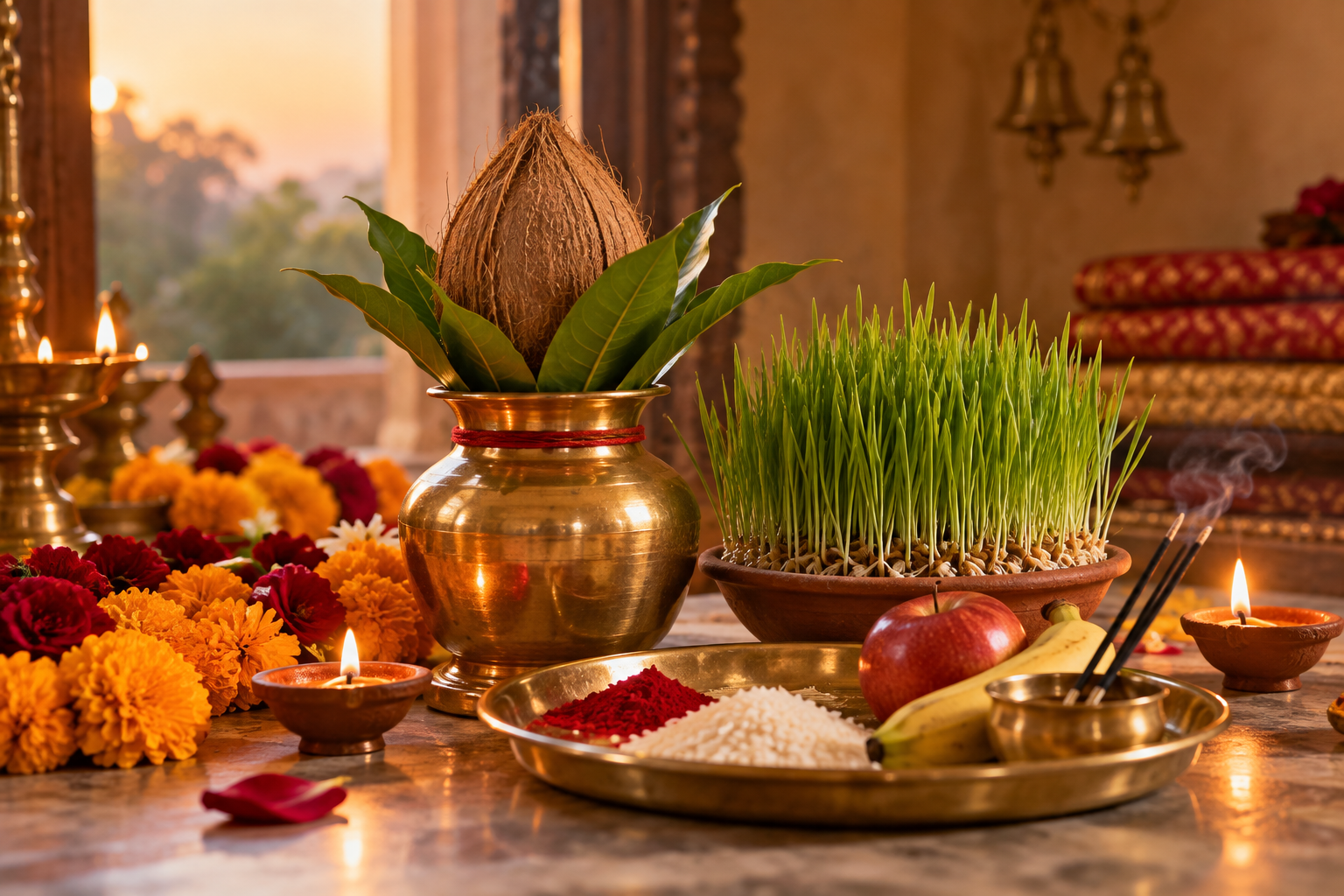
If you are coordinating family leave, a temple visit, a vrata, or Dashain tika in 2026, one date range is not enough. The observances begin together on October 11, but the relevant closing date may be October 19, 20, or 21 depending on the tradition and event you are following.
Put each date on your calendar with its proper label. That will help you avoid the common mistake of treating a temple festival, a five-day vrata, and the full Dashain family cycle as interchangeable schedules.
The four date markers to put on your 2026 calendar
The shared opening date is October 11. After that, the observance branches into distinct but related calendars. Use the following dates as planning anchors, not as substitutes for the daily timings issued by your temple or local panchanga.
| Date | Observance | What it means for your plans |
|---|---|---|
| October 11 | Maha Navaratri begins at Kollur Mookambika Temple, while Ghatsthapana opens Dashain. | Treat this as the common starting point if your household is coordinating Navaratri and Dashain commitments. |
| October 15-19 | Pancharatrotsava, the five-day Navaratri vrata. | Use this defined window if your family or temple follows the five-day form rather than an improvised shortened schedule. |
| October 20 | The 2026 Maha Navaratri celebration at Kollur Mookambika Temple concludes. | Use this date for the end of the Kollur festival programme, not automatically for every Dashain commitment. |
| October 21 | Dashain concludes with Vijayadashami Tika, or Bijayadashami; Tika and Jamara continue through this date. | Keep this day available if your family follows the full Dashain cycle or has visits for Tika and Jamara. |
Do not enter October 11-21 as a single undifferentiated festival block. Label October 20 as the end of the Kollur programme and October 21 as the concluding Dashain date. If you observe both, preserving that distinction prevents a temple itinerary from accidentally cutting short a family observance.
Why Navaratri and Dashain do not use one identical timetable
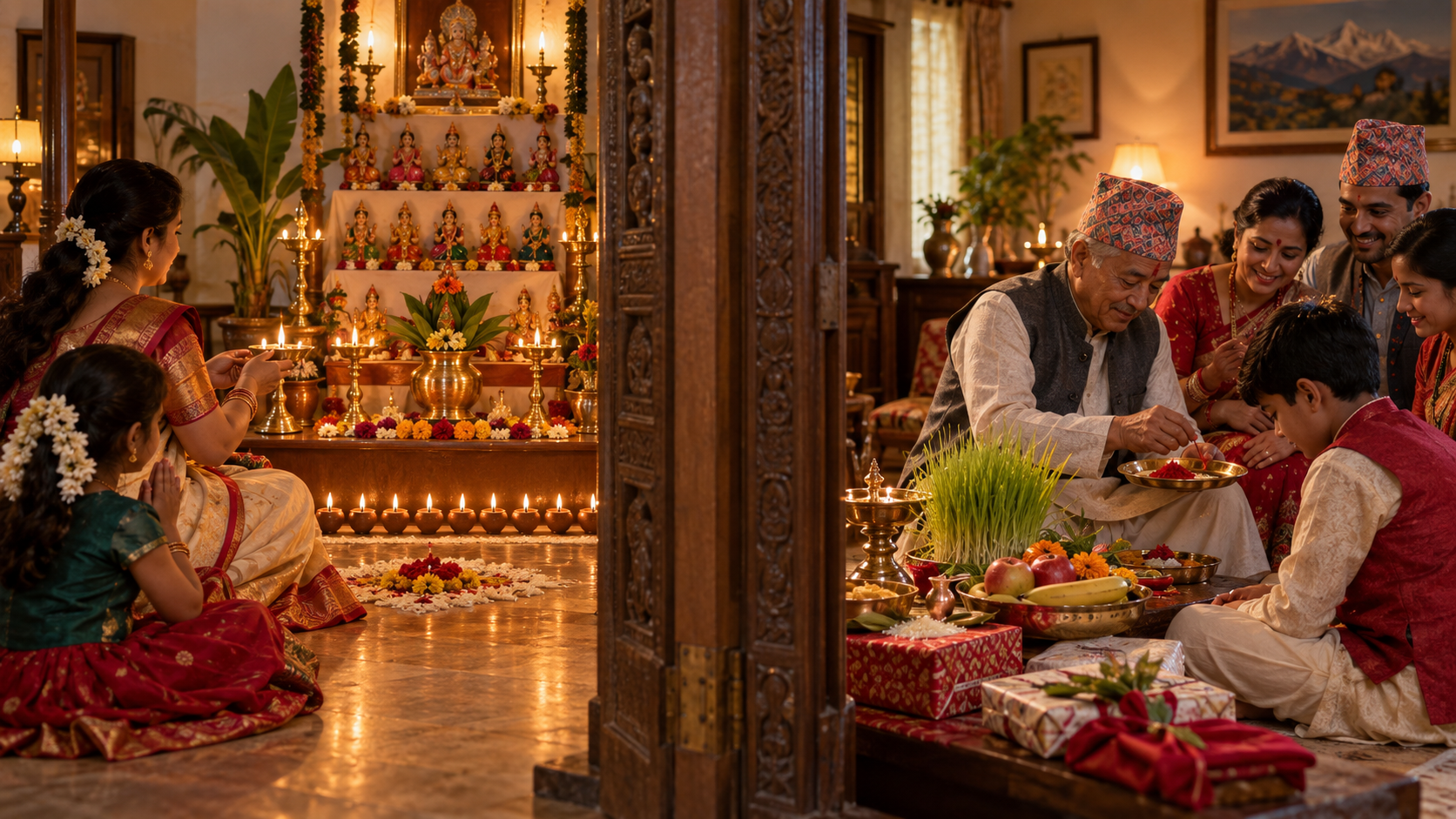
Navaratri and Dashain belong to the same sacred season, but they are lived through different regional, household, and temple traditions. At Kollur Mookambika Temple in Karnataka’s Udupi district, Maha Navaratri, also called Sharada Navratri, is the temple’s largest festival event. Dashain is a major festival across Nepal, Bhutan, and parts of northeastern India, with its 2026 calendar extending through Tika and Jamara on October 21.
The different closing dates are therefore not a problem that you need to solve by choosing which one is universally correct. They answer different questions. October 20 tells you when the Kollur celebration ends. October 21 tells you how long the stated Dashain cycle continues.
- For worship at home: follow the practice transmitted in your household or sampradaya, then confirm any date uncertainty with the priest or elder who guides that practice.
- For a temple visit: follow that temple’s programme. A general festival calendar cannot tell you the time of a particular puja, procession, entry period, or darshan.
- For Dashain Tika and Jamara: preserve October 21 in your plans unless the family or community conducting the observance gives you a different local arrangement.
- For a community gathering: distinguish the gathering date from the ritual date. A convenient weekend event may represent the festival socially without replacing your household calendar.
When two calendars appear to disagree, first ask what each date describes: a vrata, a named temple programme, a household rite, or a community gathering. Choose the appropriate calendar by ritual context, not by whichever date appears most often online.
The five-day Pancharatrotsava window is October 15-19
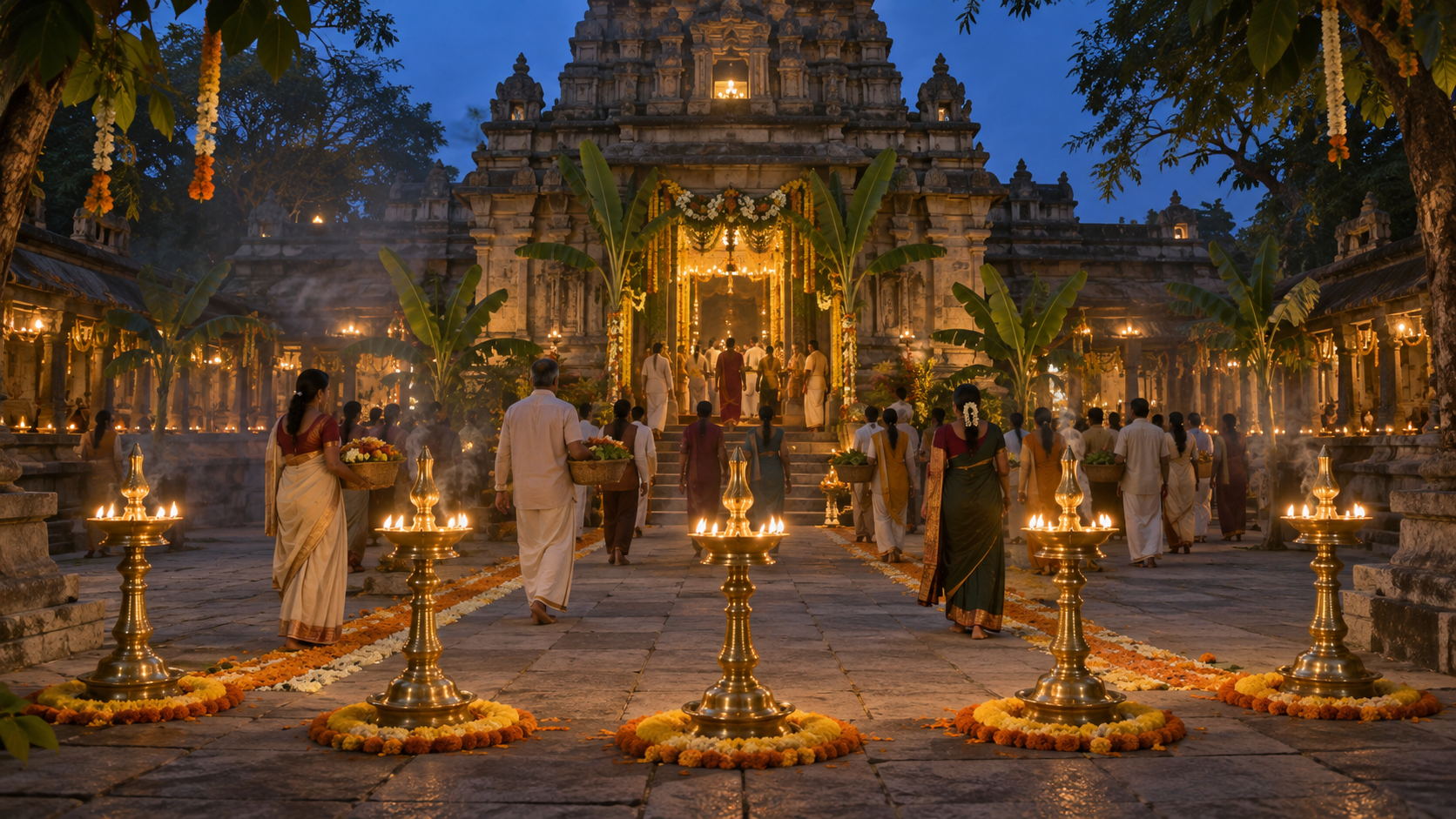
If your tradition observes Pancharatrotsava, the 2026 vrata has a specific five-day sequence. It starts on Lalitha Panchami and ends on Mahanavami. This is a defined form of Navaratri observance, not a general permission to select any five convenient days.
- October 15 – Lalitha Panchami: begin the five-day vrata according to your established household or temple procedure.
- October 16 – Durga Sashti: continue the second day’s prescribed observance.
- October 17 – Durga Saptami: mark the middle day of the five-day sequence.
- October 18 – Durga Ashtami: prepare in advance for Ashtami commitments rather than treating them as an addition to an ordinary day.
- October 19 – Mahanavami: complete the sequence; the Pancharatrotsava calendar places Saraswati Balidan or visarjan on this concluding day.
The day names establish the structure, but they do not provide a universal ritual manual. Procedures for sankalpa, offerings, fasting, recitation, Balidan, or visarjan can differ. Use the dates to organize the vrata, then follow the method already recognized by your family, guru, or temple.
A practical way to make the five days sustainable is to settle responsibilities before October 15. Write down who will obtain the required materials, who will be present each day, and which existing household practice must be completed without interruption. If work or school makes a commitment impossible, resolve that with your ritual guide before the vrata begins rather than changing the sequence midway.
Build one plan for worship, family, and temple travel

A useful festival calendar records more than dates. It records which tradition governs each date, where you need to be, and who else depends on your presence. Build your 2026 plan in this order:
- Name the observance: write Navaratri, Pancharatrotsava, Kollur temple visit, or Dashain Tika beside every commitment. Do not use the vague label “festival” for all of them.
- Identify the governing practice: note whether the time will come from your household tradition, a local panchanga, a priest, or a named temple programme.
- Block the fixed dates first: reserve October 11 for the opening, October 15-19 for Pancharatrotsava if applicable, October 20 for the end of the Kollur programme, and October 21 for the conclusion of Dashain Tika and Jamara.
- Add travel and family visits separately: the day of a journey or gathering is a logistical entry, not necessarily another ritual date.
- Confirm daily timings locally: a festival date does not establish the precise muhurta or the operating schedule of a temple. Check again before you travel or issue invitations.
If Kollur is your destination, plan for a major pilgrimage gathering rather than an ordinary temple day. The Maha Navaratri celebration draws a few lakh devotees from Karnataka, Tamil Nadu, Pondicherry, Kerala, and Andhra Pradesh. Settle transport and accommodation before making other commitments, allow for crowd-related delays, and verify the temple’s daily programme closer to your visit. The October 11-20 festival window alone does not guarantee a particular darshan or ritual time.
If you live outside Bharat or Nepal, make one further decision explicit: whether your household will follow the dates used by relatives in their location or the calendar observed by your local temple. Do not switch silently between time zones or community calendars. Record the decision in the family plan so that everyone is preparing for the same day.
Key takeaways
- Navaratri at Kollur and Dashain both begin on October 11, 2026.
- Pancharatrotsava runs from October 15 through October 19, beginning with Lalitha Panchami and ending with Mahanavami.
- The Kollur Maha Navaratri programme ends on October 20; do not use that temple date to erase the October 21 conclusion of Dashain Tika and Jamara.
- Festival dates tell you what day to reserve. Your household authority, local panchanga, or temple must still supply the applicable ritual method and daily timing.
Start by entering October 11, October 15-19, October 20, and October 21 as separately labelled calendar items. Then speak with the elder, priest, or temple responsible for your observance and remove the entries that do not apply. You will be left with a clear plan that respects both sacred sequence and family reality.
References
- Hindu Pad – Maha Navaratri 2026 at Kollur Mookambika Temple, Karnataka
- Hindu Pad – Dashain 2026 dates, Dasain Festival 2026 in Nepal
- Hindu Pad – Pancharatrotsava 2026 | 5 Days Navratri Poojan | Pancharatri Vrata in Durga Navaratri Puja

Leave a Reply
You must be logged in to post a comment.