
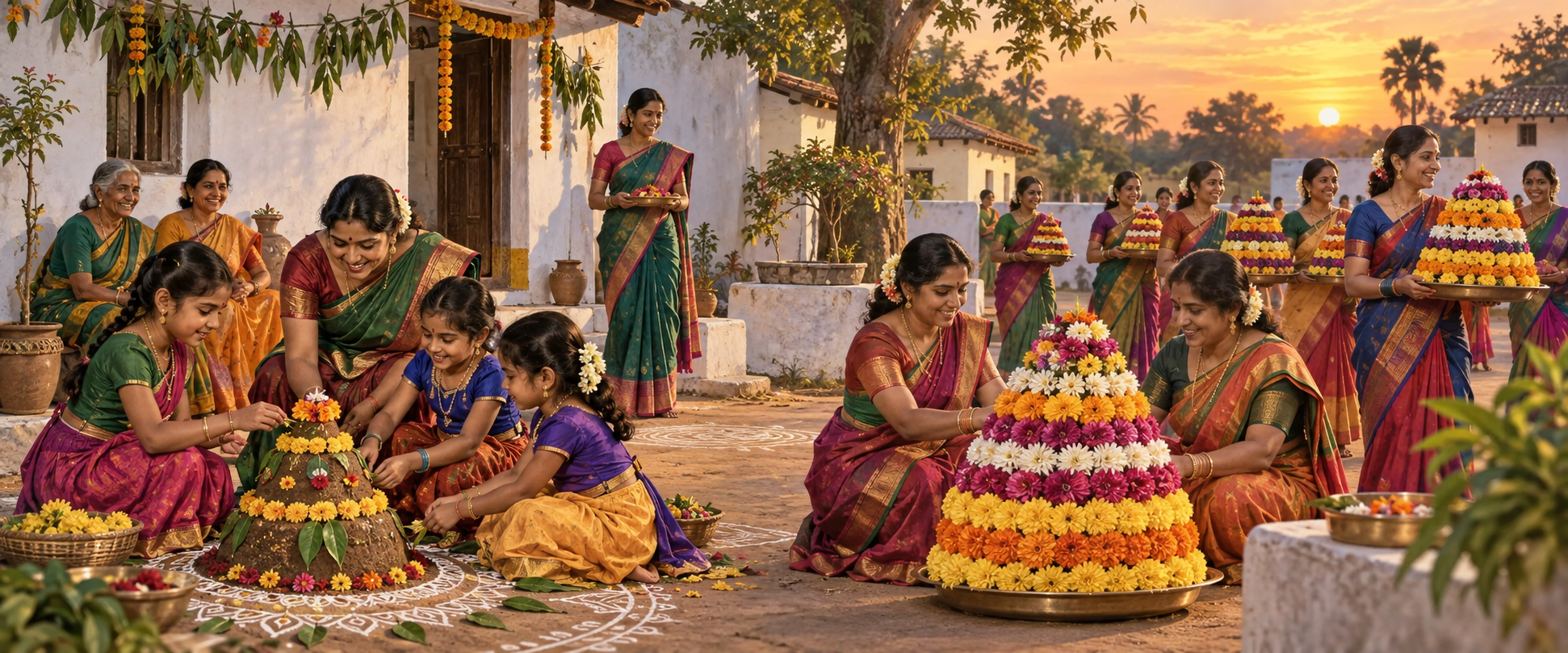
If you have been given separate dates for Boddemma and Bathukamma, the calendar can look contradictory. In 2026, Boddemma ends on October 10 and Bathukamma begins on October 10. That shared date is the clue: you are looking at a handoff within a connected festival season, not two events competing for the same space.
Once you understand that hinge, you can explain the cycle accurately, prepare a community program without misnumbering the days, and participate without flattening a distinctly Telangana observance into a generic account of Navratri.
Key takeaways
- Boddemma and Bathukamma are distinct observances connected by their devotion to Gauramma, or Gauri, and by their position in the ritual calendar.
- In 2026, Boddemma runs from October 1 to October 10, while Bathukamma is observed from October 10 to October 19.
- Boddemma is celebrated mainly by unmarried girls, from Bahula Panchami in Bhadrapada through Mahalaya Amavasya.
- Bathukamma follows a nine-day ceremonial sequence beginning with Engili Poola Bathukamma and ending with Saddula Bathukamma.
- Saddula Bathukamma falls on Durga Ashtami in the usual sequence, but in some instances it is observed on Mahanavami. Confirm the local practice before publishing a schedule.
One Goddess, two distinct observances
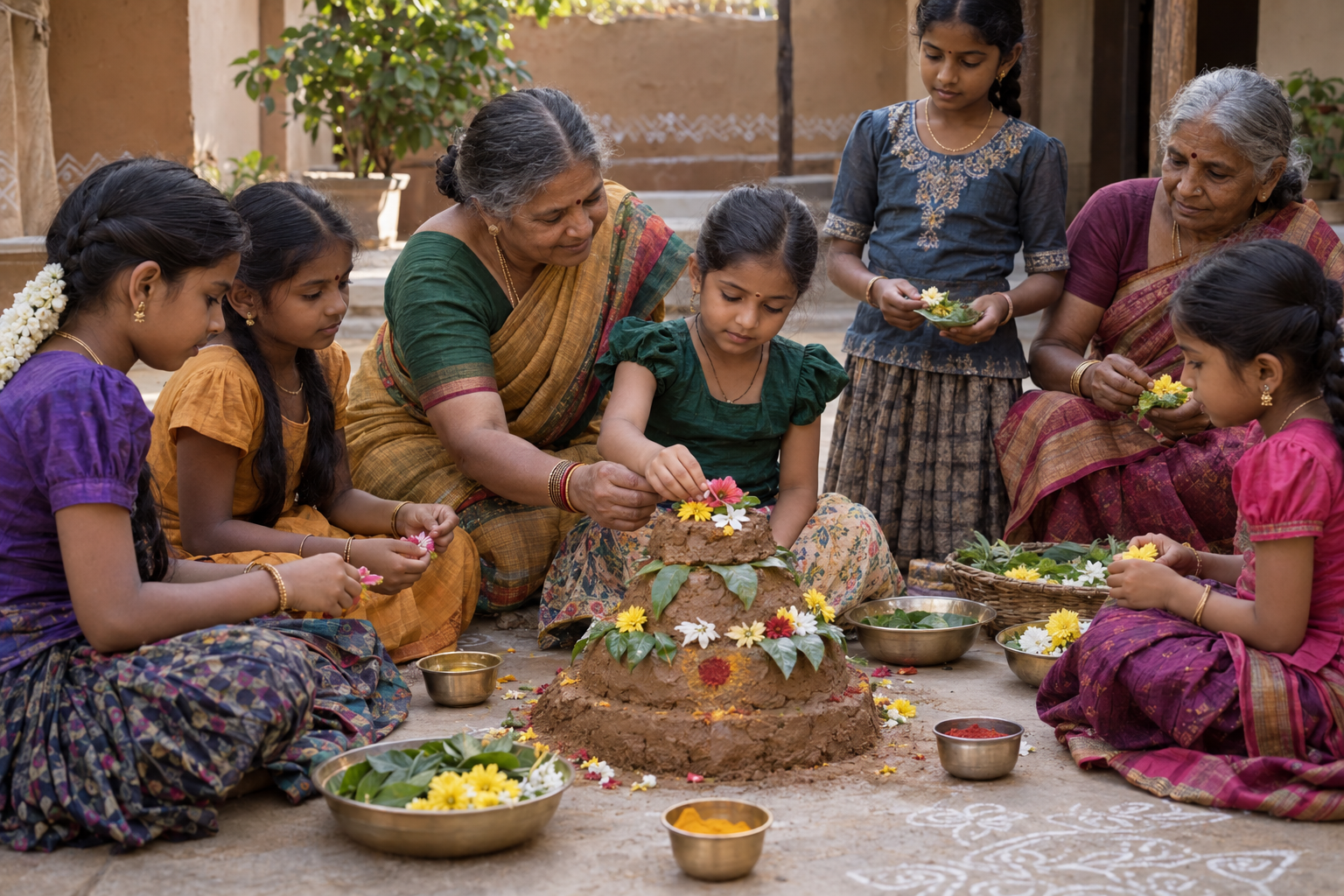
Gauramma provides the clearest thread through the cycle. Boddemma is dedicated to Gauramma and is celebrated mainly by unmarried girls. Its traditional span begins on Bahula Panchami in the Bhadrapada month and continues to Mahalaya Amavasya, also encountered as Pethara Amavasya or Pethra amaasa.
Bathukamma carries the worship of Gauri into Telangana’s Durga Navratri season. Gauri is worshipped in the form of Bathukamma, and the Telugu name is commonly explained as “come alive, Mother Goddess”. The invocation gives the celebration its devotional centre: this is not merely a regional label placed over Navratri, but a Telangana form of honouring the Mother Goddess.
Continuity does not mean sameness. Boddemma is not simply the first day of Bathukamma, and Bathukamma is not a new name for Boddemma. Each has its own period and identity. Boddemma’s association with unmarried girls deserves to be stated in its own right; Bathukamma has its own named opening, nine-day progression, and grand finale.
If you are explaining the cycle to a child, a visitor, or a diaspora audience, use three layers. Begin with the shared deity: both honour Gauramma or Gauri. Then distinguish the observances: Boddemma comes first and has a particular association with unmarried girls. Finally, show the calendar movement: Mahalaya Amavasya closes Boddemma and brings the community to the threshold of Bathukamma and Durga Navratri.
This formulation preserves both relationship and difference. It is more accurate than calling the entire period Bathukamma, and more illuminating than presenting the festivals as unrelated entries in a datebook.
Why October 10 is a hinge in the 2026 calendar
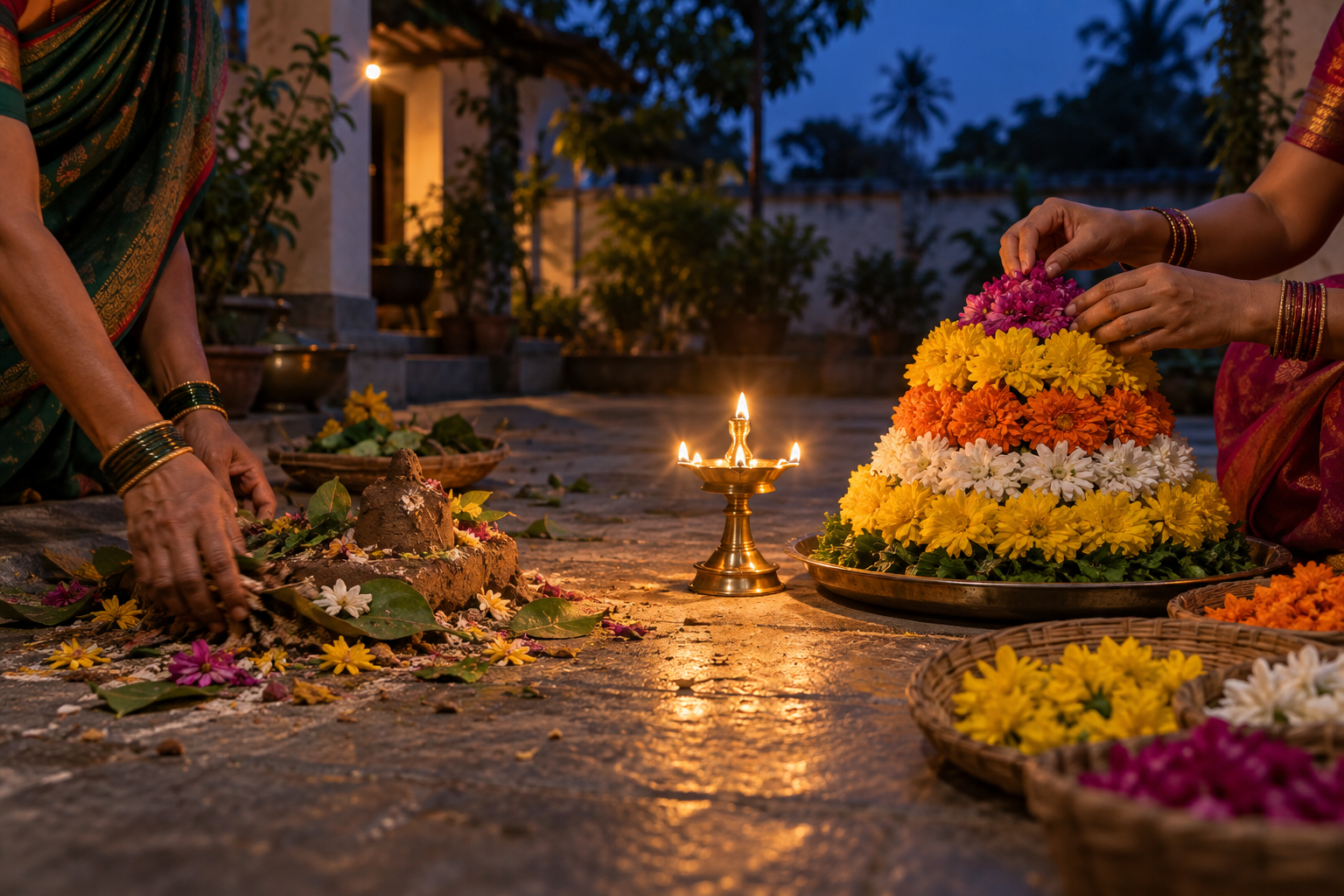
The Gregorian dates are useful for travel, leave requests, venue bookings, and community notices. They are not, by themselves, a complete ritual map. Hindu observances are organised through lunar dates, or tithis, while a Gregorian date changes at midnight. A local program should therefore be built around the named observances and applicable tithis, not by counting boxes on a civil calendar.
| Phase | 2026 dates | Ritual marker | Planning implication |
|---|---|---|---|
| Boddemma | October 1-10 | Bahula Panchami in Bhadrapada through Mahalaya Amavasya | Include this phase when presenting the full cycle, especially its association with unmarried girls. |
| Festival handoff | October 10 | Mahalaya Amavasya, also called Pethara Amavasya or Pethra amaasa in the festival context | Ask local organisers how the closing of Boddemma and opening of Bathukamma are handled. |
| Bathukamma | October 10-19 | Engili Poola Bathukamma through Saddula Bathukamma during Durga Navratri | Use locally confirmed named days rather than assigning day numbers from Gregorian dates alone. |
There is a detail here that a careful organiser should not ignore. The October 10-19 range covers ten Gregorian dates when counted inclusively, while Bathukamma has a nine-day ceremonial sequence. Do not resolve that apparent mismatch by deleting a date or inventing a tenth ritual day. It shows why civil-date arithmetic and the ceremonial sequence cannot be treated as interchangeable.
The ending also has a recognised local variation. Bathukamma ends with Saddula Bathukamma on Durga Ashtami and, in some instances, on Mahanavami. A national or global calendar may give you the broad range, but your host family or local Telangana organisation determines which schedule you should actually follow.
Before printing an invitation, booking performers, or telling participants which day to attend, get answers to four precise questions:
- Which local date is being observed as Engili Poola Bathukamma?
- How will the October 10 Boddemma-Bathukamma transition be marked?
- Which local date is Saddula Bathukamma?
- Is the finale being kept on Durga Ashtami or Mahanavami?
Those questions prevent the most common calendar error: presenting an arithmetically tidy schedule that does not match the community’s actual observance.
Plan participation around the named ritual anchors
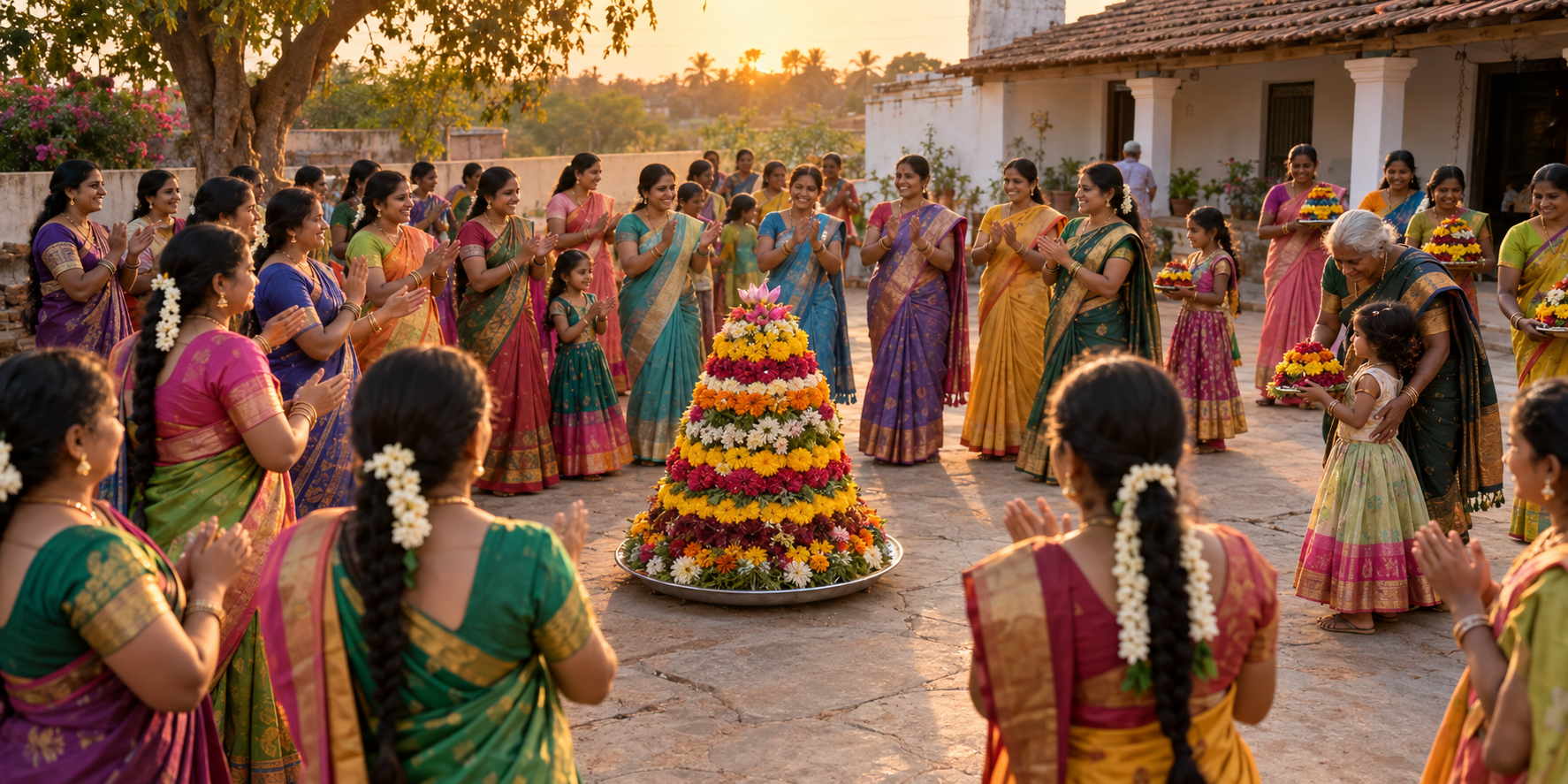
You do not need to guess every intermediate detail to understand the shape of Bathukamma. Its two firm anchors are Engili Poola Bathukamma at the opening and Saddula Bathukamma at the grand finale. Start with those names, confirm how the intervening days are observed locally, and only then publish a day-by-day program.
If you are attending
- Ask which phase or named day the gathering marks. “Bathukamma event” may not tell you where the community is within the sequence.
- When attending Boddemma, remember that it is celebrated mainly by unmarried girls. Follow the host community’s lead about who takes central ritual roles rather than assuming that an invitation makes every role interchangeable.
- Use the full names Engili Poola Bathukamma and Saddula Bathukamma when referring to the opening and finale. The names preserve the internal shape of the observance.
- If two nearby communities keep the finale on different days, do not immediately treat one as mistaken. Durga Ashtami is the usual marker, while Mahanavami occurs in some instances.
If you are organising or teaching
- Show Boddemma and Bathukamma on the same calendar, but give each its own label. A connecting arrow or shared Gauramma heading can show continuity without erasing distinction.
- Print both the Gregorian date and the ritual name wherever the latter has been locally confirmed. “Saddula Bathukamma – local date” is more useful than an unexplained “Day 9.”
- Do not advertise October 10-19 as ten ritual days simply because ten Gregorian dates appear in the inclusive range. Keep the traditional nine-day Bathukamma description and explain that local tithi practice governs the schedule.
- Include one sentence on Boddemma’s association with unmarried girls. Otherwise, a presentation centred only on the larger Bathukamma celebration can make the preceding observance disappear.
- Describe Bathukamma as a Telangana festival during Durga Navratri, not as another name for Navratri everywhere. Regional expression is part of its identity, not a minor decorative variation.
- Add a brief variation note if your material will circulate beyond one locality: “Final-day observance may follow Durga Ashtami or Mahanavami; consult the local schedule.”
This way of presenting the cycle also reveals something important about living dharma. Continuity does not require uniformity. Gauramma connects Boddemma and Bathukamma, while differences in timing, participation, and ceremonial names remain meaningful. Respecting both sides gives you a truer understanding than either merging the festivals or isolating them from one another.
For 2026, pencil in Boddemma for October 1-10 and Bathukamma for October 10-19. Before finalising anything, confirm the local October 10 handoff and the dates of Engili Poola and Saddula Bathukamma. With those anchors in place, the calendar becomes what it should be: a practical map of Telangana’s movement from Boddemma into the Bathukamma celebration of Gauramma.
References
- Hindu Pad – 9 Days of Bathukamma Festival
- Hindu Pad – Boddemma 2026 | Boddemma Festival in Telangana
- Hindu Pad – Bathukamma 2026 | Bathukamma Festival in Telangana | Bathukamma Panduga

Leave a Reply
You must be logged in to post a comment.