
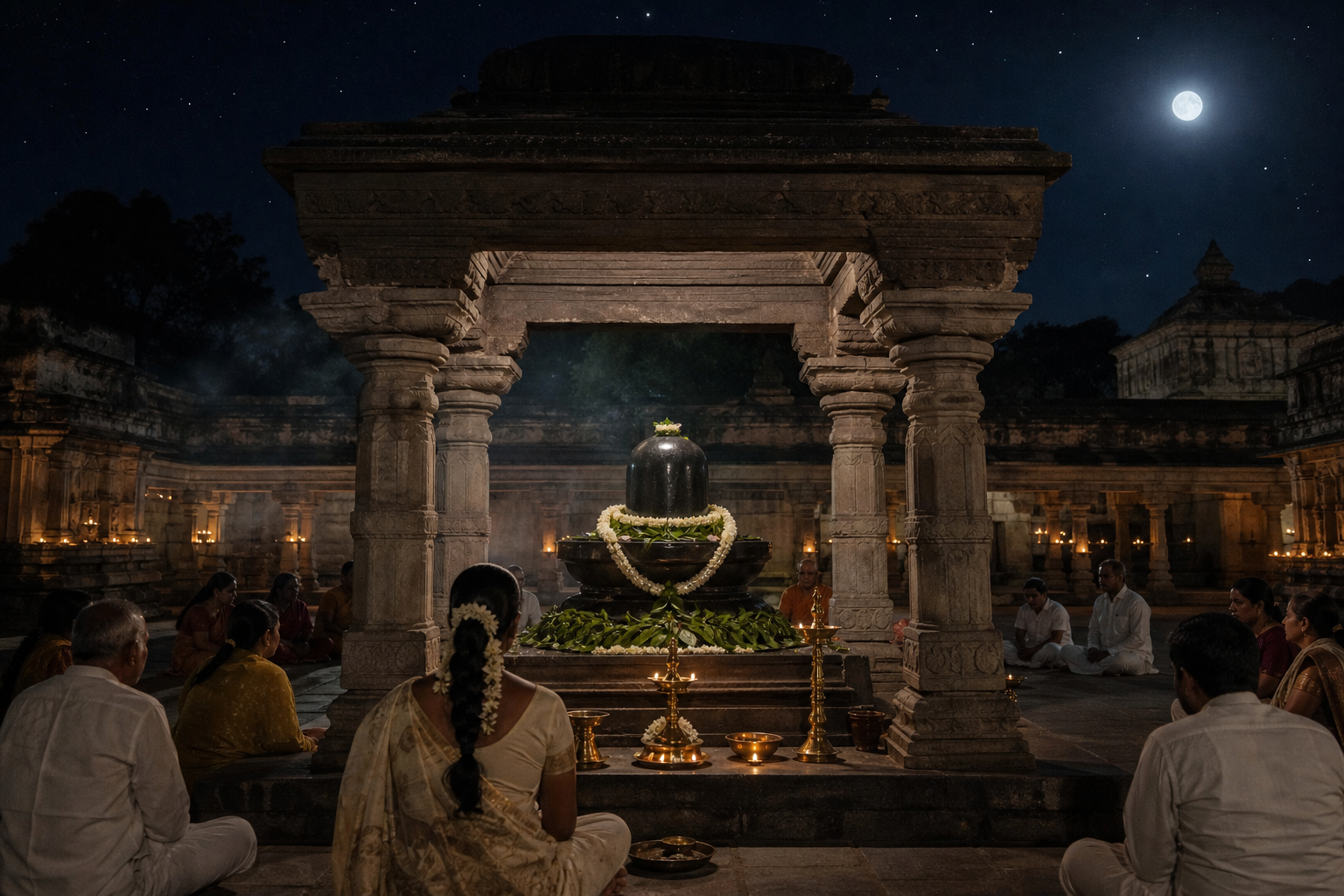
If you are trying to make sense of Maha Shivaratri 2026 after encountering different calendar names, dates and ritual lists, begin with one distinction: the principal civil date was widely shared, but the tithi terminology and household form were not identical in every tradition.
Across most regional calendars, Maha Shivaratri fell on Sunday, 15 February 2026. A sound observance did not require the largest possible collection of offerings. It required a truthful sankalpa, a form of fasting suitable for your health, attentive worship during the night and parana at the locally prescribed time.
Fix the calendar before you plan the puja
A civil date tells you which day to reserve. It does not give you the full ritual schedule. Nishita Kaal, the night interval around local midnight, depends on your location, while the beginning and end of Chaturdashi depend on the lunar calculation used by your regional panchang. The four prahars and the following day’s parana window are also location-sensitive.
For most households, the practical sequence was to observe the vrata during 15 February, worship through the night of 15-16 February, and break the fast only within the appropriate window after sunrise. You should not copy a clock time published for another city. Use the city nearest to you in a reliable regional panchang, or follow the timings issued by the temple or sampradaya guiding your worship.
The same lunar fortnight may be called Magha Krishna Chaturdashi in an Amanta calendar and Phalguna Krishna Chaturdashi in a Purnimanta calendar. That difference in month name does not necessarily indicate a different festival date. First compare the civil date, location and Nishita tithi; only then decide that two calendars disagree.
Kashmiri Pandit practice needs its own explanation. Herath 2026 was observed on 15 February as Trayodashi under the Kashmiri reckoning, with Nishita Kaal and inherited regional rules governing the observance. Vatuk Puja, vessels representing Vatuk Bhairav and Shiva’s retinue, and water-soaked walnuts belong to this living parampara. A generic Chaturdashi checklist should not be used to override it.
Temple festivals may extend beyond the principal night. At Sri Raja Rajeshwara Swamy Temple, for example, the Vemulawada Jatara ran from 14 to 16 February 2026. Preparatory rites, the main night worship and concluding utsavams therefore occupied three civil dates even though Maha Shivaratri itself centered on 15 February.
Key takeaways
- The principal Maha Shivaratri date in most regional calendars was Sunday, 15 February 2026.
- Nishita Kaal, the four prahars and parana must be taken from a panchang calculated for your location.
- Magha and Phalguna labels can reflect Amanta and Purnimanta month systems rather than conflicting festival dates.
- Herath follows Kashmiri Pandit calendrical and ritual authority; preserve its Vatuk Puja rather than forcing it into a generic home-puja template.
- A temple’s multi-day festival schedule is not the same thing as the date of the central vrata.
Choose an observance you can actually sustain
The first decision is not whether to perform five or sixteen upacharas. It is whether you are keeping one concentrated puja, a four-prahar vigil, or a temple-led observance. Make that choice before purchasing ingredients. It prevents an elaborate setup from consuming the attention meant for japa and meditation.
- A focused home observance: Keep the vrata as health permits, perform one puja during Nishita Kaal, offer a water abhisheka, bilva or flowers, chant Om Namah Shivaya for a chosen count such as 108, offer naivedya, perform aarti and close with kshama-prarthana.
- A four-prahar home vigil: Establish the altar once, then return to abhisheka, mantra, stotra, lamp and aarti in four phases. Change the devotional emphasis in each phase so the vigil remains attentive rather than mechanical.
- A temple-centered observance: Follow the temple’s queue, offering and puja rules. Keep your personal sankalpa and japa simple enough that crowd movement does not turn worship into anxiety.
- A lineage-specific observance: If your family follows a Shaiva sampradaya, Kashmiri Herath or another established regional form, inherited procedure takes priority over an internet-wide composite ritual.
For a home altar, assemble only what you will use: a Shiva-linga, murti or dignified image; a stable tray; clean water; a lamp; incense if appropriate for the room; bilva leaves or suitable flowers; vibhuti; sandal paste; akshata; fruit or another simple sattvic naivedya; and a mala. Panchamrita may be prepared from milk, curd, ghee, honey and sugar, but it is optional. A modest pure-water abhisheka remains a complete and dignified home offering.
Place the linga in a bowl or tray deep enough to contain the liquid. Keep a second vessel ready for the collected abhisheka water. Use milk, honey and ghee sparingly: large quantities create residue, waste food and make the altar harder to keep clean. After any panchamrita offering, rinse the linga thoroughly with clean water. Where household custom permits, the collected water can later be poured respectfully at the base of a tree or sacred plant.
Choose intact, clean bilva leaves. If bilva is unavailable, some household practices permit another fresh leaf or a simple flower; follow your family’s rule where one exists. In most Shiva-puja traditions, vibhuti and sandal paste are used on the linga, while haldi and kumkum are generally not applied. Tulsi and ketaki are also commonly avoided. These are customary distinctions, not reasons to abandon the puja if your materials are limited.
Keep the lamp on a heat-resistant, stable surface and do not leave it unattended. If children are participating, give them flowers, a mala or a response chant rather than responsibility for flame, hot vessels or a slippery abhisheka tray.
A simple Shiva Puja vidhi, step by step
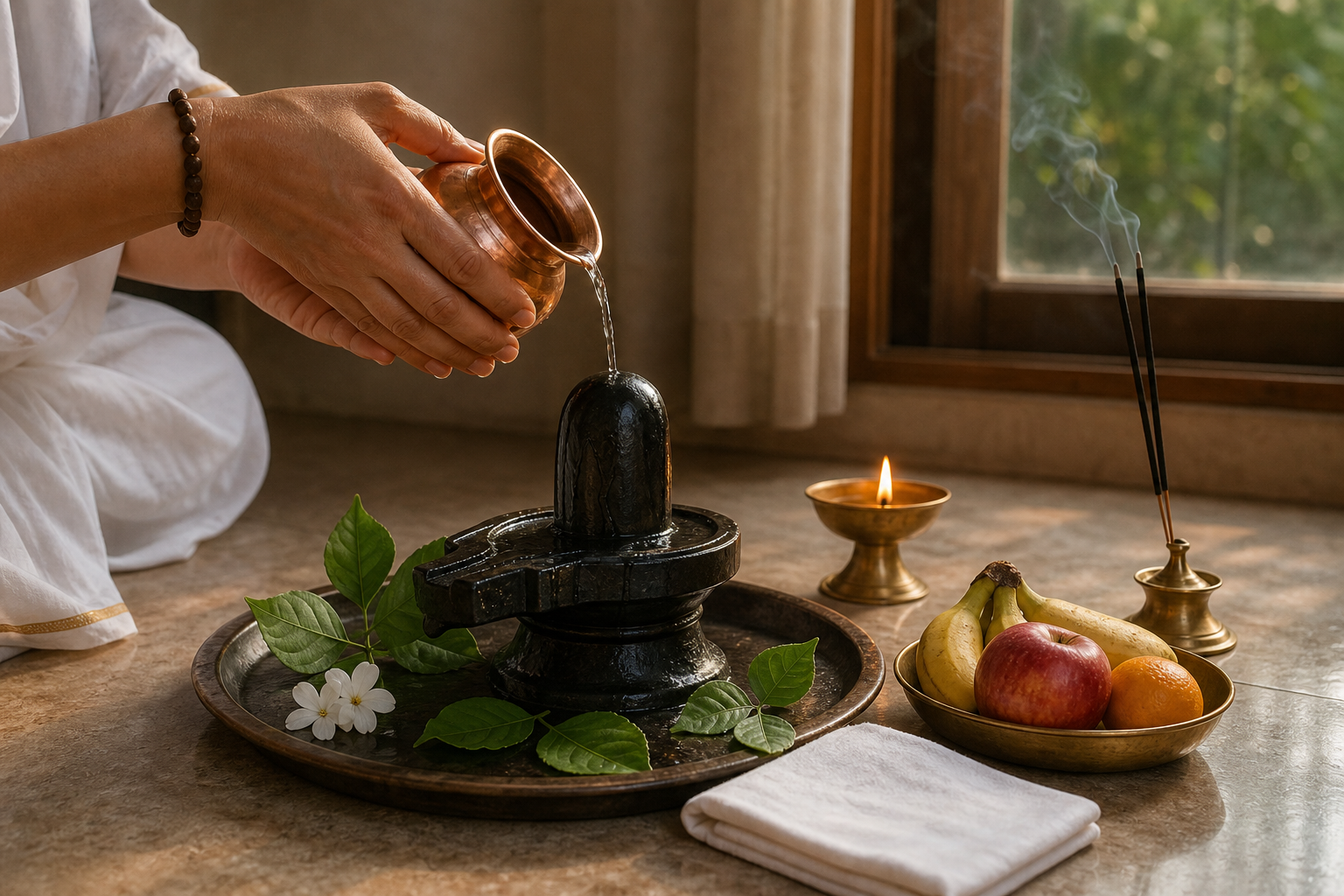
This sequence condenses the customary upacharas without making the rite casual. If your family performs Shodashopachara, retain the full sixteen offerings. If you are unfamiliar with it, the shorter sequence below keeps the essential movement of purification, invocation, abhisheka, offering and closure.
- Prepare yourself and the place. Bathe or wash, wear clean clothes, clean the altar and reduce distractions. Sit facing east or north if the room allows it. Place the phone on silent unless it is being used for a panchang or a trusted recitation.
- Light the lamp and settle the breath. If achamana and pranayama are part of your practice, perform them as learned. Otherwise, sit quietly for several breaths and bring your attention to the purpose of the vrata.
- Take sankalpa. State your name if customary, your place, the observance and its purpose. A traditional form is: मम उपात्त समस्त दुरित क्षयद्वारा श्रीपरमेश्वर प्रीत्यर्थं महाशिवरात्रि व्रतं करिष्ये। If you have not learned Sanskrit pronunciation, make the same commitment truthfully in your own language. Sankalpa is an intelligible vow, not a recital performed without understanding.
- Invoke Ganesha. Offer a flower or akshata while chanting Om Gam Ganapataye Namah. This marks an orderly beginning and asks that obstacles to the worship be removed.
- Contemplate Shiva. Look gently toward the linga or image and repeat Om Namah Shivaya. Let the first repetitions be audible and unhurried. The aim is to collect the mind before handling the offerings.
- Offer the initial honors. In a full puja these may include avahana, asana, padya, arghya and achamaniya. In a short household puja, invite Shiva’s presence with a flower and offer a small spoonful of water with reverence.
- Perform abhisheka. Begin with clean water. If using panchamrita, offer each ingredient in a small quantity, then finish with a thorough water rinse. Continue Om Namah Shivaya throughout. Those properly trained may recite Sri Rudram; anyone else can remain with the Panchakshari without treating it as an inferior substitute.
- Adorn the linga. Gently dry around the base as needed. Apply vibhuti or sandal paste according to custom. Offer bilva leaves and flowers one at a time, pairing each offering with Om Namah Shivaya or verses of the Bilvashtakam.
- Offer dhupa, deepa and naivedya. Present incense, the lamp and fruit, milk, kheer or another simple sattvic preparation. Food placed before the deity should be fresh and set aside for prasada rather than sampled during preparation.
- Perform aarti. A familiar Shiva aarti, Shiva Chalisa or brief kirtan allows the household to participate together. Keep the movement of the flame measured and safe.
- Ask forgiveness and conclude the cycle. Offer kshama-prarthana for mistakes in action, pronunciation or attention. Bow, sit for a few moments of silent japa, and leave the altar orderly if another prahar will follow.
Do not interrupt your concentration to chase ritual perfection. If an ingredient is missing, continue with water, flowers or mental offering. If a Sanskrit stotra has not been learned, slow Panchakshari japa is more fitting than a hurried imitation of Vedic pitch and cadence.
Give each prahar a distinct spiritual purpose
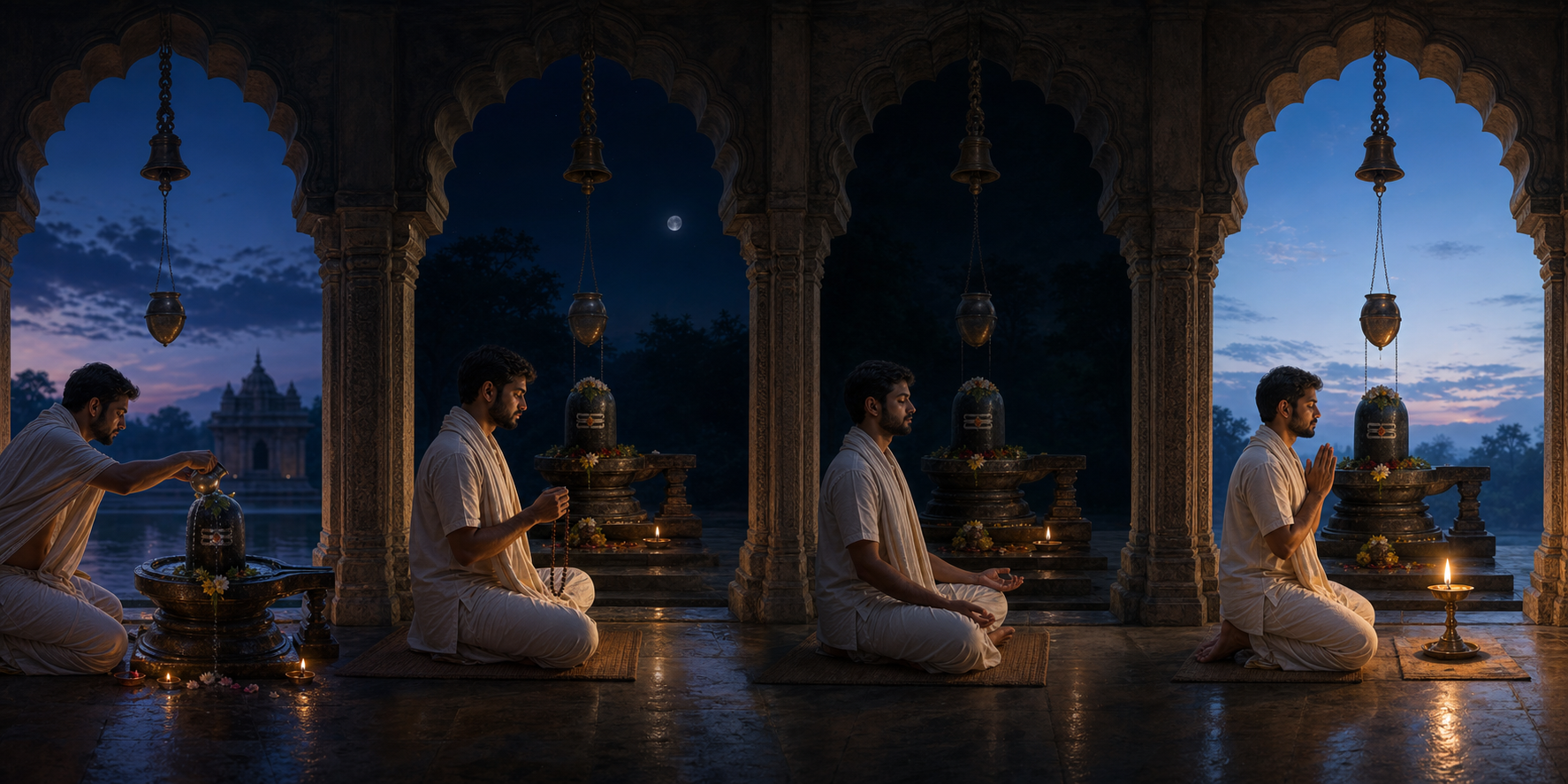
Jagarana means vigilant awareness, not simply refusing to sleep. Divide the night according to the prahar timings in your local panchang, and give each phase a clear practice. That structure prevents the middle of the night from dissolving into conversation, scrolling or devotional music playing without anyone listening.
| Phase | Primary action | Suitable recitation | Inner emphasis |
|---|---|---|---|
| First prahar | Purification, sankalpa and the principal abhisheka | Om Namah Shivaya, Lingashtakam or learned portions of Sri Rudram | Release the day’s agitation and establish attention |
| Second prahar | Bilva offering and sustained japa | Bilvashtakam and Panchakshari rounds | Restraint, surrender and steadiness |
| Third prahar | Deeper recitation, archana or silent meditation | Sri Rudram and Chamakam if learned, or Shiva Sahasranama | Move from outward ritual toward inward stillness |
| Fourth prahar | Final water abhisheka, prayer for well-being and dawn aarti | Mahamrityunjaya mantra, Shiva Chalisa and aarti | Clarity, gratitude and readiness to return to daily duty |
For Panchakshari japa, 108 or 1008 repetitions are established choices when they suit your capacity. Use a mala if counting helps, but do not let the total become the object of worship. Keep the spine comfortably upright, the breath even and the pace consistent. You may begin aloud and allow the mantra to become quieter or mental as concentration deepens.
The Mahamrityunjaya mantra may be recited in rounds of 11, 27, 54, 108 or 1008:
Om Tryambakam Yajamahe Sugandhim Pushtivardhanam, Urvarukamiva Bandhanan Mrityor Mukshiya Maamritat.
Use the mantra as a prayer for courage, resilience and inner steadiness. It is not a substitute for medicine, emergency assistance or continuing treatment. If illness is part of your sankalpa, responsible care and devotional practice should support one another.
Sri Rudram requires particular care with pronunciation, meter and Vedic intonation. Recite it as received from a qualified teacher. If you have not learned it, listen attentively or chant Om Namah Shivaya, Lingashtakam, Bilvashtakam, Shiva Mahimna Stotram, Shiva Chalisa or another hymn recognized in your tradition. Accuracy and shraddha matter more than speed.
Families can sustain the vigil by alternating collective chanting, quiet japa, a Shiva stotra, meditation and short readings. Children, elders and anyone whose health requires sleep may participate for selected phases and rest between them. The dharmic purpose is disciplined awareness, not bodily harm or a competition in endurance.
Fast intelligently, preserve regional custom and complete parana
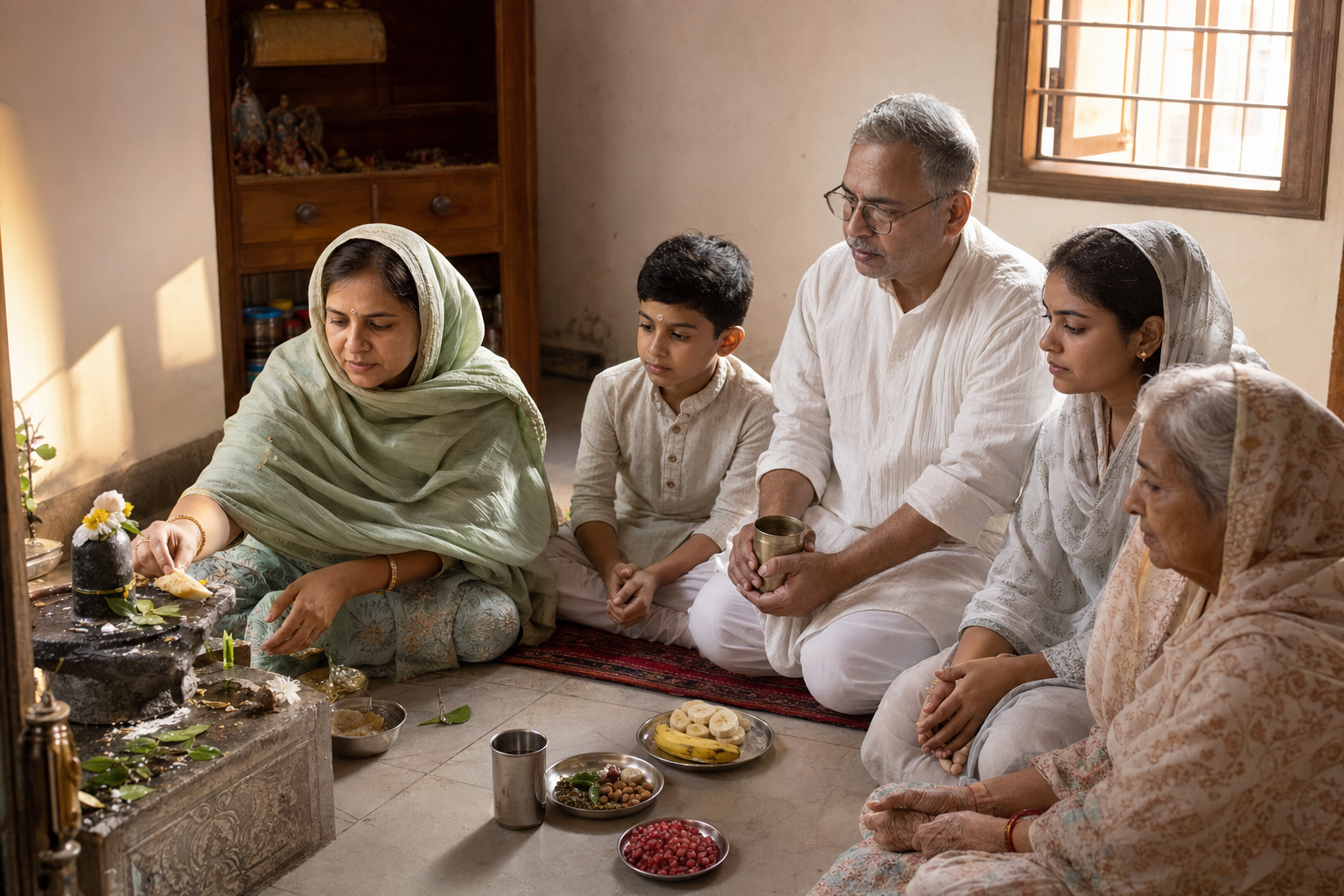
Decide the form of fasting before the vrata begins. Traditional options include nirjala, water-supported fasting, milk or fruit, and a simple sattvic intake. Nirjala is the most physically demanding option; it should not be treated as the default measure of devotion. Expectant mothers, elders, children, people taking medication and those with medical conditions should use an appropriate partial fast or ordinary simple food rather than risk dehydration, low blood sugar or disruption of treatment.
Keep the food rule clear. A standard home Shiva naivedya can consist of fruit, milk, kheer or another sattvic preparation without onion or garlic. That altar rule should not be confused with every community’s later festival meal. In many Kashmiri Pandit households, Herath cuisine may include fish and other distinctive dishes after the principal worship. The Vatuk vessels, soaked walnuts, Herath Salaam, family blessings and distribution of walnut prasada form one coherent Kashmiri inheritance; they should not be judged by a flattened pan-Indian checklist.
The same principle applies to temple vows. Dharma Gundam snana and Kode Mokku belong to Vemulawada’s kshetra tradition. If participating at the temple, follow its directions, crowd controls, sanitation rules and treatment of offerings. A temple-specific vow should not be improvised at home without the customary context and guidance.
Parana completes the vrata; it is not an afterthought. The usual sequence is to wait until the prescribed period after sunrise, after Chaturdashi has ended as required by the applicable panchang, offer a brief prayer, take water and prasada, and then eat a light meal. Do not assume that sunrise itself automatically opens the window. A regional calendar or temple notice should settle the timing.
Before closing the observance, clean the altar, distribute prasada and record the panchang used, the puja actually completed and anything you would simplify next time. That small record will serve your household better than another oversized shopping list. Carry one part of the vrata into ordinary life as well: continue a manageable round of Om Namah Shivaya, perform dana or seva, feed an animal, or care for a tree without turning the act into display.
If you are preserving the 2026 observance for your family, write down the local Nishita and parana timings alongside your inherited customs now. On the next sacred night, you will be able to begin with sankalpa and stillness rather than calendar confusion.
References
- Hindu Pad — Mahashivratri 2026: Puja Mantras, Stotras, and Step-by-Step Vidhi for a Sacred Night
- Hindu Pad — Vemulawada Rajarajeshwara Swamy Maha Shivaratri 2026: Jatara Dates, Key Rituals, Pilgrim Guide
- Hindu Pad — Herath 2026 Explained: Kashmiri Pandits’ Shivaratri on Trayodashi – Date, Rituals, Significance
- Hindu Pad — Maha Shivratri Puja Vidhi with Mantras: Precise, Devotional, Step-by-Step Home Guide
