
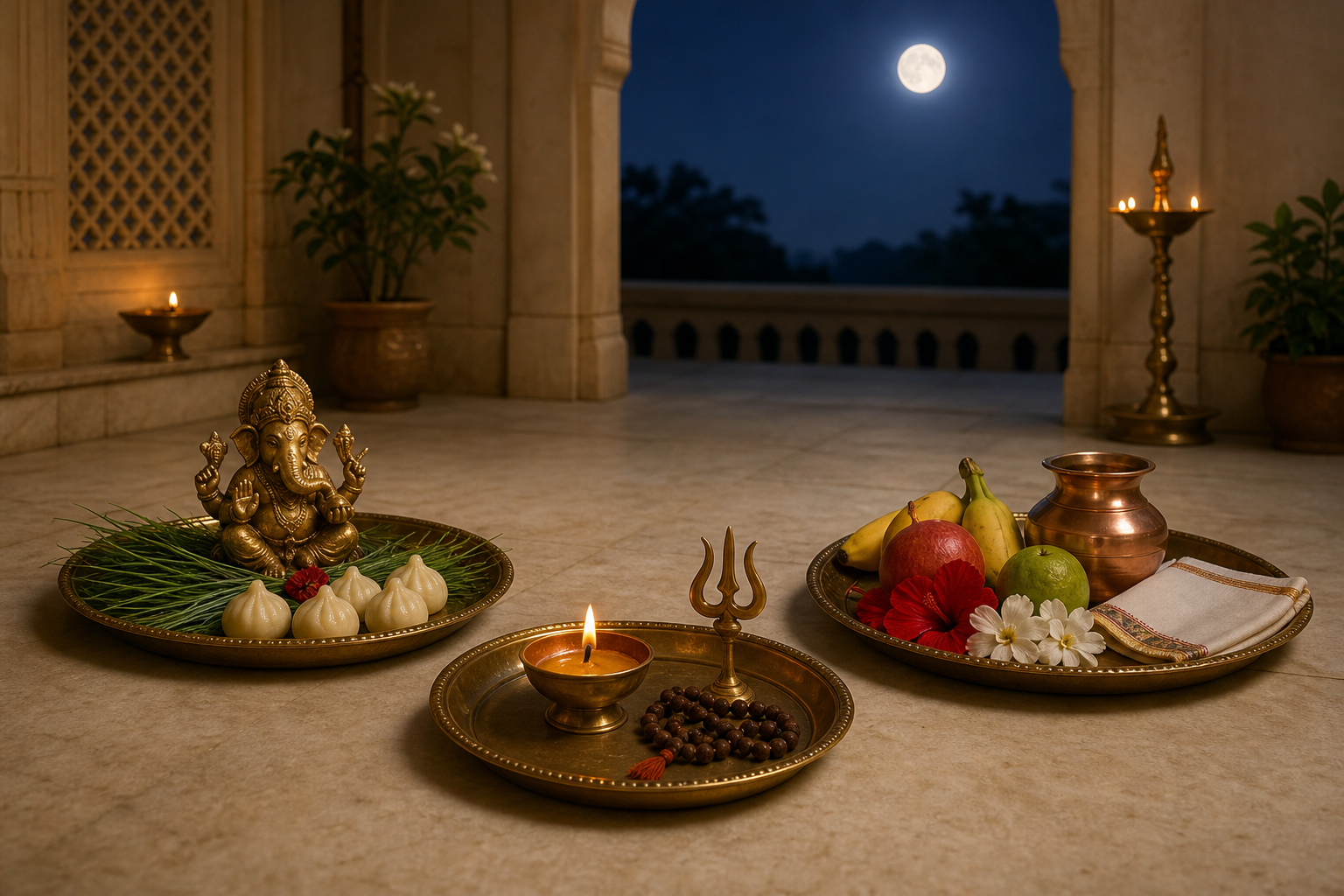
Three nearby dates can create more confusion than a month crowded with festivals. If you are arranging work, meals, temple visits, or a family puja for July 2026, reserve July 3, July 7, and July 8—but do not treat every printed clock time or regional Ashtami observance as universal.
The practical task is to separate what is fixed from what depends on place and parampara. The dates below use Indian Standard Time (IST); your local Panchang determines the precise tithi observance, and your own tradition determines which rites belong in your home.
Put these three July dates on your calendar
The month’s focal sequence begins with Sri Ganesha, moves to Kala Bhairava, and then opens into several region-specific Ashtami traditions. Use this table to reserve the dates before settling the finer details.
| Date in IST | Observance | What you need to decide |
|---|---|---|
| July 3, 2026 | Ganesh Sankashti Chaturthi Vrat | Choose a suitable form of fasting and confirm your city’s actual moonrise before setting the parana time. The India-wide moonrise reference is 9:49 PM IST. |
| July 7, 2026 | Kalashtami | Decide whether your custom calls for an evening fast, a longer night observance, a temple visit, or a simple home worship of Shri Kala Bhairava. |
| July 8, 2026 | Sheetala Ashtami, Indrani Puja, or Trilochan Ashtami in particular regional traditions | Check which, if any, is observed by your family, community, or temple. These are not automatically three compulsory pujas for every household. |
Key takeaways
- Use July 3, 7, and 8 as the main IST planning dates for this sequence.
- On Sankashti, break the fast after your local Chandrodaya; 9:49 PM IST is a planning reference, not one universal moonrise for every city.
- Observe Kalashtami on July 7 according to your established Shiva or Bhairava tradition.
- Treat the July 8 observances as regional and lineage-specific. Confirm them instead of combining unfamiliar rites.
- Do not make a fast medically unsafe, and do not let the basoda custom override safe food storage and handling.
Settle Panchang differences before planning the puja
A Hindu festival date is governed by tithi, not merely by the midnight-to-midnight civil calendar. A tithi represents a 12-degree step in the angular separation of the Sun and Moon. Its beginning or end can therefore fall partway through a civil day. Sunrise rules, local coordinates, nakshatra, yoga, and karana can further affect how a Panchang assigns an observance.
Month names can also look different while the underlying tithi remains the same. The Amanta system ends its lunar month at Amavasya and is common across much of southern India. The Purnimanta system ends the month at Purnima and is common in northern India. Most regional almanacs place this July sequence in Ashadha Krishna Paksha, but a household using another month convention should not abandon its inherited calendar merely because a different label appears online.
Calculation methods matter as well. Drik Ganita uses astronomical computation, while Surya Siddhanta follows a classical computational approach. Small differences do not necessarily mean that one family has neglected Dharma. They usually mean that location, convention, or calculation rules differ.
When two calendars disagree, use this order of decision:
- Follow the parampara consistently observed by your family or sampradaya.
- Confirm the date and relevant time with a trusted local temple, priest, or city-specific Panchang using the same tradition.
- Use the IST schedule as a planning framework, especially when coordinating relatives in different places.
Do not average two Panchang times or switch between systems simply to obtain a more convenient result. If you live outside India, an IST conversion can help you understand when relatives in Bharat are observing the vrata, but your own date and parana must still respect the local tithi and local moonrise.
July 3: plan Sankashti around your local moonrise
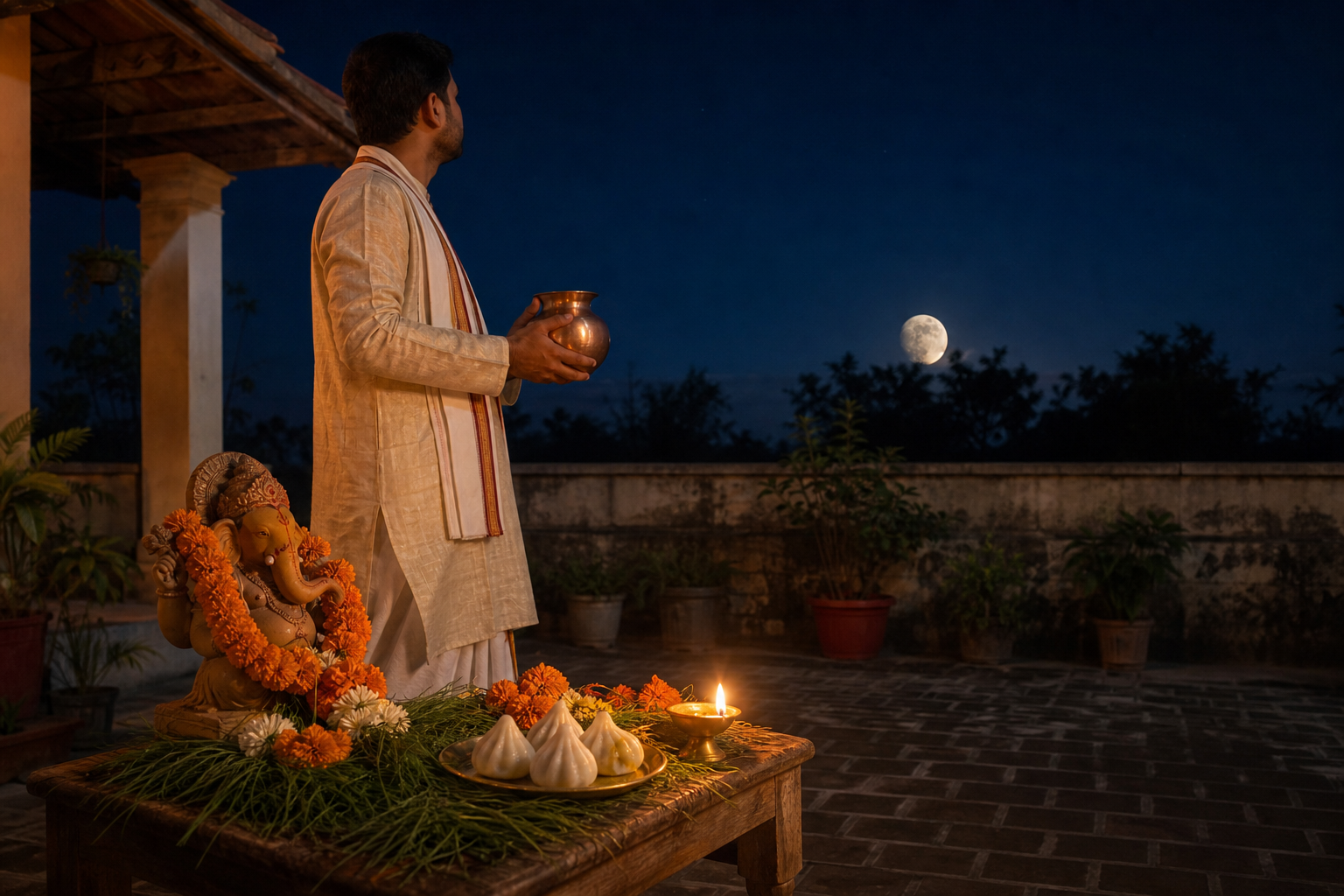
Sankashti Chaturthi is a Krishna Paksha vrata offered to Sri Ganesha for the removal of obstacles and the cultivation of steadiness. In peninsular India, you may hear the same observance called Sankatahara Chaturthi. The name varies, but the central discipline remains fasting, Ganesha worship, arghya to the Moon, and parana after Chandrodaya.
Choose the fast before the day begins
A healthy practitioner may undertake nirjala fasting, phalahar, or another customary discipline. A light sattvic regimen is also used in many homes. Choose deliberately rather than treating the strictest option as the only sincere one. If fasting without water, delaying medicine, or going without food could affect your health, seek appropriate professional guidance and use a moderated fast. A vrata is meant to train attention and conduct, not to turn preventable physical harm into a badge of devotion.
A workable home sequence
- Check a reliable city-specific Panchang and write down the local moonrise. The India-wide reference for July 3 is 9:49 PM IST, but longitude and latitude can move the observed moonrise by several minutes.
- Prepare durva grass, red or yellow flowers, akshata, a deepa, and modak or laddu before the evening. Adapt the offering to your household tradition instead of delaying worship to find every item.
- Keep the chosen fast while also restraining speech, anger, and distracted activity. The inner obstacle being addressed matters as much as the meal being omitted.
- Perform Sri Ganesha puja in the evening. You may recite the Ganesha Ashtottara, the Sankashti Vrat Katha, “Om Gam Ganapataye Namah,” or “Vakratunda Mahakaya” according to your practice.
- At local moonrise, offer arghya to Chandra. This step—not an India-wide alarm set for 9:49 PM—is the time marker for parana.
- Break the fast after the moon offering with suitable sattvic food and water.
If several family members live in different cities, let each person follow the moonrise for the place where that person is physically observing the vrata. You can coordinate the puja by phone or video, but one relative’s Chandrodaya should not replace another city’s local sky calculation.
July 7: make Kalashtami a discipline, not a fear ritual
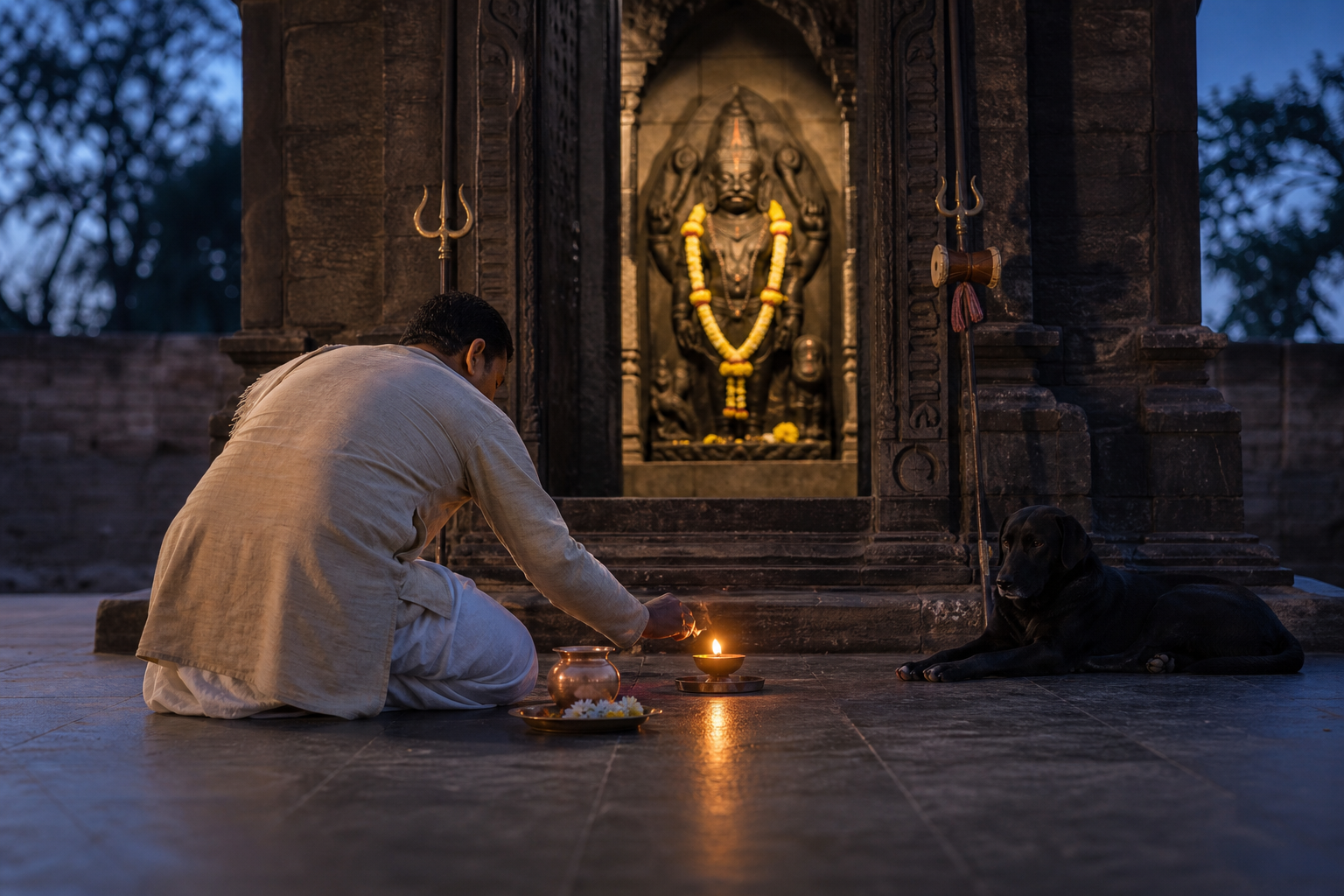
Kalashtami honours Shri Kala Bhairava, the fierce and protective form of Shiva associated with time, ethical vigilance, courage, and the guardianship of sacred space. Some devotees fast until evening; others keep a longer night observance. Decide which form belongs to your custom before the day rather than improvising an extreme fast at night.
A simple home observance can be complete:
- Clean the shrine and set aside a safe place for an oil lamp.
- Offer black sesame, the lamp, and modest naivedya according to your household practice.
- Chant “Om Kalabhairavaya Namah” or recite a familiar Bhairava hymn.
- Visit a Shiva or Bhairava temple if that is practicable. Circumambulation or a short night vigil may be included where they are customary.
- Carry the worship into conduct by guarding your speech, refusing needless anger, and completing a neglected duty on time.
The last step is not an optional moral decoration. A vrata connected with kala loses its centre if the lamp is lit while promises, time, and responsibilities are treated carelessly. Where health makes prolonged fasting unsuitable, a sattvic one-meal observance joined to mindful conduct preserves the discipline without confusing self-harm with tapas.
July 8: observe the Ashtami that belongs to your tradition
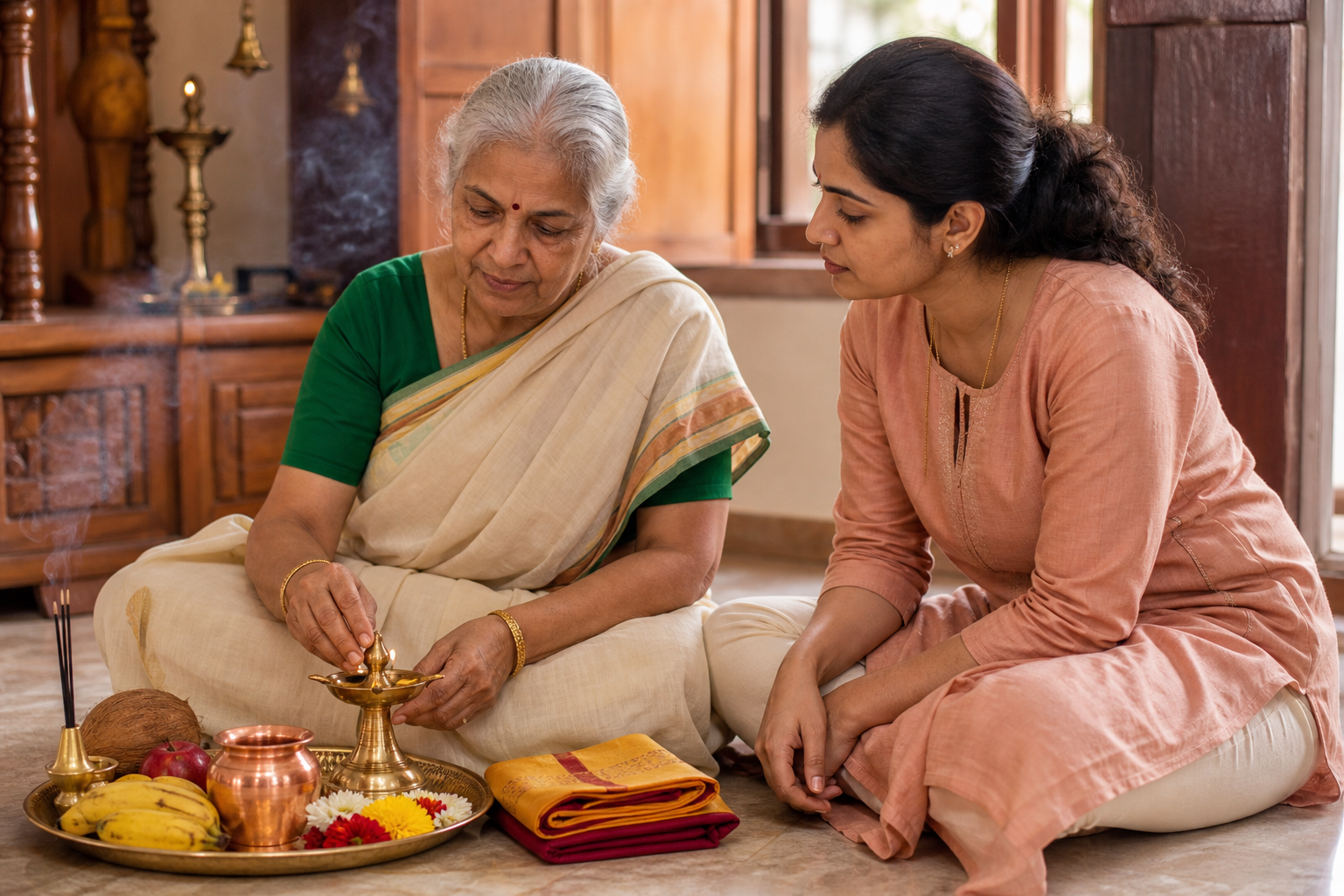
Ashtami tithi extends from July 7 into July 8 for relevant time blocks, which is why some regional Panchangs place additional observances on July 8. The right question is not, “How can we perform all three?” It is, “Which observance does our family or local temple actually keep?”
Sheetala Ashtami: unite worship with cleanliness
Sheetala Devi embodies cooling grace and protection from heat-associated and communicable illness within the devotional tradition. The household expression is concrete: clean the kitchen, water source, cooking vessels, and serving area. Cooling foods, neem leaves, and lamps may be offered according to regional practice.
In communities that keep basoda, families traditionally avoid freshly cooked food for the day. Do not interpret that custom as permission to consume food that has been stored unsafely. Plan the preparation and storage in advance; if safe handling cannot be assured, ask a knowledgeable elder or priest how your household can modify the food observance while retaining the puja, cleanliness, and restraint. Sheetala worship can reinforce preventive care, but it is not a substitute for medical treatment or sound hygiene.
Indrani Puja: follow lineage-specific procedure
Indrani, or Aindri, is the shakti associated with Indra and is honoured among the Saptamatrikas. The worship seeks courage, clarity, and harmony. Yellow or red flowers, a lamp, and the mantra “Om Aindryai Namah” form a simple devotional focus, but this is precisely the kind of rite in which lineage-specific details matter. If Aindri Puja is not already part of your family tradition, do not assemble a procedure from unrelated fragments; seek guidance from the priest or community that maintains it.
Trilochan Ashtami: turn the gaze inward
Trilochan Ashtami worships Shiva as Trilocana, the three-eyed Lord. A home observance may include abhishekam with water, milk, or panchamrita, followed by “Om Namah Shivaya” japa. Recitation from the Rudra-adhyaya may be added where the text, training, and family practice support it. The point is inner vision joined to tapas, not ritual complexity for its own sake.
These July vrats remain distinct Hindu observances, yet their disciplines reach into a wider Dharmic moral field. Ahimsa, restraint, cleanliness, dana, seva, and careful speech also resonate across Buddhism, Jainism, and Sikhism without making the paths interchangeable. You can extend the vrata beyond the shrine through a donation, service to a community kitchen, compassionate care for living beings, or one consciously restrained day of speech.
Before July begins, make three concrete notes: your city’s July 3 moonrise, your chosen Kalashtami fasting form, and whether a July 8 observance belongs to your parampara. Gather the puja materials early and settle any health or food-safety adjustments before the vrata starts. That preparation leaves the sacred day free for worship rather than last-minute calendar disputes.
References
